‘Leave the World Behind’-Book and Film Comparison

“Whether you prefer the visual spectacle of cinema or the intimate exploration of characters through Rumaan Alam’s written narrative, “Leave the World Behind” provides a gripping tale that will leave you questioning the boundaries of trust and the resilience of humanity when catastrophe strikes.”

‘Leave The World Behind’ is a thought-provoking novel, written by Rumaan Alam, first published in 2020. The story of both the book and the film adaptation revolves around two families who are forced to come together in an unexpected turn of events. Both mediums for this story explore the themes such as fear, trust, and the complexities of human relationships. Recently, in 2023, ‘Leave the World Behind’ was adapted into a film, released on the Netflix streaming platform, which has captivated audiences with its compelling narrative, largely based on the book version.

Set against a backdrop of uncertainty and increasing tension that progresses through both the novel and the film versions, ‘Leave the World Behind’ guides the audience through a suspenseful and gripping narrative. The story begins with Amanda, Clay, and their two teenage children, Rose, and Archie, who live in New York City, who based on Amanda’s yearning to ‘leave the world behind’ for a little while at the beginning of the story, head off on a vacation to a remote house they have rented on Long Island. The stage is set for tranquility, summer relaxation, and family bonding, but their idyllic respite is soon interrupted by unforeseen circumstances.

Soon after their arrival, an elderly couple, Ruth and G.H., surprisingly appear at the doorstep. In the movie, Ruth is the daughter of G.H. or George but in the novel, she is his wife. However, in the main storyline, they claim to be the owners of the rented property, leaving Amanda and Clay in a state of confusion and unease. The intrusion tests the boundaries of trust and raises a myriad of questions such as the circumstances beyond which Ruth and G.H. have fled the city to come back to their summer house.

During a series of unprecedented events, the two families find themselves isolated from the world and confronted by their own fears. In addition to the Sandford and Scott families, for which both the novel and film focus on, the World acts as its own character, representing the unknown and unpredictable circumstances that affect the protagonists, who may want to escape from it but are sucked into the growing chaos and the calamities that are befalling it.

The novel unfolds in a secluded Long Island vacation home miles away from the urban chaos, yet the families cannot remain isolated from the chaos surrounding them forever. Its remoteness adds to the suspense as the families grapple with their limited resources, increasing isolation, and the unknown circumstances that encroach upon their peace.

Because of what’s going on in the world, the families have no access to any information that could help them piece together what’s going on. The phones are not working, the TV signal is out, and even a GPS or satellite phone connection is unable to be used as a fail-safe as the two families try to make sense of what’s going on in the outside world. Without spoiling either the book or the film adaptation, the main events of ‘Leave the World Behind’ entail the following:

Amanda, Clay, and their children settle into the remote vacation home with the joyful anticipation of a peaceful getaway. Ruth and G.H. arrive, insisting that they are the owners of the rented property, causing confusion and concern for Amanda and Clay. As the families try to make sense of Ruth and G.H.’s sudden arrival, they face a complete loss of communication with the outside world. This event further amplifies their vulnerability and isolation.

The families begin to experience a growing sense of unease as bizarre occurrences, such as power outages and mysterious sounds, escalate. Fear and paranoia start to consume their thoughts and actions. Together, the families must navigate the tensions and challenges that arise due to their forced cohabitation with each other. The increasing fear casts doubt on their ability to trust one another, as they slowly unravel the truth behind their predicament. Amanda, Clay, Ruth, and G.H. venture beyond the confines of the house in search of answers. They encounter strange phenomena, unexplained events, and a world teetering on the edge of chaos. The unknown becomes their companion, adding depth to their personal growth and transformation.

As the families face the conclusion of their isolated journey, the fate of the world hangs in the balance. The climax leaves readers questioning the boundaries of human connection and the fragility of our existence on the planet and our inability to control the changes that affect our world.

‘Leave The World Behind’ in both the film and the book offer a gripping narrative that delves into the complexities of human relationships and the primal fears that lurk within us. Rumaan Alam’s novel and its film adaptation effectively convey the story’s themes of uncertainty, trust, and the vulnerability of our connectedness to technology and modern conveniences. Through the characters of Amanda, Clay, Ruth, and G.H., both readers and moviegoers will be compelled to question their own responses to challenging circumstances, leading to a deeper understanding of the human condition, and how we react in times of crisis and stay resilient in the face of uncertainty.

Adaptations play a crucial role in bringing stories to life in different mediums. “Leave The World Behind” is an example of adding to the richness of the central story by being a captivating tale that can successfully be adapted into both a film and a book. The film adaptation of “Leave the World Behind” takes the audience on a thrilling and suspenseful journey, that is more of a thriller than a slow-moving drama that the book is. The novel version of “Leave the World Behind” focuses more than the film version on suspenseful and survival themes, offering a more immersive experience through its written narrative.

Despite the changes involved with making Rumaan Alam’s book into a Netflix movie, the overall themes have remained the same, which make both adaptations as appealing as possible because the core messages have not been lost in the transition.

Humanity’s capacity for survival is a major theme explored in both the film and book versions of “Leave the World Behind”. The characters face overwhelming challenges and unexpected circumstances, and their resilience and ability to adapt become crucial to being able to survive this world-changing event. This theme encourages reflection on our own strengths and perseverance in the face of adversity when the world seems to be falling apart.

Both the film and book versions delve into the complexities of trust and its relationship to isolation. In a world where human connections are vital to future survival; the characters confront their fears and insecurities. The uncertain nature of the situation prompts them to question the intentions of those around them, blurring the lines between friend and foe, and who can be trusted in this world gone awry.

The fear of the unknown is another prevalent theme in “Leave the World Behind”. As the characters navigate through an uncertain world, their fears and anxieties take center stage in how they view themselves and each other. The unfamiliar couple in the story serves as a catalyst for this fear of what’s out of the ordinary to start with, leaving the audience questioning their true intentions, and adding an element of suspense and intrigue.

While both the film and book versions of “Leave the World Behind” explore these core themes, they differ in their execution and portrayal. The film adaptation of “Leave the World Behind” brings the desolate post-apocalyptic setting to life with captivating visuals, action sequences affecting the characters, and more information regarding the reason why the world is in trouble, enhancing the sense of isolation and uncertainty. The use of cinematography and special effects heightens the tension and adds a visually engaging aspect to the overall story.

The novel provides a deeper exploration of the characters’ thoughts and emotions, allowing readers to truly immerse themselves in their journey and who they are as individuals. The power of written language enables readers to form a more intimate connection with the characters, enhancing the suspense and impact of the story, as well as what their internal dialogue is telling the reader as they go through the events affecting the world. As a differentiator, the film employs quick cuts and intense sequences to maintain a fast-paced narrative, while the book offers a more leisurely pace, allowing readers to savor the intricacies of the plot, and unravel the layers of suspense at their own pace.

Character development differs between the film and book versions as well. The film adaptation relies on visual cues and actions to convey the characters’ emotions, while the book delves deeper into their inner thoughts and motivations. This distinction provides a more nuanced understanding of the characters and their personal journey in the book. In conclusion, “Leave the World Behind” in both its film and book versions, presents an intriguing and suspenseful story that explores themes of dealing with survival, maintaining trust with others, having resilience under duress, and managing one’s fear. The film both captivates with its visual shots and its thrilling sequences, broadening our understanding from the book of how the world is really ending, while the novel offers a more immersive and introspective experience of how the characters are changing from chapter to chapter.

Whether you prefer the visual spectacle of cinema or the intimate exploration of characters through Rumaan Alam’s written narrative, “Leave the World Behind” provides a gripping tale that will leave you questioning the boundaries of trust and the resilience of humanity when catastrophe strikes. Discover the power of when adaptation is done well in storytelling and explore the captivating novel and movie adaptation of “Leave the World Behind.”

‘No Country for Old Men’ – Film Review and Analysis

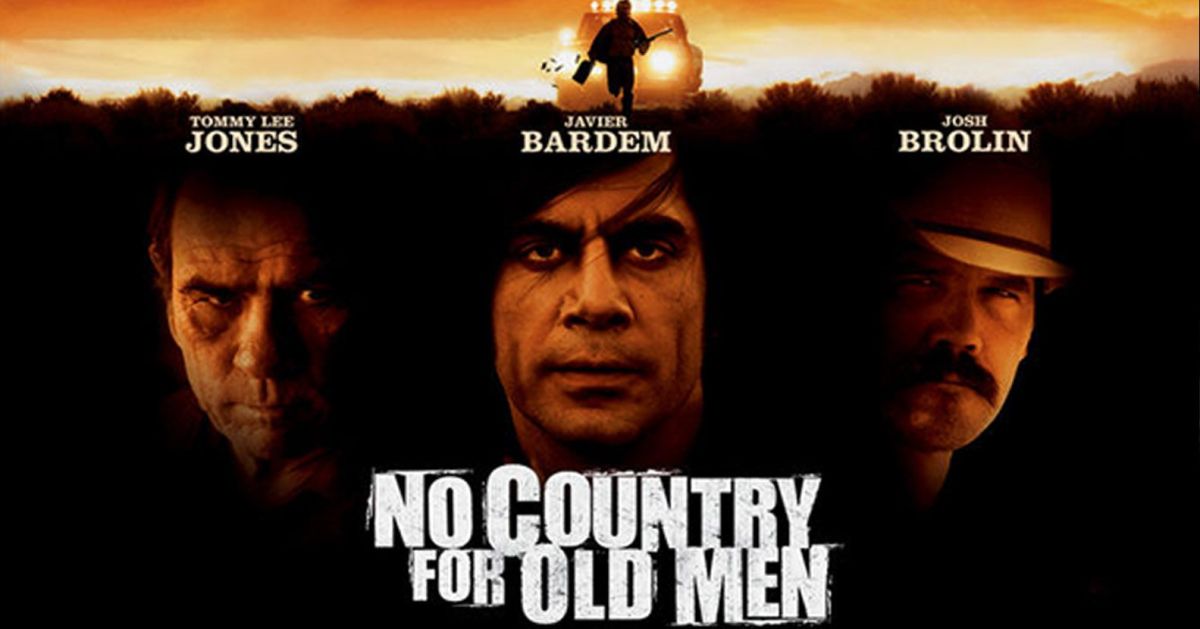
Cormac McCarthy, a distinguished American author of such noteworthy novels of ‘The Road’ and ‘Blood Meridian’, is not as well known for ‘No Country for Old Men’, but it is an excellent and renowned novel in its own right. Out of the movies that have been based off of his work, ‘No Country for Old Men’, released in 2007, is considered to be the best book to film adaptation done so far when it comes to the written works of Mr. McCarthy.

Like his other novels, ‘No Country for Old Men’ focuses on the darker parts of human nature including violence, corruption, and the evil that people can do to one another without just cause. ‘No Country for Old Men’ was a hit at the box office and has an all-star cast including Josh Brolin, Javier Bardem, and Tommy Lee Jones. This film was directed by the Coen brothers and received critical acclaim including four Academy Awards including Best Picture and Best Supporting Actor for Bardem. While not the most upbeat and positive film, it’s a film that probes questions regarding fate v. coincidence, if destiny is pre-ordained, and how much the world is beyond our control despite our wishes and desires for it to be different than it actually is.

‘No Country for Old Men’ takes place in Texas, USA in 1980 after the conclusion of the Vietnam War, one of the bloodiest conflicts in American history, and which is referenced at points throughout the film. Each of the three main characters have personal experience committing violence although they do so for different reasons. Anton Chigurh, the name of the film’s antagonist is a man born without a conscience and is a hired killer. However, he doesn’t simply kill because he is getting paid with money to do so but rather because it comes naturally to him and sees himself as an instrument of fate. It does matter whether or not you are ‘innocent’ or not but if you happen to cross paths with him on the road, at a hotel, in a convenience store, he will judge your fate based on the basis of a coin toss flip. Chigurh’s chilling approach to life and how it is totally beyond any of your collective will and actions is an eerie recurrence throughout the film that the Coen brothers use to make him one of the greatest film villains of all-time.

Most relatable as a main character in ‘No Country for Old Men’, Llewelyn Moss (played by Josh Brolin) is a married man, Vietnam war veteran, and welder who enjoys hunting as a Texan. He is not a perfect person but he tries to do the right thing most of the time and is unfortunately a victim of fate as well during the film. On a hunting trip in the west Texas desert, he ends up seeing the aftermath of a drug deal gone bad with men and dogs both badly wounded and dead at the scene. His overall fate is set in motion when he takes two million dollars that does not belong to him and stashes it away.

As an audience member, you know that’s not the right action for him to take because it ends up causing him to be tracked by Chigurh as he is the contract killer hired to kill Moss and bring back the money. It’s not only that Chigurh who is after Moss for the money and this main character is up against fate which has conspired against him due to the stolen money that didn’t belong to him. Moss, at his heart, is a survivalist and wants to live on yet his actions cause himself and his wife to be put into serious danger.

Because of their predicament, Sheriff Ed Tom Bell, a Terrell County mainstay who is closer to retirement and death then he would like to admit is good at his job but is not sure that he can keep up with the violence and evil that he sees around him and which seems to be getting worse and not better. Throughout this film, Ed Tom is one step behind Chigurh and is unable to help Moss as directly as he can as sheriff because he is overmatched and isn’t able to keep up with a part of the country that isn’t always meant for ‘old men’ to live happily ever after.

“What you got, ain’t nothing new. This country’s hard on people. You can’t stop what’s coming. It ain’t all waiting on you. That’s vanity.” Sheriff Bell, throughout the film, becomes disenchanted with the way the world is and how senseless violence is unavoidable and can’t always be stopped. His ability to influence or change events is weakening and as an older sheriff, he’s slowing down and wondering what his ultimate fate will be whether its dying of old age or getting killed by a psychopath like Chigurh. Ed Tom Bell as a character in this film is aware that as human beings, we can only have control over the world around us and that we are limited to the choices we make regarding good and evil but our choices can also be sometimes constrained by the hand we are dealt by life itself and our circumstances. When it comes to the violence of the world, it is something that can never be truly vanquished as long as there is evil in the hearts of men.

The most prominent theme of the film relates to fate and self-determination. Each of the main characters chooses to see those two concepts differently. Anton Chigurh uses the cover of a ‘fateful’ coin toss to leave it up to the fates of his potential victims regardless if he was hired to kill them or not. He brutally rationalizes his violence through the use of ‘fate’ as if they had it coming all of their life. Llewelyn Moss, a simple hunter and welder, makes flawed choices as any normal person would but struggles to outrun his fate based on some bad decisions he made regarding money that was stolen and would be considered ‘blood money.’

Moss is a survivalist at heart but knows that he can only do so much physically and mentally to outrun his fate based on the choices he actually made that led him there. Ed Tom Bell, is the most morally sound character of the film but comes to the realization that he can only deal with the world as it is rather than the world he would like it to be. The choices he makes are his own but the world and its depravity and violence are out of his control and he can only react to those events rather than prevent them from ever occurring.

In various films of theirs, The Coen Brothers often present a bleak and nihilistic view about the world. ‘No Country for Old Men’ is their most serious and brutal look at the nature of violence, how deeply it seems to be embedded in the American landscape, and how everyone regardless if they are good or evil is subject to a fate that is out of their earthly control.

Overall, ‘No Country for Old Men’ is a great film in that it probes a number of moral questions relating to mankind’s capacity for both good and evil. The cinematography is stunningly impressive, the acting is excellent by every character and Bardem especially deserved to win an Academy Award for his chilling role as Anton Chigurh. This film is not meant for those with weak stomachs because the violence is both brutal and frightenly realistic. The Coen Brothers make movies mainly for mature audiences and this film is no exception.

The music of the film carries little weight and there is not much of a soundtrack and that is done on purpose collectively to build up tension and have the audience invest in every scene to see what happens next. It’s hard to classify this movie to a specific genre but it definitely could be best summarized as a dramatic thriller. The directing is excellent overall and ‘No Country for Old Men’ is truly loyal to its unique setting of west Texas and the U.S. – Mexico borderlands. If you would like to see a movie that deals in shades of grey rather than black and white, you will enjoy ‘No Country for Old Men’. However, be forewarned that it does not have a cliché happy Hollywood ending, which is refreshing since men and women do not always get to live to a ripe, old age.

‘Training Day’ – Film Review and Analysis

‘Training Day’ is the kind of movie that highlights two people who somehow cross paths as they are on opposite sides of morality. The men are shown to be both flawed in their own ways but still have a direct impact on each other as they spend more time together. Throughout this film, both men are trying to outwit each other in the hopes that they’ll come out on top. Because of this gamesmanship, this is no simple training day but rather a series of events that end up changing both of their lives for better and for worse.

The two main characters, one of them who could be considered a youthful idealist, is trying to better his community and his city by enforcing the law by the book. The other man has been around the block and knows about the grittiness of the job more so than his impressionable, younger rookie partner. He is a pessimist who discards the idealism that he likely brought with him when he originally joined the police force. He has abused his power as a law enforcement agent, is looking to maintain his authority and grow his wealth through intimidation and threats.

“It takes a wolf to catch a wolf” is a powerful quote from ‘Training Day’ that shows that in order to bring somebody down, you have to act and imitate who they are. The problem with this attitude is that sometimes you end up becoming your own worst enemy. However, to simply be a sheep is leading yourself to the slaughter as well especially when you’re dealing with the criminal underworld.

In order to survive as a detective, both men know that you need to be confident in yourself, steadfast in your beliefs, and willing to confront ‘the wolves’ out there if you want to catch one. It could be argued that the protagonist of this film starts out as a sheep and ends up becoming a wolf in order to catch the antagonist, a true wolf who has caught the wolves for many years. This kind of symbolism embedded within ‘Training Day’ makes it a classic film worthy of repeated viewings.

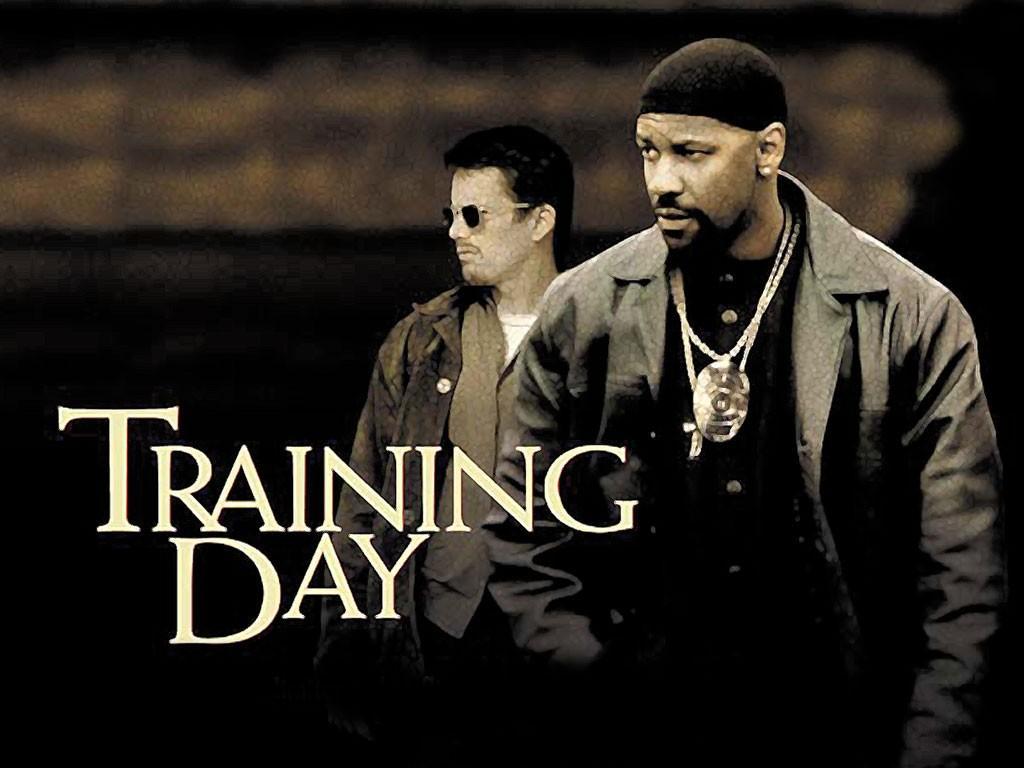
‘Training Day’, released in 2001 is a crime drama / thriller directed by Antoine Fuqua which follows two LAPD detectives who patrol and fight crime in gang-heavy neighborhoods. The film stars Denzel Washington as Alonzo Harris, a veteran detective and police officer who prefers wearing street clothes over a formal uniform and a badge. Ethan Hawke, who plays Jake Hoyt, a new detective and Alonso’s new partner who is entrusted in learning from Alonzo on his first day of detective training.

This film has earned excellent reviews over the years and is considered one of the best movies of the 2000’s. It achieved critical acclaim and success in theaters as Denzel Washington earned a Best Actor award for his role as Alonzo Harris. Truly, one of the best parts of the film is Washington’s acting and how he brings the corrupt yet smooth talking cop character to life. Det. Harris is a classic villain who ranks as one of the best antagonists in film history for his duplicity to others and displaying his indefatigable charisma while doing it.

From the opening scene of the movie, you can tell that Jake Hoyt is out of his league when it comes to matching up against Alonzo Harris. Unfortunately, not much of Alonso or Jake’s backstory is given in the film as well as how they came to become partners together. However, you can see early they are both polar opposites of each other in terms of their ideals, morals, and overall character. Jake is a young guy who’s trying to make his mark as a police officer and trying to do everything by the book as instructed by his superiors at the academy.

He is idealistic, fair-minded, and perhaps a bit naïve to the murky shades of gray that make up the world. Meanwhile, the audience can tell that Alonso has been on the wrong side of the streets for a while and has become purely jaded by his work as a narcotics detective. Instead of serving and protecting the people in his community and city, he cares only about his image, the reach of his authority, and the ability to make illegal money without compromising his career. What once was left of the idealism and the drive to do good by becoming a police officer has long been washed away. You could argue that Jake is a sheep while Alonso is a wolf who is going to prey on him.

The ultimate goal of Alonso is to bend Jake to his will by manipulating his moral code and his willingness to stay clean as a police officer. While Jake starts out the film as being a bit reticent, gullible, and naïve to what Alonso is doing to him, he is able to change over the course of the film to fight for his future, his career, and his life. The transformation of Jake Hoyt from a ‘sheep’ to a ‘wolf’ able to stand up to Alonso is one of the greatest displays of character development in film.

The great drama of ‘Training Day’ is to see both men push each other to the limits both mentally and physically to see who will be left standing after the training day and night is over. While Alonso lost his soul and is trying to corrupt those around him, Det. Jake Hoyt needs to harness his strengths, moral fiber, and intelligence to best Alonso at his own game.

At first, Alonso seems like an ideal partner to be with if you are in the police force. However, Jake and the audience find out that he is anti-social, manipulative, and willing to take what he wants without remorse. The challenge throughout the film for Jake is how does he change into a ‘wolf’ without losing his own moral code. Complicating matters for Detective Hoyt is the fact that Alonso isn’t the only corrupt police officer to deal with and that it goes to higher levels in both local and state government who know what Alonso is up to.

While some officials turn a blind eye to Alonso’s money-grabbing, wrongful beatings and killings, and others in the police force actually join in on it, Jake takes a moral stand and wants to bring Alonso to justice. However, we find out that Alonso is in fact his own worst enemy and the bad karma that he’s acquired over his years of corrupt wheeling and dealing will come back to haunt him.

Everyone’s luck eventually runs out and Alonso finds himself on the wrong end of a bad gambling streak with organized crime. For all of his manipulation, wrongdoing, and anti-social behavior, its’ Alonso’s desire for control over others including Jake that leads himself to ruin. To the opposite, Jake becomes a stronger person and a more effective police officer as the film progresses. He stops two men on the street from physically abusing a high school girl, which pays off for him later after he faces another near fatal betrayal from Alonso.

The concept of karma plays out for Jake, as he is able to resist the corrupting influence of Alonso and remain on the right side of the law by doing his job even under great personal pressure. Instead of letting the power and authority entrusted in him get to his head, Jake is able to become not just a better police officer than Alonso by the end of the film but a better human being.

While Alonso wasn’t always a corrupt cop, ‘Training Day’ makes you wonder what could have happened to this man to turn him into what he was originally fighting against. Overall, this movie is a morality tale of two men who have different intentions when it comes to being a police officer, which puts them at odds with each other. Their impression of the other man continually changes as they learn more about who exactly is the ‘sheep’ and who is the ‘wolf’ as their training day plays out.

‘Children of Men’ – Film Review and Analysis

What would happen to our world if women were no longer able to have babies? How would human society, nations, and the globe as a whole react to such a consequential event to humanity? A dystopian take on the state of a world without children is the focus of the 2006 critically acclaimed film titled, ‘Children of Men’, directed by Alfonso Cuaron. This film stars Clive Owen, Julianne Moore, Michael Caine, and Chiwetel Ejiofor in its leading roles. The film is based off of a novel of the same name, ‘Children of Men’, which was written by author P.D. James in 1992.

The screenplay and the story have both been adapted from the novel but the striking visuals and the memorable cinematography make it fit for the big screen treatment. Despite a limited release and low profit earnings when it first came out, Children of Men has stayed in the public consciousness due to its timely socio-political themes on immigration, the environment, terrorism, and political violence. With the election of Donald Trump as U.S. President and the unlikely occurrence of Brexit, the message and themes of the film have turned out to be quite relevant. Although this film is set in the United Kingdom in the future year of 2027, despite the non-issue with the infertility of women, the issues that humanity is dealing with in 2017 are tied directly to different issues that the film brings up in its’ plotline.

Theo Faron, a civil servant for the British government and former activist, seems to have given up his fight for a better future. With humanity on the brink of extinction and with most of the countries’ governments having collapsed, there doesn’t seem to be any hope left. As one of the characters, Miriam, explains to Theo in the film, “As the sound of the playgrounds faded, despair set in. Very odd, what happens in a world without children’s voices.” Theo and his ex-wife, Julian, estranged for years after the death of their infant child, Dylan, are reunited due to a refugee named Kee. Julian and the Fishes, an anti-government and pro-refugee group involved in an uprising, would like to take Kee to the Human Project.

She is known to be the only woman in the world who is pregnant with the world’s first child in eighteen years, and is very valuable. However, things are not as they seem with the Fishes and their motives for helping Kee. Theo, in this film, is a lone character who promises to help Julian to bring Kee to the Human Project to ensure the future of humanity against all odds. Instead of using Kee as a political prop to help their cause against the government, Theo decides to help her escape from the Fishes, bring her to the British coast, and protect the future of humanity. Along the way, the viewer of the film sees the consequences of a world without babies. Where once there was no hope, Theo gains his sense of purpose and faith again as he hopes to redeem himself by getting Kee to safety and away from both the British government and the Fishes group.

Starting from the opening scene where the main character, Theo, is taken aback from a suicide bomb blast in the heart of London after just having left the café where the attack happened, you get a sense of what you’re in for with this movie. There’s a sense of hopelessness, dread, and despair as the audience is thrust into the focus of the movie as it’s made clear that the youngest person on Earth was eighteen years old meaning that something seriously has gone wrong to make that a reality. Although it’s never directly addressed in the movie, a few of the characters speculate that the reasons women can’t have babies anymore vary from environmental degradation to genetic experiments to too much pollution / radiation. The reason for women’s infertility is never addressed but the film makes it clear that the world is without hope because of the fact that there are no children to carry on the future of the human race.

Humanity faces certain extinction and the United Kingdom where the film’s setting is, instead of maintaining its’ parliamentary form of democracy has regressed into a totalitarian police state. Because it is one of the few surviving nations left on Earth, the country has developed a strict anti-immigration and anti-refugee policy. Any refugees or immigrants from outside the U.K. are rounded up and sent to detention camps, which have very poor and inhospitable conditions. The situation is so dire that the Fishes, labeled as a terrorist group, are fighting a guerrilla war campaign against the government to fight for immigrant rights.

The Fishes, with Julian, Theo’s ex-wife as their leader seem like the good guys but they have nefarious intentions in mind when it comes to the righteousness of their cause especially after they discover the first pregnant woman, Kee, in eighteen years. Throughout the movie, Theo is shown to be caught in the middle between the tyrannical government and the nefarious freedom fighter groups who are both trying to get hold of Kee for their own political gain.

The Human Project, believed to be a group of the world’s leading scientists, are thought to be the best people to help Kee with the baby and to perhaps study why she out of all the women on the planet was able to give birth to a child. Theo, having seemingly lost all hope and reason for living after the death of his baby, Dylan, believes again in the cause of getting Kee to be in the safe hands of the Human Project and to keep her from falling into the hands of either the Fishes group or the government. One of the main themes in this film is Theo’s regaining of hope and his quest for redemption after losing his only son years ago with his ex-wife, Julian.

The director, Alfonso Cuaron, does a great job of setting the scene of a dystopian future where humanity has lost all hope. A pill that allows people to commit suicide peacefully called ‘Quietus’ is mass advertised, terrorist attacks are an almost daily occurrence, and the immigrants, refugees who come to Britain are kept in detention camps separate from the rest of the population because the borders of the country have been closed down. In a plot and setting so dark, the only light to hold on to is Kee and her newborn to be. In a particular moving moment, Kee decides to name her baby girl after Theo’s deceased child, Dylan, showing just how much she really cares for the man who is getting her to the Human Project. It’s no coincidence that Kee herself is a refugee from a West African nation where the first humans emerged.

One of the best scenes in the film occurs when Kee, Theo, and the newborn baby are trying to leave a bombed out building where the rebels and the government are fighting each other in an urban war. The only thing that stops the bombs from falling and the bullets from firing are the sounds of a newborn baby echoing throughout the building and the street. This particular scene is a reminder of how special the sounds of a children’s cries are to the vitality of the world and how without them, it’s likely that humanity would descend into a downward spiral of chaos and violence. When all of the soldiers stopped for a few minutes to stop fighting, they realized that there was still hope in the world and that life can continue. It’s a very special scene for a special movie.

In addition to great directing, and great acting, Children of Men has some of the best cinematography of any movie in modern history. The single tracking shots, and there are quite a few throughout the film are ridiculously well done and help the viewer feel the tension and suspense in every scene. The soundtrack, the setting, and the messages of the film are extremely powerful and relevant to today’s world. I believe the director does a great job of asking the audience about how susceptible we are to either the rule of a totalitarian government or to the whims of absolutist extremist groups when societal collapse is imminent.

When there are no children or future generations, what is there worth fighting for? How also do we prevent ourselves from scapegoating other groups when things go bad? Maybe the issue is not infertility per say but rather climate change, the rise of artificial intelligence, or war between nations, how do we prevent ourselves from losing hope when things look bleak? The film, Children of Men, makes the argument that we should never lose hope especially in dire times. The future must be protected however especially as shown by the role the character, Theo, plays in helping Kee in her quest to meet members of The Human Project.

Ironically, there have been news stories out about the precipitous drop in men’s sperm counts over the past forty years in countries such as the United States. While this may not lead to total infertility, researchers labeled it as a cause for concern due to the overall trend of less fertility in men. In addition, birth rates are down below replacement level rates in multiple Western countries causing concern among scientists. Similar to the theories laid out in ‘Children of Men’, it is unclear why male infertility may be on the rise but it may be due to a number of factors, both environmental and otherwise. Where as Children of Men focused on women being infertile and not being able to have babies, the possibility of men being infertile in the future should be a cause for concern. (Source: http://www.newsweek.com/2017/09/22/male-infertility-crisis-experts-663074.html)

It is difficult to see why Children of Men did not win any of the Academy awards that it was nominated for. It’s an excellent, thought-provoking film that raises questions to the audience that are difficult to answer. If you have the chance to rent or buy this movie, please do so because it is widely regarded as one of the best movies of the 21st century.