

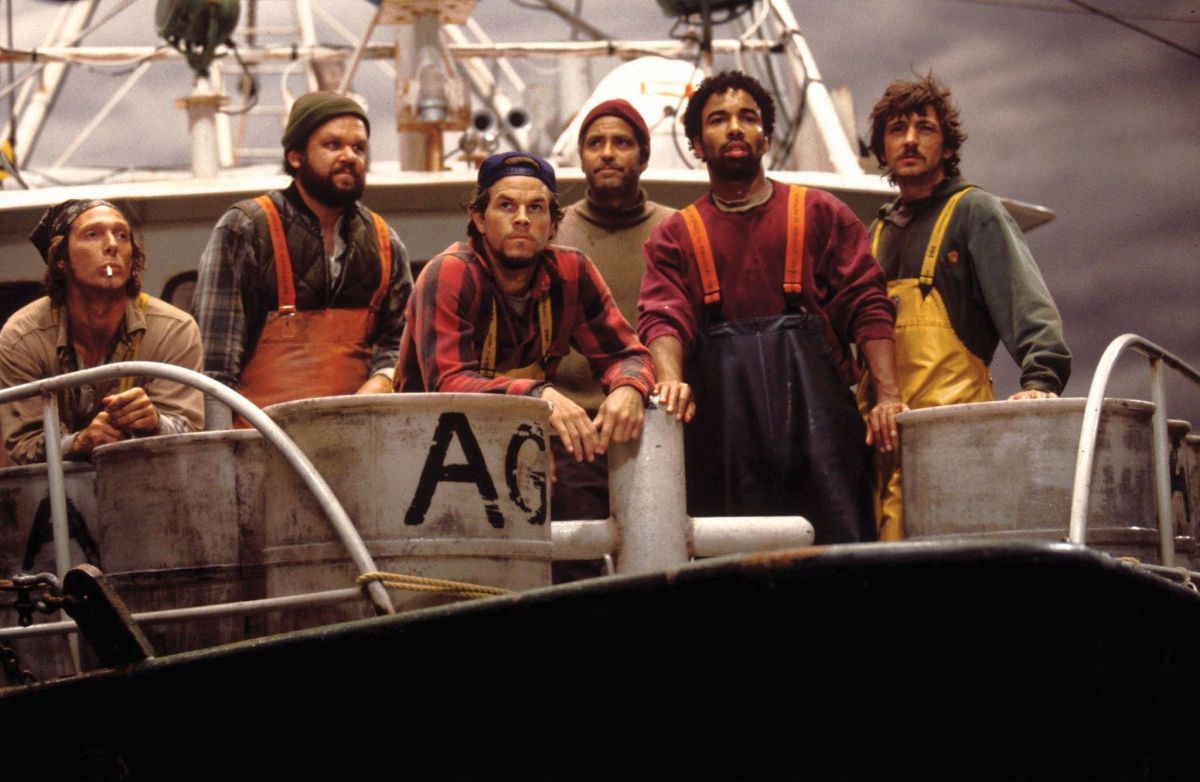
‘The Perfect Storm’ – Film Review and Analysis

“In the fantastic 2000 film, ‘The Perfect Storm’, you get to see what it is like to be a full-time swordfish boat captain and his crew out of Gloucester, Massachusetts, who rely on catching enough fish, and specifically big swordfish, to make ends meet.”

How far would you go to risk it all? If you had a family to provide for, a roof to keep over your head, or in need of enough money to make it through the next week or month, would you take up a livelihood that would often put your life at risk. If you are a fisherman or a fisherwoman especially those men and women who go hundreds or thousands of miles from home to do so, you know what it’s like to put your life at risk for your life’s work. In the fantastic 2000 film, ‘The Perfect Storm’, you get to see what it is like to be a full-time swordfish boat captain and his crew out of Gloucester, Massachusetts, who rely on catching enough fish, and specifically big swordfish, to make ends meet.

Whether or not you may be familiar with the lives of the fishermen and women who make catching fish their livelihoods, you cannot argue with how vital their jobs are to local economies like Gloucester. It’s not just Massachusetts but you consider the role fishing or crabbing or shrimping plays in states like Maine, Alaska, Louisiana, and elsewhere, which can provide a comfortable life for some while others struggle to make it depending on both the size and quality of their daily or weekly catch.

‘The Perfect Storm’ film, which is based upon a non-fiction novel of the same name, which was originally published in 1997 by talented American author Sebastian Junger, details the very rare occurrence in storm weather history from 1991, when a large-scale nor-easter or what’s known as an extratropical cyclone absorbed Hurricane Grace coming from off the coast of the southeastern United States. A lot of coastal damage and flooding occurred from this rare occurrence, but the worst effects happened to those vessels caught in between as the storms absorbed each other’s strength out in the north Atlantic.

Back in 1991, when technology was not as advanced, fishing boats did not have an advanced GPS and had to rely on old school maps, and did not have access to the latest weather reports. The one thing keeping them from being in the dark ages was an antenna and a fax allowing them to get reports via radio or from a machine. For the Andrea Gail fishing vessel, tragically, they were not able to avoid the worst of the ‘Perfect Storm’ and tragically, six men out of Gloucester lost their lives at the end of October 1991.

More than 24 years after the film’s release, it is considered maybe not as accurate to Junger’s book in terms of what were the last moments of the Andrea Gail or what the decision-making was like when Captain Frank William ‘Billy’ Tyne decided to go further out into the Flemish Cap beyond the Grand Banks where he and his crew usually fished in order to go above and beyond to bring back a catch that all of Gloucester would be able to appreciate.

While I admit that I have not read the book yet but hope to do so soon, ‘The Perfect Storm’ is one of those rare Hollywood disaster films that does not trivialize the risk that these men and women take to make a living as fishermen/women. ‘The Perfect Storm’ does a good job in fleshing out Billy Tyne and his five crew members, Robert ‘Bobby’ Shatford, Dale ‘Murph’ Murphy, David ‘Sully’ Sullivan, Michael ‘Bugsy’ Moran, and Alfred Pierre, and honors their memory by the actors who portray them such as George Clooney, Mark Wahlberg, and John C. Reilly.

The film sets up the story quite well including how a smaller than average catch or a lesser return on investment can put a strain on a captain and crew to go out sooner than they would want in the hopes that they can change their luck with the fishing ‘gods.’ It’s clear that these men and women are brave, bold, and love what they do regardless of the risk involved. They know the risk involved, are willing to do what it takes to feed their families and to put a roof over their heads, and even though the risks may outweigh the benefits, as Captain Billy Tyne says as part of the film’s opening monologue, “you know what? you’re a goddamn sword boat captain, is there anything better in the world?”

As ‘The Perfect Storm’ makes clear, this job is more than just a job, it’s a livelihood and a lifestyle for fishing communities like Gloucester, Massachusetts, which has had generations of fishermen for over four centuries since before the United States of America became a country. It is part of the identity of those towns and communities like Gloucester. When fishing is all that, you knew as a child from your parents, grandparents, and beyond, why wouldn’t it be what you attach your livelihood to as an adult?

In 1991, I’d imagine that the job itself had higher risk, but higher rewards given how lucrative it could be when the seas were not overfished or not as affected by climate change as they are now in 2024. The film does not judge the sword boat fishermen for the risks they make during that fateful period in late October 1991 because we will never hear from the six men who lost their lives then tragically.

We only have glimpses into their thought processes or the lack of information they had to make at the time. They not only had to contend with the stress of an ice machine breaking down, but also with not being able to fish as well in the Grand Banks, have an arrogant boss who owned the boat and was expecting them to deliver or face the consequences of losing their place on the Andrea Gail. A crew is also forced together in tight quarters for days or weeks at a time and they may end up disliking or fighting each other. There are also mishaps with a misplaced fishing trap, an errant wave casting a man overboard, or even catching an accidental shark that can harm or kill you if you are not careful.

Being a sword boat fisherman or woman is not for the weary or the weak-hearted. It is for sturdy, strong, and risk-takers who love what they do because they do what they love. It is not usually a job that you can get very wealthy from, but it can provide stability, a livelihood, and help you provide for your wife or husband or for a family if you do well enough. The film does an excellent job on not making the actors who play the six men of the Andrea Gail who lost their lives in ‘The Perfect Storm’ as caricatures but they really feel as they do exist and still exist today in terms of what they do for a living.

Their backgrounds, their motivations, their fears, and their doubts are fully fleshed out over the course of the film. The story is intriguing especially since it happened and was a tragic event in 1991 that affected millions of people in North America. We also think about how storms such as hurricanes are still with us today and are affecting people around the country regardless of if we believe that it can happen to us or not. We are always at the whims of mother nature, and we must realize that it’s important to be prepared for whatever it may throw at us regardless of if we are on land, sea, or air.

The men of the Andrea Gail knew that their job entailed risks, but they also knew that the love of the work, the livelihood and purpose it brought them, and how much it meant to others for what they did will help enshrine their memory in the hearts of their fellow Gloucester men and women forever as well as around the country and the world. Each man had love not just for the ocean, but also a love for their friends, family, and loved ones, which shines through in the film adaptation of ‘The Perfect Storm.’

One of the most beautiful parts of the film for me is when one of the youngest crewmen on the Andrea Gail, Robert ‘Bobby’ Shatform, who loses his life in the storm, tells his girlfriend Christina in a dream where she envisions him being there with her, for the last time, “Remember I’ll always love you, Christina, I’ll love you now, and I’ll love you forever. There’s no Goodbye, only love.”

The lives of the six men who were lost tragically at the end of October 1991 live on forever in the hearts and memories of the people they loved and for the lives they touched in Gloucester and elsewhere. The movie, ‘The Perfect Storm’ is a great tribute to who they were, what they did for a living, and the courageous and bold actions they took to make a living and to help feed others in that community and elsewhere with their lives as fishermen.

I hope you’ll watch this excellent film and read the book it’s based on as I hope to do so for the latter soon. Between an excellent cast, great story pacing, stirring music from the dearly departed composer James Horner, beautiful cinematography, and impactful visuals that have held up to this day almost 25 years later since the film’s original release, ‘The Perfect Storm’ is an excellent movie and one of my favorite films I’ve ever watched.

I’ll leave you with the entire portion of the excellent monologue from the film’s opening and closing scenes to describe the lived experience of being a fisherman or women out on the sea and the pure joy and peace it can bring them when they are heading out to the sea:
“The fog’s just lifting, you throw off your bowline, throw off your stern, you move out the South Channel, past Rocky Neck and Ten pound Island, past Niles Pond — where I skated as a kid — on to Black Bess Point, blow your airhorn, and throw a wave to the lighthouse keeper’s kid on Thatcher Island — then the birds arrive — Blackbacks and Herring Gulls, Big Dump Ducks and Green-Legged Coots. The sun hits you; you head north and open up to twelve — steaming now — the guys are busy and you’re in charge…And you know what? You’re a goddamn sword boat captain. Is there anything better in the world?”

‘Field of Dreams’ – Film Review and Analysis

terencemann
“Oh…People will come, Ray. People will most definitely come.”

Field of Dreams is a quintessential classic American film and a movie that gets better with repeated viewings. Field of Dreams is almost thirty years old but has aged like a fine wine since it was released in 1989. This film is a unique mixture of the fantasy, sports, and drama genres and shows how crucial the game of baseball is to American culture. While some people who watch Field of Dreams think that this film is an original story, it is actually based off a novel by W.P. Kinsella titled, ‘Shoeless Joe’, which was critically acclaimed as well.

Part of the reason why Field of Dreams was so successful is because of the great cast of actors and actresses that helped make the film so popular. This was one of Kevin Costner’s most famous roles and also stars Amy Madigan, James Earl Jones, Ray Liotta, and the late and legendary Burt Lancaster who starred in his final role in this movie. Another fact that most fans of this film wouldn’t know about is that Field of Dreams was nominated for three Academy Awards including Best Original Score, Best Adapted Screenplay and Best Picture.

Of all the places in the world to hear a voice whisper the phrase, “If you build it, he will come…” a large cornfield in the middle of Iowa wouldn’t be your first guess most likely. However, that is exactly the premise behind Field of Dreams. A local farmer, Ray Kinsella, who has a troubled relationship with his father, John Kinsella, a former baseball player who wanted his son to follow in his footsteps feels guilt at what a strained relationship he had with his father before he passed away.

Ray then sees a vision of his cornfield being turned into a baseball field and decides to go along with this vision by turning his farm into a real baseball field. Ray is an adamant defender of ‘Shoeless’ Joe Jackson who believes he was actually innocent and didn’t do anything wrong despite the fact that he was banned from baseball due to the 1919 Black Sox Scandal. Ray’s father, John, was also a big defender of ‘Shoeless’ Joe Jackson and that’s the one major thing that Ray and his father could agree upon. His daughter, Karin, and his wife, Annie, are skeptical of Ray’s plan to build a baseball field at first but end up trusting his judgment after some convincing.

After Ray completes the building of his baseball field in Iowa, many months go by and the bills for maintaining the field start to pile up causing Ray and his family to feel some serious financial stress. When all hope seems to be lost regarding his vision, Karin spots a baseball player moving through the baseball field one night and Ray recognizes the player as being no one other than ‘Shoeless’ Joe Jackson (played brilliantly by Ray Liotta). John, Ray’s father was a big fan of ‘Shoeless’ Joe Jackson and would be thrilled to know that Ray’s vision came true and Mr. Jackson was here out on his farm in Iowa absolutely thrilled to being playing baseball again. Shoeless Joe ends up bringing some of his teammates from the Black Sox who were also banned from baseball due to the 1919 scandal and they start practicing together on Ray’s field.

Unfortunately, not everyone in Ray’s family can see the baseball players on the field. Ray’s brother-in-law, Mark, warns Ray about how much of a financial drain the baseball field is on his farm and Ray may have to foreclose on the property unless he is able to generate some money from it. Mark thinks Ray has gone crazy because he keeps referencing the baseball players on the field who Mark is unable to see. Luckily, Ray’s wife, Annie, and Ray’s daughter Karin can see the baseball players and believe Ray to be doing the right thing leaving Mark quite flustered and angry.

Ray ends up hearing another voice whisper through the field telling Ray to ‘ease his pain.’ After seeing how the local town wants to ban the books of one of his favorite authors from the 1960’s, Terence Mann, Ray ends up doing some more research about his favorite author and discovers that one of Mann’s dreams was to play for the Brooklyn Dodgers professionally. One of the reasons why Ray ended up quitting baseball even though his father wanted him to play professionally was because he read one of Terence Mann’s books when he was a teenager and never played catch with his father, John, again.

Ray and Annie both have a dream about Mr. Mann one night in which Ray is attending a baseball game at Fenway Park together with Terence. With Annie’s support, Ray goes all of the way to Boston to seek out Mr. Mann even though he has become a curmudgeon recluse over the past few decades and mainly keeps to himself. With a lot of convincing, Ray takes Terence to a baseball game at Fenway where they both end up hearing another voice telling the two of them to ‘go the distance.’ They also see the statistics of a baseball played of Archibald ‘Moonlight’ Graham who starred in only one game for the New York Giants but never had an actual at-bat. Ray and Mr. Mann do more research about Graham and end up driving together on their way to Minnesota to go see him.

When Ray and Mr. Mann travel all the way to Minnesota, they realize that Moonlight Graham became a doctor and had passed away over fifteen years ago in 1972. When Ray goes for a walk one evening, he realizes that he has transported himself to that time before Moonlight ‘Archie’ Graham had died and encounters him on the street where they have a conversation about his short-lived baseball career. The older Moonlight Graham is content to be a doctor but wishes for that one chance to face a major league pitcher.

After Ray and Terence leave Minnesota, they encounter a young hitchhiker on the road who introduces himself as Archie Graham. The two of them are amused by this crazy coincidence and take him with them to Iowa. During the ride, Ray confides in Terence Mann that his father was disappointed in Ray for throwing away his baseball career and for denouncing his father’s hero, ‘Shoeless’ Joe Jackson as a criminal. One of Mr. Mann’s books led to Ray putting down the baseball bat as well. Ray really wishes to make up with his father and make things right again if he had a dream to spare.

The amazing thing is that this young Archie Graham character gets to play on Ray’s baseball field in Iowa. In this only “major league” play, he is able to hit the ball into the outfield and get a sacrifice fly run in for his team miraculously after winking at the opposing pitcher as he always wanted to do even as an old man. Facing financial pressure from Mark and his associates, Ray thinks about selling the field to save his farm but Terence Mann encourages Ray to re-consider.

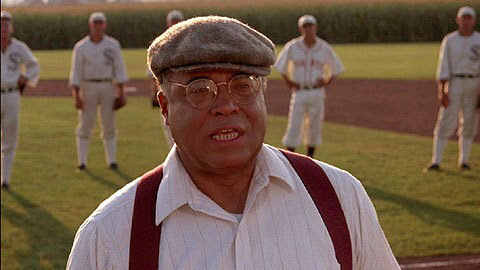
Considered to be one of the greatest monologues in modern film, James Earl Jones gives an amazing speech regarding the central role that baseball has played as America’s pastime and how it has formed our culture, and made the nation stronger during times of peril and tragedy. “People will come, Ray, people will most definitely come…” Terence Mann’s beautiful speech to Ray convinces him to keep the baseball field and not sell it off because he knows that baseball fans will come to Iowa to see their childhood heroes play America’s beloved game.

Mark, acting increasingly incensed, causes Ray’s daughter, Karin to fall from the bleaches, but Archie Graham who has a sense of both his past and future to come, steps off this magic baseball field to save Karin from choking. Mark then becomes a believer and sees all of these historical baseball players and encourages Ray not to sell the baseball field. He most likely believes that the field could be a major cash crop within itself and that people will most definitely come to see it. The older Moonlight Graham thanks Ray for the chance to make his dream to come true and that he doesn’t regret how he became a doctor too.

Terence is invited to leave with the baseball players one day to go through the cornfields to a destination that is unknown. Ray is going to miss Terence but trusts his judgment that it could ‘make one hell of a story one day’ about ‘Shoeless Joe Jackson coming to Iowa.’ Ray has his own family and can’t go with Terence who may be entering a realm or destination beyond our comprehension as the audience. Still though, he’s confident about his next destination and isn’t worried about not coming back.

One day, A younger version of Ray’s father shows up on the baseball field and Shoeless Joe Jackson references that the voice in Ray’s head was not Joe’s but rather Ray himself wanting to have a better relationship with his father and to ‘ease his pain.’ In the climatic scenes that can make even the most stone-hearted person cry, John is reunited with his son, Ray, on the baseball field, and he even gets introduced to Ray’s wife and his granddaughter, Karin, who he never knew in life.

John Kinsella remarks to Ray how “it’s so beautiful here, it’s like a dream come true.” The young John, asks Ray if this is heaven. Ray replies simply that, “It’s Iowa.” Even though John believes it still could be heaven, Ray asks if there is a heaven having never experienced it. John replies, “Oh yeah…it’s the place where dreams come true.” An uplifting emotional moment takes place in this scene as Ray Kinsella looks around at his beautiful farm, his wife and daughter happy and smiling, and to be reunited with his estranged father again as being a sign that maybe they, in fact, are all in heaven together.

Ray is so overcome with emotions at being with John again that before John leaves to go through the cornfields as the sun sets, he strikes up the courage to ask his dad to have a catch with him as they did in the old days. They start to throw to each other and Ray is struggling to believe that this is actually happening until John throws him the baseball, which Ray catches in his glove, and he can actually feel the soft baseball in his mitt knowing that his dream finally came true.

This last scene of ‘Field of Dreams’ is an iconic one and shows the power and love of the relationship of a father and son. Despite their differences, they still want to share the tradition of having a catch together after all of those years had passed between them. As the final scene fades out, you can see thousands of red lights emanating from the cars who are lining up to visit the ‘Field of Dreams’ and see their old childhood heroes play the game of baseball. People most definitely will come if you build it.

A truly remarkable film, ‘Field of Dreams’ is hard to get through without tearing up and having some tissues near you. More so than just Ray and John’s relationship, many characters have their dreams realized because of this baseball field. Archie ‘Moonlight’ Graham gets to swing the bat for the first time, ‘Shoeless’ Joe Jackson gets to play baseball again as apart of his shamed Black Sox team, and Terence Mann gets to see what’s on the other side of those Iowa cornfields. The powerful musical score by the dearly departed James Horner stirs your emotions with every scene, and you can feel the weight of Ray and John’s relationship with each sound of the orchestra. James Earl Jones steals the show by giving one of the best monologues about baseball and its’ importance within the history of America.

If you love the game of baseball and you enjoy a story about achieving your dreams when they seem out of reach, then you should watch ‘Field of Dreams.’ They really don’t make too many Hollywood films like Field of Dreams anymore and even though it was released in 1989, it’s still an American classic, which has stood the test of time. If you ever go to Iowa, that special baseball field is still there to visit. If you’re a father or a son, you’ll also really connect with this film and it will touch you in your heart and in your soul.