

‘Springsteen: Deliver Me From Nowhere’ – Film Review and Analysis

“What I enjoyed about ‘Springsteen: Deliver Me from Nowhere’ (directed by Scott Cooper) is that for a biographical film, it really does dive into the effects of fame, expectations, struggling with one’s past, and reconciling it with a future very much unlike where you once came from.”

Everyone knows who Bruce Springsteen is by now, the Rock superstar and legend who has produced over twenty studio albums, won dozens of awards, and sold out shows over many decades. He is the extrovert’s extrovert on the stage producing marathon 3 ½ – 4 hour live shows with the powerful energy and stamina of a man half or one third of his age (Springsteen is 76 as of this writing). What I enjoyed about ‘Springsteen: Deliver Me from Nowhere’ (directed by Scott Cooper) is that for a biographical film, it really does dive into the effects of fame, expectations, struggling with one’s past, and reconciling it with a future very much unlike where you once came from.

‘Springsteen: Deliver Me from Nowhere’, the film has excellent source material in the book of the same name mostly due to interviews with the man (i.e. Springsteen) himself in the book, previously released in 2023 by author Warren Zanes. I highly recommend reading the book before seeing the movie to get a fuller picture of how Springsteen’s unlikely first solo album came to be in 1982. While the movie takes some time away for some side plots not related to the album’s making, it does do justice to how ‘Nebraska’ came to be and how it almost got completely derailed. The romantic subplot, while competently acted, feels tacked on and somewhat distracting from the core narrative. I found myself wishing the film had dedicated more screen time to the mechanics and mindset behind Nebraska’s creation as the book had done that it is based on; its stark originality is one of the most fascinating aspects of Springsteen’s career, and the film sometimes glides past that too quickly and not deeply enough.

Commercial success puts a lot of pressure on any musician and even Bruce Springsteen was exhausted both mentally and physically from ‘The River’ tour with his first taste of super stardom. It’s hard to top that kind of album so his decision after the tour to seek some peace and quiet at a rental home in Colts Neck, New Jersey seems like a good step to get the writing process started again. In the film, Bruce seems introverted almost to a fault when he gets off stage, must sit by himself to have some quiet and enjoy the peace of his dry towel hanging over his head.

While he responds warmly to fans and to his love interest especially during his guest set at The Stone Pony in Asbury Park, you still sense he’s caught between who he was and who fame is forcing him to become. I enjoyed how the film shows that he is battling himself at times in terms of what direction to take his life on top of his unresolved issues of his past highlighted by his turbulent relationship with his father (played by the great Stephen Graham). Even when you’re popular and famous for your music, sometimes anyone would want to do, including Bruce, is to isolate oneself for a while and be somewhere where you aren’t recognized or don’t want to be recognized. Bruce wants to focus on his musical range and channel his creativity away from the record executives’ wants, away from the band, and perhaps away from everyone.

Jeremy Allen White nails the role, embodying Springsteen’s physical stillness, haunted expressions, and the restless mind of a young artist wrestling with ideas he doesn’t yet fully understand. Being able to master guitar playing, the singing, the panic of not knowing who he is at times and searching for lyrics and the meaning behind them are tall tasks for any actor to convince an audience of and Jeremy nails it throughout the film. White’s performance works because he understands Springsteen not just physically but emotionally: a rising star caught between inspiration and uncertainty, trying to decode the meaning of his own lyrics as he writes them.

Coming up with an album different than anything you’ve ever done before takes time, effort, and introspection, which helps Bruce to look for movies, books, and stories that help create the theme for what Nebraska becomes. While Bruce and the E Street Band are shown in the film as a tight band, hitting on all cylinders, and creating great music for their own album, Bruce feels passionately about making something of his own and letting it not be changed or influenced beyond what he put together in an upstairs bedroom of his rental house on a simple four track cassette. Even in the early 1980s, technology could have given Nebraska a cleaner, more polished sound. But Springsteen refused to smooth out the edges. He believed the atmosphere, imperfections, and claustrophobic intimacy of the demos were the very thing that made the album special.

In both the book and the recent film, Springsteen is not afraid of Nebraska failing or his other music not being well received. Rather, he is afraid of how not to crack up from what is haunting him internally. Money, fame, and a bright future do not make him whole, and being able to carve out your own identity, deal with your past wisely, and find a way to deal with depression in a healthy manner takes time, support, and sometimes admitting when you need to seek help.

Luckily, Bruce has a loyal manager, Jon Landau (played by Jeremy Strong) who is more than looking out for making money off the next hit Springsteen album. He shows that he cares for Bruce as a person and more importantly as a dear friend and wants what’s best for him, even if Nebraska is not the album he would have hoped to promote or the kind of musical direction, he wants from Bruce either. Landau wants Bruce to find inner peace and happiness more than just fame, success, and wealth, which not every manager wants for their star.

Bruce, like the characters in Nebraska, are imperfect people in an imperfect world, and even if the stories are ghostly, gruesome, or unpolished, like the album, they must be told and given room to breathe. Even from great solitude and from introversion, Bruce’s personal struggle in that time led to one of his best albums and is still being covered and listened to over forty years later. Nebraska wasn’t built for radio or for Top 10 charts, even if it did outperform expectations, but it was built for truth and showed the underbelly of hard lives and harder circumstances. Bruce’s childhood and dealing with his past are covered in the film and you get the sense that there would be no Nebraska if the artist hadn’t any struggles in life or not been tested by family or by fame or by his search for the next song.

‘Deliver Me from Nowhere’ isn’t just a book or a film. It’s a reminder that even legends hit that crossroads where success, identity, and truth collide. It’s a thoughtful, beautifully acted portrait of an artist wrestling with his past to shape his future. For Springsteen fans, it adds new insight into one of his most daring albums; for newcomers, it’s an unforgettable introduction to the man behind the myth. Nebraska was never meant for radio or music videos; it was meant for honesty and truth-telling. More than forty years later after this album first came out, that honesty still cuts through all the noise.

‘Mystic River’ – Film Review and Analysis

“This book-to-film adaptation, praised for its emotional intensity and thematic complexity, remains one of Eastwood’s most acclaimed directorial efforts to this day. Mystic River is a powerful combination of stellar performances, masterful direction, evocative cinematography, and a carefully crafted screenplay making the film a standard bearer of cinematic storytelling.”

Mystic River, directed by Clint Eastwood in 2003 and starring an amazing cast including Sean Penn, Kevin Bacon, and Tim Robbins, is an intricate and darkly intense film that has left a lasting impact on audiences and critics alike since it first came out in theaters over two decades ago. Based on Dennis Lehane’s novel of the same name, the film explores deep themes of trauma, guilt, vengeance, and the ways in which past experiences haunt the present and future. This book-to-film adaptation, praised for its emotional intensity and thematic complexity, remains one of Eastwood’s most acclaimed directorial efforts to this day. Mystic River is a powerful combination of stellar performances, masterful direction, evocative cinematography, and a carefully crafted screenplay making the film a standard bearer of cinematic storytelling.

The plot begins in a working-class Boston neighborhood, not too far from the Mystic River, and centers on three childhood friends: Jimmy Markum (Sean Penn), Sean Devine (Kevin Bacon), and Dave Boyle (Tim Robbins). As young boys, the trio spends their days together, playing stick ball, hockey, exploring the neighborhood, and strengthening their bond as friends. However, one traumatic incident forever changes their lives, marking them all in ways that will resonate through their adult years. Decades later, their lives intertwine once more when Jimmy’s teenage daughter, Katie, is found murdered, prompting a deep and painful investigation into both the current crime and the unresolved scars of the past for each of the three main characters.

Set against the gritty, blue-collar backdrop of Eastwood’s Boston, the environment reflects the rough and bleak outlook shared by many of the characters, most of whom never left the neighborhood as adults. This urban setting becomes almost a character, embodying a sense of entrapment and suffocation and what ifs. Eastwood and the film’s cinematographer, Tom Stern, create a cold, foreboding atmosphere that mirrors the psychological darkness of the characters. The use of shadows and natural light throughout the film provides an eerily realistic tone, further immersing the audience in the story’s weighty themes. As a film, Mystic River, sets itself apart by giving each character room to grow and develop over the course of the two and half hours of screentime. Each of them has a unique backstory despite the overlap and they each have their own personal scars and demons to bear.

To understand the film better as an audience, we must go through each character’s backstory, motives, and circumstances:

  1. Jimmy Markum (Sean Penn) – Jimmy is a reformed ex-convict who did two years in prison who now runs a local convenience store. He’s fiercely loyal to his family, especially his beloved daughter, Katie, who he has tried to shield her from his checkered past. His character is marked by a volatile personality and a deeply ingrained sense of loyalty, one that can easily turn to vengeance, if provoked. This trait becomes particularly apparent when Katie’s murder brings his hidden rage and pain to the surface. Penn’s portrayal of Jimmy is raw and gut-wrenching; he conveys a sense of intense, bottled-up pain that feels as if it could erupt at any moment at any one person who he is feels is responsible or partly responsible for her murder. Jimmy’s background as a former criminal, his letting his emotions cloud his judgment, and the rawness of the recent loss of his daughter drive much of his actions, adding layers of complexity to his character.
  2. Sean Devine (Kevin Bacon) – Sean, one of Jimmy and Dave’s friends, is now a detective with the Massachusetts State Police who is investigating Katie’s murder, and his ties to Jimmy and Dave complicate the case. Although he’s become more distant over the years from both men, Sean feels a sense of duty and friendships to bring closure to Katie’s murder and perhaps, in turn, to his own fractured past. His unresolved feelings about the childhood trauma shared by him, Jimmy, and Dave gives his character a detached yet conflicted edge. Kevin Bacon’s performance as Sean is understated but poignant, particularly as Sean grapples with the uncomfortable ties between his childhood friendships and the demands of justice. Sean’s role in the story is not just as a detective but as someone attempting to reconcile his past with his present responsibilities. During the film, we also give glimpses into Sean’s present struggles with an estranged spouse and his own personal turmoil surrounding his commitment to his job as detective, which may have led him astray from the woman he loves.
  3. Dave Boyle (Tim Robbins) – Dave is the most visibly affected by the traumatic events of his childhood because he is the one who was physically and emotionally abused until he escaped from the nightmare one day, and Robbins’ portrayal of a victim of child abuse is haunting. As a result of the childhood abduction and abuse, Dave is marked by a pervasive sadness and paranoia that set him apart from others including Jimmy and Sean. Married with a son now, he still struggles with feelings of inadequacy, unresolved trauma, and the psychological scars left by his past. His character raises questions about the psychological ramifications of unresolved trauma, and Robbins plays Dave with a quiet and unsettling vulnerability as he is a boy trapped in a man’s body who never got to really grow up into what he wanted to be. This kind of trauma and sadness culminates in behavior that others in the film including his wife interpret as suspicious, especially as Sean’s investigation of Katie’s murder begins to close in around him. Dave’s struggle for normalcy and acceptance is central to the film’s portrayal of trauma and his seeking redemption for what had happened to him in the past, through no fault of his own.
  4. Celeste Boyle (Marcia Gay Harden) – Celeste, Dave’s wife, represents the emotional turmoil that affects loved ones in the wake of trauma. Marcia Gay Harden’s portrayal brings depth to the character of Celeste, illustrating the complexity of being married to a man who is emotionally distant and troubled. Her suspicions and insecurities about Dave’s behavior create tension within their marriage, which becomes another focal point in the larger mystery of what Dave was doing on the night of Katie’s murder. Through Celeste, the film explores how the impact of trauma reverberates through relationships, and her doubts contribute to the suspense as she becomes uncertain of Dave’s innocence.

The thematic core of Mystic River lies in its exploration of personal trauma and its long-lasting effects on those around the affected person. Eastwood skillfully illustrates how the characters’ pasts influence their present, emphasizing the psychological toll of unhealed wounds. The trauma of Dave’s abduction and abuse is a powerful throughline, shaping his entire personality and decisions, and is indirectly responsible for the fractures in his relationships, friendships, and the suspicions cast upon him, whether justified or not. The themes of guilt and retribution are intricately woven into the story, particularly through Jimmy’s character, as he vacillates between his roles as a loving father and a man haunted by his own past mistakes and violent tendencies.

The film also dives into the notion of justice, both formal and informal, in our world. Sean’s role as a Massachusetts State Police detective represents the lawful pursuit of justice, yet the lack of resolution to certain aspects of his past shows how incomplete the law can be in addressing psychological scars, especially in a community where the lawful pursuit of justice is looked upon with skepticism especially by Jimmy. Jimmy, on the other hand, seeks a more personal form of justice, operating on a visceral level almost as a vigilante for Katie and the community who were also affected by her loss, guided by his own sense of right and wrong. This contrast between official justice and personal retribution forms one of the central tensions in the film and between Jimmy and Sean, estranged friends who are brought back together because of Katie’s murder.

Mystic River subtly but powerfully engages with a subtle theme tied to the Catholic Church and refers to one of Dave’s abusers in the early part of the film’s plot. This also is shown in the film particularly in the Catholic Church’s allusions to the trauma and secrecy that have historically been associated with the institution, especially around issues of child abuse. Although the film does not explicitly delve into the church’s scandals, the storyline of Dave’s childhood abduction and abuse parallels the real-life abuse scandals within the Catholic Church that would become a dominant public conversation in the years following the film’s release in 2003. The film portrays the silence, guilt, and repression surrounding trauma for abuse victims, especially for male victims, in ways that align with the complex and devastating effects of institutional abuse later revealed in widespread reports that came out in the 2000s and 2010s.

Eastwood’s sensitive handling of these themes amplifies the emotional impact of the film, allowing Mystic River to serve as a quiet commentary on the long-lasting scars left by abuse, trauma, and lives that could have been different. The cultural resonance of the film deepened as these themes became more publicly discussed, especially with the Boston Archdiocese scandal coming to light just months before the movie’s release and other subsequent revelations about abuse within the Catholic Church. The film’s nuanced portrayal of silence and trauma thus became eerily relevant, mirroring real-world struggles for justice, accountability, and healing.

Eastwood’s direction in Mystic River is marked by a disciplined, almost minimalist style that avoids sensationalism or quick cuts and jumps. His choice is to keep the film grounded in the characters’ experiences, which creates an immersive atmosphere, allowing the audience to connect deeply with each character’s journey because they are fully fleshed out individuals by the end of the film to us. By focusing on small, authentic details—the cold, grim environment, the weathered textures of Boston’s streets, and the understated settings within homes and local establishments in the neighborhoods surrounding the Mystic River, Eastwood crafts a world that feels palpably real and one we can believe in as viewers.

Cinematographer Tom Stern contributes to this atmosphere by using a muted color palette dominated by grays, blues, and other cold tones, mirroring the bleak outlooks of the characters and their surroundings. The naturalistic lighting helps underscore the characters’ emotional states, with shadows and half-lit scenes, hinting at hidden secrets and unresolved traumas. The camera work is frequently restrained, using lingering shots that capture subtle shifts in the actors’ expressions, allowing their performances to be the focal point of each scene.

As an adaptation, Mystic River succeeds largely because of Brian Helgeland’s screenplay, which translates Lehane’s complex narrative into a visually evocative and emotionally rich script. Helgeland captures the essence of the novel’s psychological tension and moral ambiguity without resorting to heavy exposition, instead allowing the characters’ actions and interactions to reveal their deeper motivations and conflicts. The adaptation retains the novel’s depth by focusing on character development rather than plot mechanics, preserving the source material’s thematic weight.

The film’s pacing, controlled by Eastwood’s direction, also serves the adaptation well even at two and a half hours long in length. Rather than racing toward revelations, the narrative unfolds gradually, mirroring the pace of real life in how trauma is dealt with and the need for closure. This approach preserves the novel’s introspective tone, making it not just a crime thriller but a meditation on human resilience, the search for true justice, and the impact of unresolved pain.

Mystic River stands out as a masterclass in adapted screenwriting, direction, and performance. It is perhaps one of the greatest films in this young 21st century as well. Eastwood’s subtle yet unrelenting vision creates a haunting atmosphere that perfectly matches Lehane’s themes of trauma, revenge, and the flawed pursuit of justice. The ensemble cast delivers compelling performances, each actor bringing depth to their own character’s unique struggles and inner turmoil. With Stern’s atmospheric cinematography, the gritty Boston setting feels almost oppressive, creating a visual landscape as intense as the narrative itself.

Through its slow-burn approach, Mystic River probes deeply into the characters’ psyches and decisions, making the experience both unsettling and profoundly affecting. The result is a powerful film that not only respects its source material but elevates it, offering a cinematic experience that explores the human capacity for both destruction and redemption. Eastwood’s restrained direction, combined with the richness of Lehane’s story, makes Mystic River a film that resonates long after the final frame comes to an end.

‘The Perfect Storm’ – Film Review and Analysis

“In the fantastic 2000 film, ‘The Perfect Storm’, you get to see what it is like to be a full-time swordfish boat captain and his crew out of Gloucester, Massachusetts, who rely on catching enough fish, and specifically big swordfish, to make ends meet.”

How far would you go to risk it all? If you had a family to provide for, a roof to keep over your head, or in need of enough money to make it through the next week or month, would you take up a livelihood that would often put your life at risk. If you are a fisherman or a fisherwoman especially those men and women who go hundreds or thousands of miles from home to do so, you know what it’s like to put your life at risk for your life’s work. In the fantastic 2000 film, ‘The Perfect Storm’, you get to see what it is like to be a full-time swordfish boat captain and his crew out of Gloucester, Massachusetts, who rely on catching enough fish, and specifically big swordfish, to make ends meet.

Whether or not you may be familiar with the lives of the fishermen and women who make catching fish their livelihoods, you cannot argue with how vital their jobs are to local economies like Gloucester. It’s not just Massachusetts but you consider the role fishing or crabbing or shrimping plays in states like Maine, Alaska, Louisiana, and elsewhere, which can provide a comfortable life for some while others struggle to make it depending on both the size and quality of their daily or weekly catch.

‘The Perfect Storm’ film, which is based upon a non-fiction novel of the same name, which was originally published in 1997 by talented American author Sebastian Junger, details the very rare occurrence in storm weather history from 1991, when a large-scale nor-easter or what’s known as an extratropical cyclone absorbed Hurricane Grace coming from off the coast of the southeastern United States. A lot of coastal damage and flooding occurred from this rare occurrence, but the worst effects happened to those vessels caught in between as the storms absorbed each other’s strength out in the north Atlantic.

Back in 1991, when technology was not as advanced, fishing boats did not have an advanced GPS and had to rely on old school maps, and did not have access to the latest weather reports. The one thing keeping them from being in the dark ages was an antenna and a fax allowing them to get reports via radio or from a machine. For the Andrea Gail fishing vessel, tragically, they were not able to avoid the worst of the ‘Perfect Storm’ and tragically, six men out of Gloucester lost their lives at the end of October 1991.

More than 24 years after the film’s release, it is considered maybe not as accurate to Junger’s book in terms of what were the last moments of the Andrea Gail or what the decision-making was like when Captain Frank William ‘Billy’ Tyne decided to go further out into the Flemish Cap beyond the Grand Banks where he and his crew usually fished in order to go above and beyond to bring back a catch that all of Gloucester would be able to appreciate.

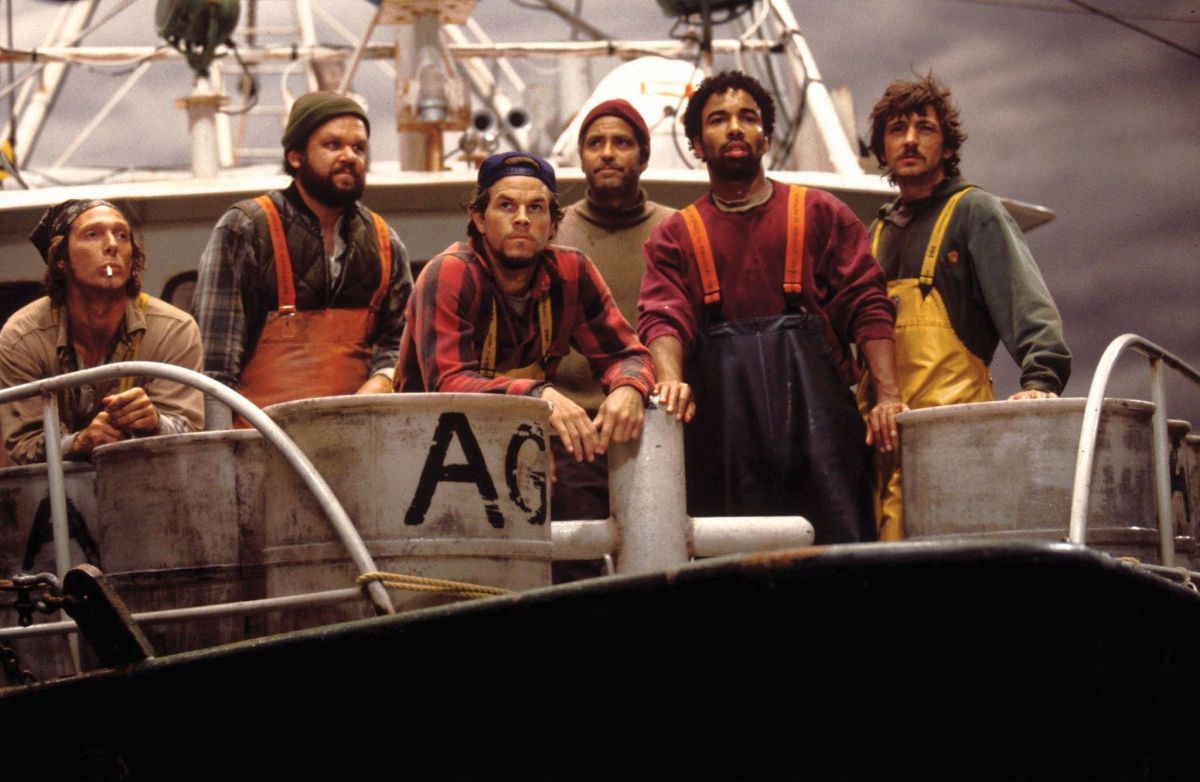
While I admit that I have not read the book yet but hope to do so soon, ‘The Perfect Storm’ is one of those rare Hollywood disaster films that does not trivialize the risk that these men and women take to make a living as fishermen/women. ‘The Perfect Storm’ does a good job in fleshing out Billy Tyne and his five crew members, Robert ‘Bobby’ Shatford, Dale ‘Murph’ Murphy, David ‘Sully’ Sullivan, Michael ‘Bugsy’ Moran, and Alfred Pierre, and honors their memory by the actors who portray them such as George Clooney, Mark Wahlberg, and John C. Reilly.

The film sets up the story quite well including how a smaller than average catch or a lesser return on investment can put a strain on a captain and crew to go out sooner than they would want in the hopes that they can change their luck with the fishing ‘gods.’ It’s clear that these men and women are brave, bold, and love what they do regardless of the risk involved. They know the risk involved, are willing to do what it takes to feed their families and to put a roof over their heads, and even though the risks may outweigh the benefits, as Captain Billy Tyne says as part of the film’s opening monologue, “you know what? you’re a goddamn sword boat captain, is there anything better in the world?”

As ‘The Perfect Storm’ makes clear, this job is more than just a job, it’s a livelihood and a lifestyle for fishing communities like Gloucester, Massachusetts, which has had generations of fishermen for over four centuries since before the United States of America became a country. It is part of the identity of those towns and communities like Gloucester. When fishing is all that, you knew as a child from your parents, grandparents, and beyond, why wouldn’t it be what you attach your livelihood to as an adult?

In 1991, I’d imagine that the job itself had higher risk, but higher rewards given how lucrative it could be when the seas were not overfished or not as affected by climate change as they are now in 2024. The film does not judge the sword boat fishermen for the risks they make during that fateful period in late October 1991 because we will never hear from the six men who lost their lives then tragically.

We only have glimpses into their thought processes or the lack of information they had to make at the time. They not only had to contend with the stress of an ice machine breaking down, but also with not being able to fish as well in the Grand Banks, have an arrogant boss who owned the boat and was expecting them to deliver or face the consequences of losing their place on the Andrea Gail. A crew is also forced together in tight quarters for days or weeks at a time and they may end up disliking or fighting each other. There are also mishaps with a misplaced fishing trap, an errant wave casting a man overboard, or even catching an accidental shark that can harm or kill you if you are not careful.

Being a sword boat fisherman or woman is not for the weary or the weak-hearted. It is for sturdy, strong, and risk-takers who love what they do because they do what they love. It is not usually a job that you can get very wealthy from, but it can provide stability, a livelihood, and help you provide for your wife or husband or for a family if you do well enough. The film does an excellent job on not making the actors who play the six men of the Andrea Gail who lost their lives in ‘The Perfect Storm’ as caricatures but they really feel as they do exist and still exist today in terms of what they do for a living.

Their backgrounds, their motivations, their fears, and their doubts are fully fleshed out over the course of the film. The story is intriguing especially since it happened and was a tragic event in 1991 that affected millions of people in North America. We also think about how storms such as hurricanes are still with us today and are affecting people around the country regardless of if we believe that it can happen to us or not. We are always at the whims of mother nature, and we must realize that it’s important to be prepared for whatever it may throw at us regardless of if we are on land, sea, or air.

The men of the Andrea Gail knew that their job entailed risks, but they also knew that the love of the work, the livelihood and purpose it brought them, and how much it meant to others for what they did will help enshrine their memory in the hearts of their fellow Gloucester men and women forever as well as around the country and the world. Each man had love not just for the ocean, but also a love for their friends, family, and loved ones, which shines through in the film adaptation of ‘The Perfect Storm.’

One of the most beautiful parts of the film for me is when one of the youngest crewmen on the Andrea Gail, Robert ‘Bobby’ Shatform, who loses his life in the storm, tells his girlfriend Christina in a dream where she envisions him being there with her, for the last time, “Remember I’ll always love you, Christina, I’ll love you now, and I’ll love you forever. There’s no Goodbye, only love.”

The lives of the six men who were lost tragically at the end of October 1991 live on forever in the hearts and memories of the people they loved and for the lives they touched in Gloucester and elsewhere. The movie, ‘The Perfect Storm’ is a great tribute to who they were, what they did for a living, and the courageous and bold actions they took to make a living and to help feed others in that community and elsewhere with their lives as fishermen.

I hope you’ll watch this excellent film and read the book it’s based on as I hope to do so for the latter soon. Between an excellent cast, great story pacing, stirring music from the dearly departed composer James Horner, beautiful cinematography, and impactful visuals that have held up to this day almost 25 years later since the film’s original release, ‘The Perfect Storm’ is an excellent movie and one of my favorite films I’ve ever watched.

I’ll leave you with the entire portion of the excellent monologue from the film’s opening and closing scenes to describe the lived experience of being a fisherman or women out on the sea and the pure joy and peace it can bring them when they are heading out to the sea:
“The fog’s just lifting, you throw off your bowline, throw off your stern, you move out the South Channel, past Rocky Neck and Ten pound Island, past Niles Pond — where I skated as a kid — on to Black Bess Point, blow your airhorn, and throw a wave to the lighthouse keeper’s kid on Thatcher Island — then the birds arrive — Blackbacks and Herring Gulls, Big Dump Ducks and Green-Legged Coots. The sun hits you; you head north and open up to twelve — steaming now — the guys are busy and you’re in charge…And you know what? You’re a goddamn sword boat captain. Is there anything better in the world?”