

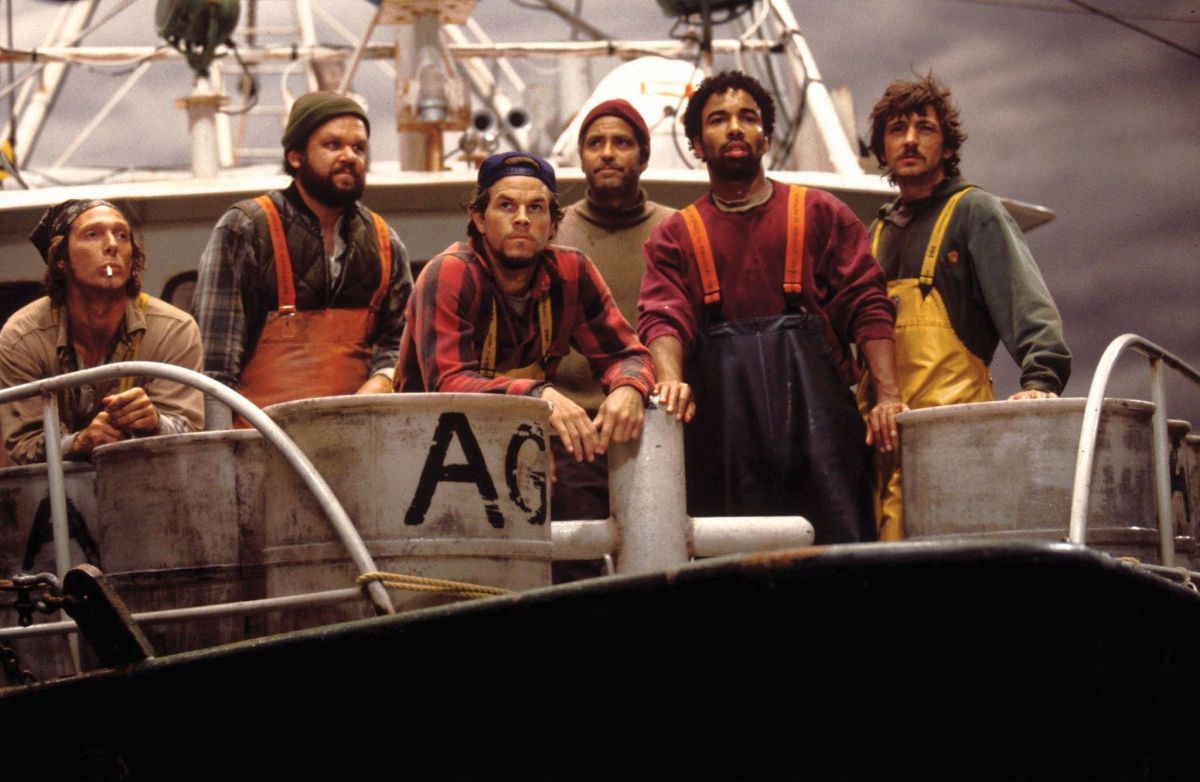
‘The Perfect Storm’ – Film Review and Analysis

“In the fantastic 2000 film, ‘The Perfect Storm’, you get to see what it is like to be a full-time swordfish boat captain and his crew out of Gloucester, Massachusetts, who rely on catching enough fish, and specifically big swordfish, to make ends meet.”

How far would you go to risk it all? If you had a family to provide for, a roof to keep over your head, or in need of enough money to make it through the next week or month, would you take up a livelihood that would often put your life at risk. If you are a fisherman or a fisherwoman especially those men and women who go hundreds or thousands of miles from home to do so, you know what it’s like to put your life at risk for your life’s work. In the fantastic 2000 film, ‘The Perfect Storm’, you get to see what it is like to be a full-time swordfish boat captain and his crew out of Gloucester, Massachusetts, who rely on catching enough fish, and specifically big swordfish, to make ends meet.

Whether or not you may be familiar with the lives of the fishermen and women who make catching fish their livelihoods, you cannot argue with how vital their jobs are to local economies like Gloucester. It’s not just Massachusetts but you consider the role fishing or crabbing or shrimping plays in states like Maine, Alaska, Louisiana, and elsewhere, which can provide a comfortable life for some while others struggle to make it depending on both the size and quality of their daily or weekly catch.

‘The Perfect Storm’ film, which is based upon a non-fiction novel of the same name, which was originally published in 1997 by talented American author Sebastian Junger, details the very rare occurrence in storm weather history from 1991, when a large-scale nor-easter or what’s known as an extratropical cyclone absorbed Hurricane Grace coming from off the coast of the southeastern United States. A lot of coastal damage and flooding occurred from this rare occurrence, but the worst effects happened to those vessels caught in between as the storms absorbed each other’s strength out in the north Atlantic.

Back in 1991, when technology was not as advanced, fishing boats did not have an advanced GPS and had to rely on old school maps, and did not have access to the latest weather reports. The one thing keeping them from being in the dark ages was an antenna and a fax allowing them to get reports via radio or from a machine. For the Andrea Gail fishing vessel, tragically, they were not able to avoid the worst of the ‘Perfect Storm’ and tragically, six men out of Gloucester lost their lives at the end of October 1991.

More than 24 years after the film’s release, it is considered maybe not as accurate to Junger’s book in terms of what were the last moments of the Andrea Gail or what the decision-making was like when Captain Frank William ‘Billy’ Tyne decided to go further out into the Flemish Cap beyond the Grand Banks where he and his crew usually fished in order to go above and beyond to bring back a catch that all of Gloucester would be able to appreciate.

While I admit that I have not read the book yet but hope to do so soon, ‘The Perfect Storm’ is one of those rare Hollywood disaster films that does not trivialize the risk that these men and women take to make a living as fishermen/women. ‘The Perfect Storm’ does a good job in fleshing out Billy Tyne and his five crew members, Robert ‘Bobby’ Shatford, Dale ‘Murph’ Murphy, David ‘Sully’ Sullivan, Michael ‘Bugsy’ Moran, and Alfred Pierre, and honors their memory by the actors who portray them such as George Clooney, Mark Wahlberg, and John C. Reilly.

The film sets up the story quite well including how a smaller than average catch or a lesser return on investment can put a strain on a captain and crew to go out sooner than they would want in the hopes that they can change their luck with the fishing ‘gods.’ It’s clear that these men and women are brave, bold, and love what they do regardless of the risk involved. They know the risk involved, are willing to do what it takes to feed their families and to put a roof over their heads, and even though the risks may outweigh the benefits, as Captain Billy Tyne says as part of the film’s opening monologue, “you know what? you’re a goddamn sword boat captain, is there anything better in the world?”

As ‘The Perfect Storm’ makes clear, this job is more than just a job, it’s a livelihood and a lifestyle for fishing communities like Gloucester, Massachusetts, which has had generations of fishermen for over four centuries since before the United States of America became a country. It is part of the identity of those towns and communities like Gloucester. When fishing is all that, you knew as a child from your parents, grandparents, and beyond, why wouldn’t it be what you attach your livelihood to as an adult?

In 1991, I’d imagine that the job itself had higher risk, but higher rewards given how lucrative it could be when the seas were not overfished or not as affected by climate change as they are now in 2024. The film does not judge the sword boat fishermen for the risks they make during that fateful period in late October 1991 because we will never hear from the six men who lost their lives then tragically.

We only have glimpses into their thought processes or the lack of information they had to make at the time. They not only had to contend with the stress of an ice machine breaking down, but also with not being able to fish as well in the Grand Banks, have an arrogant boss who owned the boat and was expecting them to deliver or face the consequences of losing their place on the Andrea Gail. A crew is also forced together in tight quarters for days or weeks at a time and they may end up disliking or fighting each other. There are also mishaps with a misplaced fishing trap, an errant wave casting a man overboard, or even catching an accidental shark that can harm or kill you if you are not careful.

Being a sword boat fisherman or woman is not for the weary or the weak-hearted. It is for sturdy, strong, and risk-takers who love what they do because they do what they love. It is not usually a job that you can get very wealthy from, but it can provide stability, a livelihood, and help you provide for your wife or husband or for a family if you do well enough. The film does an excellent job on not making the actors who play the six men of the Andrea Gail who lost their lives in ‘The Perfect Storm’ as caricatures but they really feel as they do exist and still exist today in terms of what they do for a living.

Their backgrounds, their motivations, their fears, and their doubts are fully fleshed out over the course of the film. The story is intriguing especially since it happened and was a tragic event in 1991 that affected millions of people in North America. We also think about how storms such as hurricanes are still with us today and are affecting people around the country regardless of if we believe that it can happen to us or not. We are always at the whims of mother nature, and we must realize that it’s important to be prepared for whatever it may throw at us regardless of if we are on land, sea, or air.

The men of the Andrea Gail knew that their job entailed risks, but they also knew that the love of the work, the livelihood and purpose it brought them, and how much it meant to others for what they did will help enshrine their memory in the hearts of their fellow Gloucester men and women forever as well as around the country and the world. Each man had love not just for the ocean, but also a love for their friends, family, and loved ones, which shines through in the film adaptation of ‘The Perfect Storm.’

One of the most beautiful parts of the film for me is when one of the youngest crewmen on the Andrea Gail, Robert ‘Bobby’ Shatform, who loses his life in the storm, tells his girlfriend Christina in a dream where she envisions him being there with her, for the last time, “Remember I’ll always love you, Christina, I’ll love you now, and I’ll love you forever. There’s no Goodbye, only love.”

The lives of the six men who were lost tragically at the end of October 1991 live on forever in the hearts and memories of the people they loved and for the lives they touched in Gloucester and elsewhere. The movie, ‘The Perfect Storm’ is a great tribute to who they were, what they did for a living, and the courageous and bold actions they took to make a living and to help feed others in that community and elsewhere with their lives as fishermen.

I hope you’ll watch this excellent film and read the book it’s based on as I hope to do so for the latter soon. Between an excellent cast, great story pacing, stirring music from the dearly departed composer James Horner, beautiful cinematography, and impactful visuals that have held up to this day almost 25 years later since the film’s original release, ‘The Perfect Storm’ is an excellent movie and one of my favorite films I’ve ever watched.

I’ll leave you with the entire portion of the excellent monologue from the film’s opening and closing scenes to describe the lived experience of being a fisherman or women out on the sea and the pure joy and peace it can bring them when they are heading out to the sea:
“The fog’s just lifting, you throw off your bowline, throw off your stern, you move out the South Channel, past Rocky Neck and Ten pound Island, past Niles Pond — where I skated as a kid — on to Black Bess Point, blow your airhorn, and throw a wave to the lighthouse keeper’s kid on Thatcher Island — then the birds arrive — Blackbacks and Herring Gulls, Big Dump Ducks and Green-Legged Coots. The sun hits you; you head north and open up to twelve — steaming now — the guys are busy and you’re in charge…And you know what? You’re a goddamn sword boat captain. Is there anything better in the world?”

‘Up In The Air’ – Film Review and Analysis

“The choices he has made haven’t caught up to him yet, but he is on the path he has chosen that while unorthodox to most leaves him satisfied and content with who he is.”

Ryan Bingham has chosen a different life path than most people he knows. Instead of staying in his hometown, reveling in the glories past of high school and the diner down the road, he wanted to leave his roots and his family for his true passion in life: being up in the air and striving for excellence as a motivational speaker. The choices he has made haven’t caught up to him yet, but he is on the path he has chosen that while unorthodox to most leaves him satisfied and content with who he is.

Bingham (played by George Clooney) is at a crossroads in middle age where he has forgone the responsibilities that are normally achieved by most people his age with a house and a picket fence, being married, and maybe having children. He has forgone all that for an industry on the rise sadly at the time the film is set in and for being out on the road and up in the air for 250+ days of the year. He advocates for a life in motion because if he is not moving, he is not actually living.

His work like his constant travel is an unorthodox industry where he works as a human resources consultant traveling both domestically and internationally to do the dirty work of firing or ‘letting go’ employees in person and providing them with transition packet(s) that the company that’s firing them is leaving them with to help them in the ‘transition’ period. It is a rough job that due to the 2008-2009 global recession has made his HR consultancy firm as needed as ever. The one industry at the time that is gaining jobs rather than losing jobs, Ryan finds himself at risk of having his life of work travel outsources to advancements in video technology (about ten years before Zoom and Skype became mainstream).

While Ryan Bingham is not at risk of getting laid off like so many other working Americans during the period of the Great Recession, the worst since the Great Depression of the 1930s, Bingham is at risk of losing his life of travel on the road due to firing people via telecommunications video instead. To make matters worse, his boss Craig Gregory (Jason Bateman) is tasking him with having a new hire out of Yale University, Natalie Keener (Anna Kendrick) shadow his in-person firings for a few months as the company, CTC, makes the transition to virtual consulting instead of letting those employees go in-person from now on.

That is not the only change that threatens to upend Ryan’s life choice as he has met a charming, attractive woman who has the same lifestyle as him and appears to see life as he does with less commitments and more choice. Alex Goran (Vera Farmiga) is the constantly traveling business woman for whom Ryan may have finally met his match. While they started out as a casual fling, Ryan begins to develop feelings for her as he ponders his uncertain future of life on the road as well as the fact that once he achieves his life goal of ten million airline miles accumulated may not have much to strive for.

Ryan and Natalie may not show it at first but the firings and the emotional weight of being responsible for upending people’s lives cause them stress, anxiety, and a desire to break free of their own pains in doing the job they have chosen. While Ryan is content with travel on the road, he hears from his estranged sister, Kara, that his other, younger sister, Julie is getting married. Ryan left home when he first could leave and never looked back, and his family still remembers that. He is the ‘black sheep’ of the family, known to pursue his own gratification while letting his relationships deteriorate over the years.

Having Alex as a love interest has reignited his desire to see his sisters again and to be there for the wedding in northern Wisconsin. Him and Alex are still a bit of a mystery to each other, but they enjoy each other’s company, and he invites her to join him as the +1 guest, not wanting to be the ‘guy alone at the bar’ watching all the couples enjoy a dance together. There are these moments of vulnerability interspersed through ‘Up in The Air’ that remind the audience that all these characters have their own flaws and shortcomings. They are not perfect people, and the film does not judge them outright but allows the audience to decide if they are admirable or detestable or a bit of both. What I love most is that the film director and writers allow us to decide if we agree with Ryan’s choices or if we would have chosen to go the other route in life that he has neglected.

Sometimes, it is never too late to choose a different path than the one that we have set out for ourselves. However, whether we can pull back from previous choices made and to get a fresh start on a new path, is one of the underlying themes of ‘Up in The Air.’ Ryan can try to start a real relationship with Alex, make amends with his sisters and be more present in their lives, and still achieve his 10-million-mile goal but life can get in the way so it’s possible he will not be as successful in salvaging both his relationships, his career goals, and his need for travel. Even if he thinks he can be successful at keeping everybody in his life happy, he may have to make sacrifices as in life, it can be nearly impossible to keep all options available to you.        

The priorities we make now while end up defining us far into the future and there may come a time where the sacrifices, we make in one area may lead to a lack of connection or attachment or fulfilment in another area. Throughout the film during Ryan’s motivational speeches, he talks about the ‘stuff’ in life weighing us down whether it’s our relationships, our possessions, and even our desires. He makes the point in the audience that ‘life can be better footloose’ and not as tied down to suffer from it. However, what the film makes clear is that when you find real happiness in a relationship, can you pivot to slowing down with that heavier backpack you carry around because you feel fulfilled to do so? Can Ryan make room for a real relationship with Alex or his sisters to give up life on the road so his backpack will be heavier, but he’ll still be happier as a result, and maybe that what’s he was missing all this time around?

While Ryan is a ‘road warrior’ and enjoys not being attached to anyone or anything, who will be there for him if he must stay at his scant one-bedroom apartment in Omaha or if he were to be fired from his job where he fires other people. The film brilliantly shows real people who’ve been through real loss in terms of their jobs and livelihoods, and how while it is almost impossible to get through it, they could not keep going on without their responsibility to their families or the love that their families show for them in those tough times. In life, it always helps to have a good support system or to have good people like family motivating you to get you through the tough times.

Ryan may be prepared for a life unattached now, but he may find as he gets older, that his choice to not have many or any attachments at all may lead to the loneliness and pain that then can come from facing life’s hurdles alone, especially when you don’t truly get to know the person because you are so busy traveling and can’t make time for them at all. As Ryan says to his sister Julie’s husband-to-be, Jim, on their wedding day to help him get over his ‘cold feet’ at getting married, “Life’s better with company.”

Anatomy of a Scene – ‘To Know Me Is To Fly With Me’

“He has found a job that allows him to be constantly on the road at a job he is good at without commitments or obligations that would keep him from being who he is.”

Some people are most comfortable on the ground, others down below beneath the sea. Ryan Bingham, however, is most comfortable up in the air. Ryan goes from city to city and from town to town racking up airline miles, staying in recognizable hotels, and sadly letting people go from jobs by helping them with the transition process to a new life. He does the dirty work, which can be quite tense and unforgiving. He does not do his job out of pleasure for helping companies fire people in-person but rather because he likes life on the road and is comfortable being in airports, rental cars, and hotels rather than in a cubicle or a factory day in and day out.

Without going into too much detail about the movie, ‘Up in The Air’, I’m going to focus on two scenes to encompass Ryan’s life on the road and how he should be known best. Ryan is single, not a family man, never been married, and does not go on at length about children because he does not have them. He is driven not by his family or his career per say but rather how his home is his backpack or suitcase and how if he stays still, he loses an essential part of who he is as a person. When other people brag about their kids’ latest success or their wife or husband’s latest accomplish, Ryan instead brags about his quest for ten million airline miles and how he has privileged status with his hotel rewards program.

While others would find Ryan’s lifestyle odd and unusual, he would consider their lifestyle to be the odd and unusual one. He has found a job that allows him to be constantly on the road at a job he is good at without commitments or obligations that would keep him from being who he is. While he enjoys being with people, he is also comfortable on his own and enjoys his own company. He believes that any other way to live would not be as satisfying and for what others dislike about traveling constantly, he relishes it. Ryan does not think anything, or anyone would derail him from continuing this lifestyle even after he reaches his ten million miles goal. If he were to stop, it may be only because he loses his job where he helps to fire people or if he met a woman who could live with his ‘unusual’ lifestyle.

“Fast Friends.”

As the scene ‘to know me is to fly with me’ demonstrates, Ryan’s friendships are often self-serving because he is often on the road and can’t have true friendships but rather ‘fast friendships.’ He is a new kind of person and must go along with his constantly shifting itinerary. Ryan is personable and likes to meet new people such as a man next to him in business class and can relate to another gentleman who likes to be on the road.

Ryan has traveled so much that he knows how to approach a conversation with a stranger sitting next to him. They can discuss family matters, where to go for good food in a specific city, and even about the dreams of the person he is sitting with. He may not have deep friendships but is personable and friendly enough to make a quick connection like he would a flight to a new city without skipping a beat.

Ryan can get the business card, say goodbye forever, and is busy enough to move on without feeling a sense of loss or sadness about not seeing that gentleman he had met and formed a connection with for a few hours just before. As Ryan indicates in his narration, he lives by ‘the margins of his itinerary’ and is committed to his schedule without missing a beat or feeling like he is out of step. Even where there is turbulence, bad airline food, or onerous airline security procedures, Ryan Bingham takes it all in stride. He is not dismayed by any of the various annoyances that plague the travel industry. It is where he feels most at home and is probably the only kind of life he would feel at home with.

“I am home.”

Another scene that compliments the ‘to know me is to fly with me’ deleted scene from the movie is where Ryan’s travel process is shown from beginning to end. Different from ‘fast friends’, Ryan’s job encompasses him helping companies too afraid to fire their employees directly by having him fly around the country and perhaps internationally to do it himself. He says that it’s easy to do it since “he’ll never see them again” but it does not seem like he takes pleasure in it and just uses it to travel for a living. Instead of ‘fast friends’, he may be making ‘fast discontents’ as they blame him for everything bad happening to them at that job even though it’s not his decision to fire them but their boss’s. While Ryan never sees them again like the friendly businessman sitting next to him on the plane, those brief moments of sad or happy coincidence just fall by the wayside when he focuses on his true passion of making the travel lifestyle of his as seamless as possible.

From organizing his TravelPro suitcase easily stored in the overhead bin in any normal jumbo-sized jet plane to making sure his ties and shirts are neatly folded to fit in his suitcase, Ryan fits the bill as a true traveler who knows what to do. “This is where I live.” Ryan says as he drops off his rental car, which he probably rented for free by using his compiled credit card miles. He avoids long check-in lines by having ‘priority access’ with his airline points allowing him such perks as a personalized greeting from one of the airline staff, which is part of sitting in the ’first class’ section of the airplane. While ‘Up in The Air’ was made before TSA Precheck and Global Entry came out as options to avoid long security and U.S. customs lines, you can believe Ryan would have been able to sign up for those perks as well for free due to his accrued airline miles.

From greeting the smiling airline staffer who is aware of his ‘privileged’ status to making it through the TSA check like it is second nature, Ryan is suited up to make himself presentable for the flight but does not forget to wear dress slip on shoes to make the onerous security check process a little bit faster and little less annoying. He gets out the two bins to put through the x-ray machine for his luggage, expertly has his laptop at the top of his carry-on bag ready to be placed in one of the bins and has the slip-on shoes out of his face so fast he does not struggle with getting them back on later. He even folds his suit jacket expertly in half, so it does not wrinkle at all as it goes through the machine and holds his boarding pass out in front of him through the metal detector, so the TSA security agents know he does not have “anything left in his pockets.”

“All the things you probably hate about traveling: the recycled air, the artificial lighting, the digital juice dispenses, the cheap sushi…are warm reminders that I am home. While most people would hate to have a job that makes them the face people have to see when they get fired or would not enjoy constantly being on the road most of the year, if not all of it, Ryan Bingham in ‘Up in The Air’ truly relishes it and would not have it any other way. There are Ryan Bingham’s in the world out there and they live a lifestyle that while unconventional and difficult, is a unique one that deserves some respect as it isn’t easily pulled off especially since as he said, the stuff most people hate about traveling, he really loves, and that is worth admiring about him.