

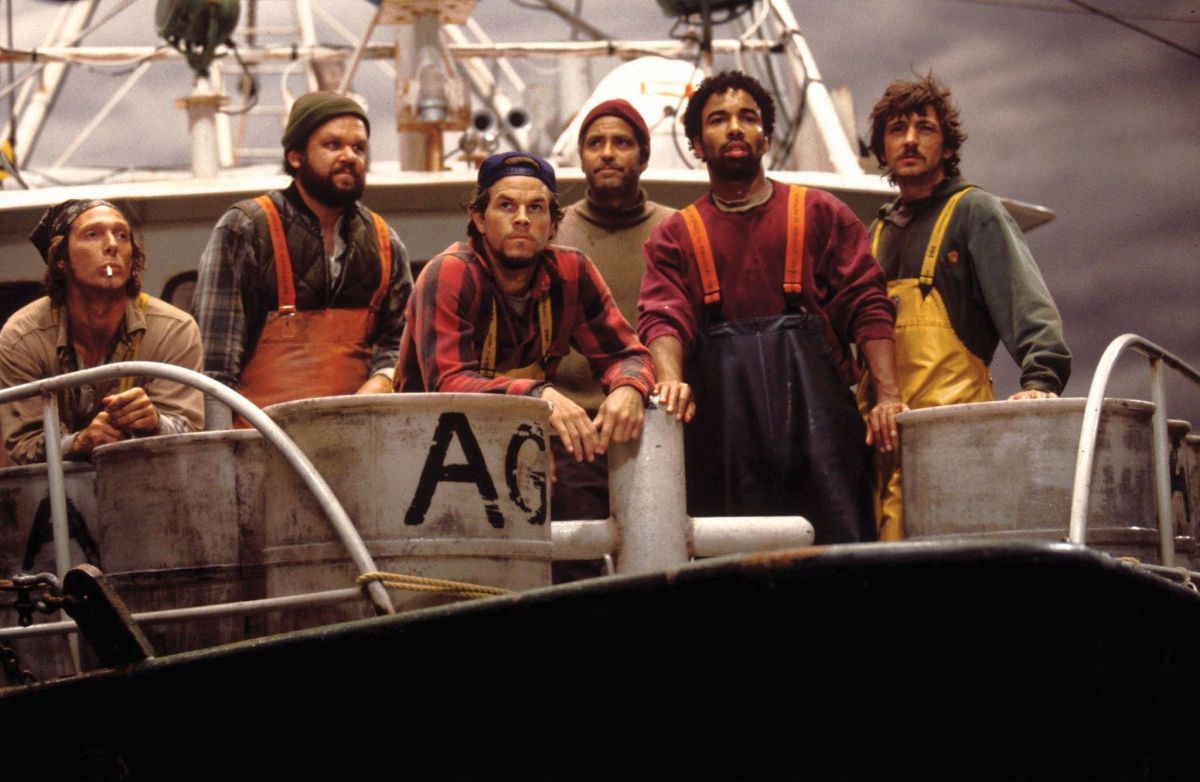
How far would you go to risk it all? If you had a family to provide for, a roof to keep over your head, or in need of enough money to make it through the next week or month, would you take up a livelihood that would often put your life at risk. If you are a fisherman or a fisherwoman especially those men and women who go hundreds or thousands of miles from home to do so, you know what it’s like to put your life at risk for your life’s work. In the fantastic 2000 film, ‘The Perfect Storm’, you get to see what it is like to be a full-time swordfish boat captain and his crew out of Gloucester, Massachusetts, who rely on catching enough fish, and specifically big swordfish, to make ends meet.
Whether or not you may be familiar with the lives of the fishermen and women who make catching fish their livelihoods, you cannot argue with how vital their jobs are to local economies like Gloucester. It’s not just Massachusetts but you consider the role fishing or crabbing or shrimping plays in states like Maine, Alaska, Louisiana, and elsewhere, which can provide a comfortable life for some while others struggle to make it depending on both the size and quality of their daily or weekly catch.
‘The Perfect Storm’ film, which is based upon a non-fiction novel of the same name, which was originally published in 1997 by talented American author Sebastian Junger, details the very rare occurrence in storm weather history from 1991, when a large-scale nor-easter or what’s known as an extratropical cyclone absorbed Hurricane Grace coming from off the coast of the southeastern United States. A lot of coastal damage and flooding occurred from this rare occurrence, but the worst effects happened to those vessels caught in between as the storms absorbed each other’s strength out in the north Atlantic.
Back in 1991, when technology was not as advanced, fishing boats did not have an advanced GPS and had to rely on old school maps, and did not have access to the latest weather reports. The one thing keeping them from being in the dark ages was an antenna and a fax allowing them to get reports via radio or from a machine. For the Andrea Gail fishing vessel, tragically, they were not able to avoid the worst of the ‘Perfect Storm’ and tragically, six men out of Gloucester lost their lives at the end of October 1991.
More than 24 years after the film’s release, it is considered maybe not as accurate to Junger’s book in terms of what were the last moments of the Andrea Gail or what the decision-making was like when Captain Frank William ‘Billy’ Tyne decided to go further out into the Flemish Cap beyond the Grand Banks where he and his crew usually fished in order to go above and beyond to bring back a catch that all of Gloucester would be able to appreciate.
While I admit that I have not read the book yet but hope to do so soon, ‘The Perfect Storm’ is one of those rare Hollywood disaster films that does not trivialize the risk that these men and women take to make a living as fishermen/women. ‘The Perfect Storm’ does a good job in fleshing out Billy Tyne and his five crew members, Robert ‘Bobby’ Shatford, Dale ‘Murph’ Murphy, David ‘Sully’ Sullivan, Michael ‘Bugsy’ Moran, and Alfred Pierre, and honors their memory by the actors who portray them such as George Clooney, Mark Wahlberg, and John C. Reilly.
The film sets up the story quite well including how a smaller than average catch or a lesser return on investment can put a strain on a captain and crew to go out sooner than they would want in the hopes that they can change their luck with the fishing ‘gods.’ It’s clear that these men and women are brave, bold, and love what they do regardless of the risk involved. They know the risk involved, are willing to do what it takes to feed their families and to put a roof over their heads, and even though the risks may outweigh the benefits, as Captain Billy Tyne says as part of the film’s opening monologue, “you know what? you’re a goddamn sword boat captain, is there anything better in the world?”
As ‘The Perfect Storm’ makes clear, this job is more than just a job, it’s a livelihood and a lifestyle for fishing communities like Gloucester, Massachusetts, which has had generations of fishermen for over four centuries since before the United States of America became a country. It is part of the identity of those towns and communities like Gloucester. When fishing is all that, you knew as a child from your parents, grandparents, and beyond, why wouldn’t it be what you attach your livelihood to as an adult?
In 1991, I’d imagine that the job itself had higher risk, but higher rewards given how lucrative it could be when the seas were not overfished or not as affected by climate change as they are now in 2024. The film does not judge the sword boat fishermen for the risks they make during that fateful period in late October 1991 because we will never hear from the six men who lost their lives then tragically.
We only have glimpses into their thought processes or the lack of information they had to make at the time. They not only had to contend with the stress of an ice machine breaking down, but also with not being able to fish as well in the Grand Banks, have an arrogant boss who owned the boat and was expecting them to deliver or face the consequences of losing their place on the Andrea Gail. A crew is also forced together in tight quarters for days or weeks at a time and they may end up disliking or fighting each other. There are also mishaps with a misplaced fishing trap, an errant wave casting a man overboard, or even catching an accidental shark that can harm or kill you if you are not careful.
Being a sword boat fisherman or woman is not for the weary or the weak-hearted. It is for sturdy, strong, and risk-takers who love what they do because they do what they love. It is not usually a job that you can get very wealthy from, but it can provide stability, a livelihood, and help you provide for your wife or husband or for a family if you do well enough. The film does an excellent job on not making the actors who play the six men of the Andrea Gail who lost their lives in ‘The Perfect Storm’ as caricatures but they really feel as they do exist and still exist today in terms of what they do for a living.
Their backgrounds, their motivations, their fears, and their doubts are fully fleshed out over the course of the film. The story is intriguing especially since it happened and was a tragic event in 1991 that affected millions of people in North America. We also think about how storms such as hurricanes are still with us today and are affecting people around the country regardless of if we believe that it can happen to us or not. We are always at the whims of mother nature, and we must realize that it’s important to be prepared for whatever it may throw at us regardless of if we are on land, sea, or air.
The men of the Andrea Gail knew that their job entailed risks, but they also knew that the love of the work, the livelihood and purpose it brought them, and how much it meant to others for what they did will help enshrine their memory in the hearts of their fellow Gloucester men and women forever as well as around the country and the world. Each man had love not just for the ocean, but also a love for their friends, family, and loved ones, which shines through in the film adaptation of ‘The Perfect Storm.’
One of the most beautiful parts of the film for me is when one of the youngest crewmen on the Andrea Gail, Robert ‘Bobby’ Shatform, who loses his life in the storm, tells his girlfriend Christina in a dream where she envisions him being there with her, for the last time, “Remember I’ll always love you, Christina, I’ll love you now, and I’ll love you forever. There’s no Goodbye, only love.”
The lives of the six men who were lost tragically at the end of October 1991 live on forever in the hearts and memories of the people they loved and for the lives they touched in Gloucester and elsewhere. The movie, ‘The Perfect Storm’ is a great tribute to who they were, what they did for a living, and the courageous and bold actions they took to make a living and to help feed others in that community and elsewhere with their lives as fishermen.
I hope you’ll watch this excellent film and read the book it’s based on as I hope to do so for the latter soon. Between an excellent cast, great story pacing, stirring music from the dearly departed composer James Horner, beautiful cinematography, and impactful visuals that have held up to this day almost 25 years later since the film’s original release, ‘The Perfect Storm’ is an excellent movie and one of my favorite films I’ve ever watched.
I’ll leave you with the entire portion of the excellent monologue from the film’s opening and closing scenes to describe the lived experience of being a fisherman or women out on the sea and the pure joy and peace it can bring them when they are heading out to the sea:
“The fog’s just lifting, you throw off your bowline, throw off your stern, you move out the South Channel, past Rocky Neck and Ten pound Island, past Niles Pond — where I skated as a kid — on to Black Bess Point, blow your airhorn, and throw a wave to the lighthouse keeper’s kid on Thatcher Island — then the birds arrive — Blackbacks and Herring Gulls, Big Dump Ducks and Green-Legged Coots. The sun hits you; you head north and open up to twelve — steaming now — the guys are busy and you’re in charge…And you know what? You’re a goddamn sword boat captain. Is there anything better in the world?”

