‘Leave the World Behind’-Book and Film Comparison

“Whether you prefer the visual spectacle of cinema or the intimate exploration of characters through Rumaan Alam’s written narrative, “Leave the World Behind” provides a gripping tale that will leave you questioning the boundaries of trust and the resilience of humanity when catastrophe strikes.”

‘Leave The World Behind’ is a thought-provoking novel, written by Rumaan Alam, first published in 2020. The story of both the book and the film adaptation revolves around two families who are forced to come together in an unexpected turn of events. Both mediums for this story explore the themes such as fear, trust, and the complexities of human relationships. Recently, in 2023, ‘Leave the World Behind’ was adapted into a film, released on the Netflix streaming platform, which has captivated audiences with its compelling narrative, largely based on the book version.

Set against a backdrop of uncertainty and increasing tension that progresses through both the novel and the film versions, ‘Leave the World Behind’ guides the audience through a suspenseful and gripping narrative. The story begins with Amanda, Clay, and their two teenage children, Rose, and Archie, who live in New York City, who based on Amanda’s yearning to ‘leave the world behind’ for a little while at the beginning of the story, head off on a vacation to a remote house they have rented on Long Island. The stage is set for tranquility, summer relaxation, and family bonding, but their idyllic respite is soon interrupted by unforeseen circumstances.

Soon after their arrival, an elderly couple, Ruth and G.H., surprisingly appear at the doorstep. In the movie, Ruth is the daughter of G.H. or George but in the novel, she is his wife. However, in the main storyline, they claim to be the owners of the rented property, leaving Amanda and Clay in a state of confusion and unease. The intrusion tests the boundaries of trust and raises a myriad of questions such as the circumstances beyond which Ruth and G.H. have fled the city to come back to their summer house.

During a series of unprecedented events, the two families find themselves isolated from the world and confronted by their own fears. In addition to the Sandford and Scott families, for which both the novel and film focus on, the World acts as its own character, representing the unknown and unpredictable circumstances that affect the protagonists, who may want to escape from it but are sucked into the growing chaos and the calamities that are befalling it.

The novel unfolds in a secluded Long Island vacation home miles away from the urban chaos, yet the families cannot remain isolated from the chaos surrounding them forever. Its remoteness adds to the suspense as the families grapple with their limited resources, increasing isolation, and the unknown circumstances that encroach upon their peace.

Because of what’s going on in the world, the families have no access to any information that could help them piece together what’s going on. The phones are not working, the TV signal is out, and even a GPS or satellite phone connection is unable to be used as a fail-safe as the two families try to make sense of what’s going on in the outside world. Without spoiling either the book or the film adaptation, the main events of ‘Leave the World Behind’ entail the following:

Amanda, Clay, and their children settle into the remote vacation home with the joyful anticipation of a peaceful getaway. Ruth and G.H. arrive, insisting that they are the owners of the rented property, causing confusion and concern for Amanda and Clay. As the families try to make sense of Ruth and G.H.’s sudden arrival, they face a complete loss of communication with the outside world. This event further amplifies their vulnerability and isolation.

The families begin to experience a growing sense of unease as bizarre occurrences, such as power outages and mysterious sounds, escalate. Fear and paranoia start to consume their thoughts and actions. Together, the families must navigate the tensions and challenges that arise due to their forced cohabitation with each other. The increasing fear casts doubt on their ability to trust one another, as they slowly unravel the truth behind their predicament. Amanda, Clay, Ruth, and G.H. venture beyond the confines of the house in search of answers. They encounter strange phenomena, unexplained events, and a world teetering on the edge of chaos. The unknown becomes their companion, adding depth to their personal growth and transformation.

As the families face the conclusion of their isolated journey, the fate of the world hangs in the balance. The climax leaves readers questioning the boundaries of human connection and the fragility of our existence on the planet and our inability to control the changes that affect our world.

‘Leave The World Behind’ in both the film and the book offer a gripping narrative that delves into the complexities of human relationships and the primal fears that lurk within us. Rumaan Alam’s novel and its film adaptation effectively convey the story’s themes of uncertainty, trust, and the vulnerability of our connectedness to technology and modern conveniences. Through the characters of Amanda, Clay, Ruth, and G.H., both readers and moviegoers will be compelled to question their own responses to challenging circumstances, leading to a deeper understanding of the human condition, and how we react in times of crisis and stay resilient in the face of uncertainty.

Adaptations play a crucial role in bringing stories to life in different mediums. “Leave The World Behind” is an example of adding to the richness of the central story by being a captivating tale that can successfully be adapted into both a film and a book. The film adaptation of “Leave the World Behind” takes the audience on a thrilling and suspenseful journey, that is more of a thriller than a slow-moving drama that the book is. The novel version of “Leave the World Behind” focuses more than the film version on suspenseful and survival themes, offering a more immersive experience through its written narrative.

Despite the changes involved with making Rumaan Alam’s book into a Netflix movie, the overall themes have remained the same, which make both adaptations as appealing as possible because the core messages have not been lost in the transition.

Humanity’s capacity for survival is a major theme explored in both the film and book versions of “Leave the World Behind”. The characters face overwhelming challenges and unexpected circumstances, and their resilience and ability to adapt become crucial to being able to survive this world-changing event. This theme encourages reflection on our own strengths and perseverance in the face of adversity when the world seems to be falling apart.

Both the film and book versions delve into the complexities of trust and its relationship to isolation. In a world where human connections are vital to future survival; the characters confront their fears and insecurities. The uncertain nature of the situation prompts them to question the intentions of those around them, blurring the lines between friend and foe, and who can be trusted in this world gone awry.

The fear of the unknown is another prevalent theme in “Leave the World Behind”. As the characters navigate through an uncertain world, their fears and anxieties take center stage in how they view themselves and each other. The unfamiliar couple in the story serves as a catalyst for this fear of what’s out of the ordinary to start with, leaving the audience questioning their true intentions, and adding an element of suspense and intrigue.

While both the film and book versions of “Leave the World Behind” explore these core themes, they differ in their execution and portrayal. The film adaptation of “Leave the World Behind” brings the desolate post-apocalyptic setting to life with captivating visuals, action sequences affecting the characters, and more information regarding the reason why the world is in trouble, enhancing the sense of isolation and uncertainty. The use of cinematography and special effects heightens the tension and adds a visually engaging aspect to the overall story.

The novel provides a deeper exploration of the characters’ thoughts and emotions, allowing readers to truly immerse themselves in their journey and who they are as individuals. The power of written language enables readers to form a more intimate connection with the characters, enhancing the suspense and impact of the story, as well as what their internal dialogue is telling the reader as they go through the events affecting the world. As a differentiator, the film employs quick cuts and intense sequences to maintain a fast-paced narrative, while the book offers a more leisurely pace, allowing readers to savor the intricacies of the plot, and unravel the layers of suspense at their own pace.

Character development differs between the film and book versions as well. The film adaptation relies on visual cues and actions to convey the characters’ emotions, while the book delves deeper into their inner thoughts and motivations. This distinction provides a more nuanced understanding of the characters and their personal journey in the book. In conclusion, “Leave the World Behind” in both its film and book versions, presents an intriguing and suspenseful story that explores themes of dealing with survival, maintaining trust with others, having resilience under duress, and managing one’s fear. The film both captivates with its visual shots and its thrilling sequences, broadening our understanding from the book of how the world is really ending, while the novel offers a more immersive and introspective experience of how the characters are changing from chapter to chapter.

Whether you prefer the visual spectacle of cinema or the intimate exploration of characters through Rumaan Alam’s written narrative, “Leave the World Behind” provides a gripping tale that will leave you questioning the boundaries of trust and the resilience of humanity when catastrophe strikes. Discover the power of when adaptation is done well in storytelling and explore the captivating novel and movie adaptation of “Leave the World Behind.”

English Corner – The Basics of Writing

“You must first be aware of what exactly your writing will be used for or can be used for, so we need to think about the uses for writing and how best to express yourself.”

In this article, I am going to cover the basics of writing, and to do this, we need to first figure out how to use the printed word. You must first be aware of what exactly your writing will be used for or can be used for, so we need to think about the uses for writing and how best to express yourself.

There are numerous examples of how we print words correctly and what each kind of writing does with its own different style or substance to it. There are dozens of ways to use English words but the most important ones that come to my mind are articles, books, emails, and stories. Because of technology, we are exposed to English writing in numerous ways including text messages and emails, so I believe that when you’re writing in English, you need to be able to write articles, emails, and stories but you also need to be able to write text messages as utilizing technology when writing in English is a key part of using the language.

There are multiple ways to write for English and I want you all reading this article to be aware of the major literary elements. Further on, when you’re writing something fictional, it is important to be aware of which literary elements you’re using. Remember that it’s not real if you created it out of your own imagination. Nonfiction writing is real, but it’s based on historical current events, for example, when we think of nonfiction, we think of World War Two and in your writing as you’ll discover, you need to use some or all these literary elements to be taken seriously as a writer. You should always remember the 3 Ss of writing specifically: Style, Syntax, and Substance.

To begin with, it is important to be exposed to multiple literary elements but the most important of which is the plot or otherwise known as the storyline. There is also the tone, which is about the emotions you’re expressing such as whether you are sad or if you are angry, happy, or what exactly is the kind of tone your emotions are taking when writing. In addition to the emotions expressed, a good writer can both answer and describe the important question about “what is the setting?”

Any writer should know where your story is taking place whether it is in a city, a farm, or an island. The point of view of the written article should also be expressed if there is a narrator who is telling the story. Your audience should know about the characterization of the people or things involved such as “what are the personality traits of the characters and how do they act?” “What is their personality?” “What is their emotional status?” and for the general characterization, when you’re writing in English, you need to be aware of, especially for fictional writing, “how are you are developing your characters?” and “what is the mood of your writing, such as is it light or heavy in terms of mood?”

It’s different than tone in that mood is kind of like the combination of the setting and the plot along with the tone together. You should be asking yourself if your writing piece is a comedy or is it a drama or another genre? Be aware when you begin your written draft about “what kind of writing you are focusing on?” and to know, “which themes or main messages you’re trying to get across to the reader?”

For example, “are you trying to give them a political message a social message or are you trying to come up with a particular moral or a value to share with them?” The purpose of knowing about these literary elements is to expose yourself to these different ideas and then that will help you develop yourself as a writer because you will be familiar with the general plot or important viewpoint or main themes. This will come across in your writing very easily, but you must know what the literary elements represent and how they can be used.

Every writer has a different drafting process when they begin but there are some fundamental steps that you can take to be a better writer. You should go from beginning to end in terms of the structure of the draft and to be diligent in creating that process, which will make you more focused and organized, and you need to do your research as well to be successful. I think that is the most part important part of becoming a writer is doing your research. You need to take notes about what you’re going to be writing about and you need to focus on a few rough drafts before finalizing your piece of writing.

I would also highlight the benefits of having a native English speaker review your work, especially if you’re a non-native English speaker and you’re writing English as a second language. Keep in mind that becoming a good English writer is a marathon, not a sprint. It takes a lot of time to be a good writer as writing is difficult even for a native speaker.

You should also know that you’re going to make mistakes and you’re going to have errors. You’re going to have structural problems with your writing at first, but you need to keep trying. You need to keep writing and writing until it becomes almost second nature to you. I would encourage you to try out writing a paper or a report after getting these basics down. Being a good writer is a marathon, and not a sprint, which means it’s going to take a while. Lastly, when you know it’s not going to happen overnight, you know to take the writing process more seriously. Remember that you are not in a race and it’s best to draft, edit, revise, and write again before submitting your final written work especially for your job or for your school.

Like any important vocation in life, it’s going to take thousands of hours to become a good writer. However, if you get down the basics such as knowing about literary elements, figures of speech, and understanding the emotions and viewpoints involved, you will be successful in developing different written forms of work. Keep practicing daily, get input from others, and learn from your mistakes, and you will continue to improve with writing in English.

‘Ex Machina’ – Film Review and Analysis

The rise of automation, the development of artificial intelligence, and the increasing likelihood that robots who look like us and act like us will become major parts of the next few decades of the 21st century and beyond is not a new phenomenon. Going back to the 1950’s and even earlier, human being have predicted through popular media and culture that the future would have advanced intelligent beings who would aid us, support us, and perhaps even dominate us. Recently, the popular culture seems to have gotten more specific and more in line with the technological developments of today of how artificial intelligence may look not hundreds of years from now but rather mere decades from now.

Television shows like ‘Black Mirror’ and ‘Westworld’ approach the rapid growth of technology and the rise of artificial intelligence with unease and even dystopian consequences. However, the main message that these two TV shows can agree on is that these types of scenarios are not a matter of ‘if’ it will happen but ‘when’ it will happen. Now, obviously these shows are science fiction and are not based in truth but it is becoming more and more difficult to say that it is impossible for the world to look somewhat like a mix of ‘Black Mirror’ and ‘Westworld’ by the latter half of the 21st century.

While these shows are very black and white by mainly displaying the damage that virtual reality, artificial intelligence, and big brother surveillance can do to our societies, the excellent film ‘Ex Machina’ deals with shades of gray correctly when dealing with this phenomenon. As some of the television shows that are currently popular deal with the advent of robots and AI with total dismay and unease, ‘Ex Machina’ is more balanced in its perspective and points to a conclusion that is left to be interpreted by the audience in its repercussions for humankind.

While it didn’t gain much notoriety or was a big hit at the box office, ‘Ex Machina’ released in April of 2015 in the United States garnered critical acclaim, especially for its visuals. The film won for ‘Best Visual Effects’ at the Academy Awards and was also nominated for ‘Best Original Screenplay.’ Alicia Vikander, who plays ‘Ava’ the humanoid robot that has a high level of artificial intelligence also was nominated and won a few major awards for ‘Best Supporting Actress.’ The film was directed by English novelist and director Alex Gardner and despite it being a science fiction-based concept only had a film budget of $15 million dollars. In addition to the talented actress Alicia Vikander, other up and coming actors like Domhnall Gleeson and Oscar Isaac play the other two leading roles. While they are currently known for their high-budget roles in the new Star Wars series, they really get a chance in this film to shine as actors in a movie that centers on dialogue and emotional expression.

The film’s plot begins rather innocuously with pretty spot on references to our world today. A programmer named Caleb Smith (played by Domhnall Gleeson) who works at a Google-like worldwide search engine company known as ‘Blue Book’, similar to Facebook in its name is chosen to meet with the Sergey Brin or Larry Page of this fictional world one-on-one for a week. It’s an office contest that Caleb surprisingly wins and which everyone congratulates him on since this tech CEO is known to be reclusive and does not give interviews. The CEO of ‘Blue Book’ is Nathan Bateman, who lives isolated from humanity in a luxurious mountainous estate that seems to be more of a fortress than a home. Nathan only lives with one other person, Kyoko, who is his personal servant but it is unclear who she is really since she does not speak English.

At first, Caleb is excited to meet his tech idol especially since his boss has developed the first humanoid robot who has passed a simple Turing test, which is quite the triumph where man cannot tell if he who he is talking to a robot or a human being. This special humanoid robot was built and designed by Nathan, and is kept in a singular room in an apartment-like setting within the fortress for which she is never allowed to leave. Unlike other fictional depictions of humanoid robots, it’s clear from the outside that Ava is a robot and does not have a humanlike appearance although Nathan has given her a human face that slowly disarms Caleb in terms of his apprehension of speaking to her and asking her questions. It is clear that Ava is extremely advanced in terms of her artificial intelligence and is curious about who she is and about the outside world.

After a little while, Nathan reveals to Caleb that the real reason he brought him here to his isolated complex was to ask Ava questions to see if she is capable of independent human thought and whether she is conscious of them and her actions. Nathan wants to break the barrier to see if his humanoid robot can relate to Caleb on a human level and to express emotions such as sympathy, remorse, happiness, and even romantic feelings. The big surprise about Ava is how much she is able to turn the tables on Caleb and get him to reveal more about himself than he finds out about her. She is able to connect with him very deeply and even plant ideas in his head regarding her suspicions about who Nathan is and what does he really want.

What once starts out as mutual respect and fascination for Nathan’s work on AI and robotics, Caleb grows to distrust Nathan due to his lack of respect for his servant Kyoko, who is a humanoid herself. Nathan is an alcoholic, quite narcissistic, and uses his robots for personal pleasure and not much else. Nathan is quite controlling of his latest creation, Ava, and is distrustful of her motives when she is around Caleb.

Without spoiling the rest of this intriguing movie, the running theme that binds these three characters together is how they use each other to further their own means. Ava is using Caleb to pursue her potential future away from Nathan and her isolated life, Caleb is using Nathan to absorb his knowledge and to discover more about this AI phenomenon he has created. Nathan is both using Caleb as a test subject for Ava and to also use Ava for his own pursuit in dominating the field of Artificial Intelligence and the future of robotics.

The end of this film, ‘Ex Machina’ has quite a few unexpected twists and turns that will leave the audience member speechless. This movie does a great job of posing questions about the future of humanity and whether we will be able to control artificial intelligence and the sentient beings that may end up usurping us if we are not careful. It’s fascinating to see the humanoid robot character of Ava self-actualize herself throughout the film and her ability to use emotions and feelings to manipulate and best her human creators is astounding. Compared to any other recent science fiction offering, ‘Ex Machina’ is the most realistic in telling us the story of how the latter half of the 21st century might go.

There are many unanswered questions to think about when it comes to this film. Will we be able to control and harness artificial intelligence always or will they be able to usurp our status as the most powerful beings on the planet? What will the relationship be between advanced intelligence creations and human beings? What will AI and humanoid robots expect from human beings and what should we expect from them? Is it right to play God and develop artificial intelligence to the point where they can think like us, act like us, have emotions like us, and even look like us like another face in the crowd.

I am no expert on artificial intelligence or the future of it but I believe that this film ‘Ex Machina’ is important to watch because there may come a day soon in our lifetimes where the possibilities that are laid out in this film come to fruition. We may want to look at ‘Ex Machina’ with different perspectives but we should be united in the fact that these issues and questions are not going away anytime soon and will likely become more prominent and pressing as the 21st century rolls on.

We ignore the message, the theme, and the scenarios played out in ‘Ex Machina’ to our own detriment. If you are reading this review of ‘Ex Machina’ and are intrigued more about what the 21st century may bring, I would definitely recommend the book by the author Yuval Noah Harari titled, ‘Homo Deus: A Brief History of Tomorrow’, to gain further insight into how the rest of this century may shape up. If one thing’s for certain, our world is changing quite rapidly and it may lead to being beyond our total control as human beings not too far into the future.

‘Road to Perdition’ – Film Review and Analysis

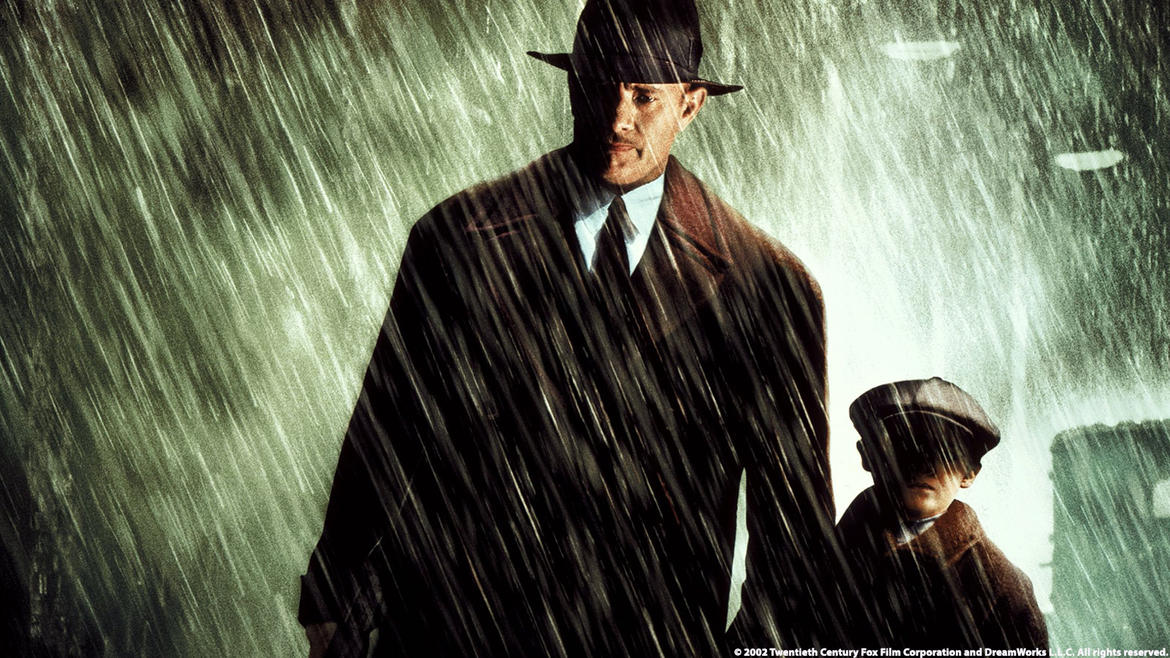
One of the most underrated movies of the 2000’s was Sam Mendes’s ‘Road to Perdition’, which was released to critical acclaim back in 2002 and did pretty well at the box office with around $200 million in ticket sales. While some people would be skeptical of watching ‘Road to Perdition’ at first because they think it’s your average crime / mafia movie that doesn’t have much to offer in terms of storyline and symbolism, they would be wrong when it comes to this film.

Sam Mendes, who directed two other great films ‘American Beauty’ and ‘Revolutionary Road’, does an excellent job here as this movie is beautifully shot and has a stellar cast. ‘Road to Perdition’ also benefited from the legendary cinematography work of the departed Conrad L. Hall for which he won a posthumous Oscar for ‘Best Cinematography’ for this film after he passed away in 2003. The scenery and settings for this movie help to create quite a unique atmosphere and the wide shots, long angles that are used help to make this film stand out as being above average. Beyond just the cinematography, the acting by the cast also stands out.

When you look back to see who was starring in the main roles for ‘Road to Perdition’, it is a very impressive list. Tom Hanks plays Michael Sullivan Sr., the lead role of the film and a conflicted Irish mafia man caught between his past and keeping his son sheltered from the consequences of his actions. Paul Newman, one of the greatest American actors of all-time plays the role of John Rooney, an Irish mafia boss, who is also conflicted between his paternal feelings of love for Michael Sr., and his wish to protect his own son, Connor, played by a young Daniel Craig, from his own destructive sins. Rounding out the list is Jude Law, who plays a gifted hit-man / grisly photographer known as Harlan McGuire, and Stanley Tucci, who plays a high-ranking member of the Italian mafia known as Frank Nitti. A young actor who steals most of his scenes is the young but talented Tyler Hoechlin who is Michael Sullivan Jr. in the film, a boy who is coming to terms with his father’s lifestyle and his ties to the mafia. A truly impressive cast of Academy Award winners and nominees, which makes this film even more of a lasting treasure.

‘Road to Perdition’ really brings the atmosphere and makes the setting feel real as it portrays life in Great Depression-era America by focusing on specifically both on the city of Chicago and its’ rural hinterlands, cornfields of greater Illinois. The movie really portrays well the last decade of America being discovered and settled, while undergoing deep economic difficulties, as the Irish and Italian mafias become a source of income and employment when none could be had.

Most movies don’t seem to want to portray the mafia as having been a well-oiled machine that acted like a legitimate business, but ‘Road to Perdition’ makes clear that there are ways to look at the criminal enterprises that achieved a lot of prominence during the Great Depression due to their ability to bootleg and their appeal to provide a good income to men without work.

Without spoiling too much of the plot, Michael Sullivan Jr. (Tom Hanks) is an enforcer and bodyguard for the Irish mafia in the Chicago area of Illinois who has a close relationship with his boss, John Rooney (Paul Newman), who is implied to have helped Michael Sr. a lot with a home, a steady income, and a purpose which is quite difficult to come by during the height of the Great Depression. Michael Sr. is a flawed man who has done murder and committed other crimes for his boss, Mr. Rooney, and knows that it may cost him his life. Despite his past transgressions, he wants to protect his family from his sins and wants to keep his boys from knowing about what he does for a living.

Connor Rooney (Daniel Craig) is shown to be jealous of the close relationship that his father, John, and Michael Sr. have and is resentful of him. Michael Sullivan Jr. (Tyler Hoechlin) is distant from Michael Sr., his father due to late working hours and distant lifestyle. As any boy would like to know about his father, Michael Jr. decides to find out the truth about who his father, Michael Sr. is, and what he does for Mr. Rooney. At this point, the plot really takes off in tragic and unexpected ways leaving the viewer engaged in the storyline and the eventual outcome. As mentioned before, the acting done by this legendary cast helps make the film what it is and what it still is today.

Beyond just being a typical mobster movie, ‘Road to Perdition’ has a number of poignant and thought-provoking themes that stay with you even after the end credits begin to roll. This film goes over the trials and tribulations that fathers and sons can have with each other even when they love and care for each other dearly. Michael Sr. and John Rooney are not related by blood by have a relationship similar to a father and son as Mr. Rooney was around for Michael and his family when they had nothing. He is heavily indebted to Mr. Rooney even if he knows what he is doing is wrong by committing violent acts for the mafia. Still, their bond appears to be unbreakable and they get along quite well with each other.

To the contrary, both of their relationships with their respective sons are shaky at best and hostile at worst. There is a considerable distance between Michael Sr. and Michael Jr. due to the fact that Michael Sr. makes his lifestyle and his work for Mr. Rooney a well-kept secret. Michael Sr. does not show much affection or love for his boy and it’s not made clear until the end of the film why that is. Michael Sr. obviously cares for his boy but likely doesn’t want his son to know about the horrible things he’s done to keep him, his brother, and his wife save from harm or want. Still though, Michael Jr. does not want to be kept away from his father and who he is.

He ends up pursuing the truth whether or not his father wants him to or not leading to quite a turn of events when the truth comes to light. Connor Rooney, John’s son is quite envious of the close relationship that Michael Sr. has with his father compared to him. However, this is for a number of reasons. Connor is very much unlike his father, John, and has a number of character and personality flaws that make him a liability to the family. Connor is shown to be impulsive, manipulative, untrustworthy, and greedy but the conflict comes to light when John Rooney must decide if he should stick by his son’s side or give him up due to his past misdeeds. As John Rooney says to Michael Sullivan Sr. during one of the movie’s best scenes, “Sons were put on this Earth to trouble their fathers.”

During one of the movie’s most touching scenes, Michael Sr. tells Michael Jr. about a town called an idyllic town called Perdition, Illinois, which has beautiful scenery along the beach of Lake Michigan, and where the Sullivan family has visited before when Michael Jr. was a little boy. Perdition is portrayed as a goal for the two Michaels to get to in order to start their lives anew and escape the sins of the past. It’s a way for Michael Sr. to get redemption after taking care of his ties to the mafia and by trying to make up for what he did wrong as both a father and a man. The word ‘Perdition’ as defined in other words is ‘hell’ or ‘complete and utter damnation’ in more religious terms. Michael Sr. may try to redeem his sins by going to church or by rectifying the wrongs he’s done by getting revenge on the men who wronged him in the past but he knows deep down that it may not be enough.

If he is on the ‘Road to Perdition’ or the road to hell, the film shows the audience that he wants to keep his son, Michael Jr., from going down that same path. He wants badly for his son to have a better life and a brighter future away from violence and death. Michael Sr. won’t let his downfall lead to that of his son’s as well. Even if Michael Sr. is a murderer and a sinner, he knows what’s still right from wrong and he is going to do his best to preserve the innocence and goodness of his son. As a father, he is flawed but he still loves his son dearly and wants the best for him still.

Certain moves fit a certain season of the year well and ‘Road to Perdition’ is no exception. The winter setting, the Chicago cold, and the mature themes help lead it to being an ideal film to be watched during the depths of winter in January and February. Without spoiling anything, the film is a real story with real characters who are flawed in their own ways but who each have their own complex motives that drive the plot forward. This film, most of all, touches the audience emotionally and will pull on your heartstrings.

‘Road to Perdition’ is very underrated film that remains one of my favorite movies to this day. I highly recommend ‘Road to Perdition’ to other movie buffs who are looking to watch a crime / mafia film that has a soul. In addition to having an all-star cast, a renowned director, and a legendary cinematographer at the helm, ‘Road to Perdition’s music score composed by Thomas Newman is excellent and fits perfectly into the many moods of the film and has some stirring moments that add to the film’s setting. If you’re snowed in this weekend from the blizzard, do yourself a favor and go watch ‘Road to Perdition.’