‘Springsteen: Deliver Me From Nowhere’ – Film Review and Analysis

“What I enjoyed about ‘Springsteen: Deliver Me from Nowhere’ (directed by Scott Cooper) is that for a biographical film, it really does dive into the effects of fame, expectations, struggling with one’s past, and reconciling it with a future very much unlike where you once came from.”

Everyone knows who Bruce Springsteen is by now, the Rock superstar and legend who has produced over twenty studio albums, won dozens of awards, and sold out shows over many decades. He is the extrovert’s extrovert on the stage producing marathon 3 ½ – 4 hour live shows with the powerful energy and stamina of a man half or one third of his age (Springsteen is 76 as of this writing). What I enjoyed about ‘Springsteen: Deliver Me from Nowhere’ (directed by Scott Cooper) is that for a biographical film, it really does dive into the effects of fame, expectations, struggling with one’s past, and reconciling it with a future very much unlike where you once came from.

‘Springsteen: Deliver Me from Nowhere’, the film has excellent source material in the book of the same name mostly due to interviews with the man (i.e. Springsteen) himself in the book, previously released in 2023 by author Warren Zanes. I highly recommend reading the book before seeing the movie to get a fuller picture of how Springsteen’s unlikely first solo album came to be in 1982. While the movie takes some time away for some side plots not related to the album’s making, it does do justice to how ‘Nebraska’ came to be and how it almost got completely derailed. The romantic subplot, while competently acted, feels tacked on and somewhat distracting from the core narrative. I found myself wishing the film had dedicated more screen time to the mechanics and mindset behind Nebraska’s creation as the book had done that it is based on; its stark originality is one of the most fascinating aspects of Springsteen’s career, and the film sometimes glides past that too quickly and not deeply enough.

Commercial success puts a lot of pressure on any musician and even Bruce Springsteen was exhausted both mentally and physically from ‘The River’ tour with his first taste of super stardom. It’s hard to top that kind of album so his decision after the tour to seek some peace and quiet at a rental home in Colts Neck, New Jersey seems like a good step to get the writing process started again. In the film, Bruce seems introverted almost to a fault when he gets off stage, must sit by himself to have some quiet and enjoy the peace of his dry towel hanging over his head.

While he responds warmly to fans and to his love interest especially during his guest set at The Stone Pony in Asbury Park, you still sense he’s caught between who he was and who fame is forcing him to become. I enjoyed how the film shows that he is battling himself at times in terms of what direction to take his life on top of his unresolved issues of his past highlighted by his turbulent relationship with his father (played by the great Stephen Graham). Even when you’re popular and famous for your music, sometimes anyone would want to do, including Bruce, is to isolate oneself for a while and be somewhere where you aren’t recognized or don’t want to be recognized. Bruce wants to focus on his musical range and channel his creativity away from the record executives’ wants, away from the band, and perhaps away from everyone.

Jeremy Allen White nails the role, embodying Springsteen’s physical stillness, haunted expressions, and the restless mind of a young artist wrestling with ideas he doesn’t yet fully understand. Being able to master guitar playing, the singing, the panic of not knowing who he is at times and searching for lyrics and the meaning behind them are tall tasks for any actor to convince an audience of and Jeremy nails it throughout the film. White’s performance works because he understands Springsteen not just physically but emotionally: a rising star caught between inspiration and uncertainty, trying to decode the meaning of his own lyrics as he writes them.

Coming up with an album different than anything you’ve ever done before takes time, effort, and introspection, which helps Bruce to look for movies, books, and stories that help create the theme for what Nebraska becomes. While Bruce and the E Street Band are shown in the film as a tight band, hitting on all cylinders, and creating great music for their own album, Bruce feels passionately about making something of his own and letting it not be changed or influenced beyond what he put together in an upstairs bedroom of his rental house on a simple four track cassette. Even in the early 1980s, technology could have given Nebraska a cleaner, more polished sound. But Springsteen refused to smooth out the edges. He believed the atmosphere, imperfections, and claustrophobic intimacy of the demos were the very thing that made the album special.

In both the book and the recent film, Springsteen is not afraid of Nebraska failing or his other music not being well received. Rather, he is afraid of how not to crack up from what is haunting him internally. Money, fame, and a bright future do not make him whole, and being able to carve out your own identity, deal with your past wisely, and find a way to deal with depression in a healthy manner takes time, support, and sometimes admitting when you need to seek help.

Luckily, Bruce has a loyal manager, Jon Landau (played by Jeremy Strong) who is more than looking out for making money off the next hit Springsteen album. He shows that he cares for Bruce as a person and more importantly as a dear friend and wants what’s best for him, even if Nebraska is not the album he would have hoped to promote or the kind of musical direction, he wants from Bruce either. Landau wants Bruce to find inner peace and happiness more than just fame, success, and wealth, which not every manager wants for their star.

Bruce, like the characters in Nebraska, are imperfect people in an imperfect world, and even if the stories are ghostly, gruesome, or unpolished, like the album, they must be told and given room to breathe. Even from great solitude and from introversion, Bruce’s personal struggle in that time led to one of his best albums and is still being covered and listened to over forty years later. Nebraska wasn’t built for radio or for Top 10 charts, even if it did outperform expectations, but it was built for truth and showed the underbelly of hard lives and harder circumstances. Bruce’s childhood and dealing with his past are covered in the film and you get the sense that there would be no Nebraska if the artist hadn’t any struggles in life or not been tested by family or by fame or by his search for the next song.

‘Deliver Me from Nowhere’ isn’t just a book or a film. It’s a reminder that even legends hit that crossroads where success, identity, and truth collide. It’s a thoughtful, beautifully acted portrait of an artist wrestling with his past to shape his future. For Springsteen fans, it adds new insight into one of his most daring albums; for newcomers, it’s an unforgettable introduction to the man behind the myth. Nebraska was never meant for radio or music videos; it was meant for honesty and truth-telling. More than forty years later after this album first came out, that honesty still cuts through all the noise.

Movie Recommendations – Volume II

  1. The Mule (2018)

MV5BMTc1OTc5NzA4OF5BMl5BanBnXkFtZTgwOTAzMzE2NjM@._V1_UX182_CR0,0,182,268_AL_

A normal man of the middle class is pushed to his limits and takes serious risks that could backfire on him. This is essentially the premise of legendary actor and director Clint Eastwood’s latest film in which he stars and directs as an octogenarian horticulturist turned drug mule named Earl Stone. Based on true events, this unreliable family man and an even worse husband, Earl has sacrificed his love of flowers for the love of his daughter and wife. More at home on the road with his drinking buddies and colleagues than with his own family members, Earl has spent over thirty years doing what he does best much to the chagrin of those who care about him including his soon to be wed granddaughter.

Earl is faced with the unsettling reality of the crippling economic recession beginning in 2008 and the subsequent rise of eCommerce outlets when his horticulture lifestyle and flower gardens go out of business. All Earl has left is his love of the road, his ability to never get a speeding ticket, and a lot of debt that he’s not sure how to get out of. Earl has the utter misfortune to run into people who are shady yet loaded with cash and Earl, being as desperate as he is to stay afloat economically goes ahead and trusts them anyway despite not knowing about the illicit cargo, he is transporting around the country for them.

You are left feeling bad for Earl because despite putting work first all those years and missing time with his loved ones, he partly did it to feed his family and give them a good life even if he was away most of the time. Eastwood who plays Earl in the film is not an innocent lamb and deserves punishment for what he did, but he is simply a manipulated fall guy and another casualty to the endless ‘war on drugs.’ Pursued by federal agents and cartel criminals, Earl ends up between a rock and a hard place and you have to wonder how we can live in a society where an old man such as himself has to resort to be a drug mule in order to get by financially and create a good life for himself and those close to him.

Overall, this is a good movie that I would recommend for its questions about morality, family, and the consequences economic hard times can have and are still a reality for so many people who choose to take illegal means or are forced to do so in order to survive or get by. It’s clear from the movie that crime doesn’t pay but we are left to reckon with the absurdity of an eighty plus year old man needing to work for the cartels in order to thrive economically.

  1. Once Upon a Time in Hollywood (2019)

once-upon-a-time

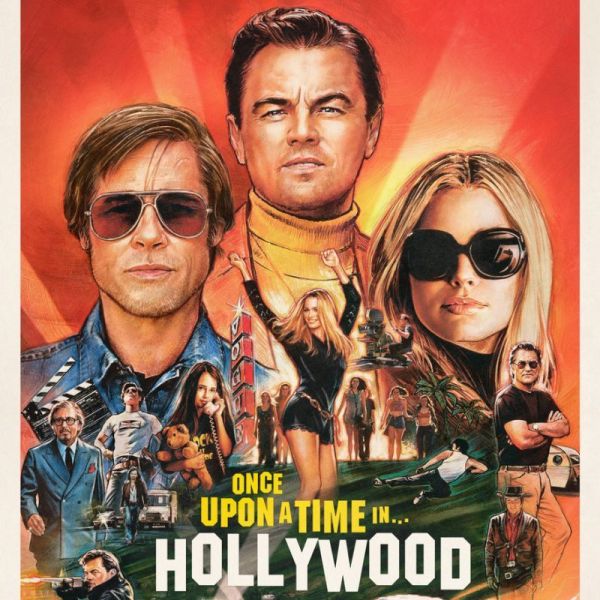
It may not be Tarantino’s best but it’s certainly not his worst. With a stellar cast of characters including Leonardo DiCaprio, Brad Pitt, Margot Robbie, Al Pacino, etc., This film does a great job of invoking the nostalgia and uniqueness of Hollywood in its heyday during the late 1960’s. Set in a time when hitchhiking was normal to partake in, hippies were hanging out in ranches, and the Manson family was beginning its reign of terror, Tarantino has an uncanny ability to bring those cultural tenets together to produce a satisfying film.

Between the cars, the outfits, the egos of the actors, you get a real sense of what it must have been like to be in Hollywood during that golden era. Even still, Tarantino as in his other films, likes to put his own spin on history and without revealing too much, the last thirty minutes of this film are among the most satisfying that he has put to the big screen.

It would not be a Tarantino movie without some craziness and shocking moments occurring. One of the best parts of ‘Once Upon a Time in Hollywood’ is the chemistry between Brad Pitt’s character, Cliff Booth, a stuntman who does all the dirty work with a smile on his face and Leo DiCaprio’s character, Rick Dalton, an actor who is struggling with the notion that his career may be on the downslope.

While the film gets off to a slow start and certain scenes are drawn out way too long, the writing is well-done, the characters are interesting to see develop, and the payoff of the ending is way too satisfying to not recommend this film. Especially if you are a fan of Hollywood history and the era of the 1960’s, you’ll definitely enjoy this one.

  1. Blinded by The Light (2019)

blinded_by_the_light_onesheet

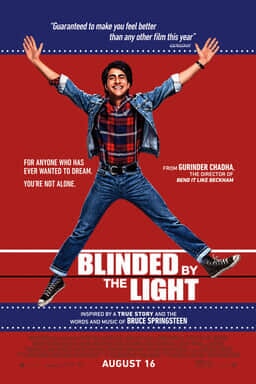
Brrrrrruuuuucccceeeeee! Springsteen fans are going to love this film. I know I did and it’s for a couple of reasons. The actors are really likable in this one and the story they’re telling is one as old as time but in a setting and an era that I found pretty compelling. There are some similarities between the coming of age of someone like a Bruce Springsteen and the film’s main character, Javed Khan (played by Viveik Kalra). Even though they are from different countries, different races, and different religious beliefs, there is a universal truth that underlies what Javed and Bruce went through as younger men. Dealing with overprotective or absent fathers, searching for one’s own identity, trying to find true love, and figuring out how to make their dreams come true These are the powerful themes of the film that are timelines across cultures and across borders.

Also timeless is the fight against hatred, bigotry, and intolerance among those who don’t accept others who are different living in their communities. The film is not just about Springsteen’s music and how it relates to a young man’s search for his place in the world but also about a family’s immigrant dream to create a better life for themselves in a community that can be rather cruel and mean at times. Not only is Javed trying to make his dreams come true but his family are also trying to fit in to a town, Luton, where they are minorities, and are discriminated against.

I particularly like how ‘Blinded by The Light’, while it followed the formulaic story of similar films, it has its own identity and its own unique setting and characters that make it a rewarding watch. There are some lessons to be taken from this film beyond just enjoying the music of the Boss. It’s about balancing family responsibilities and your own independence and desires, and also about what your priorities are in life.

Music isn’t everything but it’s the sweet, fulfilling topping that will get you through hard times when things look bleak. That is part of the appeal of Bruce Springsteen’s music and it’s why his music is so powerful and resonant from Asbury Park to Luton and from New York City to London. If you get the chance, see this film even if you don’t like Springsteen. It is more than just a musical and at its core, it’s about the triumph of love over hate and of dreams over despair.