‘Lord of War’ – Film Review and Analysis

Arguably one of the best movies of the 2000’s and Nicholas Cage’s best performance as a lead actor, The film ‘Lord of War’, released in 2005, is a realistic and unfiltered take in the role of illegal arms dealers, who facilitate the sale and transfer of arms trafficking throughout the international arms industry, which continues to be one of the world’s most profitable endeavors. ‘Lord of War’, while nonfictional in its’ story is actually based off of the lives and exploits of different real-life arms smugglers. ‘Lord of War’ is directed by Andrew Niccol, and stars a cast of Nicholas Cage, Jared Leto, Ethan Hawke, and Bridget Moynahan.

Nicholas Cage plays Yuri Orlov, the son of Ukrainian refugees from the Soviet Union, where he and his brother, Vitaly, help their parents out in their Ukrainian restaurant as cooks and helpers. While Vitaly is somewhat satisfied with this simple life of cooking borscht and washing dishes, Yuri wants to achieve the ‘American Dream’ and get out of Brighton Beach, Brooklyn, where he grew up after leaving Ukraine. He struggles to grasp at any real business opportunity in order to get out of the shadow of his ordinary life in Brooklyn.

However, one day when he is dining at a restaurant in Brighton Beach, the business idea he needs comes to life for Yuri in the form of a Russian mobster killing two would-be assassins and fending off their attack with AK-47 Kalashnikov rifles. Yuri believes that there is a lot of money to made in international arms sales and decides to go into business despite the protests of his brother, Vitaly, and the fact that his parents don’t know what he’s up to.

One scene in particular that stands out in Yuri’s beginning as an illegal arms dealer is when he tells his brother that since there are so many McDonald’s and gun stores in America already, he needs his business to be international in its’ focus. At first, Yuri feels that dealing arms is comparable to serving food at a restaurant. He justifies his nefarious business by narrating to the audience that its’ providing for a part of human nature in his opinion, the instinct to kill and harm others, as documented by the “earliest human skeletons who had spears in their heads and rib-cages.”

While Vitaly, Yuri’s brother has moral reservations about what Yuri is doing, he decides to join him later on as they crisscross the globe during the late 1980’s and into the 1990’s dealing with corrupt governments, genocidal dictators, and other more ruthless arms dealers as their competition. As Yuri becomes more popular and wealthy with the illegal arms business, he runs up against a by-the-book, incorruptible, and idealistic Interpol agent, Jack Valentine (Ethan Hawke), who tries unsuccessfully to track Yuri’s business dealings down by air and by sea.

Despite the fact that his brother, Vitaly, becomes a drug addict, and is an unreliable business partner, Yuri continues to run his illegal arms business as a one-man show. While a fictional story, ‘Lord of War’ is based off of real life conflicts and real life people who were involved in the illegal arms trade. These conflicts include the 1982 Lebanon War, the Soviet Union’s War in Afghanistan against the Mujahadeen, the civil war in Liberia during the 1990’s, etc. The movie does not gloss over the dissolution of the Soviet Union and the impact that the end of this cold war conflict had on the rest of the world in terms of arms sales. Yuri is able to become a very wealthy and powerful arms dealer in the film due to his family connections in Ukraine and the sheer weaponry, and arsenal that the Soviet military left unused.

Like his arms business, which is run under false pretenses, he does the same with his love life as he falls for a fashion model and childhood crush, Ava Fontaine (Bridget Moynahan), who he sets himself up with under the guise of a false photo shoot. Despite the fact that his parents don’t know about his illegal dealings, he lies to his new wife regularly, and his brother ends up in a drug rehabilitation center, Yuri does not give up on the arms business because he likes it, is good at it and is unable to go straight in legal business endeavors. However, in the wake of all of his ‘success’, innocent men, women, and children get killed by the guns, bombs, ammunition, tanks, planes, etc. that he sells and profits off of. As the film progresses, the director makes clear that Yuri has sold his soul in this dirty trade and it may cost him his life or the lives of others close to him if he doesn’t stop.

In a way, the audience who watches ‘Lord of War’ could be most closely aligned with the perspective of the Interpol agent, Jack Valentine. He knows that Yuri is a bad person and he wants to bring him down, but will it make any difference to bring one sole arms dealer down when billions of dollars are exchanged around the world each year through both legal and illegal arms sales. Like Jack, the audience may question the nobility of bringing down one arms sales dealer like Yuri when there are dozens of them out there, and Presidents / Prime Ministers of the major countries are the biggest arms dealers of them all.

Yuri never takes full responsibility for his business dealings during the film even if the sale of his arms causes bloodshed and death. He remarks bluntly to his brother, Vitaly during one scene: We don’t talk about it. How many car salesmen talk about their work? How many cigarette salesmen talk about their work? Both their products kill more people every year than mine, at least mine comes with a safety switch. Those guys can leave their work at the office, so can I.”

In Yuri’s opinion, he may be evil, but he’s ‘necessary evil’ because there are other people or governments out there like him involved in the business, but sometimes they ‘can’t have their fingerprints on the gun.’ Despite the pressures placed on him by family, friends, and the law, Yuri is committed to doing what he does best without having the moral imperative to stop. As I don’t want to reveal the ending, the first time you see it, you may be shocked but this film doesn’t deal in black and white, and that’s what I love about it.

There are numerous shades of grey that go along with the black and white, and the ending of ‘Lord of War’ falls within those shades of gray. ‘Lord of War’ doesn’t have your typical Hollywood ending, and that’s partly what it makes it such an alluring film. On top of the exquisite directing, acting by Nicholas Cage, Jared Leto, Ethan Hawke, etc. and the deep political and philosophical themes behind this film, I highly recommend it.

I’ll leave you with a quote from the film that is very poignant and is still true twelve years after ‘Lord of War’ was released in movie theaters. “While private gun-runners continue to thrive, the world’s biggest arms suppliers are the U.S., the U.K., Russia, France, and China…they are also the five permanent members of the United Nations Security Council.”
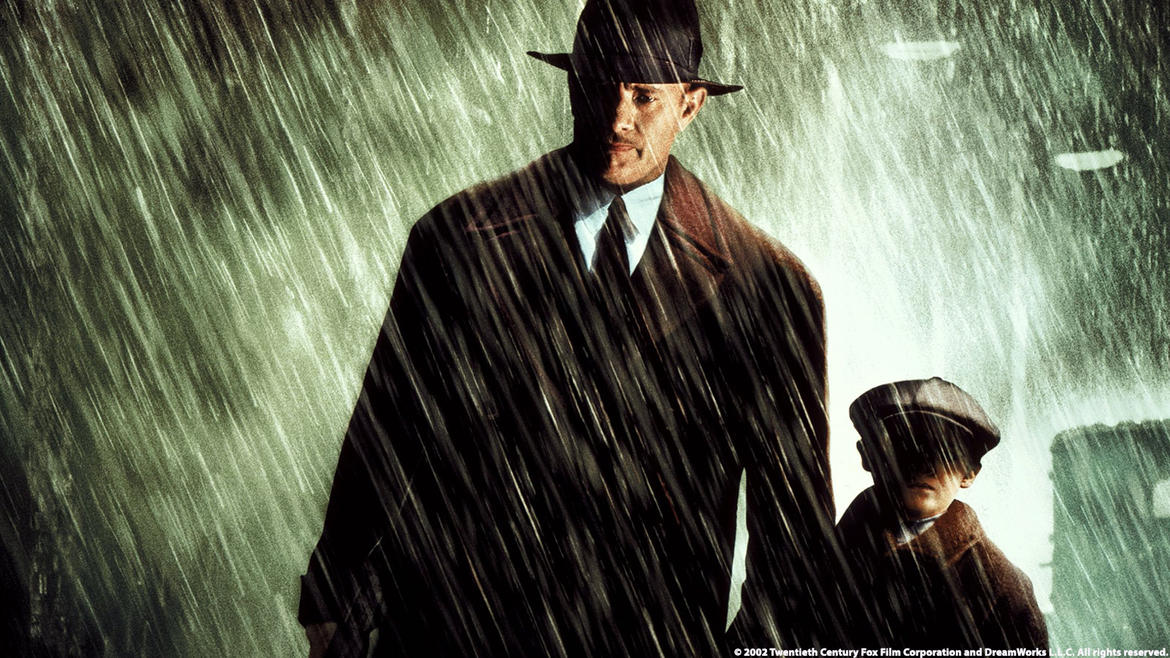
‘Road to Perdition’ – Film Review and Analysis

One of the most underrated movies of the 2000’s was Sam Mendes’s ‘Road to Perdition’, which was released to critical acclaim back in 2002 and did pretty well at the box office with around $200 million in ticket sales. While some people would be skeptical of watching ‘Road to Perdition’ at first because they think it’s your average crime / mafia movie that doesn’t have much to offer in terms of storyline and symbolism, they would be wrong when it comes to this film.

Sam Mendes, who directed two other great films ‘American Beauty’ and ‘Revolutionary Road’, does an excellent job here as this movie is beautifully shot and has a stellar cast. ‘Road to Perdition’ also benefited from the legendary cinematography work of the departed Conrad L. Hall for which he won a posthumous Oscar for ‘Best Cinematography’ for this film after he passed away in 2003. The scenery and settings for this movie help to create quite a unique atmosphere and the wide shots, long angles that are used help to make this film stand out as being above average. Beyond just the cinematography, the acting by the cast also stands out.

When you look back to see who was starring in the main roles for ‘Road to Perdition’, it is a very impressive list. Tom Hanks plays Michael Sullivan Sr., the lead role of the film and a conflicted Irish mafia man caught between his past and keeping his son sheltered from the consequences of his actions. Paul Newman, one of the greatest American actors of all-time plays the role of John Rooney, an Irish mafia boss, who is also conflicted between his paternal feelings of love for Michael Sr., and his wish to protect his own son, Connor, played by a young Daniel Craig, from his own destructive sins. Rounding out the list is Jude Law, who plays a gifted hit-man / grisly photographer known as Harlan McGuire, and Stanley Tucci, who plays a high-ranking member of the Italian mafia known as Frank Nitti. A young actor who steals most of his scenes is the young but talented Tyler Hoechlin who is Michael Sullivan Jr. in the film, a boy who is coming to terms with his father’s lifestyle and his ties to the mafia. A truly impressive cast of Academy Award winners and nominees, which makes this film even more of a lasting treasure.

‘Road to Perdition’ really brings the atmosphere and makes the setting feel real as it portrays life in Great Depression-era America by focusing on specifically both on the city of Chicago and its’ rural hinterlands, cornfields of greater Illinois. The movie really portrays well the last decade of America being discovered and settled, while undergoing deep economic difficulties, as the Irish and Italian mafias become a source of income and employment when none could be had.

Most movies don’t seem to want to portray the mafia as having been a well-oiled machine that acted like a legitimate business, but ‘Road to Perdition’ makes clear that there are ways to look at the criminal enterprises that achieved a lot of prominence during the Great Depression due to their ability to bootleg and their appeal to provide a good income to men without work.

Without spoiling too much of the plot, Michael Sullivan Jr. (Tom Hanks) is an enforcer and bodyguard for the Irish mafia in the Chicago area of Illinois who has a close relationship with his boss, John Rooney (Paul Newman), who is implied to have helped Michael Sr. a lot with a home, a steady income, and a purpose which is quite difficult to come by during the height of the Great Depression. Michael Sr. is a flawed man who has done murder and committed other crimes for his boss, Mr. Rooney, and knows that it may cost him his life. Despite his past transgressions, he wants to protect his family from his sins and wants to keep his boys from knowing about what he does for a living.

Connor Rooney (Daniel Craig) is shown to be jealous of the close relationship that his father, John, and Michael Sr. have and is resentful of him. Michael Sullivan Jr. (Tyler Hoechlin) is distant from Michael Sr., his father due to late working hours and distant lifestyle. As any boy would like to know about his father, Michael Jr. decides to find out the truth about who his father, Michael Sr. is, and what he does for Mr. Rooney. At this point, the plot really takes off in tragic and unexpected ways leaving the viewer engaged in the storyline and the eventual outcome. As mentioned before, the acting done by this legendary cast helps make the film what it is and what it still is today.

Beyond just being a typical mobster movie, ‘Road to Perdition’ has a number of poignant and thought-provoking themes that stay with you even after the end credits begin to roll. This film goes over the trials and tribulations that fathers and sons can have with each other even when they love and care for each other dearly. Michael Sr. and John Rooney are not related by blood by have a relationship similar to a father and son as Mr. Rooney was around for Michael and his family when they had nothing. He is heavily indebted to Mr. Rooney even if he knows what he is doing is wrong by committing violent acts for the mafia. Still, their bond appears to be unbreakable and they get along quite well with each other.

To the contrary, both of their relationships with their respective sons are shaky at best and hostile at worst. There is a considerable distance between Michael Sr. and Michael Jr. due to the fact that Michael Sr. makes his lifestyle and his work for Mr. Rooney a well-kept secret. Michael Sr. does not show much affection or love for his boy and it’s not made clear until the end of the film why that is. Michael Sr. obviously cares for his boy but likely doesn’t want his son to know about the horrible things he’s done to keep him, his brother, and his wife save from harm or want. Still though, Michael Jr. does not want to be kept away from his father and who he is.

He ends up pursuing the truth whether or not his father wants him to or not leading to quite a turn of events when the truth comes to light. Connor Rooney, John’s son is quite envious of the close relationship that Michael Sr. has with his father compared to him. However, this is for a number of reasons. Connor is very much unlike his father, John, and has a number of character and personality flaws that make him a liability to the family. Connor is shown to be impulsive, manipulative, untrustworthy, and greedy but the conflict comes to light when John Rooney must decide if he should stick by his son’s side or give him up due to his past misdeeds. As John Rooney says to Michael Sullivan Sr. during one of the movie’s best scenes, “Sons were put on this Earth to trouble their fathers.”

During one of the movie’s most touching scenes, Michael Sr. tells Michael Jr. about a town called an idyllic town called Perdition, Illinois, which has beautiful scenery along the beach of Lake Michigan, and where the Sullivan family has visited before when Michael Jr. was a little boy. Perdition is portrayed as a goal for the two Michaels to get to in order to start their lives anew and escape the sins of the past. It’s a way for Michael Sr. to get redemption after taking care of his ties to the mafia and by trying to make up for what he did wrong as both a father and a man. The word ‘Perdition’ as defined in other words is ‘hell’ or ‘complete and utter damnation’ in more religious terms. Michael Sr. may try to redeem his sins by going to church or by rectifying the wrongs he’s done by getting revenge on the men who wronged him in the past but he knows deep down that it may not be enough.

If he is on the ‘Road to Perdition’ or the road to hell, the film shows the audience that he wants to keep his son, Michael Jr., from going down that same path. He wants badly for his son to have a better life and a brighter future away from violence and death. Michael Sr. won’t let his downfall lead to that of his son’s as well. Even if Michael Sr. is a murderer and a sinner, he knows what’s still right from wrong and he is going to do his best to preserve the innocence and goodness of his son. As a father, he is flawed but he still loves his son dearly and wants the best for him still.

Certain moves fit a certain season of the year well and ‘Road to Perdition’ is no exception. The winter setting, the Chicago cold, and the mature themes help lead it to being an ideal film to be watched during the depths of winter in January and February. Without spoiling anything, the film is a real story with real characters who are flawed in their own ways but who each have their own complex motives that drive the plot forward. This film, most of all, touches the audience emotionally and will pull on your heartstrings.

‘Road to Perdition’ is very underrated film that remains one of my favorite movies to this day. I highly recommend ‘Road to Perdition’ to other movie buffs who are looking to watch a crime / mafia film that has a soul. In addition to having an all-star cast, a renowned director, and a legendary cinematographer at the helm, ‘Road to Perdition’s music score composed by Thomas Newman is excellent and fits perfectly into the many moods of the film and has some stirring moments that add to the film’s setting. If you’re snowed in this weekend from the blizzard, do yourself a favor and go watch ‘Road to Perdition.’

‘The Godfather’ – Film Review and Analysis

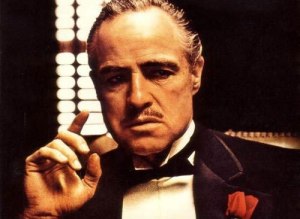
don-vito
“I’ve spent my life trying not to be careless. Women and children can be careless, but not men.”

One of the great classic American films of the 20th century, The Godfather, directed by the legendary Francis Ford Coppola and based off of the novel of the same title by Mario Puzo is often considered to be the most influential film that created the ‘organized crime’ or mafia/gangster genre in cinemas.

Since its’ release in theaters in 1972, it has garnered a cult following among fans who led to ‘The Godfather’ becoming a trilogy with Parts Two and Three both released in following years. Because of its significance culturally and historically, the Library of Congress preserved it in the United States National Film Registry in 1990. Because of its success at the box office and with film critics alike, ‘The Godfather’ garnered many Academy Award nominations and won four Academy Awards including ‘Best Actor’ for Marlon Brando and ‘Best Picture’.

In addition to adding to the legendary career of Brando, ‘The Godfather’ also introduced to Hollywood a young Al Pacino and a very talented Robert Duvall. Both men would have extremely successful careers in American film but I believe that it was ‘The Godfather’ which helped catapult their early careers into noteworthy stardom.

Drawing parallels to the real life ‘Five Families’ of New York that dominated the Italian mafia during the 20th century, the fictional Corleone family, led by Don Vito Corleone, is highlighted as being the ‘pariah’ and at odds with the other crime families throughout the film. Vito Corleone, played by Marlon Brando, acts like the quintessential mob boss whose cunning and intellect has made him to this day a very quotable character that has become apart of American popular culture.

In The Godfather, we see Vito nearing the end of his reign as boss of the family and looking for his eventual successor. Vito has three sons: Sonny, the oldest whose lack of foresight and hotheaded temper makes him a liability albeit is the favorite initially to replace Vito as Don of the Corleone family. Fredo is the middle child and is a consistent womanizer. Considered neither to be reliable nor intelligent, Fredo is kept to the side often and is not a suitable person to lead the family due to his lack of cunning and intellect. Michael, a U.S. Army Veteran and the youngest child of Vito Corleone is portrayed as being very innocent and often has requested to be kept out of the family business if he can avoid it.

However, as the viewers of the film can understand and interpret, a mafia family reels everyone in to its business whether or not it’s intentional. One of the best aspects of The Godfather is watching the changes in Michael’s behavior and demeanor as extenuating circumstances involving the family forces his hand and he is forced to take on more responsibilities and duties as a Corleone and the son of Vito. His loss of innocence and the transformation that occurs with Michael from dignified U.S. Army Veteran to cunning, ruthless Mafia boss is a great strength of this timeless film.

For those critics who are against violent Mafia films and choose not to watch them, that is fine but it should be considered that there is more to this movie than meets the eye. Above all else, it is the story of a father trying to repent for the sins of the past and trying to keep his sons from avoiding the same mistakes that he has made.

The relationship between Vito and his son, Michael in particular is memorable for how Vito expects so much from Michael considering he is the most levelheaded and intelligent of the Corleone brothers. There is one great scene in the film where Vito and Michael are discussing the ongoing drama of the war between “The Five Families.” Vito laments to Michael on how he is sorry that he was thrust into the mafia business when he expected his son instead to become “Governor Corleone” or “Mayor Corleone.” Michael simply looks at his father lovingly, and says: “We’ll get there, pop. We’ll get there.”

Other classic scenes that I enjoyed involve the courtship between Michael and a beautiful Sicilian woman named Apollonia. What I liked most was highlighting the very old-school dating process of asking Apollonia’s father for permission to date and then later marry his daughter with all respect given. It’s a touching moment in the film, which reveals that Michael’s humanity has not been totally wiped out because of the mafia. It was also great of Director Coppola to show the traditional procession of the Sicilian wedding and how all of the townspeople were involved in wishing Michael and Apollonia well.

Without trying to spoil the rest of the film for those of you readers who haven’t watched The Godfather yet, I can’t recommend it enough to avid movie fans. The directing by Francis Ford Coppola, the cinematography, the acting performances by Al Pacino, Marlon Brando, Robert Duvall, James Caan, etc. are phenomenal and they deserved every heap of credit that was bestowed upon them at the Oscars and elsewhere.

The Godfather is simply more than just a mafia film in my opinion. It is a story about a complex family, fathers and sons, human nature, and the thirst for power and respect. Have an open mind and see this film if you get the chance. I promise that you won’t regret it even if the running time is three hours in total. You can always tell your friends and family that I wrote a blog post that you couldn’t refuse to read.