

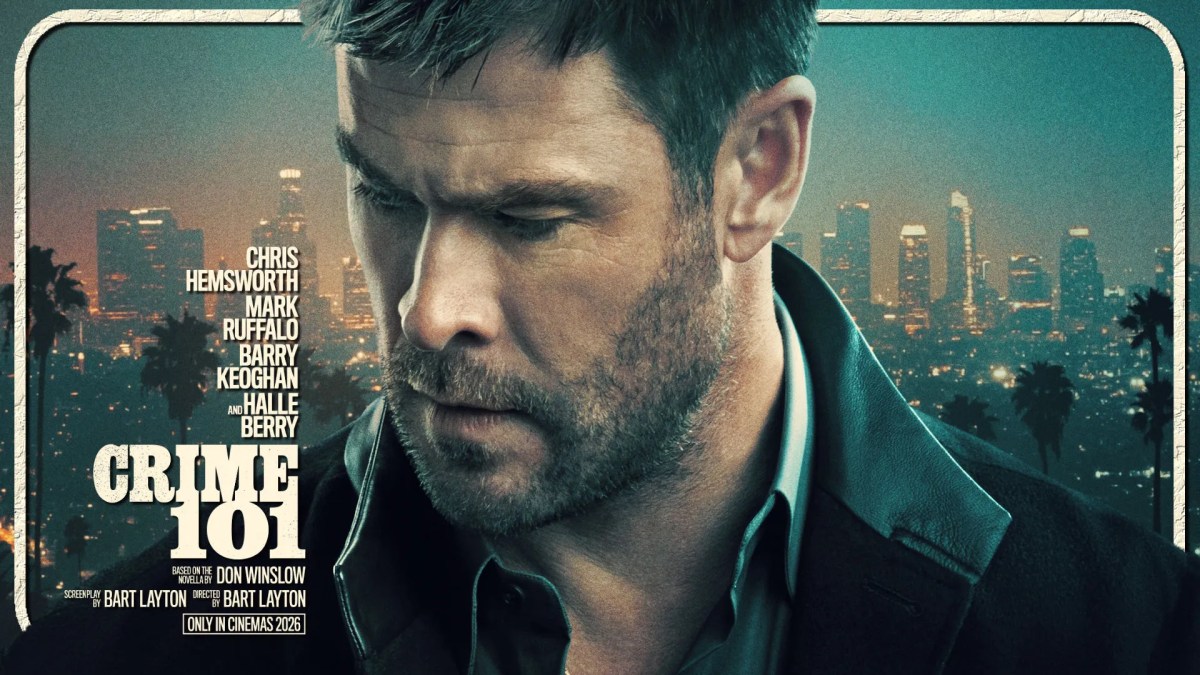
‘Crime 101’ – Film Review and Analysis

“While the film’s title, ‘Crime 101’ seems basic in its premise about a typical jewel thief applying his craft while other characters fight to make their mark in a ‘late stage’ capitalist system, the depth to which each character is brought to life over the film’s runtime and then tied into each other’s destinies convincingly is both good writing and screenplay adaptation.”

Los Angeles, California, just lends itself to being ripe for crime or drama thriller films and this has been the case since the 1990s when ‘Boyz n the Hood’, Heat’ and ‘L.A. Confidential’ came out in theaters. Since then, you’ve got other great films like ‘Training Day, Collateral’ and ‘Crime 101’ (2026). While the film’s title, ‘Crime 101’ seems basic in its premise about a typical jewel thief applying his craft while other characters fight to make their mark in a ‘late stage’ capitalist system, the depth to which each character is brought to life over the film’s runtime and then tied into each other’s destinies convincingly is both good writing and screenplay adaptation.

What could easily have fallen into the well-worn formula of a black-and-white crime thriller instead embraces moral ambiguity, examining how each character navigates the uneasy space between the fate handed to them and the choices they make to escape it. The film adaptation of ‘Crime 101’, a novella by crime novel author is fleshed out over different locations within Los Angeles from LAX to Santa Monica to Beverly Hills, showing that the city itself shapes the story, its characters, and how the action unfolds scene by scene.

The main storyline centers around Mike Davis, who is an experienced jewel thief, who has his own moral code despite robbing and threatening those who stand in his way, including no use of violence and never leaving a discernible trace behind including DNA. He leaves a discernible pattern that not many detectives would pick up on except for LAPD Detective Lou Lubesnick who unlike his younger colleagues, enjoys putting the pieces together, building a case up overtime, and trying to purposely entrap Mike before he lands his next big score. Lou is nearing the end of his career, wanting to still make a name for himself in his department, and the 101-highway jewel robber known as ‘Mike’ may be his best chance to still make a legacy for himself with his lack of recognition for his contributions and chiding he receives from younger superiors.

Sharon, like Mike and Lou, is heading towards a reckoning with her chosen path as she strives to close her biggest deal yet with her being a high-end insurance broker for LA’s wealthy elite, even though she has done so multiple times before, is not her own boss, and is unable to be recognized as a partner at her own firm after many years. Each character becomes honed in on each other because they reflect what they see in themselves as Lou looks to further his career by finding Mike and catching him, Mike needs Sharon to help him land an even bigger robbery of a client of hers, and Sharon realizes she may need both their help to get herself out of her current predicament at her job, which morally tests her and could threaten her financial future.

Each of the film’s major characters is looking to make their most out of the dog-eat-dog world that capitalism forces upon them whether you’re born into poverty and in the foster system like Mike, whether you’re overlooked and disregarded because of your unwilling to play the work status game like Sharon, or if you’re like Mike whose unique perspective and meticulous work is unrecognized by an LAPD looking to clear cases as soon as possible, even when a string of robberies fit a perfect pattern, but yet is overlooked by others for the clear ‘wins’ of the day.

Crime thrillers are a dime a dozen, but ‘Crime 101’ is brilliant in terms of its direction, the screenplay, the usefulness of the LA setting, and the depth of each main character with how you really get to know them over the course of the 2 ½ hour screen time. You’re able to understand the moral predicament of each character, what motivates them each, how the world has let them down in different ways, and what drives them to do what they do. Without giving everything away about each character in the first 20-30 minutes, Director Bart Layton can really bring out the suspense, the tension, and the character development without overdoing it.

The film’s release in 2026 really captures how chasing after increasingly concentrated capital in the hands of a wealthy few leaves each character scrambling to have a piece of the illusive pie, which is largely out of reach without resorting to extreme measures. The current issues of inequality, homelessness, lack of social welfare, really feed into the story and what drives each character as they are overlooked in the grand scheme of LA” s high society. Each of them stands to benefit from choosing to not play the game anymore on other people’s terms, whether for promotion (Sharon), for recognition (Lou), or freedom from a volatile past. (Mike).

Luckily, there are a few twists and turns throughout the film to keep it engaging, especially with great supporting performances by the legendary Nick Nolte (Money) as Mike’s money man and fixer along with Barry Keoghan as ‘Ormon’, a violent and disturbed young biker looking to steal or replicate Mike’s robbery success(es) but without any kind of moral code. Each of the major characters may be resigned to losing their job, their freedom, or their livelihood, but they cling to their chosen craft as a way to keep themselves moving forward in life. They don’t want to let their fate to be left to pure chance, but rather to work with each other in an unlikely way to make sure they can surpass the limits on their futures that society has imposed. You can question the morality of each character’s choices, but ‘Crime 101’ lets us really understand their motivations and why they take the actions they do, and it’s not done in an overly cliché way.

In the end, Crime 101’ stands out not just as another stylish Los Angeles crime thriller from a long history of great ones, but as a character-driven examination of ambition, recognition, and survival in a city where everyone seems to be chasing something just out of reach. By allowing its characters to exist in moral grey zones rather than simple hero-or-villain roles, the film captures the uneasy tension between personal choice and circumstance that defines so many lives in modern Los Angeles. Director Bart Layton builds suspense patiently, letting the intersecting paths of Mike, Lou, and Sharon unfold until their destinies collide in ways that feel both inevitable and tragic. In a genre crowded with forgettable heists and predictable thrillers, ‘Crime 101’ reminds audiences that the best crime stories are ultimately about people, their flaws, their desires, and the risks they are willing to take when the system leaves them with few other options.
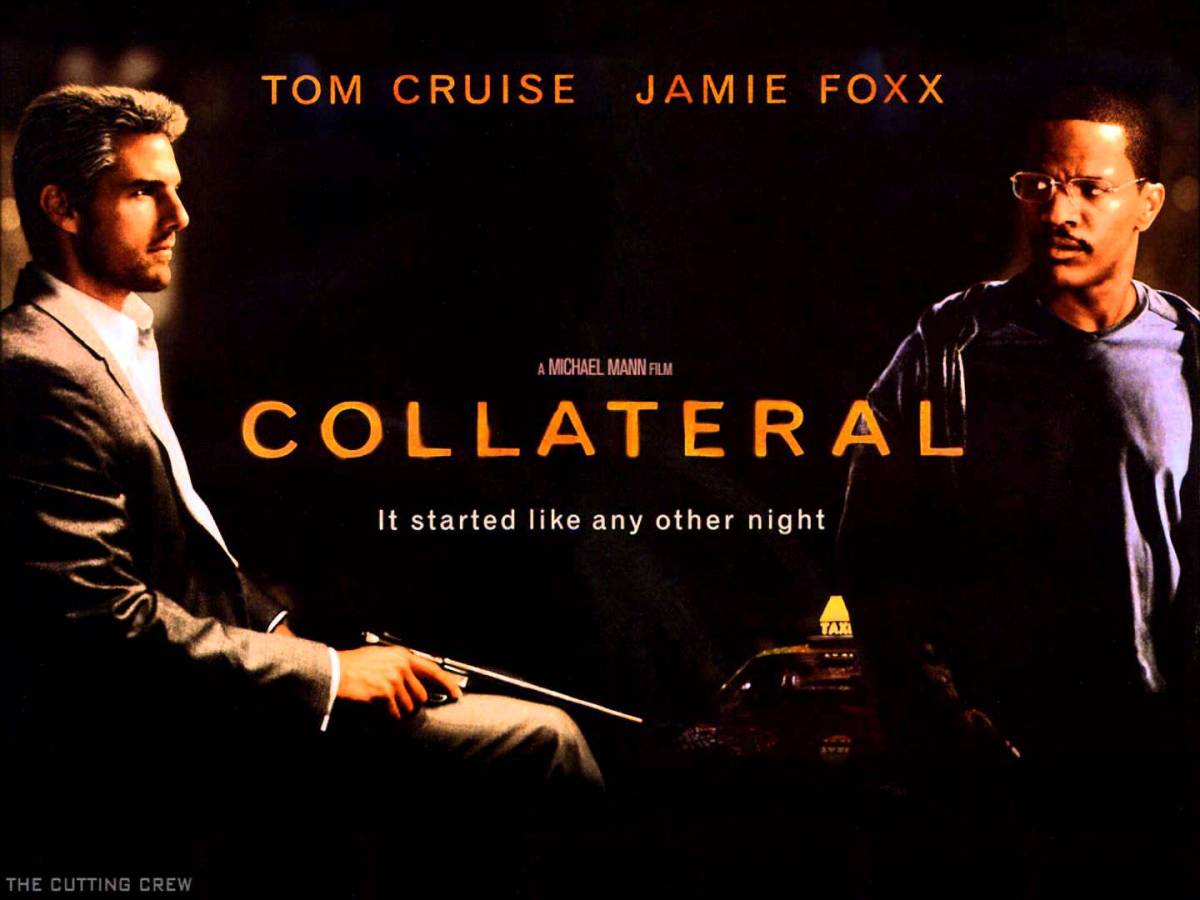
‘Collateral’ – Film Review and Analysis

It’s not often the case that a Hollywood film can go beyond its’ genre to relay a deeper message about the human condition and why people are the way they are. ‘Collateral’ (2004) is one of those movies that is able to achieve just that by making the audience member such as myself care about the characters as well as appreciate the deeper meanings beyond the dialogue and the setting.

While there are numerous crime thriller films out there, ‘Collateral’ is able to go above and beyond the clichés and be original in its’ own right. Part of this is due to the fact that Tom Cruise and Jamie Foxx give outstanding performances for their respective characters along with the rest of the credit that should be given to director Michael Mann who relishes being a director for crime noir dramas that are set in Los Angeles. While ‘Collateral’ was not an Oscar award winning film unfortunately, its’ characters, the setting, the action sequences, the directing, and the overall message that the plot sends to the audience make it a unique and reputable movie that deserves a viewing or two.

Without going into too much detail, the plot of ‘Collateral’ stars two men who come from very different circumstances and live very different lives. However, the Cosmos align to have them meet for the first time at night in Los Angeles. “Vincent” played by Tom Cruise, has just arrived in Los Angeles from the airport and is looking for someone to take him around the city. What better way to see L.A. than to do so by taxi so Vincent goes to the nearest taxi stand to seek one out for a ride. That’s where the plot of the film begins as Max, played by Jamie Foxx, accepts Vincent as a new passenger after ignoring his presence initially. Vincent, dressed in a gray suit with gray hair could be just like any other businessman in Los Angeles but he’s not what he appears to be. Max starts to realize this as the night goes on but not until after he drops off Vincent at his first but not his last destination.

Vincent is more than just the new guy in town here for business. He’s a contract killer and a hitman who is in Los Angeles for one night only in order to carry out a series of hits. After bearing witness to the first of Vincent’s murders, Max is forced into being Vincent’s chauffeur for the rest of the night as he has four more contract hits to carry out for his boss, “Felix”, played brilliant by actor Javier Bardem. Vincent’s goal for the night is to carry out the rest of the contract hits successfully and then get a flight out of Los Angeles as the sun rises after his boss pays him handsomely for his ‘work’. Max’s goal for the rest of the night is to get out of this situation alive without getting killed by Vincent or being seen by the police as an accomplice of Vincent who is dragging him along as he commit these vicious murders in cold blood.

Mixed up in all of this madness is “Annie”, played by Jada Pinkett Smith, who is a prosecutor in the U.S. Justice Department who works out of their office in Los Angeles. She ends up being the first passenger of the evening in Max’s cab before the fates intertwine and Vincent comes along to change Max’s life forever. The only good part of Max’s night is when he meets Annie and they hit it off enough to the point where he is able to get her phone number but it is uncertain whether or not he will have the confidence to call her and make plans.

Unfortunately, Vincent, the contract killer, has Annie in his sights as one of his five targets setting off a series of events that put Max and Vincent on a tense collision course. On top of all of this, you have members of both the FBI and the Los Angeles Police Department noticing what Vincent and Max have been up to which causes more violence and bloodshed to occur. “LAPD Detective Ray Fanning and FBI Investigator Frank Pedrosa” (played by Mark Ruffalo, and played by Bruce McGill) are the ones leading the investigation into these random but coordinated killings popping up all over Los Angeles in the dead of night orchestrated by Vincent with Max as his unwilling accomplice.

There’s no character in this film that isn’t in danger or who may come into harms way and that is partly what makes the title of the film fitting as called ‘Collateral’ because everybody in this movie feels the damage caused by Vincent in some way. Max has feelings for Annie so he wants to do the most he can to protect her before she become apart of the ‘collateral’ damage that is being inflicted by Vincent.

Michael Mann, the director of ‘Heat’ (1995) previously and of this film ‘Collateral’, does an excellent job of making the setting of Los Angeles feel like its’ own character that sets the tone for the movie as well as provide an analogy for what the characters of Max and Vincent are like. Los Angeles is a sprawling urban city of more than four million people and has highways, tunnels, and bridges that loop and wind through the various neighborhoods that can only be connected by car.

For Max, Los Angeles is the only home he’s ever known but for Vincent, it’s a sprawling, disconnected mess of alienated people who don’t know or care about each other even if the collective Gross Domestic Product (GDP) of their city is more than most countries on the planet. Vincent regales Max about a story of someone who dies on the Los Angeles Metro one day and nobody else on the transit system notices for many hours, which proves his supposed point about the city’s culture of alienation. Similar to L.A., Max and Vincent are disconnected from other people in their own ways. Max is shy and reticent with new people he meets and doesn’t go after what he wants while Vincent is a sociopathic killer who doesn’t have much regard for people in general.

There’s one excellent scene in this film where Vincent and Max chide and prod each other as to why they are who they are. Vincent wants Max to call Annie, the girl whose number he got earlier in the evening, because “Life is short. One day it’s gone…” Max doesn’t reply regardless of what Vincent’s opinion is of his dating life. Later on in the scene, they both see a lone grey wolf walking through the streets of Los Angeles presumably searching for food or for some sort of purpose. In so many ways, this is symbolic of who Vincent and Max both are.

Vincent knows his purpose is to kill people because it’s what he ‘does for a living’ but this job alienates him from his humanity and causes him to be a lone wolf. Max is unsure of his purpose in life and wants desperately to be more than a simple taxi driver. He has dreams to start his own limo company one day but never takes the first step to making that dream come true and actually become a reality.

Even though they are two different men from very different circumstances, they are able to see what they should become if they weren’t so set in their ways. Max is a compassionate person who cares for others but is stuck without a purpose and isn’t able to take control of his life. Vincent is a sociopath who can’t relate to other human beings but knows what his one true purpose in life is and this allows him to feel some control over his existence, which he deems as being ‘meaningless’ in the long run.

Even with the fact that they detest each other, they begin to understand the flaws in their own character and how they could be different if they gave themselves a chance. Max could be more spontaneous and avoid having a repetitive life if he chose to be something more than a taxi driver. There’s no changing that Vincent is a cold-blooded killer but you start to see the circumstances that created his monstrous self. He never knew his mother, and his father was an alcoholic who beat him mercilessly and let young Vincent to grow up in foster homes. Max, nor the audience, can show much sympathy for Vincent’s plight but you start to realize that he is not just a simple-minded killing machine.

While life may be meaningless for Vincent, he still thinks that Max should live it to the fullest and ‘carpe diem’ before it’s too late for him. Max gets Vincent to ask himself why he is a sociopathic killer and gets him to reveal a little about his troubled family as well as to why he is a nihilist. In response, Vincent gets Max to ask why he never did anything to make the Limo Company to become a reality. He implores him to think deeply about making his dream come true because someday it may never come to pass if you don’t do anything to make it happen in the first place.

‘Collateral’ is a great crime thriller that is extremely well written, has great acting, and is directed and choreographed superbly by Michael Mann and his team. Beyond that, ‘Collateral’ is a film that makes you question certain things about life and the limits that we put on ourselves. The nihilism and disconnectedness of both Los Angeles and the main characters of Max and Vincent is both surreal and powerful. This is not your typical Hollywood drama and that’s a good thing. This movie is not a blockbuster and feels more like an independent film that came in way under budget.

‘Collateral’ is a gripping take on two men who are forced together by fate to go through a night together that will change them forever. I highly recommend this movie based on the excellent writing, acting, directing, and the strong storyline that keeps the viewer interested. Jamie Foxx and Tom Cruise do an excellent job and have great chemistry together, which is what makes ‘Collateral’ really shine, and have longevity as a unique film over a decade later. If you get the chance sometime, you should really see this movie.