

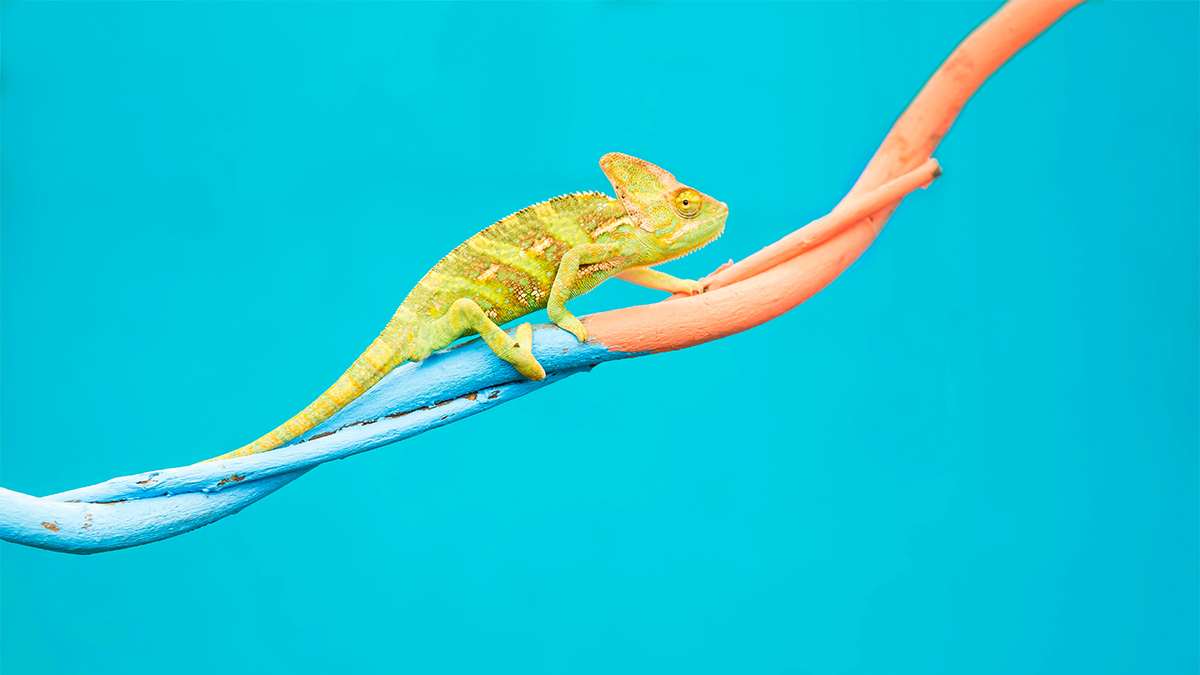
Adaptability Is Both Our Greatest Strength And Weakness

“To be, feel, or act the same or to be resistant to change can hurt us in an ever-changing society where we are constantly at the mercy of forces that are beyond our control.”

Being adaptable is largely thought of as a good characteristic and for which you are usually commended for. We try our best to be adaptable to the challenges and opportunities that life throws at us as best as we can. To be, feel, or act the same or to be resistant to change can hurt us in an ever-changing society where we are constantly at the mercy of forces that are beyond our control.

When you can adjust to new conditions or changes, there is usually positive reinforcement from others who also are adaptable to the changes or conditions at the same time. My concern is that while adaptability has helped us thrive in different eras as a species, it has at the same time been a weakness of ours in adapting to norms or behaviors that harm our collective progress.

Adaptability is both our biggest strength and our biggest weakness in that it both allows us to change conditions and norms for the better, but also it can make things worse when we backslide into previous harmful attitudes, values, and beliefs that can make a comeback. Being adaptable has helped humanity survive different tumultuous eras since the early days when we were foraging for basic sustenance and shelter to survive.

The act of adaptation goes back to what makes us innately human, at our core, even when we get used to adapting to less-than-ideal conditions or changes that revert progress we’ve made rather than embracing further progress to our benefit. While change does not always equal to progress, my concern is that when we are adaptable to any kind of change, both positive and negative, without thinking of the consequences of such constant adaptability, we remain at risk for going backwards and worsening our quality of life.

To give a few examples of when adaptability is a strength of ours as a species, I would refer to our ever-increasing desire to assimilate, tolerate, and promote diversity, inclusion, and equity in our world. This social inclusion and desire for equal rights has been an adaptation that is rather recent when you consider how far humanity has come from the centuries and millennia of mistreatment, discrimination, slavery, and wars that were fought to keep the horrible status quo of how we treat each other.

Our ability to adapt to making sure that this previous status quo was no longer acceptable and repugnant in terms of previous attitudes has led to greater tolerance, acceptance, and more diversity throughout the world. Yes, there are still challenges to our adaptability in this important area but to say that we haven’t made progress in this area of life would be a falsehood. Being able to adapt successfully to these societal changes has by and large been a positive development in my lifetime and beforehand earlier on in the 20th century. While there has been negative resistance to this kind of adaptability, I’ve found there has been most people accepting these changes that have gone on and while the struggle continues, this strength of humanity to seek greater equality and inclusion has been a net positive of our adaptability mechanism.

In addition to that previous point, the expansion of social and economic rights to more and more people throughout the world have led to greater political and civil rights as a result. They have been tied to each other and have been a positive step in the right direction. There is greater representation politically and economically for more diverse populations than ever before and while progress still needs to be made, the status quo has been upended by our adaptability in this area to these kinds of societal changes.

While adaptability is our greatest strength, it can also be our greatest weakness ironically, and this has been shown in different areas of life where there has been a reversal of progress recently or too much comfort shown with a lack of progress. I’ll point to two different areas where there been a reluctant yet steady adaptability towards the climate crisis and for democratic backsliding across the world. Where there is significant resistance in both areas, we are running out of time in preventing these new ‘norms’ from taking hold. It’s common knowledge that our planet’s climate is changing with disastrous consequences for livability for more and more people in different worlds.

Longer-lasting heat waves, disastrous storms with greater frequency, and unyielding glacial icecap melting threaten to become the rule of our life on this planet rather than the exception. From my perspective, we have become complacent to these changes and are looking to adapt rather than to work harder to change course. From our political leaders to our civil society, we are looking more and more like we are giving up rather than trying harder to reverse the negative changes set to befall us around the world.

Our ability to adapt to a warming world highlight how while we can adapt to negative changes, many of us will still suffer as a result and some won’t survive this kind of adaptation. Rather than seek to change the status quo in climate action, I believe that we are seeking to adapt to the changes that will befall us despite the harm it will do to the planet and our place in it rather than do our best to collectively try to resist such a negative adaptation.

Related to this regretful kind of adaptability, our political leadership worldwide has failed to martial the resources and the willpower necessary to combat climate change as quickly and as effectively as needed. Instead of championing solutions and working across societies to solve the climate crisis, there has been instead of focus on centralizing power, holding on to political office, and reversing previous norms and values of democratic rule to a forthright shift towards autocratic or dictatorial rule. I think this is a negative adaptation that more and more countries are seemingly getting used to as previous norms, values, and equality under the law are being undermined. It is not too late to reverse the damage done while the power of the vote and the right to assemble and protest is still allowed but that is not a given.

As much as we had to adapt to democratic rule centuries ago, it’s been shown that when there is no fight to keep those norms and values alive, we can just as slide backwards to the days when kings, tyrants, and demagogues ruled by force and decree across broad swaths of the world. Democratic norms and values are not universal values these days but our adaptions to them have largely further greater equality, inclusion, and prosperity than the opposite of autocratic rule. If we get used to the unraveling of previous norms that had served us well as a society to a previous time where we adapted to autocratic norms and rule by the few over the many, then we are in for a rough period of adaptation which will not serve us as well.

Adaptability has largely served humanity well since our early days of foraging and hunter-gathering. It is an innate trait that we must make whatever conditions we live in work well enough for us. Being able to adapt can both help us but also harm us depending on what we are adapting to. Let’s continue to set a higher standard individually and collectively to what we tolerate and adapt to and what we will not adapt to. We still have a choice in what we get used to and for what we do not accept and let’s hope we always will but right now, our adaptability is leading us on a crash course where instead of choosing to adapt to our surroundings, we will be forced to do so and will have to do so as a result without having had the choice in previous eras.

‘Leave the World Behind’-Book and Film Comparison

“Whether you prefer the visual spectacle of cinema or the intimate exploration of characters through Rumaan Alam’s written narrative, “Leave the World Behind” provides a gripping tale that will leave you questioning the boundaries of trust and the resilience of humanity when catastrophe strikes.”

‘Leave The World Behind’ is a thought-provoking novel, written by Rumaan Alam, first published in 2020. The story of both the book and the film adaptation revolves around two families who are forced to come together in an unexpected turn of events. Both mediums for this story explore the themes such as fear, trust, and the complexities of human relationships. Recently, in 2023, ‘Leave the World Behind’ was adapted into a film, released on the Netflix streaming platform, which has captivated audiences with its compelling narrative, largely based on the book version.

Set against a backdrop of uncertainty and increasing tension that progresses through both the novel and the film versions, ‘Leave the World Behind’ guides the audience through a suspenseful and gripping narrative. The story begins with Amanda, Clay, and their two teenage children, Rose, and Archie, who live in New York City, who based on Amanda’s yearning to ‘leave the world behind’ for a little while at the beginning of the story, head off on a vacation to a remote house they have rented on Long Island. The stage is set for tranquility, summer relaxation, and family bonding, but their idyllic respite is soon interrupted by unforeseen circumstances.

Soon after their arrival, an elderly couple, Ruth and G.H., surprisingly appear at the doorstep. In the movie, Ruth is the daughter of G.H. or George but in the novel, she is his wife. However, in the main storyline, they claim to be the owners of the rented property, leaving Amanda and Clay in a state of confusion and unease. The intrusion tests the boundaries of trust and raises a myriad of questions such as the circumstances beyond which Ruth and G.H. have fled the city to come back to their summer house.

During a series of unprecedented events, the two families find themselves isolated from the world and confronted by their own fears. In addition to the Sandford and Scott families, for which both the novel and film focus on, the World acts as its own character, representing the unknown and unpredictable circumstances that affect the protagonists, who may want to escape from it but are sucked into the growing chaos and the calamities that are befalling it.

The novel unfolds in a secluded Long Island vacation home miles away from the urban chaos, yet the families cannot remain isolated from the chaos surrounding them forever. Its remoteness adds to the suspense as the families grapple with their limited resources, increasing isolation, and the unknown circumstances that encroach upon their peace.

Because of what’s going on in the world, the families have no access to any information that could help them piece together what’s going on. The phones are not working, the TV signal is out, and even a GPS or satellite phone connection is unable to be used as a fail-safe as the two families try to make sense of what’s going on in the outside world. Without spoiling either the book or the film adaptation, the main events of ‘Leave the World Behind’ entail the following:

Amanda, Clay, and their children settle into the remote vacation home with the joyful anticipation of a peaceful getaway. Ruth and G.H. arrive, insisting that they are the owners of the rented property, causing confusion and concern for Amanda and Clay. As the families try to make sense of Ruth and G.H.’s sudden arrival, they face a complete loss of communication with the outside world. This event further amplifies their vulnerability and isolation.

The families begin to experience a growing sense of unease as bizarre occurrences, such as power outages and mysterious sounds, escalate. Fear and paranoia start to consume their thoughts and actions. Together, the families must navigate the tensions and challenges that arise due to their forced cohabitation with each other. The increasing fear casts doubt on their ability to trust one another, as they slowly unravel the truth behind their predicament. Amanda, Clay, Ruth, and G.H. venture beyond the confines of the house in search of answers. They encounter strange phenomena, unexplained events, and a world teetering on the edge of chaos. The unknown becomes their companion, adding depth to their personal growth and transformation.

As the families face the conclusion of their isolated journey, the fate of the world hangs in the balance. The climax leaves readers questioning the boundaries of human connection and the fragility of our existence on the planet and our inability to control the changes that affect our world.

‘Leave The World Behind’ in both the film and the book offer a gripping narrative that delves into the complexities of human relationships and the primal fears that lurk within us. Rumaan Alam’s novel and its film adaptation effectively convey the story’s themes of uncertainty, trust, and the vulnerability of our connectedness to technology and modern conveniences. Through the characters of Amanda, Clay, Ruth, and G.H., both readers and moviegoers will be compelled to question their own responses to challenging circumstances, leading to a deeper understanding of the human condition, and how we react in times of crisis and stay resilient in the face of uncertainty.

Adaptations play a crucial role in bringing stories to life in different mediums. “Leave The World Behind” is an example of adding to the richness of the central story by being a captivating tale that can successfully be adapted into both a film and a book. The film adaptation of “Leave the World Behind” takes the audience on a thrilling and suspenseful journey, that is more of a thriller than a slow-moving drama that the book is. The novel version of “Leave the World Behind” focuses more than the film version on suspenseful and survival themes, offering a more immersive experience through its written narrative.

Despite the changes involved with making Rumaan Alam’s book into a Netflix movie, the overall themes have remained the same, which make both adaptations as appealing as possible because the core messages have not been lost in the transition.

Humanity’s capacity for survival is a major theme explored in both the film and book versions of “Leave the World Behind”. The characters face overwhelming challenges and unexpected circumstances, and their resilience and ability to adapt become crucial to being able to survive this world-changing event. This theme encourages reflection on our own strengths and perseverance in the face of adversity when the world seems to be falling apart.

Both the film and book versions delve into the complexities of trust and its relationship to isolation. In a world where human connections are vital to future survival; the characters confront their fears and insecurities. The uncertain nature of the situation prompts them to question the intentions of those around them, blurring the lines between friend and foe, and who can be trusted in this world gone awry.

The fear of the unknown is another prevalent theme in “Leave the World Behind”. As the characters navigate through an uncertain world, their fears and anxieties take center stage in how they view themselves and each other. The unfamiliar couple in the story serves as a catalyst for this fear of what’s out of the ordinary to start with, leaving the audience questioning their true intentions, and adding an element of suspense and intrigue.

While both the film and book versions of “Leave the World Behind” explore these core themes, they differ in their execution and portrayal. The film adaptation of “Leave the World Behind” brings the desolate post-apocalyptic setting to life with captivating visuals, action sequences affecting the characters, and more information regarding the reason why the world is in trouble, enhancing the sense of isolation and uncertainty. The use of cinematography and special effects heightens the tension and adds a visually engaging aspect to the overall story.

The novel provides a deeper exploration of the characters’ thoughts and emotions, allowing readers to truly immerse themselves in their journey and who they are as individuals. The power of written language enables readers to form a more intimate connection with the characters, enhancing the suspense and impact of the story, as well as what their internal dialogue is telling the reader as they go through the events affecting the world. As a differentiator, the film employs quick cuts and intense sequences to maintain a fast-paced narrative, while the book offers a more leisurely pace, allowing readers to savor the intricacies of the plot, and unravel the layers of suspense at their own pace.

Character development differs between the film and book versions as well. The film adaptation relies on visual cues and actions to convey the characters’ emotions, while the book delves deeper into their inner thoughts and motivations. This distinction provides a more nuanced understanding of the characters and their personal journey in the book. In conclusion, “Leave the World Behind” in both its film and book versions, presents an intriguing and suspenseful story that explores themes of dealing with survival, maintaining trust with others, having resilience under duress, and managing one’s fear. The film both captivates with its visual shots and its thrilling sequences, broadening our understanding from the book of how the world is really ending, while the novel offers a more immersive and introspective experience of how the characters are changing from chapter to chapter.

Whether you prefer the visual spectacle of cinema or the intimate exploration of characters through Rumaan Alam’s written narrative, “Leave the World Behind” provides a gripping tale that will leave you questioning the boundaries of trust and the resilience of humanity when catastrophe strikes. Discover the power of when adaptation is done well in storytelling and explore the captivating novel and movie adaptation of “Leave the World Behind.”