The Fan Pricing Crisis – How Sports and Entertainment Are Pricing Out Their Biggest Supporters

“There is a clear difference between paying a premium for a rare experience and being priced out of that experience, which most people find themselves facing today.”

If the value of a product or service is in high demand and the supply is limited, you’re going to be paying a lot for that good or service. I accept that inevitable fact of life and have paid that in my own life numerous times, especially for a concert, a sporting event, or even a last-minute show. Performers, artists, and athletes put their blood, sweat, and tears into their craft and they need that consistent revenue from fans for their livelihoods. I’m supportive of this kind of system, but what I am increasingly frustrated by is when dynamic pricing models, monopolistic practices, and sheer lack of affordability across these different types of entertainment have combined to cause inflated prices to occur for the average fan, where you can’t get in the arena.

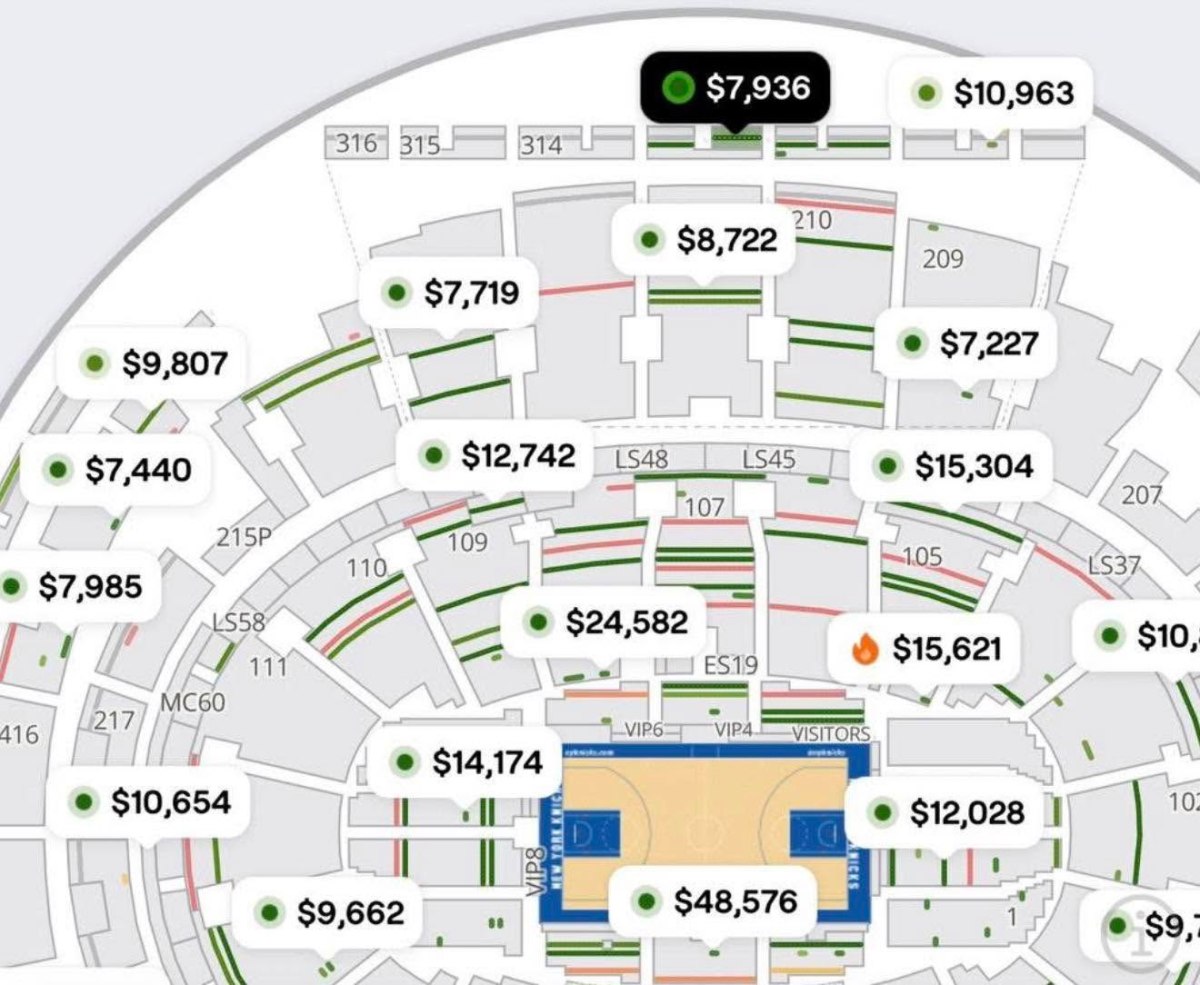
Prices for special events like the Super Bowl, the FIFA World Cip, and the NBA Finals are always going to be inflated, but I find that they have become overinflated. Many special events don’t even match the cost of those events should charge if they matched the inflation-adjusted value compared to the event ten or twenty years ago. For example, When the New York Knicks last reached the Finals against the San Antonio Spurs in 1999, a typical Finals ticket generally ranged from roughly $150–$500 face value, with premium seats running higher. In the secondary market, many tickets sold for hundreds rather than thousands of dollars at that time. Adjusted for inflation, that ticket price would be approximately $300–$950 in 2026 dollars. However, if you look at any secondary market site as I write this article in June 2026, it costs between 3k-10k for nosebleed seats and there’s nothing available under $3,000, showing that these prestigious events are no longer affordable, except for the very wealthy in our society.

The issue is not that prices rise when demand exceeds supply, which is to be expected especially for special concerts or rare sporting events. That is a basic economic reality of supply and demand in a capitalist system. The current issue is that modern ticketing systems have evolved in ways that extract the maximum possible amount of money from consumers through dynamic pricing algorithms, excessive service fees, speculative resale markets, and limited competition among ticketing providers. There is a clear difference between paying a premium for a rare experience and being priced out of that experience, which most people find themselves facing today.

This unfortunate situation is especially the case since there’s nothing available for the average middle-class fan in their price range, including the sections that are further away from the action. Increasingly, average fans of median or lower income are finding themselves out of luck for any special entertainment events and even for regular concerts or theater performances. Notable performers including Taylor Swift, Bruce Springsteen, and Beyonce have taken advantage of the dynamic pricing situation to charge more for their concerts even as their fans find themselves squeezed not just by the ticket prices but also for paying concessions, parking, and even needing to fly or drive to the concert on top of the cost for entry to the event.

One of the most controversial developments in modern entertainment has been the rise of dynamic pricing, which is very much an American phenomenon at this point, but could become popular elsewhere soon. Like airline tickets or hotel rooms, ticket prices can now fluctuate dramatically based on demand. A seat that costs $250 in the morning may cost $750 by the afternoon simply because an algorithm determines that consumers are willing to pay more and track people’s spending patterns over time.

While defenders of dynamic pricing argue that this approach reflects market realities, critics are right to point out that these systems often reward sheer wealth rather than loyalty to the team, the athlete, or the musician. Fans who have supported a team, artist, or event for decades frequently find themselves competing against corporate buyers, professional resellers, and affluent consumers with far deeper pockets. These buyers don’t usually care about the team or the artist and will often surge the pricing to make a profit off the ticket and sell to the highest bidder rather than to lower the price for someone of moderate means who is a true fan or supporter of the event they want to see, but will never get the chance to do so now.

Sports and entertainment have historically served as one of the few places where people from different economic backgrounds could gather and share a common experience together without barriers between them. Yet as prices continue to rise and these kinds of events become geared to the top 1-10% of our society including private suites and with whole parts of the arenas or stadiums blocked off to the wealthiest, these events increasingly resemble luxury products reserved for those people with significant disposable income only.

The danger is not merely economic in terms of fostering greater inequality and already has resulted in a K-shaped economy in the United States as many economists have noted lately. There is cultural damage being done as well, which could be even more damaging to how different social classes relate to each other going forward. When the average fan or supporter can no longer attend a championship game, a major concert, or a global sporting event, something valuable is lost as a result. The shared experiences that once united different communities become increasingly exclusive and reflect a stratified society rather than preserve a rare opportunity to bring everyone together to celebrate an event or a person that unites us together.

The question that policymakers, leagues, promoters, and ticketing companies should be asking is not how much revenue can be extracted from consumers. It is whether future generations of fans will be able to participate in the events they love at all. I have no problem with people making money from what they do and selling at a higher price to reflect the sheer demand and the perceived value of their product. However, pricing a major portion of your supporters and fan base out of these events will ultimately result in growing antipathy toward the sports teams, entertainers, leagues, and ticketing companies involved. Loyal fans are the foundation upon which these brands are built. When lifelong supporters can no longer afford to attend the very events that helped make them successful, a sense of alienation and disenfranchisement begins to replace loyalty. Over time, that erosion of goodwill may prove more costly than any short-term revenue gains generated through excessive and dynamic pricing.

For many New York Knicks fans including myself, the 2026 NBA Finals represent the first championship opportunity of our lifetimes. Yet many lifelong supporters who endured decades of losing cannot afford even the cheapest seat inside Madison Square Garden for a Finals game. When a once-in-a-generation moment becomes inaccessible to the very fans who helped sustain a franchise through its worst years (of which there were many), it is fair to ask whether the pricing system is still serving its intended purpose. While organizations and individual artists may celebrate record profits today, they should remember that every lifelong fan who is priced out is a future customer, advocate, and ambassador lost. The strength of any sports league, artist, or event ultimately depends not on how much money can be extracted from its audience, but on how many people still feel they belong there.

The Nation’s Memory Is Not Yours to Rewrite

“When you erase, bulldoze, or alter these symbols forever, you change how a place is understood and strip future generations of history they would otherwise have witnessed firsthand.”

A civilization’s monuments, memorials, and symbols are its autobiography, chiseled in stone, cast in bronze, arranged in plazas and squares where citizens walk daily. They are not neutral objects and are often contested in terms of meaning and relevance. Each carries weight: the pride of founding, the grief of loss, and the uncomfortable truths of contested history. That historical weight is precisely why they matter, and precisely why they should not be altered, removed, or rewritten by any single political moment or leader.

One man or one woman should not have sway over the monuments, memorials, and symbols that dot the landscape of a country, nor should institutions be swayed by the whims of that person regardless of what public office or status they occupy. When the institutions entrusted with safeguarding national heritage defer to one executive’s preferences rather than the greater public’s, they abandon the very mandate that justifies their existence. The public and the representatives elected to speak for them should be the only ones with the power to change, remove, or replace the symbols and monuments that define a town, city, or nation. When you erase, bulldoze, or alter these symbols forever, you change how a place is understood and strip future generations of history they would otherwise have witnessed firsthand.

The impulse to reshape public memory is understandable as values and priorities shift with each passing generation, just as society itself does. Every historical era believes its moral clarity superior to the last. However, there is a meaningful difference between a society collectively working through its commemorative landscape, through legislation, local governance, and democratic deliberation, and a leader or institution beholden to one person rather than the public at large.

The latter uses executive authority to redecorate or revert the national story according to personal preference, by passing elected representatives and any meaningful public input on the proposed changes. The former is how mature democracies handle living history, with the consent of those being governed as the most important factor above all else. The latter is how authoritarian states operate when they revise a nation’s living memory as they see fit, without prior consultation or approval.

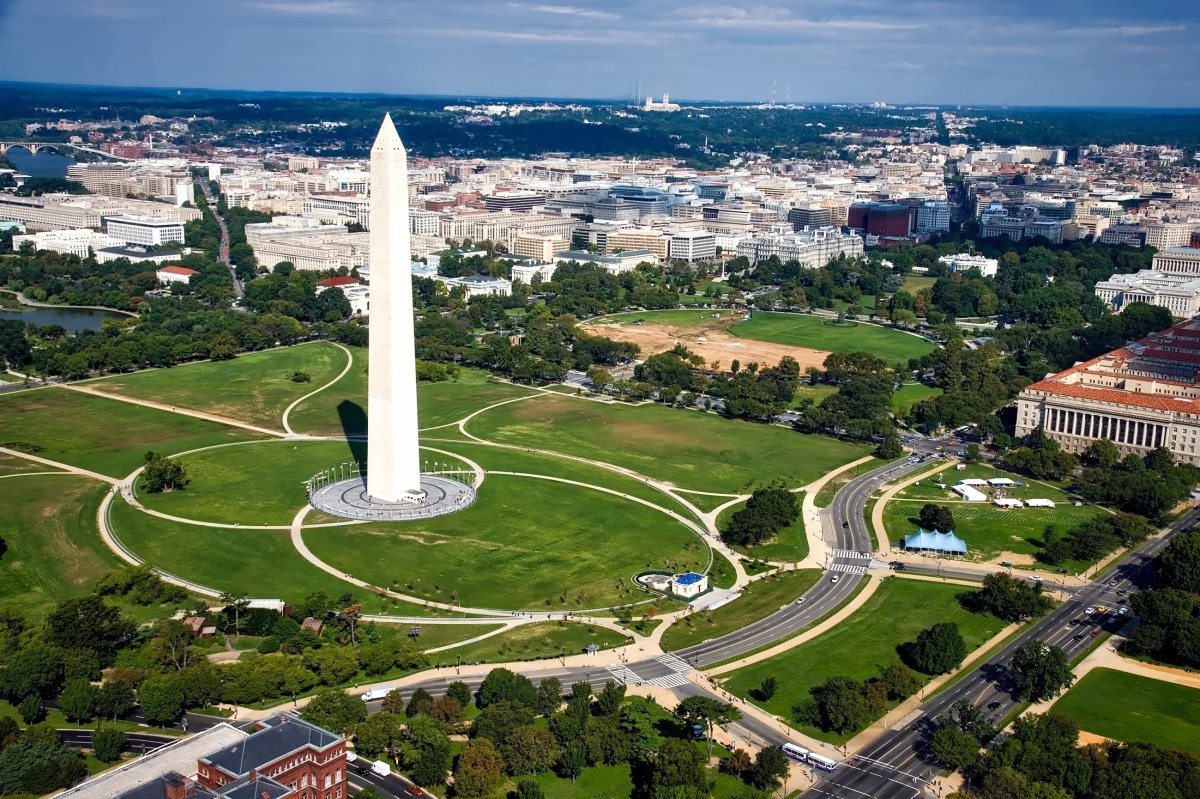
In Washington, D.C., the stakes feel particularly acute given the relatively short history of the city compared with other nations’ capitals that date back thousands of years. As the United States celebrates its 250th year as a sovereign nation, the capital’s memorials and monuments are not simply decorative; they are civic infrastructure at the heart of what makes this country’s history legible to its own people and the world.

The Lincoln Memorial, the Vietnam Wall, the MLK Memorial, the World War II Memorial, etc., these are foundational places where Americans of radically different politics and background go to grieve, to reconcile, to protest, to gather, and to feel something collectively true. Visitors travel from across the country and around the world to stand before these national landmarks in person, having known them only through photographs or screens. They deserve to find them intact, not altered or diminished without public consent.

When these symbols and monuments become pawns in a culture war, renamed, relocated, or removed at the stroke of a pen, something beyond stone and brick is damaged. The precedent it sets is equally corrosive: if any administration or political party can reshape national memory at will, then no symbol is truly secure. Preservation does not mean uncritical veneration or unobjective support. Controversial symbols have been removed or replaced before in the United States and in other countries, but those decisions carried weight because the people saw them as clearly divisive, racist, or unworthy of public honor. In those documented cases, no single leader or institution acted alone; the change was voted upon by the people or by their elected representatives who had to live alongside those symbols in their own communities.

Having reverence for national monuments and symbols means insisting that changes to shared symbolic space deserve public process and genuine review, not political expedience or unilateral decree. History, including its uncomfortable chapters, belongs to all of us, not to whichever administration or party currently holds the lease on the capital or controls the institutions managing these national heirlooms. The stroke of a pen that rewrites monuments and memorials today can just as easily be turned against the ones you hold dear tomorrow. Remember that and always stand up to those who would erase or alter a nation’s history without the support and consent of the citizenry.

A Society Without a Center – What Happens When Morality Fractures

“Today, that baseline feels increasingly unstable and it’s not because morality has disappeared, but because it has largely fragmented. There is no longer a shared moral consensus or compass that is keeping the glue that holds a functioning society together, which is harmful in the short run and devastating the longer it goes on.”

There was a time in my life when I was younger, and while not perfect, but real in my view, when people could disagree with politics yet still recognize a shared baseline of right and wrong. Today, that baseline feels increasingly unstable and it’s not because morality has disappeared, but because it has largely fragmented. There is no longer a shared moral consensus or compass that is keeping the glue that holds a functioning society together, which is harmful in the short run and devastating the longer it goes on.

We no longer argue from the same starting point when it comes to understanding what is moral and what is not. What one group sees as justice, another sees as inequity where this principle is not being equally distributed or followed. What one calls freedom for everyone; another calls it inflicted harm to a particular group who is having their freedoms limited as a result. These aren’t surface-level disagreements; they cut to the core of how people interpret truth, responsibility, and even reality itself.

A shared moral compass cannot survive in a system where consequences are inconsistent or not applied equally to everyone. When ordinary people are expected to follow rules and laws that the powerful and the well-connected routinely evade and mock, morality stops feeling like a standard and starts feeling like a tool, used or applied when convenient, and ignored when costly or detrimental to those people who have a lot to lose.

For example, the average employee notices when corporate leaders avoid consequences for actions that would destroy the career of an average employee. The average voter also notices when political figures excuse corrupt behavior from themselves, their allies, or their donors that they would condemn in their opponents or in their colleagues. They notice when public outrage seems selective, flaring up in some cases while remaining quiet in others showing a peculiar kind of hypocrisy that has only gained steam in recent years in a polarized political and social climate.

Over time, this kind of blatant inconsistency corrodes overall trust and fairness in one another. It sends a quiet but powerful message to everybody in society: morality is not universal and it is conditional and can be applied or not applied as such. As a result, more people begin to believe that the incentive to act morally weakens or erodes completely leaving an absence from that behavior, especially in our institutions. Why follow rules that others can bypass or not be held accountable to? Why uphold standards or norms that are not enforced equally to everyone in the society?

Part of this shift comes from the collapse of shared institutions, religion, local communities, even trusted media, that once anchored moral conversation. In their place, we’ve built personalized ecosystems of belief, reinforced by algorithms and tribal loyalty. The result is a culture where validation matters more than reflection, and outrage travels faster than understanding. However, the deeper issue isn’t disagreement, it’s disconnection. When people stop believing that others are arguing or acting in good faith, the possibility of persuasion disappears. Debate becomes performance, and morality becomes a tool for scoring points rather than seeking truth.

This doesn’t mean that most people suddenly abandon their values or morals entirely. It means those kinds of values become more tribal, more situational, and more defensive as a result. Morality becomes something we apply outward, toward others, rather than inward, toward ourselves. It becomes easier to justify our own actions while scrutinizing everyone else’s.

At the same time, we are facing a different kind of problem: a lack of education around how to think morally in the first place, which should start at a young age but for which schools and universities have long neglected in their curriculum. We’ve replaced moral education with moral reaction. People are often taught what to believe, what to support, and what to condemn but not how to reason through complex ethical situations or think critically about why enforcing standards, morals, and laws equally is so important. They inherit frameworks that have been established through centuries of precedent without examining them or understanding why they exist in the first place. Many people today absorb positions or opinions without questioning the principles or values behind them. In today’s environment that rewards speed and certainty, there is little incentive to slow down and reflect on how or why one should act in any given situation.

This untenable situation creates a kind of moral fragility that becomes more relevant each day. When individuals encounter perspectives that challenge their beliefs, they are more likely to react defensively than to engage thoughtfully on how someone came to develop those perspectives. This is not necessarily because they are unwilling to think critically, but because they were never taught how to navigate moral ambiguity. In a world where many issues are not black and white, that gap becomes a serious problem for the next generation(s) to solve on their own without guidance from previous generations.

Education systems, broadly speaking, prioritize absorbing complex information and developing technical skills. Those matter in developing one’s career and prospects in the 21st century. However, the current curriculum by and large often leaves out something just as important: the ability to weigh competing values, to recognize bias, and to wrestle honestly with difficult moral and ethical questions. Without that foundation, people default to the loudest voices, the most emotionally charged narratives, or the groups they feel most aligned with to guide their own morality. Perhaps most worrying to me is that we really do not teach ethics, values, having a strong moral compass or how to recognize a lack or absence of that kind of compass in other people in society regardless of who they are or what their status is. 

Layer on top of that the digital media environment is designed to amplify and cause division, and the problem continues to compound each day. Social media platforms reward content that provokes strong reactions and outrage. Nuance doesn’t spread as easily as certainty and thoughtful disagreement doesn’t travel as far as selective outrage. Over time, this shapes not only what people see, but how they think. It encourages a style of moral engagement that is quick, reactive, and shallow.

Where does that leave the future of morality? The loss of a shared moral compass does not mean society is doomed to fail or deteriorate. Still, it does mean the work ahead will be harder and be exceedingly difficult if this issue is not treated with the seriousness that it deserves. Rebuilding common ground and shared morality in a fragmented world requires more than louder arguments or sharper critiques. It requires a shift in how we approach and teach morality itself.

First, there must be a renewed emphasis on consistency, especially when it comes to applying morals to those who hold power, influence, or wealth. Rules, ethics, and norms cannot be optional at the top and mandatory for the rest of us. Accountability must apply across the board, or it loses its legitimacy with society. That doesn’t mean perfection in diagnosing who’s being moral and who is not and the consequences that the latter should face. It means a genuine effort to close the gap between what we say we value and how those values are enforced.

Second, we need to take moral education more seriously and to invest much more money, time, and effort in its teaching, especially to young people. This approach should not be done in the sense of telling people what to think, but in teaching them how to think. That includes engaging with different ethical frameworks, debating morality and how it is applied, understanding trade-offs, and developing the ability to question one’s own assumptions. It also means creating third spaces, whether in schools, communities, or in public discourse, where people can wrestle with difficult ideas without immediately being reduced to labels or judged harshly for what they see is moral or not.

Finally, there must be a cultural shift toward fomenting intellectual humility. That doesn’t mean abandoning convictions or pretending that all viewpoints are equally valid. It means recognizing that our understanding is limited, that we are capable of being wrong, and that other people, even those we strongly disagree with, may be operating from a framework that makes sense to them given their education, their background, and their life experiences.

A shared moral compass doesn’t require total agreement all the time on what is ‘morality’. It requires enough overlap to make conversation possible, enough trust to assume good faith, and enough consistency to believe that the standards we claim matter and they apply to everybody once agreed upon and instituted within the rules, laws, and regulations of that society as such.

Right now, that foundation feels shaky and declining across the world. The loss of a shared moral compass doesn’t mean society is doomed to regress further. It does mean though that we face a harder task ahead: rebuilding common ground in a world that increasingly rewards division and rancor. That kind of consensus building starts not with louder arguments, but with a willingness to question our own certainty and to listen, seriously, to those we instinctively dismiss and disagree with.

The question isn’t just whether we can rebuild a shared sense of morality and virtue immediately given the gravity of the current situation; it’s whether we’re willing to do the slower, less rewarding work required to get there in the future and establish it for the long term. Otherwise, we will continue down a path where right and wrong mean something different depending on who you ask and which person it applies to. If everything is debatable, eventually nothing is binding, including morals. A society where nothing is binding is one that cannot hold together.

The Stadium Test – What Japanese Fans Understand That We Don’t

“The difference between these two scenes isn’t about cleanliness, it’s about culture, responsibility, and what we believe we owe to each other.”

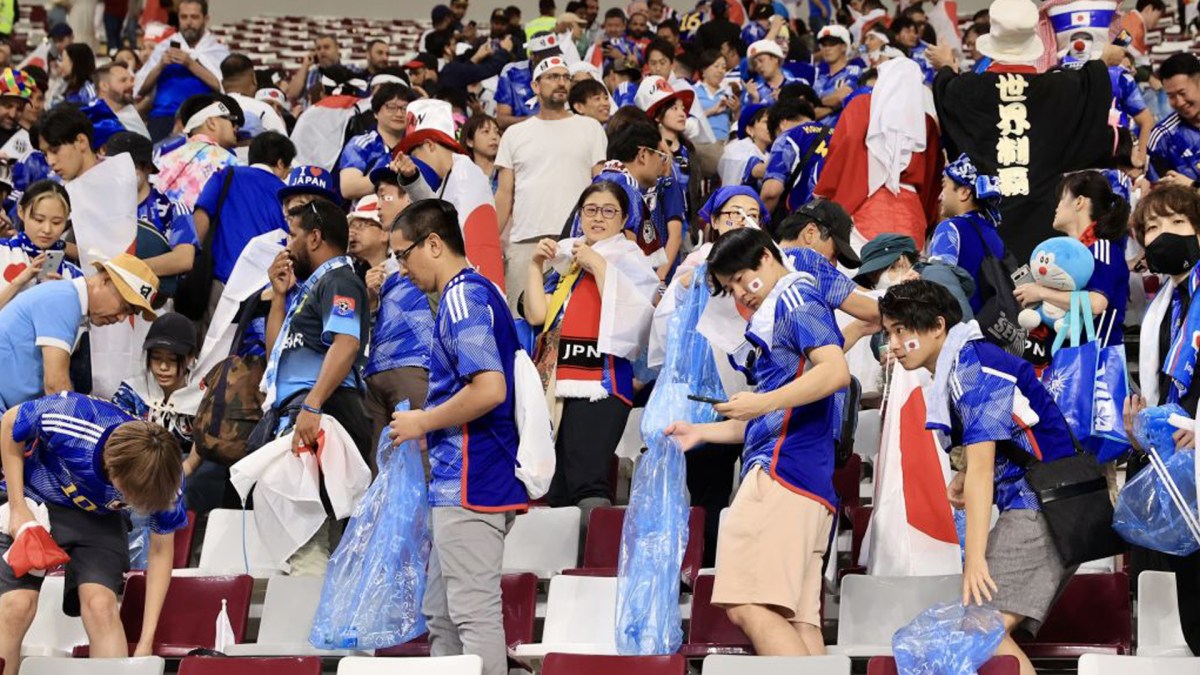
The final whistle blows at an international stadium as tens of thousands of fans rise, cheer, and file out either in celebration or in dismay about their national team’s performance at the Olympics or World Cup. However, in one section, something extraordinary happens. A group stays behind and does not leave their trash behind. Instead, they pull out trash bags. They start cleaning and not just their own mess, but everyone else’s too. This isn’t a publicity stunt. It’s not a requirement. It’s just normal for them. Meanwhile, across the world, another kind of crowd leaves behind a different legacy: half-eaten popcorn, plastic cups, and the quiet assumption that someone else will deal with it later. The difference between these two scenes isn’t about cleanliness, it’s about culture, responsibility, and what we believe we owe to each other.

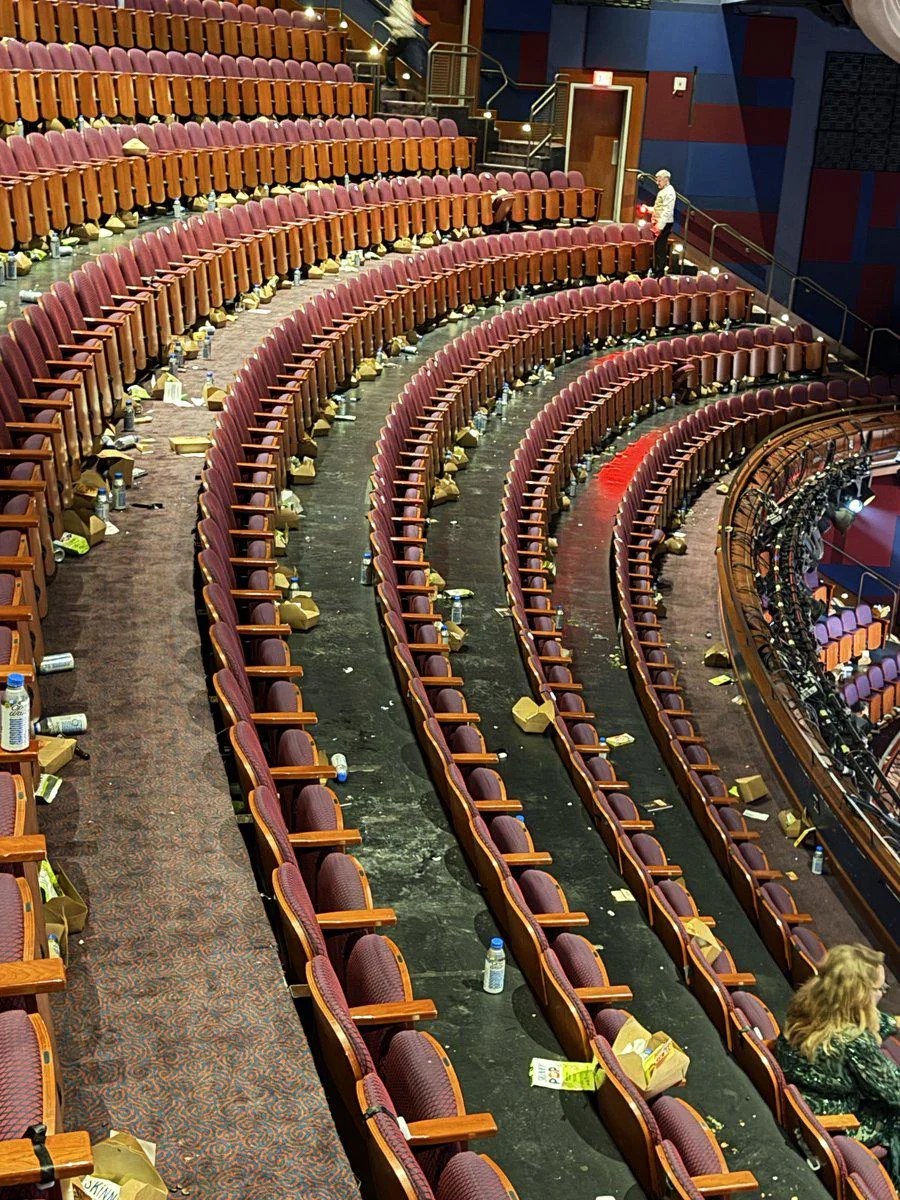
When I think of Japanese culture, what stands out to me is about the internalized responsibility to each other and to the greater society. I’ve seen videos and photos of it at international sporting events, but I’d imagine that responsibility is ingrained from an early age and while I haven’t been to Japan yet, I do believe there is a key distinction that separates their culture of cleanliness from others including my own. Recently at the 2026 Oscars, a photo went viral after Hollywood’s biggest night when popcorn boxes, candy wrappers, and soda cups were left behind at the Dolby Theatre, and instead of depositing the waste in trash bins after the awards ceremony was over, a lot of folks chose instead to let the custodians handle it. They could have deposited their trash themselves but in my view, American-style messiness (especially at large events or in public places) reflects an opposite culture of outsourced responsibility.

The Dolby Theater in Los Angeles, Post-Oscars 2026

From my research, Japanese students from a young age are taught to pick up after themselves including in the classroom and in the workplace. Instead of relying on janitors or custodians, there is the ‘Osouji’ (cleaning) system where values like ownership, respect for shared space, forming good habits are emphasized by authority figures. While Americans including myself were taught to ‘don’t litter’, Japanese kids were also taught that ‘this is your mess and you are responsible for also taking care of it yourself.’ Another Japanese expression I have learned about known as ‘Atarimae’, which is the cultural expectation that cleanliness is both normal and expected from everyone. Even if they are not in Japan for a sporting event, Japanese fans will often clean up after themselves and their section after pure habit because it was ingrained in them from such an early age.

These fans don’t see themselves doing anything out of the ordinary or exceptional and while they are admired for it by other nationalities especially as guests or visitors, the Japanese fans often shrug and remark how it’s just a normal cultural practice for them even when they are not mandated to clean up after themselves in these stadiums. Often times in Western culture, we praise those who clean our streets, stadiums, and public areas, but we often pay them little for their hard work and instead of asking everyday citizens to pitch in to do it more often or to pay our custodians and cleaning staff better, we do neither and wonder why there is less communal responsibility as a result here.

In Japanese culture, especially in sporting culture, it doesn’t matter if their team won or lost, cleanliness and having respect for your surroundings is non-negotiable. This attitude also extends to the players themselves who clean their locker rooms, leave thank you notes to their hosts, and leave their space better than they found it, inspiring others with their example going forward. Character often shows itself most when nobody else is watching or expecting someone to go above and beyond but that’s exactly what these fans, players, and supporters are doing. Collectively, cleaning is seen as respect for the shared space and for other people around you. In these sporting events, the Japanese fans will not just clean their own immediate space but for others’ as well and work together as a team in the section or in the whole stadium.

Oftentimes, in Japan, “This is our space and we should take care of it together.” I’ve found that in the U.S. we ask others with pay or to volunteer to help solve the issue rather than see it as a collective responsibility. The Japanese proverb that is often cited focuses on “don’t leave a place worse than when you depart from it.” I believe this is something that while Japanese in origin should apply to the rest of us too. This one idea alone could help cities and countries adapt more, especially when it comes to reducing pollution or helping our growing waste problem. Incentivizing people to clean up after themselves, to not leave shared space messy, and to start imparting that message from a young age should not be specific to one culture but about promoting a global consciousness around this important issue.

In my own country, cleanliness can vary widely but there have been multiple times where I’ve seen trash left behind in stadiums, people don’t flush after themselves or leave the bathroom in good shape, concerts have sticky floors from spilled alcohol, overflowing bins in my neighborhood because the city doesn’t have enough of them or they are not held onto until the tourists go home, etc. I could go on and on but the dominant cultural mindset is that “there’s staff or people who will clean up after me” and while that is true, I still think it’s in poor form to not throw things out, to make a mess and not clean it up, and to pass on the problem to somebody else. I have been guilty of this myself and I’m not proud of it in terms of leaving trash behind in a stadium or movie theater, and I recognize that now. I hope to get better at it and tell friends and family politely to do the same as me.

When responsibility is outsourced to others, behavior will follow accordingly in this case. When we internalize a new behavior or see others change theirs, culture can shift over time especially regarding cleanliness. When people are seen to clean up after themselves especially foreigners in a football stadium who practice what they preach, others will follow this example and set a new trend. Culture isn’t something to be enforced but it can be mirrored when we see others who have expectations of themselves that we didn’t even think would be possible in our own culture.

Not everyone is perfect and I don’t want to stereotype a whole country regarding cleanliness practices, which can vary depending on the individual context. Social pressure and conformity expectations do have their own drawbacks in certain areas but I do believe that encouragement can be healthy in terms of promoting trash pickup, leaving a place better than you found it, and taking responsibility for your actions in a public place, these are not negative behaviors to me and I think we’d all be better off for encouraging these positive actions like the Japanese fans at a World Cup stadium.

Having lived in other countries, every country has a different relationship to cleanliness and what constitutes civic responsibility, but I do believe that a healthier, happier society is one where the individual thinks more of him or herself in a social context and is in harmony with their environment. We are not an island unto ourselves and what we do has an effect not only on our surroundings but on the wider planet we all share together. The question to summarize isn’t why Japanese fans clean stadiums. The question is why the rest of us don’t and what it would take to make that kind of behavior feel just as normal. Because culture doesn’t change through rules, regulations, or fines, it changes when enough people decide that leaving a place better than they find it isn’t extraordinary, it’s just what you choose to do.

Do You Have A Frame of Reference Here?

“Instead of trusting in the experts and letting them inform the public, those with little to no experience are voicing their opinion on subject(s) that they don’t have any expertise or understanding of. Thus, this brings me to the critical question that rarely gets asked today: Do you have a frame of reference here?”

We live in a time where having an opinion on every single topic is often treated as more important than having an informed one or not having one when you haven’t fully researched the topic at hand. The influence of social media, 24-hour news cycles, and the pressure to ‘weigh in’ constantly have created a culture where silence is mistaken for ignorance and confidence is mistaken for competence in many different areas. Instead of trusting in the experts and letting them inform the public, those with little to no experience are voicing their opinion on subject(s) that they don’t have any expertise or understanding of. Thus, this brings me to the critical question that rarely gets asked today: Do you have a frame of reference here?

A ‘frame of reference’ is built through lived experience, actual study, or meaningful exposure to a subject, regardless of which one it is. Without it, opinions are often shallow, reactive, or based on incomplete information from often unreliable sources. Yet today, many people, especially political leaders, regularly comment on complex issues such as geopolitics, economics, public health, without the necessary context to understand them or any one of these complex topics. This kind of willful arrogance doesn’t just dilute meaningful discourse on the subject being discussed; it can actively mislead others who assume that their confidence equals real credibility.

What’s personally refreshing for me is when a public figure, especially a political leader, admits the limits of their knowledge. When a mayor of a major city recently acknowledged that they were not informed enough to comment on a geopolitical issue involving another country, it stood out to me positively not as a weakness, but as showing intellectual honesty. In a culture that rewards hot takes and instant reactions, restraint is increasingly rare but it’s also responsible and what we should expect more from our leaders.

Real wisdom comes from not needing to be a ‘master of all’ but rather to hone your knowledge base and your life experience on subjects you are confident enough to weigh in on and learn more about others where you have little or no experience with. Focusing on mastering one subject or a few subjects is difficult enough over a period of years or a lifetime, what’s impossible is trying to comment on every little subject you hear about or is making the news.

There’s value in recognizing when something is outside your lane and admitting that you don’t know enough about something to give an opinion on. Deferring to experts, asking questions instead of making declarations, or simply choosing not to comment are all signs of maturity, not ignorance. In fact, the ability to say “I don’t know enough about this” might be one of the most credible statements a person can make, especially those people in positions of power and influence.

Before speaking out loud, it’s worth pausing to ask: Do I understand this? Or am I just participating to hear myself talk? That distinction matters more than ever because not every conversation needs your opinion, and not every opinion needs to be voiced. In practice, this means getting comfortable with a little restraint especially with different audiences. You’re your coworkers, it might look like asking clarifying questions instead of jumping into debate, or saying, “I haven’t looked into that enough to have a strong view.” That doesn’t make you disengaged; it makes you credible. With your friends and family, where emotions tend to run higher, it helps to focus on understanding their viewpoint rather than winning the argument. You don’t need to ‘correct’ every take at the dinner table. Sometimes the better move is letting a moment pass or redirecting the conversation to something more constructive or worthwhile.

If a topic genuinely interests you and you really want to learn more about it to have an informed opinion, there’s nothing wrong with engaging with it further but do it the right way. Take the time to seek out legitimate sources, compare perspectives, and pressure-test what you’re reading to see if it’s credible information. That kind of effort means going beyond sensational headlines, avoiding echo chambers, and giving more weight to subject-matter experts than to loud personalities who bloviate without any substance. Real understanding of any subject takes serious effort, which you may not be able to devote time to. Here’s the part that most people skip: be willing to revise your opinion as you learn more about the topic. Changing your mind isn’t a loss but rather it’s evidence that you’re thinking deeply about it in a constructive way. When you finally do speak about it, do it from a place of informed perspective, not impulse. That kind of discipline doesn’t just make your voice more credible; it makes it worth listening to.

When things get heated with voicing your opinion, especially with strangers, the goal should shift from being right to keeping things from spiraling out of control. You’re not going to out-argue someone who isn’t interested in nuance or subtlety. What you can do instead is lower the temperature of the conversation: acknowledge their perspective without endorsing it outright (“I can see why you’d feel that way”), avoid absolute statements, and step back when the conversation turns into a one-way performance rather than a two-day dialogue. Walking away from that person or people, changing the subject, or simply not engaging further in the discussion isn’t weakness, it’s control of your environment. It’s true that not every verbal battle deserves either your energy or your effort.

At the end of the day, discernment is a key skill for any adult to exercise, especially in our current era. Knowing when to speak, when to listen, and when to opt out entirely of making your opinion heard will earn you more respect than having a take on every single subject. In a world full of noise and bluster, the people who stand out are the ones who choose their words carefully and know when silence says enough.

A Café Full of Blank Faces

“This surreal experience of mine in the local coffee shop was seeing mostly everyone except for myself wrapped up exclusively in their device, mobile, computer, or another kind of technology rather than interacting with their immediate surroundings.”

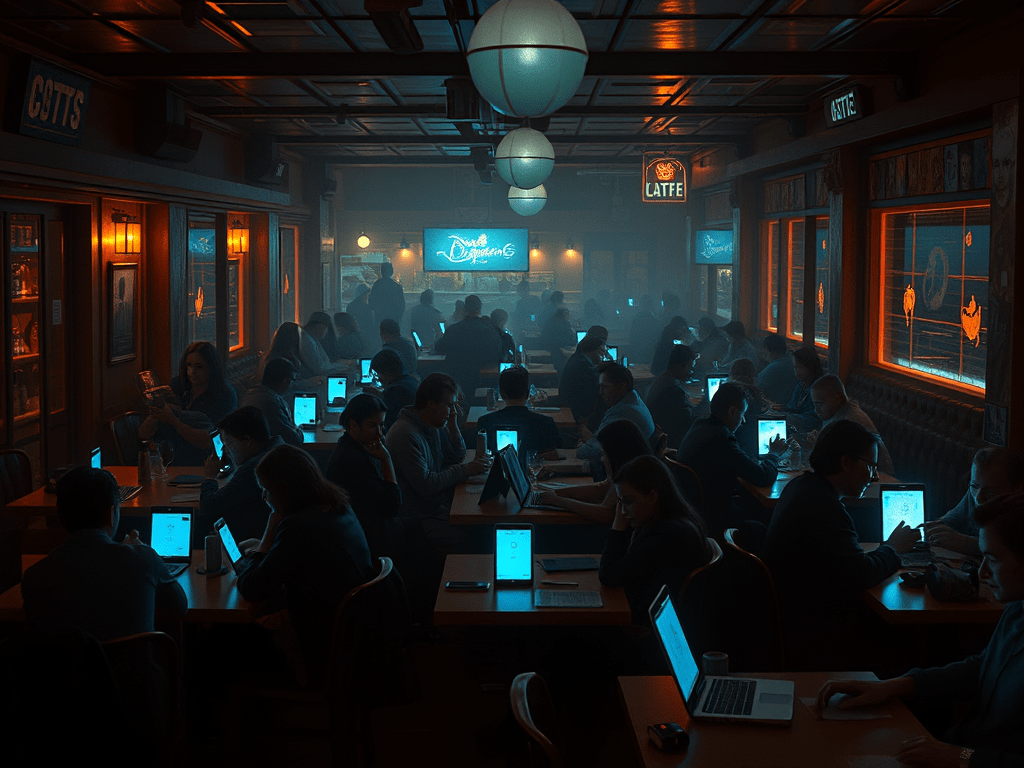
Surreal moments often catch you off guard and recently, one hit me in a coffee shop that I like to frequent. These moments are important to reflect on for better or worse though, to see how society has changed immeasurably and perhaps permanently. This surreal experience of mine in the local coffee shop was seeing mostly everyone except for myself wrapped up exclusively in their device, mobile, computer, or another kind of technology rather than interacting with their immediate surroundings.

It was shocking, usually there are a few people browsing their phones casually, catching up on work with their laptops, or just tracking their health data on their digital watch. However, when I looked around and saw that it was basically a sea of screens as each person was locked into their digital world rather than focused on the people there. It was a dystopian scene that is burned into my memory now so much so that I had to explore this societal change further.

In the U.S. especially, it seems like cafes or coffee houses are more for interacting with the digital realm rather than the physical realm, which is quite different from Europe and Latin America where the priority is to meet people or gather with friends or family. It is usually a mix, but in the U.S., cafes seem to have reached a turning point. They focus more on having people be there to work and endure loud or constant music being played in the background, and having people isolated rather than connecting with one another.

While there are still numerous cafes where people are still likely to do poetry slams, play trivia, and are welcoming gathering spaces, my concern is with how eerie it can be when some cafes are solely about work and technology rather than connection and leisure. There are some solutions out there and some bars I’ve heard are even implementing ‘no phones’ as an entry rule to help people to interact with each other rather than their own devices in a shared space.

I personally hope that the ‘no phones’ movement can spread to cafes, community centers, and other third spaces that are increasingly difficult to find in the U.S., especially where you don’t need to pay to sit down, talk, or get to know one another. Having a ‘no technology’ rule for set hours in cafés seems like a great idea to me, especially before or after work hours and making sure that cafes and co-working spaces are not merging to be the same. Community events with no phones would help people sharpen their social skills, minimize distractions, and connect without any devices competing for their attention.

It was jarring for me to see almost the whole café on some sort of device or another except for myself (even though I do tend to check my phone quickly here and there). However, I was meeting someone there so I wanted my attention to be paid to them as much as possible and I am for a technology ban so the connection we would form would be that much easier. Having a rule of ‘no phones’ in cafes or at least ‘no tech’ hours would probably make people happier, more sociable, and allow cafes to sell more to people who would have their undivided attention.

We used to get our dopamine from our social connections and that has been increasingly replaced by responsive AI chatbots, persistent social media notifications, and algorithms focused on our every need. It’s a losing battle right now but we may be at a precipice where people including myself realize that this isn’t sustainable and it isn’t healthy for society to indulge in without limits, even for adults.

One of my favorite shows growing up was ‘Friends’ and ‘Seinfeld’, where the all-American diner or the local café was a spot to hang out, talk, play music, and catch up on each other’s lives. These shows from the 1990s-2000s could not possibly be replicated today because the scenes would be showing almost everyone on their phone or laptop and the dialogues would be flat or lackluster. I want cafés, diners, and bars to be more than background noise for our technological devices. Instead, these places should be spaces to connect, to share, and to find a moment of human interaction in a world increasingly dominated by screens.

Cafés, diners, and bars should be refuges from screens, spaces to connect, share, and find a moment of human interaction in a world dominated by devices. It’s time to reclaim these public places, not just for nostalgia, but for our social health. We still need public places to provide a respite from the hustle and bustle of daily life, to let us express ourselves freely, to meet new people, to practice community, and maybe even make some new friends.

The Lost Skill of Making People Feel Seen

“Most people aren’t lonely because they lack friends, they’re lonely because nobody truly sees them. In a world of constant interactions, at work, online, or in our daily routines, these moments are often shallow, rushed, and forgettable.”

Most people aren’t lonely because they lack friends, they’re lonely because nobody truly sees them. In a world of constant interactions, at work, online, or in our daily routines, these moments are often shallow, rushed, and forgettable.

One of the best books I’ve read recently on this subject is from New York Times writer and columnist, David Brooks, who authored the book, ‘How to Know a Person: The Art of Seeing Others Deeply and Being Deeply Seen’ in October 2023. The core idea of his book was that you can divide people into two camps of ‘Illuminators vs. Diminishers’, with illuminators making people feel recognized, clearer, more important, and the diminishers who make interactions about themselves or forget about the other person (often not on purpose). If attention is now the primary currency in our lives, giving or receiving quality attention is the key difference in seeing others fully.

Let’s go into what ‘feeling seen’ means in 2025 and what it doesn’t because it can get confusing if you’re new to this concept. Feeling seen is not about just agreeing with someone, praising them effusively, being ‘nice’ or ‘kind’, fixing their problems for them, dumping your own problems or inadequacies on them to compensate in return for them sharing their issues. Rather, feeling seen is about being perceived accurately and without judgment often, having your inner logic understood and how you see the world, and feeling that your emotions are being recognized rather than just analyzed and interpreted.

An example of this in action could be a friend, a spouse, or a co-worker telling you, “I don’t necessarily agree with you here, but I understand why that matters to you and I see your perspective.” Being able to let that person know that you know where they are coming from in their views and why it matters to them makes a huge difference in your personal and professional life.

Technological and other daily distractions aside, there are various reasons why people don’t feel fully seen nowadays. Most people are not patient in waiting for their turn to talk, rehearse their response in advance while you’re still speaking, filtering everything through themselves and what they would do, or just not wanting to understand when they listen. If you are not seeing someone enough, start with listening to understand the other person rather than listening to reply or putting themselves in their shoes right away. You cannot see someone else while you’re playing their role in your own mental movies or thinking through what you would do, say, or behave in their shoes.

Like any social skill, there are ways to make someone feel more seen and to build up that skill like it’s a positive habit. The more you use, repeat, and solidify these response tactics, the more comfortable other people will feel around you. First, listen to the emotion that they are carrying with their words even if they don’t express it outright. Train yourself to hear the ‘fear, anxiety, pride, shame, sadness, frustration, hope, joy, etc. that they exude with their cadence and tone beyond the words they are saying. Being able to voice what emotions they may be expressing to you in their words is very powerful and will make someone feel very seen. For example, “You sound disappointed, not angry, about ____.” As David Brooks wrote about ‘illuminators’, seeing people’s emotions clearly even if they aren’t telling you with their words what exactly they are feeling is a very useful people skill.

Second, I think it’s key to asking expanding questions, rather than extractive or basic ones. Good questions open doors to a deeper and more fulfilling conversation while bad questions can feel like an interview or an interrogation. A good question could be, “What part of your work gives you the most fulfillment?”, which can expand the conversation and take that person through a positive memory or a feeling of contentedness sharing what they do for a living in a specific way. Rather than an extractive question that may not lead anywhere that we often hear a lot as “So, what do you do?” If the question helps them understand better or explains why someone does what they do, you’re doing it the right way.

Additionally, some other ways to make others feel seen is to avoid pivoting to yourself right away. You should want to reflect on the conversation rather than redirect it to be about yourself or what you would do. For example, you could say “What I’m hearing from you is ____”, allowing that person to know that you were paying attention but also that you heard them correctly in terms of their viewpoint. Remember to ask questions that open the conversation, not trap it. Name specific strengths you notice. These small moves make someone feel truly seen. A friend once told me they felt burnt out by their job. In this case, just nodding back wasn’t enough, but I reflected on their frustrations with their work environment, and it completely shifted the conversation

Naming the strength(s) and good qualities of a person is also an excellent way to make them feel seen. Instead of calling someone you respect ‘smart, clever, hard-working’, go deeper than that by taking why you think they are that way and what it is specifically that led you to come to that conclusion about them. At a meeting once, instead of saying “Good point. I said, ‘I see why that approach would make sense given the constraints you’re dealing with.”

Lastly, people are unfinished characters meaning that they are complex, deep, and contradictory at times. Mr. Brooks’s book emphasizes the need to have a ‘moral imagination’ about someone to get beyond who you think they are just because you know their politics, childhood, job, worst moment(s). Assume in good faith that there is a lot more going on in a person’s life than you currently understand and try to hold judgment about them based just on the information that you have available about them.

Being seen by another person deeply is a great feeling and is increasingly rare these days. Seeing others requires courage, dedication, and attention, which is in short supply. The ability to see and be seen demands humility, slowing ourselves down, removing our ego armor, and being present with them fully. It is also worth noting that the people who feel most unseen by others end up being the worst at seeing others in response as it becomes a negative cycle. If you’re not seen at all or at least a little bit, why would you want to do the same for others rather than breaking the cycle?

Making others feel seen changes you for the better as a person. When you see others well, your relationships deepen, you become a better leader, your conflicts soften or end, and your own sense of personal meaning grows as a result. As Brooks writes in ‘How to Know a Person’, “To know other person well is one of the highest forms of love.” I think this is a great lesson worth imparting on us all to try to illuminate other people as often as people and to do so in a consistent manner. I’ve seen it personally in my classrooms, work meetings, or even casual coffee chats as people light up when someone hears them and not just nods along.

Try this once today: make someone feel truly understood. Watch what happens. Whether it’s a comment, a reflection, a thoughtful question, a moment of real attention without distraction, you can make a positive difference in that person’s life, especially if they are going through a tough time. You don’t need grand gestures, just presence, attention, and care. In a world obsessed with being seen, the rarest superpower is knowing how to see.

I’ll Take Kind Gestures Over Kind Words Any Day

“When was the last time someone let you merge into traffic or grabbed you a coffee without asking? Too long, right? Small gestures like these can make your day or even your week. We’re taught from a young age that kind words keep the world turning, but words are just the starting point.”

When was the last time someone let you merge into traffic or grabbed you a coffee without asking? Too long, right? Small gestures like these can make your day or even your week. We’re taught from a young age that kind words keep the world turning, but words are just the starting point.

Even rarer than kind words are kind actions. Post-COVID, people’s social skills have atrophied, making everyday courtesies harder to come by. Things like holding the door, walking on the right side of the sidewalk, or letting someone merge on the highway might seem small but they matter far more than words alone, and we could all use more of them.

Having these kinds of gestures be optional instead of compulsory represents an overall reflection of the fracturing of what used to be common courtesy along with the kind of bare minimum expectations we have of one another too often. Instead of kind gestures, we often have the opposite now: people being loud in public places, not using earphones or headphones on their meetings or in the music they listen to, or just not minding their body language or others’ personal space. I value the importance of these basic gestures because they take such little time or self-awareness yet have become harder to find even when I consider them to be increasingly important to societal harmony.

It’s one thing for strangers to abstain from kind gestures or words but it’s entirely another when they come from business associates, colleagues, family, or friends. Taking the initiative and building a two-sided friendship or relationship, professional or personal, doesn’t take much to sustain but it truly can make a world of difference to the other person(s). Such kind gestures mean more than the average word could ever and people really remember those sincere actions more than giving a basic compliment or heaping on effusive praise.

These kind gestures depend on the kind of relationship you have with the person or group in question, but sending business associates a holiday card or remembering their birthday can strengthen the relationship significantly. You could also offer to buy them coffee or tea for providing advice or mentorship with your work or business. With work colleagues, it doesn’t hurt to share your appreciation in giving a kind word for them, but it could mean much more to bring in food or drinks for lunch or help them with a problem they are having on a difficult project. If you’re a manager, kind words are nice to hear but recognizing your employees with a bonus, a promotion, or just an award or other kind of real recognition can make a huge difference with morale building or employee retention at your firm.

With one’s family and friends, it’s always important to say ‘please’, ‘thank you’ and show your appreciation for their presence in your life. However, it’s always better to take the initiative to ask them out for a dinner or a concert or just to give them a call consistently to check-in with them and see how they’re really doing. Keeping a friendship or family relationship in good shape is hard to do but at least making the effort to see each other and to do so in a two-way manner is key to keeping it sustainable.

Being complimentary, supportive, and positive are all great with your words but real actions or gestures will always speak loudest. That’s especially the case when you’ve known that person a long time and have a history together. Sometimes, friendships end out of nowhere and family bonds are breakable by one party or the other, but if you want to make a real effort, make sure to rely on kind gestures primarily because they mean a lot more to someone than your words.

These days, it’s hard to get kind words out of strangers or people you don’t know and even more so when it comes to expecting basic social graces or gestures of kindness. As a result, we are starved for those kinds of gestures and actions that are unprompted, considerate, and relevant to us. We need those friends, family, and even close associates doing kind things for us and for them to be reciprocated as well because it helps foster our happiness, joy, and overall life satisfaction more than we think.

Kindness begets kindness. While words can move the needle, gestures, actions, and time spent together make a world of difference. Remember: kind words are the minimum of a polite society but making kind gestures second nature to you, especially for the people in your orbit, will make your life richer and fuller. Tomorrow, remember to hold the door for someone, send that quick ‘thank you’ note if someone did something kind for you, or buy a mentor or a friend a cup of coffee. Small gestures always make a big impact, which makes life better for everyone.

Corruption Is A Weed That Is Not Easily Removed

“Invasive, resilient, and growing back sometimes stronger if not pulled out or removed completely, corruption is a weed that is not easily removed from society. Corruption has occurred throughout human systems at different levels throughout history since the dawn of mankind.”

Invasive, resilient, and growing back sometimes stronger if not pulled out or removed completely, corruption is a weed that is not easily removed from society. Corruption has occurred throughout human systems at different levels throughout history since the dawn of mankind. It’s a recurring feature that comes up across the world with examples ranging from post-Soviet oligarchies to Latin American caudillismo to modern lobbying culture without imposed limits or oversight mechanisms.

Corruption has different forms that emerge depending on the permissiveness of both the individual culture and its society. While corruption can’t be permanently eradicated, it must be confronted and diminished as much as possible by both citizens and leaders. A mature society recognizes the existential risk involved in how corruption can permeate a community, a society, a government, and how it must be pruned as much as possible with legal and rule-based consequences.

In my definition of corruption, it’s more than just outright bribery, grift, or stealing, it’s systematic decay in the forms it can take such as persistent favoritism, nepotism, cronyism, apathy, and moral erosion when there are no consequences for breaking the law or not obeying the rules of society. There are psychological roots involved in how corruption first gets planted as a root when greed, survival instinct, permissiveness from the society, and peer pressure takes hold since “everyone else is doing it” and “there won’t be any consequences for me” for flouting the rules or laws on the books that are supposed to stop it. There is fertile soil in any society for corruption to grow and spread as a ‘weed’ when institutions are weak, unresponsive, or don’t push back, transparency is low or non-existent, and accountability is rare for leaders and citizens.

Some examples of corruption digging in are when local or national officials enrich themselves from public projects or are enriched personally from private or backroom deals. They are involved personally in these same deals when they hold public office and do not separate their public role from their private life, which causes obvious conflict of interest issues. In the corporate world, when lobbying is not curtailed or regulated where it turns into legalized bribery. Unlimited money from a company given to a politician or a community leader to influence their decision-making is corrupt in nature, especially when this kind of ‘donation’ is not disclosed to the public. This kind of pervasiveness can spread to everyday life where the average citizen sees that those in power or who have wealth are getting away with the corruption and are not being held accountable. Possibly, you can see certain citizens cutting corners, committing nepotism, or looking the other way in response instead of pushing back and calling for accountability.

There need to be constant ‘gardeners’ on watch who need to get their hands involved to weed out the corruption in their society. Whether it’s civil society actors like journalists, whistleblowers, or reformers, they have a role to play especially when leaders or public officials do not hold themselves accountable. Backlash, burnout, and even threats to their lives are constant risks for these ‘gardeners’ but in a corrupt society, their role becomes increasingly important specifically when dismantling civil society becomes one of the goals of corrupt leadership. However, if society keeps rewarding or ignoring corruption taking place and the soil for it is fertile, then there is only so much that whistleblowers or journalists can do to stem the tide of corruption. The best the ‘gardeners’ can do is bring the corruption to light and to release the papers, reports, and evidence so that the public, likely unknown to them, just what is being done behind closed doors.

Sometimes, corruption is not limited to one leader but rather they can spawn a cascading effect as once it takes place with one central leader, his or her influence within a cabinet, an agency, or an entire government leads to the ‘hydra effect’ where it’s becomes beyond just one person and is institutionalized. Corruption becomes more than just a one-off event or about one leader, it becomes part of the culture itself, and this is when it becomes hardest to bring to light or to remove it easily from the wider society. Societies sometimes are complicit in their comfort with the level of corruption they are willing to tolerate and prefer the “devil they know” to how the system could be possibly change for the better. When you think of some examples here, the Italian mafia interlaced with the politics of the country post-WWII, when you hear of past political leaders in Colombia or Mexico who had known ties to drug gangs and cartels, or when lobbying becomes a revolving door between government and industry in the United States, that’s when it becomes embedded in the institutions themselves and is hard to remove like a cancer.

Technology can both help and hinder corruption as a double-edged sword depending on how it is used by the individual and the institution. It can either lead to more transparency by sharing instances of corruption more widely with citizens and being able to gather evidence to share with more reporting outlets. It can also lead to more digital forms of corruption that are becoming common like crypto scams, online pyramid schemes, and surveillance tools used against whistleblowers and activists. Also, illicit money including use of bogus cryptocurrencies can move faster and be dispersed faster than laws and regulations on the book can track or pinpoint the money laundering origin. Corrupt actors will also use online sources of information to promote disinformation, attack opponents with false information, or flood the zone with different orders and actions that could be considered corrupt, but for which takes time to track, to respond to, and to bring a case against in a court of law.

Nations can still control or minimize corruption through using their institutions’ digital systems in the modern age to counteract the growth of corruption because of the cyber world with their own digital tools. Whether its transparency laws on the books, or secure data regulations (the European Union’s General Data Protection Regulation (GDPR), these institutional tools recently developed can help assist in the fight against corruption online. Strengthening an independent judiciary or legislative body is also key to push back against overreach by executive power.

Legislating for stronger whistleblower protections as well as removing threats against civil society are other ways to stem the tide of corrupt actors from lashing out against accountability measures. Another key component that relates to preventing corruption from reaching the average citizen is encouraging more civic education about how to prevent or remove it from society by focusing on trust-building within different communities including having town halls, open hearing and sessions by government officials, and encouraging public input on referendums, propositions, and leadership matters such as term limits for politicians. It’s no secret that more developed nations in Scandinavia (Sweden, Denmark, Finland, Norway), Singapore, and in Oceania (Australia, New Zealand) have strict enforcement measures against corruption. In these countries, there is high trust in institutions, transparency in government actions, and social shame for citizens who engage in corruption or encourage corrupt behaviors.

The roots of corruption are there in each one of us and it’s not just out there as a distant term that applies to only the rich and powerful who are affected by its presence. How we conduct ourselves and how we relate to others has a direct impact on the kind of society you live in. When small personal compromises like lying, favoritism, or abuse of power take root, they spread throughout society little by little. “Weed management starts in your own garden” so if you want to fight corruption, hold yourself to a high standard and don’t engage at all with those people you may encounter in life who have acted corruptly or encourage it in your society.

The fight against corruption is also about the fight against one’s ego or greed or appetite for power or influence. Corruption, while it can’t be 100% eradicated, it can be minimized and kept under tight controls with constant vigilance by both the individual and the institution. It’s not just “liberty that requires our constant vigilance” as abolitionist Wendell Phillips once wrote in 1952 but also about maintaining our integrity and preventing others from falling into corrupt practices. Societies that understand the existential threat of corruption and how endless yet necessary the work of ‘weeding’ it out will be are the ones that will prosper, be just, and keep the weeds at bay.

Being a Specialist vs. a Jack of All Trades in 2025

“There’s a saying that’s been repeated so often it’s lost its bite these days: “A jack of all trades is a master of none.” However, what most people forget is the full quote: “…but oftentimes better than a master of one.” That second half hits home for me as someone who likes to consider myself a man of many interests and likes.”

There’s a saying that’s been repeated so often it’s lost its bite these days: “A jack of all trades is a master of none.” However, what most people forget is the full quote: “…but oftentimes better than a master of one.” That second half hits home for me as someone who likes to consider myself a man of many interests and likes. I’ve been a jack of all trades most of my life, by design, and not by accident. I’ve always had too many interests to narrow myself into one lane, from teaching English and managing international projects to running side businesses, writing, and exploring new skills like photography and video creation. In 2025, this flexibility isn’t a flaw but rather its survival and adaptation in an ever-changing and acceleratingly fast world.

Let’s be real here too: the world doesn’t reward loyalty to one craft the way it used to in my parents or grandparents’ generations. The days when someone could spend thirty years perfecting a single skill at one company and retire with a gold watch are long gone. Industries move at the speed of AI updates and quarterly market shifts. The specialist like the surgeon, the dentist, the coder, the data scientist still has immense value, of course, and they should be commended for their craft and their dedication to their field.

Those are the people who go deep rather than wide, mastering one corner of a field to the point where they can innovate within it and do so for decades luckily. However, the specialist also lives or dies by their niche or calling. When that niche collapses, loses favor in terms of employability, or evolves faster than they can adapt to the changes to the industry, their expertise in one area can quickly become a liability.

On the other hand, generalists or ‘jack of all trade’s types, people like me, tend to thrive when change is the only constant in life. We’re used to juggling multiple domains, learning on the fly, and connecting dots others don’t even see or don’t wish to see. When AI starts writing code or generating content faster than humanly possible, the jack of all trades doesn’t panic; they pivot to adapt to that change and to see how they can go with the flow. They find new intersections where creativity, management, and soft skills still matter in a world that is increasingly tech-first, question later. In 2025, the ability to synthesize ideas across fields like education, technology, business, culture is arguably more valuable than mastery of just one skillset.

Still though, let’s not sugarcoat it: being a generalist or ‘jack of all trades’ comes with tradeoffs. You’re rarely the “go-to” expert in the room. You may not command the highest salary, or you may constantly feel spread thin, working to keep up with several evolving interests instead of going all-in on one interest. There’s a sense of restlessness built into the generalist’s DNA. However, that same restlessness is what keeps us generalist types adaptable and flexible. We’re built for the gig economy, the hybrid or remote workplace, the new industries, and the unpredictable career paths that define this modern era.

Specialists, for their part, enjoy a kind of depth that the generalists envy. They can focus, dig deep, and master a single language, whether that’s the language of law, medicine, finance, or engineering. Their work can bring a deep sense of purpose and respect that comes from being the person that people rely on when things get complex or challenging. Specialization can be a trap too though as it can make you resistant to change, or worse, blind to possible opportunities outside your comfort zone. The moment your expertise or your sole skillset is no longer in demand, your value can plummet unless you reinvent yourself and to do so quickly.

The reality is that 2025 doesn’t belong exclusively to either camp of ‘generalists’ or ‘specialists’. It belongs to the hybrids instead, who the ones who know enough across different professional disciplines to connect the dots and have enough depth in one or two areas to back it up with credibility and experience. The future as I see it will reward those people who can learn fast, adapt faster, and translate knowledge across industries.

Also, if you know how to communicate well, can solve problems, and meet deadlines consistently, you will always be in demand in my view to work for a company, organization, or other professional body. Whether you’re a generalist who’s learning to specialize or a specialist learning to broaden your scope beyond your field, the key remains the same as you should stay curious, stay humble, and never stop evolving.

Yes, I’m a jack of all trades and I don’t see that changing anytime soon in my own life. If anything, I’ve learned to wear it as armor in a world that’s constantly trying to box people into a corner. I’ve been told I should “pick a lane,” specialize, and double down on one thing alone but that’s never been me or my personality. My curiosity doesn’t fit neatly into a job title or a sole industry. I like moving between worlds, connecting people and ideas that weren’t supposed to meet in the first place.

I’ve realized that being a generalist isn’t about doing everything halfway; it’s about mastering having adaptability itself. It’s about knowing enough across fields to spot the patterns others miss and having the guts to reinvent yourself when the winds change direction. Specialists might thrive when the road is straight and predictable, but I thrive when the map is being redrawn in real time. So no, I don’t apologize for my curiosity or for the eclectic path I’ve taken in life so far. Being a jack of all trades in 2025 isn’t a weakness, rather, it’s an operating system for the modern world. In a time when rigidity gets punished and reinvention gets rewarded; versatility isn’t just a skill; it’s a survival strategy to get by. Honestly, I wouldn’t have it any other way.