Cuisine Spotlight – Bandeja Paisa

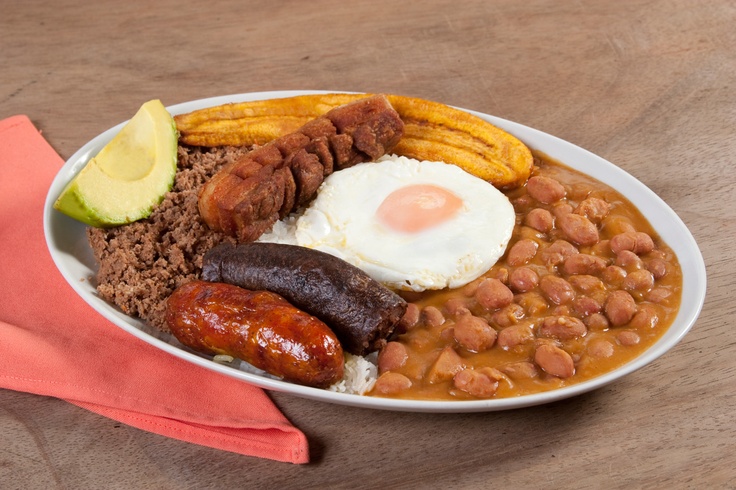
For my first post in the new ‘Cuisine Spotlight’ series, I will be focusing on my favorite dish here in Colombia, which is known as the ‘Bandeja Paisa.’ Flavorful, unique, and made up of different food groups, ‘Bandeja Paisa’ is a conglomeration of the best of Colombian cuisine, and specifically of the Antioquia region. You can tell by its’ name that this popular food dish has its’ origins with the Paisas who are the inhabitants of Department of Antioquia. If you translated ‘Bandeja Paisa’ from Spanish to English, it would roughly mean ‘Paisa Platter.’

It’s a paisa platter because there are a number of different foods that make up this huge plate of food. There is a variety and amount of flavors and tastes that you can’t find in many other dishes here. While there are a number of ‘Bandejas’ or ‘Platters’, the ‘Bandeja Paisa’ is the most well known along with its’ ingredients. The ‘Bandeja Paisa’ usually includes red beans mixed with pork, white rice, ground meat, chicharron, fried egg, plantains, chorizo, arepas, blood sausage, avocado, and criollo sauce to top it all off. You have to eat ‘Bandeja Paisa’ on an empty stomach. Otherwise, you may not be able to finish half of the dish.

‘Bandeja Paisa’ is a lunchtime dish and should be enjoyed with a nice cold glass of fruit juice. In Colombian culture, lunch rather than dinner is the main meal of the day and is to be taken seriously. I would recommend to have your ‘Bandeja Paisa’ dish with other people around whether they be friends or family because chances are good that you won’t be able to finish it all on your own. It is likely that the ‘Bandeja Paisa’ dish was made for those people who worked the fields for farming and growing crops. They also could be herding cattle and collecting food for their families.

I would like to believe that they would look forward to having ‘Bandeja Paisa’ as their main meal of the day due to the arduous physical tasks that would be asked of them to complete from sunrise to mid-day. I’m sure millions of Colombians and foreigners here like myself have thought about settling down and having ‘Bandeja Paisa’ after a long day of work regardless of which profession we tie ourselves to. Once again, it’s worth noting that the simple pleasures like a big meal after a hard day of labor can make a world of difference in brightening our outlook for the rest of the day. Having something to look forward to like biting into a chorizo or sampling some avocado can make the work less tedious and the time pass by more quickly.

‘Bandeja Paisa’ is considered to be a mestizo dish meaning that it is a unique mixture of both American and European ingredients and foods. The different indigenous peoples who have inhabited Antioquia and Colombia in general have left their influence on dishes like this one along with the Spanish colonists who adapted the ‘Bandeja Paisa’ to their own tastes and preferences. Interestingly enough, there is also some African influence along with that of British and French colonialists. The best thing about the ‘Bandeja Paisa’ is that you can adapt it to fit your dietary needs. If you don’t like having so much meat, you can switch in a salad or a vegetable. While the original food options are preferred, I’ve noticed that there are a number of variations to the ‘Bandeja Paisa’ and that Antioquians are flexible with its’ presentation.

The people of Antioquia have such a fond love for ‘Bandeja Paisa’ that they tried to get the national government in Bogota to make it the national dish of Colombia. While there has been no movement on having this become official, ‘Bandeja Paisa’ is held in high regard in terms of representing Colombian cuisine and is advertised by many restaurants and tourist agencies alike. Similar to the popular ‘Sancocho’ favored by Costenos on the Atlantic coast and the delicious ‘Ajiaco’ soup that Bogotanos covet, the Paisas of Antioquia regard ‘Bandeja Paisa’ as the national dish of Colombia even though its’ overall popularity is limited to the department itself.

While ‘Bandeja Paisa’ is not an everyday kind of food, it is a delicious and unique plate of food that is a large part of the cuisine here in Antioquia. It is an excellent choice when it comes to filling yourself up after a long day of work. It is very affordable, has all different food groups represented and it will earn respect from the locals by trying it out. My last recommendation if you are going to try to eat the whole ‘Bandeja Paisa’ is to order some lemonade, water, or fruit juice because it will help a lot with the digestion process and prevent you from getting a nasty stomachache. Buen provecho!

The City of Eternal Spring

Medellin, a bustling metropolis of over three million people, has a popular and well-known nickname, “The City of Eternal Spring.” I can say for certain that this particular nickname is well warranted and appropriate given the moderate temperatures and humidity that make up the day and night here. Among the cities and towns I’ve visited in Colombia thus far, Medellin is special in that its’ climate is hospitable and agreeable.

Luckily, after a long day’s work at my new school, I can come back home without sweating through my shirt and dress pants. When it does rain here, it’s refreshing and cool. Sometimes, it can pour really hard but usually only for short periods of time and despite July and August being the prime months for the rainy season, it hasn’t been that frequent of an occurrence.

In addition to its’ great climate, there are other qualities that make Medellin a unique city. Its’ transportation is well organized and runs smoothly. The metro system here is one of the few in South America and is clean, affordable, and has frequent trains. I’ve been impressed at how easy it is to get around the city without breaking the bank. In addition to the metro, there are also the ‘Colectivo’ buses, the Metro Plus bus system, the Metro Cable car system, plentiful taxis, and Uber if you really need to get around in a hurry. Motorcycles, which I noticed to be quite popular on the Atlantic coast, are also another great way to get around especially if you’re not patient with the traffic here.

Caution is necessary, as ‘right of way’ does not exist for the pedestrian so you have to be an eye out for both cars, taxis, motorcycles, and large buses. Everything seems to run efficiently when it comes to getting people to and from their jobs whether they are in the north, south, or central part of the city. While I haven’t spent much time in Bogota or Cali, I would say that Medellin is the most interconnected city in Colombia when it comes to transportation.

Residents of Medellin and the Antioquia region in general are commonly known as ‘Paisas.’ This nickname is also spot on given the fact that these people are really born and raised here in the countryside. Compared with Costenos, Paisas are accustomed to the mountains and hills that surround their fair city. It’s been an adjustment for me given my past experience of living near the Atlantic coast of the country. It’s a unique opportunity to be able to see Colombia through a different lens.

While the food is similar to what you would find in other parts of Colombia, Paisa cuisine is unique in offering hearty dishes like ‘La Bandeja Paisa’ and ‘Cazuela Antioquia.’ Rather than seafood, Antioquia pride itself on its’ offerings of different kinds of meat served with potatoes, avocado, tomatoes, etc. Each region of Colombia including Antioquia are known for its’ cuisine offerings which may be unique to the particular region.

To put it bluntly, Medellin is a city which contrasts its’ natural surroundings of mountains and rivers with its’ skyscrapers, bridges, and freeways. In any view of the city, you get a mix of pure nature and urban settings. Tucked below the valley, the city rises with its’ buildings and elevated metro to contend with the nearby green mountains that surround the city. The most special sight to me occurs at night when the lights of the city flicker brightly across the valley and off the side of the mountains. Each white and orange light that shines in the valley at night signifies one of the homes, apartments, and buildings that house a few of the city’s overall three million residents.

I have only been in Medellin for two weeks so far but I can tell that this is a special place. In addition to the great climate, good public transportation, tasty local cuisine, and stunning views of nature, the city’s inhabitants are friendly and helpful. Sometimes, to me, it doesn’t feel like a big city but a cluster of small towns that make up an urban area. Part of the fun of living here is discovering new neighborhoods that each has something different to offer. There are cool museums and botanical gardens to see at the University of Antioquia, trendy restaurants and bars that make up most of the Laureles / Estadio neighborhood, and the heart of the nightlife scene in El Poblado. It’s also cool to check out the more suburban neighborhoods that are within a metro ride of Medellin such as Envigado and Sabaneta.

Even if one were to get bored with Medellin, there are a lot of things to do, and places to see in the Antioquia region. In addition, there’s also a number of day trips out there to explore the local nature scene and to experience more traditional villages. It would be unrealistic for me to say that you can get bored living in Medellin because it really is a vibrant cultural capital and I believe that a lot of tourists and residents from other Colombian cities now acknowledge that fact. Having had an unfortunate negative reputation in the international news media for many decades, Medellin is a city on the rise with a deep culture, cool neighborhoods, and hard-working, friendly people who want to show you the best of what their home city and region have to offer. I am very happy with my decision to have come back here to Colombia and to make my current residence here in ‘The City of Eternal Spring.’ Hopefully, as a reader of my blog and website, you’ll come down to visit Medellin sometime to find out just what all the hype is about.

Colombian Fruits and Juices

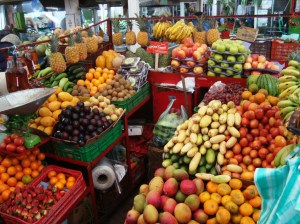
paloquemao-bogota-colombia-fruit
“So many choices to choose from, so little time.”

One of the joys of living here in Colombia is the diverse and plentiful selection of fruits to choose from. The choices are quite abundant and it is an integral part of the culture to imbibe in a cold and tasty fruit juice at the end of a long day.

As I mentioned before in my blog post titled, ‘The Heat Is On’, one of the best ways to deal with the heat and humidity is to cool down with a delicious fruit juice. It is also much healthier and refreshing than having soda or coffee instead. Over the past two months, I have done a great job of sampling the different choices of fruit juices and which ones I have a preference for. I’ve listed below the common fruit juices available here on the Atlantic coast and have also highlighted my personal favorites. The one juice that I have not tried thus far is the ‘Zanahoria’ or Carrot juice but I’m willing to give it a shot during the rest of my time here.

I hope that for those of you who plan on traveling to Colombia in the future will consider this ‘fruit juice’ list as a helpful guide to you. It can be a very hard choice to make when you’re at the ‘Fruteria’ and there are ten choices available but you’re not sure which one will be most refreshing.

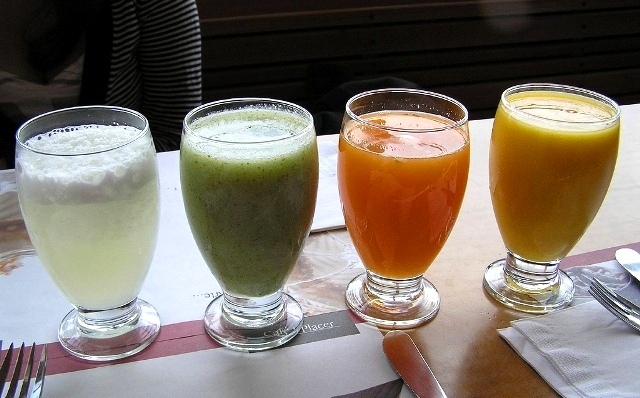
Honestly, you can’t go wrong with any of the choices detailed below. Colombian fruit juices are freshly blended together rather than squeezed as is the case in the U.S. and elsewhere. In addition, the fruits are mixed with water or milk (smoothies) and topped off with a little bit of sugar. What results is a very fresh and tasty drink to keep you cool during those hot days and humid nights. The Colombian people take their fruit juices seriously and so do I.

  • Lulo: Orange on the outside with green and yellow pulp on the inside, Lulo has a citrus flavor that is very sour to eat. However, jugo de lulo, mixed with some sugar, is perhaps the most popular juice here on the Atlantic coast. Also known as Naranjilla in other parts of Latin America, the fruit is related to the tomatillo and some people would describe its flavor as somewhere between green apple, and lime. It’s up there with being one of my favorite juices here.
  • Guanabana: Another one of Colombia’s most popular fruit juices. Its’ thorny green skin is filled with white filling and black seeds, similar in appearance to the fruit known as the cherimoya. Its juice has a creamy flavor with hints of strawberry and pineapple, and goes well with water, milk, and sugar.
  • Tomate de Arbol: The ‘tomato of the tree’ in English is an egg-shaped fruit with a yellow filling that is distinct from the typical red tomato that you would find in the supermarket. It has one of the most unique flavors I’ve ever tasted, and is similar to a mix of passion fruit and tomato, and supposedly has many health benefits. I enjoy its unique flavor and its refreshing qualities.
  • Granadilla: This fruit is a close relative of the well-known passion fruit. On the outside, it looks like a small orange or mandarina, but when it is cracked open, it contains a gelatinous pulp filled with black seeds. The flavor is similar to that of the passion fruit, but sweeter, and the seeds are easily disposable by spitting them out amidst the delicious juices. When turned into a fruit juice, it’s pulpy yet satisfying on a hot and humid day.
  • Mamoncillo: On the outside, this fruit looks like a lime, but when cracked open, it reveals a pinky-orange flesh similar to that of a lychee. The flavor is a mix of the tartness of a lime with the mild sweetness of the lychee. When blended into a juice, it looks like an iced tea and has a light orange/beige color.
  • Maracuya: Another part of the passion fruit family along with the Granadilla. It has an oval-shape, can look a bit wrinkly, and makes for a delicious juice or ice cream flavor as well. Maracuya is a great source of Vitamin C and is also known to be a natural sedative too. It also is known to aid digestion of food in the stomach. Extremely similar to the look of orange juice, Maracuya has a yellow-orange color when turned into a juice.
  • Gulupa: A cousin of the aforementioned Maracuya and another passion fruit. It has a dark purple skin that becomes wrinkled when it is ripe for eating or drinking. Along with Maracuya, it has plenty of Vitamin C and can help ease stress and tension in the body. When blended into a juice, it has a yellow color and looks very similar to orange juice.
  • Zapote: One of Colombia’s toughest and most durable fruits. It can grow very fast and is resistant to heavy wind and drought conditions. Zapote is full of minerals and antioxidants and can help with ailments ranging from irritable bowel syndrome to gastritis. It is very high in fiber so be careful not to eat too many as it does act as a natural laxative. Like other fruits here, it goes well with sugar and has a pink-orange color in juice/smoothie form.
  • Borojo: Known to be a ‘Love Juice’, and possessing some aphrodisiac qualities, this juice has been well-known for centuries and can act like a natural Viagra if you’re in the mood. Nutritionists have claimed that ‘Borojo’ is one of the most nutrient-rich fruits in the world can help combat malnutrition. When mixed and blended into a fruit juice, it gives off a dark to light brown color.
  • Mora: Known as ‘Blackberry’ in English, this is my favorite juice to have here in Colombia. Rich in Vitamin C, antioxidants, and nutrients, it is the most refreshing drink I’ve encountered thus far. I also enjoy the dark red color of the juice and enjoy it after a long day outside. While not an exotic fruit or drink, it gets the job done and I enjoy the simplicity yet refreshing qualities of the juice itself.

While I only listed ten fruits / fruit juices to indulge in, there are over dozens of unique fruits here in Colombia to try out. Some of the most exotic and sought-after fruits reside here in Colombia and you usually can’t find them anywhere else. A lot of the fruits I mentioned in this post have great health benefits and are packed with nutrients. Different than the apple, banana, and grape, these ‘superfruits’ can cure ailments, keep you well, and give you more energy. If you decide to ever visit Colombia, eat the fruits and try the fruit juices. I promise you won’t regret it.