‘Mystic River’ – Film Review and Analysis

“This book-to-film adaptation, praised for its emotional intensity and thematic complexity, remains one of Eastwood’s most acclaimed directorial efforts to this day. Mystic River is a powerful combination of stellar performances, masterful direction, evocative cinematography, and a carefully crafted screenplay making the film a standard bearer of cinematic storytelling.”

Mystic River, directed by Clint Eastwood in 2003 and starring an amazing cast including Sean Penn, Kevin Bacon, and Tim Robbins, is an intricate and darkly intense film that has left a lasting impact on audiences and critics alike since it first came out in theaters over two decades ago. Based on Dennis Lehane’s novel of the same name, the film explores deep themes of trauma, guilt, vengeance, and the ways in which past experiences haunt the present and future. This book-to-film adaptation, praised for its emotional intensity and thematic complexity, remains one of Eastwood’s most acclaimed directorial efforts to this day. Mystic River is a powerful combination of stellar performances, masterful direction, evocative cinematography, and a carefully crafted screenplay making the film a standard bearer of cinematic storytelling.

The plot begins in a working-class Boston neighborhood, not too far from the Mystic River, and centers on three childhood friends: Jimmy Markum (Sean Penn), Sean Devine (Kevin Bacon), and Dave Boyle (Tim Robbins). As young boys, the trio spends their days together, playing stick ball, hockey, exploring the neighborhood, and strengthening their bond as friends. However, one traumatic incident forever changes their lives, marking them all in ways that will resonate through their adult years. Decades later, their lives intertwine once more when Jimmy’s teenage daughter, Katie, is found murdered, prompting a deep and painful investigation into both the current crime and the unresolved scars of the past for each of the three main characters.

Set against the gritty, blue-collar backdrop of Eastwood’s Boston, the environment reflects the rough and bleak outlook shared by many of the characters, most of whom never left the neighborhood as adults. This urban setting becomes almost a character, embodying a sense of entrapment and suffocation and what ifs. Eastwood and the film’s cinematographer, Tom Stern, create a cold, foreboding atmosphere that mirrors the psychological darkness of the characters. The use of shadows and natural light throughout the film provides an eerily realistic tone, further immersing the audience in the story’s weighty themes. As a film, Mystic River, sets itself apart by giving each character room to grow and develop over the course of the two and half hours of screentime. Each of them has a unique backstory despite the overlap and they each have their own personal scars and demons to bear.

To understand the film better as an audience, we must go through each character’s backstory, motives, and circumstances:

  1. Jimmy Markum (Sean Penn) – Jimmy is a reformed ex-convict who did two years in prison who now runs a local convenience store. He’s fiercely loyal to his family, especially his beloved daughter, Katie, who he has tried to shield her from his checkered past. His character is marked by a volatile personality and a deeply ingrained sense of loyalty, one that can easily turn to vengeance, if provoked. This trait becomes particularly apparent when Katie’s murder brings his hidden rage and pain to the surface. Penn’s portrayal of Jimmy is raw and gut-wrenching; he conveys a sense of intense, bottled-up pain that feels as if it could erupt at any moment at any one person who he is feels is responsible or partly responsible for her murder. Jimmy’s background as a former criminal, his letting his emotions cloud his judgment, and the rawness of the recent loss of his daughter drive much of his actions, adding layers of complexity to his character.
  2. Sean Devine (Kevin Bacon) – Sean, one of Jimmy and Dave’s friends, is now a detective with the Massachusetts State Police who is investigating Katie’s murder, and his ties to Jimmy and Dave complicate the case. Although he’s become more distant over the years from both men, Sean feels a sense of duty and friendships to bring closure to Katie’s murder and perhaps, in turn, to his own fractured past. His unresolved feelings about the childhood trauma shared by him, Jimmy, and Dave gives his character a detached yet conflicted edge. Kevin Bacon’s performance as Sean is understated but poignant, particularly as Sean grapples with the uncomfortable ties between his childhood friendships and the demands of justice. Sean’s role in the story is not just as a detective but as someone attempting to reconcile his past with his present responsibilities. During the film, we also give glimpses into Sean’s present struggles with an estranged spouse and his own personal turmoil surrounding his commitment to his job as detective, which may have led him astray from the woman he loves.
  3. Dave Boyle (Tim Robbins) – Dave is the most visibly affected by the traumatic events of his childhood because he is the one who was physically and emotionally abused until he escaped from the nightmare one day, and Robbins’ portrayal of a victim of child abuse is haunting. As a result of the childhood abduction and abuse, Dave is marked by a pervasive sadness and paranoia that set him apart from others including Jimmy and Sean. Married with a son now, he still struggles with feelings of inadequacy, unresolved trauma, and the psychological scars left by his past. His character raises questions about the psychological ramifications of unresolved trauma, and Robbins plays Dave with a quiet and unsettling vulnerability as he is a boy trapped in a man’s body who never got to really grow up into what he wanted to be. This kind of trauma and sadness culminates in behavior that others in the film including his wife interpret as suspicious, especially as Sean’s investigation of Katie’s murder begins to close in around him. Dave’s struggle for normalcy and acceptance is central to the film’s portrayal of trauma and his seeking redemption for what had happened to him in the past, through no fault of his own.
  4. Celeste Boyle (Marcia Gay Harden) – Celeste, Dave’s wife, represents the emotional turmoil that affects loved ones in the wake of trauma. Marcia Gay Harden’s portrayal brings depth to the character of Celeste, illustrating the complexity of being married to a man who is emotionally distant and troubled. Her suspicions and insecurities about Dave’s behavior create tension within their marriage, which becomes another focal point in the larger mystery of what Dave was doing on the night of Katie’s murder. Through Celeste, the film explores how the impact of trauma reverberates through relationships, and her doubts contribute to the suspense as she becomes uncertain of Dave’s innocence.

The thematic core of Mystic River lies in its exploration of personal trauma and its long-lasting effects on those around the affected person. Eastwood skillfully illustrates how the characters’ pasts influence their present, emphasizing the psychological toll of unhealed wounds. The trauma of Dave’s abduction and abuse is a powerful throughline, shaping his entire personality and decisions, and is indirectly responsible for the fractures in his relationships, friendships, and the suspicions cast upon him, whether justified or not. The themes of guilt and retribution are intricately woven into the story, particularly through Jimmy’s character, as he vacillates between his roles as a loving father and a man haunted by his own past mistakes and violent tendencies.

The film also dives into the notion of justice, both formal and informal, in our world. Sean’s role as a Massachusetts State Police detective represents the lawful pursuit of justice, yet the lack of resolution to certain aspects of his past shows how incomplete the law can be in addressing psychological scars, especially in a community where the lawful pursuit of justice is looked upon with skepticism especially by Jimmy. Jimmy, on the other hand, seeks a more personal form of justice, operating on a visceral level almost as a vigilante for Katie and the community who were also affected by her loss, guided by his own sense of right and wrong. This contrast between official justice and personal retribution forms one of the central tensions in the film and between Jimmy and Sean, estranged friends who are brought back together because of Katie’s murder.

Mystic River subtly but powerfully engages with a subtle theme tied to the Catholic Church and refers to one of Dave’s abusers in the early part of the film’s plot. This also is shown in the film particularly in the Catholic Church’s allusions to the trauma and secrecy that have historically been associated with the institution, especially around issues of child abuse. Although the film does not explicitly delve into the church’s scandals, the storyline of Dave’s childhood abduction and abuse parallels the real-life abuse scandals within the Catholic Church that would become a dominant public conversation in the years following the film’s release in 2003. The film portrays the silence, guilt, and repression surrounding trauma for abuse victims, especially for male victims, in ways that align with the complex and devastating effects of institutional abuse later revealed in widespread reports that came out in the 2000s and 2010s.

Eastwood’s sensitive handling of these themes amplifies the emotional impact of the film, allowing Mystic River to serve as a quiet commentary on the long-lasting scars left by abuse, trauma, and lives that could have been different. The cultural resonance of the film deepened as these themes became more publicly discussed, especially with the Boston Archdiocese scandal coming to light just months before the movie’s release and other subsequent revelations about abuse within the Catholic Church. The film’s nuanced portrayal of silence and trauma thus became eerily relevant, mirroring real-world struggles for justice, accountability, and healing.

Eastwood’s direction in Mystic River is marked by a disciplined, almost minimalist style that avoids sensationalism or quick cuts and jumps. His choice is to keep the film grounded in the characters’ experiences, which creates an immersive atmosphere, allowing the audience to connect deeply with each character’s journey because they are fully fleshed out individuals by the end of the film to us. By focusing on small, authentic details—the cold, grim environment, the weathered textures of Boston’s streets, and the understated settings within homes and local establishments in the neighborhoods surrounding the Mystic River, Eastwood crafts a world that feels palpably real and one we can believe in as viewers.

Cinematographer Tom Stern contributes to this atmosphere by using a muted color palette dominated by grays, blues, and other cold tones, mirroring the bleak outlooks of the characters and their surroundings. The naturalistic lighting helps underscore the characters’ emotional states, with shadows and half-lit scenes, hinting at hidden secrets and unresolved traumas. The camera work is frequently restrained, using lingering shots that capture subtle shifts in the actors’ expressions, allowing their performances to be the focal point of each scene.

As an adaptation, Mystic River succeeds largely because of Brian Helgeland’s screenplay, which translates Lehane’s complex narrative into a visually evocative and emotionally rich script. Helgeland captures the essence of the novel’s psychological tension and moral ambiguity without resorting to heavy exposition, instead allowing the characters’ actions and interactions to reveal their deeper motivations and conflicts. The adaptation retains the novel’s depth by focusing on character development rather than plot mechanics, preserving the source material’s thematic weight.

The film’s pacing, controlled by Eastwood’s direction, also serves the adaptation well even at two and a half hours long in length. Rather than racing toward revelations, the narrative unfolds gradually, mirroring the pace of real life in how trauma is dealt with and the need for closure. This approach preserves the novel’s introspective tone, making it not just a crime thriller but a meditation on human resilience, the search for true justice, and the impact of unresolved pain.

Mystic River stands out as a masterclass in adapted screenwriting, direction, and performance. It is perhaps one of the greatest films in this young 21st century as well. Eastwood’s subtle yet unrelenting vision creates a haunting atmosphere that perfectly matches Lehane’s themes of trauma, revenge, and the flawed pursuit of justice. The ensemble cast delivers compelling performances, each actor bringing depth to their own character’s unique struggles and inner turmoil. With Stern’s atmospheric cinematography, the gritty Boston setting feels almost oppressive, creating a visual landscape as intense as the narrative itself.

Through its slow-burn approach, Mystic River probes deeply into the characters’ psyches and decisions, making the experience both unsettling and profoundly affecting. The result is a powerful film that not only respects its source material but elevates it, offering a cinematic experience that explores the human capacity for both destruction and redemption. Eastwood’s restrained direction, combined with the richness of Lehane’s story, makes Mystic River a film that resonates long after the final frame comes to an end.
Movie Recommendations – Volume III

Movie Recommendations – November 2019

MV5BMTcwMzU0OTY3NF5BMl5BanBnXkFtZTYwNzkwNjg2._V1_UX182_CR0,0,182,268_AL_

‘Eastern Promises’ (2007) is an excellent film focusing on the role of a mysterious hitman / bodyguard for the Russian Mafia who is forced to be drawn into a situation which forces him to take drastic measures to hide his true intentions. He must do this while protecting a woman who cares for a baby born out of wedlock whose mother died of a heroin addiction after being forced into prostitution. The man must choose where his loyalties lie as he becomes more and more intertwined with his allegiance to the mafia and his affection for the woman caring for the baby and her family.

The man is Nikolai Luzhin, played by the brilliant Viggo Mortensen, whose Russian accent and tattoos make him as feared as he is believable as a Russian gangster caught in the middle between his obligations to his mafia superiors and those of to the British-Russian midwife, Anna Khitrova, played by the excellent Naomi Watts, who pleads for his help and assurance of safety, when she comes upon the newborn baby of mysterious origins. The film’s title says it all in many ways as both of the main characters struggle to hold on to the ‘Eastern Promises’ they are sworn to uphold either by allegiance or by a simple diary left by a dying woman who fears for the future of her baby.

From beginning to end, the film ‘Eastern Promises’ is unique in its subject matter, its portrayal of the inner workings of the Russian mafia, and for the dramatic storyline that leaves you in suspense until the final scene. There are a few plot twists that make the experience even more enriching along with the brutal and realistic fight scenes that are enthralling. Above all else, Viggo Mortensen gives a thrilling performance for someone who had to exert a lot of effort to play a Russian gangster with the tattoos and the accent to show for it. I highly recommend this film.


download

‘Ad Astra’ (2019) was an underwhelming box office hit but it was critically acclaimed for a number of good reasons. There are a lot of well-done special effects, heavy themes, and good acting performances especially by the legendary Donald Sutherland and Tommy Lee Jones. While it has not gotten much press, I find it to be on par with other great science fiction movies about space that have come out in the past decade including Gravity, Interstellar, and The Martian.

 ‘Ad Astra’ is unique compared to those other films in terms of its plot line and its themes. Roy McBride (played by Brad Pitt) is a decorated and distinguished major in the U.S. Space Command, who is emotionally detached yet very good at what he does regarding being an astronaut. He has both fame and notoriety as the son of Clifford McBride (Tommy Lee Jones), who has been gone by Earth for 16 years and last heard from near Neptune from the last transmission. While he does not have a close relationship with his father, a new threat emerging from that part of the Solar System may be related to ‘Project Lima’ that his father captained. Roy is looking for answers and that is why he enlists to find his father, help save the Earth from these electrical surges, and even discover if we are in fact alone in the universe or not.

Without spoiling too much, this film ‘Ad Astra’ does a good job of showing the likely outcome of interstellar space travel to how Moon bases would shape up to be and how Mars would be used for research purposes among other missions. It also shows the dark side of human nature with rogue scavengers carrying out attacks, overt commercialization coming from Earth-based companies to turn the Moon into a shopping mall / food court, as well as the desire to leave Earth to colonize other planets when the one planet we have has all we need in terms of family, nature, and our search for meaning.

Roy’s character transformation throughout the film is the best part of the movie and he is a reliable narrator to show how space travel may change the course of humanity, but it does not change human nature. At the end of the film, you may be asking, why should we be asking if there is life on other planets when we should be valuing the life, we have here on Planet Earth?


MV5BNGVjNWI4ZGUtNzE0MS00YTJmLWE0ZDctN2ZiYTk2YmI3NTYyXkEyXkFqcGdeQXVyMTkxNjUyNQ@@._V1_

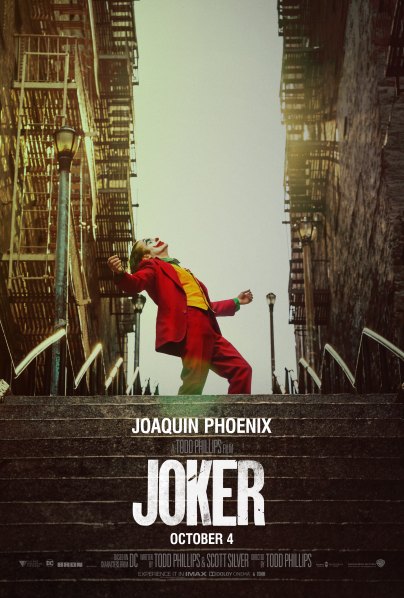
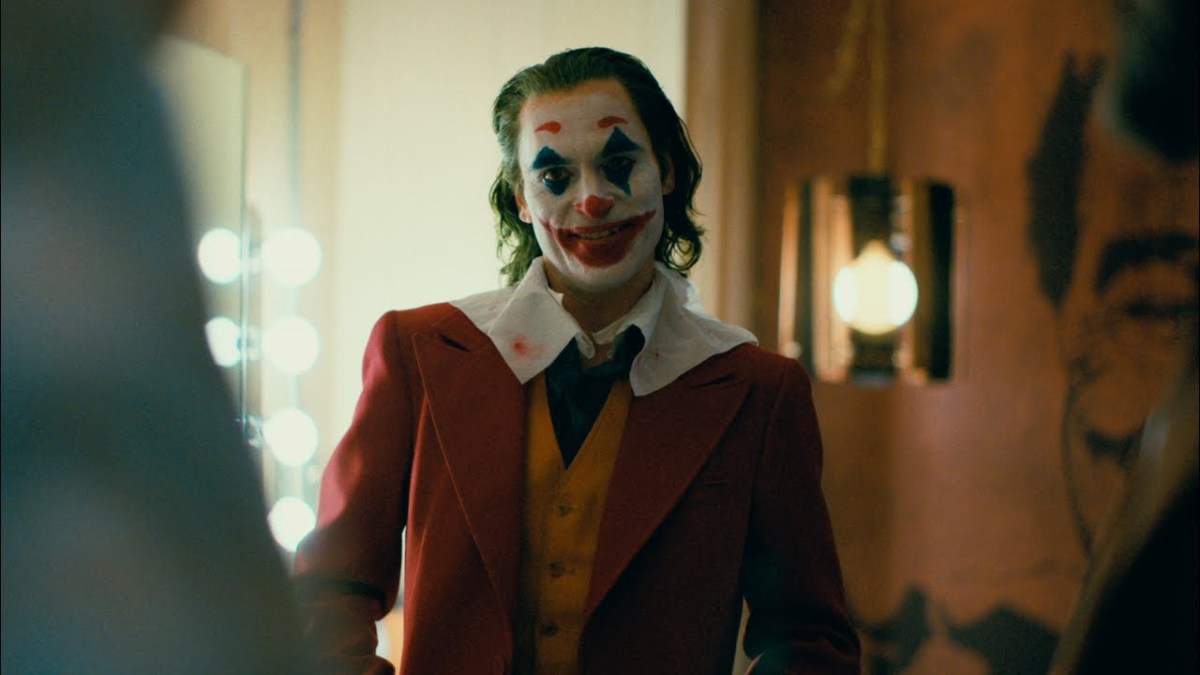
‘Joker’ (2019). What more can I say about a film that has garnered extensive media coverage, been on the subject of many debates, and been both acclaimed and scrutinized for many different reasons? All there is left to say is that one should see it for themselves and cast their own judgment. Overall, the film is a remarkable tour de force with excellent acting, cinematography, and direction along with a brilliant and moving soundtrack. Joaquin Phoenix is a shoo-in for winning Best Actor at next year’s Academy Awards and definitely deserves it. Any actor who can lose 60 pounds (32 kilograms) for a role, develop an insidious laugh, and show a huge range of emotions in all of one scene deserves huge praise and recognition.

I highly recommend seeing the film because it is more than just a movie about the world’s most famous fictional super villain. There are weighty themes that every audience member should think about such as the role of a society in producing a murderer and how we treat mental illness or the lack thereof. It is also about the gap between the rich and the poor as well as how we tend to live separate lives from each other based on our social status, which could lead to inevitable protests and unrest.

The film, in my opinion, does not condone the actions of Arthur Fleck or Joker (Joaquin Phoenix) but it holds a mirror up to the society that makes a man turn to madness and murder in that the very spot-on assumption that we too play a role in creating a monster like that. When certain people, especially the mentally ill, fall through the cracks, bad things can happen, and it is important to serve those people to get the help and care they need.

I think the main lesson of the film can also be that it is important to always do your best to treat others with kindness and respect because you do not know what is going on in their lives. While the ‘Joker’ is a monster and commits heinous acts worthy of severe punishment, this origin story shines a light on a society that fosters a man like him to turn to crime and murder to feel meaning and purpose. While ‘Joker’ is the one who pulls the trigger, it’s clear that had he gotten the help and support he needs as ‘Arthur Fleck’, there would be no ‘Joker’ to begin with.

‘The Grey’ – Film Review and Analysis

The actor Liam Neeson has become one of the main action figures in Hollywood, starring in such popular films as ‘Taken’, ‘Batman Begins’, and ‘Gangs of New York.’ However, while these roles were a bit one-dimensional or short lived in terms of his supporting role, you get to see the full scope of his talents in a powerful and dramatic role in the 2012 film, ‘The Grey.’ In this fictional drama, we get to see a man pushed to his mental and physical limits and how he is able to come to grips with such weighty topics such as his own mortality and his religious beliefs.

Not only is ‘The Grey’ a great film when it comes to its views on mortality, religion, and the depths of human nature when pushed to its limits. The cinematography, direction, pacing and setting in the film help make it stand out. There’s something in this film for everybody who is a fan of serious cinema especially when it comes to character backstory, action scenes, and touching moments of vulnerability and camaraderie. ‘The Grey’ doesn’t sugarcoat anything as well and does not shy away from addressing real life struggles such as depression, a search for meaning, and the futility of having bad luck run roughshod over one’s life.

Man can only control so much in his life and that includes what happens to those who he loves, how he adapts and survives when it exposed to the worst elements of nature and of the animal kingdom. Sometimes, the only choice that you have is to fight, persevere, and struggle to the last breath even when things look bleak. Neeson and the other men in the film have to grapple with a lot of bad events that make it a hopeless situation to get out of. There is no choice though and all of them have to do their best to make it out alive especially to the ones they love.

John Ottway, the main character in the film played by Liam Neeson, is a guy you want with you in the oil fields of Alaska. We know little about his backstory in the film, but it is revealed that he struggles with depression, meaning, and his faith in a higher power. He dreams of a woman who is his wife and the audience are not sure if he is still with her or if they divorced or each other or if something fatal has befallen her.

We assume that he is in Alaska working as a marksman protecting oil workers from the wolves and that he is doing this job for lack of better options and to preserve some remaining meaning in his life. Part of the brilliance of this film is that it doesn’t reveal everything too quickly about why Ottway is in Alaska or what happened to his wife. ‘The Grey’ does not ignore the great sense of suspense that can be built up over the course of the film to make a true compelling drama that captures and holds your attention until the end.

Ottway and the other men are facing grey wolves who see them as a threat and it’s not possible for the men to communicate to these wolves that they are friends and not foes. The animal kingdom suffers no man especially when he is in their territory. They can’t communicate with each other so it’s a battle for survival between man and wolf. While the grey wolves in real life are harmless and do not hunt humans, ‘The Grey’ takes some creative liberties with this fact in order to have a compelling film. Despite the criticism from animal rights groups, if you enter the area of a wolf’s pack den, you are likely asking for trouble regardless if you didn’t mean to do so, man or animal alike.

After a freak plane crash, Ottway and the other oilmen must fend for survival in harsh conditions while they are stalked by wolves including its alpha leader who see the men as threats to be reckoned with. Ottway has killed wolves before to protect the oilmen when they’re working in the fields and he knows what they are like. Against ever increasing odds of survival, he proves to be a great example of how to lead men in times of crisis and peril. His leadership, throughout the film, proves pivotal in giving the men a shot to get out of the Alaskan wilderness and back to their families. Even though it seems at the beginning of the film that Ottway has lost his will to live due to the situation with his wife, the freak plane crash and his survival from it propels him to try and save the men and outwit the wolves if possible.

Still though, ‘The Grey’ is a serious and realistic film about how far faith will carry you out of a real crisis. There is an underlying atheistic outlook of the movie that may rub some people the wrong way, but I found it to be needed. In life, when you face a tragedy, a crisis, or a perilous event, faith can only do so much, and you have to claw and fight your way out of it. I think ‘The Grey’ does a great job of showing how important it is to confront your fears, show true leadership, and fight as hard as possible against the odds to make it out alive of a bad and deteriorating situation.

Ottway’s character and his fight against the Alaskan wilderness and the wild wolves is a great metaphor of how each of us is fighting against our own personal demons and against events that are beyond our control in life. We each have a struggle to face and we have to do it on our own. If we have a wife or a crew by our side, that’s a great thing to have but that’s not always the case as it is in ‘The Grey.’ When you’re put into a bad situation and all hope is lost, you have to truly fight for survival and live like it’s your last day because it might just be it.

There’s an excellent quote from ‘The Grey’ that has a lot of resonance for how true it is regarding life’s fragility and how you have to live like it’s your last day and to do the best you can to survive against the odds. “Once more into the fray…into the last good fight I’ll ever know. Live and die on this day…live and die on this day.” This quote that Liam Neeson’s character recites throughout the film is not only a metaphor for his fight against the wolves and nature but his fight against depression and to make it through the day when all hope seems lost.

‘The Grey’ is a true survival film and it is excellently directed with a great starring performance by Liam Neeson. I believe it is an extremely underrated film and does a good job of bringing up various themes surrounding hope, faith, loss, and about life’s injustices. If you can check it out, I highly recommend giving ‘The Grey’ a view. It will be well worth your time.

Movie Recommendations – Volume I

‘Good Kill’ (2014)

220px-Good_Kill_poster

Good Kill is an excellent drama/thriller film that highlights the ethics and the cost involving drone warfare and how it can affect the servicemen and women who have to pull the trigger and live with the consequences. Starring Ethan Hawke, this film is a deep and probing look at how warfare conducted from thousands of miles away can still leave a lasting imprint on those who have a role in it even when they are not anywhere near the battlefield.

The film highlights correctly how while drone strikes may carry less collateral damage to civilian lives, there will always be the chance for the loss of innocent life and families being destroyed. Whether that’s an errant missile crashing into a wedding party or a group of children running by a targeted building within seconds of a missile being launched and getting caught in the crossfire, death from the skies will not only affect terrorists, but women and children too. Because drone strikes are less costly to governments and militaries, the rules of engagement can sometimes be abused to focus too often on low-level targets, who pose some actionable threat, but who could also be captured for intelligence purposes. A lack of international norms and standards regarding drone warfare leads to serious consequences in terms of possible abuse by governments who overuse it on secondary targets.

Airmen and women such as Ethan Hawke’s character and his colleagues, who conduct drone strikes, are shown to suffer from symptoms of post-traumatic stress disorder because they get to know their targets, see how they live, and struggle with having the power of death over them. High-resolution surveillance makes the act of killing personal despite the fact that these servicemen are thousands of miles away. When a drone strike goes wrong and innocent civilians are killed, it leaves a long-lasting psychological effect on the military personnel involved.

They may not see their victims when they are flying an F-16, but they are aware of what collateral damage is when they see the dead bodies of women, children being shown on the high definition screen. Military service members do not last long as drone pilots due to the immense mental strain placed on them especially when they did not sign-up for conducting warfare with a joystick. Alcoholism, depression, and family problems have occurred due to pilots being asked to conduct drone strikes in the name of national security. All of these issues are highlighted in Good Kill making it more than just your average film about war, but also about an excellent look on how the human condition is affected from holding life or death decisions over those who never see it coming.

‘Roma’ (2018)

220px-Roma_theatrical_poster

Roma is more than just your average film about a family. It is excellent in its scope and ambition in covering a tumultuous period in Mexican history and for highlighting the issues of family, race, and class within the larger society. What I enjoyed most about this film was that it felt personal and it is based off of the childhood of the director Alfonso Cuaron. The way the story unfolds feels as if it has been lived out before.

Cuaron’s work and that of his film crew that was done with the cinematography, film editing, and screenplay is extremely impressive and goes to show the audience just how film is another form of human artwork that can display beauty, meaning, and pure emotion.

Amidst the story of this family are real-life events in Mexican history that overlap with the film without overwhelming the intimacy of the story being told. For example, The Corpus Christi Massacre or “El Halconazo” in 1971 are intertwined with Cleo’s search for a crib for his newborn baby to be.

Nobody in this film is perfect and true human error of both behavior and character are laid bare. Amongst the flawed characters in this film are redemptive qualities about them and how they fight and struggle to overcome betrayal, disappointments, and tragedy. The film is gripping in that it is about real life and there is no sugarcoating. In Roma, no one is immune from setbacks and struggles, and that is what makes the audience invests in the story being told even more.

Compared to many other films that I have seen, few have touched me more on an emotional level than Roma. The realistic dialogue, the set pieces, the chain of events, and the character development all lend to its longevity as one of the best films of the decade. If you have a Netflix subscription, do yourself a favor and watch Roma. You won’t regret the chance to view this pure work of art and I would not be surprised if it sweeps the awards at the Oscars. It is that good of a film and a noteworthy achievement by director Alfonso Cuaron.

‘A Private War’ (2018)

Unknown

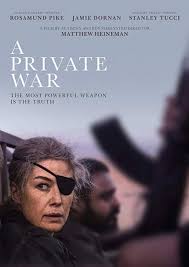
This is a biographical film without feeling overwhelming or too much tied up in the protagonist. This film does a good job in covering the life of the deceased war correspondent, Marie Colvin, who reported from multiple war zones over two decades including Sri Lanka, Iraq, Libya, Syria. Marie was a fearless and bold reporter who did the under-appreciated work of reporting the facts on the ground when it came to what was going on in these war zones.

The film portrays her as someone who battled the terrible things that she witnessed and the horrors that she could not avoid. She struggled with her dependency on alcohol, cigarettes, was divorced twice and also had her bouts with post-traumatic stress disorder (PTSD) as many war correspondents deal with when they return home from a war zone. Rosamund Pike, the lead actress in A Private War does an incredible job in accurately portraying who Marie Colvin was in how she mimics both her mannerisms and her speaking style throughout the film’s entirety.

Despite losing an eye, suffering from PTSD, and struggling with maintaining her friendships and relationships away from the battlefield, Mrs. Colvin dedicated her life to reporting the truth and the facts from war zones around the world so that everyone would else would know the costs of war.

While she was afraid and while she was fearful, she had the courage to press on and do her duty in informing the public on what was going on. While she was killed during the siege of Homs, Syria, her memory lives on with this film and the work that she did for two decades in holding the powerful accountable for the wars that they started. In an era where journalists are being denigrated and dismissed with increasing impunity, it’s refreshing to see a film that pays tribute to a war correspondent who gave her life to the cause of reporting the facts so that people would be more informed on what was going on and to also care about why it was happening.