‘Springsteen: Deliver Me From Nowhere’ – Film Review and Analysis

“What I enjoyed about ‘Springsteen: Deliver Me from Nowhere’ (directed by Scott Cooper) is that for a biographical film, it really does dive into the effects of fame, expectations, struggling with one’s past, and reconciling it with a future very much unlike where you once came from.”

Everyone knows who Bruce Springsteen is by now, the Rock superstar and legend who has produced over twenty studio albums, won dozens of awards, and sold out shows over many decades. He is the extrovert’s extrovert on the stage producing marathon 3 ½ – 4 hour live shows with the powerful energy and stamina of a man half or one third of his age (Springsteen is 76 as of this writing). What I enjoyed about ‘Springsteen: Deliver Me from Nowhere’ (directed by Scott Cooper) is that for a biographical film, it really does dive into the effects of fame, expectations, struggling with one’s past, and reconciling it with a future very much unlike where you once came from.

‘Springsteen: Deliver Me from Nowhere’, the film has excellent source material in the book of the same name mostly due to interviews with the man (i.e. Springsteen) himself in the book, previously released in 2023 by author Warren Zanes. I highly recommend reading the book before seeing the movie to get a fuller picture of how Springsteen’s unlikely first solo album came to be in 1982. While the movie takes some time away for some side plots not related to the album’s making, it does do justice to how ‘Nebraska’ came to be and how it almost got completely derailed. The romantic subplot, while competently acted, feels tacked on and somewhat distracting from the core narrative. I found myself wishing the film had dedicated more screen time to the mechanics and mindset behind Nebraska’s creation as the book had done that it is based on; its stark originality is one of the most fascinating aspects of Springsteen’s career, and the film sometimes glides past that too quickly and not deeply enough.

Commercial success puts a lot of pressure on any musician and even Bruce Springsteen was exhausted both mentally and physically from ‘The River’ tour with his first taste of super stardom. It’s hard to top that kind of album so his decision after the tour to seek some peace and quiet at a rental home in Colts Neck, New Jersey seems like a good step to get the writing process started again. In the film, Bruce seems introverted almost to a fault when he gets off stage, must sit by himself to have some quiet and enjoy the peace of his dry towel hanging over his head.

While he responds warmly to fans and to his love interest especially during his guest set at The Stone Pony in Asbury Park, you still sense he’s caught between who he was and who fame is forcing him to become. I enjoyed how the film shows that he is battling himself at times in terms of what direction to take his life on top of his unresolved issues of his past highlighted by his turbulent relationship with his father (played by the great Stephen Graham). Even when you’re popular and famous for your music, sometimes anyone would want to do, including Bruce, is to isolate oneself for a while and be somewhere where you aren’t recognized or don’t want to be recognized. Bruce wants to focus on his musical range and channel his creativity away from the record executives’ wants, away from the band, and perhaps away from everyone.

Jeremy Allen White nails the role, embodying Springsteen’s physical stillness, haunted expressions, and the restless mind of a young artist wrestling with ideas he doesn’t yet fully understand. Being able to master guitar playing, the singing, the panic of not knowing who he is at times and searching for lyrics and the meaning behind them are tall tasks for any actor to convince an audience of and Jeremy nails it throughout the film. White’s performance works because he understands Springsteen not just physically but emotionally: a rising star caught between inspiration and uncertainty, trying to decode the meaning of his own lyrics as he writes them.

Coming up with an album different than anything you’ve ever done before takes time, effort, and introspection, which helps Bruce to look for movies, books, and stories that help create the theme for what Nebraska becomes. While Bruce and the E Street Band are shown in the film as a tight band, hitting on all cylinders, and creating great music for their own album, Bruce feels passionately about making something of his own and letting it not be changed or influenced beyond what he put together in an upstairs bedroom of his rental house on a simple four track cassette. Even in the early 1980s, technology could have given Nebraska a cleaner, more polished sound. But Springsteen refused to smooth out the edges. He believed the atmosphere, imperfections, and claustrophobic intimacy of the demos were the very thing that made the album special.

In both the book and the recent film, Springsteen is not afraid of Nebraska failing or his other music not being well received. Rather, he is afraid of how not to crack up from what is haunting him internally. Money, fame, and a bright future do not make him whole, and being able to carve out your own identity, deal with your past wisely, and find a way to deal with depression in a healthy manner takes time, support, and sometimes admitting when you need to seek help.

Luckily, Bruce has a loyal manager, Jon Landau (played by Jeremy Strong) who is more than looking out for making money off the next hit Springsteen album. He shows that he cares for Bruce as a person and more importantly as a dear friend and wants what’s best for him, even if Nebraska is not the album he would have hoped to promote or the kind of musical direction, he wants from Bruce either. Landau wants Bruce to find inner peace and happiness more than just fame, success, and wealth, which not every manager wants for their star.

Bruce, like the characters in Nebraska, are imperfect people in an imperfect world, and even if the stories are ghostly, gruesome, or unpolished, like the album, they must be told and given room to breathe. Even from great solitude and from introversion, Bruce’s personal struggle in that time led to one of his best albums and is still being covered and listened to over forty years later. Nebraska wasn’t built for radio or for Top 10 charts, even if it did outperform expectations, but it was built for truth and showed the underbelly of hard lives and harder circumstances. Bruce’s childhood and dealing with his past are covered in the film and you get the sense that there would be no Nebraska if the artist hadn’t any struggles in life or not been tested by family or by fame or by his search for the next song.

‘Deliver Me from Nowhere’ isn’t just a book or a film. It’s a reminder that even legends hit that crossroads where success, identity, and truth collide. It’s a thoughtful, beautifully acted portrait of an artist wrestling with his past to shape his future. For Springsteen fans, it adds new insight into one of his most daring albums; for newcomers, it’s an unforgettable introduction to the man behind the myth. Nebraska was never meant for radio or music videos; it was meant for honesty and truth-telling. More than forty years later after this album first came out, that honesty still cuts through all the noise.

Anatomy of a Scene – ‘A Small Measure of Peace’

“To be at a certain place or with a certain person for the rest of your days and to be at ease with your decision, that contentedness is to have found the ‘small measure of peace’ that we can spend our entire lives trying to capture but only a few ever truly find.”

The Last Samurai (2003) – ‘A Small Measure of Peace’

There is a distinct moment in our lives when we realize that the fight is done, and the work is over. It is a pleasant realization that all you can do has been done and that you must take the rest of our days to welcome ‘a small measure of peace’ in one’s life, which is not easily found or embraced. To be at a certain place or with a certain person for the rest of your days and to be at ease with your decision, that contentedness is to have found the ‘small measure of peace’ that we can spend our entire lives trying to capture but only a few ever truly find.

It does not mean that the work is over but rather that the trials of our life have come to pass and that what we have fought for, bled for, or even cried for have now come to pass. While there may no final resting place until we depart from this Earth, finding a small patch of land to call your own, a garden or a farm for you to mend, and a woman (or a man) for whom you can love freely, that is the ‘small measure of peace’ to strive for obtaining, especially in one’s later years.

One man who was able to find his small measure of peace was Nathan Algren, who in ‘The Last Samurai’ can redeem himself, end his alcoholism, and fight with courage and honor in preserving the memory of the Samurai. While the Samurai age came to an end, Industrial Japan, and its Emperor, partly thanks to Nathan leading the Samurai into battle, to preserve their dignity and honor, were able to leave their mark on Japanese culture and history. While he may have been the last Samurai and a foreigner in Japan, he was able to rally them to a glorious end for which Imperial Japan would never forget.

“Tell me how he died.” “I will tell you…how he lived.” Even after losing his close confidant and friend in the final battle, the samurai Katsumoto, who took Nathan under his wing, told him the ways of the Samurai, and introduced him to the woman he came to love, Nathan wanted to preserve his memory to the young Emperor and to let the Imperial Japanese court know how special the age of the Samurai was and how it should not be forgotten.

“Nations, like Men, it is sometimes said…have their own destiny.” While nations choose to look forward to the future, they must also embrace the past to preserve their identity. What was once part of their culture may go away but it can leave an imprint and be remembered by generations to come. Japan’s destiny lies in looking to the future but always remembering the past, such as the age of the Samurai. Nathan Algren, the American who learned the ways of the Samurai, was able to throw off his own turbulent past as a Civil War captain by learning to fight with dignity and honor as a Samurai in a cause bigger than his own ego.

“As for the American Captain, no one knows what became of him…some say…he died of his wounds…others…that he returned to his own country…But I like to think…he may have, at last, found some small measure of peace…that we all seek…and few of us ever find.”

After trying to get himself killed or trying to deliberately drink himself to death, being able to survive as the last Samurai and tell of their traditions to keep the memory of Katsumoto alive, Nathan Algren was able to finally let go of the demons of his past and find the small measure of peace in a small Japanese village where he was first introduced to the only woman he truly loved. In her, Nathan finds a reason to stay alive, to make a life away from war and suffering, to be part of the woman’s village again, and perhaps start anew where he could be at peace with the past and have a pleasant future that is filled with love and peace.

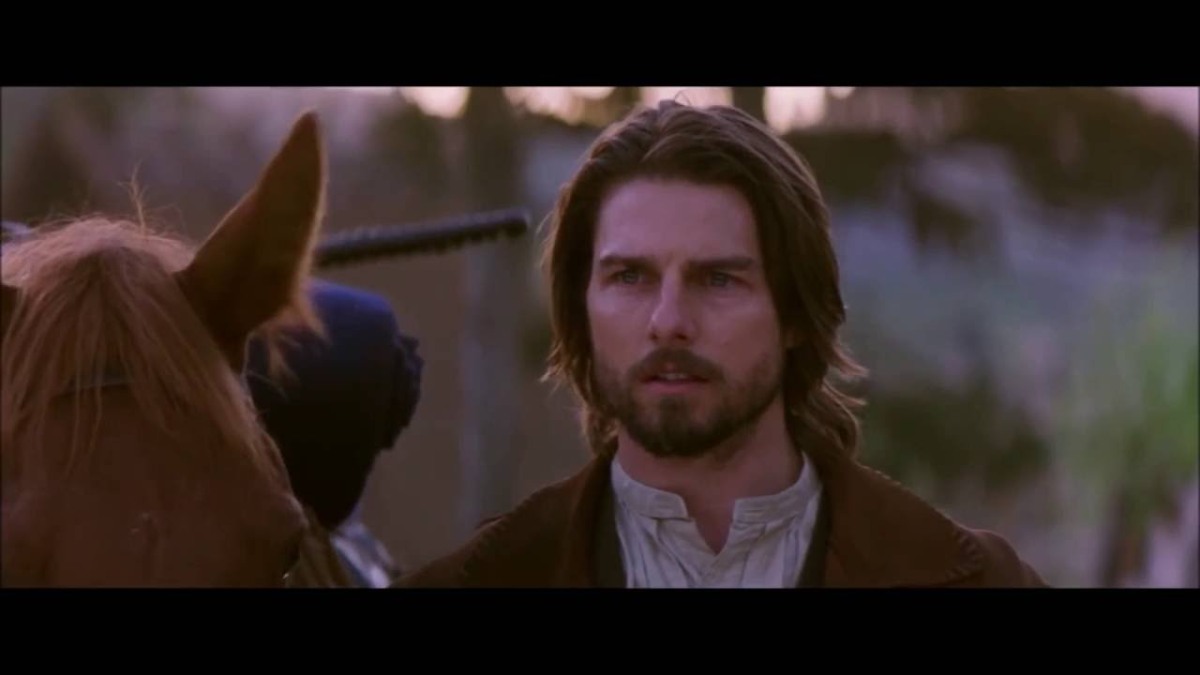
As Nathan gathers his horse and rides down to Taka’s village, he is a man who is content, who is at peace, and who knows what exactly he must do for the rest of his living days. Taka and Nathan have a history together over the course of the film but by the ending scene, she is happy to see him alive and well again. Her beauty, grace, and femininity shine through as she gazes at Nathan, giving him a heartfelt smile, happy to see him in her presence again.

One look at each other says it all and they have been through so much in their time together that just to be making eye contact again is enough to fill up both of their hearts with joy. Like how Japan was willing to move forward to a new age while remembering the last Samurai, Nathan is also ready to be at peace with his past while looking to the future with Taka.