‘Lord of War’ – Film Review and Analysis

Arguably one of the best movies of the 2000’s and Nicholas Cage’s best performance as a lead actor, The film ‘Lord of War’, released in 2005, is a realistic and unfiltered take in the role of illegal arms dealers, who facilitate the sale and transfer of arms trafficking throughout the international arms industry, which continues to be one of the world’s most profitable endeavors. ‘Lord of War’, while nonfictional in its’ story is actually based off of the lives and exploits of different real-life arms smugglers. ‘Lord of War’ is directed by Andrew Niccol, and stars a cast of Nicholas Cage, Jared Leto, Ethan Hawke, and Bridget Moynahan.

Nicholas Cage plays Yuri Orlov, the son of Ukrainian refugees from the Soviet Union, where he and his brother, Vitaly, help their parents out in their Ukrainian restaurant as cooks and helpers. While Vitaly is somewhat satisfied with this simple life of cooking borscht and washing dishes, Yuri wants to achieve the ‘American Dream’ and get out of Brighton Beach, Brooklyn, where he grew up after leaving Ukraine. He struggles to grasp at any real business opportunity in order to get out of the shadow of his ordinary life in Brooklyn.

However, one day when he is dining at a restaurant in Brighton Beach, the business idea he needs comes to life for Yuri in the form of a Russian mobster killing two would-be assassins and fending off their attack with AK-47 Kalashnikov rifles. Yuri believes that there is a lot of money to made in international arms sales and decides to go into business despite the protests of his brother, Vitaly, and the fact that his parents don’t know what he’s up to.

One scene in particular that stands out in Yuri’s beginning as an illegal arms dealer is when he tells his brother that since there are so many McDonald’s and gun stores in America already, he needs his business to be international in its’ focus. At first, Yuri feels that dealing arms is comparable to serving food at a restaurant. He justifies his nefarious business by narrating to the audience that its’ providing for a part of human nature in his opinion, the instinct to kill and harm others, as documented by the “earliest human skeletons who had spears in their heads and rib-cages.”

While Vitaly, Yuri’s brother has moral reservations about what Yuri is doing, he decides to join him later on as they crisscross the globe during the late 1980’s and into the 1990’s dealing with corrupt governments, genocidal dictators, and other more ruthless arms dealers as their competition. As Yuri becomes more popular and wealthy with the illegal arms business, he runs up against a by-the-book, incorruptible, and idealistic Interpol agent, Jack Valentine (Ethan Hawke), who tries unsuccessfully to track Yuri’s business dealings down by air and by sea.

Despite the fact that his brother, Vitaly, becomes a drug addict, and is an unreliable business partner, Yuri continues to run his illegal arms business as a one-man show. While a fictional story, ‘Lord of War’ is based off of real life conflicts and real life people who were involved in the illegal arms trade. These conflicts include the 1982 Lebanon War, the Soviet Union’s War in Afghanistan against the Mujahadeen, the civil war in Liberia during the 1990’s, etc. The movie does not gloss over the dissolution of the Soviet Union and the impact that the end of this cold war conflict had on the rest of the world in terms of arms sales. Yuri is able to become a very wealthy and powerful arms dealer in the film due to his family connections in Ukraine and the sheer weaponry, and arsenal that the Soviet military left unused.

Like his arms business, which is run under false pretenses, he does the same with his love life as he falls for a fashion model and childhood crush, Ava Fontaine (Bridget Moynahan), who he sets himself up with under the guise of a false photo shoot. Despite the fact that his parents don’t know about his illegal dealings, he lies to his new wife regularly, and his brother ends up in a drug rehabilitation center, Yuri does not give up on the arms business because he likes it, is good at it and is unable to go straight in legal business endeavors. However, in the wake of all of his ‘success’, innocent men, women, and children get killed by the guns, bombs, ammunition, tanks, planes, etc. that he sells and profits off of. As the film progresses, the director makes clear that Yuri has sold his soul in this dirty trade and it may cost him his life or the lives of others close to him if he doesn’t stop.

In a way, the audience who watches ‘Lord of War’ could be most closely aligned with the perspective of the Interpol agent, Jack Valentine. He knows that Yuri is a bad person and he wants to bring him down, but will it make any difference to bring one sole arms dealer down when billions of dollars are exchanged around the world each year through both legal and illegal arms sales. Like Jack, the audience may question the nobility of bringing down one arms sales dealer like Yuri when there are dozens of them out there, and Presidents / Prime Ministers of the major countries are the biggest arms dealers of them all.

Yuri never takes full responsibility for his business dealings during the film even if the sale of his arms causes bloodshed and death. He remarks bluntly to his brother, Vitaly during one scene: We don’t talk about it. How many car salesmen talk about their work? How many cigarette salesmen talk about their work? Both their products kill more people every year than mine, at least mine comes with a safety switch. Those guys can leave their work at the office, so can I.”

In Yuri’s opinion, he may be evil, but he’s ‘necessary evil’ because there are other people or governments out there like him involved in the business, but sometimes they ‘can’t have their fingerprints on the gun.’ Despite the pressures placed on him by family, friends, and the law, Yuri is committed to doing what he does best without having the moral imperative to stop. As I don’t want to reveal the ending, the first time you see it, you may be shocked but this film doesn’t deal in black and white, and that’s what I love about it.

There are numerous shades of grey that go along with the black and white, and the ending of ‘Lord of War’ falls within those shades of gray. ‘Lord of War’ doesn’t have your typical Hollywood ending, and that’s partly what it makes it such an alluring film. On top of the exquisite directing, acting by Nicholas Cage, Jared Leto, Ethan Hawke, etc. and the deep political and philosophical themes behind this film, I highly recommend it.

I’ll leave you with a quote from the film that is very poignant and is still true twelve years after ‘Lord of War’ was released in movie theaters. “While private gun-runners continue to thrive, the world’s biggest arms suppliers are the U.S., the U.K., Russia, France, and China…they are also the five permanent members of the United Nations Security Council.”

‘Field of Dreams’ – Film Review and Analysis

terencemann
“Oh…People will come, Ray. People will most definitely come.”

Field of Dreams is a quintessential classic American film and a movie that gets better with repeated viewings. Field of Dreams is almost thirty years old but has aged like a fine wine since it was released in 1989. This film is a unique mixture of the fantasy, sports, and drama genres and shows how crucial the game of baseball is to American culture. While some people who watch Field of Dreams think that this film is an original story, it is actually based off a novel by W.P. Kinsella titled, ‘Shoeless Joe’, which was critically acclaimed as well.

Part of the reason why Field of Dreams was so successful is because of the great cast of actors and actresses that helped make the film so popular. This was one of Kevin Costner’s most famous roles and also stars Amy Madigan, James Earl Jones, Ray Liotta, and the late and legendary Burt Lancaster who starred in his final role in this movie. Another fact that most fans of this film wouldn’t know about is that Field of Dreams was nominated for three Academy Awards including Best Original Score, Best Adapted Screenplay and Best Picture.

Of all the places in the world to hear a voice whisper the phrase, “If you build it, he will come…” a large cornfield in the middle of Iowa wouldn’t be your first guess most likely. However, that is exactly the premise behind Field of Dreams. A local farmer, Ray Kinsella, who has a troubled relationship with his father, John Kinsella, a former baseball player who wanted his son to follow in his footsteps feels guilt at what a strained relationship he had with his father before he passed away.

Ray then sees a vision of his cornfield being turned into a baseball field and decides to go along with this vision by turning his farm into a real baseball field. Ray is an adamant defender of ‘Shoeless’ Joe Jackson who believes he was actually innocent and didn’t do anything wrong despite the fact that he was banned from baseball due to the 1919 Black Sox Scandal. Ray’s father, John, was also a big defender of ‘Shoeless’ Joe Jackson and that’s the one major thing that Ray and his father could agree upon. His daughter, Karin, and his wife, Annie, are skeptical of Ray’s plan to build a baseball field at first but end up trusting his judgment after some convincing.

After Ray completes the building of his baseball field in Iowa, many months go by and the bills for maintaining the field start to pile up causing Ray and his family to feel some serious financial stress. When all hope seems to be lost regarding his vision, Karin spots a baseball player moving through the baseball field one night and Ray recognizes the player as being no one other than ‘Shoeless’ Joe Jackson (played brilliantly by Ray Liotta). John, Ray’s father was a big fan of ‘Shoeless’ Joe Jackson and would be thrilled to know that Ray’s vision came true and Mr. Jackson was here out on his farm in Iowa absolutely thrilled to being playing baseball again. Shoeless Joe ends up bringing some of his teammates from the Black Sox who were also banned from baseball due to the 1919 scandal and they start practicing together on Ray’s field.

Unfortunately, not everyone in Ray’s family can see the baseball players on the field. Ray’s brother-in-law, Mark, warns Ray about how much of a financial drain the baseball field is on his farm and Ray may have to foreclose on the property unless he is able to generate some money from it. Mark thinks Ray has gone crazy because he keeps referencing the baseball players on the field who Mark is unable to see. Luckily, Ray’s wife, Annie, and Ray’s daughter Karin can see the baseball players and believe Ray to be doing the right thing leaving Mark quite flustered and angry.

Ray ends up hearing another voice whisper through the field telling Ray to ‘ease his pain.’ After seeing how the local town wants to ban the books of one of his favorite authors from the 1960’s, Terence Mann, Ray ends up doing some more research about his favorite author and discovers that one of Mann’s dreams was to play for the Brooklyn Dodgers professionally. One of the reasons why Ray ended up quitting baseball even though his father wanted him to play professionally was because he read one of Terence Mann’s books when he was a teenager and never played catch with his father, John, again.

Ray and Annie both have a dream about Mr. Mann one night in which Ray is attending a baseball game at Fenway Park together with Terence. With Annie’s support, Ray goes all of the way to Boston to seek out Mr. Mann even though he has become a curmudgeon recluse over the past few decades and mainly keeps to himself. With a lot of convincing, Ray takes Terence to a baseball game at Fenway where they both end up hearing another voice telling the two of them to ‘go the distance.’ They also see the statistics of a baseball played of Archibald ‘Moonlight’ Graham who starred in only one game for the New York Giants but never had an actual at-bat. Ray and Mr. Mann do more research about Graham and end up driving together on their way to Minnesota to go see him.

When Ray and Mr. Mann travel all the way to Minnesota, they realize that Moonlight Graham became a doctor and had passed away over fifteen years ago in 1972. When Ray goes for a walk one evening, he realizes that he has transported himself to that time before Moonlight ‘Archie’ Graham had died and encounters him on the street where they have a conversation about his short-lived baseball career. The older Moonlight Graham is content to be a doctor but wishes for that one chance to face a major league pitcher.

After Ray and Terence leave Minnesota, they encounter a young hitchhiker on the road who introduces himself as Archie Graham. The two of them are amused by this crazy coincidence and take him with them to Iowa. During the ride, Ray confides in Terence Mann that his father was disappointed in Ray for throwing away his baseball career and for denouncing his father’s hero, ‘Shoeless’ Joe Jackson as a criminal. One of Mr. Mann’s books led to Ray putting down the baseball bat as well. Ray really wishes to make up with his father and make things right again if he had a dream to spare.

The amazing thing is that this young Archie Graham character gets to play on Ray’s baseball field in Iowa. In this only “major league” play, he is able to hit the ball into the outfield and get a sacrifice fly run in for his team miraculously after winking at the opposing pitcher as he always wanted to do even as an old man. Facing financial pressure from Mark and his associates, Ray thinks about selling the field to save his farm but Terence Mann encourages Ray to re-consider.

Considered to be one of the greatest monologues in modern film, James Earl Jones gives an amazing speech regarding the central role that baseball has played as America’s pastime and how it has formed our culture, and made the nation stronger during times of peril and tragedy. “People will come, Ray, people will most definitely come…” Terence Mann’s beautiful speech to Ray convinces him to keep the baseball field and not sell it off because he knows that baseball fans will come to Iowa to see their childhood heroes play America’s beloved game.

Mark, acting increasingly incensed, causes Ray’s daughter, Karin to fall from the bleaches, but Archie Graham who has a sense of both his past and future to come, steps off this magic baseball field to save Karin from choking. Mark then becomes a believer and sees all of these historical baseball players and encourages Ray not to sell the baseball field. He most likely believes that the field could be a major cash crop within itself and that people will most definitely come to see it. The older Moonlight Graham thanks Ray for the chance to make his dream to come true and that he doesn’t regret how he became a doctor too.

Terence is invited to leave with the baseball players one day to go through the cornfields to a destination that is unknown. Ray is going to miss Terence but trusts his judgment that it could ‘make one hell of a story one day’ about ‘Shoeless Joe Jackson coming to Iowa.’ Ray has his own family and can’t go with Terence who may be entering a realm or destination beyond our comprehension as the audience. Still though, he’s confident about his next destination and isn’t worried about not coming back.

One day, A younger version of Ray’s father shows up on the baseball field and Shoeless Joe Jackson references that the voice in Ray’s head was not Joe’s but rather Ray himself wanting to have a better relationship with his father and to ‘ease his pain.’ In the climatic scenes that can make even the most stone-hearted person cry, John is reunited with his son, Ray, on the baseball field, and he even gets introduced to Ray’s wife and his granddaughter, Karin, who he never knew in life.

John Kinsella remarks to Ray how “it’s so beautiful here, it’s like a dream come true.” The young John, asks Ray if this is heaven. Ray replies simply that, “It’s Iowa.” Even though John believes it still could be heaven, Ray asks if there is a heaven having never experienced it. John replies, “Oh yeah…it’s the place where dreams come true.” An uplifting emotional moment takes place in this scene as Ray Kinsella looks around at his beautiful farm, his wife and daughter happy and smiling, and to be reunited with his estranged father again as being a sign that maybe they, in fact, are all in heaven together.

Ray is so overcome with emotions at being with John again that before John leaves to go through the cornfields as the sun sets, he strikes up the courage to ask his dad to have a catch with him as they did in the old days. They start to throw to each other and Ray is struggling to believe that this is actually happening until John throws him the baseball, which Ray catches in his glove, and he can actually feel the soft baseball in his mitt knowing that his dream finally came true.

This last scene of ‘Field of Dreams’ is an iconic one and shows the power and love of the relationship of a father and son. Despite their differences, they still want to share the tradition of having a catch together after all of those years had passed between them. As the final scene fades out, you can see thousands of red lights emanating from the cars who are lining up to visit the ‘Field of Dreams’ and see their old childhood heroes play the game of baseball. People most definitely will come if you build it.

A truly remarkable film, ‘Field of Dreams’ is hard to get through without tearing up and having some tissues near you. More so than just Ray and John’s relationship, many characters have their dreams realized because of this baseball field. Archie ‘Moonlight’ Graham gets to swing the bat for the first time, ‘Shoeless’ Joe Jackson gets to play baseball again as apart of his shamed Black Sox team, and Terence Mann gets to see what’s on the other side of those Iowa cornfields. The powerful musical score by the dearly departed James Horner stirs your emotions with every scene, and you can feel the weight of Ray and John’s relationship with each sound of the orchestra. James Earl Jones steals the show by giving one of the best monologues about baseball and its’ importance within the history of America.

If you love the game of baseball and you enjoy a story about achieving your dreams when they seem out of reach, then you should watch ‘Field of Dreams.’ They really don’t make too many Hollywood films like Field of Dreams anymore and even though it was released in 1989, it’s still an American classic, which has stood the test of time. If you ever go to Iowa, that special baseball field is still there to visit. If you’re a father or a son, you’ll also really connect with this film and it will touch you in your heart and in your soul.

‘Sideways’ – Film Review and Analysis

notdrinkingmerlot
“Miles is not drinking any Merlot!”

Sideways (2004) is an excellent film about the topsy-turvy nature of middle-age life and how to cope with the curveballs that life throws at us to challenge us. Critically acclaimed at the time and nominated for many awards, Sideways, directed by Alexander Payne is a good tale about male friendship, how to deal with mid-life problems, and finding love and purpose during difficult times.

The very title of the film ‘Sideways’ is symbolic of the best way in which wine bottles should be preserved by being laid on its’ side in order to age properly. Also, men and women who are going through their mid-life ‘sideways’ must embrace the challenges that lie ahead and the changes that come to them with this part of life in order to grow and mature as a person.

The basic premise of the film ‘Sideways’ involves two middle-aged men who are close friends, Miles Raymond (played by Paul Giamatti) and Jack Cole (starring Thomas Haden Church) that decide to take a week long Bachelor’s trip up to the wine country of Napa Valley in California to celebrate Jack’s upcoming wedding and the end of his singledom. Both of these men are in their forties and have a sinking feeling that the best of life is behind them.

Miles is in a depressive state due to the fact that he feels like a failed writer due to the uncertain future success of his yet-to-be published book. While he has a steady job as a high school English teacher, he feels unfulfilled by his life and wants to achieve greater success as a novelist but has yet to break through. On top of that, he has gone through a recent divorce that he has yet to recover from fully and is newly single.

Luckily or unluckily for Miles, he has a friend, Jack, who is hoping to have a good time for his last few days as a single man. Jack Cole, Miles’ friend is an actor who may be past his prime. While he used to be a TV soap opera star years ago, now, he is mostly relegated to doing voiceovers for silly commercials and seems to be getting tired of the acting business. Jack loves his fiancé but has the problem of not being able to control him when it comes to women.

Unlike Miles, Jack is not a big wine connoisseur and is more into playing golf and hooking up with a local woman before he takes those fateful steps down the aisle. Jack is hoping to not screw up his marriage but he obviously misses the single life while his friend, Miles dreads being single again. Jack may love his fiancée but he is also hoping to get involved with the real estate business that his soon-to-be father-in-law is running in Los Angeles, which Jack wants to be apart of in order to get away from acting once and for all.

Beyond just writing novels and teaching his students, Miles’s true passion in life is wine, which is why he proposes Jack that they go to Napa Valley to drink some great wine, play some golf, and eat some good food together. While Jack enjoys all of those activities, he has other plans in mind for his last days as a single guy leading to hilarious and disturbing results for the both of them. Before Jack wants to get married, he wants one last fling as a ‘single’ guy before he becomes the husband to his wife. In the meantime, Miles encounters a woman he never expected to meet.

Maya, (played by Virginia Madsen), is a kind and intelligent waitress at a local restaurant in Napa Valley known as ‘The Hitching Post II.’ She is someone who Miles has encountered before during his previous solo trips to Napa Valley. While they were friendly to each other, it’s only on this Bachelor’s trip to the wine country where Miles with the help of Jack’s support gets to know Maya better. Maya and Miles really hit it off with each other especially over their shared love of good wine and they start to develop a relationship.

Luckily for Jack, Maya knows a local wine keeper, Stephanie, (played by Sharon Oh), who has a lot of the characteristics that Jack likes in a woman. The two men end up dating and hooking up with both women but with unforeseen and negative consequences. Jack’s adulterous philandering almost catches up with him and causes Miles a lot of unneeded stress. Miles also suffers during this trip from the lack of hope for his novel in finding a publisher to sell and advertise it.

He also struggles to give up on his ex-wife, Vicki, who he did cheat on leading to their divorce and breakup. The almost breaking point for Miles comes when he finds out that his ex-wife, Vicki, got re-married and has a newborn daughter causing him to regret his divorce from her. While his wife has moved on from him, he still struggles with the fact that his book is going nowhere, he is single in his 40’s, and has no legacy or children at the moment.

Despite all of mid-life struggles that both Miles and Jack go through during the film, they remain loyal and true friends despite the pain and suffering they cause each other. Miles and Jack are almost complete opposites of each other in terms of their personality and character. Miles is serious yet forlorn and an intelligent, well-spoken man while Jack is a cocky womanizer who never really grew out of his teenage years.

However, despite their differences from each other, they do help lift each other out from their problems. Jack gives Miles encouragement to keep working on his novel and to self-publish it if he has to. He wants Miles to succeed at starting a relationship with Maya and really gets him to start going out with her. Miles saves Jack from himself multiple times throughout the film and even though Jack’s integrity is compromised, Miles is there to clean up the damage and makes sure that his friend follows through on his marriage commitment to his fiancée, Stephanie.

Every character in this film is flawed in some way and even though each of them, both men and women, are in their forties, they still have some growing up to do and don’t have everything figured out when it comes to life. Each of these characters has their own personal demons with Miles having depression and a lack of success in his passion and Jack being an adulterer and a compulsive liar.

While they are not perfect men and the women they are involved with make that clear to them, they are still good guys at heart and want to do the right thing. Life has thrown them ‘Sideways’ and they are trying to keep up with all of the curveballs that they must dodge and move forward against. It is really no surprise to me that similar to ‘Lost In Translation’, this film has become a cult classic that can warrant multiple viewings.

While it may not be your typical feel good movie, it’s a ‘real’ film about ‘real’ people who are trying to succeed both personally and professionally against the odds. If you decide to watch ‘Sideways’ for the first time, you’re going to be rooting for each of these characters to find happiness. They are endearing to us as the audience because they make mistakes and have setbacks just like those of us watching the film. In addition to the brilliant acting especially by Virginia Madsen, Paul Giamatti, and Thomas Haden Church, the adapted screenplay is brilliantly written and thought out.

Even though most viewers would consider it a dark, morose film, it also has a lot of comedy in it and some great lines about wine. There are a lot of moments in ‘Sideways’ that will make you sad, happy, angry, and even make you relate to the characters themselves. A great film overall directed by Alexander Payne, Sideways was released way back in 2004 but still remains a popular and heart-warming film that will leave you satisfied. I highly recommend checking ‘Sideways’ out when you get the chance and to remember after watching the whole film to never order a tall glass of Merlot again.

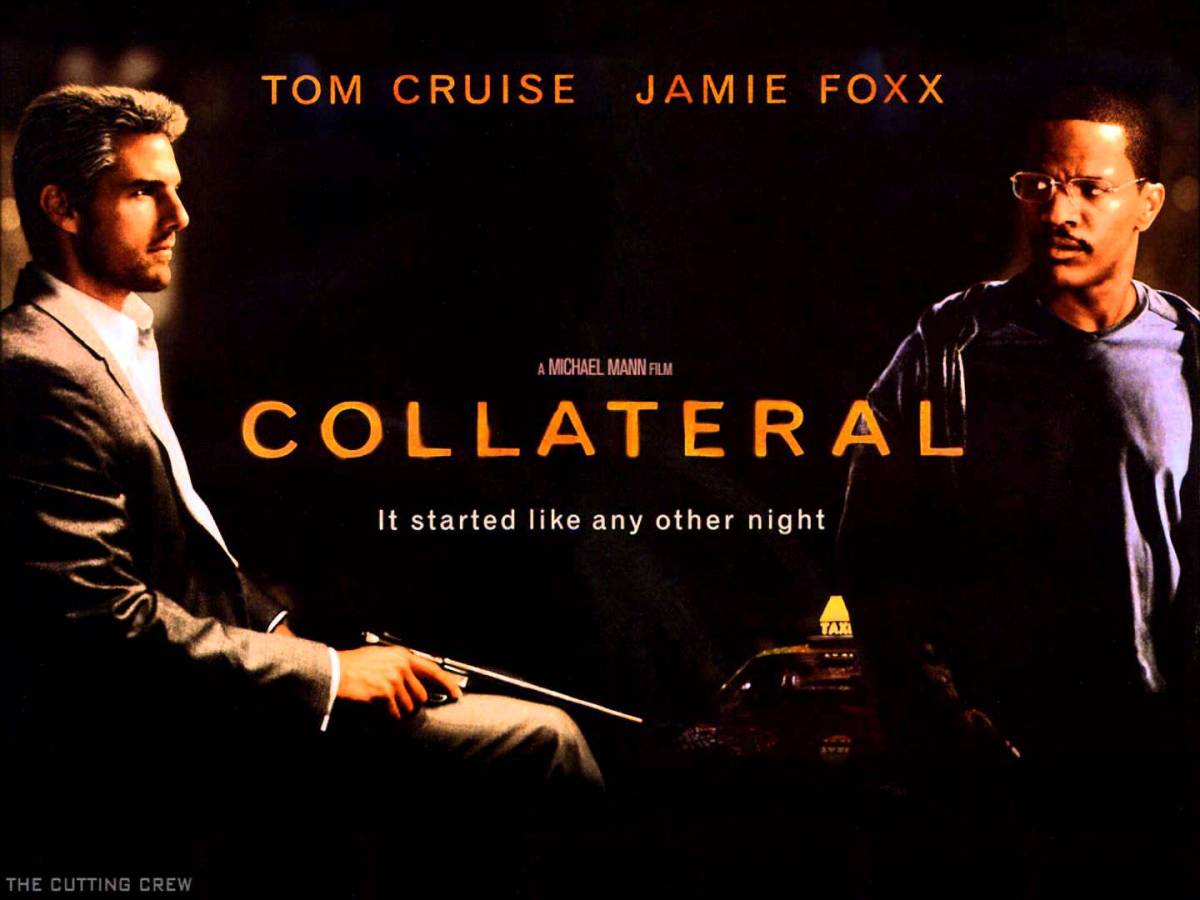
‘Collateral’ – Film Review and Analysis

It’s not often the case that a Hollywood film can go beyond its’ genre to relay a deeper message about the human condition and why people are the way they are. ‘Collateral’ (2004) is one of those movies that is able to achieve just that by making the audience member such as myself care about the characters as well as appreciate the deeper meanings beyond the dialogue and the setting.

While there are numerous crime thriller films out there, ‘Collateral’ is able to go above and beyond the clichés and be original in its’ own right. Part of this is due to the fact that Tom Cruise and Jamie Foxx give outstanding performances for their respective characters along with the rest of the credit that should be given to director Michael Mann who relishes being a director for crime noir dramas that are set in Los Angeles. While ‘Collateral’ was not an Oscar award winning film unfortunately, its’ characters, the setting, the action sequences, the directing, and the overall message that the plot sends to the audience make it a unique and reputable movie that deserves a viewing or two.

Without going into too much detail, the plot of ‘Collateral’ stars two men who come from very different circumstances and live very different lives. However, the Cosmos align to have them meet for the first time at night in Los Angeles. “Vincent” played by Tom Cruise, has just arrived in Los Angeles from the airport and is looking for someone to take him around the city. What better way to see L.A. than to do so by taxi so Vincent goes to the nearest taxi stand to seek one out for a ride. That’s where the plot of the film begins as Max, played by Jamie Foxx, accepts Vincent as a new passenger after ignoring his presence initially. Vincent, dressed in a gray suit with gray hair could be just like any other businessman in Los Angeles but he’s not what he appears to be. Max starts to realize this as the night goes on but not until after he drops off Vincent at his first but not his last destination.

Vincent is more than just the new guy in town here for business. He’s a contract killer and a hitman who is in Los Angeles for one night only in order to carry out a series of hits. After bearing witness to the first of Vincent’s murders, Max is forced into being Vincent’s chauffeur for the rest of the night as he has four more contract hits to carry out for his boss, “Felix”, played brilliant by actor Javier Bardem. Vincent’s goal for the night is to carry out the rest of the contract hits successfully and then get a flight out of Los Angeles as the sun rises after his boss pays him handsomely for his ‘work’. Max’s goal for the rest of the night is to get out of this situation alive without getting killed by Vincent or being seen by the police as an accomplice of Vincent who is dragging him along as he commit these vicious murders in cold blood.

Mixed up in all of this madness is “Annie”, played by Jada Pinkett Smith, who is a prosecutor in the U.S. Justice Department who works out of their office in Los Angeles. She ends up being the first passenger of the evening in Max’s cab before the fates intertwine and Vincent comes along to change Max’s life forever. The only good part of Max’s night is when he meets Annie and they hit it off enough to the point where he is able to get her phone number but it is uncertain whether or not he will have the confidence to call her and make plans.

Unfortunately, Vincent, the contract killer, has Annie in his sights as one of his five targets setting off a series of events that put Max and Vincent on a tense collision course. On top of all of this, you have members of both the FBI and the Los Angeles Police Department noticing what Vincent and Max have been up to which causes more violence and bloodshed to occur. “LAPD Detective Ray Fanning and FBI Investigator Frank Pedrosa” (played by Mark Ruffalo, and played by Bruce McGill) are the ones leading the investigation into these random but coordinated killings popping up all over Los Angeles in the dead of night orchestrated by Vincent with Max as his unwilling accomplice.

There’s no character in this film that isn’t in danger or who may come into harms way and that is partly what makes the title of the film fitting as called ‘Collateral’ because everybody in this movie feels the damage caused by Vincent in some way. Max has feelings for Annie so he wants to do the most he can to protect her before she become apart of the ‘collateral’ damage that is being inflicted by Vincent.

Michael Mann, the director of ‘Heat’ (1995) previously and of this film ‘Collateral’, does an excellent job of making the setting of Los Angeles feel like its’ own character that sets the tone for the movie as well as provide an analogy for what the characters of Max and Vincent are like. Los Angeles is a sprawling urban city of more than four million people and has highways, tunnels, and bridges that loop and wind through the various neighborhoods that can only be connected by car.

For Max, Los Angeles is the only home he’s ever known but for Vincent, it’s a sprawling, disconnected mess of alienated people who don’t know or care about each other even if the collective Gross Domestic Product (GDP) of their city is more than most countries on the planet. Vincent regales Max about a story of someone who dies on the Los Angeles Metro one day and nobody else on the transit system notices for many hours, which proves his supposed point about the city’s culture of alienation. Similar to L.A., Max and Vincent are disconnected from other people in their own ways. Max is shy and reticent with new people he meets and doesn’t go after what he wants while Vincent is a sociopathic killer who doesn’t have much regard for people in general.

There’s one excellent scene in this film where Vincent and Max chide and prod each other as to why they are who they are. Vincent wants Max to call Annie, the girl whose number he got earlier in the evening, because “Life is short. One day it’s gone…” Max doesn’t reply regardless of what Vincent’s opinion is of his dating life. Later on in the scene, they both see a lone grey wolf walking through the streets of Los Angeles presumably searching for food or for some sort of purpose. In so many ways, this is symbolic of who Vincent and Max both are.

Vincent knows his purpose is to kill people because it’s what he ‘does for a living’ but this job alienates him from his humanity and causes him to be a lone wolf. Max is unsure of his purpose in life and wants desperately to be more than a simple taxi driver. He has dreams to start his own limo company one day but never takes the first step to making that dream come true and actually become a reality.

Even though they are two different men from very different circumstances, they are able to see what they should become if they weren’t so set in their ways. Max is a compassionate person who cares for others but is stuck without a purpose and isn’t able to take control of his life. Vincent is a sociopath who can’t relate to other human beings but knows what his one true purpose in life is and this allows him to feel some control over his existence, which he deems as being ‘meaningless’ in the long run.

Even with the fact that they detest each other, they begin to understand the flaws in their own character and how they could be different if they gave themselves a chance. Max could be more spontaneous and avoid having a repetitive life if he chose to be something more than a taxi driver. There’s no changing that Vincent is a cold-blooded killer but you start to see the circumstances that created his monstrous self. He never knew his mother, and his father was an alcoholic who beat him mercilessly and let young Vincent to grow up in foster homes. Max, nor the audience, can show much sympathy for Vincent’s plight but you start to realize that he is not just a simple-minded killing machine.

While life may be meaningless for Vincent, he still thinks that Max should live it to the fullest and ‘carpe diem’ before it’s too late for him. Max gets Vincent to ask himself why he is a sociopathic killer and gets him to reveal a little about his troubled family as well as to why he is a nihilist. In response, Vincent gets Max to ask why he never did anything to make the Limo Company to become a reality. He implores him to think deeply about making his dream come true because someday it may never come to pass if you don’t do anything to make it happen in the first place.

‘Collateral’ is a great crime thriller that is extremely well written, has great acting, and is directed and choreographed superbly by Michael Mann and his team. Beyond that, ‘Collateral’ is a film that makes you question certain things about life and the limits that we put on ourselves. The nihilism and disconnectedness of both Los Angeles and the main characters of Max and Vincent is both surreal and powerful. This is not your typical Hollywood drama and that’s a good thing. This movie is not a blockbuster and feels more like an independent film that came in way under budget.

‘Collateral’ is a gripping take on two men who are forced together by fate to go through a night together that will change them forever. I highly recommend this movie based on the excellent writing, acting, directing, and the strong storyline that keeps the viewer interested. Jamie Foxx and Tom Cruise do an excellent job and have great chemistry together, which is what makes ‘Collateral’ really shine, and have longevity as a unique film over a decade later. If you get the chance sometime, you should really see this movie.

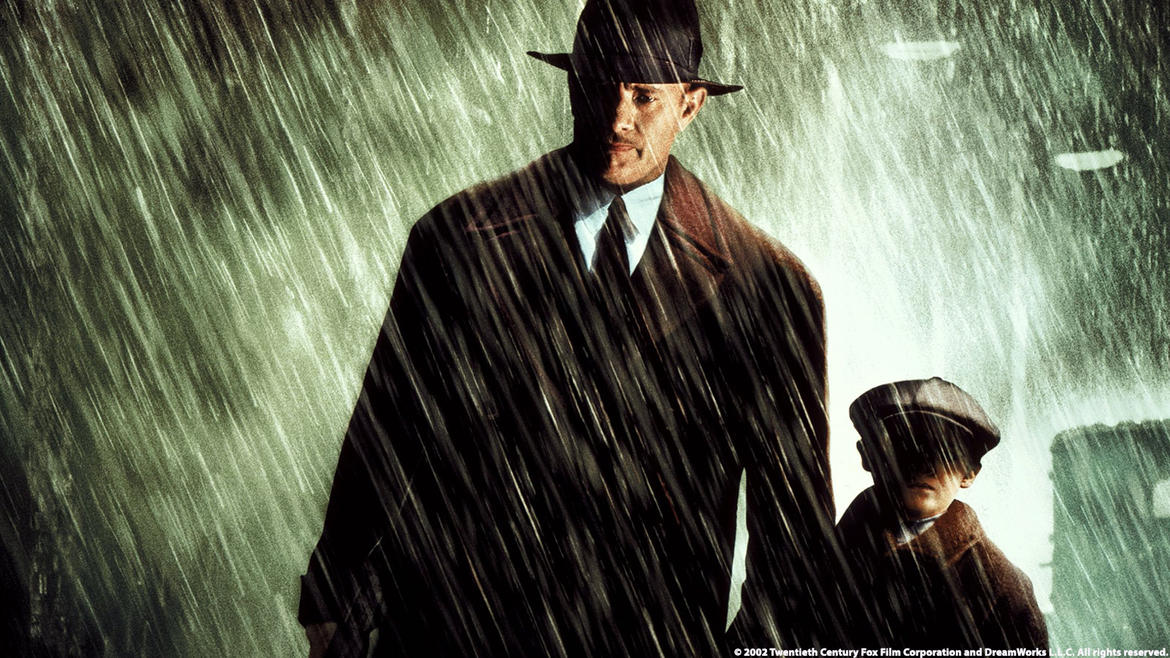
‘Road to Perdition’ – Film Review and Analysis

One of the most underrated movies of the 2000’s was Sam Mendes’s ‘Road to Perdition’, which was released to critical acclaim back in 2002 and did pretty well at the box office with around $200 million in ticket sales. While some people would be skeptical of watching ‘Road to Perdition’ at first because they think it’s your average crime / mafia movie that doesn’t have much to offer in terms of storyline and symbolism, they would be wrong when it comes to this film.

Sam Mendes, who directed two other great films ‘American Beauty’ and ‘Revolutionary Road’, does an excellent job here as this movie is beautifully shot and has a stellar cast. ‘Road to Perdition’ also benefited from the legendary cinematography work of the departed Conrad L. Hall for which he won a posthumous Oscar for ‘Best Cinematography’ for this film after he passed away in 2003. The scenery and settings for this movie help to create quite a unique atmosphere and the wide shots, long angles that are used help to make this film stand out as being above average. Beyond just the cinematography, the acting by the cast also stands out.

When you look back to see who was starring in the main roles for ‘Road to Perdition’, it is a very impressive list. Tom Hanks plays Michael Sullivan Sr., the lead role of the film and a conflicted Irish mafia man caught between his past and keeping his son sheltered from the consequences of his actions. Paul Newman, one of the greatest American actors of all-time plays the role of John Rooney, an Irish mafia boss, who is also conflicted between his paternal feelings of love for Michael Sr., and his wish to protect his own son, Connor, played by a young Daniel Craig, from his own destructive sins. Rounding out the list is Jude Law, who plays a gifted hit-man / grisly photographer known as Harlan McGuire, and Stanley Tucci, who plays a high-ranking member of the Italian mafia known as Frank Nitti. A young actor who steals most of his scenes is the young but talented Tyler Hoechlin who is Michael Sullivan Jr. in the film, a boy who is coming to terms with his father’s lifestyle and his ties to the mafia. A truly impressive cast of Academy Award winners and nominees, which makes this film even more of a lasting treasure.

‘Road to Perdition’ really brings the atmosphere and makes the setting feel real as it portrays life in Great Depression-era America by focusing on specifically both on the city of Chicago and its’ rural hinterlands, cornfields of greater Illinois. The movie really portrays well the last decade of America being discovered and settled, while undergoing deep economic difficulties, as the Irish and Italian mafias become a source of income and employment when none could be had.

Most movies don’t seem to want to portray the mafia as having been a well-oiled machine that acted like a legitimate business, but ‘Road to Perdition’ makes clear that there are ways to look at the criminal enterprises that achieved a lot of prominence during the Great Depression due to their ability to bootleg and their appeal to provide a good income to men without work.

Without spoiling too much of the plot, Michael Sullivan Jr. (Tom Hanks) is an enforcer and bodyguard for the Irish mafia in the Chicago area of Illinois who has a close relationship with his boss, John Rooney (Paul Newman), who is implied to have helped Michael Sr. a lot with a home, a steady income, and a purpose which is quite difficult to come by during the height of the Great Depression. Michael Sr. is a flawed man who has done murder and committed other crimes for his boss, Mr. Rooney, and knows that it may cost him his life. Despite his past transgressions, he wants to protect his family from his sins and wants to keep his boys from knowing about what he does for a living.

Connor Rooney (Daniel Craig) is shown to be jealous of the close relationship that his father, John, and Michael Sr. have and is resentful of him. Michael Sullivan Jr. (Tyler Hoechlin) is distant from Michael Sr., his father due to late working hours and distant lifestyle. As any boy would like to know about his father, Michael Jr. decides to find out the truth about who his father, Michael Sr. is, and what he does for Mr. Rooney. At this point, the plot really takes off in tragic and unexpected ways leaving the viewer engaged in the storyline and the eventual outcome. As mentioned before, the acting done by this legendary cast helps make the film what it is and what it still is today.

Beyond just being a typical mobster movie, ‘Road to Perdition’ has a number of poignant and thought-provoking themes that stay with you even after the end credits begin to roll. This film goes over the trials and tribulations that fathers and sons can have with each other even when they love and care for each other dearly. Michael Sr. and John Rooney are not related by blood by have a relationship similar to a father and son as Mr. Rooney was around for Michael and his family when they had nothing. He is heavily indebted to Mr. Rooney even if he knows what he is doing is wrong by committing violent acts for the mafia. Still, their bond appears to be unbreakable and they get along quite well with each other.

To the contrary, both of their relationships with their respective sons are shaky at best and hostile at worst. There is a considerable distance between Michael Sr. and Michael Jr. due to the fact that Michael Sr. makes his lifestyle and his work for Mr. Rooney a well-kept secret. Michael Sr. does not show much affection or love for his boy and it’s not made clear until the end of the film why that is. Michael Sr. obviously cares for his boy but likely doesn’t want his son to know about the horrible things he’s done to keep him, his brother, and his wife save from harm or want. Still though, Michael Jr. does not want to be kept away from his father and who he is.

He ends up pursuing the truth whether or not his father wants him to or not leading to quite a turn of events when the truth comes to light. Connor Rooney, John’s son is quite envious of the close relationship that Michael Sr. has with his father compared to him. However, this is for a number of reasons. Connor is very much unlike his father, John, and has a number of character and personality flaws that make him a liability to the family. Connor is shown to be impulsive, manipulative, untrustworthy, and greedy but the conflict comes to light when John Rooney must decide if he should stick by his son’s side or give him up due to his past misdeeds. As John Rooney says to Michael Sullivan Sr. during one of the movie’s best scenes, “Sons were put on this Earth to trouble their fathers.”

During one of the movie’s most touching scenes, Michael Sr. tells Michael Jr. about a town called an idyllic town called Perdition, Illinois, which has beautiful scenery along the beach of Lake Michigan, and where the Sullivan family has visited before when Michael Jr. was a little boy. Perdition is portrayed as a goal for the two Michaels to get to in order to start their lives anew and escape the sins of the past. It’s a way for Michael Sr. to get redemption after taking care of his ties to the mafia and by trying to make up for what he did wrong as both a father and a man. The word ‘Perdition’ as defined in other words is ‘hell’ or ‘complete and utter damnation’ in more religious terms. Michael Sr. may try to redeem his sins by going to church or by rectifying the wrongs he’s done by getting revenge on the men who wronged him in the past but he knows deep down that it may not be enough.

If he is on the ‘Road to Perdition’ or the road to hell, the film shows the audience that he wants to keep his son, Michael Jr., from going down that same path. He wants badly for his son to have a better life and a brighter future away from violence and death. Michael Sr. won’t let his downfall lead to that of his son’s as well. Even if Michael Sr. is a murderer and a sinner, he knows what’s still right from wrong and he is going to do his best to preserve the innocence and goodness of his son. As a father, he is flawed but he still loves his son dearly and wants the best for him still.

Certain moves fit a certain season of the year well and ‘Road to Perdition’ is no exception. The winter setting, the Chicago cold, and the mature themes help lead it to being an ideal film to be watched during the depths of winter in January and February. Without spoiling anything, the film is a real story with real characters who are flawed in their own ways but who each have their own complex motives that drive the plot forward. This film, most of all, touches the audience emotionally and will pull on your heartstrings.

‘Road to Perdition’ is very underrated film that remains one of my favorite movies to this day. I highly recommend ‘Road to Perdition’ to other movie buffs who are looking to watch a crime / mafia film that has a soul. In addition to having an all-star cast, a renowned director, and a legendary cinematographer at the helm, ‘Road to Perdition’s music score composed by Thomas Newman is excellent and fits perfectly into the many moods of the film and has some stirring moments that add to the film’s setting. If you’re snowed in this weekend from the blizzard, do yourself a favor and go watch ‘Road to Perdition.’