


Thinking of Life Like It’s a Cup of Turkish Coffee

“Similarly to life itself, I find that the Turkish coffee experience is a lot like life and perhaps even more so than a box of chocolates (no offense to any Forrest Gump fans).”

I love Turkish coffee. Its roast, its scent, its strength, and subtle sweetness that I can’t get enough of. I don’t even mind the times I drink too much, leaving bitter remains on my tongue. I’m not too bothered by it because sometimes you must taste the bitter ends to get the sweetness out of most of the coffee you drink. Turkish coffee is unique, the jolt and caffeine rush unlike any other I’ve experienced in the world. Similarly to life itself, I find that the Turkish coffee experience is a lot like life and perhaps even more so than a box of chocolates (no offense to any Forrest Gump fans).

Preparing Turkish coffee to be served is an art, requiring patience, precision, and care, qualities life demands from us as well. The finely ground beans must be measured just right, water poured with attention, and heat applied slowly to coax out the perfect brew without letting it boil over. A slight misstep can change the flavor entirely, just as small choices in life can ripple into large consequences. Stirring the coffee gently, watching the foam rise, and letting it rest before serving mirrors the need to pause, reflect, and nurture the moments that matter most. In both coffee and life, the effort put into preparation shapes the richness of the experience and skipping the process only leaves you with a bitter, incomplete taste.

Just like a cup of Turkish coffee is carefully prepared with time and attention, life rewards those who pause to notice the details. The swirling patterns at the bottom of the cup hint at what’s to come, just as small choices ripple into larger consequences. Sometimes, life surprises you with unexpected flavors like a hint of cardamom, a twist of fortune, and other times it’s a sharp bitterness that makes you wince. But every sip, whether sweet or strong, shapes the experience and reminds you that the richness of life comes from paying attention, savoring the moment, and accepting the unknown.

When you first taste Turkish coffee, it’s like a jolt of pure energy and a rush that I would liken to the sun hitting your face as you wake up from a dream and when your consciousness first stirs in the morning. You try to recapture that feeling with each sip, chasing the sweetness that lingers consistently. You can even add a bit of sugar, stir it around to keep the bitterness at bay, and prolong the experience as much as you can. Life like a Turkish coffee cup is pretty small and the portion is not as big as you would expect. It’s a concentrated dose of caffeine and is a high-quality batch of brew.

Like life itself, you got to enjoy it to the fullest but also savor it at the same time. No matter your age, life rushes by, just like the last sip at the bottom of a Turkish coffee cup. Bitterness is inevitable in a Turkish coffee experience as it’s mixed in with the rest of the sweet flavor. There are bitter times in life to be had mixed in with the sweet times and as much as you try to avoid it or abstain from it, you need the bitter parts of life to truly realize how sweet the overall experience was. The bitterness reminds you to savor the good times and to not let it affect your perception of the life you had as a whole. Coffee, like life, can be bitter or strong at times, but that doesn’t mean we should stop living or stop drinking it. 

Especially towards the end of life, the bitterness is unavoidable and comes on strong. As health wanes and loved ones are lost, life goes on and you sip, and you savor it while it lasts. A good Turkish coffee is enjoyed ideally by a body of water like the Bosphorus Strait in Istanbul but ideally, it can be with a view of the ocean, the mountains, or even just on your back patio with the quiet of the day. Life, like Turkish coffee, should be embraced in all its sweetness, bitterness, and everything in between. You really don’t want to miss out on the whole experience having never fully lived it to the most extent. Don’t miss it. Drink it all.
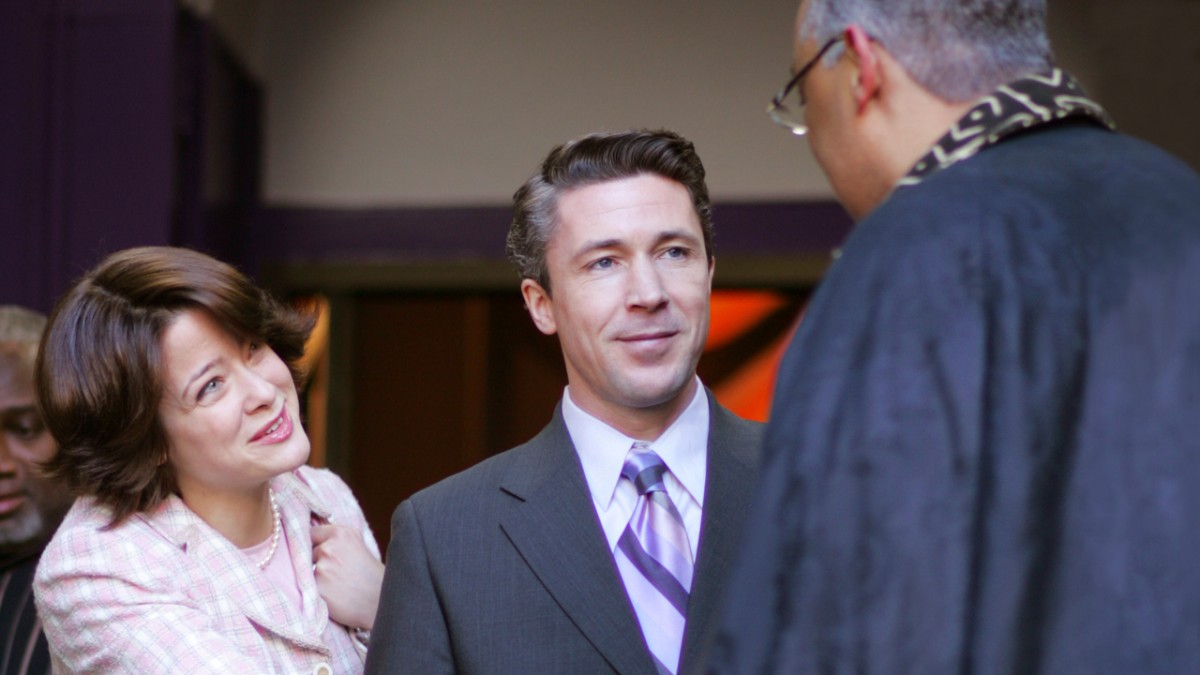
Anatomy of a Scene – ‘The Bowls of Sh*t Analogy’ (The Wire)

“He describes how, during his time as the mayor, he had to endure constant demands, pressures, and compromises from various interest groups, from business leaders to police brass to union members, each one forcing him into undesirable and often humiliating positions.”

In this scene from the HBO show, ‘The Wire’, Tommy Carcetti, having just been elected as the mayor of Baltimore, seeks advice from Tony, a former mayor of Baltimore, who has since left city politics. At this scene’s beginning, Tony’s anecdote about “eating sh*t” conveys a bleak reality about the job of being mayor. He describes how, during his time as the mayor, he had to endure constant demands, pressures, and compromises from various interest groups, from business leaders to police brass to union members, each one forcing him into undesirable and often humiliating positions.

The peculiar imagery Tony uses of “eating sh*t” is deliberately crude for the viewer, emphasizing the degradation, disgust, and frustration politicians often face, especially in dealing with conflicting interests and the inherent contradictions in serving a large and diverse constituency such as in the city of Baltimore.

This “parable of the bowls of sh*t” lays bare the unglamorous side of politics—one where idealism and personal ambition are often suffocated by the practicalities of governing a community, a city, or even a country. Tony is essentially warning Tommy Carcetti that as mayor, he will be forced to navigate a landscape where decisions are rarely black and white, and success often means making choices that will inevitably upset one group or another within his constituency.

Tony’s use of the phrase of “eating sh*t” is a vivid and visceral metaphor for the compromises that politicians are forced to make, whether they want to or not, and how it can be interpreted in several ways:

  1. Constituent Demands and Special Interests: Every politician enters office with a policy platform and promises to keep, but once elected, they must contend with the complex and competing demands of their constituents. Business leaders may push for deregulation so they can improve their balance sheet, while unions may demand better labor protections and more workers rights. Environmentalists would advocate for sustainability, while real estate developers might prioritize economic growth over conservation. Each of these groups represents a different “bowl of sh*t” that a politician must eat, in the sense that satisfying one group often means alienating another in the process. Tony’s point is that no matter what decision is made, someone or some group will be unhappy, and the politician is left to bear the burden of that dissatisfaction, often at the ballot box when it comes time for election day.
  2. Compromising Ideals for Practical Governance: Many politicians enter office with lofty ideals, but the reality of governance forces them to compromise even when they would rather not do so. Tony’s story reflects how those compromises can wear a person down, leading to disillusionment with the political process. For someone like Carcetti, who may still hold on to a vision of reform and change as a newer politician, Tony’s words serve as a sobering reminder that idealism alone will not be enough to get the job done. The job itself will require him to make deals, water down policies, and prioritize certain interests over others. Over time, this compromise can erode a politician’s sense of purpose, leaving them, as Tony implies, burned out and ready to leave politics behind.
  3. Bureaucratic and Institutional Challenges: Beyond the immediate interests of voters and lobbyists, politicians must also grapple with the entrenched bureaucracies of a government. Mayors, governors, and presidents are not free agents—they operate within systems that include various institutions, legal constraints, and political adversaries. Tony’s “sh*t” may also refer to the frustrations of working within this system, where change is often slow, and even modest reforms can be blocked by bureaucratic inertia or political opposition. The administrative side of governance can be just as dispiriting as dealing with special interests.

Tony’s disillusionment with his time as mayor of Baltimore is emblematic of a larger critique of politics in general. This scene from ‘The Wire’ highlights several key themes that resonate beyond the specific context of the show:

  1. The Personal Cost of Politics: Tony’s story reveals the emotional and psychological toll that politics can take on individuals and on families. His decision to leave the office and pursue a different career suggests that the constant battles, compromises, and failures eventually become too much. For Carcetti, this scene is a warning that the personal price of pursuing higher office may be more than he expects it to be. It suggests that political power is not just about having prestige and influence—it is also about enduring constant pressures that can erode a person’s ideals and sense of self-worth.
  2. The Limits of Power: Despite being mayor, Tony felt powerless in many respects. This is a paradox of political leadership: while politicians are often seen as wielding immense power, they are also constrained by the demands of other people. Whether it is donors, voters, or other political actors, a politician’s power is always mediated by those they are beholden to. Tony’s experience suggests that being in charge does not mean having total control. In fact, it often means being at the mercy of various outside forces that are beyond one’s control, leading to frustration, disenchantment and, eventually, burnout.
  3. Cynicism vs. Idealism: The conversation between Tony and Tommy Carcetti highlights the tension between cynicism and idealism in politics. Tony, having gone through the wringer as a former mayor, represents the cynical view that politics is an unending series of compromises and frustrations. Carcetti, on the other hand, represents the younger and more idealistic politician who still believes he can make a difference. The scene leaves open the question of whether Carcetti will maintain his idealism or if he will, like Tony, become disillusioned over time. This tension between cynicism and idealism is a central theme in many political dramas, reflecting the real-world challenges that politicians face.

In essence, Tony’s parable of the “bowls of sh*t” is a commentary on the nature of modern political leadership. It paints a picture of politics not as a noble pursuit of justice, opportunity, or progress for your constituents, but as a constant battle to navigate competing outside interests and pressures. This scene from ‘The Wire’ offers a cynical, yet realistic, portrayal of what it means to be a politician: a job where compromises are inevitable, satisfaction is rare, and the personal toll can be significant especially on one’s family and friends, and the politician themselves.

For Tommy Carcetti, this conversation is a forewarning of the difficulties that lie ahead for him as the new Mayor of Baltimore, setting up a narrative about the price of obtaining power and the inevitable disillusionment that comes with it. Ultimately, this scene serves as a powerful reminder that politics is not just about the exercise of power, but about the endurance of hardship, frustration, and compromise that comes with it.