


Managing Life’s Risks is a Balancing Act

“While risks often bring about growth, innovation, and personal growth, it is crucial to acknowledge that not all risks are created equal, nor do they have the same level of probability of occurring.”

What is life without a little risk involved? Life itself is an intricate and colorful tapestry woven with uncertainties, challenges, and opportunities. In navigating this profound tapestry, one cannot escape the reality that risks are an inherent part of the human experience and cannot be 100% avoided no matter how hard we try to do so. While risks often bring about growth, innovation, and personal growth, it is crucial to acknowledge that not all risks are created equal, nor do they have the same level of probability of occurring.

Therefore, it is key that your priority should be to strike a delicate balance between embracing risks for personal and professional growth and mitigating those risks that could pose threats to your health, safety, and livelihood, which is paramount to keep in mind. It is necessary to explore the importance of embracing risks to some extent, while highlighting the need for discernment and smart risk mitigation strategies.

Embracing risks is synonymous with embracing the unknown, and it is in these uncharted territories that personal and professional growth often thrives in that space. Taking risks fosters resilience, adaptability, and the ability to confront and overcome challenges in one’s life. It is through risk-taking that individuals discover their true capabilities, push their boundaries, and expand the limits of what they thought was possible.

Innovation, a driving force behind societal progress, is born from calculated risks that inventors, visionaries, and leaders have pushed for. History is filled with examples of individuals and organizations that embraced risks, leading to groundbreaking discoveries, technological advancements, and societal transformations. From the pioneering spirit of explorers venturing into the unknown waters to the entrepreneurial risk-takers who fueled economic growth; risks have been an essential ingredient in the human condition.

However, it is important to differentiate between positive risks that contribute to growth and innovation to those that can jeopardize well-being. Striking this balance requires a thoughtful approach to risk-taking, where one acknowledges the potential rewards while also recognizing the potential pitfalls.

Here are some steps to keep in mind to control or manage one’s risk-taking:

  1. Making a Risk Assessment and Evaluation: Before embarking on any venture or decision involving risk, it is imperative to conduct a thorough risk assessment. Identify potential outcomes, both positive and negative, and evaluate the likelihood of each scenario occurring. By understanding the risks involved, individuals can make informed decisions about whether the potential rewards outweigh the potential consequences involved.
  2. Set Clear Objectives and Goals: Establishing clear objectives and goals provides a framework for risk-taking. Knowing what one hopes to achieve allows for a more focused and calculated approach to risks. By aligning risks with specific objectives, individuals can better gauge the potential benefits and make decisions that align with their overarching aspirations or goals.
  3. Continuous Learning and Adaptability: Embracing risks necessitates a commitment to having continuous learning and showing adaptability. Staying informed about potential challenges and being open to adjusting strategies based on feedback and evolving circumstances are key components of smart risk-taking. This iterative process allows individuals to refine their approach while mitigating potential risks along the way.
  4. Diversification of Risks: In both personal and professional contexts, diversifying risks is a prudent strategy. This involves spreading your risks across different areas or investments rather than putting all resources or net worth into one venture. By diversifying the risks, individuals can reduce the impact of potential failures in one area, which helps with increasing overall resilience.
  5. Financial Planning and Contingency Measures: Financial stability is often at the core of risk mitigation. Developing a robust financial plan and having contingency measures in place provide a safety net in the face of unforeseen challenges. This preparation not only cushions the impact of potential setbacks but also instills a sense of confidence and security, enabling you to take calculated risks.
  6. Seeking Professional Advice: In complex situations, seeking advice from professionals in the relevant field of expertise can be invaluable. Whether it’s financial advisors, personal development mentors, or industry experts, consulting with those people who have years or decades of experience can provide insights that may not be apparent to the person who is taking the risk. Learning from the experiences and expertise of others can contribute to smarter and more informed decision-making.
  7. Prioritize Health and Well-being: Not all risks are worth taking in life, especially those that could compromise physical or mental health. Prioritizing well-being physically and mentally is non-negotiable, and any risk that poses a threat to your health should be approached with extreme caution. Buying a motorcycle to drive on the highway going 100 MPH may be a once-in-a-lifetime experience, but ask yourself beforehand, is it worth potentially risking life and limb to have that kind of experience? That is just one example of prioritizing health and well-being before jumping into a risk that could affect one’s body and mind. Recognizing the value of a healthy and vigorous life is integral to making wise decisions about the risks one is willing to embrace physically and mentally.

In the great arena that is life, risks are the threads that we weave together through moments of triumph, growth, and self-discovery. Embracing risks, to some extent, is essential for both our progress and personal development. However, it is equally important to exercise prudence and discernment, avoiding risks that could compromise one’s health, safety, and livelihood.

The steps that I outlined above provide a roadmap for keeping your risk-taking under control. From thorough assessment and goal setting to continuous learning and seeking professional advice, these strategies empower individuals to navigate the delicate balance between embracing risks and mitigating potential harm. In the pursuit of a fulfilling and successful life, it is not about avoiding risks altogether, but instead it is about making informed and smart choices that lead to personal growth, greater innovation, and increased well-being.
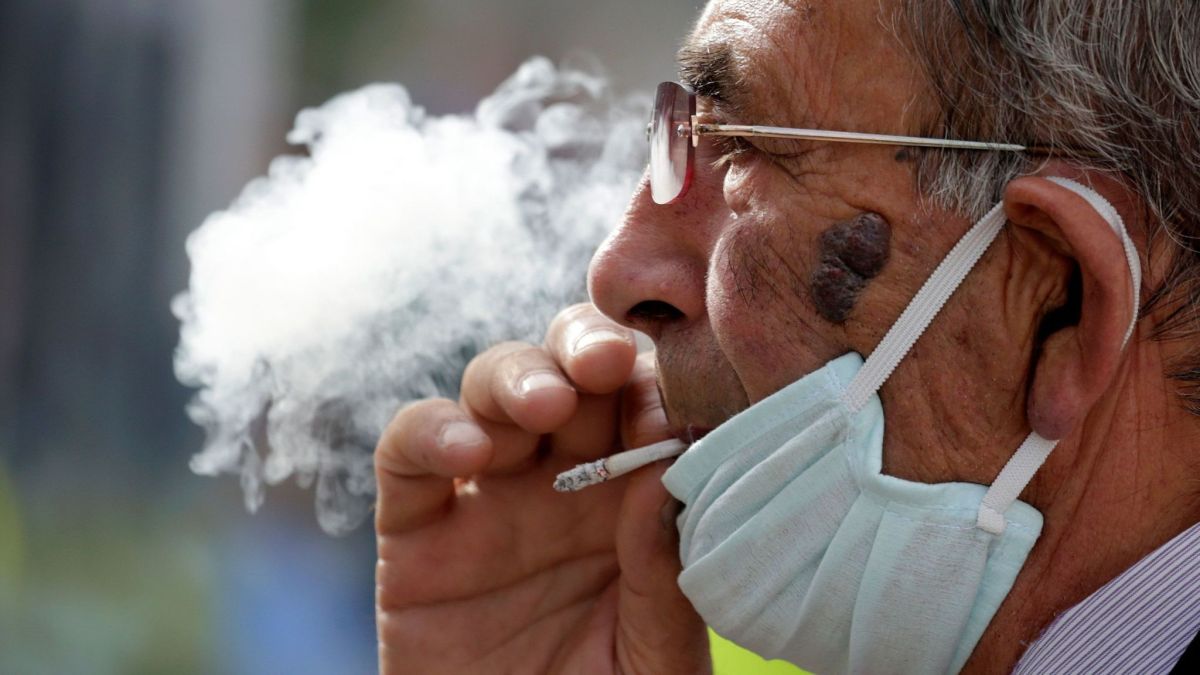
The Cigarette and The Mask

“Just as I catch my bags and see if I’ve been clipped, I noticed that he’s wearing sunglasses on with his surgical mask pulled down below his chin and has an unlit cigarette in his mouth.”

While I walk back to my apartment with bags full of groceries under my arms, I stop at the cross section waiting for the walking signal to light up, seemingly unaware of the bike screeching by me. “Hey, watch out, man!”, the bicyclist yells as he peddles past me almost knocking into my groceries. He speeds by just narrowly missing oncoming traffic as he heads downtown. Just as I catch my bags and see if I’ve been clipped, I noticed that he’s wearing sunglasses on with his surgical mask pulled down below his chin and has an unlit cigarette in his mouth.

Now, I would hope that he was not getting ready to smoke while biking, but it sure looked like he had smoked a few or more cigarettes. We were both outside at the time, of course, and I could assume that he maybe just likes to wear a mask indoors and would rather smoke a cigarette while he biked or afterwards to enjoy the rush while getting some needed fresh air. The confluence of events of almost getting hit by this biker along with the scene of him having an unlit cigarette in his mouth, a mask under his chin, and no helmet on as he sped through foot traffic without regard for anybody else was so laden with irony that I couldn’t happen to notice all the ironies afoot.

If a commercial could be made about this bicyclist, it would be quite entertaining. “Protect yourself from COVID in the short-term, but don’t forget about the long-term risks to one’s health!” In that commercial, it would show the bicyclist being transformed from having a cigarette in his mouth to having none with a nicotine patch or gum if it’s anti-smoking or if it’s pro-safety to have him properly wearing a biking helmet rather than not having one.

These kind of public health or public safety campaigns are quite common in our culture especially when it comes to the dangers of smoking and the dangers of not wearing a helmet while cycling or biking. Now, after almost two years, we now have quite substantive public health messages around wearing a face mask or adequate face covering, especially while indoors, to prevent the further spread of the Coronavirus. The same public health messaging was quite prevalent at first when it came to social or physical distancing before the arrival of tested and approved vaccines.

Undoubtedly, these public health messages have saved thousands of lives and done much to further the progress of the current vaccination campaigns. We now know society-wide how masks can help prevent the spread of viruses just as we knew starting in the 1980s and later in the 1990s the harm that smoking can do long-term to one’s health. It took a few decades but now smoking is much less prevalent than it used to be, and the risks are well-known. The same could be said about wearing a protective helmet when biking or riding a motorcycle. It took a while for these messages to be ingrained in our society, but they protect not only our health long-term but also our safety in the short-term.

The advent of mask wearing in a pandemic has not fully set in for some people but for most people, the public health messages had a massive impact and after some initial confusion and the lack of supplies for protective gear, almost two years later, that public health messaging has set in across society. You could argue if the advent of mask wearing in public will have the same longevity or the same need years from now as anti-smoking campaigns would. While virus and diseases can become endemic, they can also possibly burn out much quicker than the long-term health risks that will remain with us after the pandemic such as smoking or drinking alcohol.

While the public health and safety messages around mask wearing, helmet wearing, and not smoking especially near a building have made people healthier and safer, I fear that other health warnings or messaging has been rather lackluster especially during the pandemic. Wearing a mask and not picking up a cigarette are easy enough for society to adopt, but the messaging should not end there.

In the age of the Internet, social media, and seemingly endless modes of messaging mediums, I have not noticed any uptick in making the public aware about the benefits of exercising daily or multiple times per week. I also have not noticed an effort to educate people on what a well-balanced diet looks like or what foods to avoid that are both addictive and unhealthy. Smoking is a bad habit but so is not having a proper diet. I am not saying that people should be told what to eat and what to drink but I don’t see the harm in sharing more messaging about what a healthy breakfast, lunch, or dinner looks like or to give examples to adults, especially young people in college or in their 20s.

In addition to a proper diet, bringing to people’s attention the need to exercise has never been a real part of public health messaging. The lack of public and/or outdoor gyms provided by towns and cities has contributed to other health issues that have reared their head during the pandemic. COVID-19 may be with us now but other health issues like obesity, diabetes, and heart disease are not going away anytime soon.

For the almost two years of the pandemic, there was a real opportunity that was squandered for the public to hear about other ways to stay healthy and well. Viruses make people fearful and anxious but instead of just saying “wear a mask!” and “be socially distant!”, other messages about sleeping 7-8 hours a night, reducing our time staring at screens, maintaining a healthy diet, and making sure to exercise each day or most days was rarely ever thought of to be entered into public consciousness.

Even something as simple as telling people who were mainly indoors to take their vitamins each day especially both Vitamins C and D, which some people are deficient in especially in wintertime was completely neglected. I usually refrain from commenting on matters of public health but having done all these things for myself as many others do on their own accord, I don’t see why this kind of public health messaging hasn’t caught on. It doesn’t take more than a minute or two to discuss proper habits to build such as having more hours of sleep, what goes into a healthy diet, why exercise is important, or what are the benefits of vitamins.

I am not sure of how much money has been spent on anti-smoking, anti-drunk driving campaigns over the years but I’m sure it’s much more than what could also been address to the public. Now, in addition to the ills of drinking, smoking, we know now why mask wearing is important during a pandemic with an infectious virus that spreads easily. I don’t think that we should stop there and to keep trying to advocate for other commonly known public health matters that sadly still go largely ignored in terms of messaging campaigns.

From the local to the national level, after the pandemic is over, I would strongly recommend investing much more money, time, and even public infrastructure (outdoor gyms, for example) in building awareness of different public health matters that have remained largely unaddressed. From sleep to diet to exercise to even how to manage anxiety and stress properly, these important messages will affect people’s long-term health positively.

We know messages have worked in the past as I mentioned with wearing a helmet, not smoking in public places, and wearing a mask when others are near you. Lives have been saved and society has been improved because of those messages. When it comes to everyone’s long-term health, I would ask us all to think bigger to improve messaging around other public health needs, so we don’t end up only receiving advice on protecting the public’s health during a once-in-a-century global pandemic.