


The Brilliance of Curb Your Enthusiasm

“Created by and starring the incomparable and legendary Larry David, this groundbreaking television series has left an indelible mark on the landscape of comedic television forever.”

In the realm of television comedy history, few shows have attained the iconic status and enduring brilliance of HBO’s “Curb Your Enthusiasm.” Created by and starring the incomparable and legendary Larry David, this groundbreaking television series has left an indelible mark on the landscape of comedic television forever.

From its razor-sharp wit to its unapologetically irreverent humor, “Curb Your Enthusiasm” stands as a testament to the genius of its creator and the unparalleled hilarity of its ensemble cast. In this reflection on the recent 12-season end to this timeless show, I will dive into what makes “Curb Your Enthusiasm” one of the best comedy shows of the current century, examining its societal critiques, witty dialogue usage, and the reasons for the genius behind show creator, Larry David’s success.

At the heart of “Curb Your Enthusiasm,” lies its fearless examination of social norms and conventions, some that I would argue as the show does are both outdated and tiresome. Through its biting satire and clever storytelling, the show offers a candid and often uncomfortably honest portrayal of everyday American life. Larry David, known for his role as the co-creator of “Seinfeld,” brings his signature brand of observational humor to “Curb Your Enthusiasm”, presenting audiences with a heightened reality where social etiquette is put under a microscope and hilariously dissected.

One of the show’s defining features is its ability to derive comedy from mundane situations, turning everyday occurrences into laugh-out-loud moments. Whether it’s navigating the intricacies of a dinner party or grappling with the complexities of personal relationships, “Curb Your Enthusiasm” finds humor in the absurdities of human behavior. This relatable quality endears the show to audiences of all backgrounds, as viewers see themselves reflected in Larry David’s misadventures and faux pas.

Central to the success of “Curb Your Enthusiasm” was its groundbreaking use of improvisation. Unlike traditional sitcoms with scripted dialogues, “Curb” relies heavily on improvised performances, giving its actors the freedom to explore their characters, and react in real-time. This unscripted approach lends a unique authenticity to the show’s interactions, allowing for spontaneous moments of comedic brilliance that feel genuine and unrehearsed.

Larry David’s portrayal of himself as a fictionalized version of his persona is nothing short of a genius move. Through his character, also named Larry David, the creator skewers societal norms with fearless abandonment, fearlessly tackling taboo subjects, and challenging conventional wisdom. David’s willingness to embrace discomfort and confront controversial topics head-on sets “Curb Your Enthusiasm” apart from other comedies, elevating it to a league of its own.

The ensemble cast of “Curb Your Enthusiasm” further contributes to its comedic brilliance. From Jeff Garlin’s portrayal of Larry’s loyal but perpetually exasperated manager, Jeff Greene, to Richard Lewis, a fellow comedian dressed in black perpetually and Larry’s comedic foil, to Cheryl Hines’ pitch-perfect performance as Larry’s long-suffering wife, Cheryl, each actor brings their A-game to the show, delivering performances that are equal parts hilarious and heartwarming. The chemistry between each of the cast members is palpable, lending an authenticity to their interactions, which was essential to the show’s long-lasting success.

Beyond its comedic brilliance, “Curb Your Enthusiasm” is also notable for its incisive social commentary. Through its satirical lens, the show tackles issues of race, religion, politics, relationships, friendships, and more, offering a searing critique of contemporary American society. Whether it’s exposing the absurdity of political correctness or challenging entrenched stereotypes, “Curb” fearlessly confronts the ‘elephant in the room’, sparking real conversations between its viewers, and provoking a good amount of thought long after the credits roll.

Another hallmark of “Curb Your Enthusiasm” is its distinctive dialogue patterns. The show is renowned for its rapid-fire banter and quick-witted repartee, with characters engaging in verbal sparring matches that are as entertaining as they are memorable. Larry David’s penchant for wordplay and linguistic acrobatics infuses the show’s dialogue with a playful energy, keeping audiences on their toes, and delighting in every clever turn of phrase.

Perhaps the most remarkable aspect of “Curb Your Enthusiasm” is the way in which it blurs the lines between reality and fiction. Larry David’s decision to play a fictionalized version of himself blurs the boundaries between the actor and the character, inviting viewers to question where the line between truth and fiction truly lies with regards to if Larry behaves as his character, Larry will do. This meta-narrative device adds an additional layer of complexity to the show’s storytelling, challenging audiences to discern where reality ends and satire begins.

Larry David’s success in making “Curb Your Enthusiasm” a TV show hit can be attributed to his uncompromising vision and unwavering commitment to his craft as an actor. As both the creator and star of the show, David brings a singular voice to the screen, infusing each episode with his unique perspective and razor-sharp wit. His willingness to push boundaries and defy expectations has earned him a devoted following amongst fans including myself and has cemented his status as one of the most influential figures in comedy history.

“Curb Your Enthusiasm” stands as a timeless masterpiece of television comedy, a show that continues to resonate with audiences more than two decades after its initial debut. Through its fearless satire, impeccable improvisation, and incisive social commentary, “Curb” offers a refreshing take on the human condition, challenging conventions, and sparking a lot of genuine laughter in equal measure. With its brilliant writing, unforgettable characters, and fearless exploration of society’s taboo subjects, “Curb Your Enthusiasm” has rightfully earned its place as one of the comedy shows of this young century, leaving an indelible mark on the world of television, and inspiring countless imitators in its wake.                                

Larry David’s previous successful show, “Seinfeld”, and “Curb Your Enthusiasm” are often mentioned in the same breath, given their shared DNA through David’s involvement. While both shows explore the intricacies of human behavior and social conventions, they do so through distinct lenses. “Seinfeld” operates within the confines of a traditional situational comedy or ‘sitcom’ format, with scripted dialogue and episodic storylines centered around four main characters, one of whom, ‘George Costanza’ was based on Larry David’s past experiences living as a younger man in New York City. In contrast, “Curb Your Enthusiasm” eschews traditional sitcom conventions in favor of a more improvisational approach, blurring the lines between reality and fiction with its mockumentary-style presentation.

Despite these differences, the two shows share a common thread in their exploration of the minutiae of everyday life. Both “Seinfeld” and “Curb Your Enthusiasm” derive humor from the absurdity of human behavior, finding comedy in the mundane and the trivial. However, where “Seinfeld” often relies on situational humor and elaborate plotlines, “Curb” thrives on its characters’ interactions and spontaneous moments of hilarity that arise from their social faux pas. In considering which of the two shows may be perceived as superior to the other, one could argue that “Curb Your Enthusiasm” holds the edge due to its fearless approach to comedy and its willingness to push boundaries.

While “Seinfeld” remains a beloved classic with its timeless humor and iconic characters, “Curb” distinguishes itself through its unapologetically irreverent tone and its willingness to tackle taboo subjects head-on. Additionally, “Curb” benefits from the creative freedom afforded by its HBO platform, allowing for more explicit language and mature themes than its network predecessor. Ultimately, whether one views “Curb Your Enthusiasm” or “Seinfeld” as the better of the two shows may come down to personal preference, but there’s no denying the lasting impact and enduring brilliance of both series in the pantheon of television comedy history. Overall, Curb Your Enthusiasm is a pretty, pretty, pretty good show and one worth watching again and again.
English Corner – Double The Word Phenomenon

“The particular reason why this particular comedy hour stood out to me was due to Jerry’s focus on a peculiar aspect of the English language and how it was even strange to him even as a native speaker and whose English vocabulary is varied and mature.”

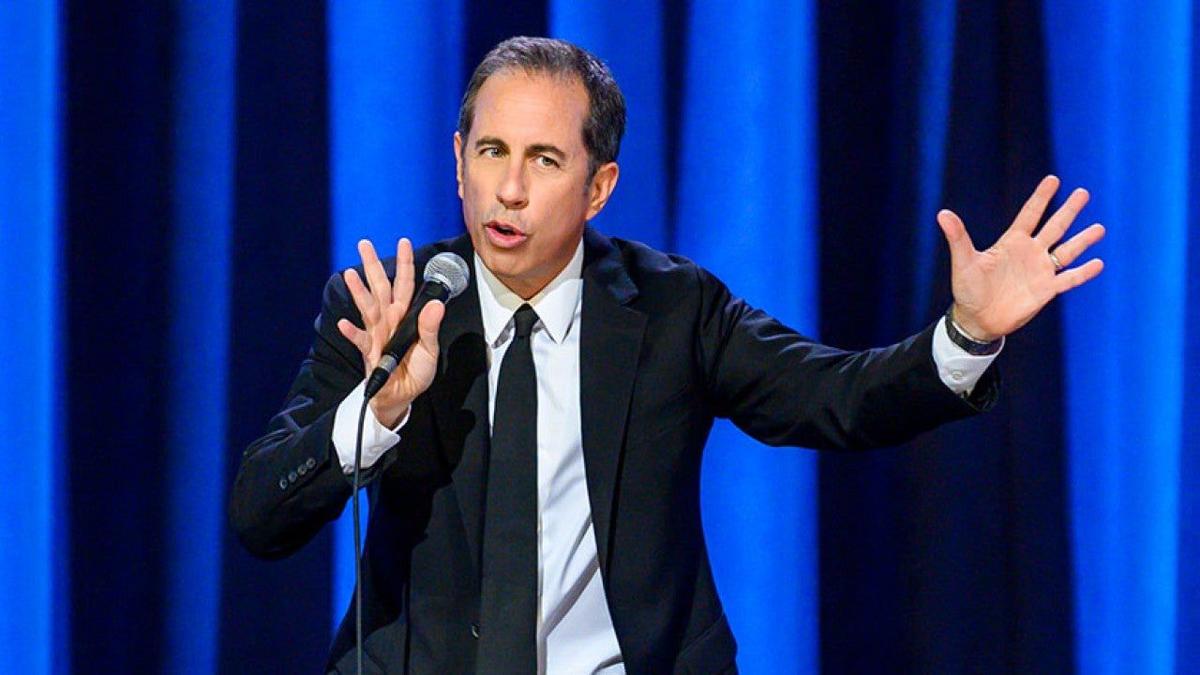
I was watching Jerry Seinfeld’s new Netflix documentary last week titled, “23 Hours to Kill”, which was pretty funny, and I do recommend it if you are looking to watch a comedy special featuring a native English speaker doing a comedy routine. The particular reason why this particular comedy hour stood out to me was due to Jerry’s focus on a peculiar aspect of the English language and how it was even strange to him even as a native speaker and whose English vocabulary is varied and mature. He was drawn to the fact that in the English language, we sometimes have this tendency to repeat certain words again or back to back and it can still make sense.

While he did not give this tendency a name, I am going to refer to it as what I like to call the “Double the Word” phenomenon. In my opinion, it is a phenomenon because it does not happen that often and if you can spot it, you can understand it easily but it tends to happen rarely and when it does, the speaker is unlikely to repeat it or even explain it to you. They may not understand why they doubled the same words or even know the meaning behind why they said it.

The phenomenon of the ‘double word’ or being back to back is not that complicated. It only takes an example or two for you to get the deeper meaning underlying the expression. I also think you will be able to use them after reading these examples. Hopefully, you will be able to take this knowledge gained to expand your English vocabulary and to explain the ‘double word phenomenon’ to your friends and family. A good skill to develop with English is to become acquainted with our various phrases expressions that you won’t find in your average textbook.

  1. “It is what it is.” This phrase means that sometimes, you can’t change things or people to be what you want and that the situation will not change so it’s not worth fighting it. You have to pick your battles but sometimes it’s best to leave things as is. An example of this ‘double word phenomenon’ would be: “Jamie does not want to change jobs at the moment because of the economy; it is what it is.”
  2. “Business is business.” This phrase is a bit neutral in its meaning in that business could be good or it could be bad, but it goes on as usual and remains uninterrupted or in danger of not going on. The meaning behind its positive or negative significance really depends upon the speaker’s tone and body expressions so it’s something to be on the look-out for. “We are making do with what we have in the store: business is business.”
  3. “Rules are rules.” Rules are not meant to be broken and this phrase makes it clear. Usually, an authority figure of some sort would say this to you to say there are no shortcuts or no easy ways out and laws or rules have to be obeyed. This kind of phrase does not lend it to leniency and means that you have the follow the rules whatever they may be. “There is no diving or jumping into the pool. Rules are rules.”
  4. “A deal’s a deal.” In the English-speaking business world, business deals after being finalized are final hence the phrase of “a deal’s a deal.” You cannot back out of a deal after it has been signed and it is a bad cultural practice to renege on your commitments after giving your signature to the paper. If you back out of a deal or want to re-negotiate, you have to make sure that is a possibility before signing the deal. If “a deal’s a deal”, it means you cannot go back on it and it has no room for further negotiations or changes. “You had agreed on the terms and conditions a week ago and now you want to back out? Sorry, but a deal’s a deal.”
  5. “What’s what.” When a person usually a colleague or a friend want to show or explain something to you. They want to show you what something is, how it works, what its’ function is, and why it’s important. When somebody wants to show you “what’s what”, they want to explain it to you so you can understand how it works and even let you figure it out while they watch. This phrase is especially true of machinery of any kind which takes a skilled person to operate it. “Jack took me to Tesla headquarters to show me what’s what regarding the new car model designed to be emissions-free.”
  6. “Who’s who.” This phrase indicates that you or someone you know is indicating that they want to show you who is really important, famous, or worth getting to know. Regardless of which career field or hobby they mastered, they are the ‘who’s who’ of their profession or craft. You might see this double word phenomenon in a Hollywood magazine to show you who are the famous or important people at an awards show. While not used often, it is an interesting ‘double word’ usage that has a deeper meaning. “The Entertainment Tonight hosts were scouring the red carpet at the Oscars to figure out who’s who for the award ceremony later.”
  7. “Whatever happens, happens.” Sometimes in life, you have to let the unknown play out and not try to control the outcome. You have to leave things up to chance or fate and not try to control it. The double the word phenomenon of “whatever happens, happens” means letting things fall as they might and rolling with what life throws at you. If you are in Las Vegas, for example, you could let down your hair a little and enjoy a party or two because in Vegas, whatever happens, happens. “John knew that Las Vegas was a good trip for his friends’ birthday because whatever happens, happens and it stays there after they leave.”
  8. “Whoever does it, does it.” You are very hands off and laid back when you say this particular phrase. You want to express your desire for the responsibility to lie with someone else and for someone else to also take the lead. You express your preference for the work to be done already and for the person to step up and do it already. “Tina did not have a preference for who starts the group’s presentation and stated, whoever does it, does it.”
  9. “And that’s that.” Conclusions or endings can be very subtle, or they can be very sudden. When “And that’s that” comes along, the ending happens very quickly to a story or an event and it is over quicker than you thought it had started. You want to leave no impression behind of any ambiguity after recalling what happened and to indicate that there is no debate to make because the ending was quite clear. There are different ways this double word can be used but this example could be one to use: “Frodo threw the ring into Mordor, Sauron and his minions were destroyed, and they lived happily ever after…And that’s that.”
  10. “Totally totaled.” This phrase may not be an exact double word, but I wanted to include it because it is close enough and includes two similar words that have the same meaning. “Totally totaled” means that something has been destroyed beyond repair or there is no way of fixing it at all. It may not be a bad thing especially if it was your intent to destroy the thing, but it often refers to a car or other kind of vehicle that was damaged beyond repair. “James was anguished when he realized that his beloved car was totally totaled in the accident that happened last night.”

The double the word phenomenon may not be that common in the English language, but these phrases can help you improve your proficiency. You will notice the subtle meanings behind idioms such as these and you will be able to use them in a number of situations, sometimes funny and sometimes serious. Like in most other languages, you can find ways to use the same words back to back and it would still make logical sense to the native speaker.

Part of being an advanced learner of English is recognizing these subtle yet important meanings behind seemingly simple words. The added word that is back to back makes it more subtle in terms of its overall meaning and it’s good to be able to know and understand these deeper meanings behind these seemingly innocuous double word expressions.

Also, if you get a chance, try and look up Jerry Seinfeld’s other comedy specials or YouTube comedy clips. He does other skits that focus on the idiosyncrasies of the English language and is able to explain these weird oddities to both native speakers and those learning the language as their 2nd or 3rd languages.