

‘Leave the World Behind’-Book and Film Comparison

“Whether you prefer the visual spectacle of cinema or the intimate exploration of characters through Rumaan Alam’s written narrative, “Leave the World Behind” provides a gripping tale that will leave you questioning the boundaries of trust and the resilience of humanity when catastrophe strikes.”

‘Leave The World Behind’ is a thought-provoking novel, written by Rumaan Alam, first published in 2020. The story of both the book and the film adaptation revolves around two families who are forced to come together in an unexpected turn of events. Both mediums for this story explore the themes such as fear, trust, and the complexities of human relationships. Recently, in 2023, ‘Leave the World Behind’ was adapted into a film, released on the Netflix streaming platform, which has captivated audiences with its compelling narrative, largely based on the book version.

Set against a backdrop of uncertainty and increasing tension that progresses through both the novel and the film versions, ‘Leave the World Behind’ guides the audience through a suspenseful and gripping narrative. The story begins with Amanda, Clay, and their two teenage children, Rose, and Archie, who live in New York City, who based on Amanda’s yearning to ‘leave the world behind’ for a little while at the beginning of the story, head off on a vacation to a remote house they have rented on Long Island. The stage is set for tranquility, summer relaxation, and family bonding, but their idyllic respite is soon interrupted by unforeseen circumstances.

Soon after their arrival, an elderly couple, Ruth and G.H., surprisingly appear at the doorstep. In the movie, Ruth is the daughter of G.H. or George but in the novel, she is his wife. However, in the main storyline, they claim to be the owners of the rented property, leaving Amanda and Clay in a state of confusion and unease. The intrusion tests the boundaries of trust and raises a myriad of questions such as the circumstances beyond which Ruth and G.H. have fled the city to come back to their summer house.

During a series of unprecedented events, the two families find themselves isolated from the world and confronted by their own fears. In addition to the Sandford and Scott families, for which both the novel and film focus on, the World acts as its own character, representing the unknown and unpredictable circumstances that affect the protagonists, who may want to escape from it but are sucked into the growing chaos and the calamities that are befalling it.

The novel unfolds in a secluded Long Island vacation home miles away from the urban chaos, yet the families cannot remain isolated from the chaos surrounding them forever. Its remoteness adds to the suspense as the families grapple with their limited resources, increasing isolation, and the unknown circumstances that encroach upon their peace.

Because of what’s going on in the world, the families have no access to any information that could help them piece together what’s going on. The phones are not working, the TV signal is out, and even a GPS or satellite phone connection is unable to be used as a fail-safe as the two families try to make sense of what’s going on in the outside world. Without spoiling either the book or the film adaptation, the main events of ‘Leave the World Behind’ entail the following:

Amanda, Clay, and their children settle into the remote vacation home with the joyful anticipation of a peaceful getaway. Ruth and G.H. arrive, insisting that they are the owners of the rented property, causing confusion and concern for Amanda and Clay. As the families try to make sense of Ruth and G.H.’s sudden arrival, they face a complete loss of communication with the outside world. This event further amplifies their vulnerability and isolation.

The families begin to experience a growing sense of unease as bizarre occurrences, such as power outages and mysterious sounds, escalate. Fear and paranoia start to consume their thoughts and actions. Together, the families must navigate the tensions and challenges that arise due to their forced cohabitation with each other. The increasing fear casts doubt on their ability to trust one another, as they slowly unravel the truth behind their predicament. Amanda, Clay, Ruth, and G.H. venture beyond the confines of the house in search of answers. They encounter strange phenomena, unexplained events, and a world teetering on the edge of chaos. The unknown becomes their companion, adding depth to their personal growth and transformation.

As the families face the conclusion of their isolated journey, the fate of the world hangs in the balance. The climax leaves readers questioning the boundaries of human connection and the fragility of our existence on the planet and our inability to control the changes that affect our world.

‘Leave The World Behind’ in both the film and the book offer a gripping narrative that delves into the complexities of human relationships and the primal fears that lurk within us. Rumaan Alam’s novel and its film adaptation effectively convey the story’s themes of uncertainty, trust, and the vulnerability of our connectedness to technology and modern conveniences. Through the characters of Amanda, Clay, Ruth, and G.H., both readers and moviegoers will be compelled to question their own responses to challenging circumstances, leading to a deeper understanding of the human condition, and how we react in times of crisis and stay resilient in the face of uncertainty.

Adaptations play a crucial role in bringing stories to life in different mediums. “Leave The World Behind” is an example of adding to the richness of the central story by being a captivating tale that can successfully be adapted into both a film and a book. The film adaptation of “Leave the World Behind” takes the audience on a thrilling and suspenseful journey, that is more of a thriller than a slow-moving drama that the book is. The novel version of “Leave the World Behind” focuses more than the film version on suspenseful and survival themes, offering a more immersive experience through its written narrative.

Despite the changes involved with making Rumaan Alam’s book into a Netflix movie, the overall themes have remained the same, which make both adaptations as appealing as possible because the core messages have not been lost in the transition.

Humanity’s capacity for survival is a major theme explored in both the film and book versions of “Leave the World Behind”. The characters face overwhelming challenges and unexpected circumstances, and their resilience and ability to adapt become crucial to being able to survive this world-changing event. This theme encourages reflection on our own strengths and perseverance in the face of adversity when the world seems to be falling apart.

Both the film and book versions delve into the complexities of trust and its relationship to isolation. In a world where human connections are vital to future survival; the characters confront their fears and insecurities. The uncertain nature of the situation prompts them to question the intentions of those around them, blurring the lines between friend and foe, and who can be trusted in this world gone awry.

The fear of the unknown is another prevalent theme in “Leave the World Behind”. As the characters navigate through an uncertain world, their fears and anxieties take center stage in how they view themselves and each other. The unfamiliar couple in the story serves as a catalyst for this fear of what’s out of the ordinary to start with, leaving the audience questioning their true intentions, and adding an element of suspense and intrigue.

While both the film and book versions of “Leave the World Behind” explore these core themes, they differ in their execution and portrayal. The film adaptation of “Leave the World Behind” brings the desolate post-apocalyptic setting to life with captivating visuals, action sequences affecting the characters, and more information regarding the reason why the world is in trouble, enhancing the sense of isolation and uncertainty. The use of cinematography and special effects heightens the tension and adds a visually engaging aspect to the overall story.

The novel provides a deeper exploration of the characters’ thoughts and emotions, allowing readers to truly immerse themselves in their journey and who they are as individuals. The power of written language enables readers to form a more intimate connection with the characters, enhancing the suspense and impact of the story, as well as what their internal dialogue is telling the reader as they go through the events affecting the world. As a differentiator, the film employs quick cuts and intense sequences to maintain a fast-paced narrative, while the book offers a more leisurely pace, allowing readers to savor the intricacies of the plot, and unravel the layers of suspense at their own pace.

Character development differs between the film and book versions as well. The film adaptation relies on visual cues and actions to convey the characters’ emotions, while the book delves deeper into their inner thoughts and motivations. This distinction provides a more nuanced understanding of the characters and their personal journey in the book. In conclusion, “Leave the World Behind” in both its film and book versions, presents an intriguing and suspenseful story that explores themes of dealing with survival, maintaining trust with others, having resilience under duress, and managing one’s fear. The film both captivates with its visual shots and its thrilling sequences, broadening our understanding from the book of how the world is really ending, while the novel offers a more immersive and introspective experience of how the characters are changing from chapter to chapter.

Whether you prefer the visual spectacle of cinema or the intimate exploration of characters through Rumaan Alam’s written narrative, “Leave the World Behind” provides a gripping tale that will leave you questioning the boundaries of trust and the resilience of humanity when catastrophe strikes. Discover the power of when adaptation is done well in storytelling and explore the captivating novel and movie adaptation of “Leave the World Behind.”
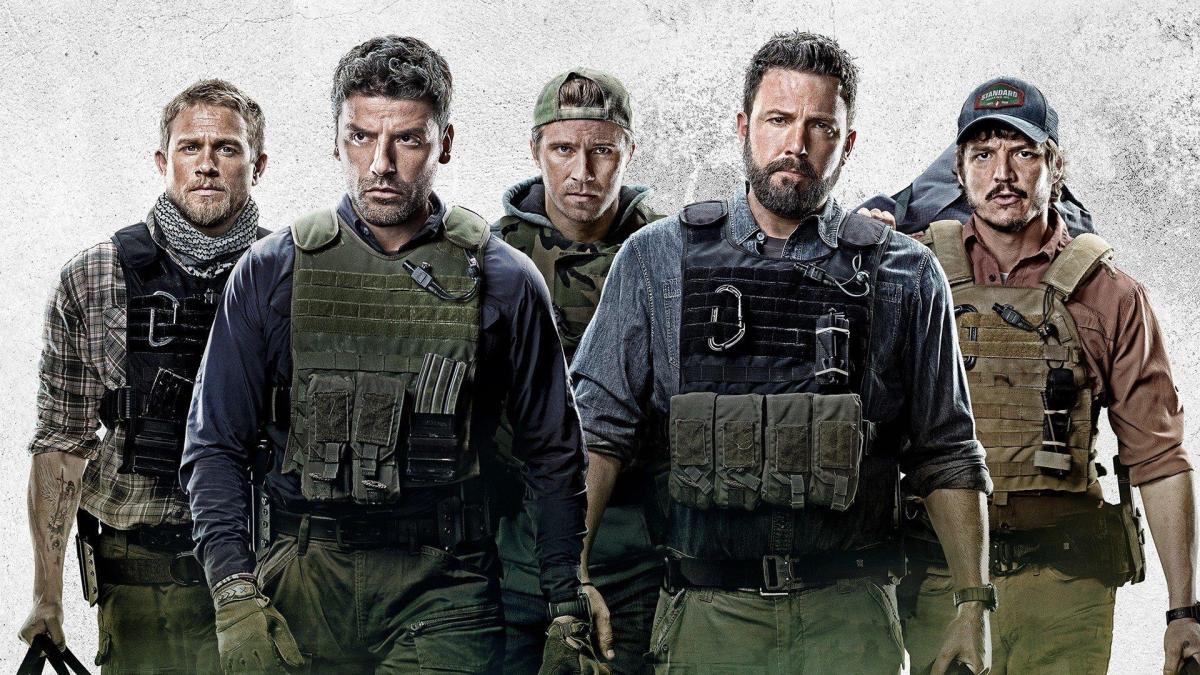
‘Triple Frontier’ – Film Review and Analysis

“Heist movies in Hollywood are a dime a dozen these days and can be quite predictable as well as not very engaging in terms of the characters and their backstories. ‘Triple Frontier’, a film released in early 2019 by Netflix takes the genre and makes it fresh again.”

Heist movies in Hollywood are a dime a dozen these days and can be quite predictable as well as not very engaging in terms of the characters and their backstories. ‘Triple Frontier’, a film released in early 2019 by Netflix takes the genre and makes it fresh again. The film explains the background of the characters, their individual motivations for conducting the heist, and the twists and turns along with a few surprises that happen along the way that will make the audience feel like it’s worth watching until the very end.

Not only is the film shot well with great cinematography, pacing, and direction so you know what is always going on even with the quick-paced action, it’s an intelligent heist movie, which is well thought out and involves a greater mission that the characters have despite their own personal motivations. The scope of ‘Triple Frontier’ or ‘Tres Fronteiras’ in Spanish is unique in that the film is set in the tri-border region of Colombia, Peru, and Brazil so it is an excellent way for the various sets to highlight this unique region of the world. From tree-covered jungles to rocky highlands to snowy mountain tops, the initial heist phase of the movie is bolstered by the 2nd half’s battle against not just external enemies but also by geographic factors.

The heart of the ‘Triple Frontier’ film is the story of the protagonists themselves. Each of them from different backgrounds but united by their special forces’ experiences, which bind them together as brothers. While the story does not get into their past experiences together, the film does a good job selling how close the bond is between the five of them is and how much they still care for each other. Civilian life has treated each of the five men differently but what they hold in common is their desire to improve their lives and go back to doing what they do best. Each of them is financially struggling to get by whether it is by dealing with a costly divorce, or by beating a misdemeanor drug charge, or by needing to fight in mixed martial arts to make more money, or by making dozens of motivational speeches to current soldiers to make ends meet.

The leader of the group, Santiago ‘Pope’ Garcia, is not so much as motivated by the money but rather to capture a notorious drug lord and leader of a prominent cartel in the ‘Triple Frontier’ who has been able to evade Pope for years as well as his Colombian counterparts. Pope has a hard time trusting the locals he is meant to led and needs a group of soldiers as well as his friends to ‘watch his six’ and help deliver Lorea for him. Pope has a local informant, Yovanna, helping him locate Lorea’s whereabouts and he just needs a solid team behind him to lead the raid as well as the heist but who better than his four ex-special forces colleagues who he knows can get the job done.

As with most things regarding a heist, it takes expert planning, a reconnaissance mission, as well as expert timing to make sure that things don’t go sideways when it comes time to exfiltration. After hearing from Yovanna that ‘the house is the safe’, and Lorea hides his money not in offshore banking accounts but in his fortress in the Amazonian jungle, Pope has the intelligence he needs to move forward with the heist. While each of the men have their own personal motivations to go on the heist with Pope, they are unified at first by their innate need for the large sums of money that can make them set for life and never have to worry about bills, MMA fights, or tedious motivational speeches ever again.

While each of Pope’s men question the ability for the heist to go smoothly, they feel like they owe it to each other to get it done especially each of them have a set of skills including one being a pilot (Francisco ‘Catfish’ Morales), one being a leader of the squad (Tom ‘Redfly’ Davis), a reconnaissance guy (William ‘Ironhead’ Miller), and the last being a stealth expert able to enact unarmed takedowns, (Ben ‘Benny’ Miller). Without each of his compatriots, Pope knows he cannot get the job done. With the help of Lorea’s money, Pope knows he can get Yovanna, his informant, and her brother out of the region safely without compromising their lives in the process.

While viewers would consider each of the men ‘greedy’ and ‘selfish’, the film makes their decision much more complex than that. They each know that his Lorea and his men pose a danger to the region and that they have a responsibility to look out for one another as brothers given the bonds, they formed with each other as previously active servicemembers. However, seeing as each of these five men have never experienced what it is to have $1 million at their disposal let alone tens or hundreds of millions, the film excellently portrays what it’s like when you finally stumble upon a smorgasbord of money never seen before and how that kind of greed can overwhelm someone, even the leader of the entire heist squad.

Money, like anything in life, when it’s too much with you or weighing you down, can cause things to go haywire when its impact is fully felt. Without spoiling the film for those readers who have not seen it, it’s not just the heist that could go wrong but also how to get the money back to themselves or their families after risking everything in the process. You can also carry so much physical money before you have too much where it starts to drag you down or also others with you, which could also put them in harm’s way if you are not careful. Each of the five men are very skilled in what they do, are loyal to each other, yet are fallible like the rest of us, and how they deal with their own greed, jealously, ego(s), and adversity in seeing the heist through carries the money to be one of the best of 2019, and a film to revisit for multiple viewings.

‘Triple Frontier’ is better than your average heist film for multiple reasons but most of all because it’s a very human film on how to overcome your own fears, doubts, shortcomings, to make sure your friend or brothers makes it back alive. The men are not good or bad men per say but are flawed in that they have given a lot to their country and the world, and now look to get what they desire in return, even if it may end up costing them dearly. The movie is not ‘black or white’ in terms of morality like other heist movies but rather shows the ‘grays’ in how people make decisions not just based on ‘self-interest’ but in a desire to be useful to the group and to put their skills to use.  

While it would be easy to say that ‘greed’ is a central theme that the film is based around, I would argue that the central theme is more about confronting our own nature and how to deal with murky aspects of right and wrong, and how that while money makes the world go around, that does not substitute for the guy or girl next to you who will fight with you, and even die for you. There are some things that money cannot buy and the film exemplifies that in its squad of five men, who while money is their motivation, they quickly learn that it is also a weight that will drag you down if you let it, and is no substitute to the man next to you, whose life is worth more than all the money you can carry, who is impossible to replace, and for which is truly worth fighting for and dying for, if necessary.

A Sense of Balance

“When the show talks about balance, it is not just about karate in terms of making sure you are able to work to anticipate your own movements as well as those of your own opponent but to be sure to not be balancing too much where your life suffers from imbalance.”

Recently, I have been watching the ‘Cobra Kai’ series on Netflix and while I was never really a huge fan of the Karate Kid movie series, I have really taken a liking to this TV series featuring the same characters with some new ones over 35 years later. There are a lot of great things about this particular popular series such as the 80s music and influence, the acting, the fight choreography among other positives that make you root for each character for different reasons. However, my favorite thing about the series is the life lesson that is not only applicable to the martial art of Karate but to someone’s life in general.

Without spoiling too much about the show, Mr. Miyagi’s philosophy of living life with a sense of balance is applicable not only to his protégé student, Daniel LaRusso, but also to the audience who is watching the show. When the show talks about balance, it is not just about karate in terms of making sure you are able to work to anticipate your own movements as well as those of your own opponent but to be sure to not be balancing too much where your life suffers from imbalance.

Imbalance can cause you to slip, fall, and end up in a fishpond as what happens to Daniel in the movie and to some of the characters for whom he teaches. When you balance on a plank or board, you have to balance your body but beyond karate as in regular life, you have to balance your mind in order to succeed in life. It’s important to be able to not lose sight of what is important in your life to what is trivial at best. When you don’t have balance, you can quickly lose sight of what’s important and what should not take up both your time and your mental capacity.

In the movie and the show too, Daniel, the protagonist of Karate Kid and a teacher in Cobra Kai, struggles to balance his responsibilities as an adult. He has a loving wife and two great kids but finds his life is out of balance. He loves Karate and misses Mr. Miyagi, his sensei or teacher, so when the show begins, his life is somewhat out of balance, which takes time for him to realize. He has a really successful car dealership business with multiple locations but even then, he uses Karate metaphors as a way of expressing how much he misses the martial art he had been practicing for years. In a way, while his life is successful on the surface, he has placed too much weight on his family and personal success but had forgotten the nurturing, passionate side of who he is as a person.

This sense of balance can be missing as it was for Daniel when we put too much weight on professional and personal success but forget what makes us passionate about life and to devote some time out of our busy lives to focus on that passion even if it doesn’t make us money. When it comes to balancing out responsibilities, duties, and habits, you should make time for each part of one’s life but not too much where one responsibility crowds out the rest.

With Daniel as an example, he has to balance it out, so he does not overwhelm himself with one part of his life when he is being pulled in three directions. He has to keep his marriage romantic and show love to his children while not neglecting his role as a business owner and making sure his customers are satisfied. If he spends too much time at work, he still has to be a present father and a loving husband, so he has to be extra cognizant of how much time he is spending on each responsibility.

When you add his love of Karate in the show to the mix, it makes that ‘sense of balance’ much harder to achieve. However, the love of Karate and spending time on his passion makes him as happy, if not more so, than when he is at his job or when he is with family. If you in your life find a passion that great where you want to mentor or help others develop that passion, you should try to add that to your life and do your best to maintain balance.

Karate, like life itself is about maintaining balance and anticipating what your opponent or what life will throw at you next. Part of having a sense of balance is to predict what is to come and adjusting your duties and responsibilities in terms of time spent on those commitments.

For example, if Daniel has a big meeting at work, hypothetically, when it comes to car sales, he may need someone to fill in at the Karate dojo for him such as a top student so that his business does not suffer. If he has to do so, he can move his training hours for the dojo to nights or weekends but that may conflict with his family obligations so maybe he has to ask his wife first to make sure he is spending enough time with them when he’s not managing the car dealership. He also has to be sure to not spend too many hours at the dealership so as to miss breakfast or dinner with his children who may be in school all day.

A good way Daniel can balance his love of Karate with his love of family and work is to incorporate an element of Karate in his work and with his family. He can add a line like ‘kicking the competition’ to his company logo or giving away Bonsai trees to customers who buy cars from them. He can also involve his wife in his dojo by showing her around the training center he set up for his students. Daniel can also encourage his children to join him and to show them how to use Karate in their lives when they are not busy with school.

Similar to Daniel in ‘Cobra Kai’ and ‘Karate Kid’, we must continue to maintain that sense of balance in our lives and to keep adjusting the balance when we become too top heavy in one part of our life which can crowd out our other responsibilities. Be sure to not lose your passion or your family or your livelihoods in the process but see first how much time and effort you can devote to each commitment you make to yourself.

Rather than totally give up something you love or are passionate about, try to do better with time management first, see if it really conflicts with your other daily or weekly tasks, and then determine if it brings enough joy in your life before getting rid of it to improve your internal balance. Balance is not just about time management but it’s also about being aware of other people’s feelings and emotions. You have to anticipate how they’ll react to what you choose to focus on. If you spend too much time at work, you should be aware of how your wife may feel about it. If you are working on a passion too much, your family may feel neglected. If you are focusing on family too much and your work suffers, you have to improve your concentration in order to be able to provide for them.

Balance involves analyzing how your life is going and being self-aware enough to know if change is needed in it. If you do nothing, your life balance is likely to suffer. When you can instead manage your time better, seek out input from others, and figure out what priorities come first, your life balance will be that much better, and your level of happiness will likely increase as a result.