


Maslow’s Hierarchy of Needs and The True Quality of Life

“Maslow’s hierarchy of needs has always been a good reference for me in describing what exactly makes us have a safe, secure, happy, and fulfilling life. I do believe we need to have our hierarchy of needs in mind as people when we focus on what’s best for our fellow man or women and how to build a prosperous society.”

Everybody wishes to have a high quality of life but what exactly does that mean? We hear the term ‘quality of life’ a lot but what goes into the ‘quality’ of it and what makes for a satisfying ‘life’? Maslow’s hierarchy of needs has always been a good reference for me in describing what exactly makes us have a safe, secure, happy, and fulfilling life. I do believe we need to have our hierarchy of needs in mind as people when we focus on what’s best for our fellow man or women and how to build a prosperous society.
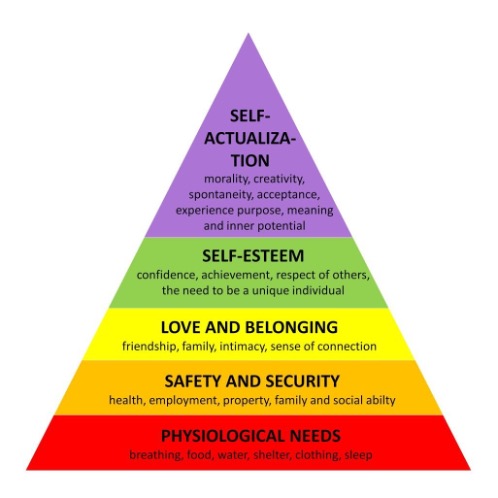
                                                                                                Source: SimplyPsychology.com

While I don’t wish to compare my own views on what true ‘quality of life’ is compared to Abraham Maslow’s ‘hierarchy of needs’ as shown in the pyramid diagram above, but it’s important to look at what makes a society flourish. I agree with Maslow at the base of the pyramid is the most important to ensure a life has some quality with it.

The societies that have the strongest base for ‘physiological needs’ usually are the happiest and satisfied with their quality of life. For example, you cannot focus on ‘safety and security’ as much as you can when you can’t even guarantee that the water you drink is clean and the air that you breathe is clean. Everything else on Maslow’s pyramid goes out the window if you are hungry, thirsty, don’t have a roof over your head or cannot clothe yourself or your family.

A lack or absence of ‘physiological needs’ is often found in the poorest or least developed of our societies and can still plague even our wealthiest and most developed societies. The key thing for all societies is that we should have an attitude of wanting to guarantee the ‘highest quality of life’ we can deliver to all people rather than just the few who can afford it financially. I do believe any society and its leadership is responsible for delivering on both ‘physiological needs’ and on ‘safety and security’ and once that is achieved, it will lead to better conditions whereas we go up Maslow’s pyramid, love, belonging, self-esteem, and self-actualization tend to be easier to achieve as well. True quality of life is knowing that if you fall on hard times, not by your fault, you’ll be looked after by your society and your government while you look to get back on your feet.

I don’t believe it’s anything farfetched or overly utopian to believe in everyone having the right to breathe clean air, drink clean war, have enough food each day, and have a roof over one’s head. I also think that while education and health care may not be on ‘physiological needs’, it ranks close in that regard to build that functional society. Everyone should be able to afford a good education and find good health care where they live and societies that accomplish this for their people are rewarded back and then some with citizens who are thriving as a result. Societies that are more educated, healthier, and with more opportunities to succeed tend to be those that have a true quality of life in my view.

You may be thinking that true quality of life is about having a big bank account, a bigger house, all the gadgets and electronics you could ever want, and all your material desires within reach, but to me, that would not go along at all with Maslow’s hierarchy. Having that stuff may make you happier but it doesn’t reflect a true quality of life in any society. If the roads are falling apart, people around you are suffering and in poverty, and you can go bankrupt for seeking medical care or a higher education, your quality of life will also suffer as a result even if you’re not directly affected by it.

When we are looked after or cared by others in the society who can ensure we have a good education, good health care, and to have affordable housing, the quality of life for everyone will go up. We are not islands unto ourselves alone and we are reflections of how we treat others. If you’re reading this article, think more about how your society or country could have a better quality of life not just for yourself but for the people living there too.

I ask that you believe in your ability to create change whether that’s advocating for more environmental regulations, prioritizing people’s access to basic needs including food and housing and thinking more about how we can include people in making them feel they belong in the society. We should collectively work towards providing more opportunities to everyone, so they don’t feel left out. Any healthy society has those public places to gather, discuss, and hopefully fix the quality-of-life issues going on in their community, town, city, or country.  

I don’t judge a society by how wealthy it is, how big the houses people live in are, or how much they have in material goods and services available. I judge a society by how they treat the least well-off members, how they prioritize the public good or not, and what they are doing to improve the overall quality of life rather than ignoring it or having it steadily decline under their watch.

It’s important for us to start thinking about not just ourselves and our own quality of life but those of our fellow man and woman. When they are worse off than us, let’s lift them up and look out for them instead of shunning them or isolating them instead. We should always be advocating for a ‘true quality of life’ where everybody is given the opportunity to succeed, grow, live healthy and happy lives, and pursue their dreams.

We all will be better off for having invested in the basic tenets of civilized society such as education, health care, transit, housing, and healthy food supply rather than just guarantee them for the few who can afford it. The higher the quality of life is not just for us but for every member of our society, the more likely we will all flourish together and reach our highest fulfillment.

Deep vs. Superficial Friendships

“The friendships that we create in life come in various types and kinds, from the shallow and fleeting to the profound and enduring, but the idea of friendships in general, are crucial to maintaining a healthy and well-balanced life.”

The friendships that we create in life come in various types and kinds, from the shallow and fleeting to the profound and enduring, but the idea of friendships in general, are crucial to maintaining a healthy and well-balanced life. We must recognize though that there is a stark disparity between having deep friendships and having superficial ones. We should always try to prioritize having the former as much as possible as it is vital in helping with our emotional well-being and it is important to cultivate such enriching and long-lasting bonds when we can in life.

Deep friendships are akin to having actual roots that anchor us, offering solace, support, and understanding amidst life’s tumultuous events. Unlike superficial friendships, which often revolve around surface-level interactions and fleeting interests and hobbies, deep friendships transcend the superficiality of small talk by delving into the depths of our souls. These profound connections are characterized by authenticity, vulnerability, and reciprocity, serving as sanctuaries where we can reveal our true selves without fear of judgment.

The importance of having a deep friendship cannot be overstated. Research in psychology consistently underscores a myriad of benefits, ranging from enhanced emotional resilience to increased lifespan longevity. Deep friendships provide a nurturing environment where individuals can share their joys and sorrows, seek counsel, and celebrate milestones. Moreover, these intimate bonds foster a sense of belonging and validation, buffering against the pangs of loneliness and isolation that plague so many in today’s hyperconnected yet paradoxically lonely world.

Conversely, superficial friendships, while ubiquitous, often leave us feeling hollow and disconnected. In the age of social media, where likes and followers reign supreme, it’s all too easy to confuse online acquaintanceships with genuine friendships. Superficial friendships are characterized by surface-level interactions, revolving around shared activities or interests rather than by having a deep emotional connection or being able to be vulnerable with the other person without judgment or regret. While they may provide fleeting moments of amusement or distraction, they lack the depth and intimacy necessary for true companionship.

American culture, with its emphasis on individualism and instant gratification, often perpetuates the primacy of superficial friendships rather than deeper ones. From the frenetic pace of social gatherings, the inability to have spontaneous meetups with friends without scheduling weeks or months in advance to the superficiality of online interactions, many Americans find themselves these days caught in a whirlwind of shallow connections, neglecting the profound bonds that sustain us throughout our lives. Societal pressures in American culture of projecting a false or inflated image of success and popularity rather than being realistic of what your life is like. This kind of attitude can incentivize people to prioritize quantity over quality when it comes to friendships, leading to a proliferation of superficial ties at the expense of forming genuine connections with others.

This trend is particularly pronounced during the adolescent phase of life, which is a formative period characterized by peer pressure and social conformity. Teenagers, eager to fit in and be accepted, may gravitate towards superficial friendships based on shared interests or social status, neglecting the deeper connections that truly nourish the spirit. Similarly, adults, juggling the demands of career and family, may find themselves ensnared in a web of acquaintanceships, leaving little time or energy for cultivating deep friendships.

How can we resist the allure of superficial friendships and cultivate the depth and authenticity we crave? The first step is awareness, recognizing the differences between superficial and deep friendships and acknowledging the profound impact the latter kind can have on our well-being. Deep friendships are marked by essential qualities such as empathy, trust, and mutual respect, whereas superficial friendships are characterized by shallowness, frivolities, and transience.

Furthermore, cultivating deep friendships requires intentionality and effort. It entails investing both serious time and energy in building and nurturing those meaningful connections, prioritizing quality over quantity when it comes to who your friends really are. This kind of approach may involve initiating vulnerable conversations, actively listening to both our friends’ struggles and triumphs, and showing up for them in times of need, even when it may be inconvenient for you to do so. It also means being willing to reciprocate the same level of vulnerability and support, fostering a sense of mutual trust and understanding between the two people involved. If your friend is going through a personal crisis, or wants to celebrate his success(-es) with you, or needs some advice, will you be there for them through both the good times and the bad? You really must know that answer before you consider it a deep friendship.

It should be noted that fostering deep friendships necessitates setting boundaries and discerning when to invest in relationships that align with our values, beliefs, and nurture our personal growth. This may mean distancing ourselves from toxic or one-sided friendships that drain our energy, our time, and diminish our sense of self-worth. While it can be daunting to confront the discomfort of letting go from any friendship you make because of how difficult it can be to start from scratch with a new person, prioritizing one’s own emotional well-being is essential for fostering deeper and more fulfilling connections for creating more rewarding friendships.

Moreover, we must challenge societal norms that prioritize superficiality over depth and authenticity. This requires redefining our cultural narratives around friendship, valuing vulnerability, and emotional intimacy as essential components of genuine connection. By modeling deep friendships in our own lives and advocating for their importance in our communities, we can shift the cultural paradigm towards one that values quality over quantity in friendships.

The profound impact of deep and enduring friendships on happiness and health cannot be overstated. Research spanning past decades has consistently demonstrated many benefits of having meaningful social connections, from reduced stress and anxiety to improved immune function and physical health. Deep friendships provide a buffer against the inherent stresses of life, offering emotional support and validation during challenging times. When we have friends who truly understand us and care for our well-being rather than just know who our favorite sports team is or what we enjoy doing on weekends, we feel less alone in our struggles and more capable of navigating life’s ups and downs.

Deep friendships help us foster an essential sense of belonging and acceptance that is essential for our psychological well-being. When we can openly share our joys and sorrows with trusted friends, we validate our experiences and affirm our sense of self-worth. This sense of belonging not only enhances our self-esteem but also strengthens our resilience in the face of adversity and challenges. Studies have shown that individuals who have strong social support networks are better equipped to cope with stress, anxiety, and trauma, leading to improved mental and emotional health over time.

Additionally, deep friendships provide opportunities for personal growth and self-discovery, as we learn from and are inspired by the unique perspectives and experiences of our friends who can relate to what we’re going through each day. In essence, deep and lasting friendships enrich our lives in ways that superficial connections simply cannot replicate, contributing to our overall happiness and well-being in profound and meaningful ways. Having deep friendships is a large part of the bedrock of our emotional well-being, offering solace, support, and understanding in an increasingly superficial and shallow world. Distinguishing between deep and superficial friendships requires having emotional awareness, intentionality, and discernment. By prioritizing authenticity, vulnerability, and reciprocity in our friendships, we can cultivate deeper friendships that nourish the soul and sustain us through life’s tribulations and triumphs.