

‘A Real Pain’ – Film Review and Analysis

“Traveling with a family member can be an invigorating yet challenging experience, especially when the family member in question has recently faced a potential tragedy, and you’ve become estranged from them.”

Traveling with a family member can be an invigorating yet challenging experience, especially when the family member in question has recently faced a potential tragedy, and you’ve become estranged from them. This is the dilemma faced by the co-protagonist of A Real Pain, David Kaplan (Jesse Eisenberg). On a trip to Poland, David must confront his family’s heritage while dealing with the eccentricities and hyperactive behavior of his cousin, Benji Kaplan (Kieran Culkin).

On the surface, David and Benji share a mutual love for their recently deceased grandmother and the memories they have of her, along with their childhood experiences. They are both nominally Jewish, although the film makes it clear that neither is particularly devout or observant. Benji is outspoken and upfront about his views on almost anything, while David is quiet, observant, and reserved in social settings. Benji seems to have retained the same rambunctious personality he had as a youth, whereas David now has a wife, a child, and a steady career in New York City as a digital marketer.

Following their grandmother’s death, Benji struggles to find his footing in adulthood. He works odd jobs in Binghamton, New York, and lives in his mother’s basement. Though less mature and socially aware than David, Benji is full of life and feels emotions more intensely. He has no filter, makes no apologies for it, and leaves a lasting impression on everyone he meets much to David’s frustration of not being able to do the same.

Despite not seeing each other for months after a distressing event in Benji’s life, the cousins decide to embark on a heritage trip to Poland. They join a group of American Jews to learn more about their ancestry and the circumstances surrounding their family’s departure from Nazi-occupied Poland. The group also includes other descendants of survivors with roots in Poland. The tour is efficiently led by a non-Jewish guide, who does an excellent job recounting the history of Polish Jews before World War II, the lead-up to the Holocaust, and the exodus of those who managed to survive. However, Benji finds the guide’s focus on statistics and dates robotic and disconnected from the lives of the people who were lost.

Benji’s outbursts during the tour seem socially inappropriate to David, displaying a lack of respect for the guide and the other participants. However, Benji’s emotional authenticity eventually wins over the group by the end of the tour. Unlike others on the trip, he refuses to numb himself to the pain of what they are witnessing and expresses his feelings freely without concern for others’ judgment. While his emotional instability troubles some on the tour, it also makes him memorable. Benji turns what could have been a somber and overwhelming experience into something more meaningful reminding everyone what it feels like to be truly alive.

In contrast, David hesitates to smoke a joint on the hotel roof, voice a critique during the tour, or even have a drink to relax after a long day. Meanwhile, Benji has no reservations about doing any of those things. Benji embraces life’s highs and lows, even when it leaves him emotionally unsteady, while David seeks stability and strives to remain even keeled through life’s challenges and opportunities. Despite his efforts, David feels let down by his job and struggles with doubts about how much his family truly loves him. Benji, on the other hand, is too immersed in the moment, sometimes for better, and sometimes for worse. The cousins admire yet resent each other throughout the film. Growing up in similar circumstances, they’ve ended up leading vastly different lives due to their contrasting personalities. While they can enjoy each other’s company, they also tire of one another quickly. Each character envies what the other has but is fiercely protective of their own lifestyle.

A Real Pain explores the concept of pain in a nuanced way: the pain of losing a loved one, the pain of dealing with a challenging family member, and the generational pain of having a family’s future stolen. The film captures how different people cope with these pains: David, Benji, the other tour participants, and even the tour guide, as they confront the events of the Holocaust, visit a Polish Jewish cemetery, and tour the Majdanek concentration camp. The message is clear: to cope with pain healthily, we must face it head-on in our own way. This journey of confronting pain is essential for building our resilience and strength.

Pain is what connects us to our humanity, reminding us that we are truly alive. During the trip, Benji recounts a painful memory: their grandmother once slapped him in a New York City restaurant because he arrived late for dinner. She had dressed up for the occasion, and the public slap left Benji feeling real pain. However, he acknowledges that this act of accountability, though hurtful, came from a place of love. Benji yearns for this kind of tough love from others, particularly from David. He craves someone who can hold him back from his impulsive tendencies, showing him care and affection in the process.

A poignant moment in the film occurs when David and Benji visit their late grandmother’s former house in Poland. The home is now owned by another family, and any traces of the Kaplans’ presence have long vanished. In a touching gesture, David places a stone in front of the house to honor their grandmother’s memory. However, the moment takes a humorous yet bittersweet turn when an elderly Polish man chastises them. He misunderstands their intention, believing the stone was placed maliciously to cause harm to the current elderly resident. Despite their efforts to explain the Jewish tradition of placing stones as a memorial to remember their deceased grandmother, the older man remains unconvinced despite his son’s English to Polish translation of their reasoning for having placed the stone there. Feeling awkward about the entire encounter, David and Benji decide to take the stone with them when they leave Poland.

In a beautifully symbolic gesture upon his return to New York, David later places the stone at the entrance of his Brooklyn home, where he lives with his wife and child. This act underscores the universal idea that “home is where the heart is.” While the memory of the family’s life in Poland has faded, their grandmother’s legacy endures. Her journey as an immigrant to America, striving to build a new life for her family while preserving her Jewish identity, continues to inspire her descendants, including David and Benji.

As the film concludes, the audience is left wondering about the futures of David and Benji’s relationship and their individual paths. The heritage trip and their shared memories of their grandmother seem to strengthen their bond. The film suggests that, despite their differences, family is ultimately the one thing you can rely upon in life. While Benji and David drive each other crazy, they also admire and need each other. The hope is that they will continue to support one another, bringing balance to each other’s lives with David finding more spontaneity and emotional authenticity, and Benji discovering greater stability and purpose.

‘Extrapolations’ – TV Series Review and Analysis

“Recent wildfires in Canada that have caused the worst air pollution in decades across the Northeast U.S. this week have made me think about how our lives are becoming more and more impacted by the effects of climate change.”

Recent wildfires in Canada that have caused the worst air pollution in decades across the Northeast U.S. this week have made me think about how our lives are becoming more and more impacted by the effects of climate change. Growing wildfires, powerful hurricanes, sea level rise, melting glaciers, species extinction, and more acidic oceans are all causes for concern for people around the world and no country or people is likely to be exempt from at least one of the effects that have already been documented. What happens though in the next 50 years when we don’t take enough action now and in the past to reverse a possible future of no return?

That question is the premise for the first mainstream drama to focus on a future where climate change wins the battle that we are currently on track to lose if we don’t make drastic changes to our impact on the world around us. ‘Extrapolations’ is not a run of the mill documentary about climate change nor is it a disaster film that has become popular in Hollywood regarding disastrous storms. Instead, it is a rather intelligent take on the world soon when humanity cannot prevent global temperatures from staying at or below a 1.5-degree Celsius increase. The show covers what happens when humanity fails in its objective to keep the warming of the planet to a tolerable level. What starts out as 1.5 degrees Celsius becomes 2 degrees than 3 degrees until we become way past the point of no return past mid-century when 3.5 – 4 degrees Celsius is where the planet is headed.

Throughout the show’s eight episodes, we see the effects on the planet from Miami, Florida to New York City to London to Tel Aviv, Israel to Mumbai, India. From sea level rise wiping out the most popular nightlife areas in Miami including a historic synagogue to the constant wildfires that engulf Israel and the Middle East to limited outdoor time in Mumbai each day due to the overbearing heat and polluted air that causes deleterious effects to one’s health, the writers paint a grim yet realistic picture on what will happen if our climate change efforts fail miserably. More so than just the settings that are portrayed accurately in terms of how these popular cities may face their own negatives based on their geographic location, the characters in ‘Extrapolations’ have fully developed backgrounds, and you really get to know each of them over the course of the TV series.

There is a wide berth of society who are represented in this show from the wealthy billionaire who is interested in maximizing profits and takes advantage in his corporation from a dying planet to the Rabbi who is trying to wrestle with his faith in God as his synagogue slowly floods from the rising sea. What ‘Extrapolations’ does well is that it acknowledges that no one is purely innocent or purely guilty because of how badly climate change has warped the planet. Everyone is responsible in their own way, some more than others, but humanity is to blame for how we did not act quickly or unite fast enough to overcome our differences to reverse the worst effects to come.

The human effects of climate change are also explored such as how we are affected when we cannot go outside or must stay indoors to avoid heart or lung issues, why the extreme heat can prevent any work or leisure to take place, and how loneliness, depression, and atomization becomes more common when we despair at the worsening state of the planet.

My favorite episode in the eight-part TV series is ‘2066: Lola’ where we see how much augmented and virtual reality has come by then so that people are paid essentially to pretend to other people as a gig job and earn credits or money that can help improve their lives and insulate themselves more from climate change’s effects. The desire to connect with other people to distract ourselves from a dying planet is truly the TV series’ most impactful episode and makes you think about how much the emergence of augmented reality will make us both lonelier than ever and wanting to connect with others in untraditional and sometimes unseemly ways.

‘Extrapolations’ as a show really gets the A-list attention for a futuristic take on climate change’s effects on humanity with movie stars like Meryl Streep, Forest Whitaker, Kit Harrington, Edward Norton, Matthew Rhys, Gemma Chan, David Schwimmer, etc. All eight episodes are boosted by a stellar cast who really pour their hearts into the performances they give. I believe that they all truly cared about the project and how important it is to have a show like this become the center of attention. While Apple has been rightly condemned for some corporate practices that are harmful to the planet, it is a major TV show and movie distributor and should be commended for being the first major studio to have a series that doesn’t shy away from the brutal honesty of where we are headed if we don’t mitigate the worst effects of climate change to come.

If you are reading this article in 2023, you already know that the sea levels are starting to rise, wildfires are growing in both size and scale, bigger and stronger hurricanes that are also becoming more powerful, and deadly heat waves are becoming more common. While the first episode in this series takes place in 2037 and the last one ends in 2070, climate change is already here in 2023 as recent news events make clear and it has been affecting us for quite some time.

I encourage ‘Extrapolations’ to be watched by viewers with an open mind but also a commitment to do better for the planet. Do not shy away to act and make your voice heard regarding climate change after watching the series. You may think you know how bad it can get in the future from watching this series but ‘Extrapolations’ importance as a show is that it is as clear as day to where we will end up if we don’t hit the collective climate target goal of 1.5 degrees Celsius or keep as close to 1.5 degrees as possible.

While the show does mention possible stopgaps and solutions that can mitigate the damage, by that time in the 21st century, these solutions are risky with side effects on the planet that can only be speculated about. While the billionaire tycoon character was likely modeled after a few people who are prominent in our current age, as the show makes clear, the blame does not fall on him alone. We all can do our part by taking action to reduce our own carbon emissions, to encourage others to petition for policies and solutions now instead of 10 to 50 years down the line.

If the show has one central message after its eight impactful episodes, we all have stake in making sure this planet is livable for future generations. Even if you won’t be around to see the worst of climate change, we all should do our part, advocate for solutions now, and to hold people in power and of great wealth accountable if they do not action as well on a larger scale. The clock is ticking and as ‘Extrapolations’ highlights from 2037 to 2070, it can go downhill and get worse than what are experiencing already in 2023. Let’s not make the show a reality but keep it as a cautionary tale of what would have happened if we did not act strongly enough in these first decades of the twenty-first century.

I recommend ‘Extrapolations’ based on its great acting, stunning visuals, excellent writing, and interesting plots, but most importantly, because it focuses on the biggest issue of our time and one that we cannot ignore or downplay anymore.   

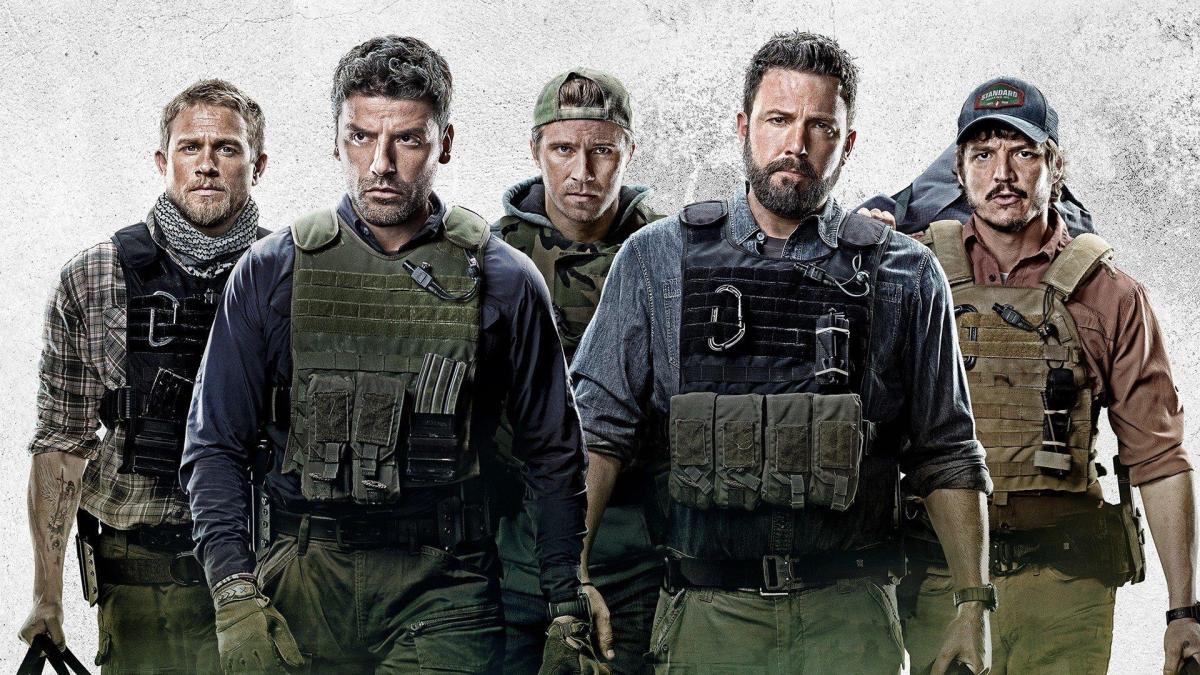
‘Triple Frontier’ – Film Review and Analysis

“Heist movies in Hollywood are a dime a dozen these days and can be quite predictable as well as not very engaging in terms of the characters and their backstories. ‘Triple Frontier’, a film released in early 2019 by Netflix takes the genre and makes it fresh again.”

Heist movies in Hollywood are a dime a dozen these days and can be quite predictable as well as not very engaging in terms of the characters and their backstories. ‘Triple Frontier’, a film released in early 2019 by Netflix takes the genre and makes it fresh again. The film explains the background of the characters, their individual motivations for conducting the heist, and the twists and turns along with a few surprises that happen along the way that will make the audience feel like it’s worth watching until the very end.

Not only is the film shot well with great cinematography, pacing, and direction so you know what is always going on even with the quick-paced action, it’s an intelligent heist movie, which is well thought out and involves a greater mission that the characters have despite their own personal motivations. The scope of ‘Triple Frontier’ or ‘Tres Fronteiras’ in Spanish is unique in that the film is set in the tri-border region of Colombia, Peru, and Brazil so it is an excellent way for the various sets to highlight this unique region of the world. From tree-covered jungles to rocky highlands to snowy mountain tops, the initial heist phase of the movie is bolstered by the 2nd half’s battle against not just external enemies but also by geographic factors.

The heart of the ‘Triple Frontier’ film is the story of the protagonists themselves. Each of them from different backgrounds but united by their special forces’ experiences, which bind them together as brothers. While the story does not get into their past experiences together, the film does a good job selling how close the bond is between the five of them is and how much they still care for each other. Civilian life has treated each of the five men differently but what they hold in common is their desire to improve their lives and go back to doing what they do best. Each of them is financially struggling to get by whether it is by dealing with a costly divorce, or by beating a misdemeanor drug charge, or by needing to fight in mixed martial arts to make more money, or by making dozens of motivational speeches to current soldiers to make ends meet.

The leader of the group, Santiago ‘Pope’ Garcia, is not so much as motivated by the money but rather to capture a notorious drug lord and leader of a prominent cartel in the ‘Triple Frontier’ who has been able to evade Pope for years as well as his Colombian counterparts. Pope has a hard time trusting the locals he is meant to led and needs a group of soldiers as well as his friends to ‘watch his six’ and help deliver Lorea for him. Pope has a local informant, Yovanna, helping him locate Lorea’s whereabouts and he just needs a solid team behind him to lead the raid as well as the heist but who better than his four ex-special forces colleagues who he knows can get the job done.

As with most things regarding a heist, it takes expert planning, a reconnaissance mission, as well as expert timing to make sure that things don’t go sideways when it comes time to exfiltration. After hearing from Yovanna that ‘the house is the safe’, and Lorea hides his money not in offshore banking accounts but in his fortress in the Amazonian jungle, Pope has the intelligence he needs to move forward with the heist. While each of the men have their own personal motivations to go on the heist with Pope, they are unified at first by their innate need for the large sums of money that can make them set for life and never have to worry about bills, MMA fights, or tedious motivational speeches ever again.

While each of Pope’s men question the ability for the heist to go smoothly, they feel like they owe it to each other to get it done especially each of them have a set of skills including one being a pilot (Francisco ‘Catfish’ Morales), one being a leader of the squad (Tom ‘Redfly’ Davis), a reconnaissance guy (William ‘Ironhead’ Miller), and the last being a stealth expert able to enact unarmed takedowns, (Ben ‘Benny’ Miller). Without each of his compatriots, Pope knows he cannot get the job done. With the help of Lorea’s money, Pope knows he can get Yovanna, his informant, and her brother out of the region safely without compromising their lives in the process.

While viewers would consider each of the men ‘greedy’ and ‘selfish’, the film makes their decision much more complex than that. They each know that his Lorea and his men pose a danger to the region and that they have a responsibility to look out for one another as brothers given the bonds, they formed with each other as previously active servicemembers. However, seeing as each of these five men have never experienced what it is to have $1 million at their disposal let alone tens or hundreds of millions, the film excellently portrays what it’s like when you finally stumble upon a smorgasbord of money never seen before and how that kind of greed can overwhelm someone, even the leader of the entire heist squad.

Money, like anything in life, when it’s too much with you or weighing you down, can cause things to go haywire when its impact is fully felt. Without spoiling the film for those readers who have not seen it, it’s not just the heist that could go wrong but also how to get the money back to themselves or their families after risking everything in the process. You can also carry so much physical money before you have too much where it starts to drag you down or also others with you, which could also put them in harm’s way if you are not careful. Each of the five men are very skilled in what they do, are loyal to each other, yet are fallible like the rest of us, and how they deal with their own greed, jealously, ego(s), and adversity in seeing the heist through carries the money to be one of the best of 2019, and a film to revisit for multiple viewings.

‘Triple Frontier’ is better than your average heist film for multiple reasons but most of all because it’s a very human film on how to overcome your own fears, doubts, shortcomings, to make sure your friend or brothers makes it back alive. The men are not good or bad men per say but are flawed in that they have given a lot to their country and the world, and now look to get what they desire in return, even if it may end up costing them dearly. The movie is not ‘black or white’ in terms of morality like other heist movies but rather shows the ‘grays’ in how people make decisions not just based on ‘self-interest’ but in a desire to be useful to the group and to put their skills to use.  

While it would be easy to say that ‘greed’ is a central theme that the film is based around, I would argue that the central theme is more about confronting our own nature and how to deal with murky aspects of right and wrong, and how that while money makes the world go around, that does not substitute for the guy or girl next to you who will fight with you, and even die for you. There are some things that money cannot buy and the film exemplifies that in its squad of five men, who while money is their motivation, they quickly learn that it is also a weight that will drag you down if you let it, and is no substitute to the man next to you, whose life is worth more than all the money you can carry, who is impossible to replace, and for which is truly worth fighting for and dying for, if necessary.