‘Mystic River’ – Film Review and Analysis

“This book-to-film adaptation, praised for its emotional intensity and thematic complexity, remains one of Eastwood’s most acclaimed directorial efforts to this day. Mystic River is a powerful combination of stellar performances, masterful direction, evocative cinematography, and a carefully crafted screenplay making the film a standard bearer of cinematic storytelling.”

Mystic River, directed by Clint Eastwood in 2003 and starring an amazing cast including Sean Penn, Kevin Bacon, and Tim Robbins, is an intricate and darkly intense film that has left a lasting impact on audiences and critics alike since it first came out in theaters over two decades ago. Based on Dennis Lehane’s novel of the same name, the film explores deep themes of trauma, guilt, vengeance, and the ways in which past experiences haunt the present and future. This book-to-film adaptation, praised for its emotional intensity and thematic complexity, remains one of Eastwood’s most acclaimed directorial efforts to this day. Mystic River is a powerful combination of stellar performances, masterful direction, evocative cinematography, and a carefully crafted screenplay making the film a standard bearer of cinematic storytelling.

The plot begins in a working-class Boston neighborhood, not too far from the Mystic River, and centers on three childhood friends: Jimmy Markum (Sean Penn), Sean Devine (Kevin Bacon), and Dave Boyle (Tim Robbins). As young boys, the trio spends their days together, playing stick ball, hockey, exploring the neighborhood, and strengthening their bond as friends. However, one traumatic incident forever changes their lives, marking them all in ways that will resonate through their adult years. Decades later, their lives intertwine once more when Jimmy’s teenage daughter, Katie, is found murdered, prompting a deep and painful investigation into both the current crime and the unresolved scars of the past for each of the three main characters.

Set against the gritty, blue-collar backdrop of Eastwood’s Boston, the environment reflects the rough and bleak outlook shared by many of the characters, most of whom never left the neighborhood as adults. This urban setting becomes almost a character, embodying a sense of entrapment and suffocation and what ifs. Eastwood and the film’s cinematographer, Tom Stern, create a cold, foreboding atmosphere that mirrors the psychological darkness of the characters. The use of shadows and natural light throughout the film provides an eerily realistic tone, further immersing the audience in the story’s weighty themes. As a film, Mystic River, sets itself apart by giving each character room to grow and develop over the course of the two and half hours of screentime. Each of them has a unique backstory despite the overlap and they each have their own personal scars and demons to bear.

To understand the film better as an audience, we must go through each character’s backstory, motives, and circumstances:

  1. Jimmy Markum (Sean Penn) – Jimmy is a reformed ex-convict who did two years in prison who now runs a local convenience store. He’s fiercely loyal to his family, especially his beloved daughter, Katie, who he has tried to shield her from his checkered past. His character is marked by a volatile personality and a deeply ingrained sense of loyalty, one that can easily turn to vengeance, if provoked. This trait becomes particularly apparent when Katie’s murder brings his hidden rage and pain to the surface. Penn’s portrayal of Jimmy is raw and gut-wrenching; he conveys a sense of intense, bottled-up pain that feels as if it could erupt at any moment at any one person who he is feels is responsible or partly responsible for her murder. Jimmy’s background as a former criminal, his letting his emotions cloud his judgment, and the rawness of the recent loss of his daughter drive much of his actions, adding layers of complexity to his character.
  2. Sean Devine (Kevin Bacon) – Sean, one of Jimmy and Dave’s friends, is now a detective with the Massachusetts State Police who is investigating Katie’s murder, and his ties to Jimmy and Dave complicate the case. Although he’s become more distant over the years from both men, Sean feels a sense of duty and friendships to bring closure to Katie’s murder and perhaps, in turn, to his own fractured past. His unresolved feelings about the childhood trauma shared by him, Jimmy, and Dave gives his character a detached yet conflicted edge. Kevin Bacon’s performance as Sean is understated but poignant, particularly as Sean grapples with the uncomfortable ties between his childhood friendships and the demands of justice. Sean’s role in the story is not just as a detective but as someone attempting to reconcile his past with his present responsibilities. During the film, we also give glimpses into Sean’s present struggles with an estranged spouse and his own personal turmoil surrounding his commitment to his job as detective, which may have led him astray from the woman he loves.
  3. Dave Boyle (Tim Robbins) – Dave is the most visibly affected by the traumatic events of his childhood because he is the one who was physically and emotionally abused until he escaped from the nightmare one day, and Robbins’ portrayal of a victim of child abuse is haunting. As a result of the childhood abduction and abuse, Dave is marked by a pervasive sadness and paranoia that set him apart from others including Jimmy and Sean. Married with a son now, he still struggles with feelings of inadequacy, unresolved trauma, and the psychological scars left by his past. His character raises questions about the psychological ramifications of unresolved trauma, and Robbins plays Dave with a quiet and unsettling vulnerability as he is a boy trapped in a man’s body who never got to really grow up into what he wanted to be. This kind of trauma and sadness culminates in behavior that others in the film including his wife interpret as suspicious, especially as Sean’s investigation of Katie’s murder begins to close in around him. Dave’s struggle for normalcy and acceptance is central to the film’s portrayal of trauma and his seeking redemption for what had happened to him in the past, through no fault of his own.
  4. Celeste Boyle (Marcia Gay Harden) – Celeste, Dave’s wife, represents the emotional turmoil that affects loved ones in the wake of trauma. Marcia Gay Harden’s portrayal brings depth to the character of Celeste, illustrating the complexity of being married to a man who is emotionally distant and troubled. Her suspicions and insecurities about Dave’s behavior create tension within their marriage, which becomes another focal point in the larger mystery of what Dave was doing on the night of Katie’s murder. Through Celeste, the film explores how the impact of trauma reverberates through relationships, and her doubts contribute to the suspense as she becomes uncertain of Dave’s innocence.

The thematic core of Mystic River lies in its exploration of personal trauma and its long-lasting effects on those around the affected person. Eastwood skillfully illustrates how the characters’ pasts influence their present, emphasizing the psychological toll of unhealed wounds. The trauma of Dave’s abduction and abuse is a powerful throughline, shaping his entire personality and decisions, and is indirectly responsible for the fractures in his relationships, friendships, and the suspicions cast upon him, whether justified or not. The themes of guilt and retribution are intricately woven into the story, particularly through Jimmy’s character, as he vacillates between his roles as a loving father and a man haunted by his own past mistakes and violent tendencies.

The film also dives into the notion of justice, both formal and informal, in our world. Sean’s role as a Massachusetts State Police detective represents the lawful pursuit of justice, yet the lack of resolution to certain aspects of his past shows how incomplete the law can be in addressing psychological scars, especially in a community where the lawful pursuit of justice is looked upon with skepticism especially by Jimmy. Jimmy, on the other hand, seeks a more personal form of justice, operating on a visceral level almost as a vigilante for Katie and the community who were also affected by her loss, guided by his own sense of right and wrong. This contrast between official justice and personal retribution forms one of the central tensions in the film and between Jimmy and Sean, estranged friends who are brought back together because of Katie’s murder.

Mystic River subtly but powerfully engages with a subtle theme tied to the Catholic Church and refers to one of Dave’s abusers in the early part of the film’s plot. This also is shown in the film particularly in the Catholic Church’s allusions to the trauma and secrecy that have historically been associated with the institution, especially around issues of child abuse. Although the film does not explicitly delve into the church’s scandals, the storyline of Dave’s childhood abduction and abuse parallels the real-life abuse scandals within the Catholic Church that would become a dominant public conversation in the years following the film’s release in 2003. The film portrays the silence, guilt, and repression surrounding trauma for abuse victims, especially for male victims, in ways that align with the complex and devastating effects of institutional abuse later revealed in widespread reports that came out in the 2000s and 2010s.

Eastwood’s sensitive handling of these themes amplifies the emotional impact of the film, allowing Mystic River to serve as a quiet commentary on the long-lasting scars left by abuse, trauma, and lives that could have been different. The cultural resonance of the film deepened as these themes became more publicly discussed, especially with the Boston Archdiocese scandal coming to light just months before the movie’s release and other subsequent revelations about abuse within the Catholic Church. The film’s nuanced portrayal of silence and trauma thus became eerily relevant, mirroring real-world struggles for justice, accountability, and healing.

Eastwood’s direction in Mystic River is marked by a disciplined, almost minimalist style that avoids sensationalism or quick cuts and jumps. His choice is to keep the film grounded in the characters’ experiences, which creates an immersive atmosphere, allowing the audience to connect deeply with each character’s journey because they are fully fleshed out individuals by the end of the film to us. By focusing on small, authentic details—the cold, grim environment, the weathered textures of Boston’s streets, and the understated settings within homes and local establishments in the neighborhoods surrounding the Mystic River, Eastwood crafts a world that feels palpably real and one we can believe in as viewers.

Cinematographer Tom Stern contributes to this atmosphere by using a muted color palette dominated by grays, blues, and other cold tones, mirroring the bleak outlooks of the characters and their surroundings. The naturalistic lighting helps underscore the characters’ emotional states, with shadows and half-lit scenes, hinting at hidden secrets and unresolved traumas. The camera work is frequently restrained, using lingering shots that capture subtle shifts in the actors’ expressions, allowing their performances to be the focal point of each scene.

As an adaptation, Mystic River succeeds largely because of Brian Helgeland’s screenplay, which translates Lehane’s complex narrative into a visually evocative and emotionally rich script. Helgeland captures the essence of the novel’s psychological tension and moral ambiguity without resorting to heavy exposition, instead allowing the characters’ actions and interactions to reveal their deeper motivations and conflicts. The adaptation retains the novel’s depth by focusing on character development rather than plot mechanics, preserving the source material’s thematic weight.

The film’s pacing, controlled by Eastwood’s direction, also serves the adaptation well even at two and a half hours long in length. Rather than racing toward revelations, the narrative unfolds gradually, mirroring the pace of real life in how trauma is dealt with and the need for closure. This approach preserves the novel’s introspective tone, making it not just a crime thriller but a meditation on human resilience, the search for true justice, and the impact of unresolved pain.

Mystic River stands out as a masterclass in adapted screenwriting, direction, and performance. It is perhaps one of the greatest films in this young 21st century as well. Eastwood’s subtle yet unrelenting vision creates a haunting atmosphere that perfectly matches Lehane’s themes of trauma, revenge, and the flawed pursuit of justice. The ensemble cast delivers compelling performances, each actor bringing depth to their own character’s unique struggles and inner turmoil. With Stern’s atmospheric cinematography, the gritty Boston setting feels almost oppressive, creating a visual landscape as intense as the narrative itself.

Through its slow-burn approach, Mystic River probes deeply into the characters’ psyches and decisions, making the experience both unsettling and profoundly affecting. The result is a powerful film that not only respects its source material but elevates it, offering a cinematic experience that explores the human capacity for both destruction and redemption. Eastwood’s restrained direction, combined with the richness of Lehane’s story, makes Mystic River a film that resonates long after the final frame comes to an end.

‘The Last Samurai’ – Film Review and Analysis

‘The Last Samurai’ (2003) is an epic drama film that takes place in a unique period of Japan’s history and highlights the conflict between modernization and tradition, between cultures, and also between different styles of warfare. However, it is not just the conflicts that are highlighted in this film but also the cooperation and the understanding that can happen as well in certain aspects such as between cultures. While this film is not specifically based on a true story, it is based on a number of true events that took place in the latter half of the 19th century for Japan and highlights the role of Western influence in Japan during the period of the Meiji Restoration or Reforms.

The main character, Nathan Algren (played brilliantly by Tom Cruise) is a Captain in the United States Army of the 7th Cavalry Regiment. Nathan is a veteran of the American – Indian Wars and perhaps the Civil War as well. He is a bitter man who is suffering from trauma related to the atrocities committed against the Indian tribes during these brutal battles. When the film starts, we can see that Nathan is an alcoholic who is regretful over the orders that he had to follow and what happened to innocent Indian women and children whose lives were disregarded by his commanding officers.

However, for lack of purpose or money, or perhaps both, Nathan is recruited by his former commanding officer, Colonel Bagley, whom Nathan still resents for his role in the Indian massacres, to help train Japanese soldiers in the Western way of combat to put down the Samurai rebellion, which is ongoing in Japan. Algren is dealt a bad hand as he has to train peasants and not actual soldiers who are firing guns for the first time and would be better suited to the farms than to the battlefield.

In addition to that, he is expected to lead them soon into battle against the Samurai for which they do not have enough time to prepare. One of themes of this film is how good men are often corrupted by following misguided orders by their superiors and often end up harmed, captured, or killed for the negligence or ignorance of those with a higher rank. Nathan is a good soldier, but he cannot train peasants into soldiers in the time that is given to him especially when he is not familiar with the ways of the Samurai and how lethal they can be compared to his peasant conscripts.

In the battle between his soldiers and the Samurai, the Samurai end up killing most of them through surprise attacks and then an ambush in a refusal to fight the way of the ‘modern’ army that Nathan has assembled. One of Nathan’s fellow American army colleagues is killed in the battle while most of his army is decimated. Undeterred and with nothing to live for, Nathan fights the Samurai ferociously and is able to hold his own. Instead of killing him, the Samurai’s leader, Katsumoto, decides to capture Nathan instead and hold him as their prisoner. Unbeknownst to Nathan, Katsumoto sees something in Nathan and believes that he is a good warrior, who although tries to kill the Samurai, may be one of them due to his capacity to fight to the last breath.

At first, Nathan is not treated kindly by the Samurai given that he is a former enemy and that he also killed the husband of Katsumoto’s sister who resents Ethan’s presence in their village. Nathan also has his preconceptions and stereotypes regarding the Samurai and their culture. Over time though, Nathan starts to acclimate to his new life as a prisoner. He embraces the Japanese language and culture as well as earns the respect of the other Samurai by learning swordsmanship as well as how to train with others.

He also finds he has an affection for Katsumoto’s sister and ends up befriending her son as well. While it is not easy, he gains an appreciation for the Samurai and their way of life. He even begins to resent the modernity and the loss of the tradition that is being imposed on them by the imperial Japanese government. In this way, ‘The Last Samurai’ does an excellent job what it means to ‘go native.’

When you live in another country for long enough, you start to really embrace certain aspects of the culture and also if you take a liking to the language, you may realize you may want to stay there now that you’re acclimated rather than return to a home culture or country whose flaws become so visible to see when you were blind before to them. This movie does a great job of showing ‘Stockholm Syndrome’ and how powerful it can be over time especially if you have a romantic interest in a woman or a man after a long enough period of time.

Algren is also no longer haunted by the nightmares of what he experienced during the Indian wars and has also forgone alcohol as he has found other ways to sustain himself while living with the Samurai. Perhaps most importantly, he develops a friendship with the Samurai’s leader, Katsumoto, who explains to Nathan their worldview and while preserving their 1000-year heritage is so important to them all. Nathan agrees with them and starts to see how important the ways of the Samurai are to Japanese culture and customs themselves.

The biggest turning point in the film is when Nathan begins to fight alongside the Samurai against attacks by both Ninjas, which one of the coolest scenes I have ever watched still. It is an amazing scene when you have Samurai battling with Ninjas and it is a very powerful point in the movie to show Nathan help save Katsumoto’s life. The Samurai are so dedicated to their way of life that they will die or commit ‘seppuku’ (suicide) to preserve their honor.

Without giving away the rest of the film, we can see that the Japanese emperor is being betrayed by big business interests and Western nations in the rapid attempt to modernize. While Japan was right in that it needed to catch up in areas of commerce and warfare, it is also important to remember the ways of the Samurai and to remember their customs as well. It is not right to destroy an important part of their culture and erase it from the history books.

That is what the Samurai leader, Katsumoto, and also Nathan wanted to preserve even if they knew that they were fighting a losing battle. A culture’s customs must be remembered, and its history remembered by all even if the country is to go in a new direction. ‘The Last Samurai’ makes it clear that even if there are no more Samurai, their memory must be retained in the national consciousness and it is important for Japan to not be belittled or bullied around by other powers. Receiving western advice, arms, and goods was a paramount need at that time but not at the sake of destroying a part of Japan that made it a special nation to begin with.

‘The Last Samurai’ is a powerful film because it reminds us all how customs and traditions form the backbone of a country’s culture and its’ history. While nations shift and change, the traditions and customs should never be forgotten by its people. That is the main message of the film and why the Samurai fought and died to preserve their place in Japanese society rather than be changed into something they are not. Becoming ‘Western’ because they had to be was an insult to them and something, they were against in an effort to remain as ‘Samurai’ in whatever capacity they could in order to serve the emperor.

It is a powerful film and also shows the redemption of Nathan Algren who went from a drunken soldier without purpose to a powerful Samurai commander who was able to integrate himself as best as he could into a foreign culture and even earn the love of a woman whose husband’s life he had ended. ‘The Last Samurai’ has many themes to it and each one of them are powerful. Remembering traditions, seeking vengeance, earning one’s redemption are all themes to the film and make it stand out still today as one of the best films of the 2000’s and maybe of this young century still. I hope you will check it out soon and please always remember the Samurai.

Anatomy of a Scene – The Training

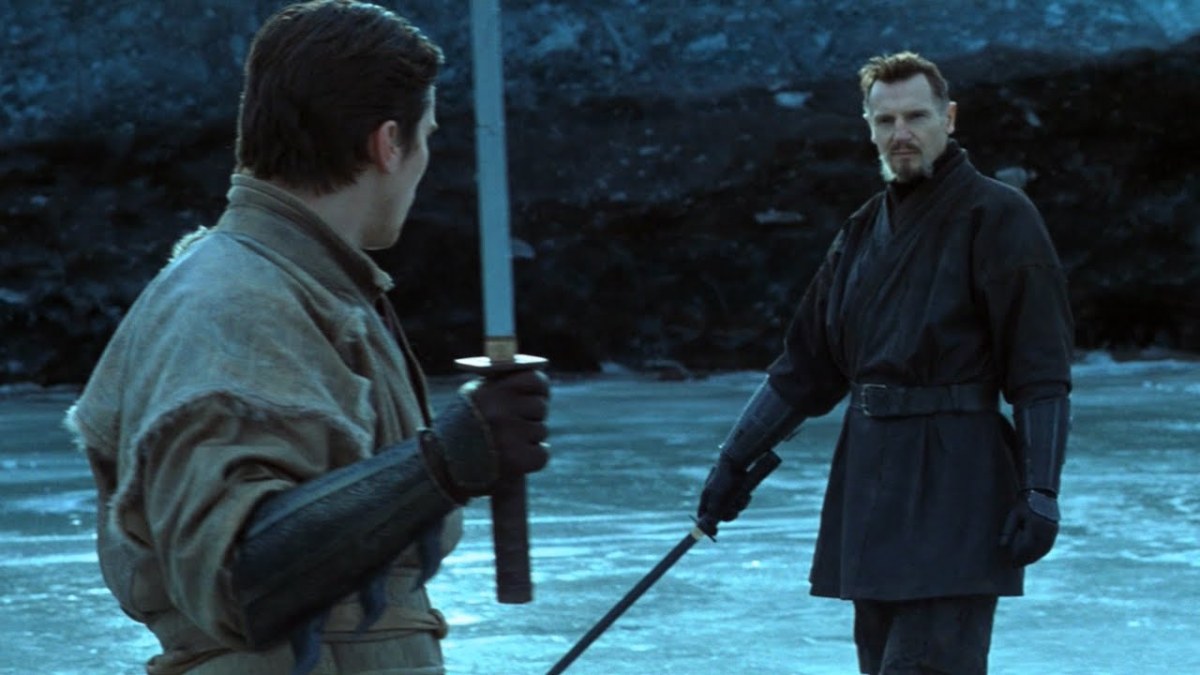
Batman Begins – The Will to Act (Training Scene HD)

‘Batman Begins’ is an excellent film for many different reasons. It has a great cast, excellent cinematography, a realistic story even if based on a famous comic book character, and also a great origin theme to it that is compelling and relatable. While we know that the idea of an ordinary man becoming a ‘superhero’ is farcical at best, the way that process is shown in ‘Batman Begins’ and the way Bruce Wayne (Christian Bale) is able to transform himself both mentally and physically into that role is really awe-inspiring when you think about it.

This is really the first Batman on film experience that shows how this caped crusader was born and what it took for him to become a masked hero to Gotham’s people. The hero’s journey in this one is believable because it takes up almost 30 minutes of the film. We see him at the beginning in a rural Chinese prison for no discernible reason and we only know that he is a wealthy man named ‘Bruce Wayne’ who seems to have lost his way. He seems desperate to find his way in the world and is desperate to fight criminals wherever they are even if it may cost him his life. Rather than concentrating his energy on his home city or finding a way to use his philanthropy for good, he wiles away in a prison fighting lowly conmen and convicts before the police have to force him into solitary confinement for ‘their’ protection and not his.

What Bruce needed at this time in the film is a good mentor to show him a better path and that person at the time is Henri Ducard (played by Liam Neeson). We do not know much about this month but only that he commands a powerful group of ninjas / mercenaries called the ‘League of Shadows’ and they are tucked away in the mountains. He offers Bruce in a previous scene the chance to join them but instills a challenge in other to be worthy. He must seek out a rare blue flower and climb up the mountain by himself so he may be deemed ready to begin his real training to instill fear in his enemies and fight them wherever there is injustice. It is a tall task, but Bruce is up for the challenge of going to their hideaway.

When he gets to this mountain hideout, he is immediately forced to start fighting even though he can barely stand. He is challenged to confront his fears especially of bats when the rare blue flower he carried can be used as a fear-inducing toxin, which he must confront and control in order to be able to succeed as a new member of the League of Shadows. In addition to challenging his mind, in different scenes, he has to learn different kinds of martial arts and learn to balance himself even as he is being attacked with sticks by many members of the League.

In ‘The Training’ scene, we are introduced to the aftermath of Bruce losing both of his parents and feeling guilty that they are dead because of him but Alfred reassures him that it was nothing he did that made them lost their lives in a cowardly homicide by the murderer.

“My anger outweighs my guilty.” Bruce does not feel guilt anymore but the anger of not being able to apprehend or kill the murderer of his parents is difficult for him to still deal with. In this Training scene, what I really enjoy is how both epic and intimate it feels from the snow-covered ice sheets to the sprawling mountain landscapes, it feels as if a superhero is being trained and that his mentor is there to help him launch that path.

“You know how to fight six men; we can teach you to engage 600.” This quote from Henri Ducard shows that he is doing more than training a mercenary like his other men, but he wants to train a future leader who will be able to use ‘theatricality and deception’ to strike fear in the hearts of hundreds of men rather than a few.’ As we see later on in the film, Bruce takes his former mentor’s advice literally by becoming Batman. Beyond different forms of martial arts, we see that Henri and Bruce are sword-fighting as well for the first time which is part of the League of Shadows arsenal. Bruce is curious to learn from Henri intermixed with their training on how to become truly invisible such as using ‘explosive powder’ and disguising one’s identity to disappear and then reappear suddenly.

“Always mind your surroundings.” In addition to skills in dodging, deflecting attacks and also going on the offensive, Ducard likes to remind Bruce on how to always be aware of the environment around you as it can be turned against you or made into an ally as well. Despite the immediate threat of his sword, Bruce must also be considered with the ice-sheets below him and the cold mountain air that can cause him to also lose his life if he is not careful.

“You must become more than just a man in the mind of your opponent.” In order to become more than just a vigilante, Bruce must become a symbol that strikes fear in the hearts of his enemies. The idea of becoming Batman is born in this pivotal training scene and the fact that he must his own fear of bats against his enemies is worth remembering later on in the film.

The example of the farmer as a prisoner because of his murder of his neighbor of a land dispute shows the beginning of a rift between Henri Ducard, the mentor, and Bruce Wayne, the student.:” Crime cannot be tolerated; criminals thrive on the indulgence of society’s understanding.” Henri Ducard has a zero tolerance of criminals and does not believe in society’s prisons and judicial systems as a means of holding them accountable for their heinous actions.

Ducard believes in an ‘eye for an eye’ such as if you murder someone, you must be murdered in return to really receive final justice. It is a very black and white view which Bruce does not entirely agree with and will push back on later. Bruce has faith in his fellow citizens and knows that a punishment such as imprisonment can be sufficient for true justice to occur. He does not believe in the total corruption of society as Henri does and this scene also shows the beginning of that difference in their world views.

In order to get Bruce to lash out at him and cause him to truly unless his potential, Ducard goads Bruce by saying that the death of his parents was not his fault but his father’s. This is a successful ploy by Ducard as Bruce loses control of his emotions and strikes wildly at Ducard who blocks his attempts and causes him to be subdued.

“Your training is nothing, the will is everything! The will to act.” This quote is by far the most powerful moment of this scene and perhaps the movie itself. It does not matter how much physical or mental training you have built what do you do when it comes time to act and take a stand. Will you be able to put your training or your knowledge to good use and make it count? This is an excellent quote by Ducard and shows that when it comes down to it, we can have all the training, expertise, and knowledge in the world on martial arts, advanced chemistry, or business but what good is that knowledge if we fail to act and use this training for the benefit of ourselves but also others in the world. It is a powerful quote that makes this scene stand out from others in ‘Batman Begins.’

Urged on by this challenge to act, Bruce seems to finally subdue Henri towards the end of the scene only to be put back in his place with Ducard’s ability to carve out a hole beneath Bruce’s feet to sink him into the frigid, icy waters. This part shows that Ducard is still the mentor and Bruce still has a lot to learn about his surroundings but also what it means to finally beat your enemies and leave no room for silly errors.

The scene ends with how much Ducard and Bruce have in common even though they barely know each other. They have both felt great anger in the loss of loved ones and how they grieve the same and how they understand the pain that drives them to exact vengeance against criminals like the ones who robbed them of their families. The scene ends with Henri’s warning to Bruce that “Your anger gives you great power but if you let it, it will destroy you as it almost did me.” Unlike Bruce though, Ducard could avenge his wife’s death but Bruce lives with the guilt that he could do what was necessary to avenge the murder of his beloved parents, which haunts him in this ending of the scene.

‘The Training’ scene in Batman Begins is exquisitely filmed, has excellent scenery, and really has different life lessons imbued in its powerful dialogue. The chemistry shows between Henri Ducard and Bruce Wayne is really authentic as a mentor-mentee relationship and this scene is the first one where you can see how their paths will diverge based on their differences in opinion regarding murder, vengeance and what really encompasses true justice for criminals. A must-watch scene as part of a must-watch movie. Check it out when you have the chance.

‘Munich’ – Film Review and Analysis

Can revenge be worth it and what are the consequences involved in carrying out acts of vengeance? ‘Munich’ (2005), a film directed by Steven Spielberg poses a number of moral quandaries regarding how can there possibly be lasting peace after so much violence and bloodshed has been spilt by both Israelis and Palestinians in a decades-long conflict. In addition to the historical narratives of both groups never seem to align, there is a violent undertone to how both groups see their struggle and what they are willing to do to ensure the success of their cause.

‘Munich’ is a film that is loosely based on the novel, ‘Vengeance’ by George Jonas, and takes a number of liberties regarding the historical events of the Black September terrorist attack on the Israeli national team during the 1972 Summer Olympics in Munich, Germany. While Spielberg’s adaptation may not be the most historically accurate, it brings the events of that tumultuous time of the Israeli-Palestinian conflict to life by attaching the names of the deceased to the tragic events that occurred.

While not commercially successful at the box office, ‘Munich’ was critically acclaimed and was nominated for five Academy Awards including ‘Best Picture’, ‘Best Adapted Screenplay’, and ‘Best Score.’ While it didn’t win any of those awards, it was given a lot of praise for its writing, direction, and cast of characters including Eric Bana, Daniel Craig, and Ciaran Hinds. In addition, the film is not just about the 1972 Olympics attack, but it dives into what the Israeli government’s response was to this act of terrorism and how the response is similar to the ‘eye for an eye’ ethos that reflects how governments react to violent acts of terrorism with an approach to seek vengeance primarily.

The main character of the film is not actually based on a specific person, but he is used as an amalgam of the Mossad agents of the Israeli intelligence service who were responsible for getting revenge on the Black September group of Palestinian terrorists. Avner Kaufman, played by Eric Bana, who after witnessing the tragic act of terror take place on national television alongside his wife, is subsequently thrust into service by Mossad, Israel’s national intelligence service, to run a counterterrorism operation and to lead a team of operatives whose main objective is to bring those men who plotted and orchestrated the attacks on the Olympians in Munich to justice, dead or alive.

This isn’t your average intelligence mission because it involves the probable use of deadly force to achieve the aims of the mission. Avner has to technically ‘resign’ from Mossad first and to disavow that he has any connection to the Israeli government in order to carry out this secret mission. Avner’s handler, Ephraim, also informs him that this team is an eclectic mix of Jewish volunteers from around the world who are not really assassins so much as bomb makers, drivers, and document forgers.

Luckily, this unique team of newly recruited Mossad agents has good chemistry and they work well together in tracking down the plotters of the Munich attack. They are able to carry out the first couple of assassinations against the terrorists with precision and without any ‘collateral damage’, meaning that no innocent civilians were not caught up in the crossfire. However, there are a few close calls where they almost end up killing the daughter of Mahmoud Hamshari in Paris which are they able to call off the bomb detonation calling off the attack at just the last moment. Also, the men who are being killed, while they are the masterminds of an older age, there’s a lingering sense in the film that the young militants who carry out these attacks are ready to take up arms given how righteous they feel the mission is of creating a free Palestine even if it means killing Israelis and Jews around the world.

In one scene, Avner, pretending to be a member of the German Red Army Faction (RAF), has a frank conversation with Ali, a member of the Palestinian Liberation Organization (PLO), about how ‘home is everything’ to the Palestinian peoples and how much they want the land back that they believe was taken from them in the creation of the state of Israel in 1948. Believing that the Arab states would have the back of the Palestinian people, Ali believes that “Israel will cease to exist”, which did not change even with the Yom Kippur War of 1973 and the invasion of Egypt and Syria against Israel. In this critical conversation of the film, Ali believes that it will take a few more generations but a free Palestine is inevitable given how poor the conditions are in the refugee camps and how the Palestinians will win due to demographics and the deep belief in their want for a ‘home’ and a state of their own separate from other Arab identities. “We want to be nations” is a belief that hasn’t changed in the past forty years and is an intractable fact behind how the Israeli-Palestinian conflict continues to this day.

With this chance encounter of Mossad agents and PLO, there seems to be a worry among the Israeli team how they are targets as well and there is a team looking to kill them as well in response for their attacks against the Black September group. While the group is successful in tracking down seven of the eleven men who plotted the 1972 Munich Olympics attack, there is growing frustration as to whether meeting their objectives will have any long-term importance since these terrorist group leaders are just replaced by new people, and the cause of Black September and the Palestinian Liberation Organization continues to recruit new and young members to join the fight against the Israeli government. Avner, the main character, also sees most of his team members die in retaliation attacks along with interference from the CIA with regards to protecting their own Palestinian asset, Ali Hassan Salameh. As Avner’s team loses members and aren’t able to kill Salameh, the violent actions that Avner undertook as well as his inability to protect his men from harm weigh heavily on his conscience.

“Why cut my fingernails? They’ll grow back…” Ephraim, Avner’s handler, makes clear that terrorists replace one another with ease and they must keep the cycle of violence going as long as it takes until ‘peace’ is achieved. Avner is disgusted with this argument and by the end of the film, is a morally conflicted Jew and Israeli, who realizes that this is not the way to have peace through an endless cycle of revenge and vengeance. Rather than continuing on as a Mossad agent in a mission that he no longer believes will change anything, Avner decides to quit. As one of his team members tells Avner during the last mission they take on together, “We are supposed to be righteous. That’s a beautiful thing. And we’re losing that. If I lose that, that’s everything. That’s my soul.” Avner and the other team members understand implicitly that the violent actions they take have consequences and that while their version of history is different from the Palestinians, they are both using violence and bloodshed to further their own people’s cause, but to what end?

The main theme of ‘Munich’ that Spielberg gets across to the audience quite well is that while the historical narratives may never overlap with each other, there has to be a recognition of the other side’s existence and to see a way to compromise without continuing the endless cycle of violence and revenge. What it comes down to fundamentally is recognizing the dignity, the hope, and desire for a better future of your fellow man and woman while putting aside the religious, cultural, and political differences to make peace now so that in the future young Israelis and Palestinians will not have to fight and die to preserve their nation’s existence.