‘The Odyssey’ – Film Review and Analysis

“This film is one of those rare ones where three hours flies by, there are no major weaknesses besides some small sound mixing difficulties, and the last third act of it may be the best of the 2020s decade so far.”

It is very rare where I must see a movie in theaters twice. That was exactly the case though for this summer’s blockbuster hit and clear Academy Awards contender, ‘The Odyssey’ (2026), directed by Christopher Nolan, which is a stunning film revival of the 3000-year epic. While it’s been a long time since I read Homer’s epic in high school, ‘The Odyssey’, the basic premise of Nolan’s film adaptation has stayed largely the same with some changes and subtractions needed to preserve a three-hour screen time.

This film deserves to be seen in theaters, at least once, preferably in the order of 1.) IMAX 70mm, 2.) IMAX regular, 3.) 70mm, depending on what is available in your local movie theater. This film is one of those rare ones where three hours flies by, there are no major weaknesses besides some small sound mixing difficulties, and the last third act of it may be the best of the 2020s decade so far.

Why am I so ebullient about ‘The Odyssey’? There are a lot of positives about this film but the biggest one for me was just how beautifully shot this film is, how the locations seem otherworldly and seem to come straight out of the pages of Homer’s epic poem, and how your mouth drops at certain points of the film wondering just how Nolan pulled filming these scenes off? I know there are no real spoilers for a 3000-year-old epic, but consider the Cyclops scene, the Hades scene, and the Troy scenes, for which all of them will go down in cinematic history as some of the best of all-time.

It’s not just the big battles that are done well in terms of clear direction and cinematography; there are the small moments in the film where you see Odysseus looking out at a pack of dolphins swimming in the sea by his ship, panoramic and sweeping views shot of Ithaca (Odysseus’s kingdom), and the various islands and islets that make up the ill-fated journey home but never really become that repetitive in terms of their setting.

More than how visually stunning ‘The Odyssey’ is as a film but also how complete of a movie it is when you focus on the beautiful music score of Ludwig Gorannson, one of the best composers in film today, if not the best, currently working in film music. It is a haunting score tied deeply into each unique scene, and for which never feels out of place or is too overbearing. Especially seeing it in IMAX, the score and sounds are immersive, so every Cyclops yell, clash of swords, and soldiers’ war cry feel amplified like you’re also there in Ancient Greece. Now, I understand there are complaints about the casting, costume design, authenticity of the period, but that never affected my judgment of the movie rarely, if at all. You could argue about the authenticity of this adaptation but the creativity, the direction, the acting, the scenery, and the overall messages and themes of the film are all phenomenal and speak to why this is the best film of 2026 so far.

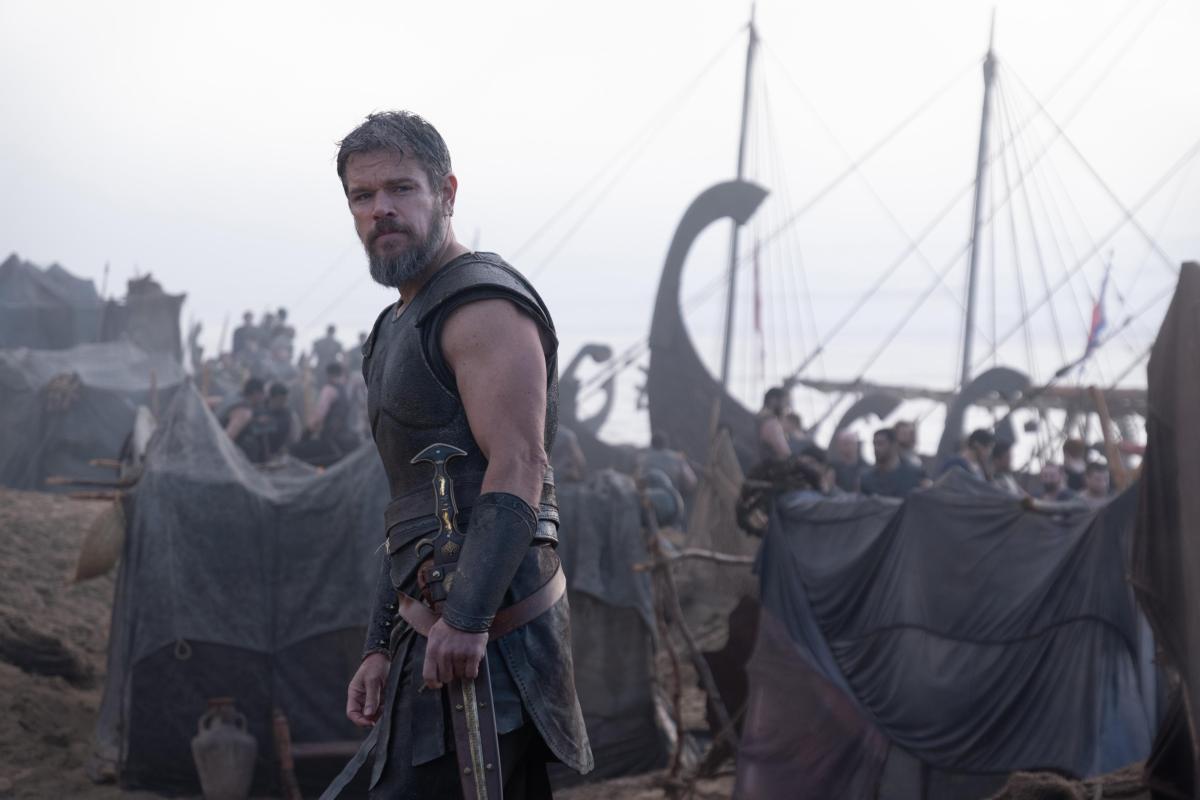
Matt Damon as ‘Odysseus’ was honestly much better than I had expected going into my viewing, and he is able to carry the sheer physicality and mental toll of playing this character. He looks convincing as a wily, cunning, aging, and most assuredly stubborn King of Ithaca whose hubris leads his men astray for more than ten years after the victory at Troy. Damon really puts his heart and soul into this role, and you can tell how dedicated he was to show how Odysseus’s fateful decisions at Troy affected how he viewed his decades-long journey home after that fateful night of what became a ‘hunt’ and not a ‘fight’ after pulling off the Trojan horse gambit at the film’s beginning. His anguish, regret, pain, sorrow, and other emotions boil to the surface of his ‘Odysseus’ character without feeling forced or out of place throughout the film, especially in its conclusion when he delivers an impactful monologue upon seeing his beloved ‘Penelope’ again.        

Anne Hathaway deserves equal praise for her portrayal of ‘Penelope’, Odysseus’s wife, who provides the emotional counterweight to Damon’s Odysseus. While Odysseus spends the film fighting, wandering, scheming, and trying to find his way home to Ithaca after the Trojan War, Penelope is forced to endure the much quieter but arguably just as difficult burden of waiting, especially since she can’t usurp the throne in the meantime as a woman. Hathaway does a wonderful job portraying a woman who is resilient without becoming emotionally hardened, and hopeful without being naïve about where Odysseus is.

The importance of Ithaca throughout the film is largely embodied through Penelope’s dilemma of moving on with her life. It is not simply the physical destination that Odysseus is desperately trying to reach; it is his family, his identity, and the life that existed before the Trojan War transformed him. In that sense, Hathaway makes Penelope an essential part of the film’s larger meditation on what it means to come home.   

Samantha Morton as the sorceress ‘Circe’ deserves considerable credit for making the human consequences of the Trojan War impossible to ignore. Troy is presented as a spectacular military achievement, but Nolan is far more interested in showing that victory does not necessarily mean anyone has truly won. The Greeks may have conquered Troy, but the war has left behind an enormous amount of suffering, grief, trauma, and resentment for which Circe is keenly aware of when she encounters some of Odysseus’s men in the aftermath.

Morton’s heart wrenching performance as ‘Circe’ helps demonstrate that the people who pay the greatest price for the ambitions of kings and warriors are often the people who had the least say in starting the conflict in the first place. The Trojan War may be the film’s great military triumph, but it is also the beginning of Odysseus’s tragedy. The victory at Troy is not the end, but rather the beginning of consequences that ripple outward through the epic, affecting every character, human and otherworldly alike, in a world defined by a “time of apparent magic” and humanity’s defiance of the gods.

Robert Pattinson deserves considerable praise for his portrayal of ‘Antinous’, one of the film’s most despicable characters. Pattinson leans into Antinous’s arrogance, cowardice, and entitlement without turning him into a stereotypical cartoon villain. He represents something fundamentally different from the external dangers Odysseus faces throughout his journey: the corruption that can develop inside a supposedly civilized society when the institution erodes without true leadership. Antinous has power, status, and access to Ithaca’s royal household, yet he uses those advantages to intimidate and exploit rather than protect, as he had promised Odysseus when he left for the Trojan War that he would look after Telemachus, Odysseus’s son.                

His behavior toward Penelope, Telemachus, and the other suitors makes him particularly effective as a symbol of what happens when Zeus’s hospitality is abused. Guests are supposed to respect the household that welcomes them, but Antinous and the suitors increasingly act as though Odysseus’s and Penelope’s home belongs to them. Pattinson makes that arrogance believable, and his performance becomes vital to the film’s eventual final reckoning in Ithaca. The biggest danger facing Odysseus is ultimately not just the monsters and gods he encounters abroad; it is also the possibility that the civilization he has fought so hard to return to has been hollowed out from within, largely thanks to Antinous and his ilk.

John Leguizamo’s performance as Eumaeus provides almost the perfect counterpoint and is the film’s #1-character standout in my view. Where Antinous represents entitlement, Eumaeus represents loyalty, humility, and genuine hospitality. He is not a king, warrior, or powerful political figure in Ithaca, yet his humanity makes him one of the most important supporting characters in the epic.

Eumaeus demonstrates that civilization is not ultimately sustained by the people with the most power but by ordinary people who continue to treat others with dignity even when they have little to gain from doing so. His relationship with Odysseus also gives the homecoming storyline some of its emotional warmth. After everything Odysseus has endured, Eumaeus represents a version of Ithaca that is still worth returning to decades later: a place where loyalty and decency have survived despite the chaos surrounding it. Leguizamo brings a grounded humanity to the role that helps keep the film from becoming consumed entirely by its larger-than-life spectacle.

The major theme of moral reckoning becomes especially important when considering the film’s depiction of Troy and the broader world surrounding Odysseus. One of the more intriguing aspects of The Odyssey is its multiple references to the so-called ‘Sea Peoples’ and a Mediterranean world that increasingly feels as though it is coming apart at the seams. Historically, the Bronze Age collapse was an enormously complicated event with multiple possible causes, and it would be overly simplistic to suggest that the ‘Sea Peoples’ alone brought down the civilizations of the eastern Mediterranean.

However, as a cinematic device used by Nolan, the reference made to them is enormously effective when you watch the film. Nolan presents a world in which established civilizations are becoming increasingly unstable, populations are moving, kingdoms are fighting for survival, and the institutions that once connected different peoples for trade and cooperation are beginning to disappear because of the loss of ‘xenia’ or hospitality.

The seamless weaving of a powerful central theme is where The Odyssey becomes much more than an adventure epic. One of the most important concepts in Homer’s original epic is xenia, the ancient Greek tradition of hospitality toward strangers and guests. Throughout Odysseus’s journey, hospitality is treated almost as a moral law. How a person treats a stranger reveal something fundamental about that person’s character and the society in which they live. Some people welcome Odysseus and his men in the film. Others exploit them, imprison them, attack them, or treat them as something less than human. The consequences of Odysseus’s choices are often enormous, and it all started with his idea of the Trojan horse, leading to the invasion, capture, and the fall of Troy that led to the loss of Zeus’s hospitality being universally practiced.

Nolan’s film adaptation of the epic makes this ancient idea surprisingly relevant to our world today. Civilizations are not held together solely by armies, walls, ships, or kings. They depend upon trust, reciprocity, restraint, and the belief that people outside our immediate community still possess humanity and dignity. Once those principles disappear, every stranger becomes a potential enemy, every neighbor becomes a potential threat, and every disagreement becomes a reason for violence. The result is a world increasingly incapable of cooperating with itself.

That makes the Bronze Age setting of The Odyssey epic feel almost eerily contemporary without the movie ever needing to become explicitly political. The civilizations surrounding Odysseus are not destroyed simply because they lack powerful warriors. They are part of a world in which conflict, displacement, revenge, greed, and mistrust have become increasingly difficult to contain or avoid. The film suggests that civilization is more fragile than we like to believe. It can take generations to build a functioning society and remarkably little time to begin tearing it all apart.

Perhaps that is why the film’s emphasis on homecoming ultimately carries so much weight for everyone who has watched it in theaters. Odysseus is not simply trying to survive long enough to reach Ithaca and his family. He is trying to return to a world that existed before the war and before his own mistakes changed that world forever. The journey home forces him to confront the difference between being a great warrior and being a good king, between being clever and being wise, and between winning a war and understanding what that fateful victory cost you.

Ultimately, that is what makes The Odyssey such a compelling film in 2026. Beneath all the spectacular battles, enormous sets, incredible locations, visual effects, and booming IMAX sound is a remarkably old story about very familiar problems for humanity: pride, love, grief, revenge, loyalty, temptation, family, and the desire to return home after being changed by the world. Christopher Nolan has taken a story that is roughly three thousand years old and somehow made it feel alive and vibrant again, which is no small achievement at all.   

That may be the most lasting achievement of Nolan’s The Odyssey as an adaptation. It takes an ancient story about one man trying desperately to get home and turns it into something much larger: a story about what happens when humanity loses its way, and what it takes to find its way home again. For me, that makes The Odyssey the best film of 2026 so far, and one of the rare Hollywood blockbusters that feels worthy of the word epic. I went to see it the first time in IMAX. Then I went back and saw it again in 70mm recently because it was that good. I suspect that says just about everything about how special this film is and why you should see it yourself.
The Modern Siren Is Endless Distraction

“Unlike Odysseus having his crew being able to restrain him with rope at the ship’s mast, most of us willingly untie ourselves from the mast because this Sirens song is irresistible and we often don’t have a choice but to play along.”

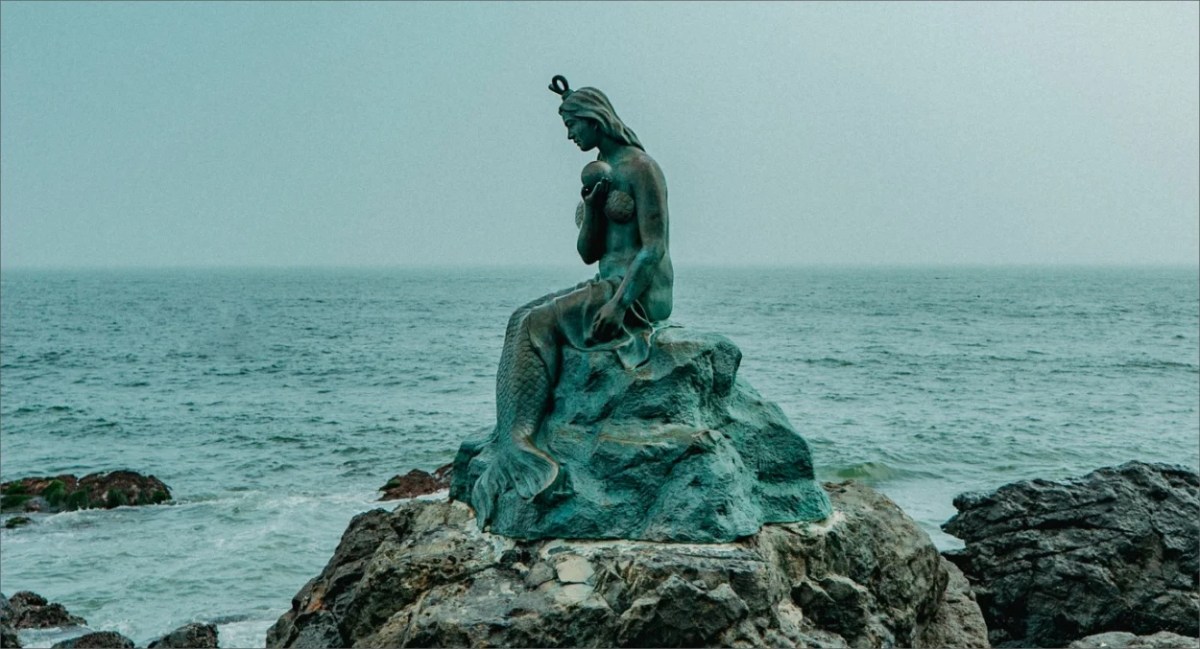
After watching the film adaptation of The Odyssey, directed by Christopher Nolan, I couldn’t stop thinking about one scene in particular: the Sirens and the particular song that Odysseus, the poem’s protagonist hears, which promises him ‘endless knowledge’ that he forces himself to listen while making sure his men put wax in their ears and steer by them oblivious to their song. In Homer’s epic, the Sirens don’t overpower the sailors through force. They do something far more dangerous, they tempt them with their deepest desires and promise them that if they only come closer, their desire will come to fruition.

Their irresistible song lures ships off course, tempting men to leap overboard in pursuit of false promises, only to be dashed against the rocks and killed. Odysseus, knowing he wants to hear the music but survives the perilous encounter of getting back home to his wife Penelope, orders his crew to plug their ears with wax and tie him tightly to the mast. No matter how much he begs to be released, they refuse out of loyalty and need his guidance so they can get home as well.

Thousands of years later, I think the Sirens are still with us in the modern era, but the song has changed as a result. Today’s ‘Sirens’ lives inside our phones, laptops, televisions, streaming services, and social media feeds. They don’t sing beautiful melodies or songs. They send notifications. They ping us with alerts. They autoplay another video without us asking them to do so. They recommend one more article, one more reel, one more breaking news alert, one more email to answer before bed.

Individually, none of these distractions seem harmful on the surface and are quite pleasurable like a relentless itch that you just must scratch to satisfy yourself. Collectively, they become incredibly powerful when amassed over the course of a day, a month, or a lifetime. The greatest challenge of the modern world isn’t necessarily a lack of information. It’s an abundance of it that we are forced to sift through and must spend valuable time finding the information that leads to real knowledge and understanding. Never have we had such unlimited entertainment, endless news, hundreds of sports events, millions of opinions, and practical communication available every second of the day with anyone in the world. Every company is competing for the same scarce resource: our attention.

Unlike Odysseus having his crew being able to restrain him with rope at the ship’s mast, most of us willingly untie ourselves from the mast because this Sirens song is irresistible and we often don’t have a choice but to play along. The irony is that modern technology has made us more connected than ever while making sustained concentration increasingly rare. Reading a book for an hour without checking your phone can feel difficult or nearly impossible, especially after a long day at the office, shop, or the factory. Working deeply on a project without interruptions has become almost a luxury. Even conversations with friends are often punctuated by glances at glowing screens. Studying for a certification, a class, or tutoring yourself continuously without being interrupted is also a challenge in it of itself.

This isn’t because we’re collectively lazy or impulsive. It’s because modern technology and their companies are extraordinarily effective at capturing our attention. Infinite scrolling, personalized recommendations, variable rewards, and carefully engineered notifications aren’t accidents, they’re features that are built in to extract our attention and our resources. The longer we stay engaged, the more valuable our attention becomes and the more content that is thrown our way to hook us in deeper.

That’s why I don’t think the answer is rejecting technology altogether and becoming a ‘luddite’. My career depends on using modern technology. I travel because of it. I learn through it. I stay connected with family and friends because of it. The challenge is making sure we remain the ones steering the ship and can take breaks or pauses when we need to and can limit these distractions as much as possible.

Odysseus understood something that feels surprisingly modern even if based off a 3000-year-old epic tale: willpower alone wasn’t enough. He knew he would be tempted, so he built systems before the temptation arrived. The wax in his crew’s ears and the ropes around the mast weren’t signs of weakness. They were acknowledgments of human nature and of our fallibility. Maybe our own “wax and rope” look different today. They may look like disallowing notifications, turning your phone off for certain times of the day, unsubscribing from useless subscriptions or email chains, or just detoxing entirely for a week or a month if you can.

Each day, you must choose willingly to put the safeguards on as best as possible. Even when you start small by leaving the phone in another room while reading or taking walks without earbuds, you can then set aside uninterrupted time for meaningful work or leisure. Choosing boredom occasionally instead of reaching for another dopamine hit. These aren’t anti-technology habits that are against these modern advancements that have made our lives more convenient. They’re pro-attention habits that allow us to create more, think more clearly, and be able to finish more projects and bolster our self-worth.

What we pay attention to is ultimately how we spend our lives. Every distraction carries an opportunity cost. Every hour spent mindlessly scrolling or doomscrolling is an hour not spent building relationships, learning a new skill, creating something meaningful, or simply sitting with our own thoughts.

The Sirens haven’t disappeared since Homer’s time. They’ve simply become digital. Every day, they call us; not with beautiful songs, but with vibrations in our pockets, breaking news alerts, endless news feeds, and the promise that happiness or fulfillment lies just one click away. Unlike Odysseus, we don’t encounter them once on a voyage to Ithaca. We encounter them dozens, if not hundreds, of times, each day.

The question, then, is the same now as it was for Odysseus: What are we willing to do to stay on course? Because every “yes” to distraction is often a “no” to something that matters more. A meaningful conversation. A difficult project. A great book. A new skill. Time with family. A quiet walk. Our own thoughts and ideas. Attention isn’t just what we focus on, it’s what we choose to give our lives to.

Perhaps that’s why The Odyssey still resonates nearly 3,000 years after it was first told and has now become a blockbuster motion picture success around the world. Beneath the monsters, witches, gods, and epic adventures lies a deeply human story about resisting temptation and remaining faithful to a destination worth reaching and a family worth preserving. Odysseus doesn’t survive because he is the strongest or most courageous man. He survives because, when it mattered most, he refused to let temporary pleasure pull him away from his long-term purpose.

The modern Sirens are unlikely to wreck our ships on jagged rocks in the middle of the sea. However, they can quietly steal something just as valuable: our time, our focus, and the years of our lives, one distraction or notification at a time. The challenge ahead isn’t to eliminate technology or diminish its relevance. It’s to master it before it masters us. Because in the end, the life we build will be shaped less by the things that demanded our attention than by the things we intentionally chose to give our attention to.

Anatomy of a Scene – ‘Why do we fall?’

“It feels more real than any other comic book movie and the character development is better than most other movies due to the major scenes having a deeper meaning behind them that continue throughout the Nolan Batman trilogy.”

As I have written in a previous blog article, ‘Batman Begins’, directed by Christopher Nolan is one of my all-time favorite movies and still my favorite comic book movie. It feels more real than any other comic book movie and the character development is better than most other movies due to the major scenes having a deeper meaning behind them that continue throughout the Nolan Batman trilogy. One of the scenes from ‘Batman Begins’ that really sum up the core message of this trio of Batman films from 2005-2012 is asking the question of ‘Why do we fall?’. This question not only summarizes the trilogy’s main message of not letting adversity or failure keep us from trying and eventually succeeding but also regarding the need to pick ourselves up, dust ourselves off, and keep moving forward in life.

This simple message of ‘why do we fall?’ is more than just about Batman’s own struggles in terms of having a traumatic experience of falling through a well, getting harassed by a swarm of bats, and injuring himself but it’s about our own setbacks in life and what we can do to put them behind us rather than dwell on them. This peculiar scene from ‘Batman Begins’ is central to the theme of the movie as Batman, an ordinary man who while having inherited obscene wealth and prestige, still suffers from tragedy early in life despite his well-to-do circumstances of birth.

This scene starts with a young Bruce Wayne falling into a boarded up well near his father’s mansion while playing with a childhood friend, Rachel, as they search for an arrow relic. Not only is the fall quite steep causing young Bruce to fracture his arm, after also falling to the bottom of the well, Bruce’s presence agitates a flock of bats who come out rapidly to surround and pester Bruce who is afraid by their mere presence. While his fright appears to be very real, it is likely that they are more frightened of him then he is of them. Luckily, Rachel tells Bruce’s father, Thomas Wayne, about the incident who comes rushing with Alfred to get his young boy out of the well. The elder Wayne is a doctor who can set the bone and care for his son as a doctor would for any patient.

As Dr. Wayne and Alfred carry Bruce to his bedroom, he asks his son, ‘Why do we fall, Bruce?’ and he answers his own question as he knows the boy to not have picked up on the inherent wisdom that comes from falling: ‘So we can learn to pick ourselves up.’ This is the exact kind of fatherly advice that Bruce will remember not only as a child but as an adult as well.

Facing adversity not only as Bruce Wayne but also as Batman will cause him to remember the quote that his father imparts on him. There will be challenges, failures, and setbacks that he must deal with but the only way to get through them is to ‘pick yourself up’ and to keep moving forward. Dr. Wayne’s advice is key also in imparting to Bruce that only through ourselves can we overcome adversity and that we cannot rely on others to do it for us. While he was there for Bruce to help him get out of the well and to heal his bones, he like all fathers will not always be there for his children. Any child including Bruce Wayne must face the passage through adulthood, often by themselves, and be forced to reckon with life’s challenges head on and by yourself without the help of family and friends even when you are an eccentric billionaire born into wealth.

“All creatures feel fear…even the scary ones? Especially the scary ones.” Another key part of the scene that resonates is that the Bats did not attack Bruce because of who he was but because of what he did. All creatures including humans tend to lash out when they are fearful sadly and that includes the bats when Bruce unknowingly invades their territory in the well causing him to be attacked. This part of the scene is also a precursor to a later scene in the Opera house where a man, seemingly both desperate and homeless, steals from the Wayne’s and kills them out of both out of fear, self-loathing, and pain as he murders them to be able to live off the stolen goods to keep himself from economic deprivation.

A good film like this one develops side characters like Bruce Wayne’s characters to show how much they meant to Bruce before their deaths and how devastating the memory is for the young boy whose unfortunate murders would change his life forever. You really feel for Bruce given how wise, caring, and kind he was both to Bruce, to his wife, and to Gotham City.

In the scene, you also see Thomas Wayne plan to surprise his wife with a necklace of pearls and to ask for his son’s opinion before he plans to give it to her on a family outing to the opera house. He cajoles his son out of bed, seemingly healed from his injury, to join them at the opera house.

My favorite part of the scene is Dr. Wayne’s philanthropic efforts directed not just at charities, foundations, and such but also right to the city that helped made the Wayne’s very wealthy as a family. Bruce asks his father, “Did you build this train, Dad?” His father responds, “Gotham’s been good to our family. But the city’s been suffering. People less fortunate than us have been enduring very hard times.”

He goes on to say, “So, we built a new cheap public transportation system to unite the city. And at the center, Wayne Tower.” His son asks if he works at the gleaming financial center with his name, but Thomas says that he works at the hospital where he is most needed and leaves his company’s financial dealings to those men ‘better and more interested’ in that kind of work than he is.

In this version of Batman, Thomas Wayne is a philanthropist and billionaire you can’t help but be proud of in a way. He doesn’t shirk responsibilities and puts the money directly to help those who are less fortunate in a real manner while he is running the company. He may like to direct attention to himself and his name by having the public transportation system be centrally located in Wayne Tower but it’s a small price to pay for an investment project like that for those who need to get around the city in a cheap and efficient manner. For a billionaire to not hoard his wealth, to invest in the city he loves with an actual, physical embodiment of helping others get to work or to school such as a public transportation network, so the city’s residents can have greater opportunities, it makes his untimely death that much more tragic.

Not only a doctor helping at a city hospital but a man willing to put money towards an actual public good like transportation is an example of the rich and powerful galvanizing resources together to help people less fortunate than they are in a concrete way. Whether its building new schools, constructing a train system, or adding more hospitals, that is a real kind of philanthropy to a city that the wealthy of a society should realize their civic duty to do so beyond paying taxes.

Beyond Thomas Wayne’s message of ‘picking yourself up’ when you have an accident, or a tragedy happen to you, his willingness to invest money back into a city that made his family wealthy is a real example in a movie of how to give a fictional character real development in just one two-minute scene. It is a good example for other filmmakers and directors how to really start to care for a character before an untimely demise and to learn about why drives the other characters in the film who were affected by their death or demise. I highly recommend viewing this ‘why do we fall’ scene to better understand character development but also the Batman film franchise of Christopher Nolan as well.

If there’s one thing I know for sure, our world today could use more men and fathers like Thomas Wayne from ‘Batman Begins.’

Movie Scene link here: https://www.youtube.com/watchv=CPvGLawULKw&pbjreload=101

Anatomy of a Scene – The Training

Batman Begins – The Will to Act (Training Scene HD)

‘Batman Begins’ is an excellent film for many different reasons. It has a great cast, excellent cinematography, a realistic story even if based on a famous comic book character, and also a great origin theme to it that is compelling and relatable. While we know that the idea of an ordinary man becoming a ‘superhero’ is farcical at best, the way that process is shown in ‘Batman Begins’ and the way Bruce Wayne (Christian Bale) is able to transform himself both mentally and physically into that role is really awe-inspiring when you think about it.

This is really the first Batman on film experience that shows how this caped crusader was born and what it took for him to become a masked hero to Gotham’s people. The hero’s journey in this one is believable because it takes up almost 30 minutes of the film. We see him at the beginning in a rural Chinese prison for no discernible reason and we only know that he is a wealthy man named ‘Bruce Wayne’ who seems to have lost his way. He seems desperate to find his way in the world and is desperate to fight criminals wherever they are even if it may cost him his life. Rather than concentrating his energy on his home city or finding a way to use his philanthropy for good, he wiles away in a prison fighting lowly conmen and convicts before the police have to force him into solitary confinement for ‘their’ protection and not his.

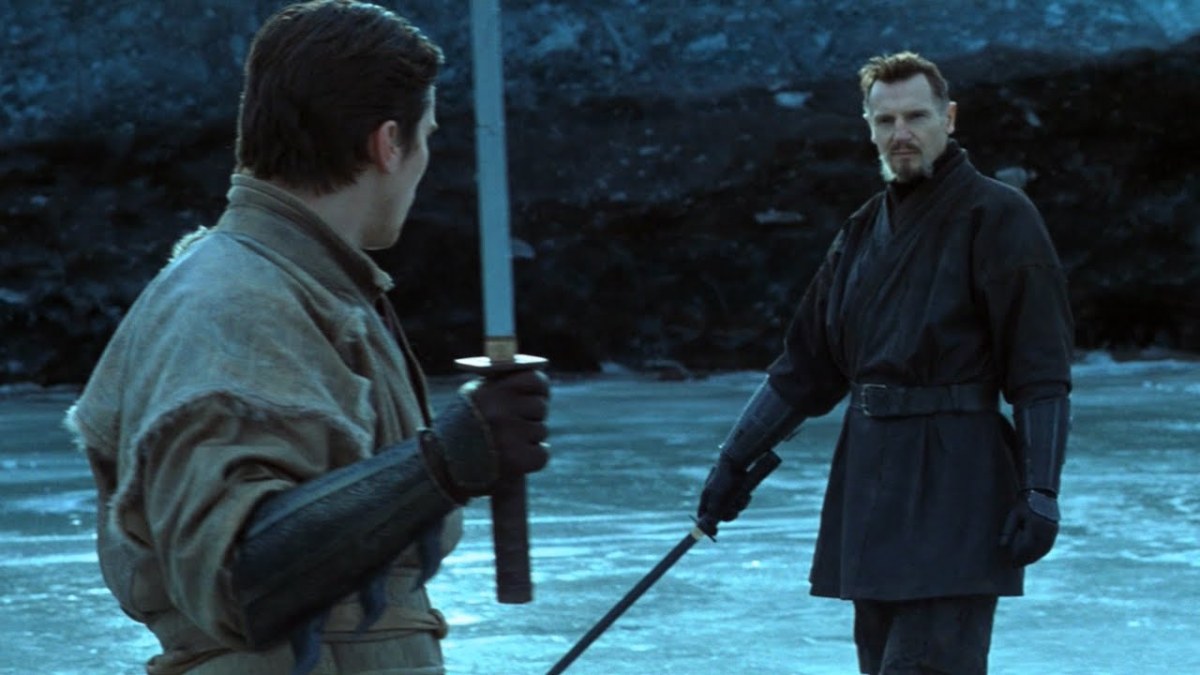
What Bruce needed at this time in the film is a good mentor to show him a better path and that person at the time is Henri Ducard (played by Liam Neeson). We do not know much about this month but only that he commands a powerful group of ninjas / mercenaries called the ‘League of Shadows’ and they are tucked away in the mountains. He offers Bruce in a previous scene the chance to join them but instills a challenge in other to be worthy. He must seek out a rare blue flower and climb up the mountain by himself so he may be deemed ready to begin his real training to instill fear in his enemies and fight them wherever there is injustice. It is a tall task, but Bruce is up for the challenge of going to their hideaway.

When he gets to this mountain hideout, he is immediately forced to start fighting even though he can barely stand. He is challenged to confront his fears especially of bats when the rare blue flower he carried can be used as a fear-inducing toxin, which he must confront and control in order to be able to succeed as a new member of the League of Shadows. In addition to challenging his mind, in different scenes, he has to learn different kinds of martial arts and learn to balance himself even as he is being attacked with sticks by many members of the League.

In ‘The Training’ scene, we are introduced to the aftermath of Bruce losing both of his parents and feeling guilty that they are dead because of him but Alfred reassures him that it was nothing he did that made them lost their lives in a cowardly homicide by the murderer.

“My anger outweighs my guilty.” Bruce does not feel guilt anymore but the anger of not being able to apprehend or kill the murderer of his parents is difficult for him to still deal with. In this Training scene, what I really enjoy is how both epic and intimate it feels from the snow-covered ice sheets to the sprawling mountain landscapes, it feels as if a superhero is being trained and that his mentor is there to help him launch that path.

“You know how to fight six men; we can teach you to engage 600.” This quote from Henri Ducard shows that he is doing more than training a mercenary like his other men, but he wants to train a future leader who will be able to use ‘theatricality and deception’ to strike fear in the hearts of hundreds of men rather than a few.’ As we see later on in the film, Bruce takes his former mentor’s advice literally by becoming Batman. Beyond different forms of martial arts, we see that Henri and Bruce are sword-fighting as well for the first time which is part of the League of Shadows arsenal. Bruce is curious to learn from Henri intermixed with their training on how to become truly invisible such as using ‘explosive powder’ and disguising one’s identity to disappear and then reappear suddenly.

“Always mind your surroundings.” In addition to skills in dodging, deflecting attacks and also going on the offensive, Ducard likes to remind Bruce on how to always be aware of the environment around you as it can be turned against you or made into an ally as well. Despite the immediate threat of his sword, Bruce must also be considered with the ice-sheets below him and the cold mountain air that can cause him to also lose his life if he is not careful.

“You must become more than just a man in the mind of your opponent.” In order to become more than just a vigilante, Bruce must become a symbol that strikes fear in the hearts of his enemies. The idea of becoming Batman is born in this pivotal training scene and the fact that he must his own fear of bats against his enemies is worth remembering later on in the film.

The example of the farmer as a prisoner because of his murder of his neighbor of a land dispute shows the beginning of a rift between Henri Ducard, the mentor, and Bruce Wayne, the student.:” Crime cannot be tolerated; criminals thrive on the indulgence of society’s understanding.” Henri Ducard has a zero tolerance of criminals and does not believe in society’s prisons and judicial systems as a means of holding them accountable for their heinous actions.

Ducard believes in an ‘eye for an eye’ such as if you murder someone, you must be murdered in return to really receive final justice. It is a very black and white view which Bruce does not entirely agree with and will push back on later. Bruce has faith in his fellow citizens and knows that a punishment such as imprisonment can be sufficient for true justice to occur. He does not believe in the total corruption of society as Henri does and this scene also shows the beginning of that difference in their world views.

In order to get Bruce to lash out at him and cause him to truly unless his potential, Ducard goads Bruce by saying that the death of his parents was not his fault but his father’s. This is a successful ploy by Ducard as Bruce loses control of his emotions and strikes wildly at Ducard who blocks his attempts and causes him to be subdued.

“Your training is nothing, the will is everything! The will to act.” This quote is by far the most powerful moment of this scene and perhaps the movie itself. It does not matter how much physical or mental training you have built what do you do when it comes time to act and take a stand. Will you be able to put your training or your knowledge to good use and make it count? This is an excellent quote by Ducard and shows that when it comes down to it, we can have all the training, expertise, and knowledge in the world on martial arts, advanced chemistry, or business but what good is that knowledge if we fail to act and use this training for the benefit of ourselves but also others in the world. It is a powerful quote that makes this scene stand out from others in ‘Batman Begins.’

Urged on by this challenge to act, Bruce seems to finally subdue Henri towards the end of the scene only to be put back in his place with Ducard’s ability to carve out a hole beneath Bruce’s feet to sink him into the frigid, icy waters. This part shows that Ducard is still the mentor and Bruce still has a lot to learn about his surroundings but also what it means to finally beat your enemies and leave no room for silly errors.

The scene ends with how much Ducard and Bruce have in common even though they barely know each other. They have both felt great anger in the loss of loved ones and how they grieve the same and how they understand the pain that drives them to exact vengeance against criminals like the ones who robbed them of their families. The scene ends with Henri’s warning to Bruce that “Your anger gives you great power but if you let it, it will destroy you as it almost did me.” Unlike Bruce though, Ducard could avenge his wife’s death but Bruce lives with the guilt that he could do what was necessary to avenge the murder of his beloved parents, which haunts him in this ending of the scene.

‘The Training’ scene in Batman Begins is exquisitely filmed, has excellent scenery, and really has different life lessons imbued in its powerful dialogue. The chemistry shows between Henri Ducard and Bruce Wayne is really authentic as a mentor-mentee relationship and this scene is the first one where you can see how their paths will diverge based on their differences in opinion regarding murder, vengeance and what really encompasses true justice for criminals. A must-watch scene as part of a must-watch movie. Check it out when you have the chance.

‘Batman Begins’ – Film Review and Analysis

I know what you may be thinking as you read out loud the title of this blog post. You’re probably wondering why I would choose to review and analyze a movie based off a super hero from a comic book series. It may appear to be juvenile but I made this creative choice for a couple of good reasons.

  1. Batman is not just any super hero. He is often ranked as being the most popular and well-known super hero worldwide up there with Superman or the ‘Man of Steel.’
  2. Batman isn’t your traditional super hero to make a movie about due to the fact that he has no super powers, and is an ordinary man who strives to be extraordinary.

A superhero who has been around since the early days of comic books in the early 1930’s, Batman is a popular cultural figure who until the 2000’s came around was never done justice on the silver screen. I remember as a kid watching the overly cartoonish and god-awful early film adaptations such as ‘Batman Forever’ and ‘Batman and Robin.’ The best film up until ‘Batman Begins’ was Tim Burton’s ‘Batman’, released in 1989, and even that movie was a bit goofy and contrived at times. Luckily, Batman on film earned a well-needed revival due to the masterful directing, screenwriting, and casting for Batman Begins, which was released over a decade ago in 2005.

Christopher Nolan, who directed Batman Begins, and helped to write the screenplay, did an amazing job in bringing Batman to life again as a superhero that comes from a realistic setting. Compared to The Avengers or X-Men, this is as close to reality as a superhero film can get. Compared to all of the comic book movies I’ve seen, and I’ve seen a good amount, ‘Batman Begins’ is the most realistic. It never gets too fanciful, and it takes itself seriously as a film that falls under the ‘drama’ genre.

For those readers who are unfamiliar with the origins of Batman, ‘Batman Begins’ does a great job of setting up the rise of this super hero from his childhood to his 30th birthday. You can see how much Bruce Wayne evolves into the role of the masked dark knight due to the painful tragedy that befalls him at an early age.

Bruce Wayne is a boy who grew up with everything a child could ask for: a loving family, a safe home, and a bright future. He has it all taken away from him when his parents are gunned down in front of him by one of the people they were trying to help. The Wayne family comes from immense wealth and they are tied to Gotham City through the generations. The Wayne’s are great benefactors to the city and try to help it out financially so that citizens can gain economic opportunities even during hard times.

The death of Bruce Wayne’s parents is the true beginning of his path to becoming Batman. This film does a great job in showing the phases that Bruce goes through after suffering a trauma such as the loss of his closest family members: his mother and his father. For many years, Bruce turns his deep-seated emotions onto blaming himself to feel the full guilt, the relentless anger, and the deep sadness fully. He is unable to use those powerful emotions, and turn them into constructive action.

An ever-present theme throughout ‘Batman Begins’ is Fear. As a young child, Bruce fell into a deep well near his parents’ mansion, and was unable to get himself out after experiencing a wave of bats surrounding him as they flew away into the sunlight. During an opera performance one night, young Bruce asks his father if they can leave the theater for a little while because he is frightened by the performers pretending to be bats in one of the play’s acts. Because of this fateful decision, for many years, Bruce blames himself completely for his parents’ death because they ended up being shot and killed by the mugger, Joe Chill, after Bruce asked them to leave the theater, and head into the nearby alley.

Bruce seeks out vengeance against the man who killed his parents and wishes to kill Mr. Chill as he leaves the courthouse. He buys a gun one day and wants to take justice into his own hands like a vigilante. Before he is able to do the grisly deed, Joe Chill is killed by one of Carmine Falcone’s men, a Gotham City mob boss. Although Mr. Falcone didn’t kill Bruce’s parents, the corruption befalling the city’s institutions, the unrelenting crime wave, and the lack of a respectable police force have led to more injustice than ever that has left Gotham City a shell of what it used to be.

One of the best scenes of ‘Batman Begins’ highlights the fact that Bruce has more to lose than he knows and should protect the people he cares about. He decides to use Batman as more than just a man flying around in a cape, but more as a symbol to be feared by criminals everywhere, and that anybody can become Batman if they have the will to act. Bruce is wise to use his fear of Bats and turn that fear into a powerful symbol, which criminals will one day fear themselves.

Despite the personal tragedy that befell him, men like Carmine Falcone lecture the young Bruce Wayne regarding his naivety about the world. “You always fear what you don’t understand”, and “people from your world have so much to lose.” Before becoming Batman, Bruce decides to travel the world, learn about the psychology of criminals, train himself in various martial arts, and harness the power of stealth to strike fear into the hearts of Gotham’s underbelly.

In order to learn fully about the evils of the world, Bruce has to go out there himself to experience what actually drives criminals to do what they do. He has to push himself physically and mentally in order to be able to stop them. In order to become Batman, he has to develop a strong moral code so that he can be incorruptible, and more than just a vigilante taking justice into his own hands. In this film, Batman doesn’t kill and he desires to make sure that all criminals face true justice to prove that it’s more than just vengeance for him.

In order to fully develop into Batman, he must complete his training under the tutelage of Henri Ducard (played brilliantly by Liam Neeson). Henri and Bruce have both suffered personal tragedies at the hands of ruthless criminals, but they decide to use their anger and pain to motivate them to strengthen, develop, and confront their adversaries whomever they may be. Bruce becomes Ducard’s best student and excels in different areas of physical and mental training. As Ducard imparts on Wayne, “Your training is nothing, the will is everything. The will to act.”

Batman Begins does an excellent job of showing the physical dexterity and the mental will needed to become a hero like Batman. In addition to that, the training scenes are spectacular in highlighting how Bruce must use deception, theatricality, and stealth in order to overcome his enemies with fear. Most similarly, he must play the role of an actual ninja. “In order to manipulate the fear in others, you must first master the fear within yourself.”

Batman is a symbol that cannot be bought off, corrupted, or killed. Ducard reminds Bruce Wayne of the fact, “If you make yourself more than just a man, if you devote yourself to an ideal, and if they can’t stop you…you become something else entirely…A legend, Mr. Wayne.” However, Ducard and Wayne have a fundamental difference of belief regarding the nature of criminals that puts them on an adversarial footing with each other, which leads to an inevitable confrontation later on. Bruce desires to bring criminals to justice but with the support of the police and the criminal justice system. On a fundamental level, he wants to uphold the institutions of Gotham City to be free of corruption in all of its’ forms.

We find out that Mr. Ducard is no fan of granting any leniency to criminals and wants them to be punished without any hesitation or limits. For Ra’s al-Ghul, Henri Ducard, and the rest of the League of Shadows, an organization that helped train Bruce Wayne to become Batman, crime cannot be tolerated and that criminals thrive when societies indulge themselves by not having them pay the ultimate price of death. Even if the criminal is a despicable murderer, Bruce still believes in the rule of law, wants them to be tried in a fair court, and does not desire to become a singular executioner.

Batman wants to save Gotham City in the right way even though he finds it to be an almost insurmountable task given the lack of allies he has. However, he discovers that he has help with the incorruptible Officer James Gordon of the Gotham City Police Department and his friend, Rachel Dawes, a district attorney who won’t be bought off.

Batman comes up against another villain who desires to strike fear into the heart of Gotham’s citizenry: The Scarecrow (played by Cillian Murphy) who uses fear toxin gas to poison people, and make them do horrible things to each other out of their fear of each other. Bruce Wayne must lead a double life, keep his secret safe, weed out corruption, and be able to combat two villains who use fear to prey on the fearful (Scarecrow and Ra’s al-Ghul).

Instead of using fear against the citizens of Gotham, Batman uses his terrifying appearance to strike fear into the hearts of criminals and villains everywhere. While he understands that justice is never ensured for all criminals, he does not want to be a murderer himself who decides the fate of all those enemies he fights and stops.

‘Batman Begins’ is a deep superhero movie that asks some philosophical and psychological questions regarding the nature of true justice, and how far individuals and a collective society should go in order to stop crime. The film also probes the feeling of ‘fear’ and how a person can master their own fear in order to become mentally and physically stronger.

Christopher Nolan asks the question of how do we control our own fear and keep it from controlling us. Batman is a flawed superhero, but he is able to control his fear to become a legend. His symbolism helps Gotham City to rise up against corruption, crime, and to fight injustice. While he is only just a man without any real superpowers, he is able to inspire others to fight the good fight with his moral example.

In a movie where there’s not much hope, the Batman inspires others to believe in themselves and their city again. He is a regular man, driven into action after going through a terrible tragedy. Instead of being broken by what happened to him at a young age, he uses his pain and sorrow to motivate himself so that others don’t suffer the same kind of tragedy in life of losing a loved one. As a superhero and as a film character, Batman sets himself up as an example to follow for the audience even if it is a fictional story.

Making a super hero film is an extremely difficult process, which is why director Christopher Nolan should be given a lot of credit. Mr. Nolan has directed a lot of great films including Inception and Interstellar. Batman Begins is the first of three movies in the Dark Knight film series, and it may be the most underrated of them all. He and his team did a great job of bringing this character back onto the big screen in a big way.

It’s a realistic take on the Batman, and its’ a film franchise that has produced three excellent, unique films. For myself and many other fans, Batman Begins is more than just a simple superhero movie. It is a morality tale about hope overcoming fear, how to overcome adversity to become a stronger person, and how to set an example for others to follow in your footsteps.

Batman has survived in our popular culture for so long because you get the sense that he is a relatable character for many people despite the fiction behind it. Ultimately, he is a man who has his strengths, his weaknesses, yet he is ultimately fallible. Still though, he is a powerful individual that strives to fight for justice, hope, and wants to bring the best out of others. It’s important to remember that you don’t have to become a superhero like Batman to emulate those characteristics. You just have to do the right thing and be a good person.