

Corruption Is A Weed That Is Not Easily Removed

“Invasive, resilient, and growing back sometimes stronger if not pulled out or removed completely, corruption is a weed that is not easily removed from society. Corruption has occurred throughout human systems at different levels throughout history since the dawn of mankind.”

Invasive, resilient, and growing back sometimes stronger if not pulled out or removed completely, corruption is a weed that is not easily removed from society. Corruption has occurred throughout human systems at different levels throughout history since the dawn of mankind. It’s a recurring feature that comes up across the world with examples ranging from post-Soviet oligarchies to Latin American caudillismo to modern lobbying culture without imposed limits or oversight mechanisms.

Corruption has different forms that emerge depending on the permissiveness of both the individual culture and its society. While corruption can’t be permanently eradicated, it must be confronted and diminished as much as possible by both citizens and leaders. A mature society recognizes the existential risk involved in how corruption can permeate a community, a society, a government, and how it must be pruned as much as possible with legal and rule-based consequences.

In my definition of corruption, it’s more than just outright bribery, grift, or stealing, it’s systematic decay in the forms it can take such as persistent favoritism, nepotism, cronyism, apathy, and moral erosion when there are no consequences for breaking the law or not obeying the rules of society. There are psychological roots involved in how corruption first gets planted as a root when greed, survival instinct, permissiveness from the society, and peer pressure takes hold since “everyone else is doing it” and “there won’t be any consequences for me” for flouting the rules or laws on the books that are supposed to stop it. There is fertile soil in any society for corruption to grow and spread as a ‘weed’ when institutions are weak, unresponsive, or don’t push back, transparency is low or non-existent, and accountability is rare for leaders and citizens.

Some examples of corruption digging in are when local or national officials enrich themselves from public projects or are enriched personally from private or backroom deals. They are involved personally in these same deals when they hold public office and do not separate their public role from their private life, which causes obvious conflict of interest issues. In the corporate world, when lobbying is not curtailed or regulated where it turns into legalized bribery. Unlimited money from a company given to a politician or a community leader to influence their decision-making is corrupt in nature, especially when this kind of ‘donation’ is not disclosed to the public. This kind of pervasiveness can spread to everyday life where the average citizen sees that those in power or who have wealth are getting away with the corruption and are not being held accountable. Possibly, you can see certain citizens cutting corners, committing nepotism, or looking the other way in response instead of pushing back and calling for accountability.

There need to be constant ‘gardeners’ on watch who need to get their hands involved to weed out the corruption in their society. Whether it’s civil society actors like journalists, whistleblowers, or reformers, they have a role to play especially when leaders or public officials do not hold themselves accountable. Backlash, burnout, and even threats to their lives are constant risks for these ‘gardeners’ but in a corrupt society, their role becomes increasingly important specifically when dismantling civil society becomes one of the goals of corrupt leadership. However, if society keeps rewarding or ignoring corruption taking place and the soil for it is fertile, then there is only so much that whistleblowers or journalists can do to stem the tide of corruption. The best the ‘gardeners’ can do is bring the corruption to light and to release the papers, reports, and evidence so that the public, likely unknown to them, just what is being done behind closed doors.

Sometimes, corruption is not limited to one leader but rather they can spawn a cascading effect as once it takes place with one central leader, his or her influence within a cabinet, an agency, or an entire government leads to the ‘hydra effect’ where it’s becomes beyond just one person and is institutionalized. Corruption becomes more than just a one-off event or about one leader, it becomes part of the culture itself, and this is when it becomes hardest to bring to light or to remove it easily from the wider society. Societies sometimes are complicit in their comfort with the level of corruption they are willing to tolerate and prefer the “devil they know” to how the system could be possibly change for the better. When you think of some examples here, the Italian mafia interlaced with the politics of the country post-WWII, when you hear of past political leaders in Colombia or Mexico who had known ties to drug gangs and cartels, or when lobbying becomes a revolving door between government and industry in the United States, that’s when it becomes embedded in the institutions themselves and is hard to remove like a cancer.

Technology can both help and hinder corruption as a double-edged sword depending on how it is used by the individual and the institution. It can either lead to more transparency by sharing instances of corruption more widely with citizens and being able to gather evidence to share with more reporting outlets. It can also lead to more digital forms of corruption that are becoming common like crypto scams, online pyramid schemes, and surveillance tools used against whistleblowers and activists. Also, illicit money including use of bogus cryptocurrencies can move faster and be dispersed faster than laws and regulations on the book can track or pinpoint the money laundering origin. Corrupt actors will also use online sources of information to promote disinformation, attack opponents with false information, or flood the zone with different orders and actions that could be considered corrupt, but for which takes time to track, to respond to, and to bring a case against in a court of law.

Nations can still control or minimize corruption through using their institutions’ digital systems in the modern age to counteract the growth of corruption because of the cyber world with their own digital tools. Whether its transparency laws on the books, or secure data regulations (the European Union’s General Data Protection Regulation (GDPR), these institutional tools recently developed can help assist in the fight against corruption online. Strengthening an independent judiciary or legislative body is also key to push back against overreach by executive power.

Legislating for stronger whistleblower protections as well as removing threats against civil society are other ways to stem the tide of corrupt actors from lashing out against accountability measures. Another key component that relates to preventing corruption from reaching the average citizen is encouraging more civic education about how to prevent or remove it from society by focusing on trust-building within different communities including having town halls, open hearing and sessions by government officials, and encouraging public input on referendums, propositions, and leadership matters such as term limits for politicians. It’s no secret that more developed nations in Scandinavia (Sweden, Denmark, Finland, Norway), Singapore, and in Oceania (Australia, New Zealand) have strict enforcement measures against corruption. In these countries, there is high trust in institutions, transparency in government actions, and social shame for citizens who engage in corruption or encourage corrupt behaviors.

The roots of corruption are there in each one of us and it’s not just out there as a distant term that applies to only the rich and powerful who are affected by its presence. How we conduct ourselves and how we relate to others has a direct impact on the kind of society you live in. When small personal compromises like lying, favoritism, or abuse of power take root, they spread throughout society little by little. “Weed management starts in your own garden” so if you want to fight corruption, hold yourself to a high standard and don’t engage at all with those people you may encounter in life who have acted corruptly or encourage it in your society.

The fight against corruption is also about the fight against one’s ego or greed or appetite for power or influence. Corruption, while it can’t be 100% eradicated, it can be minimized and kept under tight controls with constant vigilance by both the individual and the institution. It’s not just “liberty that requires our constant vigilance” as abolitionist Wendell Phillips once wrote in 1952 but also about maintaining our integrity and preventing others from falling into corrupt practices. Societies that understand the existential threat of corruption and how endless yet necessary the work of ‘weeding’ it out will be are the ones that will prosper, be just, and keep the weeds at bay.
The Why of Standards

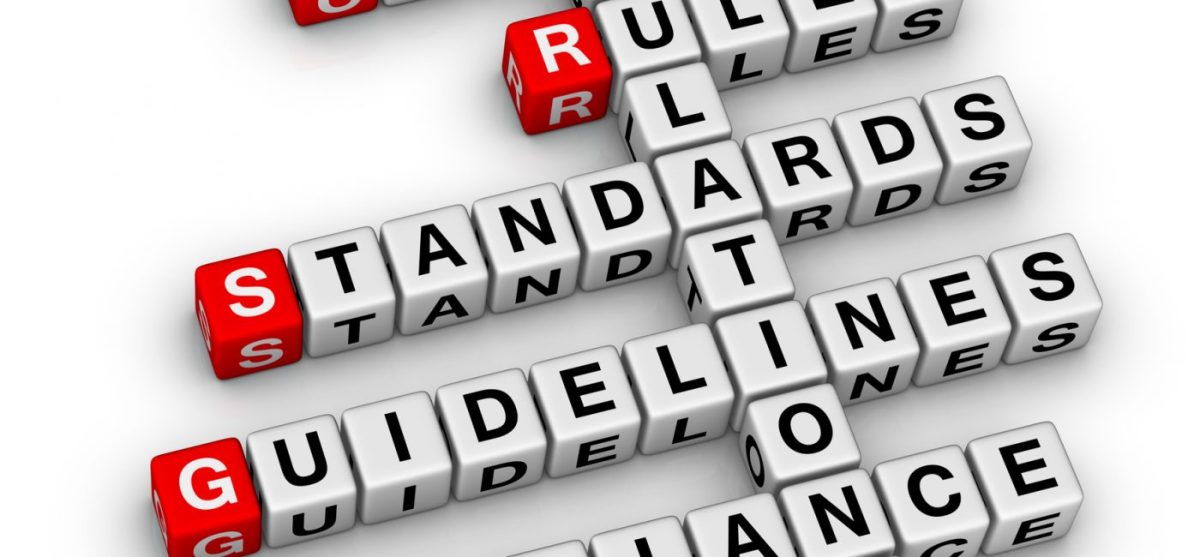
How do we define standards? What exactly do they mean to our society and the world as a whole? See, the thing about standards is that if they are not observed by everyone to some degree than what would be the point of having them in the first place. Having standards when it comes to behavior, dress, professionalism, ethics, etc. helps society to function and for people to live productive and healthy lives. Without having standards or not being beholden to anyone else will create a society of winner-take-all or every man or every woman for themselves, which is not only counterproductive but also self-destructive in the long run.

As defined by Dictionary.com, A ‘standard’ is defined as “something considered by an authority or by general consent as a basis of comparison; or an approved model.” It’s a general definition but you can see that creating a standard requires the consent of the society at large. Standards can be difficult or easy to enforce depending on how popular they are but the total absence of standards in different areas of life should be fought against as much as possible. Everybody has different standards but the key to keep in mind is whether a lack of standards or a complete abandonment of standards is making the local community or overall society worse off as a result.

We don’t think about it but basic standards helps create laws, rules, and regulations that keep society running well. When there are no standards in anything whether its’ with business, politics, dress, the environment, etc. then every individual man, woman, and child will suffer in some regard as a result. Another thing to keep in mind is that a lack of standards or standards that are burdensome and counterproductive also cause harm to us as well.

Standards change over time but there are certain ideals and beliefs that I think should stand the test of time. By this I mean that basic manners and politeness should always be observed, presenting yourself well in your outer dress and appearance depending on the setting is crucial, and that you add with basic integrity, decency, and honesty when doing business or leading as a member of your community. Standards over time for these particular areas should not change and should even become stronger so that the next generations do not forget how to act, behave, and be good.

Standards can be relaxed in a number of areas or they can be hardened in other areas depending upon the mood and whims of the larger society but those areas I listed above should be consistent and not be trifled with. When basic manners, integrity, and matters of presenting become optional rather than mandatory, it’s likely that the entire society will feel the ill effects of such an absence of standards rather quickly. Fundamentally, systemic societal issues such as corruption, violence, and poverty, which while they have a wide range of causes are still related to an absence of moral and behavioral standards.

In a free society, standards can most definitely change and be adapted to fit to the times but it has to be with the approval of the majority of those people in that society. Leaving standards to the whims of a few leaders can be cumbersome and even negligent especially if they themselves due not match the standards for which they should follow based on their leadership roles. Standards are best when they are created, managed, and enforced in a democratic fashion and where the majority of people in that society are able to follow those standards.

While we are all individuals, we are all still apart of a collective society and we have to sometimes sacrifice our personal standards when we come up against those standards of the larger society even when we may fundamentally disagree with them. No standard is perfect but if the society has collectively agreed upon those standards, then all of the people must abide by them to the best of their ability. If the standards are to be changed, that should be done over time with the consent of the majority. Even if we don’t like the standards, if no one agrees to them, then they are not standards anymore and society could suffer as a result.

If you don’t like the absence of certain standards or believe that they are too burdensome on you or people that you know, then you need to make the effort and put in the work to change these standards. If you don’t like with how someone is behaving, then you need to make an informed argument as to how that person should behave in a more polite and decent manner. If you see some form of corruption and certain political leaders are letting it slide, then you need to take some responsibility in holding yourself first to a higher standard and then calling out that corruption to get others behind you so that the corruption may end in the future.

Individuals have power in a society with standards but they will fundamentally have less power in a society where there are weak standards or none at all. That is also the case where one sole individual can set standards for everyone else without so much as a protest from others, which is also dangerous and detrimental to society as a whole.

While standards such as for behavior, dress, professionalism, ethics, etc. may not always be popular to uphold, these standards form the backbone of the collective society. With the absence of any sort of standards comes at the behest of laws, rules, regulations, and principles as well. Standards form the base for a civilized society and in their absence; there is no way that a society of individuals can function at all.

When you read this article, think about your own standards and how they came to be in your thinking. Also, think about how important they are to you. Lastly, think about the current standards of your society and how long it took for them to be formed and implemented as well as how important they also are regardless if you agree with their being in existence or not. Standards are not meant to be popular all the time but they are meant to ensure codes of conduct in various manners of life.

The sheer absence of standards leads to an anarchy of sorts that would render polite society meaningless and turn individuals against each other in a collective free-for-all. Understanding the why of standards will make you more likely to improve and better your own existing ones.

‘Training Day’ – Film Review and Analysis

‘Training Day’ is the kind of movie that highlights two people who somehow cross paths as they are on opposite sides of morality. The men are shown to be both flawed in their own ways but still have a direct impact on each other as they spend more time together. Throughout this film, both men are trying to outwit each other in the hopes that they’ll come out on top. Because of this gamesmanship, this is no simple training day but rather a series of events that end up changing both of their lives for better and for worse.

The two main characters, one of them who could be considered a youthful idealist, is trying to better his community and his city by enforcing the law by the book. The other man has been around the block and knows about the grittiness of the job more so than his impressionable, younger rookie partner. He is a pessimist who discards the idealism that he likely brought with him when he originally joined the police force. He has abused his power as a law enforcement agent, is looking to maintain his authority and grow his wealth through intimidation and threats.

“It takes a wolf to catch a wolf” is a powerful quote from ‘Training Day’ that shows that in order to bring somebody down, you have to act and imitate who they are. The problem with this attitude is that sometimes you end up becoming your own worst enemy. However, to simply be a sheep is leading yourself to the slaughter as well especially when you’re dealing with the criminal underworld.

In order to survive as a detective, both men know that you need to be confident in yourself, steadfast in your beliefs, and willing to confront ‘the wolves’ out there if you want to catch one. It could be argued that the protagonist of this film starts out as a sheep and ends up becoming a wolf in order to catch the antagonist, a true wolf who has caught the wolves for many years. This kind of symbolism embedded within ‘Training Day’ makes it a classic film worthy of repeated viewings.

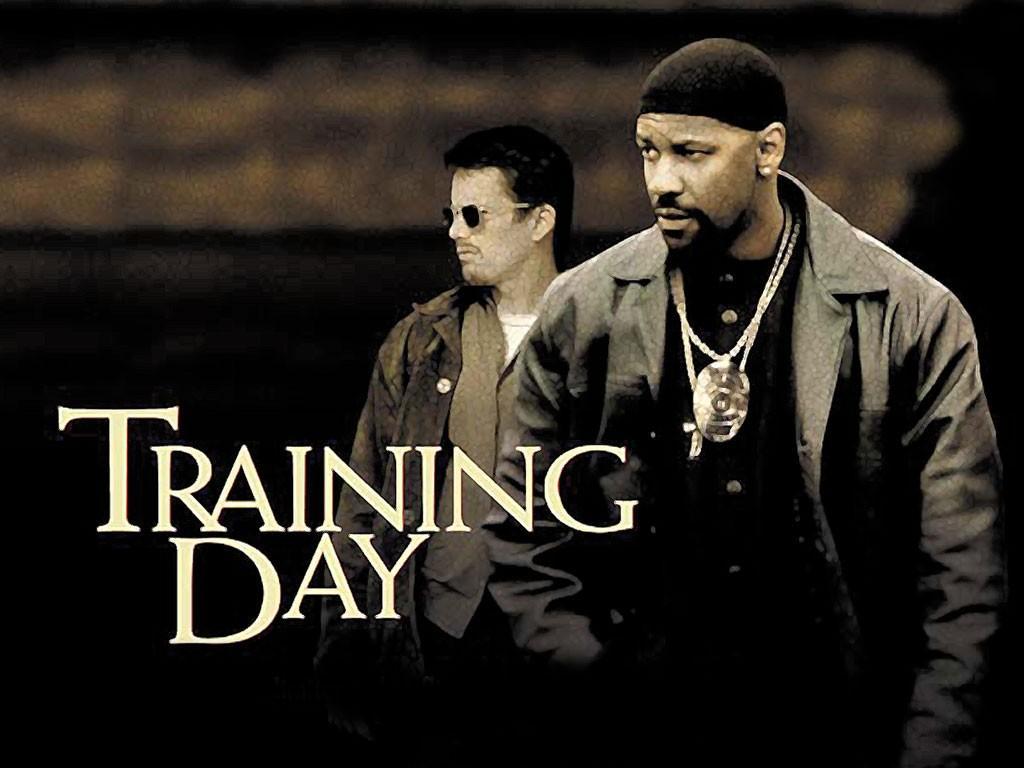
‘Training Day’, released in 2001 is a crime drama / thriller directed by Antoine Fuqua which follows two LAPD detectives who patrol and fight crime in gang-heavy neighborhoods. The film stars Denzel Washington as Alonzo Harris, a veteran detective and police officer who prefers wearing street clothes over a formal uniform and a badge. Ethan Hawke, who plays Jake Hoyt, a new detective and Alonso’s new partner who is entrusted in learning from Alonzo on his first day of detective training.

This film has earned excellent reviews over the years and is considered one of the best movies of the 2000’s. It achieved critical acclaim and success in theaters as Denzel Washington earned a Best Actor award for his role as Alonzo Harris. Truly, one of the best parts of the film is Washington’s acting and how he brings the corrupt yet smooth talking cop character to life. Det. Harris is a classic villain who ranks as one of the best antagonists in film history for his duplicity to others and displaying his indefatigable charisma while doing it.

From the opening scene of the movie, you can tell that Jake Hoyt is out of his league when it comes to matching up against Alonzo Harris. Unfortunately, not much of Alonso or Jake’s backstory is given in the film as well as how they came to become partners together. However, you can see early they are both polar opposites of each other in terms of their ideals, morals, and overall character. Jake is a young guy who’s trying to make his mark as a police officer and trying to do everything by the book as instructed by his superiors at the academy.

He is idealistic, fair-minded, and perhaps a bit naïve to the murky shades of gray that make up the world. Meanwhile, the audience can tell that Alonso has been on the wrong side of the streets for a while and has become purely jaded by his work as a narcotics detective. Instead of serving and protecting the people in his community and city, he cares only about his image, the reach of his authority, and the ability to make illegal money without compromising his career. What once was left of the idealism and the drive to do good by becoming a police officer has long been washed away. You could argue that Jake is a sheep while Alonso is a wolf who is going to prey on him.

The ultimate goal of Alonso is to bend Jake to his will by manipulating his moral code and his willingness to stay clean as a police officer. While Jake starts out the film as being a bit reticent, gullible, and naïve to what Alonso is doing to him, he is able to change over the course of the film to fight for his future, his career, and his life. The transformation of Jake Hoyt from a ‘sheep’ to a ‘wolf’ able to stand up to Alonso is one of the greatest displays of character development in film.

The great drama of ‘Training Day’ is to see both men push each other to the limits both mentally and physically to see who will be left standing after the training day and night is over. While Alonso lost his soul and is trying to corrupt those around him, Det. Jake Hoyt needs to harness his strengths, moral fiber, and intelligence to best Alonso at his own game.

At first, Alonso seems like an ideal partner to be with if you are in the police force. However, Jake and the audience find out that he is anti-social, manipulative, and willing to take what he wants without remorse. The challenge throughout the film for Jake is how does he change into a ‘wolf’ without losing his own moral code. Complicating matters for Detective Hoyt is the fact that Alonso isn’t the only corrupt police officer to deal with and that it goes to higher levels in both local and state government who know what Alonso is up to.

While some officials turn a blind eye to Alonso’s money-grabbing, wrongful beatings and killings, and others in the police force actually join in on it, Jake takes a moral stand and wants to bring Alonso to justice. However, we find out that Alonso is in fact his own worst enemy and the bad karma that he’s acquired over his years of corrupt wheeling and dealing will come back to haunt him.

Everyone’s luck eventually runs out and Alonso finds himself on the wrong end of a bad gambling streak with organized crime. For all of his manipulation, wrongdoing, and anti-social behavior, its’ Alonso’s desire for control over others including Jake that leads himself to ruin. To the opposite, Jake becomes a stronger person and a more effective police officer as the film progresses. He stops two men on the street from physically abusing a high school girl, which pays off for him later after he faces another near fatal betrayal from Alonso.

The concept of karma plays out for Jake, as he is able to resist the corrupting influence of Alonso and remain on the right side of the law by doing his job even under great personal pressure. Instead of letting the power and authority entrusted in him get to his head, Jake is able to become not just a better police officer than Alonso by the end of the film but a better human being.

While Alonso wasn’t always a corrupt cop, ‘Training Day’ makes you wonder what could have happened to this man to turn him into what he was originally fighting against. Overall, this movie is a morality tale of two men who have different intentions when it comes to being a police officer, which puts them at odds with each other. Their impression of the other man continually changes as they learn more about who exactly is the ‘sheep’ and who is the ‘wolf’ as their training day plays out.