

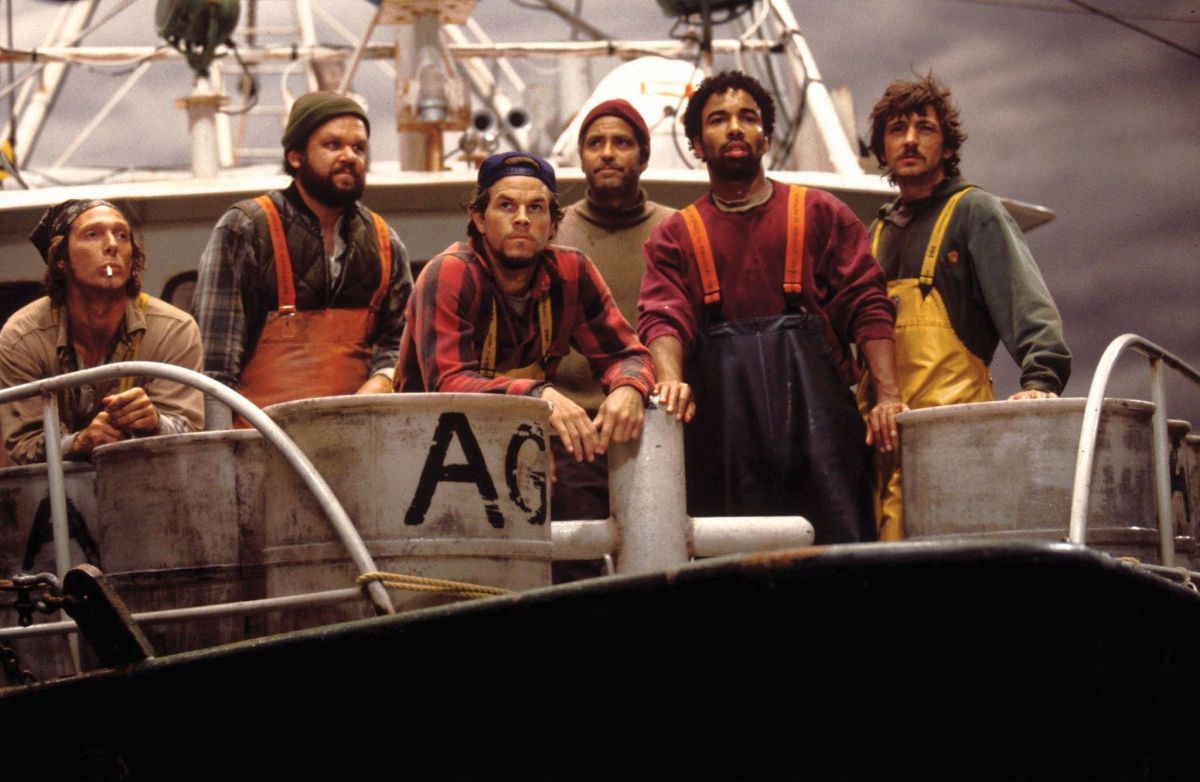
‘The Perfect Storm’ – Film Review and Analysis

“In the fantastic 2000 film, ‘The Perfect Storm’, you get to see what it is like to be a full-time swordfish boat captain and his crew out of Gloucester, Massachusetts, who rely on catching enough fish, and specifically big swordfish, to make ends meet.”

How far would you go to risk it all? If you had a family to provide for, a roof to keep over your head, or in need of enough money to make it through the next week or month, would you take up a livelihood that would often put your life at risk. If you are a fisherman or a fisherwoman especially those men and women who go hundreds or thousands of miles from home to do so, you know what it’s like to put your life at risk for your life’s work. In the fantastic 2000 film, ‘The Perfect Storm’, you get to see what it is like to be a full-time swordfish boat captain and his crew out of Gloucester, Massachusetts, who rely on catching enough fish, and specifically big swordfish, to make ends meet.

Whether or not you may be familiar with the lives of the fishermen and women who make catching fish their livelihoods, you cannot argue with how vital their jobs are to local economies like Gloucester. It’s not just Massachusetts but you consider the role fishing or crabbing or shrimping plays in states like Maine, Alaska, Louisiana, and elsewhere, which can provide a comfortable life for some while others struggle to make it depending on both the size and quality of their daily or weekly catch.

‘The Perfect Storm’ film, which is based upon a non-fiction novel of the same name, which was originally published in 1997 by talented American author Sebastian Junger, details the very rare occurrence in storm weather history from 1991, when a large-scale nor-easter or what’s known as an extratropical cyclone absorbed Hurricane Grace coming from off the coast of the southeastern United States. A lot of coastal damage and flooding occurred from this rare occurrence, but the worst effects happened to those vessels caught in between as the storms absorbed each other’s strength out in the north Atlantic.

Back in 1991, when technology was not as advanced, fishing boats did not have an advanced GPS and had to rely on old school maps, and did not have access to the latest weather reports. The one thing keeping them from being in the dark ages was an antenna and a fax allowing them to get reports via radio or from a machine. For the Andrea Gail fishing vessel, tragically, they were not able to avoid the worst of the ‘Perfect Storm’ and tragically, six men out of Gloucester lost their lives at the end of October 1991.

More than 24 years after the film’s release, it is considered maybe not as accurate to Junger’s book in terms of what were the last moments of the Andrea Gail or what the decision-making was like when Captain Frank William ‘Billy’ Tyne decided to go further out into the Flemish Cap beyond the Grand Banks where he and his crew usually fished in order to go above and beyond to bring back a catch that all of Gloucester would be able to appreciate.

While I admit that I have not read the book yet but hope to do so soon, ‘The Perfect Storm’ is one of those rare Hollywood disaster films that does not trivialize the risk that these men and women take to make a living as fishermen/women. ‘The Perfect Storm’ does a good job in fleshing out Billy Tyne and his five crew members, Robert ‘Bobby’ Shatford, Dale ‘Murph’ Murphy, David ‘Sully’ Sullivan, Michael ‘Bugsy’ Moran, and Alfred Pierre, and honors their memory by the actors who portray them such as George Clooney, Mark Wahlberg, and John C. Reilly.

The film sets up the story quite well including how a smaller than average catch or a lesser return on investment can put a strain on a captain and crew to go out sooner than they would want in the hopes that they can change their luck with the fishing ‘gods.’ It’s clear that these men and women are brave, bold, and love what they do regardless of the risk involved. They know the risk involved, are willing to do what it takes to feed their families and to put a roof over their heads, and even though the risks may outweigh the benefits, as Captain Billy Tyne says as part of the film’s opening monologue, “you know what? you’re a goddamn sword boat captain, is there anything better in the world?”

As ‘The Perfect Storm’ makes clear, this job is more than just a job, it’s a livelihood and a lifestyle for fishing communities like Gloucester, Massachusetts, which has had generations of fishermen for over four centuries since before the United States of America became a country. It is part of the identity of those towns and communities like Gloucester. When fishing is all that, you knew as a child from your parents, grandparents, and beyond, why wouldn’t it be what you attach your livelihood to as an adult?

In 1991, I’d imagine that the job itself had higher risk, but higher rewards given how lucrative it could be when the seas were not overfished or not as affected by climate change as they are now in 2024. The film does not judge the sword boat fishermen for the risks they make during that fateful period in late October 1991 because we will never hear from the six men who lost their lives then tragically.

We only have glimpses into their thought processes or the lack of information they had to make at the time. They not only had to contend with the stress of an ice machine breaking down, but also with not being able to fish as well in the Grand Banks, have an arrogant boss who owned the boat and was expecting them to deliver or face the consequences of losing their place on the Andrea Gail. A crew is also forced together in tight quarters for days or weeks at a time and they may end up disliking or fighting each other. There are also mishaps with a misplaced fishing trap, an errant wave casting a man overboard, or even catching an accidental shark that can harm or kill you if you are not careful.

Being a sword boat fisherman or woman is not for the weary or the weak-hearted. It is for sturdy, strong, and risk-takers who love what they do because they do what they love. It is not usually a job that you can get very wealthy from, but it can provide stability, a livelihood, and help you provide for your wife or husband or for a family if you do well enough. The film does an excellent job on not making the actors who play the six men of the Andrea Gail who lost their lives in ‘The Perfect Storm’ as caricatures but they really feel as they do exist and still exist today in terms of what they do for a living.

Their backgrounds, their motivations, their fears, and their doubts are fully fleshed out over the course of the film. The story is intriguing especially since it happened and was a tragic event in 1991 that affected millions of people in North America. We also think about how storms such as hurricanes are still with us today and are affecting people around the country regardless of if we believe that it can happen to us or not. We are always at the whims of mother nature, and we must realize that it’s important to be prepared for whatever it may throw at us regardless of if we are on land, sea, or air.

The men of the Andrea Gail knew that their job entailed risks, but they also knew that the love of the work, the livelihood and purpose it brought them, and how much it meant to others for what they did will help enshrine their memory in the hearts of their fellow Gloucester men and women forever as well as around the country and the world. Each man had love not just for the ocean, but also a love for their friends, family, and loved ones, which shines through in the film adaptation of ‘The Perfect Storm.’

One of the most beautiful parts of the film for me is when one of the youngest crewmen on the Andrea Gail, Robert ‘Bobby’ Shatform, who loses his life in the storm, tells his girlfriend Christina in a dream where she envisions him being there with her, for the last time, “Remember I’ll always love you, Christina, I’ll love you now, and I’ll love you forever. There’s no Goodbye, only love.”

The lives of the six men who were lost tragically at the end of October 1991 live on forever in the hearts and memories of the people they loved and for the lives they touched in Gloucester and elsewhere. The movie, ‘The Perfect Storm’ is a great tribute to who they were, what they did for a living, and the courageous and bold actions they took to make a living and to help feed others in that community and elsewhere with their lives as fishermen.

I hope you’ll watch this excellent film and read the book it’s based on as I hope to do so for the latter soon. Between an excellent cast, great story pacing, stirring music from the dearly departed composer James Horner, beautiful cinematography, and impactful visuals that have held up to this day almost 25 years later since the film’s original release, ‘The Perfect Storm’ is an excellent movie and one of my favorite films I’ve ever watched.

I’ll leave you with the entire portion of the excellent monologue from the film’s opening and closing scenes to describe the lived experience of being a fisherman or women out on the sea and the pure joy and peace it can bring them when they are heading out to the sea:
“The fog’s just lifting, you throw off your bowline, throw off your stern, you move out the South Channel, past Rocky Neck and Ten pound Island, past Niles Pond — where I skated as a kid — on to Black Bess Point, blow your airhorn, and throw a wave to the lighthouse keeper’s kid on Thatcher Island — then the birds arrive — Blackbacks and Herring Gulls, Big Dump Ducks and Green-Legged Coots. The sun hits you; you head north and open up to twelve — steaming now — the guys are busy and you’re in charge…And you know what? You’re a goddamn sword boat captain. Is there anything better in the world?”
Anatomy of a Scene – ‘At A Crossroads’

“Sometimes, the only way to move forward in life is to look for a sign or in this case, a person to help guide you in the right direction.”

“You look lost.” “I do?” “Where you headed?”, “Well, I was just about to figure that out.”

There are moments in life where the road ahead looks vague and uncertain, where we struggle to figure out what happens next or what should we do next. You can have a map with you, and you have an idea of where you want to go but there are four directions ahead and you’re not sure whether to go north, south, east, or west. Sometimes, the only way to move forward in life is to look for a sign or in this case, a person to help guide you in the right direction.

A brilliant movie in its own right, ‘Cast Away’ is about a man whose life is upended by mother nature and who will never be the same again. Without spoiling too much of the movie, Chuck (the main character) loses years away from his wife, his job, and his lifestyle and while he was away from it all, the world moved on without him. Most heartbreakingly, he cannot get back the time he lost working for FedEx or being with his wife or integrating back into his former lifestyle after having his life upended by mother nature.

Similar to how oftentimes in our lives, people move on without us. Friendships sometimes end, romantic partnerships fizzle out, and loved ones can grow distant from us on purpose or by accident. The message of the ‘Crossroads’ scene that I have included above is that life goes on with or without us and if we are still here on the planet, we cannot hold on too tightly to the past and must instead try to chart a new path forward even when that is often difficult to do.

This particular movie scene is one that a lot of us can relate to right away. You’ve finished your education, maybe you’ve quit a job, or you decided to retire and are wondering, ‘what’s next?’, which is an essential question of the human condition. It is hard to pause when you’ve had a routine upended or a part of your life just end one day, and you are not sure what will come next. You may have a couple of choices pulling you in different directions and you are looking for a sign of what to do next. Sometimes, that sign comes to you based on a significant item, object, or memory that pulls you in a certain direction but oftentimes, we just have to make the best decision that we have based on our thoughts and assumptions on the way forward. After making ‘crossroads’ decisions of my own in life, what’s important to realize is you have to make some choice and not stagnate in your own worries about what could happen. The worst decision would be to make no choice at all and let your life stay in a perpetual kind of limbo. Chuck was close to doing just that in ‘Cast Away’ before he found the sign that he needed in an unlikely place.

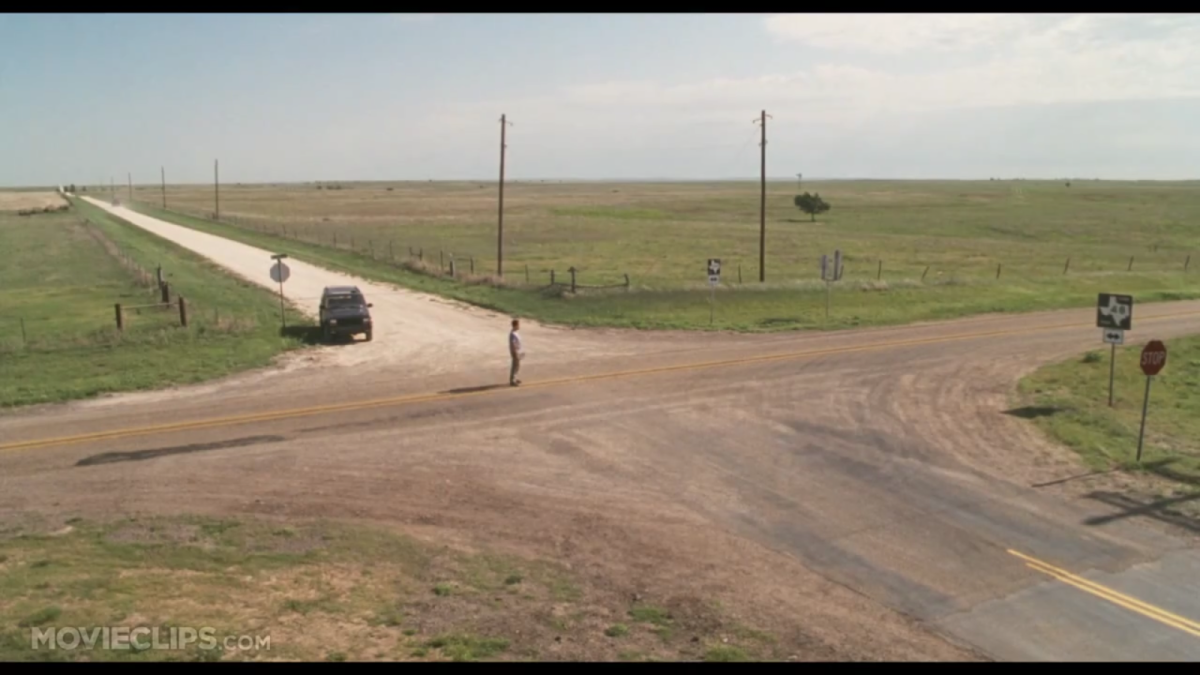
This ‘Crossroads’ scene starts exactly with that image of a crossroads on a non-descript road in middle America, which could be Kansas but is actually somewhere in rural Texas. Chuck, our protagonist, looks lost as he gets out of his car at this dirt crossroads, takes a big gulp of water in the hot Texan sun, and gets his large USA map out to chart his next decision. He just left the house of someone whose package with ‘angel wings’ helped him a lot during his isolation from civilization and for which he brought back their package as a way of thanking him or her. The people in Chuck’s life have moved on without him and he is not sure what comes next given he is a free man after years away from people but at the same time has lost his wife, his job, and his previous lifestyle to one fateful event that was out of his control, and which seemed like an act of God or mother nature.

Any part of this scenario would frighten and subdue even the most resilient person in the world, but Chuck is resilient albeit perplexed on how he ended up where he is without a sign of a compass to chart his way forward. When Chuck reaches this four-way crossroads and stops to check his map, a woman in a red, flatbed truck comes up to greet him and see if he needs any help and if ‘he is lost.’ She tries to give him advice on whether to go north to Canada, west to California, or eastward bound to the coast but he seems resilient if not a bit stubborn after being on his own for so long. Still though, the redheaded woman is kind and sweet in her manner and she says back to Chuck, “well, alright, good luck, cowboy!”

As the sweet-natured woman starts to drive away in her truck, Chuck notices something he’s seen before. A pair of yellow angel wings at the back of her truck’s bumper that he’s seen before on the package he had with him all those years. He knows now that the package he delivered was the one to her house and it was her package! A range of emotions hit Chuck all at once as he becomes shocked, bemused, and then pensive as if he should follow her or not.

Most intriguingly, towards the end of this scene, chuck now with the first sign in a while of where he might go next in life, stands in the middle of the four-way crossroads thinking about the woman whose package had such a big impact on him in his years-long solitude and how likely it is that he finds her attractive as well as kind. The camera pans out to show him in the middle of the crossroads looking at the different directions where he could possibly go next but then the camera lingers on his face as he moves to the direction where he really wants to go. It is the redhead’s truck’s direction down the long, sloping road ahead and Chuck begins to smile as he finally knows where to the long road of his life should end up next.

It is a very poignant and moving scene as we all must make decisions like Chuck in terms of where we want to go next in life. These decisions are hard to make and sometimes involve real regrets but also lead to joy, peace, and happiness. We must do our best to choose wisely in life, but like Chuck did, we must look for the signs where and when we can, and then we must make a choice because not making a choice is not living at all, it is merely existing and that is no way to go through life.

‘Everything In Its Right Place’ (A Video Retrospective)

It’s hard to really love most music videos today which tend to be shallow and lacking in any original thought. During past decades leading up to the 2000’s, it seems like actual effort and work was put into music videos of songs in order to get on MTV but also to highlight the themes of the song as well as the entire album. There are a number of my favorite artists who produce great music videos including Radiohead, The Smashing Pumpkins, U2, Oasis, Dave Matthews Band, etc.

However, MTV and official music videos are not what they used to be. In an age of instant gratification and live concerts being streamed of the songs you love, it’s hard to appreciate music videos as being part of an increasingly crowded creative marketplace. While official music videos may be dying, creative videos and covers of songs from our favorite artists seem to be on the rise. Considering that music videos are usually for hit singles of certain songs and not for entire albums, there has started to be a movement towards producing independent music videos for songs that never received the official ‘music video’ song treatment.

The rise of YouTube and other video platforms has allowed creative people who are fans of good music to produce their own music videos. While they started out as being kind of cliché or very amateur, they are now becoming very professional and also very related to the lyrics of the song in question. I saw a particular music video of a favorite song of mine featured on YouTube a couple of weeks ago. The song is ‘Everything in Its Right Place’ by Radiohead and it is an excellent song by my favorite band but the one thing that this song never had was its own brilliant music video to go with it.

Because of YouTube, the creative skills of a fan named ‘Capitao Ahab’, which is a pretty fun name in its own right, although I believe the original video creator’s name is Joschka Laukeninks who created it and titled it ‘BACKSTORY.’ It is a now an unofficial music video on the popular video platform that is really well done and professionally shot that has received almost two million views. A video like this would not have existed ten years ago but luckily it does. Part of the reason why this music video is so impactful is that it works so well with the content of this particular Radiohead song.

‘Everything in Its Right Place’ like many of Radiohead’s songs are open to interpretation but it is soothing with its use of synthesizers, digitally manipulated voices, and haunting electronic sounds that sound comforting when you have your headphones on at full blast. The lyric itself of ‘Everything in Its Right Place’ focuses on how to maintain your composure and your levelheadedness as you go through life. The fan music video’s storyline of a baby becoming a boy, a man, and then an elderly man highlights the ups and downs of life and how there are ‘two colors in my head.’

The ‘two colors’ could be interpreted as the good and the bad that you will go through as you go through life’s uncertain and mysterious waters. In particular, the song begins with the oft-repeated lyric of ‘Kid A’, the title of Radiohead’s 2000 album and expresses the experiences of a ‘boy’ as he is born, grows up, matures, and eventually dies. “Yesterday, I woke up sucking on a lemon.” Is also a lyric up to the fan’s interpretation but it implies that life can be sour as well as sweet and that you will have to taste and swallow the bitterness of life if you want to enjoy the sweet part of the fruit.

The music video begins on a hopeful note as a baby boy gains his first steps as he walks through his parents’ house. The sweetness of his childhood is referenced with meeting animals for the first time, having his 6th birthday, going to the beach, and experiencing pure joy at that age. Childhood innocence does not last forever so the boy ends up experiencing his first pains in life including the accidental burning down of his house, fights between his mother and his father, the divorce and exit of his mother from his life, pressures from his father to succeed as he ages into being a teenager.

Learning in school, riding his bicycle, summer days at the swimming pool are some of the joys of teenage life including his first experiences with girls as well with drugs and late nights with friends. Still though, the joys of discovery and youth are balanced out by his struggles with partying too much, getting into rights, being angry at the world and dealing with bad breakups. In one part of the video, the teenager emerges from the pool as a young man ready to take on the world in his 20’s. He thinks his partying days and life as a Bachelor will last forever until he stares at the woman of his dreams on New Year’s Eve and she stares back signaling a new relationship that will change his life.

They date, travel, live together, and the young man eventually proposes to the woman of his dreams. As the video speeds up, so does the aging and life of the man as he gets married, celebrates the birth of his child, and gets ready for middle-aged challenges and prospects. Moving into a house as newlyweds, getting a better job, moving up the corporate ladder, using his new car, traveling for work, going to important meetings, and shuffling along while growing a beard signifies how fast life speeds up the older you become. Sometimes, you’re running so fast that you can’t keep track of who or what you are. In the video, the man still remembers the little blissful moments of carrying his child with his beloved wife, family dinners, and trying to balance work and family until tragedy suddenly strikes.

The hardest part of life is unforeseen tragedies and we hope and pray to never experience any to happen, but this man has the tragic occurrence of seeing his wife and child running towards him across the street only to be hit by a bus and to be taken off life support. The song’s crescendo builds up as the man struggles through grief, longing, and how to move on when he knows he can’t but has to anyway. After the tragedy, what once was promising is now dull and at once he was fast to move through the world, he staggers slowly through it wondering what it is all worth and why keep going? How can one fill the void in their own heart when it was taken out of them and cannot be put back?

We see the man continue with his work, entertaining clients, meeting a new woman and getting married again but there is the lingering sense that it is not what he envisioned his life to be. He can have a child with her, but it won’t be the same as his first true love or bring back his first child. Trying to fill the void with an extramarital affair, fighting with his new wife, jogging and running to keep moving forward to futilely escape from one’s own pre-destined aging are all ways of coping both unhealthily and healthily as you go through middle age to becoming elderly in your later life.

Maybe if he stops running or walking or jogging, he will have to face his own eventual demise and departure from this world or face his memories of losing loved ones or losing his mother. The aged man with gray hairs continues to work, to exercise, to keep up his health by going to the doctor and trying to save his marriage. Some of these battles he will win, and some he will lose although we will never know from such a short video. Eventually, the man is elderly and looking back on his life from his bed and looks to be alone in the world.

However, he does not remember the tragedies that befell him as we all must endure in life sometimes. Instead, he remembers the first time he went to dance at a club, the way he looked at his firstborn child, hugging his beloved first wife, and how she stared at him lovingly on New Year’s Eve and how she stared at him at their wedding and when she gave birth to their child. He remembers the tragedy too but remembers those special moments that made his life truly worth living. You are left wondering after watching this four-minute video of a complicated, yet powerful life filled with tragedy and joy whether it was all worth it for the man. Would he do it again if he knew what was to happen in the future?

If we all knew what was to happen in the future until the end of our days, would we all do it again from the beginning? Would it be worth it even if there is pain, tragedy, and death? Would it be worth the love, joy, and pleasure that we experience as human beings as well? It really is out of our control, but this music video does an excellent job of pondering life’s deepest questions in only four minutes and only with the wistful yet dreamy lyrics of Thom Yorke from Radiohead creating a powerful combination of a great song and a great video. It may not be an original music video from Radiohead but whoever created it did a great job of getting a powerful message across to this 2-million strong audience on life, love, and loss.

If you would like to watch the music video on ‘Everything In Its Right Place’, you can find it here on YouTube: https://www.youtube.com/watch?v=GnfPaaMR6Qc

‘BACKSTORY’ Full Video on Vimeo: https://vimeo.com/245687147