Expanding National Service

nationalservice
“Congress agrees…but will that turn into actual legislation in the future?”

If you are a young American thinking about what to do next with your life after finishing high school or college, and you’re interested in serving greater causes than your own personal goals and pursuits, you should seriously consider becoming a volunteer. You may have your own preferences when it comes to serving but what matters is that you choose to do something to give back to those in your country and those around the world who are less fortunate than yourself. Your career goals, your family, and even your friends will understand if you choose to put things on hold for a few years, especially if you’re in your 20s still. You may like your volunteer service so much that you choose to make a career out of it too.

Currently, in the United States, a country which continues to be divided more and more along political and economic fault lines, I think it is vital that young Americans choose to put their differences aside and contribute to bettering their country or the wider world in some measurable way. Volunteering or serving a community can help you to become a better person and a better citizen. There are many options out there if you decide to take the leap and apply for some programs. Not only will you be doing good for a school, a community, a city, etc., you will be helping your own future out with the experience, knowledge, and skills that you will gain from the type of service you commit to.

Contrary to popular belief, joining the Military, while a very noble and brave pursuit, is not the only way to serve one’s country or community. There are many other options for those of us in the United States. The most popular volunteer programs include AmeriCorps, Peace Corps, Habitat for Humanity, CommunityHealth Corps, Teach for America, City Year, FEMA Corps, etc. Those are some of the most well-known and reputable organizations and agencies that have successfully made in a difference in the lives of thousands of people both in the United States and around the world. Besides these national programs, there is also thousands of other more local and community-based volunteer service organizations located in different towns and cities across America. While the options to serve are out there in global, national, and local settings, most young people do not commit to any type of service after college and choose instead to go into the private sector and begin their careers right away.

While the number of applications number in the thousands and continue to grow for service programs like Teach for America and the Peace Corps, there are not nearly enough spots available for all the young people who would like to serve but can’t due to a lack of funding or not enough spaces for them. Demand is not the overall issue when it comes to the issue of national service but rather the supply. Less than 1% of the American population currently serves in the Military and while other national service programs enroll tens of thousands of volunteers and the competition to get accepted is intense, only 25% of adult Americans are known have served in some capacity, which is quite a low number when you think about it.

Senator John McCain of Arizona and U.S. Army General Stanley McChrystal recently wrote an excellent Op-Ed article for CNN where they also argued for an expansion of choices and options when it comes to national service for young Americans. They both believe that this issue is non-partisan and should be heartily agreed upon by both political parties and the American public as well. They go on to discuss the idea of a year or more of mandatory national service in order to foster a greater sense of citizenship, mutual investment, and commitment among young people for the country and the world. I agree with their sentiment wholeheartedly.

While there are a great amount of people my age who commit a few years in their 20’s to public and national service, many of my fellow citizens do not have the chance to or do not want to. Mandating a year or two of national service for all American citizens after college or high school would be an excellent policy idea and would be a great benefit to institutions like Teach for America, AmeriCorps, etc. Creating the opportunity for every young American to give back to their community and country is a noble endeavor and can only help the future rather than hinder it.

Overall trust in the American government, national institutions, and even other citizens are at all-time lows. Expanding opportunities for young Americans to serve would be a great way to begin to restore that faith and confidence in our civil society, and to rebuild that national fabric that holds us together as one people. Recent legislative efforts like the Edward M. Kennedy Serve America Act and the 21st Century Conservation Service Corps have been great in expanding national service in certain ways by increasing AmeriCorps membership by 250,000 volunteers per year and focusing on putting more resources towards improving our national parks and forests respectively.

However, none of the legislation thus far has gone far enough to make at least one year of national service mandatory for every citizen and to provide enough opportunities and programs available to make it a feasible commitment. I would hope that the next President and Congress will strive to involve more young people in building a better America and a better world. One or more years of national service from millions of young Americans would make such a positive and sizable impact on the country as a whole. It would be definitely worth the money it would take to make this public policy idea a reality.

As President Theodore Roosevelt once said, “We have fallen heirs to the most glorious heritage a people ever received, and each one must do his part if we wish to show that the nation is worthy of its good fortune.”

Sources:

1.) https://www.washingtonpost.com/blogs/therootdc/post/why-volunteer-programs-like-the-peace-corps-teach-for-america-reward-children/2012/02/02/gIQAOXl8mQ_blog.html
2.) http://www.cnn.com/2015/08/10/opinions/mccain-mcchrystal-national-service-legislation/
3.) http://www.nationalservice.gov/about/legislation/edward-m-kennedy-serve-america-act
4.)http://www.nationalservice.gov/sites/default/files/documents/10_0421_saa_implementation.pdf
5.) http://www.mccain.senate.gov/public/index.cfm/2015/8/senators-john-mccain-michael-bennet-introduce-bill-to-expand-national-service-opportunities-for-american-youth
6.) http://www.huffingtonpost.com/michael-brown/americorps-funding_b_1280200.html
7.) http://www.people-press.org/2014/11/13/public-trust-in-government/
8.) http://21csc.org/
Made In America?

free-trade-cartoon

Have you ever noticed this small yet important detail when you’re out at the store buying a consumer good whether it’s a pair of pants, a carpet, or some brand new shoes? For those of you who are confused right now, there’s a tag attached to the item indicating that the final product was “Made in …..” which indicates the origin of the country the good has come from. I doubt that most people notice this small detail when they’re out shopping and it’s probably not their biggest concern.

However, I do believe it’s very important as consumers to know where our goods and services are coming from and to what sort of quality they are made. It’s also important to ask the question of these companies who make these consumer products, both foreign and domestic, how well are they treating their employees and what do they pay them for their hard work? Do they receive good health benefits and vacation time? Are the working conditions in their factories and shops safe and hospitable?

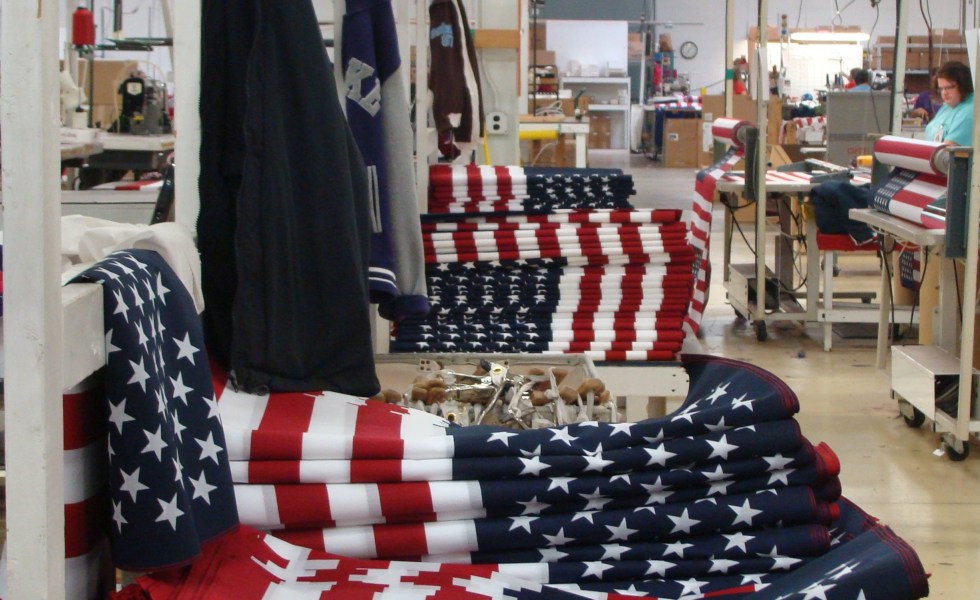
I have noticed that most of the clothing, household items, and electronic products that I have bought were not made in the United States. I am not against wearing or buying consumer goods that were created and manufactured in other countries. However, I do worry that we are relying too heavily on these foreign-made products in our daily lives instead of having some of these same goods made in the U.S.A., which could improve the lives of many people looking for decent-paying jobs. Many abandoned and dilapidated factories, plants, and mills could be re-opened again if we change the way we look at free trade.

According to the official and most recent numbers on United States International Trade Data, there was a sizable overall trade deficit in goods and services of $43.9 billion dollars in October of 2015. Since ‘The Great Recession of 2007-2008’, the trade balance has not changed greatly in terms of lowering the overall deficit. Over the past five years alone, the monthly trade deficit has ranged from $40 to $65 billion. There has been very little sign of this trade imbalance being decreasingly significantly or being entirely eliminated recently. This means that the U.S. is importing a much larger quantity of goods than we are exporting overseas. While some people would argue that this is not a big deal, I would say that in order to grow the economy at a higher output and decrease unemployment further, increasing our exports overseas with the stamp “Made in America” should be a higher priority especially with the upcoming presidential election.

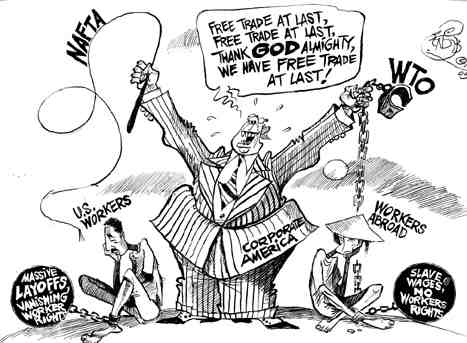
With the decline in American manufacturing, the U.S. has increasingly looked to its trading partners overseas to fill the void that has been created. Due to free-trade agreements such as NAFTA and the recent passing of the Trans-Pacific Partnership, many American companies and jobs have moved overseas causing the trade deficit to increase over the past generation. This has led to many good-paying middle class jobs with health and other benefits to disappear. There has also been a steady decline in the Unions and their total membership and influence within the U.S.

Examples of the shift towards the growing importation of manufactured goods and products that used to be made in here at home can be found in companies such as Wal-Mart and Apple. These iconic companies that were created by Americans such as Steve Jobs and Sam Walton have changed significantly like many others since their early days. They have become multi-national in nature and have expanded their facilities and operations to multiple countries around the world. Even though their company headquarters are in Silicon Valley and in the heartland of Arkansas, these companies are not taxed like other U.S. companies and carry out their manufacturing and production of goods from overseas suppliers.

American workers are known to be more expensive to train and hire than those workers found in countries such as China, Vietnam, and Cambodia. That’s an unfortunate truth that has led many companies to take the easy way out by calculating how much they would save due to the fact that foreign labor is cheaper. For these firms, there is little to no need to worry about strict labor laws that don’t exist outside the U.S. and other parts of the Western world. For example, huge multi-national companies such as Apple have used subsidiary companies like the ‘Foxconn Technology Group’ for years in order to manufacture their iPhones and other high-tech products. There have been many investigative reports done by The New York Times and other news outlets about the harsh working conditions, poor salary, long hours, and reported suicides and riots occurring at these plants in China.

In a lot of developing countries, the taxes associated with doing business are much cheaper which allows a lot of big manufacturing firms to operate there more freely. Even though multinational companies have to pay U.S. taxes on the profits that they earn from products that they make and sell in other countries, Apple and others can avoid paying these taxes by re-investing their profits made from outside the U.S. on overseas factories, stores, warehouses, etc. Because of that, they won’t have to pay the higher taxes. It’s a significant loophole that hasn’t been closed yet and allows U.S. companies to store billions in profits overseas. “Apple is not alone in this strategy. U.S. companies have $2.1 trillion in foreign profit stashed overseas, according to Capital Economics.”

Once the multi-national companies decide to move their manufacturing and production operations overseas, it’s very difficult to bring them back to the U.S. Competitors like China have the infrastructure and a vast amount of workers willing to work in the factors for these supplier companies. It is the responsibility of companies like Apple to break their agreements with manufacturing giants like Foxconn if they ever decided to move their production operations back to the U.S. However, Apple would have to invest in billions of dollars to build these new factories and pay these workers a fair wage with benefits. This proposition is entirely unlikely to occur in the near future for Apple, Wal-Mart, GE, and others to move their manufacturing back to the U.S. due to the higher taxes, the higher costs of the workers and their desire to make the most profits that they can secure.

Free trade is a complicated subject but I decided to write about this issue because I think as consumers, we should know where our money is going. I am guilty like many other Americans in supporting these popular multi-national companies who have gotten away with sketchy business practices and who have shied away from creating jobs here in the U.S. However, it’s never too late to be informed about where your clothes, your cars, and your electronics come from. Do your research and be informed about these issues.

Globalization and free trade have lifted millions of people out of poverty and allowed many countries to boost their economies but it’s also led to a higher amount of competition, the stagnation of wages, and many environmental concerns. I am not a protectionist and I believe that some free trade is good. However, it’s more important than ever that we support fair trade and business practices from these companies. Workers around the world should be treated fairly with good wages, good health and vacation benefits, and they shouldn’t be taken advantage of whether they are located in Saigon or Detroit.

We have free trade with other countries so that we can exchange goods and services with them to better our economies and our peoples. Lets’ not create a situation where we are importing more goods than we should be at the expense of the American worker and taxpayer. These companies need to be held accountable for what they do both here in the U.S. and overseas.

I would encourage everyone reading this entry to think about where your goods and products come from. If you have the chance and opportunity to do so, I would argue that you should try to buy from the U.S. companies making the goods and services right here in America. I am not against buying foreign goods either but we have to know whether these large companies out there are playing by the rules and are not being exploitative.

By ‘Buying American’, it’s good to show those small businesses and firms that we still support them and that we want them to succeed. If you would like to support buying American-made goods and products, check out this website: http://madeinusachallenge.com/ (Made In America – Master List)

Sources

The Conundrum of Choice

Life can be a lot like a cereal aisle sometimes. Too many choices, and not enough time.

No other mental task can be so challenging and exhausting yet invigorating as making a choice. The concept of “Choice” is a behavioral process that we each undergo hundreds of times each day and they can either be the most routine, mundane of decisions to be made or those that are very rare and of great importance. These choices that we make can either have the most immediate or long-term impacts on our lives.

I tend to sometimes naively overlook how important choice is in determining one’s destiny or fate in life. As human beings, we make so many choices each day that it’s difficult to discern from what’s valuable to what really doesn’t matter in the grander scheme of things. This also plays into one’s individual perception of what is and what isn’t important in life, which is a long debate that should be left for another thinker. I was walking through the local grocery store going through the vast, tall aisles and felt completely overwhelmed.

Who knew that choosing cereal these days could come with so many options to choose from? I was completely flummoxed at first and ended up just placing a random cereal in my cart out of frustration and bewilderment. This is an example of a choice that really is quite basic when you think of it but may have had it’s importance overstated since there are now more choices than ever.

Clearly, most people in this world today do not have access to these many choices as we do here in the United States and other developed countries but it makes you think that we should be lucky for all the choosing we get to do on a daily basis. We should not take for granted in our society how many choices we do have and how many decisions we can make as independent people who have the freedom to make these kinds of decisions.

 Many people living in the world today have very limited options and are unable to make choices because they are not allowed to or do not have the option to. Next time, you’re meandering in the cereal aisle for perhaps a bit longer than you should, think about the weight of this choice and whether or not it is worth the time or the effort because there are many other choices to be made throughout the day and they may be a bit more important than “Fruity Pebbles or Cheerio’s?”