

Your Job Is Not Your Identity

“While work makes up most of our day and perhaps week when you consider the weekend is still only two days (or sometimes less) for most adults, let’s not make work our sole identity, especially in this current environment.”

We spend most of our adult lives at work and when we’re not working, we’re likely thinking about work, preparing to work, or going to and from work. While work makes up most of our day and perhaps week when you consider the weekend is still only two days (or sometimes less) for most adults, let’s not make work our sole identity, especially in this current environment. When you have situations where companies are laying off workers to save money on their bottom line, unionization is at historic lows with workers not allowed or able to organize to advocate for themselves, and wages stagnating behind productivity gains since the 1980s, we need to not think of work as our sole identity anymore.

It’s important to work hard and to do your job well but at this point, that alone doesn’t get you ahead in life as much as it used to. At the same time, a full-time job nowadays doesn’t guarantee a pension, steady retirement benefits, or even optimal health care into old age like it may have decades ago. The benefits are not what they used to be and stability in any industry seems to be a thing of the past. I wish I had an answer on how to improve the work culture and perhaps I’ll share my thoughts on that issue but I would rather speak to how it’s vital to invest in your identity outside of the workplace, not to be too attached to a company or an industry, and to keep upskilling so that you can continue to make a living in the future, even when your employer doesn’t invest in you.

When you choose to upskill yourself or advocate for skills training if your employer provides it, you’re giving yourself a key advantage that could keep you employed in the future regardless of how your industry changes. I wish constant upskilling wasn’t necessary as your degrees, experience, and past skills or abilities gained should be enough, but unfortunately that’s not the world we’re living in.

Now, there’s a cost involved and sometimes you may have to foot the bill to upskill yourself, but I think it’s necessary to do so you build skills beyond your current role in case you need to pivot. Instead of identifying yourself with your company or position, identify primarily with what skills or certificates or knowledge you have and how you can pick up work in the future. Tying your identity to your current title, organization, or skillset is a recipe for losing it eventually with nowhere to pivot to without having another skillset or knowledge base to pull from.

For example, you may be an excellent data analyst and have built your experience up in that area over the years. However, if you can also obtain complimentary skills in project management or financial oversight, you can pivot to those kinds of jobs if you are not able to find another job as a data analyst. I highly recommend investing in your professional skillset so that you are not tied up in one field for the rest of your career, leaving yourself vulnerable to industry collapse, lack of positions available, or technological changes, which all could occur over time.

It takes more effort beyond traditional education you may have received but it may be worth the money to learn new skills in case you have to stay employable. I never wish anyone to lose their livelihood or job, but you must be taking precautions nowadays as the job market can be quite brutal to those people who don’t have complimentary skills to offer.

When the work is over, you should make the most of it and try to put it out of your head as much as possible. Yes, you can find comradery at work and have a good experience but sometimes, you are going to be dealing with difficult people who you would rather not have to interact with. Be professional, respectful, and responsible but don’t look for friends or fulfillment in a workplace where you may not be able to find it. You must be able to find fulfillment elsewhere these days whether it’s at a community center, a shared hobby alone or with others, getting exercise and staying healthy, or just spending time with friends and family.

I know it’s challenging if you’re working 40 hours or more on top of commuting to an in-person job back and forth and I hope that changes in the future. Having a flexible work environment can make life much more enjoyable. With the limited free time that you have, try to make the most of it, spend it doing stuff you enjoy around people you like being with. Modern work culture is not working out well in a variety of ways but before the system can change, we must realize that our identity should not be tied to it so much.

Instead of continuing to identify yourself with your title and your organization when meeting someone, talk about who you are as a person, what you like to do, how you spend your free time, and try not to focus so much on work when you clock out. Reclaim your time outside of work as much as possible and if you end up needing to find a new job, don’t let yourself mourn what is no longer part of your life. Be able to find contentment in what other titles you have such as a brother, son, traveler, guitarist, or whatever title you can make part of your whole identity. Just because we must work to make a living in this world doesn’t mean that it defines who we are.

English Corner – Proper Email Etiquette

“In order to write good emails for your professional pursuits or for your career, you need to be able to understand the proper etiquette that comes with this kind of writing.”

Writing cohesive yet concise emails is a key professional trait to be successful at as part of your overall English writing skills. In order to write good emails for your professional pursuits or for your career, you need to be able to understand the proper etiquette that comes with this kind of writing. If you are able to master the etiquette of emails, you will be able to do a good job in working well with others, being cooperative, and being considered a team player.

Without proper etiquette, you are likely to not be taken seriously at your work and you may not be able to have others take the rest of your email as seriously as it should be. Once you have the etiquette down, the content of your email is likely to be read and taken into consideration for whichever subject you are addressing.

The Introduction: Email etiquette starts with the introduction of any email message so if you do not get it right from the beginning, the rest of the email will suffer. I believe it is important to remember that how you introduce your email depends on if you know the person or not. If you do not know the person, you should begin your email with the following: ‘To whom it may concern,’ ‘Dear Sir’ (for a man but without a known name), Dear Madam (for a woman without a name known). These three ways are both formal and proper in terms of addressing someone at work or for business if you do not know who they are.

However, if you do know the person, it is best to address the email as ‘Dear Mr. __________ / Dear Ms. __________’, their last name should always come after Mr. or Mrs. To indicate the formality of the email and the unknown status of the woman’s marital background, it is best to use Ms. or Miss for the woman’s last name rather than assuming that she is married right away.

Lastly, I would refrain of saying ‘hello’, ‘hello there’, ‘hi’ to start off the email if you do not know who it is you are emailing. It is best to instead go with good morning / good afternoon or even good evening depending upon the time of the day that you are emailing for your work. I would say that once you have exchanged an email or two, you can be more informal by starting off your email with Hello ________, Hi __________, or just ‘Dear _________’ as you had for the first email.

Continuing on with the introduction, the first paragraph should begin with Hello and then a few following options below depending upon your preference.

“Hello, I hope that this email finds you well, I hope that you are doing well, I hope that you are having a good week, etc.“

You can also say the purpose of your email in that first paragraph by stating your clear purpose up front by something like:

            I am emailing you today because _______________.

            The purpose of my email is to __________________.

            I am messaging you today in the hopes that _______.

            This email is to inform you that _________________.

These are all great ways to start off a formal email and to inform your reader quickly what you are messaging them about, and it should be done in the first sentence after your salutation at the beginning. I would keep the overall introduction just two or three sentences and state the main idea of your email quickly and succinctly. You want to make it easy for the professional person or the worker to know what it is you are messaging them about and how does it involve them, all in the introduction paragraph.

The Body Paragraph(s): There is not too much to keep in mind when it comes to formality in body paragraphs but make sure you use formal words like ‘please’, ‘thank you’, ‘if you could’, ‘it would be great if…’, ‘we would be appreciative of…’, etc. The main thing to keep in mind is that you are using sir or ma’am throughout the paragraph(s) and to add in a Mr. ______, Mrs. _________ every now and then. If you need to ask something or request a few items of need, always use ‘please’ and ‘thank you’ for any major thing that you are asking for business purposes.

In order to make the email a two-way exchange, relay what you are planning to do in response to make sure that the business relationship or the exchange of information goes smoothly. Beyond the purpose of the email outlined in the introduction, you should add the supplementary details beyond the ‘ask’ or the ‘request’ in the body paragraph(s). Towards the end of the body, make sure you list a timetable for when you might need a reply back and who else you may have CC’d or added on to the email who is pertinent to the message.

While not the main focus of email etiquette, you should be using formal vocabulary throughout this part of the email and don’t forget to use ‘could’, ‘would’, ‘when’, instead of insisting with ‘you need’, ‘you will’, which is not polite at all. Any request in the email should be made with the possibility that the person may say ‘no’ to you and you should be ready to hear that kind of answer but it can help your chances of success when you are polite not just in the introduction but throughout the heart of the email as well.

The Conclusion: The most important thing to keep in mind when it comes to email etiquette in this part is to thank them above all else for their time and their attention to your message. Whatever the ask was in the body paragraph, you should thank them formally for their consideration and that you hope to hear from them soon.

You also want to say that you hope to stay in touch and to leave your contact information with them including your work phone, your best email address, and what time(s) of the day are best to be reached. It does not hurt to also say that you are hoping that they are doing well or if it’s a Friday, ‘to wish them a good weekend’, if you are writing the email before a holiday, it’s nice to also ‘wish them a good holiday’ but only best to do so when it’s a non-religious holiday rather than assume they are of a certain religion, of course.

To end the formal email on a good note, you should sign off with one of these options, which are both formal in nature and also really considerate to other people. Depending upon your preference, any of these options would be fine. It is also key to remember that you put a comma after any of these closing salutations and then write or sign your full name below it so they know who sent the email and who is making the request(s).

The following closings are good ways to end the email according to proper etiquette:

-‘Best,’

-‘Sincerely,’

-‘Warm Regards’,

-‘Kind Regards’,

-‘Regards,’

-‘Best Wishes’,

-‘Warm Wishes’,

‘Thank you,’

‘With gratitude’,

-‘Many thanks,’

The one closing that I would not endorse for a formal email of this nature is ‘much appreciated,’ because it is a little too informal in its vocabulary and would best be used instead with close friends or family members or for a business connection whom you already know very well.

After having the etiquette down well, you will be able to draft much better business or career-related emails because not only will your vocabulary improve but also your understanding of the English-speaking business culture. This kind of email writing takes time and practice but if you are willing to learn from others, practice a lot, and make a few mistakes every now and then, you will definitely be benefitting in your business or career after some time. There are clear differences between formal emails and informal emails and the etiquette that each kind of email shows makes all of the differences known. In order to write a complete email of a formal nature, you have to use etiquette properly not just for the introduction but also for all of the body paragraphs and for the conclusion as well.

From the opening salutation to the closing wish, your email etiquette must be consistent and clear for whoever is reading it. Be sure to use your best judgment, edit it before sending, and be patient in waiting for a reply. Do not be afraid to make a few mistakes because emails are sometimes hastily written, and you may fudge a word or two but that should not stop you from forgetting your overall etiquette with that person with whom you are corresponding. Writing the first draft of any email is the hardest part but once you got that part down, you will be well on your way to becoming a great English email writer.

Made In America?

free-trade-cartoon

Have you ever noticed this small yet important detail when you’re out at the store buying a consumer good whether it’s a pair of pants, a carpet, or some brand new shoes? For those of you who are confused right now, there’s a tag attached to the item indicating that the final product was “Made in …..” which indicates the origin of the country the good has come from. I doubt that most people notice this small detail when they’re out shopping and it’s probably not their biggest concern.

However, I do believe it’s very important as consumers to know where our goods and services are coming from and to what sort of quality they are made. It’s also important to ask the question of these companies who make these consumer products, both foreign and domestic, how well are they treating their employees and what do they pay them for their hard work? Do they receive good health benefits and vacation time? Are the working conditions in their factories and shops safe and hospitable?

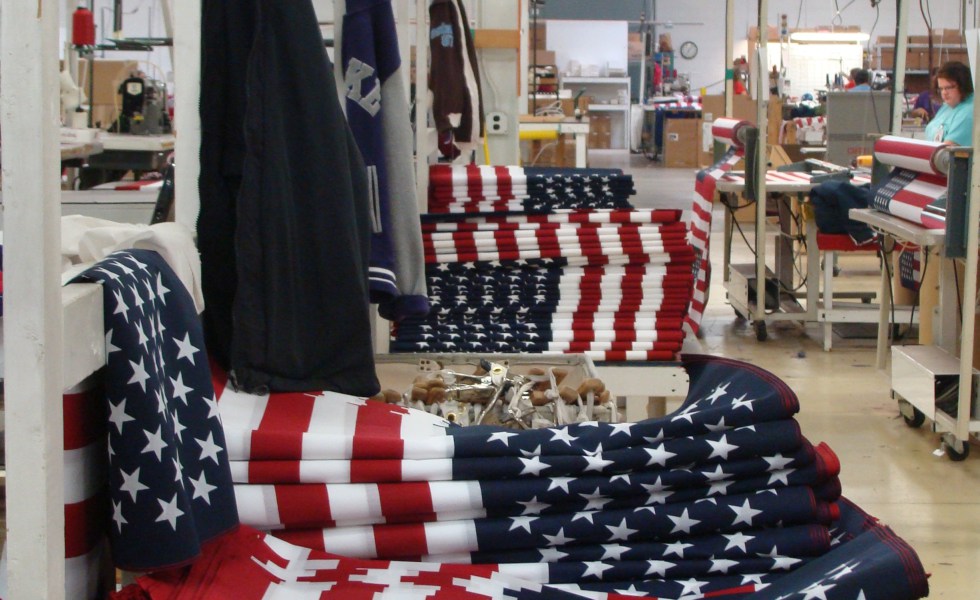
I have noticed that most of the clothing, household items, and electronic products that I have bought were not made in the United States. I am not against wearing or buying consumer goods that were created and manufactured in other countries. However, I do worry that we are relying too heavily on these foreign-made products in our daily lives instead of having some of these same goods made in the U.S.A., which could improve the lives of many people looking for decent-paying jobs. Many abandoned and dilapidated factories, plants, and mills could be re-opened again if we change the way we look at free trade.

According to the official and most recent numbers on United States International Trade Data, there was a sizable overall trade deficit in goods and services of $43.9 billion dollars in October of 2015. Since ‘The Great Recession of 2007-2008’, the trade balance has not changed greatly in terms of lowering the overall deficit. Over the past five years alone, the monthly trade deficit has ranged from $40 to $65 billion. There has been very little sign of this trade imbalance being decreasingly significantly or being entirely eliminated recently. This means that the U.S. is importing a much larger quantity of goods than we are exporting overseas. While some people would argue that this is not a big deal, I would say that in order to grow the economy at a higher output and decrease unemployment further, increasing our exports overseas with the stamp “Made in America” should be a higher priority especially with the upcoming presidential election.

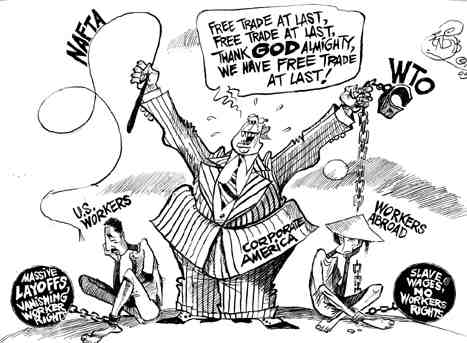
With the decline in American manufacturing, the U.S. has increasingly looked to its trading partners overseas to fill the void that has been created. Due to free-trade agreements such as NAFTA and the recent passing of the Trans-Pacific Partnership, many American companies and jobs have moved overseas causing the trade deficit to increase over the past generation. This has led to many good-paying middle class jobs with health and other benefits to disappear. There has also been a steady decline in the Unions and their total membership and influence within the U.S.

Examples of the shift towards the growing importation of manufactured goods and products that used to be made in here at home can be found in companies such as Wal-Mart and Apple. These iconic companies that were created by Americans such as Steve Jobs and Sam Walton have changed significantly like many others since their early days. They have become multi-national in nature and have expanded their facilities and operations to multiple countries around the world. Even though their company headquarters are in Silicon Valley and in the heartland of Arkansas, these companies are not taxed like other U.S. companies and carry out their manufacturing and production of goods from overseas suppliers.

American workers are known to be more expensive to train and hire than those workers found in countries such as China, Vietnam, and Cambodia. That’s an unfortunate truth that has led many companies to take the easy way out by calculating how much they would save due to the fact that foreign labor is cheaper. For these firms, there is little to no need to worry about strict labor laws that don’t exist outside the U.S. and other parts of the Western world. For example, huge multi-national companies such as Apple have used subsidiary companies like the ‘Foxconn Technology Group’ for years in order to manufacture their iPhones and other high-tech products. There have been many investigative reports done by The New York Times and other news outlets about the harsh working conditions, poor salary, long hours, and reported suicides and riots occurring at these plants in China.

In a lot of developing countries, the taxes associated with doing business are much cheaper which allows a lot of big manufacturing firms to operate there more freely. Even though multinational companies have to pay U.S. taxes on the profits that they earn from products that they make and sell in other countries, Apple and others can avoid paying these taxes by re-investing their profits made from outside the U.S. on overseas factories, stores, warehouses, etc. Because of that, they won’t have to pay the higher taxes. It’s a significant loophole that hasn’t been closed yet and allows U.S. companies to store billions in profits overseas. “Apple is not alone in this strategy. U.S. companies have $2.1 trillion in foreign profit stashed overseas, according to Capital Economics.”

Once the multi-national companies decide to move their manufacturing and production operations overseas, it’s very difficult to bring them back to the U.S. Competitors like China have the infrastructure and a vast amount of workers willing to work in the factors for these supplier companies. It is the responsibility of companies like Apple to break their agreements with manufacturing giants like Foxconn if they ever decided to move their production operations back to the U.S. However, Apple would have to invest in billions of dollars to build these new factories and pay these workers a fair wage with benefits. This proposition is entirely unlikely to occur in the near future for Apple, Wal-Mart, GE, and others to move their manufacturing back to the U.S. due to the higher taxes, the higher costs of the workers and their desire to make the most profits that they can secure.

Free trade is a complicated subject but I decided to write about this issue because I think as consumers, we should know where our money is going. I am guilty like many other Americans in supporting these popular multi-national companies who have gotten away with sketchy business practices and who have shied away from creating jobs here in the U.S. However, it’s never too late to be informed about where your clothes, your cars, and your electronics come from. Do your research and be informed about these issues.

Globalization and free trade have lifted millions of people out of poverty and allowed many countries to boost their economies but it’s also led to a higher amount of competition, the stagnation of wages, and many environmental concerns. I am not a protectionist and I believe that some free trade is good. However, it’s more important than ever that we support fair trade and business practices from these companies. Workers around the world should be treated fairly with good wages, good health and vacation benefits, and they shouldn’t be taken advantage of whether they are located in Saigon or Detroit.

We have free trade with other countries so that we can exchange goods and services with them to better our economies and our peoples. Lets’ not create a situation where we are importing more goods than we should be at the expense of the American worker and taxpayer. These companies need to be held accountable for what they do both here in the U.S. and overseas.

I would encourage everyone reading this entry to think about where your goods and products come from. If you have the chance and opportunity to do so, I would argue that you should try to buy from the U.S. companies making the goods and services right here in America. I am not against buying foreign goods either but we have to know whether these large companies out there are playing by the rules and are not being exploitative.

By ‘Buying American’, it’s good to show those small businesses and firms that we still support them and that we want them to succeed. If you would like to support buying American-made goods and products, check out this website: http://madeinusachallenge.com/ (Made In America – Master List)

Sources