John Coltrane: A Retrospective

“A true legend of his time, John Coltrane changed Jazz music forever by introducing free and experimental forms to the genre.”

“John Coltrane was a key figure in jazz, a pioneer in world music, and an intensely emotional force whose following continues to grow.”

This succinct description by author Lewis Porter in his book about the legendary Jazz musician, John Coltrane, is completely accurate. John Coltrane is to Jazz music what Neil Armstrong was to the successful Moon landings of 1960’s. He is revered not just by those involved in the world of Jazz but by people from around the world for his deep spirituality and his recognition and support of the civil rights movement in the early 1960’s.

To this day, John Coltrane remains to be the only Jazz musician to have become a saint post-humous, which was given to him by the African Orthodox Church. He also was one of the few Jazz musicians who could compete with the emerging Rock n’ Roll scene in the early 1960’s. His most famous album, titled “Love Supreme” released in 1964 was partially why Coltrane surged to popularity at a level equal to bands like The Beatles and The Beach Boys. What he lacked in terms of longevity in his career and sadly, his life, John Coltrane’s passion for Jazz and the spirituality his music had along with the masterful skill, improvisation he displayed playing the tenor saxophone continues to resonate today. Along with Duke Ellington and Thelonious Monk, John Coltrane is one of the few Jazz musicians to have received a Special Citation for the Pulitzer Prize in the study of music.

As a musician, John Coltrane’s contributions were immense especially during the relatively short amount of years he was on the top of the Jazz scene compared to other legends of the era. He was influential in promoting new forms of Jazz such as avant-garde and free form, which became popular during the 1960’s. Throughout his career, Coltrane was the leader of more than fifty recording sessions and then partnered along other musicians such as Miles Davis, Duke Ellington and Thelonious Monk. John Coltrane started recording music in 1945 right after the conclusion of World War II for which he was enlisted in the U.S. Navy.

One of the first musicians to recognize John Coltrane’s inherent musical talent was fellow saxophonist, Charlie Parker, who played and recorded together with Coltrane during the late 1940’s and early 1950’s. His most famous albums included Giant Steps (1960), My Favorite Things (1961) and A Love Supreme (1965). All three of these Jazz albums that he produced with Atlantic and then Impulse! Records are some of the best-selling albums of all time. He is also noted for collaborating with Miles Davis on some of his most famous recordings including Kind of Blue (1959) and Milestones (1958). In addition, over the course of his career, John Coltrane created many standards in Jazz music such as “Moment’s Notice”, “Lazy Bird”, “Impressions”, “My Favorite Things” and “I Want to Talk About You.”

The influence of spirituality and religion on Coltrane’s life and music is what makes him unique and rememberable more than forty years after his death. While Ornette Coleman was the musician who is credited with leading the “Free Jazz” and “Avant Garde” movements, it completely changed the perceptions of what Jazz should be to young musicians like Coltrane who were originally more technical in their play originally who adapted more of a free-form style as they encountered different influences and perspectives. His philosophy on music and life in general was that it had to be “a whole expression of one’s being.”

More than most Jazz artists of his time and era, John Coltrane was a deeply spiritual and religious person who sought out the teachings and beliefs of not just Christianity but also Islam, Hinduism, Buddhism, etc. Coltrane is said to have had a religious experience, which may have held him break his heroin and alcohol addictions in the late 1950’s. When asked about this pivotal point in his life that allowed him to produce the landmark records of A Love Supreme and Meditations, Coltrane states that, “During the year 1957, I experienced, by the grace of God, which has led me to a richer, fuller, more productive life. At that time, in gratitude, I humbly asked to be given the means and privilege to make others happy through music.” John Coltrane made many references to spirituality and different religions in many of his songs and albums. Specifically, those songs titles, “Ascension”, “Om” (Hinduism), “Amen”, “Dear Lord”, and the opening movement of Meditations which is titled, “the Father, the Son and the Holy Ghost.” He studied the Bible, Qu’ran, Kabbalah and other Buddhist and Hindu texts making him more of a Universalist than a subscriber to any certain religion. He incorporated chants and sayings into the few lyrics within his songs as well. Coltrane worked with Indian sitar player Ravi Shankar and even named his first son after him.

Beyond Jazz, John Coltrane dove into an idea of a universal musical structure and to take these spiritual influences from around the world and implement them within his own play and style. He was not political but he desired for his own country to get beyond racial and ethnic differences such as those that were plaguing America during the early 1960’s. Through his music, he spoke out against discrimination and supported the civil rights movement and gave an emotional ode to Dr. King in the song, “Alabama” after his assassination. Despite his death at the age of 40, Coltrane inspired a new generation of Jazz musicians to carry on his free-form style and his ability to reach out to different genres of music. He has been immortalized in certain Christian churches as a saint and his birthday is often a cause of celebration around the world. It is clear that he was not over-rated and that his legacy will continue to go on as long as his music is played for all.

Sources

  1. http://www.allmusic.com/artist/john-coltrane-mn0000175553
  2. http://www.pulitzer.org/citation/2007-Special-Awards-and-Citations
  3. http://coltrane.room34.com/thesis
  4. http://www.johncoltrane.com/biography.html
  5. http://www.nytimes.com/2007/12/01/us/01religion.html
  6. http://thewire.co.uk/in-writing/essays/john-coltrane_divine-wind
  7. http://www.telegraph.co.uk/science/science-news/3324621/Secret-of-John-Coltranes-high-notes-revealed.html

The Case Against Tipping

Tipping

A story that has captured the headlines of most major media outlets recently is New York City restaurateur, Danny Meyer’s decision to end the practice of tipping in his many well-known dining establishments in the city. Unsurprisingly, this caused a bit of an uproar as some people praised him for this decision while others fumed about how this would cause poorer service and lead to higher food prices when dining out at a restaurant. This small decision could eventually gain momentum and cause dining establishments around the country to end an outdated cultural practice here that has been prevalent since the early 1900’s but has been absent in most European countries, Japan, China, and elsewhere.

Both viewpoints hold valid concerns, however, I believe that the overall culture of tipping while helpful to servers, waiters, bartenders, hairdressers in helping them to make a living now is not the best that our society can do for them in the long run. When the minimum wage for tipped workers federally is still an extremely $2.13 per hour, and you have to fight and scrap for tips to make up the difference to crack the $7.25 per hour minimum wage that is in place for non-tipped workers, I believe we have a problem.

More and more U.S. states have taken it upon themselves to raise the minimum wage for both tipped and non-tipped workers, and I applaud those actions. However, eliminating the ‘tipped worker’ minimum wage standard along with the raising the federal wage for both tipped and non-tipped workers to between $15-$20 an hour would be the right and just thing to do. Tipped workers should be able to earn a guaranteed hourly wage that is fair and livable just like every other hard worker in the United States. Yes, with tipping involved, a server and a bartender could make more than $20 an hour especially if they provide great service but that’s not always the case and I can imagine that they could come up short of what they were expecting to make during some hours of their daily shift.

If I were a worker in the service industry, I would rather be paid a $15 or higher wage per hour than have to fight for tips each and every workday. Distribution of tips is not always equal in that not every worker from the dishwasher to the bus boy gets compensated fairly in terms of payment. Cooks and other workers at the back end of the restaurant have to compete with the servers for their tips, which could create an uneasy, and hostile work environment. Also, there are racial and gender biases that come into play as well when it comes to tipping workers that has been a problem in the past and still today.

The argument that by getting rid of tipping, the waiters, bartenders, hairdressers, etc. would then provide mediocre or worse service to their customers is a faulty one. If tipped workers suddenly found themselves making a $15 or $20 minimum wage and had a chance to advance in their business or industry through other incentives like vacation time, health care coverage, sick days off, etc. then they would feel better about their jobs. They would want to provide good service because how much better their employers would be treating them due to the changes in laws and regulations. I have traveled to countries in Europe and the Middle East where there is little to no tipping culture yet the service is still fine. The servers there may not have asked me how my meal was but I got used to it after a while and appreciated that they would let me eat and talk in peace. If I needed something from them, I would just call them over politely as well. I also left them an extra 10% on top of the cost of my meal despite the tip not being mandatory to show my appreciation for their hard work.

Lastly, when the time the bill comes, it’s often a struggle to figure about how much of a percentage out of the total to give the waiter/waitress, whether or not the service charge is already included or not, what is the amount of tax added on to the food, and/or alcohol that was ordered. To me, it’s always been a giant headache to pay the bill at the end of the meal, especially in larger groups. It’s because you end up doing the calculations on your own and you never know how much you’ll be paying in total until the end. I would prefer to have the extra costs of the service and taxes be added onto the costs of the food. This is what type of system that Danny Meyer and others will be implementing in their business. If this change gets implemented on a wide scale, every customer will know exactly what is to be paid at the end of the meal. By the time you sit down and look at the menu, you will know how much everything will cost and how much money you’ll be throwing down to pay without worrying about the added tip and tax.

As it still stands now, the culture of tipping in the United States is heavily entrenched and has been around for over a hundred years now. However, given that some leading restaurant business owners are starting to set their own policies, against using the service/tip charge than maybe a real change is finally going to happen. I believe that these tipped workers in different sectors will be happy with these changes to the industry and will still provide ‘service with a smile.’

Duke Ellington: A Retrospective

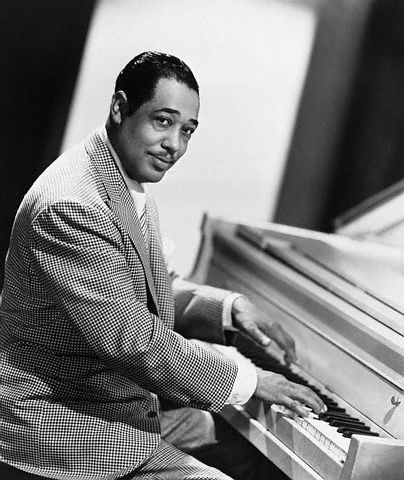
'Jazz Legend' Duke Ellington: Playing the Piano (Circa -1940's)
‘Jazz Legend’ Duke Ellington: Playing the Piano (Circa -1940’s)

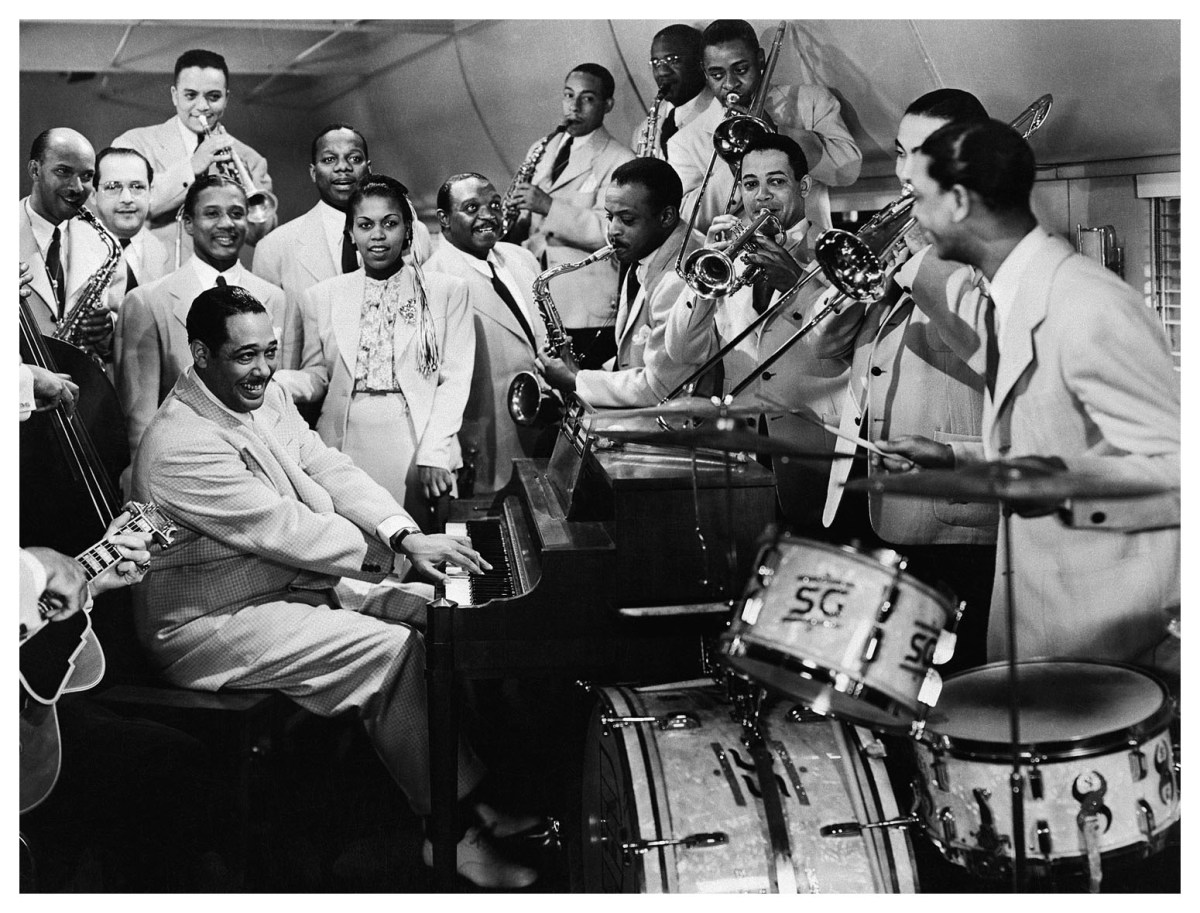
Edward Kennedy Ellington is rightly considered to be one of the leading figures and original titans of Jazz music. In addition to writing over 1,500 compositions, he was one of the most successful bandleaders and pianists of his time. To this day, he has stood the test of time and is one of the most influential musicians of the 20th century as well. Along with being a major figure in Jazz, Ellington’s music also delved into other musical genres such as blues, gospel, classical music and popular film scores.

His career was one of the longest of all the Jazz legends, spanning about 50 years from the 1920s to the 1970s. He was a versatile musician and was extremely dedicated to this work. In addition to running his big band and orchestra, Ellington composed new songs, put on many world tours and also scored the music for stage musicals and films. Many of his instrumental works have become Jazz standards that the average listener should be well aware of and familiar with many of Ellington’s compositions.

His ability to be an entertainer as well as a performer helped elevate Jazz to a level where it was considered to be equal or even more influential than most other genres of music during the early 20th century. He was the first musician to really incorporate the idea of using a big band and/or orchestra to really propel jazz/swing as being distinct forms of music with their own style and substance. Ellington came from a modest upbringing in a middle class black neighborhood in Washington D.C. and was considered by others to charismatic, compassionate and a brilliant and dedicated musician. He is as well known for his ability to entertain people as he is for his excellent piano playing.

Ellington would often refer to the music he played not as jazz but as “American” or “Negro” music and helped his orchestra’s musicians and others to develop their own jazz standards and compose for them. Some of the names for which he helped out so graciously were for Johnny Hodges’s “Jeep’s Blues”, Cootie Williams’ “Concerto for Cootie” and Juan Tizol’s “Caravan.” Many of his band members stayed with him throughout the five decades for which they were active. In addition to his band members, Ellington also worked alongside other musicians of the time such as Billy Strayhorn, Count Basie, Louie Armstrong, Coleman Hawkins, Charles Mingus, and Max Roach. Some of Ellington’s best known songs include, “It Don’t Mean A Thing If It Ain’t Got That Swing”, “Mood Indigo”, “Black and Tan Fantasy”, “Sophisticated Lady” and “Satin Doll” among many others. While which song exactly made the Duke most famous is a hotly debated topic, some argue that it is “Mood Indigo” which thrust him upon the world stage and gave him global fame for the rest of his career. When Ellington was once asked, what made him inspired to write, record and play music, he replied, “My men and my race are the inspiration of my work. I try to catch the character and mood and feeling of my people.”

Location played an important role in influencing Duke Ellington’s musical contributions to society. With each song he wrote and composed, he would try to tell a story about his community, his life and his race. It is no coincidence due to the Duke’s popularity and his wide following throughout America as one of the first prominent black musicians that he was often times referred to as a “race man.” People referred to him as this because of the cultural and social impact that he had as a popular musician representing the African-American community at a time when there were few black performers and entertainers in music. This was particularly due at the time to Jim Crow laws and general intolerance, racism towards the African-American community in many parts of the United States. Duke Ellington in a way broke through the color barrier along with Louis Armstrong because of those who came before them when it came to music in America during the early 1900’s. Ellington was an instrumental musician in bringing Jazz music outside of New Orleans to towns and cities across the country especially in New York City when he hit the big time and made his home starting in 1927, at the famous “Cotton Club” in Harlem. From that and other clubs, his big band/orchestra set the bar high when it came to playing brilliant jazz, swing, classical and other forms of music. Over the course of his career, He made jazz and swing music into American music as he traveled around the world for thousands of performances in Europe, the Middle East, Africa and Asia.

There is no doubt to the average learner and student of Jazz that Duke Ellington is one of it’s most important figures in its’ history. He was the genre’s most important composer, one of its’ most highly regarded performers and band leaders who employed many talented black and white musicians believing that everyone should have the chance to play regardless of the color of their skin. Ellington’s compositions are studied and played over and over by many musicians today and his prowess at the piano is often overlooked but was also instrumental in talking about his legacy as a musician. It’s fair to say that there will only ever be one “The Duke” and those who follow his lead. His work is also very important in describing American culture and music. His legacy is still vibrant today as many young people continue to pursue the arts and perform in music groups. They strive to play jazz and other types of music because of men like the Duke himself.

Book Recommendations – Volume I

As the Fall season turns into Winter and people start going into hibernation mode as the weather gets cold and snowy, here is my 1st volume of book recommendations that will last you through the next few months:
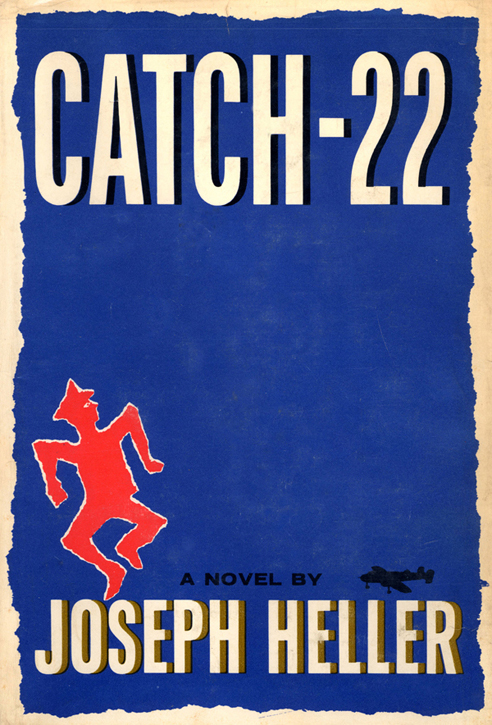
catch-22_cover

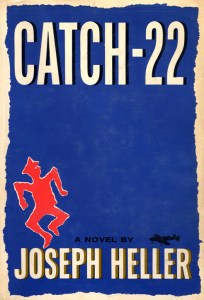
 1.) Catch 22 by Joseph Heller is my favorite book of all-time and has been ever since I read it at the young age of 16. This was the first novel that I had read which was satirical in content and utilized the concept the dark humor, which made it an enjoyable and fun read. Main characters such as Yossarian, Orr, Chaplain, Nately, Snowden, etc. were all really well-developed so you know who they were and their individual backgrounds before the end of the novel. It did help that for the first part of the book, each of the first eleven chapters were told from a different character’s perspective rather than focusing on Capt. John Yossarian for every chapter.

Describing the events from different points of view through the third-person in a non-chronological order really made it unique in a way. This made Catch-22 an easier read as this kind of format gave me as the reader the chance to put the different events together into a singular plotline rather than spell it all out for me as other non-fiction novels usually do. This novel also introduced to me several important themes that I have thought about or come into conflict with in my own life. Examples of some of these themes being: Absurdity, ridiculousness of bureaucracy, questioning one’s religious faith, and the power, influence of greed and capitalism over others.
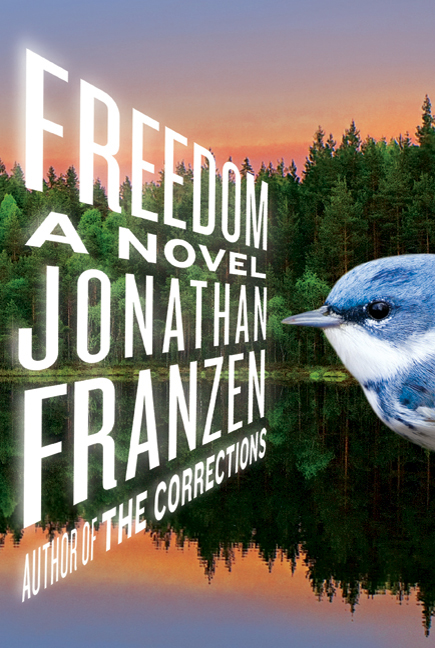
freedom-cover

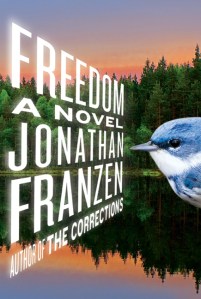
2.) Freedom by Jonathan Franzen is another favorite and an excellent fiction novel focusing on an American family, the Berglund’s, and the complex relationships that they have with each other, their friends, and their lovers. Their story takes place over the course of one generation from the late 1970’s up until the beginning year of the Obama administration, in 2009. Each family member is well represented in Franzen’s novel with the narrative flow going from Walter (the father) to Patty (the mother), and then on to the children of Joey and Jessica. Franzen also develops his supporting characters to be an integral part of the story such as Richard Katz, Lalitha, Connie, and Jenna who all play a role in the unfolding of the novel. Freedom also successfully goes back and forth from first-person to third-person narrative quite easily and without any major hiccups.

One of my favorite things about this novel is that incorporates into the plot the major events in American history and society that have happened over the past generation. Examples of these events in the book include the burgeoning environmentalist movement, 9/11, the Iraq war, and the rise of social media. I believe Franzen does a great job of bringing out the peculiarities and absurdities that encompasses American suburban life and he really shows you how the family changes over the years due to these outside events but also the changing relationships that mark these people’s lives. A fascinating novel overall, I highly recommend it.
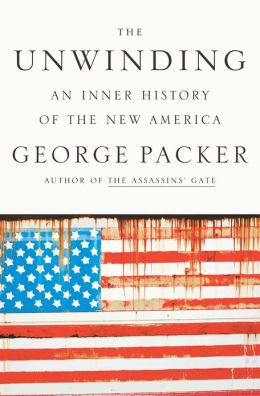
unwindingbook

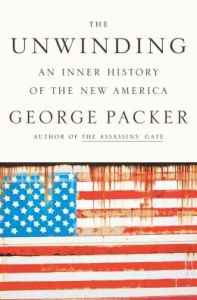
3.) The Unwinding: An Inner History of the New America by George Packer is my favorite non-fiction novel and a book that should be read by any American who wants to understand the current state of our society, culture and our politics. Packer is an excellent reporter for The New Yorker who previously wrote a book about the struggles of the U.S. endeavor in Iraq in The Assassin’s Gate. Packer got the inspiration for writing this novel after he comes home from Iraq and witnesses the 2008 financial crisis and the collapse of the markets. Along with the auto industry, Fannie Mae and Freddie Mac, he realizes that the major institutions that have held America together with a sense of unity were falling all around him. The author does an excellent job of focusing on three ordinary Americans and detailing their personal history from the beginning of ‘The Unwinding’ in the late 1970’s up until the 2012 election.

These three people are Dean Price, a struggling tobacco farmer in North Carolina who wants to revitalize the farmland by providing biofuel to school buses; Tammy Thomas, a black woman from Youngstown, Ohio who becomes a community organizer after losing her job multiple times from the closure of the factory plants along this rust belt city; and Jeff Connaughton, who comes to Washington as a staffer for Senator Joe Biden but becomes disillusioned by the lobbying, big finance levers that are pulling the strings of our politicians and leaders. One of my favorite things about this book is that Packer contrasts these three ordinary Americans with the giants of American pop culture, politics, music, and society by giving brief chapters devoted to the success of individuals of Oprah, Peter Thiel, Sam Walton, Jay-Z, Newt Gingrich, Alice Waters, etc. A must read in my opinion.
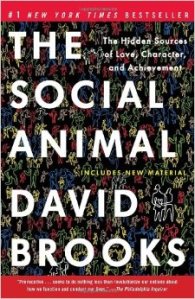
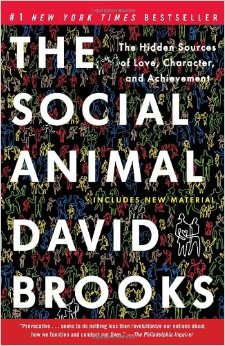
thesocialanimal

4.) The Social Animal by David Brooks is another great non-fiction novel that I have read and re-read over the past couple of years. Out of all the books on this list, it has probably influenced me the most as a person. I usually disagree with Brooks’ op-ed columns in The New York Times due to his conservative leanings but when it comes to sociology, human psychology and understanding the sub-conscious, Brooks has done the research and it really shows through in this book. The most fascinating aspect of this book is how he sets it up as a fictional novel with a male and a female character named Harold and Erica respectively.

Mr. Brooks uses a lot of recent research and findings to assert conclusions and summaries while charting an imaginary course for these two characters’ lives from Birth/Early Life to Death. My favorite chapter of the book and an area that relates to me personally is when Brooks describes the recent phenomenon of ‘The Odyssey Years’ or a person’s twenties where they are deciding what to do with career, marriage, and whether or not to have children. Brooks contrasts the ‘On The Road’ vs. ‘It’s A Wonderful Life’ type of lifestyles that young people often choose between as they come out of the Odyssey years. He details the differences of how to live such as ‘Single v. Married’ and decides its better for a person to establish roots in a community rather than going from place to place indefinitely. He makes a compelling argument using recent research for explaining what molds us into who we become in each major stage of our lives.

howardzinn
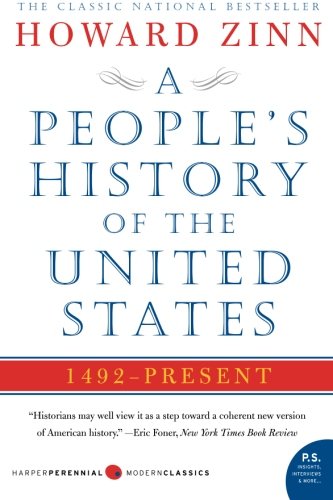
5.) A People’s History of the United States by Howard Zinn should be mandatory reading for any high school student in America who’s enrolled in a U.S. history class. Unfortunately, it wasn’t required reading for me in my Advanced Placement course which was a shame. Luckily, I was able to read it during my senior year of high school when a family member recommended the book to me and left me with a copy. The lasting appeal of Zinn’s novel is that unlike many other history books, it deals with the lives of ordinary Americans struggling through the different, tumultuous periods of our short history and the author does an excellent job of relying upon interviews, data, and statistics to give their side of the story.

Learning about the struggles of the Native Americans, the Women’s Rights movement, Civil Rights movement and other marginalized Socialists and Labor Rights activists like Eugene V. Debs was illuminating for millions of readers and myself. If only more politicians and the elite would read Zinn’s words, perhaps we as Americans would learn not to repeat the mistakes of the past and truly realize the notion of “Equality for all.” Lastly, one chapter of A People’s History that I continue to believe is very prescient even today is titled, “The Coming Revolt of The Guards” where Zinn hints at the discontent of American society even back in the early 2000’s due to the collapse of organized labor, growing wealth inequality, and the marginalization of the poor. Even though it’s a non-fiction book rooted in the past, Mr. Zinn had a lot of words of warning for our collective future.


Smartphones: Man’s New Best Friend?

Our choices for which Smartphone we use keeps increasing each year...
“Our choices for which Smartphone we use keeps increasing each year…”

 There is no invention more prominent in today’s society than the Smartphone. It is used everyday for things as simple as making a call to as complex as using an application to pinpoint your exact location on Earth. I am the owner of an iPhone and it befuddles me to this day as to how a phone has come to be so advanced and influential within our daily lives.

There’s not a couple of minutes that go by when I’m out walking where I see people absolutely absorbed to what’s happening on their smartphones, completely oblivious to their immediate surroundings. I fear that is a trend that is only going to get worse as technology continues to advance in the future. It can be a bit tiresome and annoying to have a conversation or dinner with friends when some people are too busy answering a text or checking their twitter.

 Now, I’m not against checking one’s phone from time to time or killing some time by looking at it but person to person communications have been changed significantly by the smartphone and I’m not sure if it’s for better or worse. The great irony of the smartphone is that while it has improved communications through texting, calling, social networking, etc., person to person contact has seem to be quite harmed by this technology.

There have been countless instances where people have whipped out their smartphones out of sheer boredom, nervousness or on purpose when they are out on dates, at dinner or waiting in line for a coffee. I recently watched a news report where they reported an increase in smartphone-related car accidents where people were too occupied in texting while driving or others were too busy texting then to look both ways before crossing the street.

 I am sometimes guilty of paying too much attention to my smartphone and I am trying to limit the amount of times I use it during the day. It is a greatly useful tool and has made my life and the lives of others a lot easier. I do worry about the negatives though in terms of causing too much distraction and also harming the way people interact with each other on a personal basis. I read in a recent Newsweek article that a lot of Americans sleep with their smart phone. I was a bit incredulous about this but I guess that’s what it should come to when a smartphone can basically do anything that we need ten different devices to do before.

 I’ll leave you with a moment that left me quite skeptical about the positives of the smartphone; I was hanging out with friends and having a couple of laughs when there was a moment of stillness in the midst of conversation. One by one, each of them started to take out their phones and I was then left as the only one not gazing into the alluring screen of an iPhone and other smartphones. I was disappointed by kind of resigned to the fact that I have to get used to this tendency of people today to grab for their phones for instant stimulation but I do miss those days when I didn’t have to worry about a smartphone coming between another human being and I.