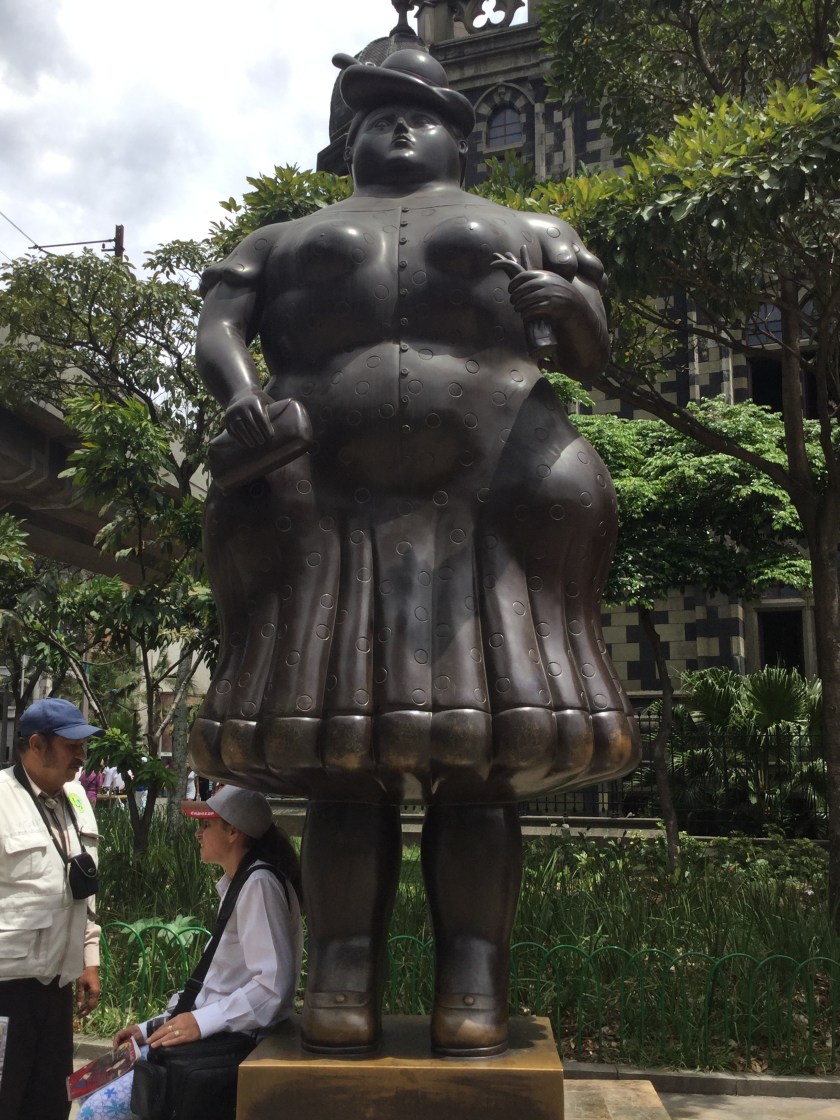
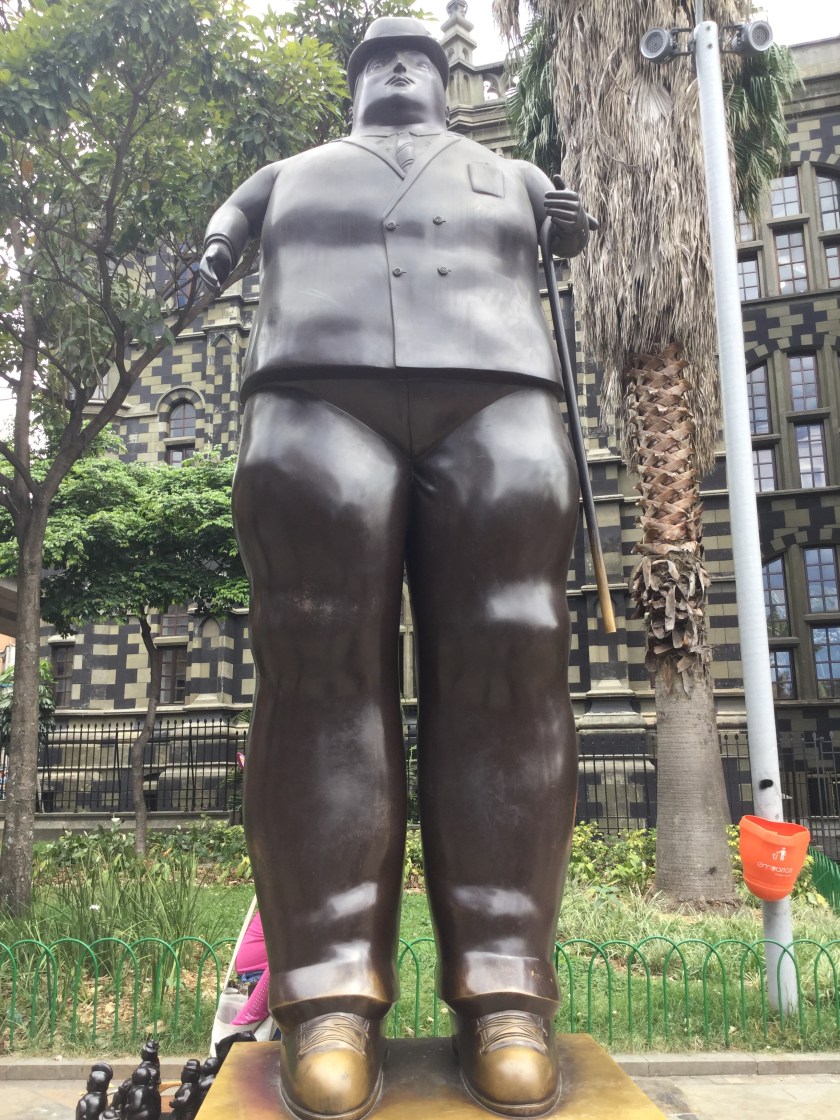
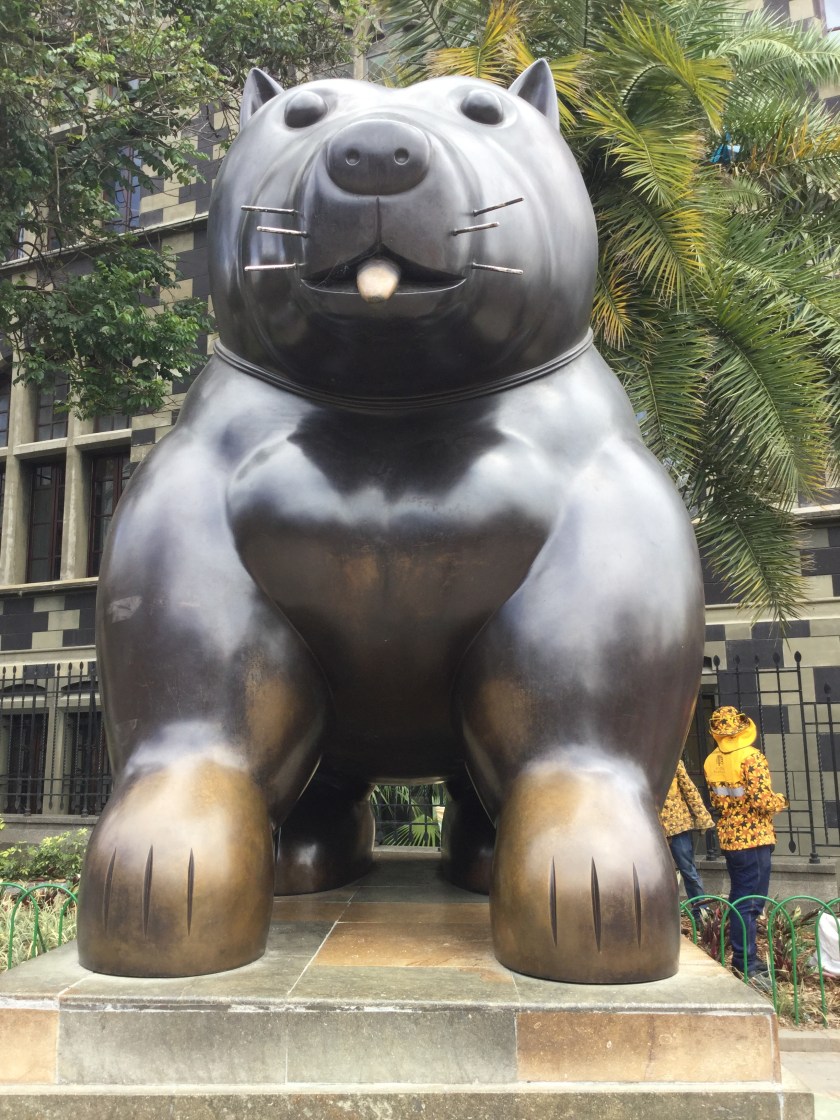
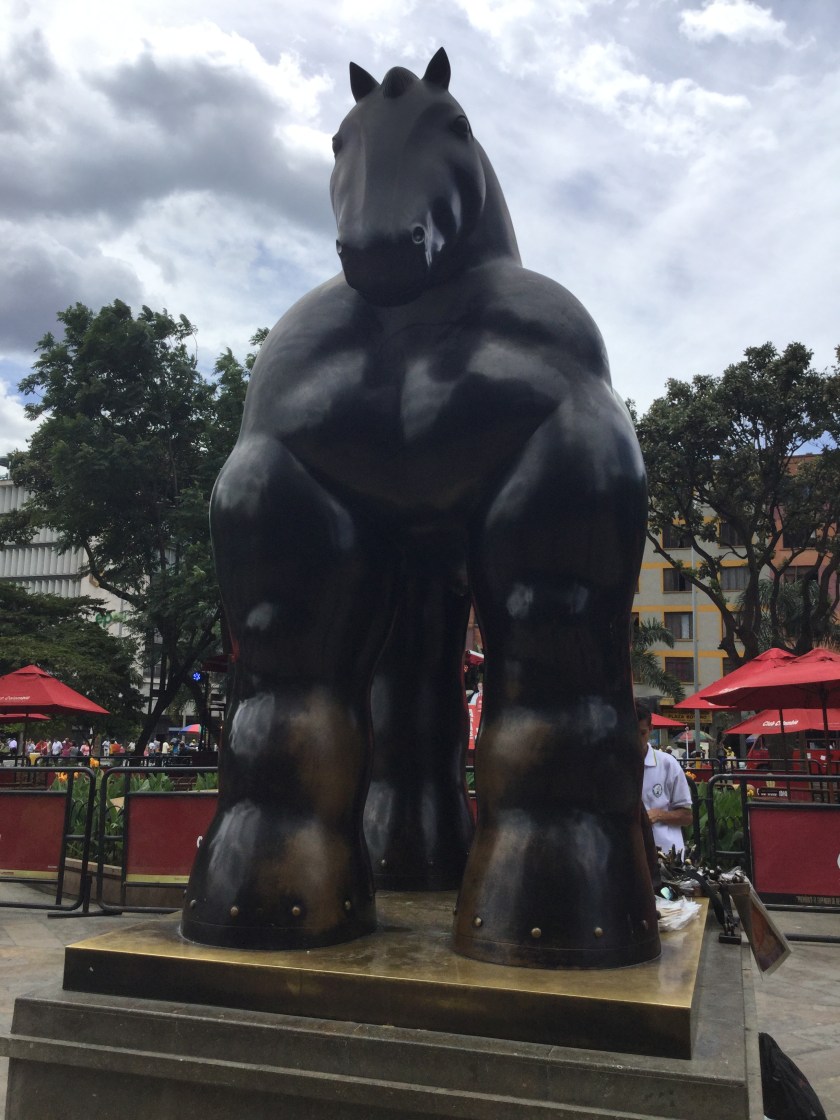
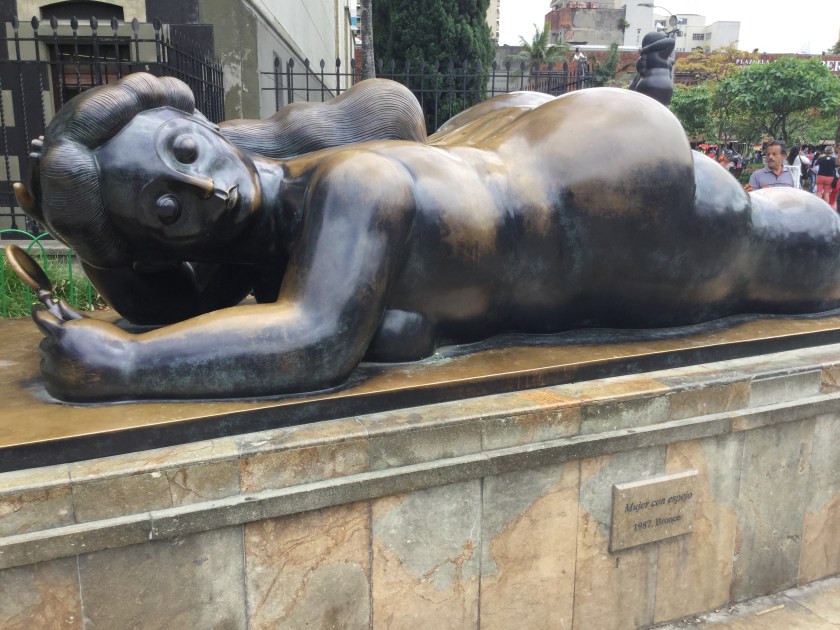

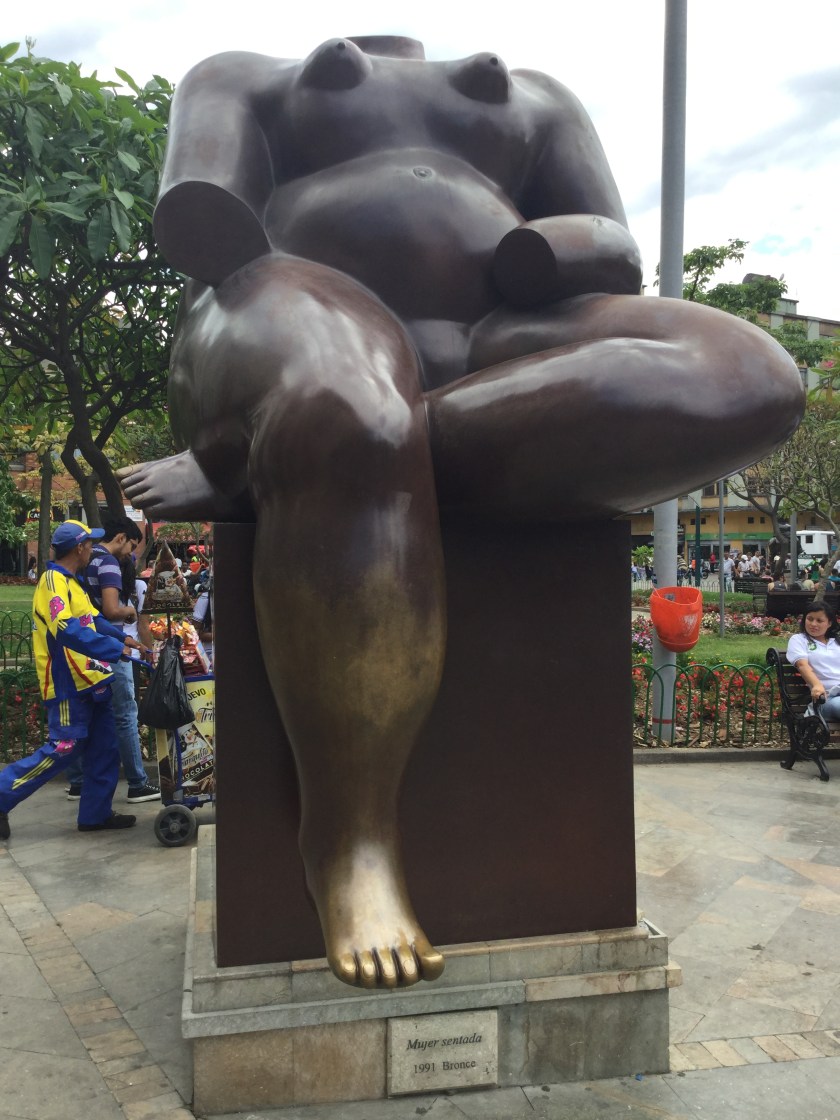
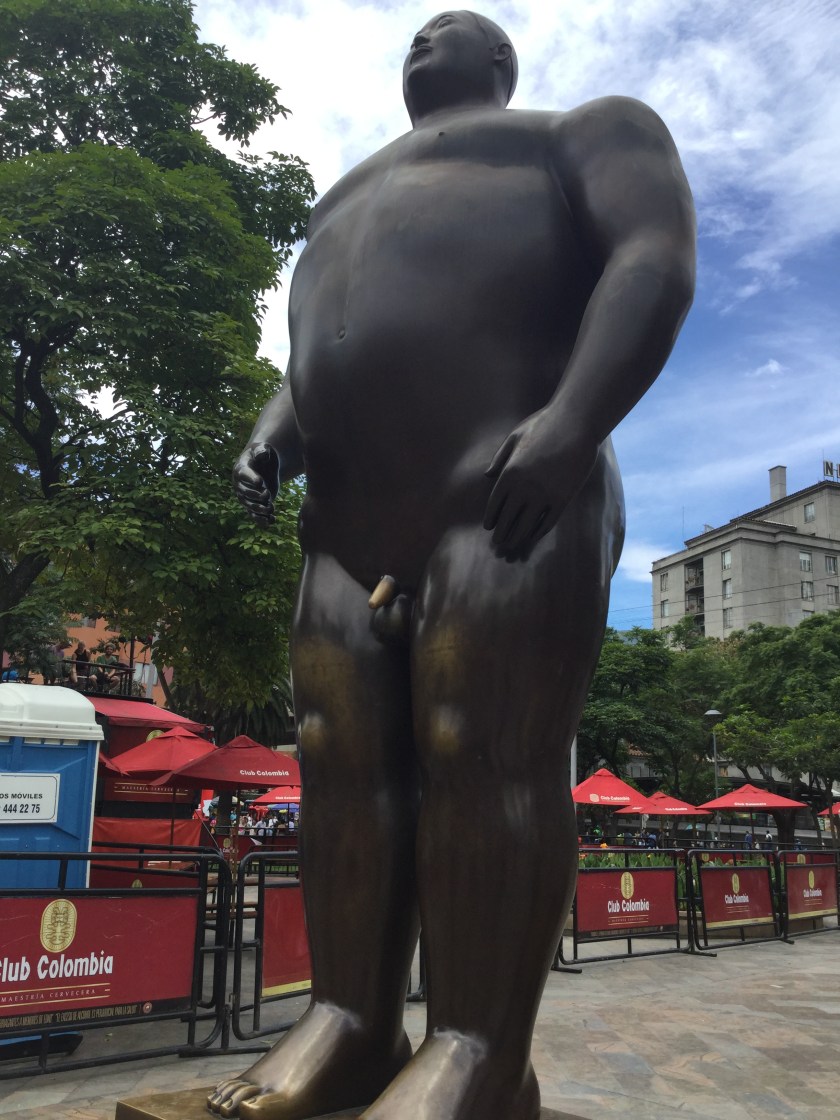
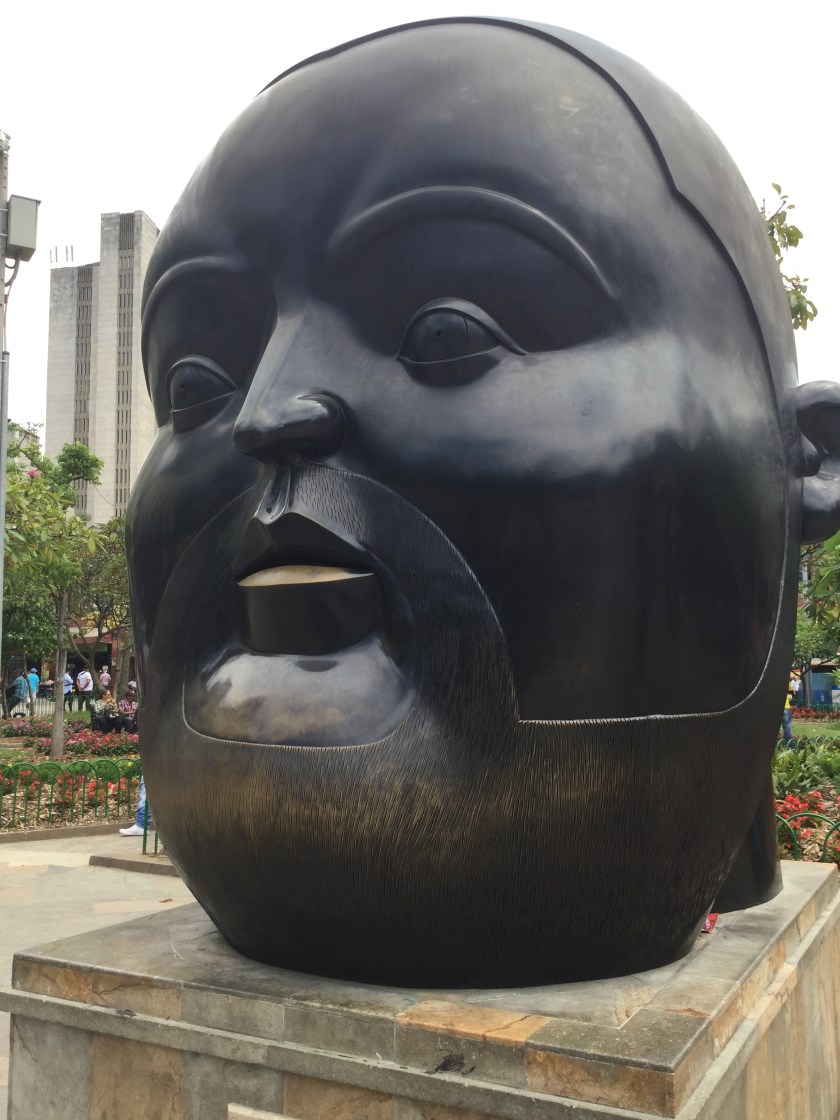
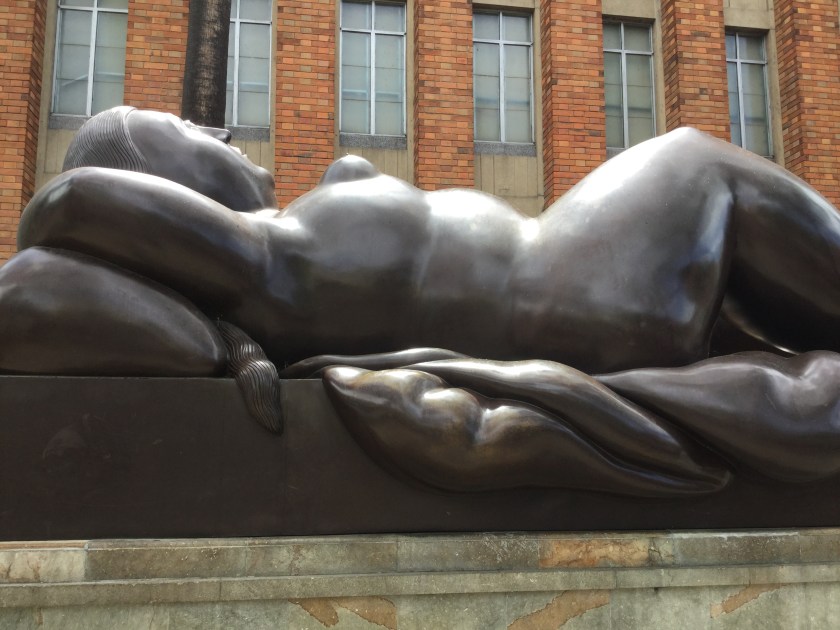
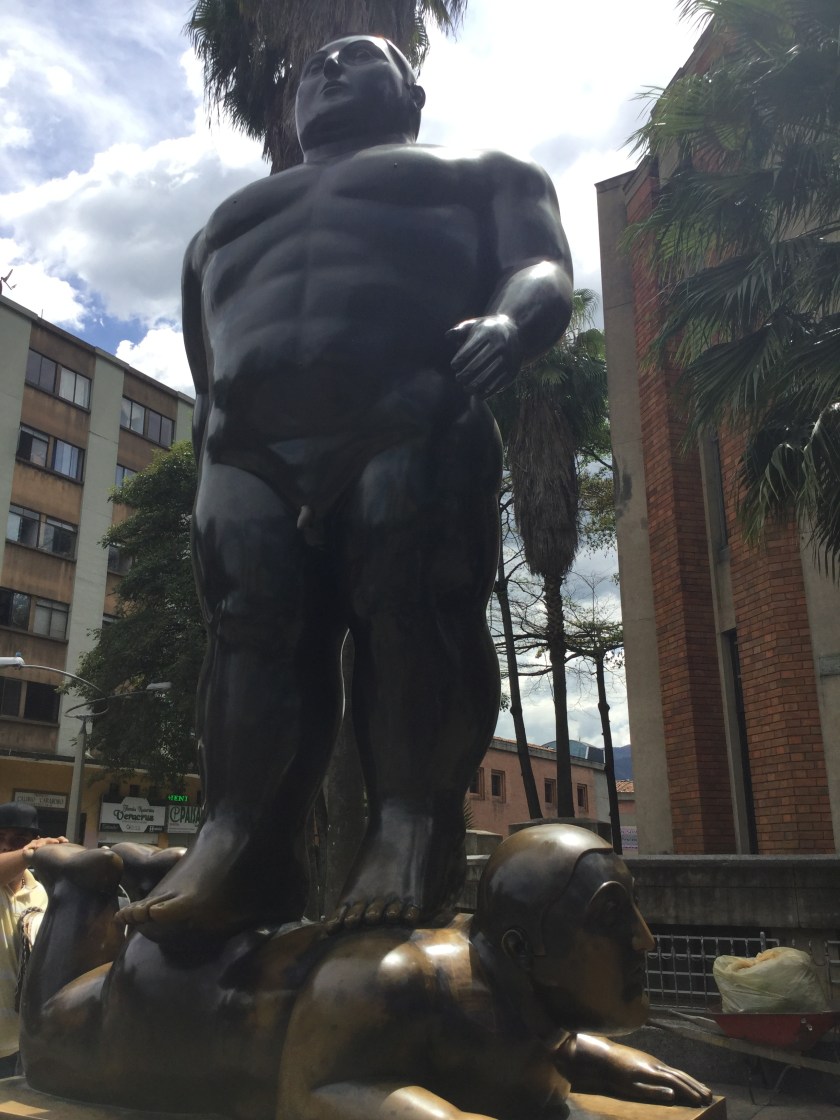
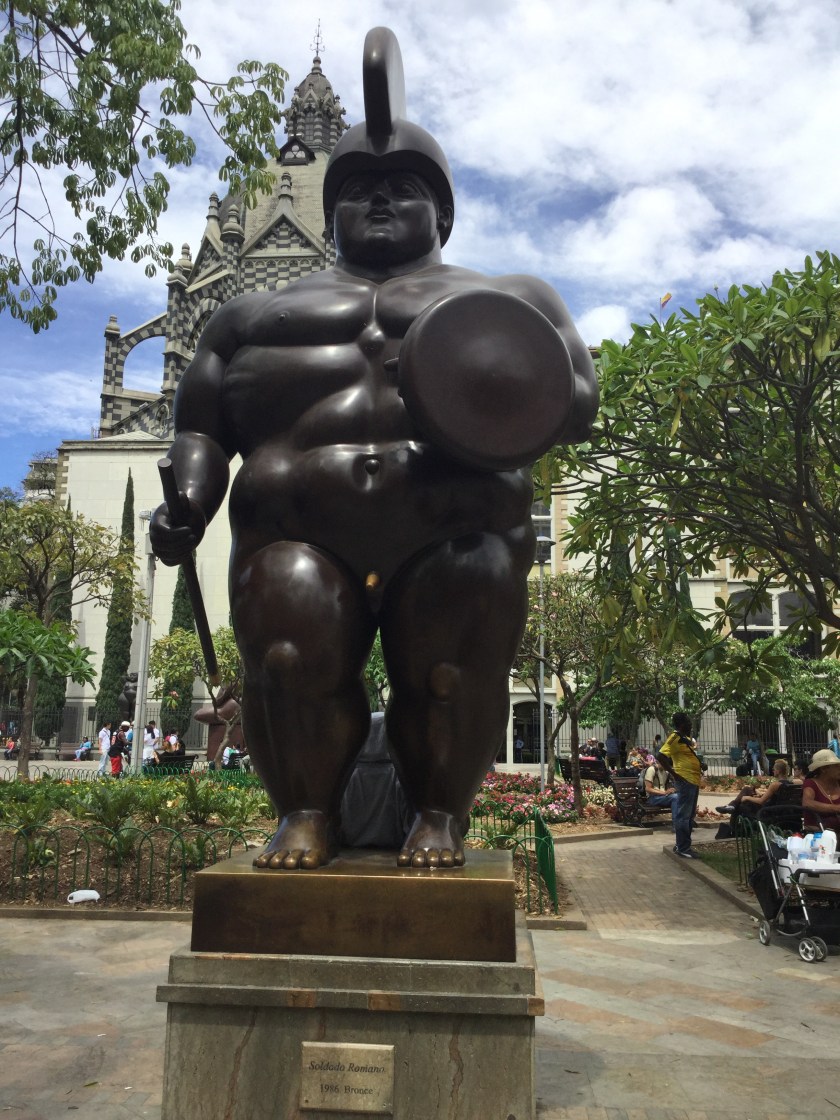
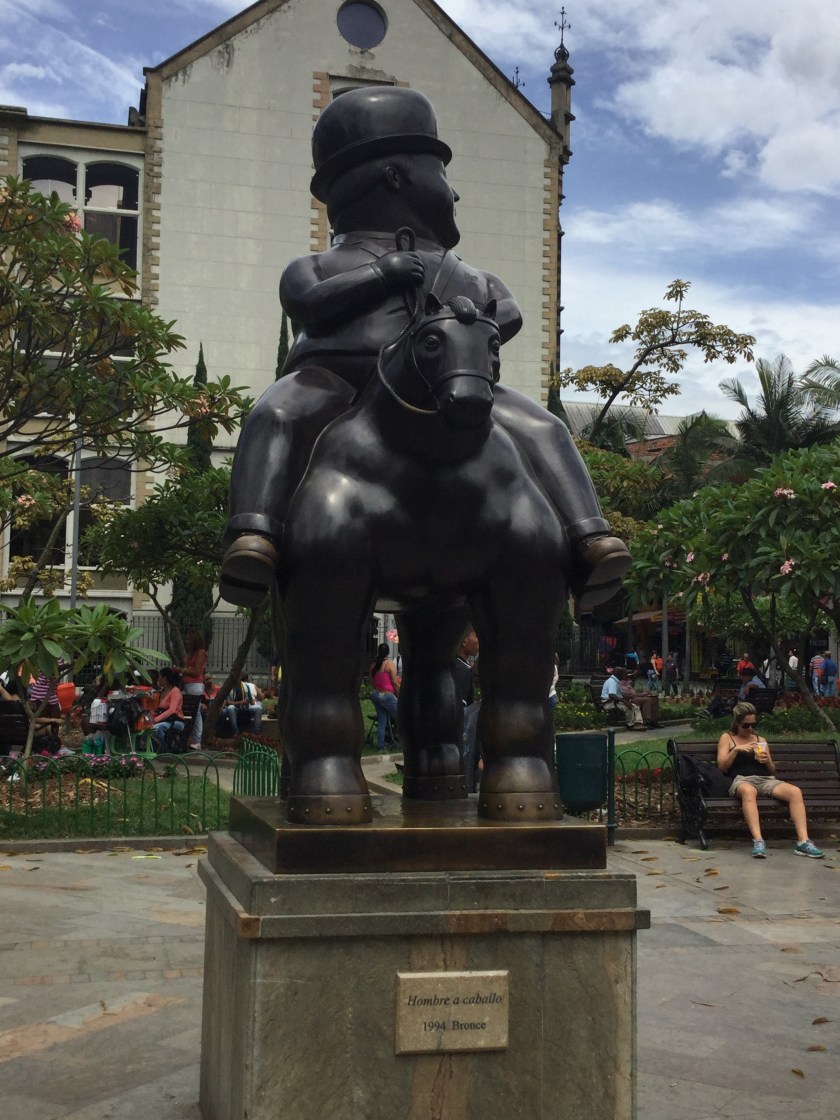
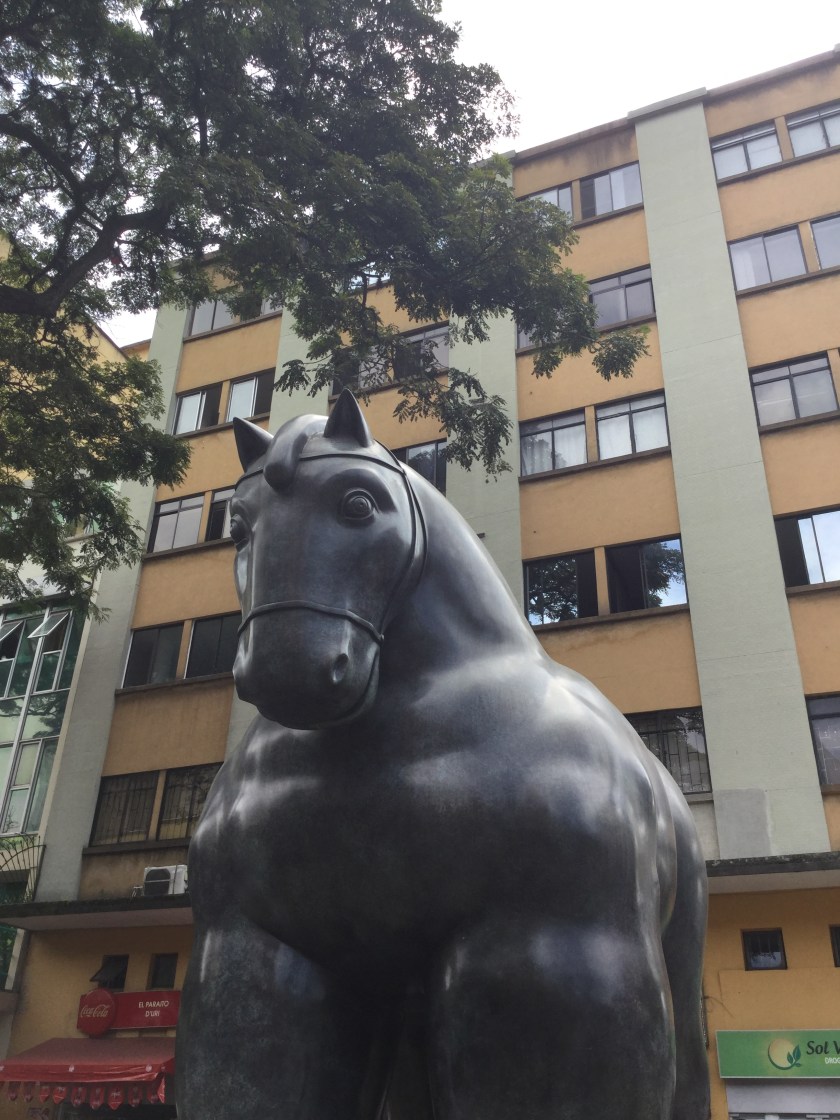
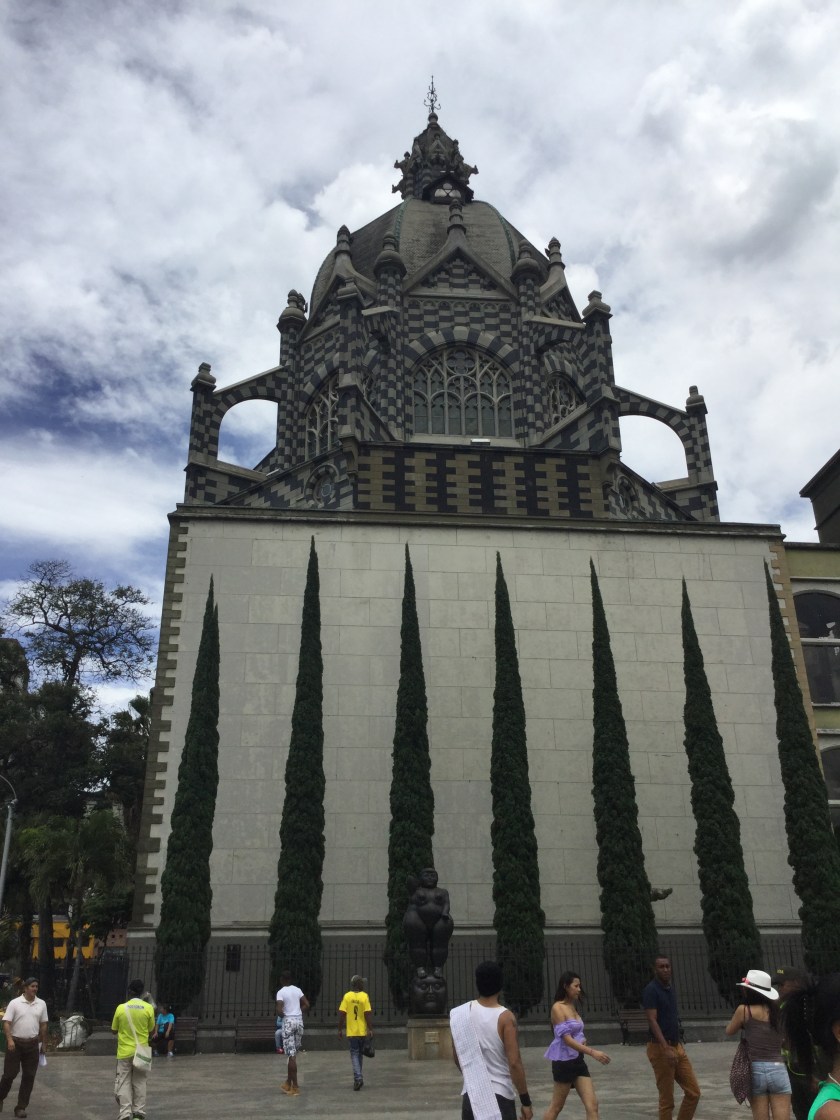
Camera: iPod Touch, 6th Generation
Location: Plaza de Botero; Medellin, Colombia

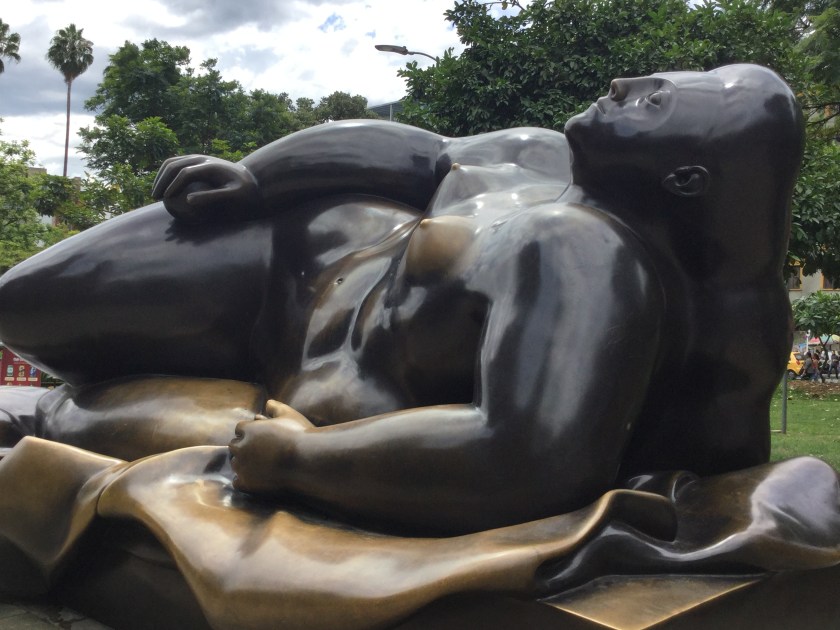
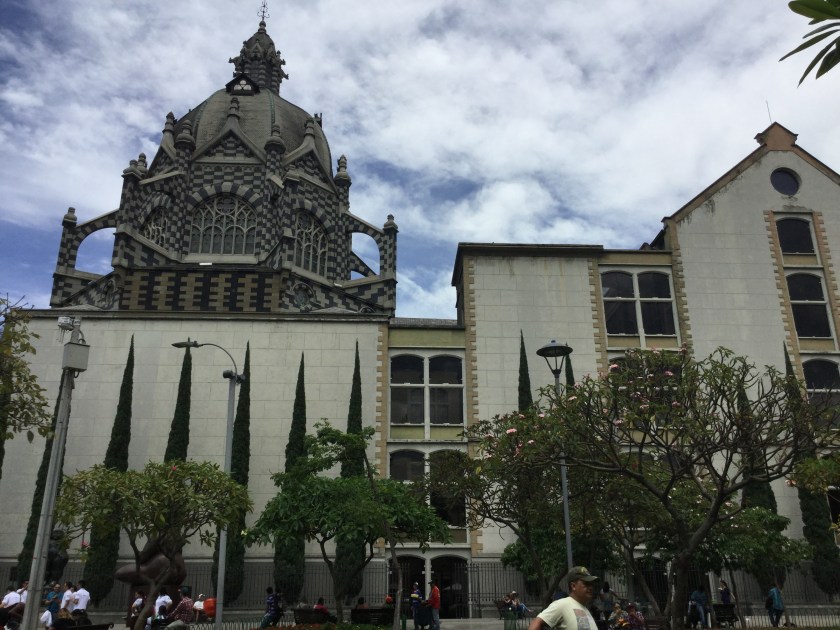
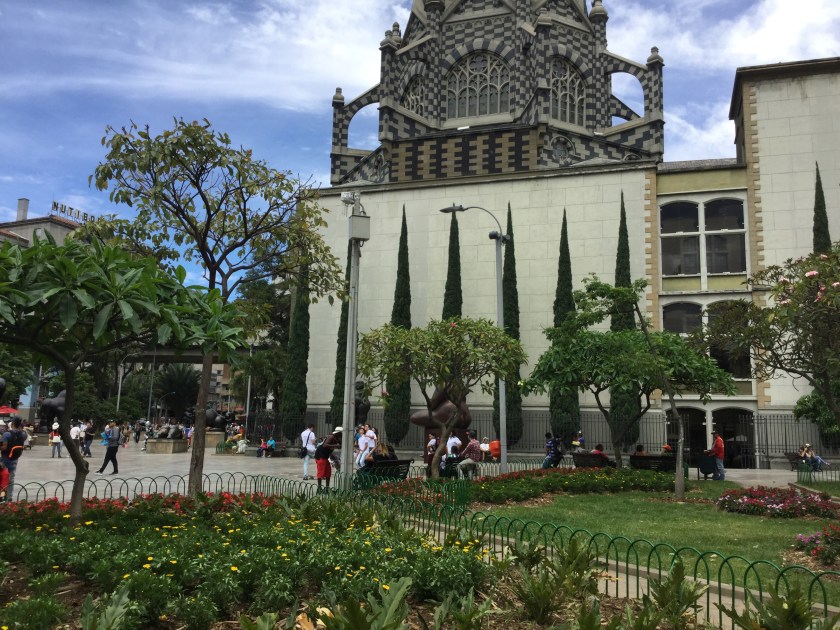
Camera: iPod Touch, 6th Generation
Location: Plaza de Botero; Medellin, Colombia

One of the best things about living in a foreign country is exploring and becoming immersed in the local sports scene. When you’re living outside the U.S., a different kind of football takes precedence over all of the sports combined. Football, in most countries, is the national sport and one in which kids from an early age learn to play and master over the years. Whether its’ a city street, a dirt field, or turf glass, football is an adaptable sport to any kind of climate which is why its’ such a famed world sport.
Before I started my travels, I looked upon football (soccer) as not that exciting and didn’t understand why it was so beloved. I didn’t like how there wasn’t that much scoring and didn’t appreciate how much skill and technique is needed in order to be successful. Football is like a fine wine that you grow to appreciate the more you learn about it. It’s a unique sport that caters both to the individual and the team too. You can play it anywhere and with anyone. Now, that I’m in my mid-20’s, I can say with a growing confidence how much I appreciate the ‘beautiful game for what it is.
The more I have traveled, the more I have witnessed the absolute love and passion that football fans have for their teams. Growing up in New York, I was a big fan of the New York Yankees and the New York Jets but it doesn’t really compare to the fanatics and supporters who back their football clubs up whether they win or lose. When I lived in Istanbul, Turkey, I saw this passion firsthand as celebrations or riots would occur whether or not the three big teams of Galatasaray, Besiktas, and Fenerbahce would win or lose. Fans of any of these local teams would light flares in the stadiums, parade through the streets, and fill the local bars up to capacity. There are few things in life that get people as emotional as the result of a football match. You have to be careful if you catch yourself in the wrong part of the city if you have your favorite team’s jersey on but they don’t support that team in that neighborhood.
I’ll never forget when thousands of Fenerbahce fans would crowd the streets of Kadikoy to celebrate their win over Besiktas. They sang team songs, lit flares up, and you could barely move through the streets. I, as a disgruntled Besiktas fan, realized just how outnumbered I was so I was forced to hide my dismay after the team had lost in a crushing defeat. There were also happier teams as an adopted Besiktas fan back in 2012 when I was studying abroad in Istanbul at the time. I remember counting down to the start of my first Besiktas match with thousands of other supporters as we jumped up and down to sing songs in support of our boys in black and white.
It’s truly a special experience when you go to a sporting event in a foreign country. I tend to find that football matches like the ones I experienced in Turkey had very passionate fans that made quite an event out of each and every game. While sporting events in the U.S. are quite fun and enjoyable in their own right, they are much more reserved than what I’ve seen from my experiences in Turkey and Colombia. A recent sports triumph that happened here in Medellin has helped make that even more true in my opinion.
Last Wednesday night, the popular and beloved Atletico Nacional team of Medellin triumphed over the Independiente del Valle FC of Quito, Ecuador to win the famed Copa de Libertadores trophy. For those of you who don’t know, the Copa de Libertadores is the South American equivalent of the UEFA Champions League where the best teams of the continent from Argentina to Paraguay battle it out over the course of many months to decide which team is the best in all of South America. It’s an intense tournament with a lot of talented teams. There are a lot of matches to play and a lot of travel involved. Its’ so difficult to win this championship that only two teams from Colombia have ever emerged victorious.
Atletico Nacional won the first championship for a Colombian club, in 1989, and Once Caldas of Manizales earned the second championship more recently in 2004. You could argue, in fact, that the Copa de Libertadores is more competitive than the UEFA Champions League of Europe given that twenty-five different teams from South America have won the title making it a more balanced and fair. There are heavyweight teams like Boca Juniors of Argentina and Santos of Brazil but there have been many underdogs who have emerged victorious in their quest of the trophy over the Copa’s history of competition.
I was lucky enough to be at a bar on the recent night when Atletico Nacional won their 2nd Copa de Libertadores title in their team history. It took them 27 years to become champions of South American club football and the excitement was palpable. A new and younger generation of devoted fans has emerged here in Medellin, and has never tasted a Copa win before. The city was on edge before the match but there was a sense of destiny with fans of all ages and backgrounds sporting the green and white of Atletico Nacional.
Taxis were hoisting the team’s flag all over the city, vendors were selling jerseys everywhere, and bars were decorating their establishments with green and white balloons. If you were a recent visitor to Medellin, you would think that there is only one football team in the city, and not two (Independiente Medellin is the other football team here with red and blue colors.) It was a special setup for a memorable match. Atletico Nacional had tied Independiente del Valle in Quito with a score of 1-1 so all they needed to do was come out with a simple victory at home now.
Due to an early and beautiful goal by forward Miguel Borja, the apprehension quickly turned to celebration for fans of Atletico Nacional all around the world. Fans still had to draw their breath after another 90 minutes of tension but Atletico Nacional were poised and determined to come out on top as champions. Atletico Nacional were victorious at 1-0 and when the final whistle blew, all of Medellin erupted in cheers, dancing, singing, and drinking.
Never in my life had I seen a city so joyous in the aftermath of victory. Cars were honking, fireworks were exploding all over, and huge crowds had formed in the streets to celebrate. Luckily, everything was peaceful here in Medellin during the night. Avenida 70, where a lot of bars and clubs were located, were so crowded that it took me an hour to get home because taxis couldn’t get through the streets. It was a wild and uproarious night and one that won’t soon be forgotten in the Colombian sports history books.
As a foreigner living here, it was pretty amazing to see the passion and the joy on the faces of the fans. If I had to compare it to a U.S. sports celebration, it would most closely resemble the Red Sox winning the 2004 World Series after an 86-year drought. The celebrations here were that intense and extensive. The school where I’m teaching here in Medellin opened its doors a few hours later than normal so that students could get some rest (or the teachers themselves.) In Turkey and now Colombia, I’ve seen the love that millions of people have for the real football. It is truly ‘the beautiful game.’
Medellin, a bustling metropolis of over three million people, has a popular and well-known nickname, “The City of Eternal Spring.” I can say for certain that this particular nickname is well warranted and appropriate given the moderate temperatures and humidity that make up the day and night here. Among the cities and towns I’ve visited in Colombia thus far, Medellin is special in that its’ climate is hospitable and agreeable.
Luckily, after a long day’s work at my new school, I can come back home without sweating through my shirt and dress pants. When it does rain here, it’s refreshing and cool. Sometimes, it can pour really hard but usually only for short periods of time and despite July and August being the prime months for the rainy season, it hasn’t been that frequent of an occurrence.
In addition to its’ great climate, there are other qualities that make Medellin a unique city. Its’ transportation is well organized and runs smoothly. The metro system here is one of the few in South America and is clean, affordable, and has frequent trains. I’ve been impressed at how easy it is to get around the city without breaking the bank. In addition to the metro, there are also the ‘Colectivo’ buses, the Metro Plus bus system, the Metro Cable car system, plentiful taxis, and Uber if you really need to get around in a hurry. Motorcycles, which I noticed to be quite popular on the Atlantic coast, are also another great way to get around especially if you’re not patient with the traffic here.
Caution is necessary, as ‘right of way’ does not exist for the pedestrian so you have to be an eye out for both cars, taxis, motorcycles, and large buses. Everything seems to run efficiently when it comes to getting people to and from their jobs whether they are in the north, south, or central part of the city. While I haven’t spent much time in Bogota or Cali, I would say that Medellin is the most interconnected city in Colombia when it comes to transportation.
Residents of Medellin and the Antioquia region in general are commonly known as ‘Paisas.’ This nickname is also spot on given the fact that these people are really born and raised here in the countryside. Compared with Costenos, Paisas are accustomed to the mountains and hills that surround their fair city. It’s been an adjustment for me given my past experience of living near the Atlantic coast of the country. It’s a unique opportunity to be able to see Colombia through a different lens.
While the food is similar to what you would find in other parts of Colombia, Paisa cuisine is unique in offering hearty dishes like ‘La Bandeja Paisa’ and ‘Cazuela Antioquia.’ Rather than seafood, Antioquia pride itself on its’ offerings of different kinds of meat served with potatoes, avocado, tomatoes, etc. Each region of Colombia including Antioquia are known for its’ cuisine offerings which may be unique to the particular region.
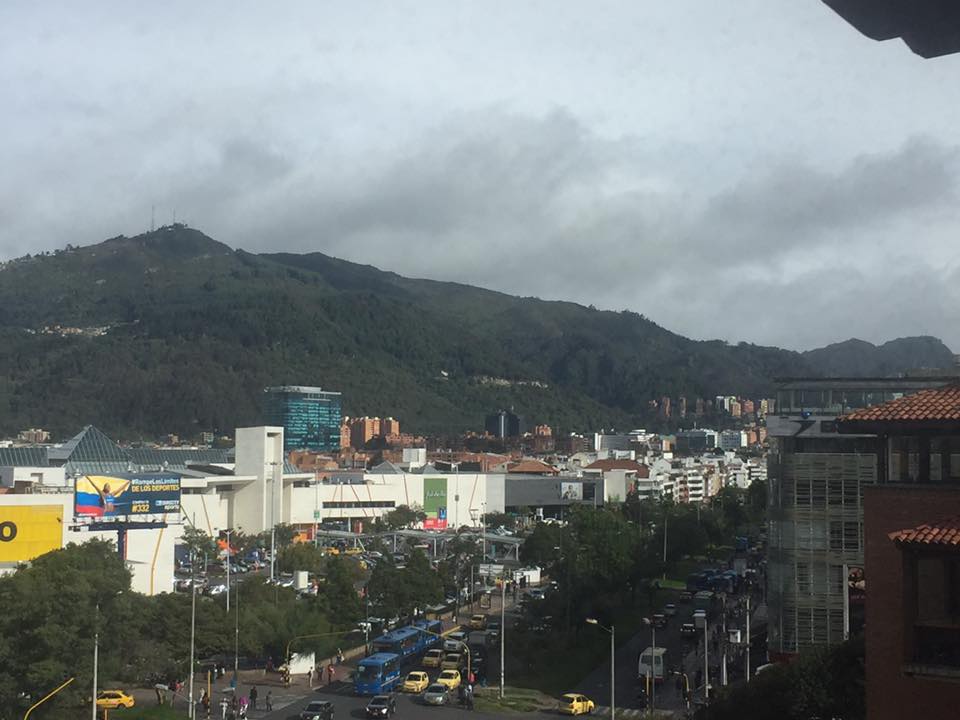
To put it bluntly, Medellin is a city which contrasts its’ natural surroundings of mountains and rivers with its’ skyscrapers, bridges, and freeways. In any view of the city, you get a mix of pure nature and urban settings. Tucked below the valley, the city rises with its’ buildings and elevated metro to contend with the nearby green mountains that surround the city. The most special sight to me occurs at night when the lights of the city flicker brightly across the valley and off the side of the mountains. Each white and orange light that shines in the valley at night signifies one of the homes, apartments, and buildings that house a few of the city’s overall three million residents.
I have only been in Medellin for two weeks so far but I can tell that this is a special place. In addition to the great climate, good public transportation, tasty local cuisine, and stunning views of nature, the city’s inhabitants are friendly and helpful. Sometimes, to me, it doesn’t feel like a big city but a cluster of small towns that make up an urban area. Part of the fun of living here is discovering new neighborhoods that each has something different to offer. There are cool museums and botanical gardens to see at the University of Antioquia, trendy restaurants and bars that make up most of the Laureles / Estadio neighborhood, and the heart of the nightlife scene in El Poblado. It’s also cool to check out the more suburban neighborhoods that are within a metro ride of Medellin such as Envigado and Sabaneta.
Even if one were to get bored with Medellin, there are a lot of things to do, and places to see in the Antioquia region. In addition, there’s also a number of day trips out there to explore the local nature scene and to experience more traditional villages. It would be unrealistic for me to say that you can get bored living in Medellin because it really is a vibrant cultural capital and I believe that a lot of tourists and residents from other Colombian cities now acknowledge that fact. Having had an unfortunate negative reputation in the international news media for many decades, Medellin is a city on the rise with a deep culture, cool neighborhoods, and hard-working, friendly people who want to show you the best of what their home city and region have to offer. I am very happy with my decision to have come back here to Colombia and to make my current residence here in ‘The City of Eternal Spring.’ Hopefully, as a reader of my blog and website, you’ll come down to visit Medellin sometime to find out just what all the hype is about.


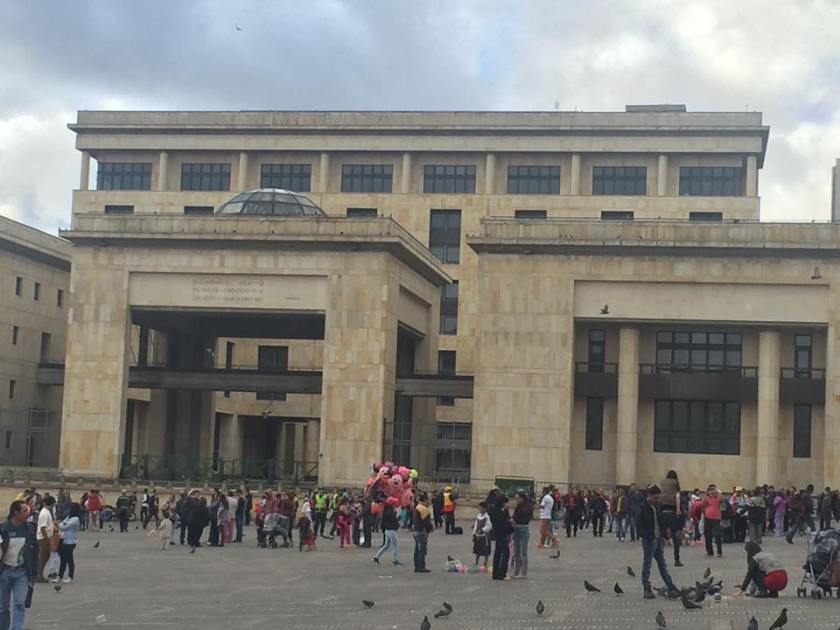


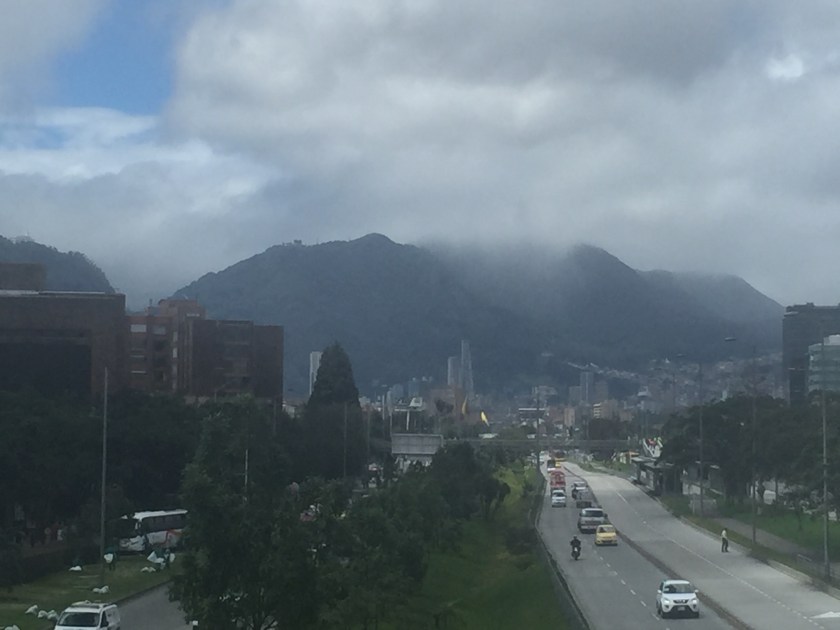
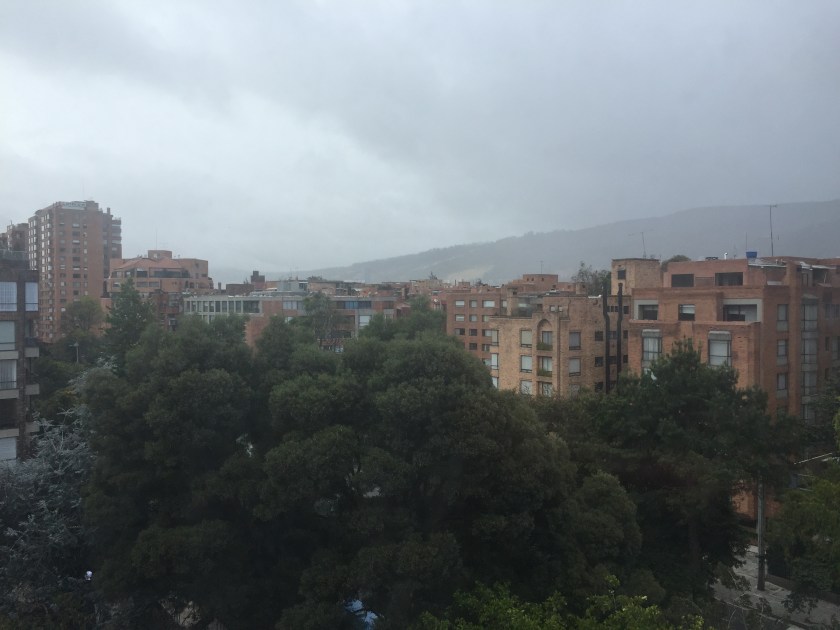
Camera: iPhone 6
Location: Bogotá, Colombia
After my first experience of living and working in Colombia was cut short rather unceremoniously, I decided not to give up on volunteering here as an English teacher and worked hard over the past three and a half months to return to this beautiful and lively country. After going through visa, medical, flights, and other forms of tedious paperwork all over again, I remained committed to what brought me to Colombia in the first place; a chance to improve the English proficiency of my students and to inspire them to look at the world a bit differently than before.
I have arrived here again in early July to accept the role of ‘English Teaching Fellow’ with the Heart for Change program and Volunteers Colombia organizations with the additional support of the Colombian Ministry of Education. I was extremely excited to hear that I had been accepted to this program in mid-April of 2016. Since then, I’ve worked diligently to prepare myself for the responsibilities and duties expected of me during these next six months to a year.
I’m quite proud to be among 240 English Teaching fellows who have come from over 30 countries around the world to be apart of this mission. It’s truly inspiring to meet and see other teachers come from nations like Iceland, Iran, Kenya, Serbia, and elsewhere with the goal of making Colombia a bilingual nation. This effort to improve the English language proficiency level of Colombia’s students is a massive undertaking and a worldwide effort. I am glad to once again play a small role as an ESL teacher in making Colombia more proficient in the English language.
After arriving in Bogota, the capitol of Colombia, the other 240 fellows and I underwent a week of intensive teacher training in order to prepare us for the job that lies ahead. While the topics that we went over were mostly review for me given my past experiences, I was grateful for the refresher and was impressed by the job done by the UNICA (Institucion Universitaria Colombiano Americana) in helping prepare us for the program’s start.
Unfortunately, I wasn’t able to explore much of Colombia’s capitol city of Bogota but I was able to walk around and check out the historic district along with the Plaza de Bolivar. In addition, I was able to dance some Salsa, eat some delicious Ajiaco soup at La Puerta Falsa (highly recommend), and practice Spanish again with the locals. Hopefully, I will be able to return to Bogota soon because there is a lot to do there and it’s a bustling metropolis on the same level as New York City and Mexico City.
What someone would notice immediately about Bogota is the unpredictability of its’ climate and it’s weather patterns. It could be sunny and warm in the early afternoon, completely cloudy an hour later, and then rainy and cold in the evening. If a direct comparison can be made with a U.S. city, the weather of Bogota would most closely resemble Seattle for better or worse.
Bogota is tucked in close to the Andes which allows visitors an excellent view of nearby towering, green mountains that jut out beyond the modern array of skyscrapers and office buildings. Bogota, like other Colombian cities, are urban oasis’s surrounded by rivers, mountains, and tropical jungles. Thankfully, from what I have noticed, there is a healthy balance here between nature and civilization, which is lacking in other places.
After having finished the initial paperwork, received my certificate from UNICA, and flown on to Medellin where I’ll be working full-time as a co-teacher in a public school starting next week, I am happy to close a past chapter in my life and open up a new one which has a positive, optimistic outlook. The first six months of 2016 were tough for me personally but I’ve put the past behind me and am ready for what comes next.
I look forward to finishing the work that I started back in January 2016 here in Colombia and hope to do some good work for my new students for the next six months or more. It’s been a wild ride with ups and downs, but I’m happy to continue riding the rollercoaster and seeing where I end up. For now, I’m fortunate to be back here in Colombia and won’t let this second chance go to waste. Todos Por Un Nuevo Pais!
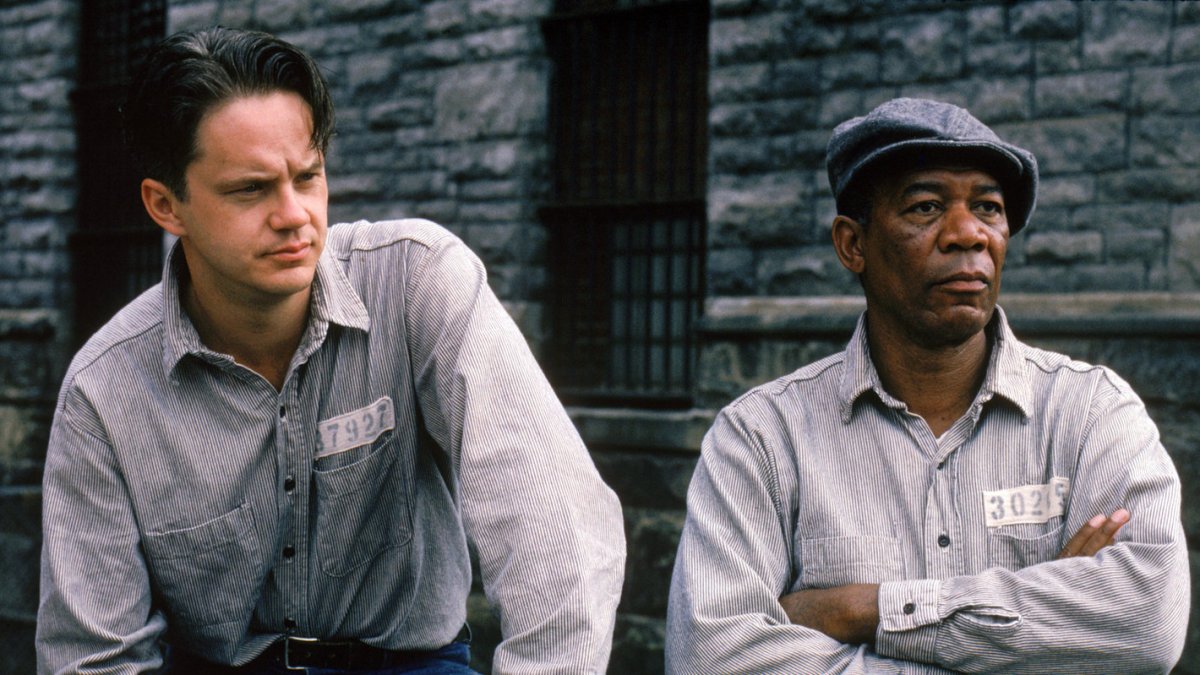
Few other modern films capture the power of the human spirit more than The Shawshank Redemption. Directed by Frank Darabont, released originally in 1994, and starring Morgan Freeman as Ellis ‘Boyd’ Redding, Tim Robbins as Andy Dufresne; this film was not originally successful in movie theaters when it was released to the general public.
However, since then, The Shawshank Redemption has become a cult classic which has skyrocketed in popularity even after its’ release twenty years later. It is often considered by film critics to be one of the best Hollywood movies of the 20th century. Personally, I have watched this film multiple times and consider it to be my all-time favorite movie. If I’m channel surfing late at night and I see that The Shawshank Redemption is on AMC, HBO, or another movie network, I’ll often stop what I’m doing to watch the film already in progress. It’s that good of a movie and is timeless in its’ themes and its’ overall message.
More so than just the brilliant acting by Mr. Freeman and Mr. Robbins, along with the great directing by Frank Darabont, the cinematography is quite flawless and the film has a consistent flow to it. It also has an engaging plot and setting that suits the overall themes quite well. The Shawshank Redemption is a very human story with a lot of powerful, and emotional scenes that have captivated millions of viewers. It’s rare to come across a film today that can tug at your heartstrings and make you really feel deep emotions about a fictional story and characters. The Shawshank Redemption is able to pass that test and remind you of what it means to be human. The film highlights the triumphs, the tragedies, and the deeper meaning that we seek within our own lives.
Andy Dufresne is a young, smart, and ambitious banker in Portland, Maine who is accused and later convicted of murdering his wife and her extramarital lover. At first, he appears to the audience as a cold, detached, and remorseless person who very well could have committed that awful crime. The other main character, Ellis ‘Boyd’ Redding, a long-time prisoner at Shawshank state prison is unimpressed by Andy’s appearance at first sight and remarks how “a stiff breeze would blow him over.” As the saying goes though, “Don’t judge a book by its’ cover.”
Throughout the film, we learn through the eyes of Red more about Andy and what he’s like in terms of his true personality and character. We don’t know whether he killed his wife or not because he pronounces his innocence to Red and the other prisoners. Red is resigned to his life in prison and tries to make the best of it by being ‘the guy who can get you things.’ His friendship with Andy blossoms due to a simple, haphazard moment when Andy asks Red for a rock hammer to carve chess pieces. It’s an unusual request but it gets the two men to talk to each other and to break down the stereotypes that Red has of Andy, and Andy has of Red.
Andy must deal as best as he can with his new life as a prisoner whom may in fact be innocent of the crime that he was convicted of. As Red states knowingly in the film, “Prison is no fairy tale world.” Andy has to cope with the vindictive warden of Shawshank prison, played by Bob Gunton as well as the malicious head prison guard, Captain Byron Hadley, who is played by Clancy Brown. He also must fend off some sadistic fellow prisoners who wish him physical harm and sexual violence. It is clear to the viewer that Andy, despite the injustices he has encountered in Shawshank and outside of Shawshank prison, maintains the ‘hope’ that he’ll survive his ordeal and eventually win his freedom. Despite his friend, Red, warning him about the dangers of seeking hope in a place where none can be found, Andy reminds Red that “Hope is a good thing, maybe even the best of things, and no good thing ever dies.”
The most memorable scenes of this film still stick out to me after all of these years. My favorite is the famous ‘Suds on the Roof’ scene when Andy risks his life to give his fellow prisoners a one-time allowance of beers while they tar the roof of a factory by giving the prison guard, Hadley, some financial advice on how to deal with the IRS. Andy knew how much it would means to his fellow prisoners if they could enjoy a beer or two while doing hard work in the hot Maine summer sun. In that scene, he also showed a lot of bravery by confronting Hadley about if “he trusts his wife with money or not.”
Another notable scene that stands out to me is how Andy continuously asks the state of Maine for extra money to give to the Shawshank prison in order to build a memorial library in honor of another prisoner, Brooks Hatlen, who committed suicide regrettably after finishing up his sentence. Andy keeps writing letters for months on end but finally receives the funds he needs after a few years to build the memorial library. Because of this library, many prisoners like young Tommy Williams, who Andy takes a liking to, end up reading books and even receiving their High School GEDs (General Equivalency Degree).
Lastly, there is an extremely beautiful scene where Andy is collecting records for the prison library and ends up putting an Italian opera record over the loudspeakers for all of the prisoners to hear. He locks himself in the room so the guards and the warden can’t get to him. For a few minutes, the opera music flows openly through the walls and the bars of the prison. As Red puts it succinctly in the movie, “For the briefest of moments, every last man in Shawshank felt free…”
After nineteen years in prison and many tumultuous events, Andy knows that his destiny no longer is meant just for the walls and bars of Shawshank prison. He dreams of a coastal city in Mexico known as Zihuatanejo, where he can run a hotel and begin his life anew. Andy implores Red to join him one day and help him out with his business since he’s a man who “knows how to get things.” While Andy remains hopeful and optimistic even when his future seems grim, Red is skeptical and dismissive of Andy’s “pipe dream.”
Despite the long odds, Andy doesn’t let the negativity get him down and puts effort toward realizing his dream of getting out of Shawshank and making his way to Mexico. This courage and perseverance shown by Andy has a lasting effect on Red by the end of the movie as they have become close friends who have known each other for almost twenty years. Red realizes the innate truth behind Andy’s belief in everlasting hope and to “get busy livin’ or get busy dyin.’”
Some people who have not taken the time to watch The Shawshank Redemption regard it naively as just another prison movie. However, this summarization is far from the truth. Similar to The Green Mile, it’s a story about finding hope in the least hopeful of places and never giving up on life when it seems rather cruel or unjust. It also has a constant theme about the power of male friendship and how Andy and Red have bonded together over the years despite their initial differences.
The Shawshank Redemption was never a summer blockbuster or a critically acclaimed behemoth of a film but it is widely regarded now as one of the best American films of all-time. Many people have cited this movie as having changed their lives for the better when they were going through difficult times in their personal or professional lives. Above all else, The Shawshank Redemption is a story about one man’s ability to remain hopeful during the most difficult and harsh circumstances. As Red states at the end of the film, “Get busy livin’ or get busy dyin.’ That’s goddamn right.”
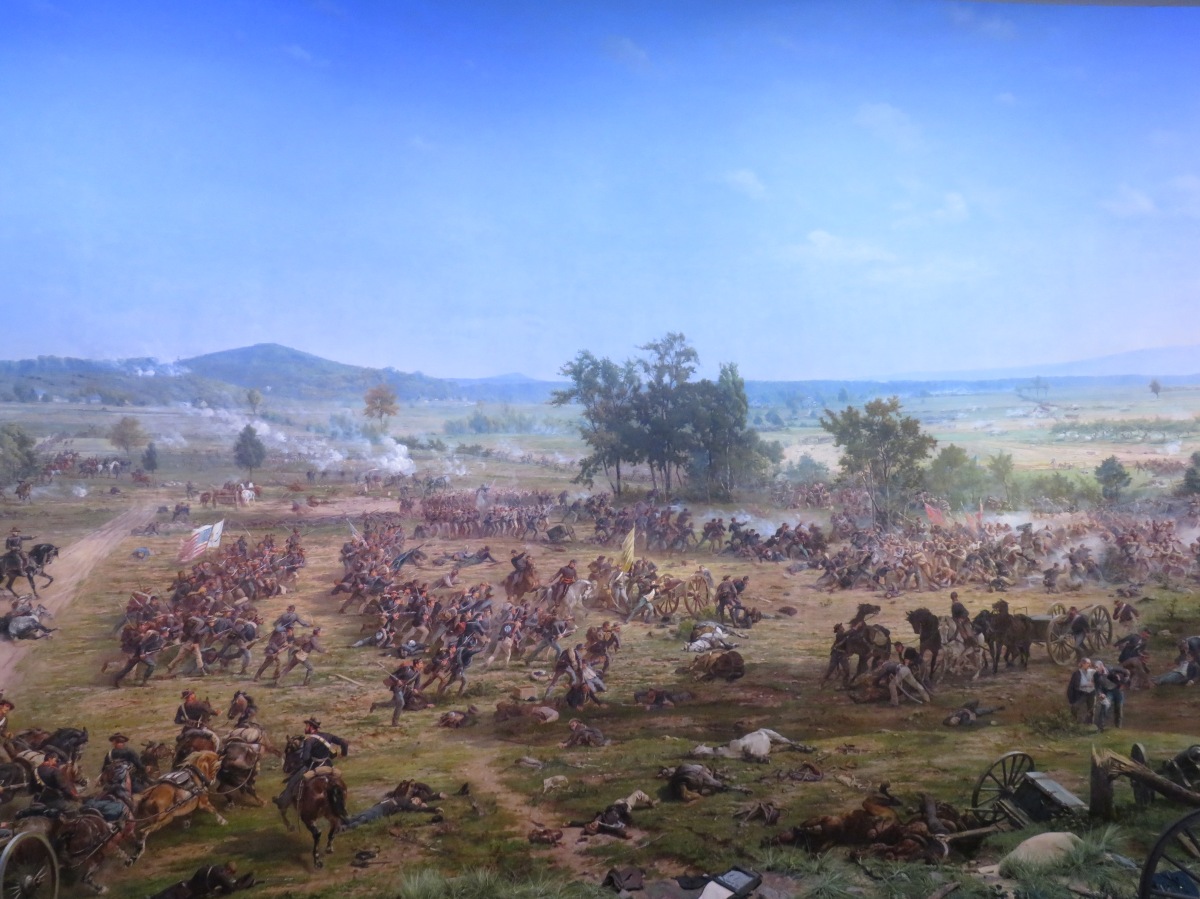
This past weekend, I was able to visit Gettysburg, Pennsylvania, the site of the most notable battle of the American Civil War, and one of the biggest battles in American military history. The battle of Gettysburg is also notable for being the main turning point of the Civil War. The outcome of the battle concluded with the Army of Northern Virginia, led by General Robert E. Lee, being prevented from invading further into the Northeast. Lee and his army were forced to retreat back into Virginia after the battles’ end and never again stepped foot in Union-controlled territory.
Set over a period of three days from July 1st – July 3rd of 1863, over 51,000 men from the Union and Confederate armies were killed, wounded, captured, or declared missing. It was the largest land battle ever fought in North America. More than 160,000 soldiers from both sides fought in the battle during those three tumultuous days with the town of Gettysburg and its civilians’ being caught in the crossfire. The battle of Gettysburg was fought on fields, marshes, hills, and sloping ridges over 10 square miles and around 6,000 total acres. In addition to the battlefield, Gettysburg is also home to a national soldiers’ cemetery close to the battlefield where the thousands of Union and Confederate troops, now long passed away, are ensconced in their final resting place.
The first thing one notices about Gettysburg is just how quiet and peaceful it is. One would have never guessed that a major battle had been fought here or that thousands of lives had been lost while fighting for their principles and values. The battlefield of Gettysburg, now devoid of soldiers and horses, still retains its wooden barriers, its replica cannons, and artillery. The National Park Service should be commended for restoring the grounds of the battlefield and keeping it clean for the more than one million plus tourists who visit the national military park each year.
What I was most surprised and pleased about during my visit was the amount of memorials, monuments, and tributes paid to the thousands of soldiers on the Union and Confederate sides. The armies, brigades, corps, divisions, etc. from each of the thirty states on both sides of the Civil War are each commemorated and memorialized in some form.
The most striking memorial to me was Pennsylvania’s state monument, the biggest and most awe-inspiring of them all. The Pennsylvania monument lists all of the soldiers’ names that fought for the commonwealth in the battle of Gettysburg. This monument in particular is Greco-Roman in design and has tributes to President Abraham Lincoln, and to notable soldiers and commanders from Pennsylvania. It also overlooks the entire battlefield of Gettysburg and can be seen from every part of the area.
Another notable memorial from the Gettysburg National Military Park can be found at the Gettysburg National Cemetery. In the center of the cemetery and overlooking the thousands of graves lying in repose is the Soldiers’ National Monument. This monument pays tribute to the soldiers who lost their lives at Gettysburg and is unique in quoting an allegory at its’ base that states, “Peace and plenty under freedom…following a heroic struggle.” In addition, this soldiers’ monument depicts the concept of ‘Liberty’ signified by a woman who carries a sword of war, while holding a wreath of peace. At the base, there are four separate statues representing ‘War, History, Peace, and Plenty’ in a chronological, circular order. In total, there are over 1,300 monuments, memorials and tributes at Gettysburg. It’s nearly impossible to see them all without spending a week or more at the battlefield because they are spread out over miles and miles of land. This is why it is known for being “the largest collection of outdoor sculpture in the world.”
You cannot come to Gettysburg without learning about the Gettysburg Address, and the process that led to President Lincoln delivering this famous and historic speech. While the spot where Abraham Lincoln gave the speech is not open to the public at this time, you can still see into the cemetery to view the general speech area. In addition, park rangers from the National Park Service are available for questions about the Gettysburg Address and a tour of the cemetery upon formal request. There’s also a bronze statue and monument of Lincoln’s bust along with an emblazoned copy of the entire Gettysburg Address close to the cemetery’s entrance.
American history was one of my favorite subjects from my high school days. The ability to go and visit historical battlefields like Gettysburg, Normandy, Lexington and Concord brings the history to life for me. I’ve been lucky enough so far to see some of the most notable locations of the American Revolution, Civil War, and World War II.
By visiting these places, you gain a great sense of gratitude and reverence around the conflicts, which these men fought and died in. You can better understand the costs and sacrifices that come with making war. Its’ also good to appreciate what we have today in our united country. There were times in our collective past as a nation when the concept of a ‘United States’ was very much in peril. Hopefully, we can continue to avoid the mistakes of the past, and learn from these dreadful conflicts.
The importance of seeking a brighter and peaceful future for our nation and the world is what I took from my visit to Gettysburg. These memorials, monuments, and the military park remind visitors and patrons alike why peace is something to strive for, even if it comes at a great cost. Sometimes, peace can only come through means of warfare, and that is why we give thanks to those men who gave their “last full measure of devotion.”
To learn more about the Gettysburg National Military Park, you can visit these websites for more information:
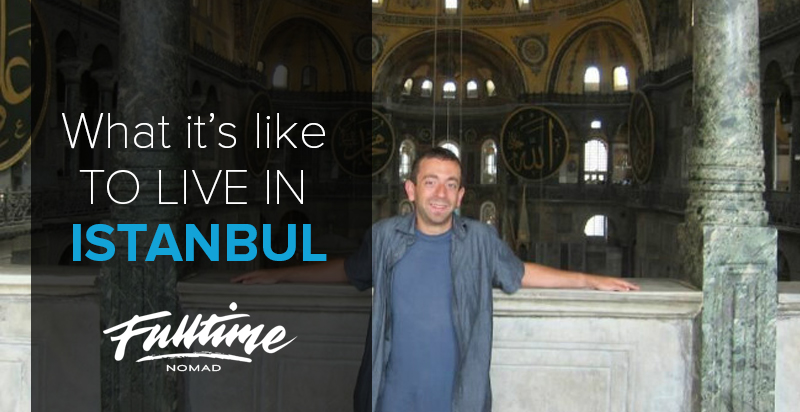
Recently, I wrote an article and submitted pictures for a guest blog post on the travel website, Fulltime Nomad, as apart of their “Living Abroad Series.”
Johnny & Radhika of Fulltime Nomad were nice enough to let me share my thoughts and experiences on their website on what it was like to live in Istanbul, Turkey.
In the article, I talk about what life is like for a foreigner in Istanbul, the unique food and culture of the city, and how best to navigate the challenges and adaptations that come with living and working as an expatriate.
Here are a few excerpts from the article:
“I loved a lot of things about living in Istanbul. I really enjoyed the Turkish cuisine with my favorites being menemen, iskender kebab, baklava, lahmacun, borek, etc. I could go on and on about the food in Istanbul but you’ll have to visit for yourself!
Being within walking distance of the Bosphorus was a real treat for me too. I’m a big fan of history so I liked learning more about the Ottoman Empire, the founding of the Turkish Republic, and visiting all of the great museums and monuments that Istanbul has to offer.”
“Istanbul is an enormous city with a lot of different people from different backgrounds mixing together. It’s similar to a lot of other major cities where there’s a lot of hustle and bustle so people may not be as warm or friendly as they would be in smaller towns or communities. However, there are a lot of smaller neighborhoods within Istanbul that are unique in that they feel smaller and people look out for each other. Overall, Turkish culture is very hospitable and kind. When you’re invited to a Turkish person’s home, be ready because they will feed you, enjoy your company, and care for you as a foreigner in their country.
The biggest challenges I faced were battling the horrendous Istanbul traffic on a daily basis and becoming advanced in the Turkish language. I tried to avoid it as much as possible by taking Istanbul’s rapidly developing metro system but it’s inevitable that you’ll hit traffic 90% of the time. That’s why I encourage people who come to visit Istanbul to stay close to the major tourism spots and/or near to the cool, hip neighborhoods. The Turkish language isn’t that hard for foreigners to learn but you really have to memorize the grammar structures and be prepared to work on your pronunciation and vocabulary skills. It’s not easy but the local people will respect and admire you very much if you try to learn Turkish.”
“Do it. Have a plan and know what you’re getting into but I highly, highly recommend it. If you’re young, want to explore the world, and have a little money saved up; it’s a worthwhile investment. It’s a lot different living overseas than just being a tourist but it’s a much more special experience. You get to experience the culture more, go deeper into the language, and a gain a more mature perspective of the world.”
_____________________________________________
You can read my full article here: Full Time Nomad – Living in Istanbul
I want to thank Johnny & Radhika again for letting me be apart of their ‘Living Abroad’ blog post series. It was a real pleasure for me to write about my past experiences and memories of Istanbul.
If you’re interested in learning more about the digital nomad lifestyle, go to Fulltime Nomad to learn more about Johnny & Radhika’s story. You can also like them on Facebook at FulltimeNomad and follow them on Twitter, @FTNomad.

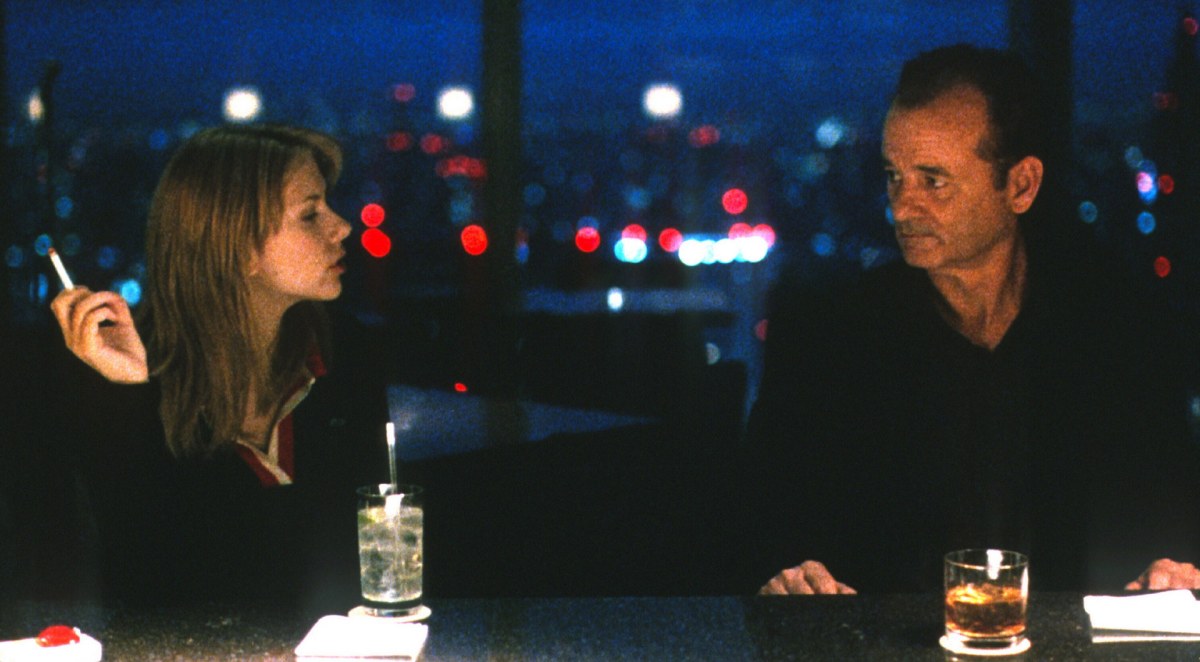
One of the great films of the 2000’s, Lost In Translation is a film that is often underrated but which deserves a lot of praise and acclamation. Directed and produced by Sofia Coppola, daughter of the highly acclaimed director Francis Ford Coppola, Lost In Translation is the story of two Americans of different ages who are visiting Japan for different reasons but who are struggling with similar existential crises.
Bob Harris, played by the wonderful Bill Murray, is an aging actor and movie star from Hollywood who is struggling with a mid-life crisis. He comes to Tokyo to film whiskey commercials and appear on some popular Japanese talk shows. In one of her first roles on film, the talented Scarlett Johansson plays Charlotte, a young college graduate from Yale, who is struggling to figure out what she wants to do in her life.
While Bob and Charlotte come from different backgrounds and are of different ages, they are both struggling with adult concerns such as marriage, work, and the search for overall meaning. Bob has been married for twenty-five years whereas Charlotte has only been marries for two years. While they are at different stages in their marriages, both of them have doubts about being or staying with their partners. In addition, once they meet each other in the hotel lounge for the first time, they are drawn to each other’s personality, humor, and the fact that they are adjusting to Japanese culture for the first time.
One of the best things about Lost In Translation is the way Tokyo, Japan becomes a character in the film. The city is a sprawling metropolis with a population of over twenty million people that seems to go on forever. Since Charlotte’s husband is a director and is busy shooting for a new film and Bob’s wife is five thousand miles away, they both find time to explore and immerse themselves in the bright lights and diverse sounds of Tokyo.
The most illustrative scenes in describing the developing relationship of Bob and Charlotte take place in the karaoke bars and the hibachi restaurants where they try to adapt to the culture shock and the persistent jet-lag together. Despite being married, they feel alone and unhappy in their relationships for different reasons.
They take solace and comfort in each other’s company as they navigate the intricacies of Japanese language and culture. They start off as complete strangers in the hotel bar but then become friends over the course of their stay. Bob also acts as a life mentor to Charlotte who is in her early 20’s by giving her lessons on life, marriage, and what it’s like to have children. Bill Murray’s character comes across as someone who’s halfway through life and is honest to Charlotte about the ups’ and downs’ of it all.
Charlotte’s youth and curiosity about the world helps to change Bob too as he rediscovers the joys and thrills of being care-free and being able to laugh with someone who puts no pressure on him. After appearing on cheesy talk shows and doing uninspiring whiskey commercials, Bob is able to have fun and enjoy himself around Charlotte. From the one-sided phone conversations you hear from Bob and his wife back in Los Angeles, neither of them seem happy or fulfilled about their marriage. I don’t want to spoil the ending for those of you who haven’t watched the film but it is possible that Bob and Charlotte will find romance or love when they least expected it to happen.
I have to admit that the first time I saw Lost In Translation, it made me really want to visit Japan. The nightlife and crowded streets of Tokyo interest me quite a bit. I was also intrigued by a scene from the movie that was set in Kyoto, where Charlotte takes a high-speed train to the city to see the Shinto temples and the beautiful cherry blossoms. The cinematography and settings of the film are very moving and beautiful. Lost In Translation has a reputation of being a serious and deep film with little humor mixed in.
However, I would disagree with this assessment because there are a lot of scenes of light-hearted humor especially when Bob Harris, Bill Murray’s character is on the set for a Japanese commercial. Many things are ‘lost in translation’ as he looks for guidance and help from his translator but she never gives him the full story of what the Japanese director wants. There are other humorous scenes where Bob appears as a guest on a goofy talk show with a quirky host. Another classic moment is when a Japanese escort is sent to Bob’s hotel room and asks Mr. Bob Harris to “lip her stockings.” It’s a subtle English faux pas but I found it hilarious the first time I watched it.
Two strangers who meet in a hotel bar and get to know each other over a drink is not a new movie concept. However, the relationship that develops after that chance meeting is what makes Lost In Translation a great film. The on-screen chemistry between the two great actors, Bill Murray and Scarlett Johansson also draws the viewers in to the plot. There can be few other cities as magical, crazy, and hypnotizing as modern Tokyo.
The neon lights, huge skyscrapers, and hoards of people make it a unique setting, which is rarely used in Hollywood films. Lost In Translation isn’t your typical romance movie and it doesn’t have a clear-cut ending. What it does offer the viewer are the special moments of two lost souls making a deep connection with each other in a foreign city, and enjoying those experiences during the short time that they have together.

For more than 50 years, The Rolling Stones have been the mainstays and stewards of the Rock n’ Roll universe. Founded in 1962, this English band transformed the music world, sold hundreds of millions copies of their albums, and have sold out countless arenas, stadiums, and concert halls. The original grouping of Mick Jagger (vocals), Keith Richards (guitar), Brian Jones (guitar), Bill Wyman (bass), Charlie Watts (drums), and Ian Stewart (piano) together help lead the emergence of Rock n’ Roll as the pre-eminent form of Western music during the 1960’s and 1970’s. Legendary and famous albums such as Let It Bleed (1969), Sticky Fingers (1971), and Exile on Main Street (1972) helped cement their legacy as ranking among the greatest live acts in Rock n’ Roll history.
When people ask me: Beatles or Stones? I simply reply, why do we have to choose between them? Why not appreciate both of these groups and appreciate how similar and how different they are. Both bands helped to represent the countercultural movement that took place in the 1960’s in both the United Kingdom and the United States. They represented the youth of the generation and the hopes for a better, freer, and more open world where you could listen, dance, and have some fun as you listen to their tunes.
While The Beatles aired on the side of creativity, experimenting with new genres, and sticking to the studio to express their musical talents, The Rolling Stones were and still are brash, bold, and loud. As a group, the blues and R&B genres heavily influenced them during their early years. Taking their cues from legends such as Chuck Berry, Lil’ Richard, and Buddy Holly, the Rolling Stones would not become the massive success they have been over the pasty fifty years without those blues pioneers who came before them.
Due to front man Mick Jagger’s exuberance, high energy, and eccentric dance moves, the Rolling Stones also gained a reputation for being an amazing live act that sold out stadiums and arenas around the world. It also helps that long-standing guitar legend Keith Richards has stayed by Jagger’s side all this time to play alongside him and the rest of the band.
With the talented support and musical stylings of the late, great Brian Jones, and Charlie Watts, the Rolling Stones have stuck together through many ups and downs over their long history. While many rock acts from The Beatles to The Eagles to The Doors have broken up due to untimely deaths, heated feuds between members, and egos clashing, The Rolling Stones have been an exception to the rule and have produced high-quality music and toured extensively without losing who they are and what they represent to the world.
While The Rolling Stones have gained all the money and fame, they still care about the fans. This band always gives their best effort regardless if they are playing in Rio de Janeiro or London. It’s a testament to their popularity where they have been able to play in all six continents of the world without skipping a beat. Their global reach was on display recently when they played a huge outdoor concert in their first trip to Havana, Cuba.
Over 500,000 people attended to see the Stones live in the flesh. Perhaps, most notable, the concert was free for all attendees so everyone could attend who wanted to without paying a high price. During the Castro years, bands like The Rolling Stones had their music bootlegged and spread throughout the Cuban isle even when the Castro government officially outlawed it. Mick Jagger declared the occasion to be “A new time” for Cuba signaling that the free expression of live music was going to continue and expand.
Whenever I listen to The Rolling Stones, their songs always lift my spirits up and instantly put me in a good mood. Tunes like “Jumping Jack Flash”, “Wild Horses”, “Start Me Up”, “Brown Sugar”, and “Satisfaction” will never go out of style and hopefully inspire future generations to pick up the guitar and sing into the microphone. Whenever I hear one of their songs, I still get the urge to dance and sing along.
Even though this is a retrospective post for a musical group that is still active and going strong, I think after fifty years of being legends of Rock n’ Roll, it is a good occasion to reflect on their wide-ranging impact on the world. To this day, I regret to inform my readers that I still have to yet to see The Rolling Stones live in concert. My hope is to make it happen before the band calls it quits for good. Given that Mick, Keith, Charlie, and Ronnie show no signs of slowing down even though they’re septuagenarians, I keep my hopes up that I’ll be rocking out to them in a live setting soon enough. Until then, let us all hope that they make it to their 60th anniversary as a band in 2022.