Interconnected

interconnected
“Will humanity become more or less interconnected during the 21st century?”

When the 21st Century is over and becomes apart of the history books, it will be known as the first truly interconnected, interdependent, and entangled era of human history. Compared to past eras, borders are more open, long-distance travel is common place due to modern aviation, and global commerce is more free than it ever has been. Globalization as a phenomenon has been made possible not just through open borders and advances in aviation but also due to the wonders of the Internet.

While many human beings can not physically cross borders or take modes of transport to other countries, the Internet has helped to minimize that gap of connection by allowing people from around the world to connect virtually at an increasing frequency. As the technology continues to improve and advance, the Internet has made our planet interconnected on a scale once considered unthinkable a generation ago.

I woke up one morning in New York, had my breakfast and juice, and then was able to log-in to Skype and chat with my good friend who is living in Beirut, Lebanon about his work there and how he has adjusted to living in the Mediterranean metropolis. After that, I sat down to have lunch and finished some homework for a 1:30 PM Spanish lesson with my teacher who is originally from Mexico but currently lives in Italy. Somehow, we were able to make the six-hour time difference work between me in New York and her in Italy. Before the day was over, I had two more Skype and Google Hangout based English lessons with my students from countries like Saudi Arabia and South Korea. Satisfied with my day of both teaching and learning, I settled the rest of my affairs and went down to the kitchen to prepare my dinner for the evening.

None of these lessons or exchanges of information would be possible between persons of different countries and backgrounds without the invention of the Internet. Too often, the average person either takes for granted the capabilities that allow us to stay connected on a worldwide scale or doesn’t take advantage of using this technology to bolster their abilities personally or professionally.

Professionally, as an ESL teacher, the fact that I have been able to use the Internet and web applications such as Skype, Google+, etc. to connect with numerous students from around the world virtually has been a real treat for me. Sometimes, my students with whom I’m working with online do not have the means or ability to work with a native English speaker / teacher in person in their own city or country. Those of us language teachers who commit time out of our lives to help others learn our native languages should be commended for making this a possibility. It is truly enjoyable for me to work with those students online from different countries who will share with me interesting tidbits about their cultures and societies.

Personally, I have been able to stay in touch and meet up again with friends of mine from different regions of the world thanks to staying connected through social media websites like Facebook, CouchSurfing, Twitter, etc. The Internet has allowed me to stay connected with international friends, both new and old, thanks to the rise of social media and its applications. It is funny to think that only fifty to hundred years ago, or even before the advent of the Internet, twenty years ago, the best that you could do is send a handwritten letter by mail or make an expensive call to any location overseas. Now, such communication to an international location is often very cheap or even free of charge depending on which application you decide to use.

While the advent of globalization has its positives and negatives, which are often debated and discussed endlessly, I believe that one net positive from globalization has been how the Internet and the “world wide web” has made humanity interconnected. This one trend of “Interconnectedness” for the 21st century is one that isn’t going to reverse course anytime soon and is going to be hard pressed to find itself limited in total amount of users or overall global popularity.

According to the World Bank’s recent report titled “World Development Report 2016: Digital Dividends”, the number of people worldwide who have access to the Internet has tripled from about 1 billion people in 2006 to about 3.5 billion people in 2016. This recent development is an extraordinary occurrence. This means that over 40% of humanity now has some type of access to the Internet which has become increasingly possible due to rise of mobile technology and the spread of 3G and 4G cellular networks.

As more and more people connect to digital markets of e-commerce, become new entrepreneurs and start to create their own small businesses, this will also allow more students to connect and learn with me here in New York and other teachers around the world to learn English or another foreign language. The possibilities of eventually having everyone connected to the Internet would be truly endless. It could lift millions more people out of poverty and create new economic opportunities where there were none before.

Some of the big questions to be answered in the coming decades is how do we as a global community work together to connect the remaining 60% of humanity to the Internet? How do we work together as governments, NGOs, and individuals to give people the means virtually to benefit economically and personally from the advent of the Internet? These are not easy questions to answer let alone solve. However, if humanity is to continue advancing and developing into the future, we must continue to become more interconnected to each other. That is a fundamental truth of the 21st century for which we all must be aware of.

Sources:
1.)  http://www.theguardian.com/technology/2016/jan/13/internet-not-conquered-digital-divide-rich-poor-world-bank-report

2.) http://www.worldbank.org/en/publication/wdr2016

A New Adventure Awaits

peace_corps
U.S. Peace Corps in Colombia – I’m excited to serve and ready for this journey to begin.

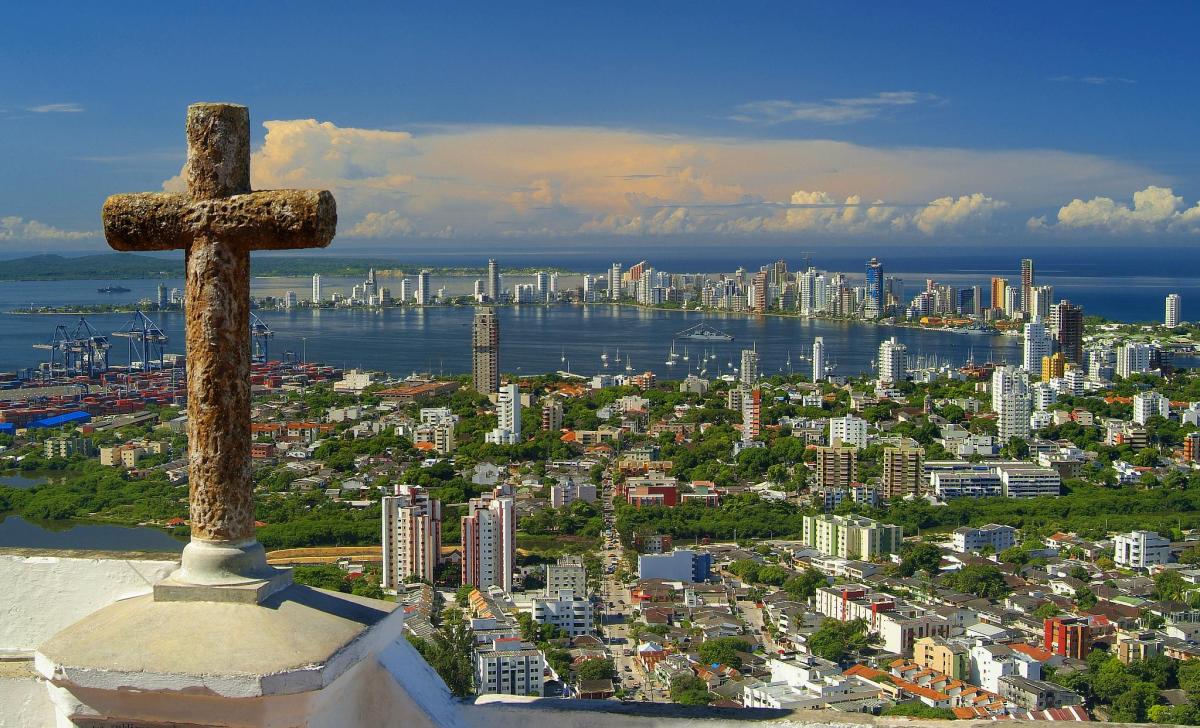
In just one week from now, I will begin my training to become a Volunteer for the United States Peace Corps in Colombia starting in mid-January of 2016. For my three months of training, I will be living in a town called Santo Tomas, which is about 45 minutes outside of Barranquilla. For my work and living situation, after I’m sworn in as a Peace Corps Volunteer, I will be located in a site close to the Atlantic Coast of Colombia close to the cities of either Barranquilla, Santa Marta, or Cartagena. The school where I will be teaching and the community that I will be living in has not been announced yet due to the fact that I haven’t completed my training yet.

This will not be my first time living overseas for an extended period of time. Previously, I lived in Istanbul, Turkey last year as an ESL teacher at a private high school. I also studied for a semester at Bogazici University in Istanbul as well when I was in college. My first overseas living experience occurred when I was 16 years old in Costa Rica where I studied Spanish for a summer there in a language homestay program. I have become quite comfortable with adjusting to a new lifestyle and territory by now. However, it still may take me a few months to adapt to the new culture and hot climate.

My family and my friends have been very supportive of my decision over the past year and a half to pursue service in the U.S. Peace Corps. It’s not easy to be away from your family and friends for a long period of time but they all know about the good work that I will be doing in Colombia. They understand the importance of volunteering and serving. I would not be where I am today without the support of my father, mother, and my brother especially. They have been great to me throughout the whole application and selection process.

My main project while serving in Colombia will be developing, and improving upon the ‘Teaching English for Livelihoods’ program. I hope to work with local Colombian teachers to advance the English curriculum and materials that they are using to teach the students. I believe that with hard work and effort, we can make real progress in creating an effective way of teaching English and improving the English proficiency levels of the Colombian students. I also would like to expand upon tutoring and after-school programs related to English learning and making sure that the students see learning English as fun and useful to them.

I look forward to being apart of a new school and a new community. I am excited to explore my surroundings and to learn about the Colombian culture and their customs. I will be very happy to work with my Colombian colleagues as well at the school and hope that I can make a real difference in improving the English level of the students that I hope to help during my service. I want to immerse myself in becoming fluent in Spanish, learning the local dances, and tasting the Colombian cuisine as well.

My motivation to join Peace Corps was because of a number of different factors. I had a desire to volunteer and serve a purpose greater than myself. I felt that I could contribute a lot to the Peace Corps’ Education sector given my previous background and experiences as an ESL teacher. I wanted to explore a new country and a new culture as well. Spanish was the first foreign language that I learned as well so I hope to use this exciting opportunity to become fluent and to connect more easily with the locals in my community. It was also important to me to volunteer and contribute to the wider world in some way. I hope I can be an example to other Americans who want to be part of something bigger than themselves but are not sure where to begin.

When I leave Colombia, I want to leave behind a school and community that is better off than it was before I arrived. My main goal is to help the local teachers to develop an effective English language curriculum that will last for many years after I depart them. I hope to foster better relations between Americans and Colombians through my actions and my relationships that I hope to build between our two peoples.

I wish to help as many students as possible with their English language skills whether its through tutoring, after-school programs, etc. so that they can become bilingual and have a brighter future. Above all else, I would like to make new, lasting friendships and to be considered an honorary member of their community by the time I leave.

I leave in less than a week and I’m excited to begin and complete my training over the next three months. All I have left is the final packing of my bags and I’m off to Miami for the staging event!

There will be a change of focus for my blog from this point forward as I will focus on writing about my experiences and adventures living in Colombia. I hope to write about the cuisine, customs, culture, and food of my adopted country for the next 27 months. I hope that you will follow me on this exciting journey. Thank you very much for your continuing viewership and support. (Muchas Gracias y Saludos para todos! Vamonos!)

A Short Guide to Teaching English Overseas

Teach English Abroad! I promise that you won’t regret it.

 This past year, I had my first teaching English as a foreign language overseas experience. I would like to give my loyal readers some insight into what it was like and I can also give you some tips/advice that I could have used when I first signed up to teach English in a foreign country.

 First of all, there’s a lot of different options when it comes to getting your teaching certificate. I would recommend taking either an online TEFL/TESOL course which would take about ten to twelve weeks and cost between $1,000-$1,500. If you want to go full-time and get it done quicker, you can most likely take an in-class course for about forty hours a week and be finished in about a month or so but it will cost you closer to $2,000.

I got my TEFL/TESOL certificate through the International TEFL Academy which is a great organization and you can find out more information about them through a simple Google search. I’ve had friends of mine sign up for a course both online and in-person and it paid off for them with real, good-paying jobs.

 Now, don’t be fooled because there are some organizations out there that are not legitimate and will try to rip you off. Between my Bachelor’s degree and my TEFL/TESOL certificate, I was good to go though and ready to apply to schools around the world. Be ready to work hard and do a decent amount of homework, and in-class training in order to achieve your TEFL certificate. It’s really easy to get good grades in your course as long as you put the effort and hard work in to earn your qualification. I believe the CELTA certificate is more advanced and could lead to more opportunities but I’m not sure how big of a difference it makes really.

 For example, if you’re an English teacher who is interested in teaching in Spain, the program that is sponsored by the Spanish government is a great option if you would like to teach English in Europe. Honestly though, besides Spain and Italy, not many Western European countries are going to pay you very well to teach English. If I were you, dear reader, I would look into Poland, Czech Republic, and/or Hungary if you’re feeling more adventurous.

There’s also Latin America, Southeast Asia, and other Eastern European countries but they don’t really pay too high if that is your main concern. China, Japan, and the Middle East are the biggest payouts even if you have just a TEFL Certificate and a Bachelor’s degree but the cultural differences are large and the living standards vary from country to country. I can’t tell you where to teach but if you do your research and talk to others about their experiences, you may have a better idea of where you want to go. It depends on your lifestyle and your cultural preferences.

 I chose to teach over the past year in Istanbul, Turkey because I was already familiar with the country and culture due to a previous experience living here a few years ago for my studies. I knew the language and the locals relatively well and I got a really good job offer to come here. Some schools will pay for your living accommodations which can help you in terms of saving money and being able to travel around Europe and elsewhere. Please make sure that you research about the school’s reputation and try to interview with them in person or through Skype before signing any paperwork/contracts. Be sure to look over the whole contract before signing on legally to a school for a year or more.

 There have been many young people who have been screwed over in the past because they did not read the fine print. Always make sure to know what you’re getting into in terms of salary, work permit, visa help, accommodations, etc. I was pretty happy with the choice I made although there were hiccups and missteps along the way. I had competing offers to work in Shanghai, Hong Kong, and elsewhere but I am content with where I chose to go. Lastly, eight weeks of paid vacation a year is a really good deal compared to most jobs out there on the market internationally.

 There are downsides to this lifestyle though in that the working culture can be quite different than you are used to and things often are done at a slower pace than Americans / Westerners are used to. Upper management at some schools can be frustrating to deal with at times and will have different work policies than the ones you’re used to in your native country.

Teaching English is a job like any other and it can be quite stressful and to teach children, you will need to develop patience and a lot of understanding. It’s not entirely a vacation from the real world as some folks make it out to be. I worked 40–45 hours a week and had to prepare lesson plans and help create exams. However, I had a great experience in getting a deeper understanding of Turkish culture, meeting new people, making new friendships, traveling when I could to different countries, and becoming a more mature and confident person. I lived comfortably on my local salary and I had free enough time where I could go out and socialize with my friends.

 For someone in their early 20’s, I think it’s a great thing to do and you’ll learn a lot about yourself and the world around you. Just do your research, think about what country fits you best, learn the language, and reap the benefits. It’s not easy moving and living in another country. It’s not for everyone too but if you’re adventurous and want to explore new places, I highly recommend it to all of you reading.

 If you have any other questions about teaching English as a foreign language, please feel free to message me or reply to this post. For more resources on getting a TEFL/TESOL certificate or finding a teaching English job, I would go to these websites, some of which I mentioned to you already above:

http://www.internationalteflacademy.com
http://www.tefl.com/
http://eslcafe.com/
https://www.teachaway.com/
http://www.tfchina.org/en/index.aspx
http://www.transitionsabroad.com/listing…road.shtml

Happy Hunting!