


Why Constant Ratings and Reviews Are Hurting Your Business

“As any business owner such as myself will tell you, getting customer feedback is extremely important to see how your business or company is doing.”

As any business owner such as myself will tell you, getting customer feedback is extremely important to see how your business or company is doing. Customers won’t sugarcoat it and won’t hide their feelings, especially when they’ve spent money on something they see as either useful or valuable. Having ratings and reviews is a good way to get feedback on how your business can improve. From a customer’s perspective, it is nice to make one’s opinion known, to have an impact on the product or service you use and have their input lead to actual changes to keep them around longer as a customer.

However, where this reviewing and rating system can run into trouble, is when you are constantly reviewing every single service and product, it’s become compulsory instead of optional, and it’s spread to industries where direct responses can be a bit too on the nose when they serve the public and not private interests. From restaurants to ride-sharing applications to doctor’s offices, every transaction in society now comes with a mandatory rating request, leaving more customers fatigued and desensitized.

Being asked to constantly review every single business, public or private, doesn’t always lead to better or more in-depth feedback, and there are other ways companies can strike the right balance going forward. One of the ways to do so is to go beyond the basic ‘stars’ or out of 10 scale that is being used by most providers today. Its surface-level, lacks nuance, and rarely captures how the customer truly feels. In this case, less is more. Anonymous, optional surveys completed at the customer’s discretion generate more meaningful feedback than shallow ratings from everyone at once.

For example, if you are a small business or company, and you are getting 100 five-star ratings, but they are from bots or fake accounts with no actual written reviews, can you claim to be a reputable business? Instead, especially with more of the Internet being filled with AI, bots, and fake accounts, real verification methods with anonymized surveys, which can be filled out over time, will make for a happier and less stressed customer base.

If you are getting scores or ratings constantly but with no real feedback, how can you possibly gain real insights from these ratings? Also, how can customers trust these cursory ratings when they could be fake or not with anything real backing up their star rating? Personally, I would rather get 10 real reviews from customers who opt to voluntarily leave a review for my business that’s in-depth and insightful about the product or service rather than 100 fake ones with no substance or trustworthiness. Beyond the risk of fake reviews, there’s also the problem of overwhelming customers with constant rating requests.

Forcing customers to rate every interaction is stressful, disingenuous, and harmful. Business owners should always make any kind of rating or review optional and only prompt the customer to leave the review every now and then and not after every interaction. There should not be a penalty for not leaving reviews as well and they should remain optional yet encouraged. Companies or firms can also incentivize reviews or ratings with a referral offering, a discount, or perhaps a free trial to encourage greater participation. If they really dislike or like your product or service, they often will want you to be the first to know but they should have the autonomy to do so on their own initiative. In addition to incentivizing voluntary feedback, companies must consider the ethical implications of rating individuals directly.

Moreover, I do not think it’s wise for some companies to review their customers even with the gig economy unless they consent to it as certain ridesharing companies have done up to this point. It’s good to have responsible customers using your platform or service but having anonymous reviews of your customers without their knowledge or feedback about their own ratings is morally gray at best and potentially illegal too. I also think it should be discouraged to rank teachers, doctors, lawyers, and other professionals directly even if it is a private practice or company. Evaluating the institution rather than individual professionals is more responsible; rating certified individuals in sensitive fields is ethically questionable.

In the end, more reviews and ratings do not automatically mean better feedback for a company. Overloading your customers with constant rating requests leads to superficial or lack of candid responses, stress, and even distrust, while fake or bot-generated reviews undermine the credibility of a business. The solution is simple but often overlooked: make feedback selective, anonymized, and meaningful.

Encourage customers to share their insights thoughtfully rather than compulsively and consider thoughtful incentives to reward genuine engagement. Beyond numbers and stars, businesses should focus on creating systems that respect their customers’ time, autonomy, and privacy. By doing so, companies not only gain actionable insights but also cultivate trust, loyalty, and a happier customer base, proving that sometimes, less truly is more.
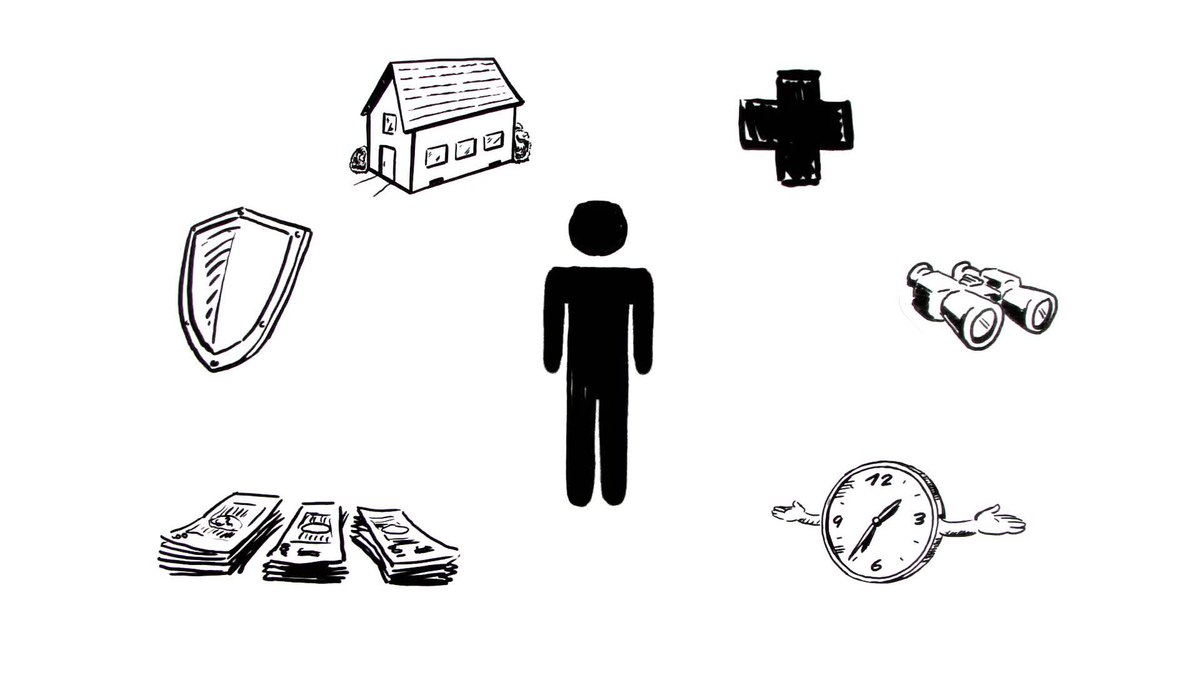
Gross Domestic Product v. Gross National Happiness

“Most of us know what Gross Domestic Product (GDP) is having learned it at some point in high school or in college. The total value of all finished goods, products, and services produced within a country’s borders over a specific time period such as a quarter (three months) or a year. Economists commonly use GDP as a model for economic health when it comes to an individual country.”

Most of us know what Gross Domestic Product (GDP) is having learned it at some point in high school or in college. The total value of all finished goods, products, and services produced within a country’s borders over a specific time period such as a quarter (three months) or a year. Economists commonly use GDP as a model for economic health when it comes to an individual country. If GDP grows positively or increases over time, then generally you could assume that the economy is doing well or is at least maintaining its equilibrium. However, when the GDP of a country is declining or has been stagnant for multiple years, economists are likely to assume there is a problem of some sort.

There are economic terms related to Gross Domestic Product as a recession (two straight quarters of negative GDP growth) leading to an economy to contract rather than grow. We also know of an economic depression where an economy contracts for years and is often associated with double-digit negative growth and/or high unemployment, inflation rates. What is less talked about is how do we measure the health and well-being of citizens within a country’s borders.

What other measurement besides GDP could measure a country on a national scale? While GDP measures the economic health, the actually mental health of a country’s citizens has been measured by a little-known survey conducted by the small land-locked, mountainous country of Bhutan, which is a Buddhist kingdom that is located at the eastern part of the Himalaya mountains. This national survey is given out only every five years to the citizens of Bhutan, of which there are only 750,000 people living in the small country. Instead of a simple 0 to 10 survey on if you are happy on a scale, the survey is quite comprehensive in its questions.

The government of Bhutan asks over 300 questions in the survey and can take multiple hours to complete. Questions are compensated a day’s working wage to answer the questions and it strives to measure all forms of human capital and not just the economic capital measured by GDP. The survey has nine different domains, 33 social indicators, and hundreds of variables. The categories of the survey include education, health, culture, time use, psychological well-being, community development, environmental practices, and overall living standards. This GNH survey has become a cornerstone of Bhutan’s presence on the world stage and has gained notoriety since it was introduced in 1998 as a form of alternative human development.

About 8,000 households in Bhutan answer the survey every five years, which is conducted by the Centre for Bhutan Studies and GNH research. Questions can range from being general about prayer and/or meditation habits to being specific about if you ‘trust your neighbors’ to if you ‘fight with your family at all.’ The measuring of the country’s happiness began in 1972 when the fourth king of Bhutan, Jigme Singye Wangchuck, declared that the “Gross National Happiness is more important than gross domestic product” for the country.

Bhutan has seen numerous changes over almost fifty years since the movement towards measuring GNH began. The same king helped ensure a parliamentary democracy was established in 2008 with the constitution and political reforms putting him in a more ceremonial role. Bhutan has strived to actually use the survey to help improve certain aspects of the lives of its citizens such as having free education, health care, and getting electricity at no extra cost. Bhutan’s new democracy is messy like any young democracy would be, but Bhutan is known for attracting increased numbers of tourists before the COVID-19 pandemic began and for being largely self-sufficient in terms of food production and for being a peaceful, inwardly looking nation.

The concept of Gross National Happiness is related to the country’s prominent religion of Buddhism with the focus on being content with less, not being so concerned with materialism or economic gains, and to be calm, cool, and collected when facing life’s many challenges. Seeking harmony with one’s friends, family, and neighbors is also another key part of the GNH survey. Bhutan is a beautiful, land-locked country, which has provided its citizens with a number of basic needs such as education, health care, and peaceful relations with its neighbors with having a smaller GDP than many other nations.

The paradox of a country such as Bhutan is that it may be the only country to internally measure happiness in some formal way, but it still ranks in the median in terms of national happiness by outside surveys. Norway was ranked 1st by the United Nation in its 2020 World Happiness Report, which had a different format and questioning style than Bhutan’s, but for which is a relatively new kind of survey that Bhutan’s GNH survey helped to inspire. While Norway topped the list, Bhutan ranked 97th out of the 153 nations surveyed, which may not inspire much confidence, but the country does face ongoing challenges especially with its GDP.

Bhutan ranks as a ‘least developed’ country by the United Nations and is dealing with the effects of climate change, high income inequality, increasing youth unemployment, and an uncertain energy future due to the effects of environmental degradation. Bhutan’s GDP is only $2.2 billion and while material wealth and economic growth are not integral to the GNH survey, it likely has a role to play in affecting the happiness of its citizens.

The 2015 GNH Survey by Bhutan reported that “91.2% of people reported experiencing happiness, and 43.4% of people said that they are deeply happy.” From my reading of the survey, Bhutan is committed to improving the happiness of its people by having such an insightful and detailed survey and while their national happiness has room for improvement, they have taken that crucial first step to actually evaluating if its citizens are happy or not, which is quite unique when compared to other nations around the world.

The first step to solving the problem is realizing there is one. If a country focuses only on GDP as a measure not only for economic health but for the health of their citizens in other ways, then they are making a false dichotomy. Economies are naturally going to rise and fall in growth rates but the same can be said of people’s own happiness over time. The key is to first be aware of how happy people are by having a comprehensive yet accessible way to measure that elusive emotion as best as you can. Bhutan is a model for not seeing only its Gross Domestic Product as a sign of national progress.

Any nation can be wealthy and still be extremely unhappy and a nation can be poor but still be happy. The same could be also for a poor nation being unhappy as a rich nation being very happy. The key to 21st century economics will be to figure out how to find that balance between economic success and people’s happiness. You can have the average citizen make a lot of money and be considered a ‘success’ but what if the schools in their town are lousy, the health care is too expensive and of low quality, and the community is distrustful of one another.

Bhutan has taken the initiative as a country for seeing happiness as being an important part of a nation’s well-being, which can be measured in various ways. While their GDP is very small, they recognize that economic growth is not simply everything that a country should be known for. If you have a certain amount of money in the economy, where are you putting the national product towards? How will you know how to spend the money gained from your citizens through taxes without knowing what their grievances are and what they unhappy with?

Having Gross National Happiness be part of a country’s consciousness involves asking difficult yet necessary questions from the population on different aspects of their lives. Bhutan has taken that crucial step towards asking their citizens what they are happy with, what they are not happy with, and what could be improved in their lives. When you have that necessary information coming in, the government can then take steps to allocate the tax money and other revenue they have available to put it towards where its’ needed most. If government services need to be improved, they’ll know from their citizenry that it’s a priority. If living standards need to be improved such as providing more housing, better food, or less pollution, they will have that awareness from knowing more from the GNH data that they are receiving.

Lastly, a government like Bhutan’s can work closely with the parliament, civil servants, non-governmental organizations, and civil society leaders to take the survey’s results and work together on a common set of facts and figures to start to improve the country in needed areas where people are unhappy about. If other governments can learn from Bhutan when it comes to Gross National Happiness, it’s that it can be measured from your citizens in a comprehensive way and that each government can learn from its citizens how their people’s lives can be improved and in what ways beyond just how much money their people are producing each year.

Sources:

https://www.npr.org/sections/parallels/2018/02/12/584481047/the-birthplace-of-gross-national-happiness-is-growing-a-bit-cynical

https://www.grossnationalhappiness.com

https://www.happiness-report.s3.amazonaws.com/2020/WHR20.pdf