The City of Eternal Spring

Medellin, a bustling metropolis of over three million people, has a popular and well-known nickname, “The City of Eternal Spring.” I can say for certain that this particular nickname is well warranted and appropriate given the moderate temperatures and humidity that make up the day and night here. Among the cities and towns I’ve visited in Colombia thus far, Medellin is special in that its’ climate is hospitable and agreeable.

Luckily, after a long day’s work at my new school, I can come back home without sweating through my shirt and dress pants. When it does rain here, it’s refreshing and cool. Sometimes, it can pour really hard but usually only for short periods of time and despite July and August being the prime months for the rainy season, it hasn’t been that frequent of an occurrence.

In addition to its’ great climate, there are other qualities that make Medellin a unique city. Its’ transportation is well organized and runs smoothly. The metro system here is one of the few in South America and is clean, affordable, and has frequent trains. I’ve been impressed at how easy it is to get around the city without breaking the bank. In addition to the metro, there are also the ‘Colectivo’ buses, the Metro Plus bus system, the Metro Cable car system, plentiful taxis, and Uber if you really need to get around in a hurry. Motorcycles, which I noticed to be quite popular on the Atlantic coast, are also another great way to get around especially if you’re not patient with the traffic here.

Caution is necessary, as ‘right of way’ does not exist for the pedestrian so you have to be an eye out for both cars, taxis, motorcycles, and large buses. Everything seems to run efficiently when it comes to getting people to and from their jobs whether they are in the north, south, or central part of the city. While I haven’t spent much time in Bogota or Cali, I would say that Medellin is the most interconnected city in Colombia when it comes to transportation.

Residents of Medellin and the Antioquia region in general are commonly known as ‘Paisas.’ This nickname is also spot on given the fact that these people are really born and raised here in the countryside. Compared with Costenos, Paisas are accustomed to the mountains and hills that surround their fair city. It’s been an adjustment for me given my past experience of living near the Atlantic coast of the country. It’s a unique opportunity to be able to see Colombia through a different lens.

While the food is similar to what you would find in other parts of Colombia, Paisa cuisine is unique in offering hearty dishes like ‘La Bandeja Paisa’ and ‘Cazuela Antioquia.’ Rather than seafood, Antioquia pride itself on its’ offerings of different kinds of meat served with potatoes, avocado, tomatoes, etc. Each region of Colombia including Antioquia are known for its’ cuisine offerings which may be unique to the particular region.

To put it bluntly, Medellin is a city which contrasts its’ natural surroundings of mountains and rivers with its’ skyscrapers, bridges, and freeways. In any view of the city, you get a mix of pure nature and urban settings. Tucked below the valley, the city rises with its’ buildings and elevated metro to contend with the nearby green mountains that surround the city. The most special sight to me occurs at night when the lights of the city flicker brightly across the valley and off the side of the mountains. Each white and orange light that shines in the valley at night signifies one of the homes, apartments, and buildings that house a few of the city’s overall three million residents.

I have only been in Medellin for two weeks so far but I can tell that this is a special place. In addition to the great climate, good public transportation, tasty local cuisine, and stunning views of nature, the city’s inhabitants are friendly and helpful. Sometimes, to me, it doesn’t feel like a big city but a cluster of small towns that make up an urban area. Part of the fun of living here is discovering new neighborhoods that each has something different to offer. There are cool museums and botanical gardens to see at the University of Antioquia, trendy restaurants and bars that make up most of the Laureles / Estadio neighborhood, and the heart of the nightlife scene in El Poblado. It’s also cool to check out the more suburban neighborhoods that are within a metro ride of Medellin such as Envigado and Sabaneta.

Even if one were to get bored with Medellin, there are a lot of things to do, and places to see in the Antioquia region. In addition, there’s also a number of day trips out there to explore the local nature scene and to experience more traditional villages. It would be unrealistic for me to say that you can get bored living in Medellin because it really is a vibrant cultural capital and I believe that a lot of tourists and residents from other Colombian cities now acknowledge that fact. Having had an unfortunate negative reputation in the international news media for many decades, Medellin is a city on the rise with a deep culture, cool neighborhoods, and hard-working, friendly people who want to show you the best of what their home city and region have to offer. I am very happy with my decision to have come back here to Colombia and to make my current residence here in ‘The City of Eternal Spring.’ Hopefully, as a reader of my blog and website, you’ll come down to visit Medellin sometime to find out just what all the hype is about.
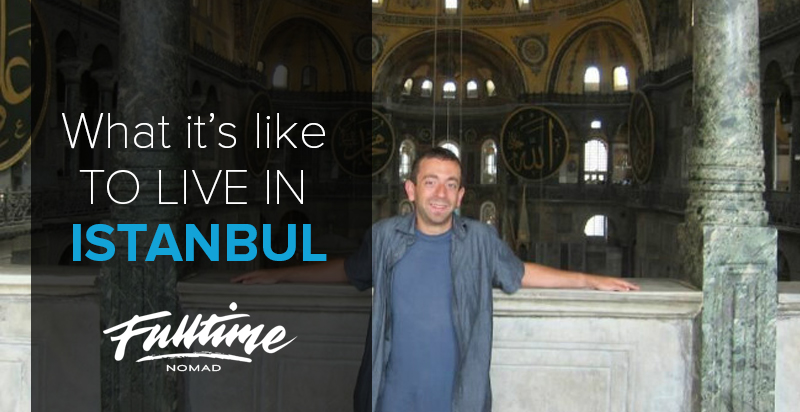
Fulltime Nomad – Istanbul, Turkey (Living Abroad Series)

Recently, I wrote an article and submitted pictures for a guest blog post on the travel website, Fulltime Nomad, as apart of their “Living Abroad Series.”

Johnny & Radhika of Fulltime Nomad were nice enough to let me share my thoughts and experiences on their website on what it was like to live in Istanbul, Turkey.

In the article, I talk about what life is like for a foreigner in Istanbul, the unique food and culture of the city, and how best to navigate the challenges and adaptations that come with living and working as an expatriate.

Here are a few excerpts from the article:

What did you love about living there?

“I loved a lot of things about living in Istanbul. I really enjoyed the Turkish cuisine with my favorites being menemen, iskender kebab, baklava, lahmacun, borek, etc. I could go on and on about the food in Istanbul but you’ll have to visit for yourself!

Being within walking distance of the Bosphorus was a real treat for me too. I’m a big fan of history so I liked learning more about the Ottoman Empire, the founding of the Turkish Republic, and visiting all of the great museums and monuments that Istanbul has to offer.”

What are the local people like? Were there any challenges that you faced?

“Istanbul is an enormous city with a lot of different people from different backgrounds mixing together. It’s similar to a lot of other major cities where there’s a lot of hustle and bustle so people may not be as warm or friendly as they would be in smaller towns or communities. However, there are a lot of smaller neighborhoods within Istanbul that are unique in that they feel smaller and people look out for each other. Overall, Turkish culture is very hospitable and kind. When you’re invited to a Turkish person’s home, be ready because they will feed you, enjoy your company, and care for you as a foreigner in their country.

The biggest challenges I faced were battling the horrendous Istanbul traffic on a daily basis and becoming advanced in the Turkish language. I tried to avoid it as much as possible by taking Istanbul’s rapidly developing metro system but it’s inevitable that you’ll hit traffic 90% of the time. That’s why I encourage people who come to visit Istanbul to stay close to the major tourism spots and/or near to the cool, hip neighborhoods. The Turkish language isn’t that hard for foreigners to learn but you really have to memorize the grammar structures and be prepared to work on your pronunciation and vocabulary skills. It’s not easy but the local people will respect and admire you very much if you try to learn Turkish.”

And, finally, any advice or encouragement for someone wanting to take the leap and live overseas?

“Do it. Have a plan and know what you’re getting into but I highly, highly recommend it. If you’re young, want to explore the world, and have a little money saved up; it’s a worthwhile investment. It’s a lot different living overseas than just being a tourist but it’s a much more special experience. You get to experience the culture more, go deeper into the language, and a gain a more mature perspective of the world.”

_____________________________________________

You can read my full article here: Full Time Nomad – Living in Istanbul

I want to thank Johnny & Radhika again for letting me be apart of their ‘Living Abroad’ blog post series. It was a real pleasure for me to write about my past experiences and memories of Istanbul.

If you’re interested in learning more about the digital nomad lifestyle, go to Fulltime Nomad to learn more about Johnny & Radhika’s story. You can also like them on Facebook at FulltimeNomad and follow them on Twitter, @FTNomad.


Colombian Fruits and Juices

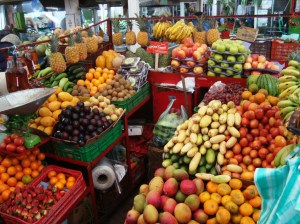
paloquemao-bogota-colombia-fruit
“So many choices to choose from, so little time.”

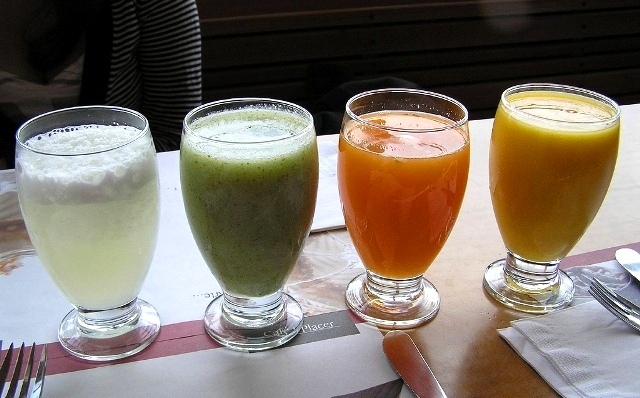
One of the joys of living here in Colombia is the diverse and plentiful selection of fruits to choose from. The choices are quite abundant and it is an integral part of the culture to imbibe in a cold and tasty fruit juice at the end of a long day.

As I mentioned before in my blog post titled, ‘The Heat Is On’, one of the best ways to deal with the heat and humidity is to cool down with a delicious fruit juice. It is also much healthier and refreshing than having soda or coffee instead. Over the past two months, I have done a great job of sampling the different choices of fruit juices and which ones I have a preference for. I’ve listed below the common fruit juices available here on the Atlantic coast and have also highlighted my personal favorites. The one juice that I have not tried thus far is the ‘Zanahoria’ or Carrot juice but I’m willing to give it a shot during the rest of my time here.

I hope that for those of you who plan on traveling to Colombia in the future will consider this ‘fruit juice’ list as a helpful guide to you. It can be a very hard choice to make when you’re at the ‘Fruteria’ and there are ten choices available but you’re not sure which one will be most refreshing.

Honestly, you can’t go wrong with any of the choices detailed below. Colombian fruit juices are freshly blended together rather than squeezed as is the case in the U.S. and elsewhere. In addition, the fruits are mixed with water or milk (smoothies) and topped off with a little bit of sugar. What results is a very fresh and tasty drink to keep you cool during those hot days and humid nights. The Colombian people take their fruit juices seriously and so do I.

  • Lulo: Orange on the outside with green and yellow pulp on the inside, Lulo has a citrus flavor that is very sour to eat. However, jugo de lulo, mixed with some sugar, is perhaps the most popular juice here on the Atlantic coast. Also known as Naranjilla in other parts of Latin America, the fruit is related to the tomatillo and some people would describe its flavor as somewhere between green apple, and lime. It’s up there with being one of my favorite juices here.
  • Guanabana: Another one of Colombia’s most popular fruit juices. Its’ thorny green skin is filled with white filling and black seeds, similar in appearance to the fruit known as the cherimoya. Its juice has a creamy flavor with hints of strawberry and pineapple, and goes well with water, milk, and sugar.
  • Tomate de Arbol: The ‘tomato of the tree’ in English is an egg-shaped fruit with a yellow filling that is distinct from the typical red tomato that you would find in the supermarket. It has one of the most unique flavors I’ve ever tasted, and is similar to a mix of passion fruit and tomato, and supposedly has many health benefits. I enjoy its unique flavor and its refreshing qualities.
  • Granadilla: This fruit is a close relative of the well-known passion fruit. On the outside, it looks like a small orange or mandarina, but when it is cracked open, it contains a gelatinous pulp filled with black seeds. The flavor is similar to that of the passion fruit, but sweeter, and the seeds are easily disposable by spitting them out amidst the delicious juices. When turned into a fruit juice, it’s pulpy yet satisfying on a hot and humid day.
  • Mamoncillo: On the outside, this fruit looks like a lime, but when cracked open, it reveals a pinky-orange flesh similar to that of a lychee. The flavor is a mix of the tartness of a lime with the mild sweetness of the lychee. When blended into a juice, it looks like an iced tea and has a light orange/beige color.
  • Maracuya: Another part of the passion fruit family along with the Granadilla. It has an oval-shape, can look a bit wrinkly, and makes for a delicious juice or ice cream flavor as well. Maracuya is a great source of Vitamin C and is also known to be a natural sedative too. It also is known to aid digestion of food in the stomach. Extremely similar to the look of orange juice, Maracuya has a yellow-orange color when turned into a juice.
  • Gulupa: A cousin of the aforementioned Maracuya and another passion fruit. It has a dark purple skin that becomes wrinkled when it is ripe for eating or drinking. Along with Maracuya, it has plenty of Vitamin C and can help ease stress and tension in the body. When blended into a juice, it has a yellow color and looks very similar to orange juice.
  • Zapote: One of Colombia’s toughest and most durable fruits. It can grow very fast and is resistant to heavy wind and drought conditions. Zapote is full of minerals and antioxidants and can help with ailments ranging from irritable bowel syndrome to gastritis. It is very high in fiber so be careful not to eat too many as it does act as a natural laxative. Like other fruits here, it goes well with sugar and has a pink-orange color in juice/smoothie form.
  • Borojo: Known to be a ‘Love Juice’, and possessing some aphrodisiac qualities, this juice has been well-known for centuries and can act like a natural Viagra if you’re in the mood. Nutritionists have claimed that ‘Borojo’ is one of the most nutrient-rich fruits in the world can help combat malnutrition. When mixed and blended into a fruit juice, it gives off a dark to light brown color.
  • Mora: Known as ‘Blackberry’ in English, this is my favorite juice to have here in Colombia. Rich in Vitamin C, antioxidants, and nutrients, it is the most refreshing drink I’ve encountered thus far. I also enjoy the dark red color of the juice and enjoy it after a long day outside. While not an exotic fruit or drink, it gets the job done and I enjoy the simplicity yet refreshing qualities of the juice itself.

While I only listed ten fruits / fruit juices to indulge in, there are over dozens of unique fruits here in Colombia to try out. Some of the most exotic and sought-after fruits reside here in Colombia and you usually can’t find them anywhere else. A lot of the fruits I mentioned in this post have great health benefits and are packed with nutrients. Different than the apple, banana, and grape, these ‘superfruits’ can cure ailments, keep you well, and give you more energy. If you decide to ever visit Colombia, eat the fruits and try the fruit juices. I promise you won’t regret it.

Carnaval!


IMG_0055
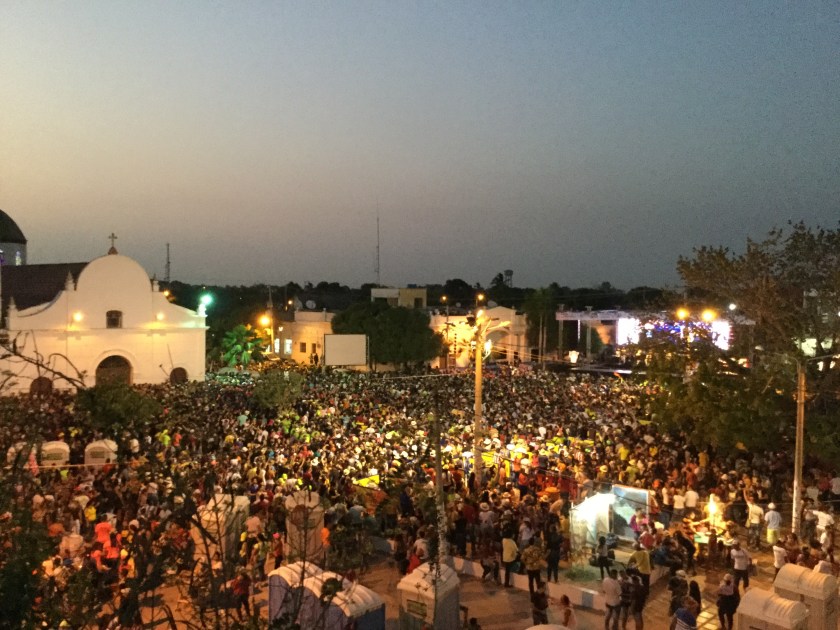
“A large crowd gathers to dance, listen to music, and enjoy the beginning of Carnaval 2016 here in Colombia.”

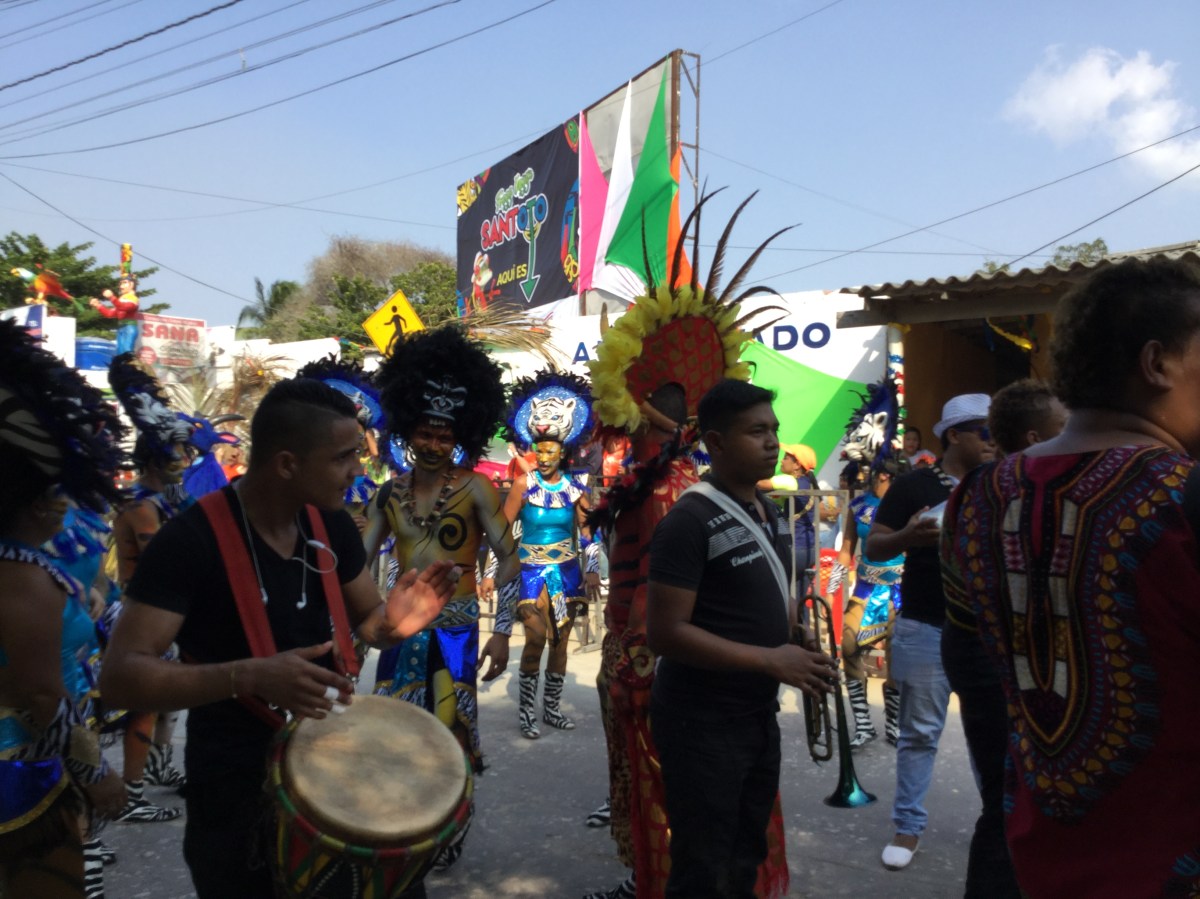
Carnaval Season here in Colombia has officially come and gone. Life here is starting to return to normalcy and I’m sure some of the locals are already beginning to count down to when Carnaval will be back in 2017. This was my first Carnaval ever and I can firmly say that it was some of the most fun I’ve had in a while. In addition to the festive parades and diverse costumes, there were also the live concerts, the neighborhood parties, and the street foods/drinks to add to the already festive atmosphere. Unfortunately, I was unable to make it to Barranquilla’s Carnaval this year but I still was able to enjoy myself by attending other parades, parties, and festivities in the Atlántico department.

The biggest highlight for me during the Carnaval celebrations was attending ‘La Gran Parada’ in one of the major towns located outside of Barranquilla. It was really cool to experience the parade from the seats and be able to enjoy a cold beverage and a warm snack while both the kids and adults danced, sang in their unique costumes as they came streaming down the main parade route.

Historically, Carnaval has been known as the main celebration associated with the Christian festive season that occurs before the period of Lent. There are many Carnaval festivals that happen around the world. The most famous one takes place in Rio de Janeiro, which attracts about a 1 million visitors to Brazil each year. Carnaval in Barranquilla is the 2nd largest in the world and brings in hundreds of thousands of tourists, partygoers as well. For those of us from the United States, we are more familiar with the Mardi Gras celebration and the infamous ‘Fat Tuesday’ which is also known for its size and scope of partying as well.

Before ‘Ash Wednesday’ and the beginning of Lent and the Easter season for Christians around the world, Carnaval represents a shedding of inhibitions, and an enjoyment of the pleasures in life. Some people see it as indulgent in heavy drinking, eating greasy foods, and fraternizing with the opposite sex but other people see it as a way to reconnect with their diverse culture, spending quality time with their family and friends, and enjoying a break from work and the daily grind. For my first Carnaval, I spent the festivities mainly meeting new people in my community, enjoying the company of new friends and my host family, and checking out the cool costumes and cultural dances that make up this very unique holiday.

I also had to deal with the tradition of young children and adults throwing great amounts of Maizena (corn starch) and white foam spray all over random strangers. It occurred multiple times where my clothes and my body, face would be covered with both substances during the festivities. Needless to say, I had to wash my clothes extra hard in order to get the cornstarch / spray out of my clothes and hair as best as I could. Besides getting messy, it was nice to drink a beer in public, eat some good food, watch the parade, and then reconnect with my fellow Peace Corps trainees later to celebrate together.

Carnaval was originally introduced to Colombia and Latin America from the Spaniards during the early days of the colonization hundreds of years ago. However, the celebration has evolved over hundreds of years to reflect the diversity in Colombian culture. In addition to European elements, Carnaval combines those traditions with those of the African, Amerindian indigenous cultures. It is a really interesting mix of cultures combined together and is reflected in the costumes, music, and dancing styles that are put on display in events like ‘La Gran Parada’ and ‘La Batalla de Flores.’ As for the types of music, they are various and diverse.

They include the popular Cumbia, Rumba, Vallenato, Reggaeton, Porro, Mapale, and African Congo music. Finally, it wouldn’t be Carnaval without the King and Queen of the festivities being anointed. For each town and city that is involved in the celebrations here in Carnaval, they must appoint a King and Queen to lead the main parade, to dance up a storm, and to wave to the partygoers in the stands. As far as I can tell in Colombia, being the King or Queen of Carnaval (Rey / Reina) is a huge honor and is very competitive between the young men and women vying for the title to represent their town or even the city of Barranquilla.

After experiencing my first Carnaval, it’s going to be difficult to top that kind of day party in the future. It truly was one of the best times I ever had in terms of celebrating a holiday. The only way I could top it in 2017 and beyond is if I was able to spend some free time and head to Barranquilla for the big kahuna there. I don’t know if it will be logistically possible but we’ll see what happens. If not, there’s always the biggest carnaval in Rio but that can wait until after I finish my Peace Corps service.