


The Brilliance of Curb Your Enthusiasm

“Created by and starring the incomparable and legendary Larry David, this groundbreaking television series has left an indelible mark on the landscape of comedic television forever.”

In the realm of television comedy history, few shows have attained the iconic status and enduring brilliance of HBO’s “Curb Your Enthusiasm.” Created by and starring the incomparable and legendary Larry David, this groundbreaking television series has left an indelible mark on the landscape of comedic television forever.

From its razor-sharp wit to its unapologetically irreverent humor, “Curb Your Enthusiasm” stands as a testament to the genius of its creator and the unparalleled hilarity of its ensemble cast. In this reflection on the recent 12-season end to this timeless show, I will dive into what makes “Curb Your Enthusiasm” one of the best comedy shows of the current century, examining its societal critiques, witty dialogue usage, and the reasons for the genius behind show creator, Larry David’s success.

At the heart of “Curb Your Enthusiasm,” lies its fearless examination of social norms and conventions, some that I would argue as the show does are both outdated and tiresome. Through its biting satire and clever storytelling, the show offers a candid and often uncomfortably honest portrayal of everyday American life. Larry David, known for his role as the co-creator of “Seinfeld,” brings his signature brand of observational humor to “Curb Your Enthusiasm”, presenting audiences with a heightened reality where social etiquette is put under a microscope and hilariously dissected.

One of the show’s defining features is its ability to derive comedy from mundane situations, turning everyday occurrences into laugh-out-loud moments. Whether it’s navigating the intricacies of a dinner party or grappling with the complexities of personal relationships, “Curb Your Enthusiasm” finds humor in the absurdities of human behavior. This relatable quality endears the show to audiences of all backgrounds, as viewers see themselves reflected in Larry David’s misadventures and faux pas.

Central to the success of “Curb Your Enthusiasm” was its groundbreaking use of improvisation. Unlike traditional sitcoms with scripted dialogues, “Curb” relies heavily on improvised performances, giving its actors the freedom to explore their characters, and react in real-time. This unscripted approach lends a unique authenticity to the show’s interactions, allowing for spontaneous moments of comedic brilliance that feel genuine and unrehearsed.

Larry David’s portrayal of himself as a fictionalized version of his persona is nothing short of a genius move. Through his character, also named Larry David, the creator skewers societal norms with fearless abandonment, fearlessly tackling taboo subjects, and challenging conventional wisdom. David’s willingness to embrace discomfort and confront controversial topics head-on sets “Curb Your Enthusiasm” apart from other comedies, elevating it to a league of its own.

The ensemble cast of “Curb Your Enthusiasm” further contributes to its comedic brilliance. From Jeff Garlin’s portrayal of Larry’s loyal but perpetually exasperated manager, Jeff Greene, to Richard Lewis, a fellow comedian dressed in black perpetually and Larry’s comedic foil, to Cheryl Hines’ pitch-perfect performance as Larry’s long-suffering wife, Cheryl, each actor brings their A-game to the show, delivering performances that are equal parts hilarious and heartwarming. The chemistry between each of the cast members is palpable, lending an authenticity to their interactions, which was essential to the show’s long-lasting success.

Beyond its comedic brilliance, “Curb Your Enthusiasm” is also notable for its incisive social commentary. Through its satirical lens, the show tackles issues of race, religion, politics, relationships, friendships, and more, offering a searing critique of contemporary American society. Whether it’s exposing the absurdity of political correctness or challenging entrenched stereotypes, “Curb” fearlessly confronts the ‘elephant in the room’, sparking real conversations between its viewers, and provoking a good amount of thought long after the credits roll.

Another hallmark of “Curb Your Enthusiasm” is its distinctive dialogue patterns. The show is renowned for its rapid-fire banter and quick-witted repartee, with characters engaging in verbal sparring matches that are as entertaining as they are memorable. Larry David’s penchant for wordplay and linguistic acrobatics infuses the show’s dialogue with a playful energy, keeping audiences on their toes, and delighting in every clever turn of phrase.

Perhaps the most remarkable aspect of “Curb Your Enthusiasm” is the way in which it blurs the lines between reality and fiction. Larry David’s decision to play a fictionalized version of himself blurs the boundaries between the actor and the character, inviting viewers to question where the line between truth and fiction truly lies with regards to if Larry behaves as his character, Larry will do. This meta-narrative device adds an additional layer of complexity to the show’s storytelling, challenging audiences to discern where reality ends and satire begins.

Larry David’s success in making “Curb Your Enthusiasm” a TV show hit can be attributed to his uncompromising vision and unwavering commitment to his craft as an actor. As both the creator and star of the show, David brings a singular voice to the screen, infusing each episode with his unique perspective and razor-sharp wit. His willingness to push boundaries and defy expectations has earned him a devoted following amongst fans including myself and has cemented his status as one of the most influential figures in comedy history.

“Curb Your Enthusiasm” stands as a timeless masterpiece of television comedy, a show that continues to resonate with audiences more than two decades after its initial debut. Through its fearless satire, impeccable improvisation, and incisive social commentary, “Curb” offers a refreshing take on the human condition, challenging conventions, and sparking a lot of genuine laughter in equal measure. With its brilliant writing, unforgettable characters, and fearless exploration of society’s taboo subjects, “Curb Your Enthusiasm” has rightfully earned its place as one of the comedy shows of this young century, leaving an indelible mark on the world of television, and inspiring countless imitators in its wake.                                

Larry David’s previous successful show, “Seinfeld”, and “Curb Your Enthusiasm” are often mentioned in the same breath, given their shared DNA through David’s involvement. While both shows explore the intricacies of human behavior and social conventions, they do so through distinct lenses. “Seinfeld” operates within the confines of a traditional situational comedy or ‘sitcom’ format, with scripted dialogue and episodic storylines centered around four main characters, one of whom, ‘George Costanza’ was based on Larry David’s past experiences living as a younger man in New York City. In contrast, “Curb Your Enthusiasm” eschews traditional sitcom conventions in favor of a more improvisational approach, blurring the lines between reality and fiction with its mockumentary-style presentation.

Despite these differences, the two shows share a common thread in their exploration of the minutiae of everyday life. Both “Seinfeld” and “Curb Your Enthusiasm” derive humor from the absurdity of human behavior, finding comedy in the mundane and the trivial. However, where “Seinfeld” often relies on situational humor and elaborate plotlines, “Curb” thrives on its characters’ interactions and spontaneous moments of hilarity that arise from their social faux pas. In considering which of the two shows may be perceived as superior to the other, one could argue that “Curb Your Enthusiasm” holds the edge due to its fearless approach to comedy and its willingness to push boundaries.

While “Seinfeld” remains a beloved classic with its timeless humor and iconic characters, “Curb” distinguishes itself through its unapologetically irreverent tone and its willingness to tackle taboo subjects head-on. Additionally, “Curb” benefits from the creative freedom afforded by its HBO platform, allowing for more explicit language and mature themes than its network predecessor. Ultimately, whether one views “Curb Your Enthusiasm” or “Seinfeld” as the better of the two shows may come down to personal preference, but there’s no denying the lasting impact and enduring brilliance of both series in the pantheon of television comedy history. Overall, Curb Your Enthusiasm is a pretty, pretty, pretty good show and one worth watching again and again.
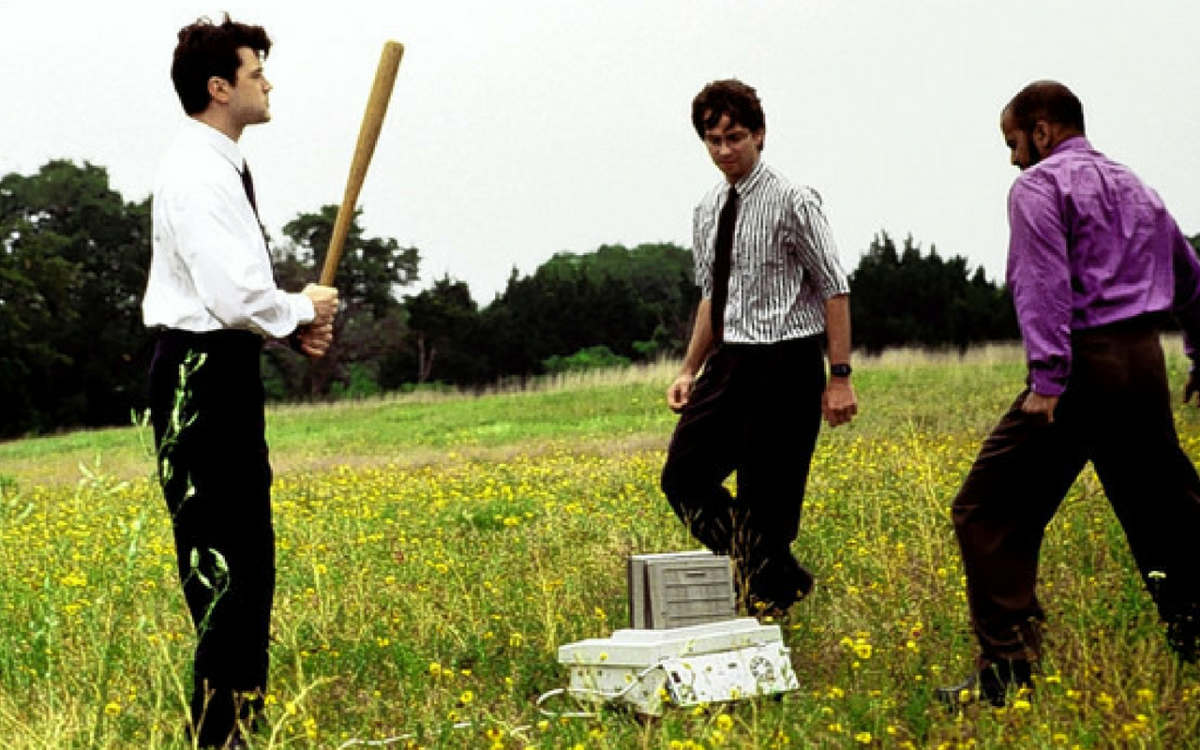

‘Office Space’ – Film Review and Analysis

“1999 was an incredible and unique year for movies in America. In an era where Hollywood would regularly produce thought-provoking content that did not dumb it down for audience and would tackle tricky real-life topics without a filter, it may have been the golden age of film for those of us in the Millennial generation.”

1999 was an incredible and unique year for movies in America. In an era where Hollywood would regularly produce thought-provoking content that did not dumb it down for audience and would tackle tricky real-life topics without a filter, it may have been the golden age of film for those of us in the Millennial generation. While not as ‘politically correct’, these movies such as ‘Office Space’ challenged our assumptions, made us question our modern comforts, and perhaps most importantly showed us the ridiculousness of having flair as a waiter or waitress at a chain restaurant as a part of the service given.

Poking fun at chain restaurants is far from the only good thing about ‘Office Space’, one of my favorite movies of all-time. During that year of 1999, two other excellent movies placed a mirror in front of our society and made us reflect on whether ‘modern’ was really that good and whether ‘materialism’ was that spiritually enlightening. While not as complex as ‘The Matrix’ or as serious as ‘American Beauty’, ‘Office Space’ is a comedy but not your average one. It chides you with wisecracking humor but also lays bare certain aspects of American adult life that are not just unpleasant but downright silly.

Whether it is a loud co-worker talking too much over the phone, a crappy printer that just won’t do its job, meaningless reports to file each week, or an obnoxious boss who makes you come in on the weekends, ‘Office Space’ is an ode to the white collar worker who despite the good health care benefits and the steady salary is unfulfilled with his life and is not sure why.

Peter Gibbons (Ron Livingston) is exasperated with his office job in IT (Information Technology) at a software company, Initech. He goes out of his way to avoid his obnoxious and micro-managing boss, Bill Lumbergh, who insists on him working on the weekends but also indicates wanting covers on the TPS reports, which is a mindless and meaningless task. Peter is comfortable with the job but knows deep down it isn’t satisfying him and he comes into work dreading it each day. Peter dislikes most of his co-workers including a lady who says to him, “Somebody has a case of the Mondays” to downplay his frustration of commuting to a suburban office park each and every week while dealing with traffic and the lack of purpose involved.

Probably the only reason Peter stays at his job are his two friends at work who sympathize with him, Michael Bolton (no relation to the singer as he makes clear) and Samir Nagheenanajar (who is obviously frustrated that no one in America can pronounce his last name). They are not as depressed as Peter but they also understand where he is coming from. Peter also gets sympathy from his neighbor, Lawrence, who lives next door. Lawrence does not work in an office and works on construction projects outdoors so he can’t relate to Peter so much with his drudgery at work but he emphasizes how nobody ever told him that he ‘has a case of the Mondays.’ He makes clear in a hilarious way that if somebody ever did that to him, they would get their ass kicked for that.

Peter’s unsatisfying life is also compounded by his girlfriend who is cheating on him and the fact that he is forced to go see a hypnotist who she thinks can help Peter get out of the funk that he is in. In perhaps the funniest scene in the film, the hypnotist / psychotherapist who is extremely overweight is in the process of hypnotizing Peter to snap him out of his lethargy regarding work and seemingly drops dead in front of him and his girlfriend.

Because the hypnotist died before taking Peter out of his temporary state of ease and relaxation, Peter’s whole personality changes and he stops worrying about work and his performance there with hilarious results. He starts to be honest about his work, his boss, and his forced weekend workdays and shockingly, instead of him getting fired, he gets promoted. Even though his girlfriend leaves him because of his lack of concern for the hypnotist’s death, Peter meets a new love interest shortly after.

His meeting with Joanna at an Applebee’s clone as he grabs a long lunch one day while skipping work; he is drawn to her because of her beauty, humor, and the fact that they both love kung-fu. Unbeknownst to her, she is also working a crummy job which is demeaning, and Peter starts to show her how to take control of her working life by caring less and being more honest.

After the hypnotist’s unfortunate death, Peter’s life does a complete 180 as he is more relaxed, less angry, and strangely more confident. He sleeps in more, gets a pay raise from two of his eight bosses (the Bob’s), and he devises a plan to steal a little bit of money from his company over a period of years. While not a good move on his part, Peter and his two co-workers, Michael and Samir, are also tired of the monotony and mistreatment at the hands of their bosses and co-workers. If they can get a little bit of money before quitting, they figure it won’t backfire on them.

While I do not want to spoil the rest of the movie, Peter is not innocent and bites off more than he can chew which causes him to wake up in a number of ways and to really fix his life instead of floating through it or resorting to a criminal action. He does realize that he is responsible for his own happiness or unhappiness and it is up to him alone to make his life fulfilling rather than meaningless. Peter is a likable character who a lot of people can relate to who have worked in an office type of setting. Still, what is blasé and unappealing to him, may be amazing and meaningful to others.

‘Office Space’ is not just about the negatives of office work and that kind of lifestyle but it is a meaningful referendum on a life not well lived. The film is a dark comedy by genre, but it also holds some deep truths within it. Director Mike Judge reminds everybody watching that you only get one life to live and how you really should consider spending it before time runs out. In addition to the fact that it is both a reflective and entertaining comedy, it is also of course a really funny movie worth a repeat viewing or two to catch all of the jokes.

While not very successful when it first released in 1999, it later became a cult classic film thanks to Blockbuster, DVDs, and the Internet’s growth. ‘Office Space’ is very quotable and I have myself referenced it multiple times especially when a printer I’m using is not working. The soundtrack of hip hop and rap from the 90s also makes it a true film from that decade. As many of America’s working men and women went from being in factories to office parks, this film has really hit a cord with not just Generation X but also the Millennial generation.

I would like to think that when you watch this film, you start to examine your own working life to figure out if it is ‘working’ for you or not. Maybe you prefer to be in another environment when you work or you prefer to work alone, this film probes the question of what office work is usually like and the downsides that it comes with. When this film was made, there were no remote work options and now it seems to be more popular. I like to think that one of the major effects of ‘Office Space’s later popularity in the 21st century is that it got more and more people to realize that cubicles aren’t and shouldn’t be for everyone. They just aren’t.

The Downsides to Sarcasm

Sarcasm is one of those things in life that should be used fleetingly or in moderation so as to not step on anybody’s toes or to get yourself into trouble. Sarcasm has its place and time but when it is used commonly, so much that you are not even sure of whether you yourself are being serious or sarcastic, then you may start to have problems in your interpersonal relationships. Sarcasm may be considered funny or humorous at times but there are much better ways on how to put a smile on somebody’s face.

How do we define ‘sarcasm’? What exactly does it mean? Well, sarcasm is essentially the using of contempt or irony to mock someone or make fun of someone. Sarcasm is often negative in terms of its usage and while it can be funny to some people you’re not referring to as the focus of the joke; others may be offended by it or not find it tasteful. The thing with sarcasm is that once you start using it on people, you may be liable to consequences where people make fun of you in return using sarcasm. Sarcasm is an unclear form of communication and while it can be considered witty or clever, you’re risking it that the joke may not go over well or that the sarcasm will be turned against you.

You also should be careful about who you are using sarcasm around because some cultures and some peoples are not familiar with this form of humor and will think that you are being serious instead of being aware that you’re joking around. While not limited to only the English language, Sarcasm is considered to be most commonly used in English and is rather foreign to other languages who do not use it as a form of humor.

Sarcasm can often be misconstrued even when it is meant to be funny leading to angst and resentment that can hurt friendships and relationships. The biggest downside to sarcasm is that at the heart of it is dishonesty or a lack of forwardness that can cause mixed emotions or bad feelings over time. When it is used over and over again with the same person, they will not be able to tell if you’re ever being serious or if you’re always being sarcastic instead. When you are hoping to clearly communicate with another person in an honest and frank way, you want to stay far away from using sarcasm at all.

While using sarcasm with friends and family isn’t the worst thing if they are familiar with what it is in terms of humor, you should avoid using it with strangers, employers, or people in official roles. You would not be sarcastic with a firefighter if your house is burning down nor would you do it with a police officer if your car got pulled over for speeding on the highway. These kinds of situations are where you do not want to use sarcasm at all because it could backfire on you in terms of hurting your future.                  Using sarcasm at the office or the workplace is also highly inadvisable especially because of the likelihood that it can be taken the wrong way.

This is especially true if you do not know the person well or know about their sense of humor. Using sarcasm with the wrong people or in the wrong situation could backfire on you severely causing you to lose your job or even lose your friendship when you are not careful about it. Sarcasm with strangers is also not a good idea because they don’t know who you are, or they might not even know what sarcasm which is could put you in potential physical danger if you are not careful. Because of these examples that I have cited, we can conclude that sarcasm should only be used with close friends or family members especially sparingly so as to not cause miscommunication or hurt feelings.

Also, compared to other figures of speech in the English language, sarcasm neither translates well to other languages nor can be written in any real form. You can only use spoken sarcasm usually with humorous or hurtful intent, which means it may be one of the least useful figures of speech to learn and use. Sarcasm is mainly used to mask a true form of communication and is a shortcut or cheap way to undermine being honest and open with other people. People who use sarcasm often and without previous thought run the risk of being seen as emotionally distant or uncaring. They will be perceived by others as putting up walls and not being able to hold a serious conversation. As a result, a lot of sarcasm can cause a lot of harm to one’s personal life and prevent somebody from forming deep, real, and lasting relationships.

Sarcasm, when used in the right way can be very funny, but it is one of those things in life that has a diminishing marginal utility the more it is used. People don’t want to be around someone who is sarcastic all of the time and can’t be trusted to have a serious conversation. Open and honest communication is the antithesis to sarcasm, and I think most people would rather deal with someone who is honest rather than sarcastic. There are also much better and more sincere forms of humor out there that can generate a lot more laughs without hurting someone’s feelings. To poke fun of someone in a real way is alright but to constantly do it will lead to serious problems and broken friendships if the sarcasm does not stop.

Unsurprisingly, sarcasm is most popular with middle school and high school children, but it should be a stage that you grow out of in college and beyond. If you’re a grown man or woman using sarcasm all of the time and never being honest with your co-workers, friends, or family, it is almost certainly going to backfire on you and cause issues in your life. The next time you think of being sarcastic as a grown adult, think deeply before you do it and think about the person or people, you’re making the butt of the joke. If you do not think before you speak, it is likely to end up with negative consequences for you.

Sarcasm is a figure of speech in the English language but to me, it is a mostly unpopular and overrated one that doesn’t translate well or write well either. The next time you hear a sarcastic conversation go on for too long, politely step away and ask to be excused. It’s not worth your time and it’s best you spend your time with other people who are more open, honest, and serious. Being able to handle mature conversations without using sarcasm will set you apart from others and show people that you are a serious adult who is not to be made fun of or messed around with.

Lastly, sarcasm is the lowest form of humor in the English language and as a figure of speech, it leaves a lot to be desired when compared to others such as irony or metaphors. While sarcasm isn’t going away anytime soon, let’s try to limit it down to only being used when a really funny situation arises.