The Last Full Measure

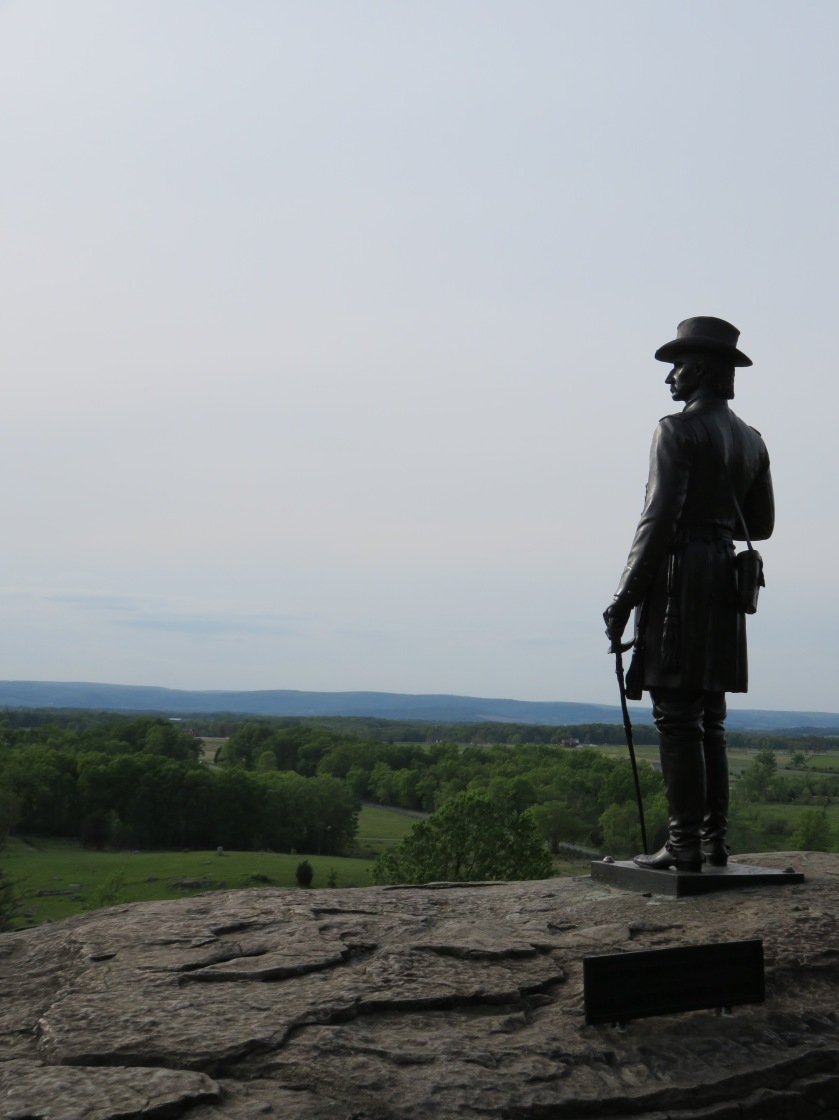
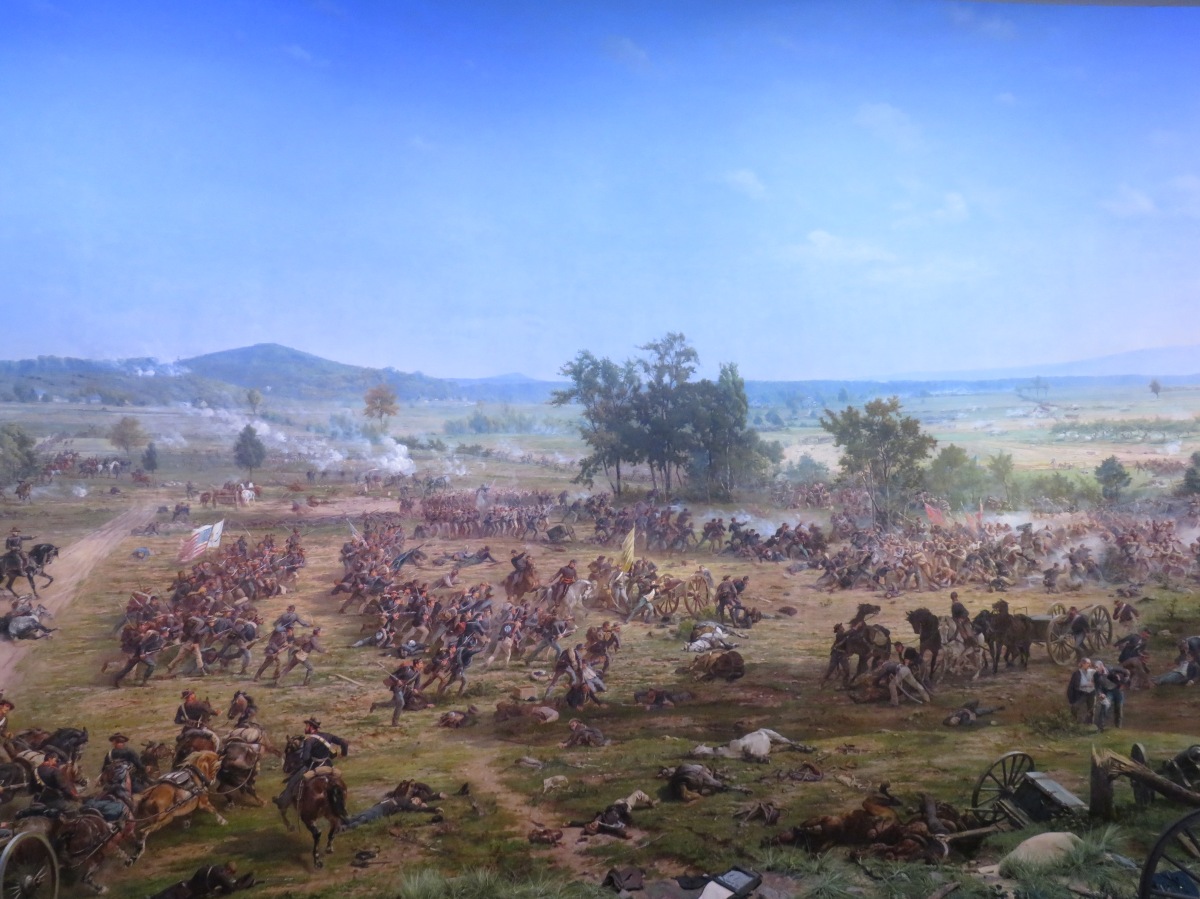
This past weekend, I was able to visit Gettysburg, Pennsylvania, the site of the most notable battle of the American Civil War, and one of the biggest battles in American military history. The battle of Gettysburg is also notable for being the main turning point of the Civil War. The outcome of the battle concluded with the Army of Northern Virginia, led by General Robert E. Lee, being prevented from invading further into the Northeast. Lee and his army were forced to retreat back into Virginia after the battles’ end and never again stepped foot in Union-controlled territory.

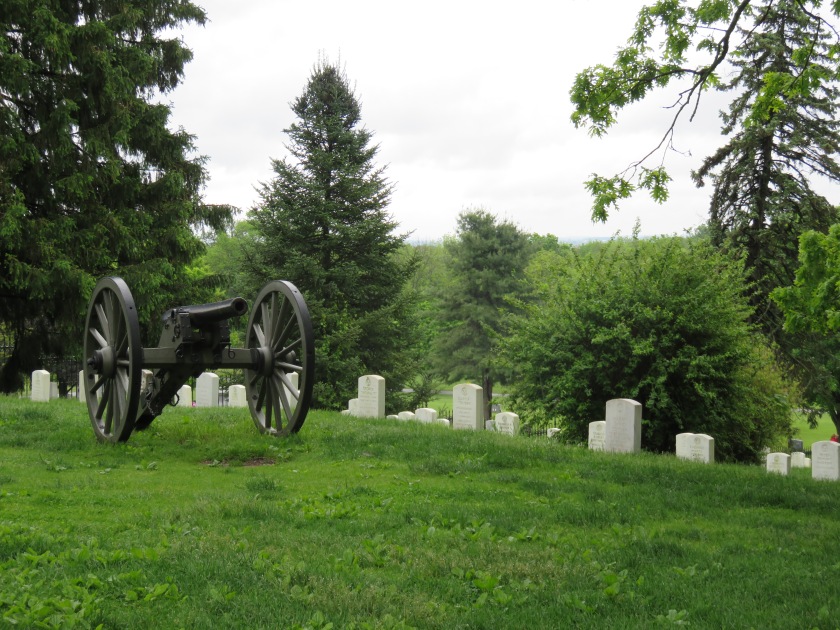
Set over a period of three days from July 1st – July 3rd of 1863, over 51,000 men from the Union and Confederate armies were killed, wounded, captured, or declared missing. It was the largest land battle ever fought in North America. More than 160,000 soldiers from both sides fought in the battle during those three tumultuous days with the town of Gettysburg and its civilians’ being caught in the crossfire. The battle of Gettysburg was fought on fields, marshes, hills, and sloping ridges over 10 square miles and around 6,000 total acres. In addition to the battlefield, Gettysburg is also home to a national soldiers’ cemetery close to the battlefield where the thousands of Union and Confederate troops, now long passed away, are ensconced in their final resting place.

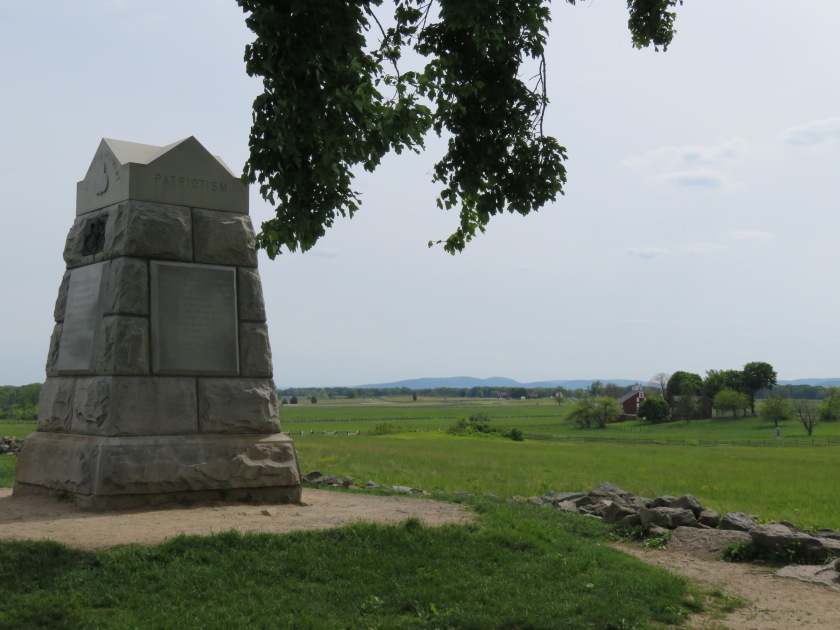
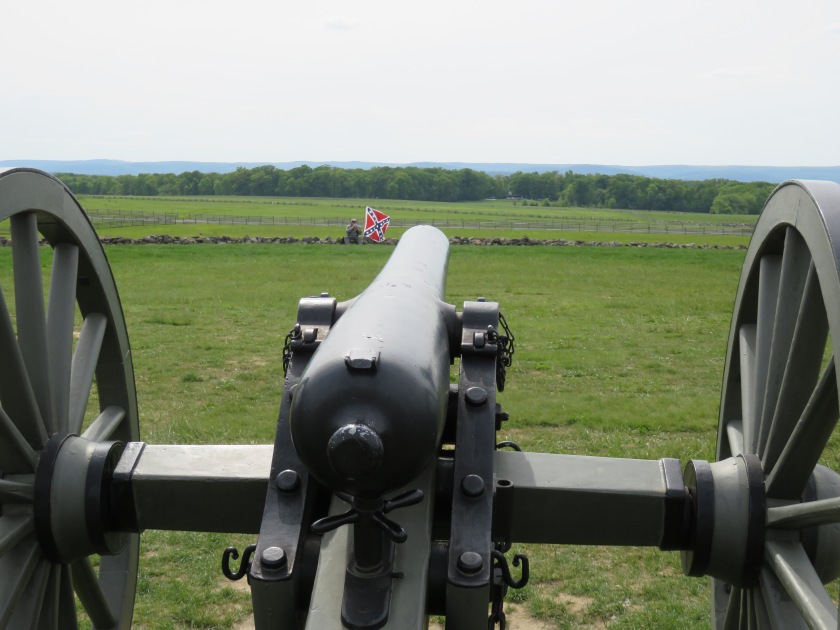
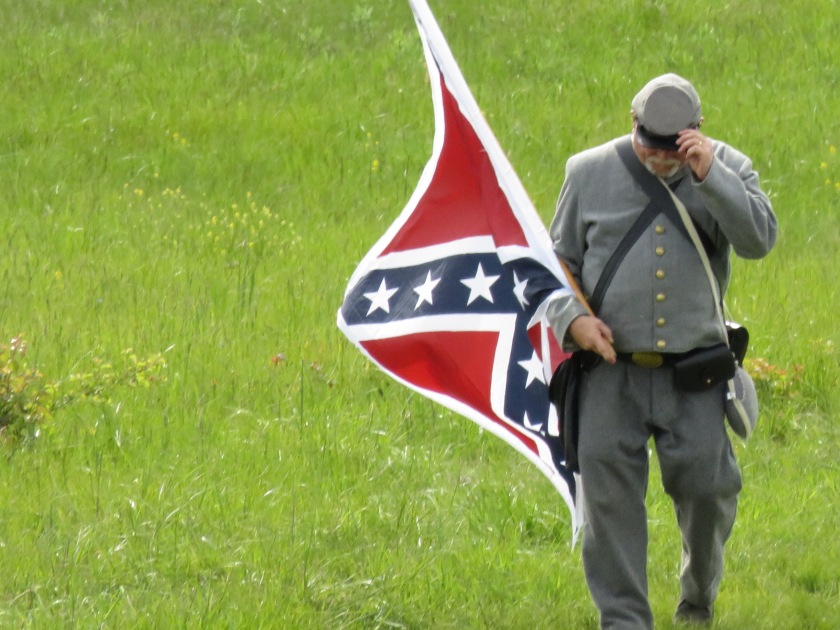
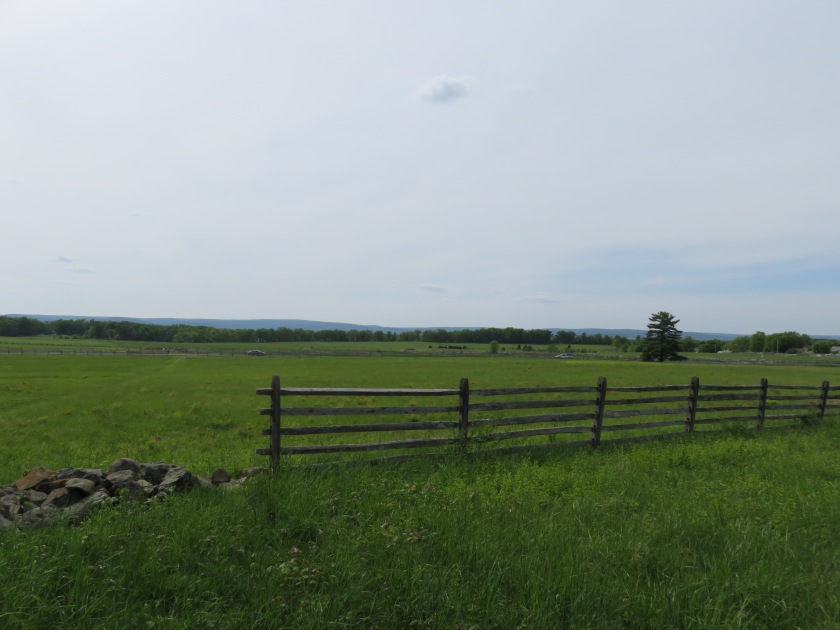
The first thing one notices about Gettysburg is just how quiet and peaceful it is. One would have never guessed that a major battle had been fought here or that thousands of lives had been lost while fighting for their principles and values. The battlefield of Gettysburg, now devoid of soldiers and horses, still retains its wooden barriers, its replica cannons, and artillery. The National Park Service should be commended for restoring the grounds of the battlefield and keeping it clean for the more than one million plus tourists who visit the national military park each year.

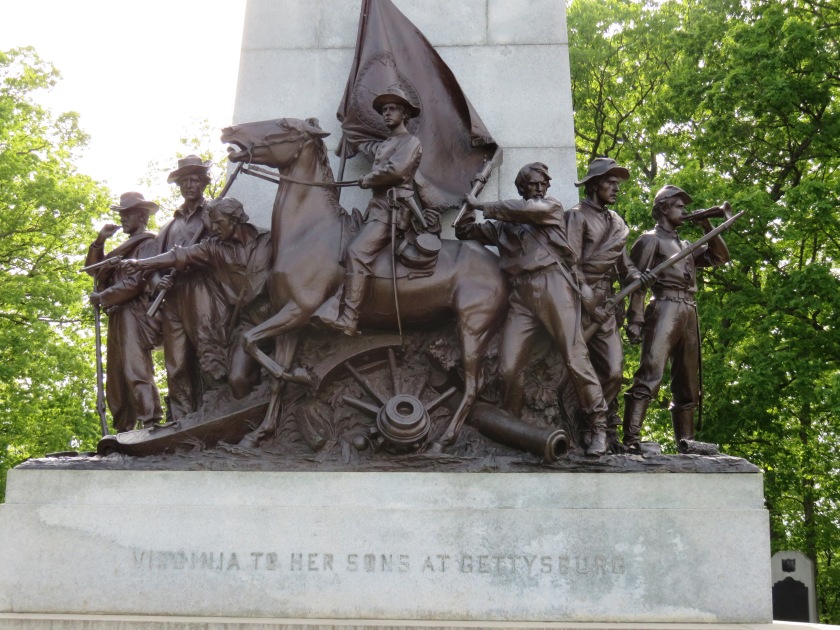
What I was most surprised and pleased about during my visit was the amount of memorials, monuments, and tributes paid to the thousands of soldiers on the Union and Confederate sides. The armies, brigades, corps, divisions, etc. from each of the thirty states on both sides of the Civil War are each commemorated and memorialized in some form.

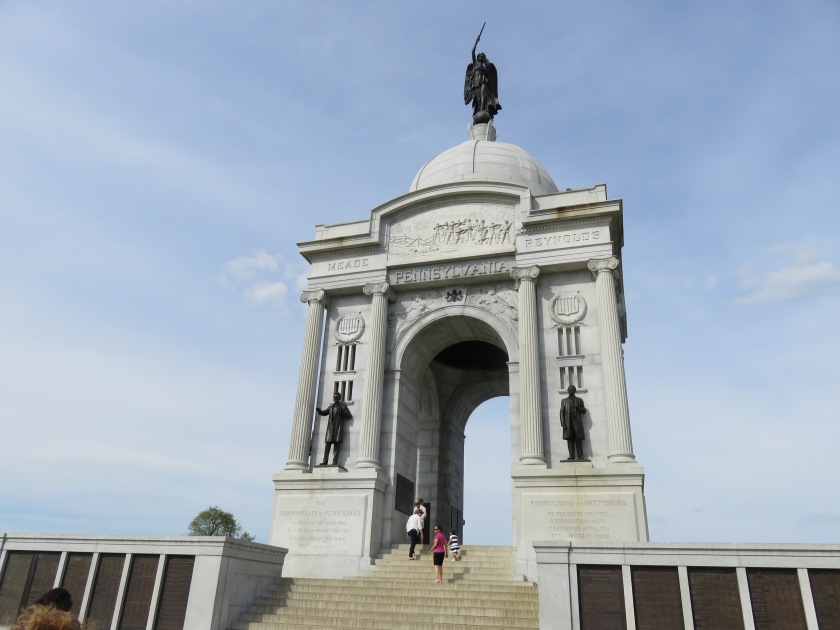
The most striking memorial to me was Pennsylvania’s state monument, the biggest and most awe-inspiring of them all. The Pennsylvania monument lists all of the soldiers’ names that fought for the commonwealth in the battle of Gettysburg. This monument in particular is Greco-Roman in design and has tributes to President Abraham Lincoln, and to notable soldiers and commanders from Pennsylvania. It also overlooks the entire battlefield of Gettysburg and can be seen from every part of the area.

Another notable memorial from the Gettysburg National Military Park can be found at the Gettysburg National Cemetery. In the center of the cemetery and overlooking the thousands of graves lying in repose is the Soldiers’ National Monument. This monument pays tribute to the soldiers who lost their lives at Gettysburg and is unique in quoting an allegory at its’ base that states, “Peace and plenty under freedom…following a heroic struggle.” In addition, this soldiers’ monument depicts the concept of ‘Liberty’ signified by a woman who carries a sword of war, while holding a wreath of peace. At the base, there are four separate statues representing ‘War, History, Peace, and Plenty’ in a chronological, circular order. In total, there are over 1,300 monuments, memorials and tributes at Gettysburg. It’s nearly impossible to see them all without spending a week or more at the battlefield because they are spread out over miles and miles of land. This is why it is known for being “the largest collection of outdoor sculpture in the world.”

You cannot come to Gettysburg without learning about the Gettysburg Address, and the process that led to President Lincoln delivering this famous and historic speech. While the spot where Abraham Lincoln gave the speech is not open to the public at this time, you can still see into the cemetery to view the general speech area. In addition, park rangers from the National Park Service are available for questions about the Gettysburg Address and a tour of the cemetery upon formal request. There’s also a bronze statue and monument of Lincoln’s bust along with an emblazoned copy of the entire Gettysburg Address close to the cemetery’s entrance.

American history was one of my favorite subjects from my high school days. The ability to go and visit historical battlefields like Gettysburg, Normandy, Lexington and Concord brings the history to life for me. I’ve been lucky enough so far to see some of the most notable locations of the American Revolution, Civil War, and World War II.

By visiting these places, you gain a great sense of gratitude and reverence around the conflicts, which these men fought and died in. You can better understand the costs and sacrifices that come with making war. Its’ also good to appreciate what we have today in our united country. There were times in our collective past as a nation when the concept of a ‘United States’ was very much in peril. Hopefully, we can continue to avoid the mistakes of the past, and learn from these dreadful conflicts.

The importance of seeking a brighter and peaceful future for our nation and the world is what I took from my visit to Gettysburg. These memorials, monuments, and the military park remind visitors and patrons alike why peace is something to strive for, even if it comes at a great cost. Sometimes, peace can only come through means of warfare, and that is why we give thanks to those men who gave their “last full measure of devotion.”

To learn more about the Gettysburg National Military Park, you can visit these websites for more information:
1.) https://www.nps.gov/gett/index.htm

2.) http://www.gettysburgfoundation.org

Gettysburg

IMG_0490

IMG_0430

IMG_0436IMG_0434

IMG_0444

IMG_0439

IMG_0457

IMG_0464

IMG_0521

IMG_0498

IMG_0499

IMG_0500

IMG_0532

IMG_0543

IMG_0529

CameraCanon PowerShot SX710 HS

LocationGettysburg National Military Park; Gettysburg, Pennsylvania
Reverse Culture Shock In The USA

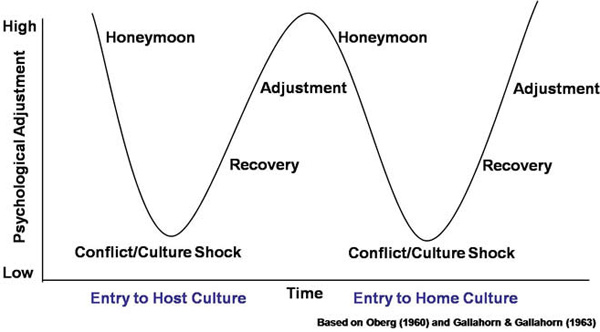
“Adjusting to one’s home country and culture can take a while. This graph sums it up quite well.”

After being away from the United States, my home country, for the past year, I have been dealing with ‘reverse culture shock’ since I have returned as many people who come back to their home culture experience after an extended time overseas. There is a natural recovery and adjustment process but it takes time to get back into the swing of things. As a writer, I like to gather my thoughts on paper about what I have noticed about my home country since returning from my time spent overseas. These observations have helped me to deal with my ‘reverse culture shock’ so far and to comment on what could be improved or changed to make my country better. I have traveled to 20 other countries, and have lived in Turkey and Costa Rica thus far so I believe I have some knowledge about how the U.S. compares to the rest of the world in different ways.

I would like to note that I do love my country and have enjoyed being born and growing up here. The United States is a great country and I only wish to see it become better and better in the future. I intend to use this blog post to merely bring up some outstanding issues and problems that the U.S. must deal with as a whole. No country I’ve lived in or have been to will ever be perfect and every country has different flaws/issues to work out. That’s part of the reason why I love to travel and explore the world. It’s interesting to see the variation among cultures and societies along with how they tackle their own internal and external problems to make their own countries better. Listed below are the items that I write in detail about which have caused me some ‘reverse culture shock’ since my return to the United States in late July of 2015.
  1. Lack of Using the Metric System in the 21st Century: The U.S. is one of only three nations in the world who don’t fully use the Metric System (International System of Units, SI). Liberia, Myanmar are currently our only counterparts in this anomaly. There’s no excuse for that and it harms our international commerce procedures and our ability to conduct foreign relations properly.
  2. Lack of High Speed Rail, and Efficient Public Transportation: This can be quite jarring after visiting developed nations like Germany, France and also from what I have read about China and Japan who are way ahead of the U.S. in developing high-speed rail networks. Part of this is the fault of state governors who refuse federal stimulus funding for high-speed rail projects. (Examples: Wisconsin, Florida, Ohio, etc.)
  3. Large and Unhealthy Food Portions: This may be part of the reason for the ongoing obesity problem in the country. I’m all for enjoying a good meal of course but I think the food portions I’ve had in the U.S. have been the biggest than all of the other countries that I’ve visited so far. I also believe that having ‘free refills’ and ‘soda fountains’ at restaurants, while a tempting proposition, is not something that should be offered to promote a healthy diet.
  4. Reliance on Tipping (Mandatory?) to pay workers’ wages: I’m fine with throwing in an extra 10% on top of my meal and tax for good service but I don’t believe it should be 15-20% every time in order for these workers to meet and go above their very low hourly Minimum Wage as ‘tipped workers’. I believe that these service workers in the U.S. should be paid a higher minimum wage altogether by law and that they should be guaranteed a good wage each shift rather than fighting for tips each day.
  5. Obesity crisis and an astounding proportion of adults/children who are overweight: It’s a drain on an already expensive health care system and contributes to our total health care expenses. There needs to be more emphasis in our society on daily exercise and getting out of the house for both children and adults. Healthier eating and taking a walk/going for a run each day can go a long way to helping to solve this problem. I believe that companies and schools should play a larger role in keeping their employees/students in good physical shape with certain incentives.
  6. Heavy reliance on cars, trucks and other motor vehicles to get around suburban and urban areas: There is a lack of walking around towns and cities because there is much more sprawl and open space in the U.S. However, I believe that having trams/streetcars, more extensive public bus transportation systems in both suburban and urban areas could relieve part of the traffic jams and gridlock that affects a lot of the country nowadays.
  7. Big Businesses and Corporations get the benefit of the doubt too often: When it comes to beating out smaller businesses and enterprises, these big box stores are winning out. These major companies contribute to this problem by monopolizing their industry and not allowing others to compete in a free market environment. This, in part, contributes to suburban sprawl because these huge megastores contribute to the layout that contributes to the car culture. (i.e. Wal-Mart, Bed Bath and Beyond, Dick’s Sporting Goods, Best Buy). I can’t remember the last time I’ve seen a family-owned coffee shop in my town or neighborhood. There are three Starbucks’ around though for a good cup of joe…
  8. General lack of curiosity about foreign cultures and peoples: Many Americans do not speak a 2nd language or don’t pay attention to international affairs beyond what they learned about briefly in high school and college. This is a generalization but I still believe it applies to the majority of people within this vast country. Still, only about 30-35% of Americans own a Passport. I would encourage more Americans to travel and see the world especially if they’re younger. Taking a “gap year” before or after college would be a good way to travel and there are ‘work-study’ programs available for Americans to take advantage of in western European countries (Ireland, UK, etc.) along with Australia.
  9. Very conservative laws about alcohol possession and consumption: “21” as the minimum legal age for consuming alcohol makes no sense to me especially considering you can start operating a motor vehicle at 16, join the military at 18 and also vote for President and other elected officials at that same age. Having someone check your ID to get into bars/clubs or at a sporting event to purchase beer or wine is also ridiculous. I’ve seen people in their 40’s and 50’s get carded when they are clearly over the legal age here. The United States is one of the few countries where the drinking age is 21 along with Pakistan, the UAE, and Indonesia.
  10. Mind-numbing advertisements: I have noticed that there are way too many drug commercials (Cialis, Prozac, Ambien etc.) that appear on television especially during the day. In the U.S., We are constantly bombarded in our homes, in public events, on public transportation, etc. with these silly advertisements. It’s predictably a way for marketers to get people to feel insecure enough about themselves to want to buy things to fill some kind of missing “void” in our lives.
  11. Political Gridlock / No ability to get big things done legislatively: The recent threats of a government shutdown, the debt ceiling threats, continuous gerrymandering, the electoral college deciding a Presidential election instead of the popular vote, too much of an influence of organized money in politics in the upcoming 2016 elections, (Citizens United decision). These occurrences harm our ability to boost our education system, solve long-term Medicare and Medicaid solvency along with the broken immigration system and the need for more investments in our antiquated transportation and infrastructure systems.
  12. Expensive costs of Higher Education: A lot of Western countries completely subsidize higher education institutions but the United States has seen a rapid growth in the amount of students going into debt to pay for college and graduate school. There have also have been cuts over the years to the Public University systems in certain states such as California. Wages have not kept up with inflation and the pace of tuition increases is out of control. $1 trillion of total student debt is disturbing and is a poor reflection of our country’s priorities.
  13. High level of income inequality between the richest and poorest Americans: The top 1% of Americans earns about 20% of the total national income. This is unacceptable and shows a widening gulf between the wealthy and poor. This level of inequality is at its’ highest since the gilded age of the 1920’s. Many economists say this is one, if not the top economic issue facing the country into the future. If not dealt with, our country runs the risk of turning into an actual “banana republic.”
  14. Too much emphasis on Military Spending: The U.S. continues to spend more on its military and armed forces at about 650 billion dollars total. This is 40% of the total world share and is more than the next 11-12 nations combined. It may only account for 4% of the total Gross Domestic Product but has much more of an influence on the federal budget than State, HUD, Education, HHS, EPA combined. The Cold War has been over for twenty years and the wars of the 21st century will be fought through specialized forces, by drones, or over the cyber-web so there’s no need for such an expansive budget into the future. It’s important to maintain a strong military but a nation should have other priorities as well and balance them out successfully.
  15. Our prison system needs real reform: The United States has the largest incarceration rate in the world. 2.3 million citizens are in its jails which is 22% of the world’s total amount of incarcerated prisoners, (Source: World Prison Population). Unfortunately, we are ahead of other nations such as Russia, Iran, China, UAE, etc. when it comes to this rather dubious distinction. While the Netherlands is closing down prisons because of a lack of need, my country continues to build up a massive private prison industry which is unheard of in most other industrialized nations. This is, in part, a result of the failed “War on Drugs” which involves serious sentencing measures for non-violent drug offenders. Recently, politicians in both major parties in the U.S. have called for prison and sentencing reform but no concrete legislation has been passed by Congress and signed by the President up until this point.