

What stood out to me about Wild Horse Nine after my recent viewing in theaters was its thoughtful writing, believable characters, and how relevant its story feels today, even though it takes place in the early 1970s in Chile. As he did with The Banshees of Inisherin and In Bruges, writer-director Martin McDonagh brings his gift for dark comedy and complicated relationships to the screen, delivering one of the best films of 2026. John Malkovich gives what I believe is the finest performance of his storied career, one that deserves to earn him his first Academy Award for Best Actor next year at the Oscars. Beneath its dark humor, Wild Horse Nine is a multifaceted story about living with past regrets, seeking redemption before it’s too late, and trusting your friends to do the right thing, even when it costs you everything.
Set in 1973, shortly before the military coup that would overthrow popularly elected Chilean President Salvador Allende, Wild Horse Nine follows Chris Carlisle (John Malkovich) and Lee Chesterfield (Sam Rockwell), two CIA operatives and longtime friends stationed in Santiago, the capital city of Chile. Having helped prepare for the military coup and eventual overthrow of the Chilean President Salvadore Allende, the pair travel to Easter Island, also known as Rapa Nui, as the terminally ill Chris hopes to fulfill a final wish by visiting the famous indigenous Easter Island ‘big heads. During their trip, they cross paths with two young and idealistic students, Monica (Mariana di Girolamo) and Alicia (Ailín Salas), who represent the future of the country, while their CIA boss, MJ (Steve Buscemi), keeps a wary eye on the two of them from their station in Santiago.
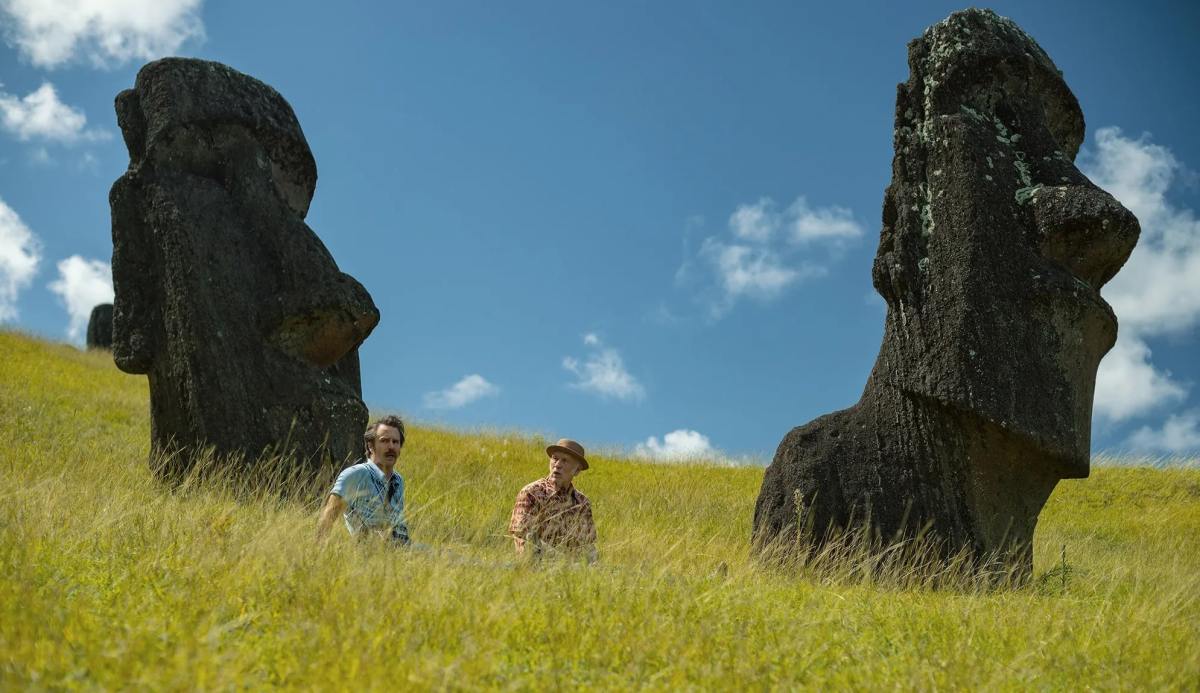
Surrounded by the island’s volcanic landscapes, roaming wild horses, and towering moai statues, Chris and Lee find that even a place as remote and beautiful as Rapa Nui cannot shelter them from the consequences of their work in the CIA or the questions of loyalty and mortality hanging over their friendship. Chris knows he’s dying but has a hard time coming to grips with how he is leaving life as the cancer spreads throughout his body. He numbs the pain with copious amounts of morphine and works on a memoir that he may never actually publish, especially given the various coups he helped orchestrate around the world for the CIA that ended up having disastrous results for each country in the long-term. Chris is also losing his ability to maintain his cover and ends up sharing too much information with the students, Monica and Alicia, as well as his divulging to Lee about having an indirect role in the Kennedy Assassination, with the gun that was used in the murder of the President (a fictional and fantastical flourish that did add some intrigue to the film’s plot).
While the two men have been in the CIA for decades and are military veterans, they harbor resentment not only to the institution but also how it has upended their lives in terms of lacking stable home lives, estrangement from family members, and being forced to take the blame from oblivious superiors like MJ who haven’t done the dirty work like Chris and Lee have. Both Chris and Lee get on each other’s nerves but they have similar backgrounds, know what it’s like to experience regrets in both personal and professional pursuits, and would like to take find some form of redemption for the bad acts they have committed already in the name of a supposed ‘greater good’.
In another life, Chris might have been a tour guide traveling the world or a rancher tending to sheep alongside the ‘wild horses’ he so loves throughout their unlikely visit to Easter Island. Meanwhile, Lee has become disillusioned by not just the CIA but also his bosses as his personal life has suffered from his constant moves around the world, and the film gives insight to how he is estranged from his wife and children though he still cares for them and their well-being at home.
What keeps both men going through their complicated careers and personal lives is the fact that they have each other to lean on through the ups and downs. After years of working together and carrying the weight of their past actions, Chris and Lee have developed a bond built on trust, loyalty, and a shared understanding of the difficult choices they have made. As Chris confronts his own mortality and past, that friendship becomes even more important, forcing Lee to consider what it truly means to be there for his friend and how much he is willing to risk for someone he cares about including his life and career.
Easter Island, or Rapa Nui, becomes the place in ‘Wild Horse Nine’ where Chris and Lee are forced to confront who they are and the consequences of the lives they have chosen. Surrounded by the island’s wide-open landscapes, wild horses, and towering moai (heads), the two men find themselves far from Santiago, Chile and even further from America, yet they cannot escape the memories, actions, and decisions that have followed them there. To me, the wild horses symbolize the freedom that both men may have longed for after spending so much of their lives carrying out orders, keeping secrets, and serving an institution that has demanded their loyalty but has taken parts of their soul in return.
As Chris faces his own mortality and Lee wrestles with where his loyalties lie, their time on the island becomes an opportunity for both men to choose a different path with the time they have left together to influence the future. By fighting back against the institution, they once served and trying to protect others in Chile from possible harm that they had an active role in orchestrating, they take steps toward confronting the wrongs they have helped commit around the world. They cannot undo the past, but their actions on Easter Island suggest that redemption can begin when you find the courage to take responsibility and do what is right, even at a great personal cost.
Wild Horse Nine is a stunning achievement, brought to life by the wonderful chemistry between John Malkovich and Sam Rockwell and by its exploration of a dark chapter in American foreign policy during the Cold War, which most Americans remain unaware of. What makes the film especially relevant today is its examination of the consequences of our choices and the responsibility we have to confront them. Through Chris and Lee’s enduring friendship to one another and their efforts to prevent further harm from occurring, McDonagh explores what it means to seek redemption when time is running out. We cannot undo the wrongs of the past, but we can take responsibility for our actions and choose to fight for a better future while we still have the chance.
