









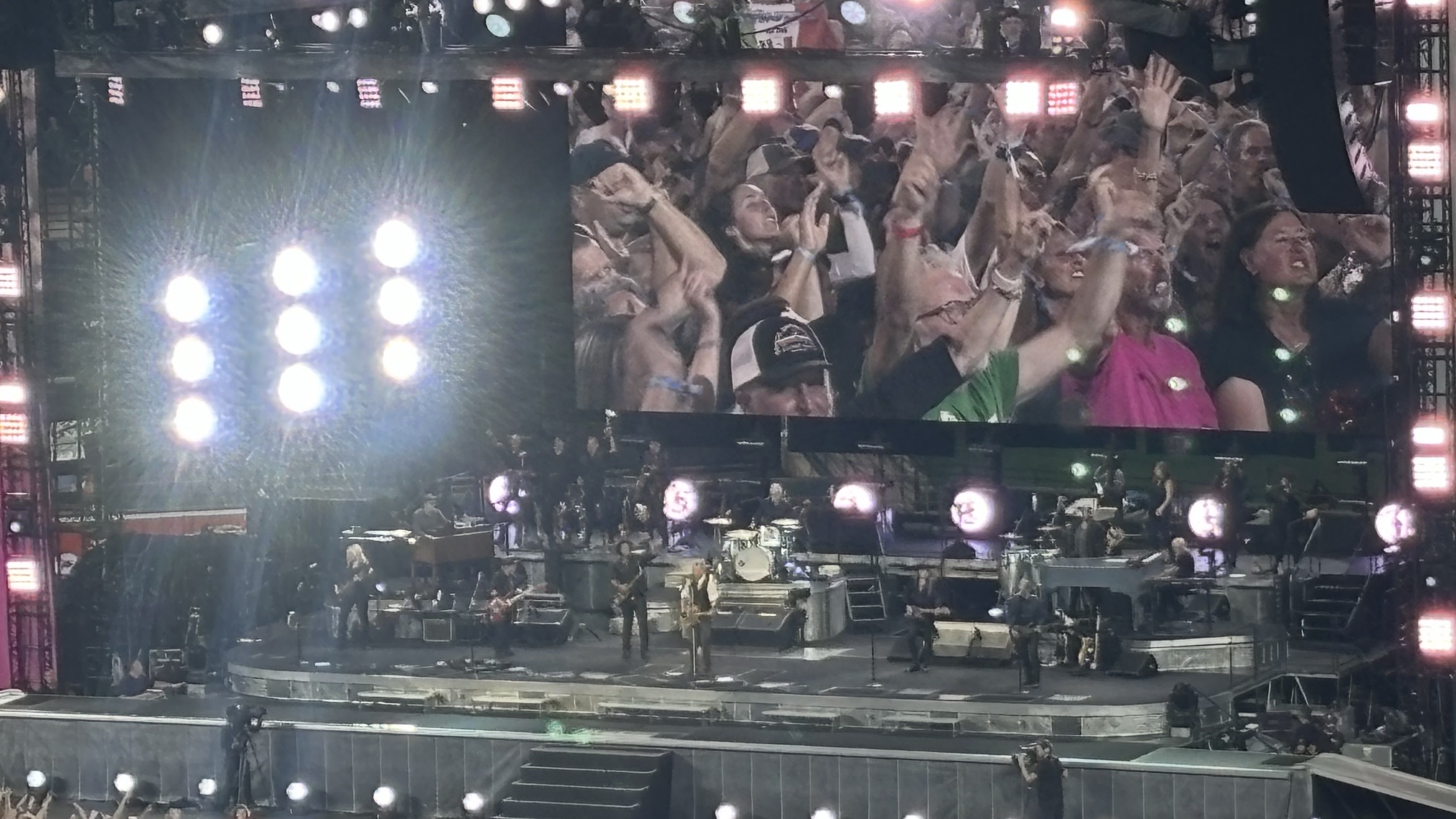



Camera: iPhone 15
Locations: Camden Yards; Baltimore, Maryland, United States

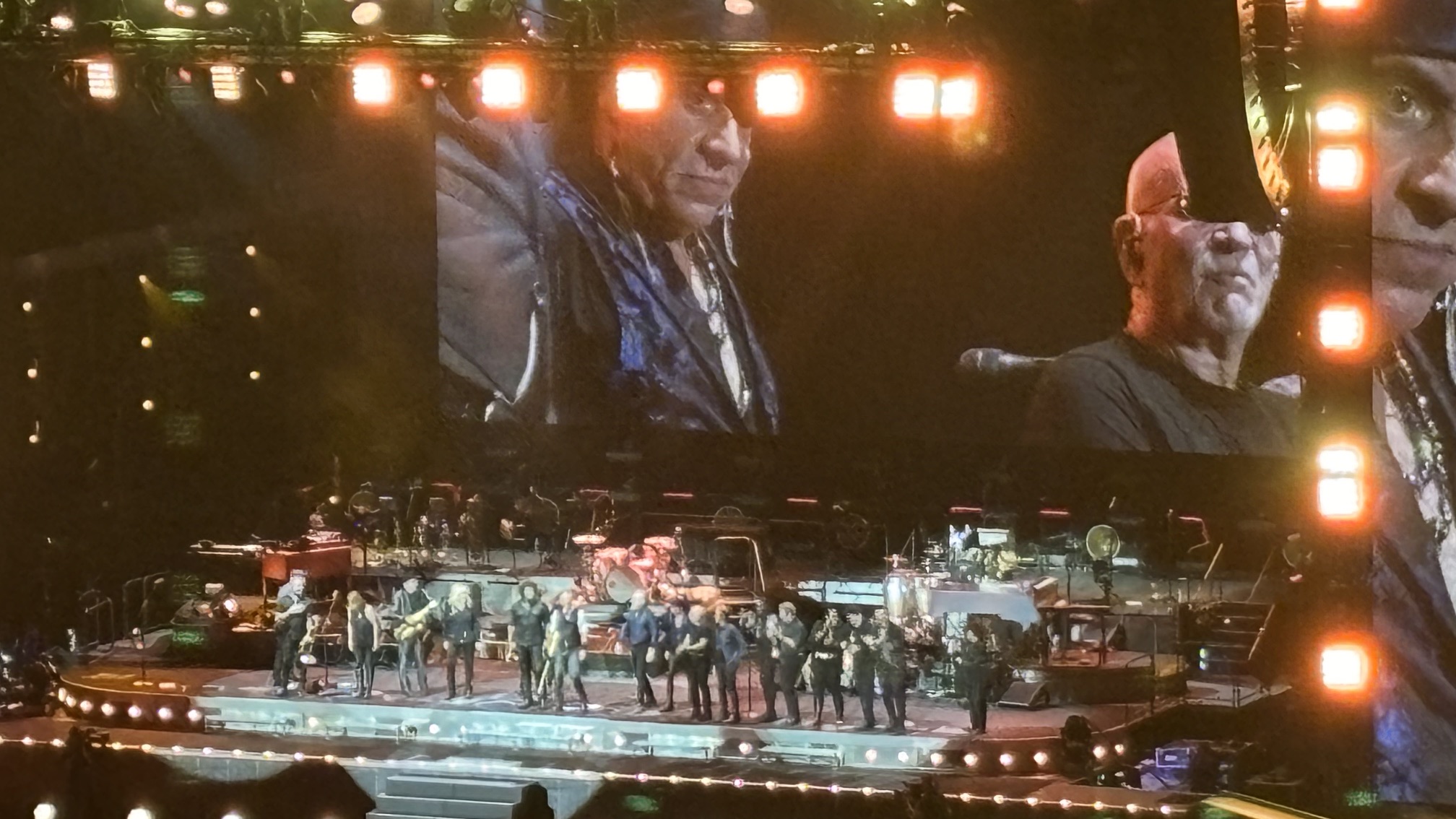
“Seeing the one and only ‘Boss’ of Rock n’ Roll, Bruce Springsteen, live in Camden Yards for an incredible show of over three hours in the heart of Baltimore, Maryland.”
Camera: iPhone 15
Locations: Camden Yards; Baltimore, Maryland, United States
“With people being distracted constantly by emails, texts, and general life obligations, you really must advocate for yourself constantly because no one else will.”
As much as we would like to think that others can network for us, find business or professional opportunities for us, or just keep us in mind in general, I hate to be the bearer of bad news but rarely is that the case. With people being distracted constantly by emails, texts, and general life obligations, you really must advocate for yourself constantly because no one else will. Sure, you may have folks who you are familiar with and have reached out to help carry the burden for you but that takes you to open your mouth and reach out to them in the first place, even if they are a stranger.
No one is going to network for you or vouch for you unless they know who you are and what you’re able to do. In an extroverted world, as hard as it is for introverts or ambiverts (a bit of both), you must speak up for yourself before others will speak up for you. It’s not easy to engage new people professionally or personally but you often must take the first step and see where it leads. I’ve noticed that especially in the post-COVID world, most people are more tied to their groups, cliques, or general friends, and it’s become harder to find reliable people who will vouch for you. If you’re standing around waiting for professional or personal relationships to find you instead of the other way around, I believe that you are going to be waiting a long time.
I’ve noticed this in my own life where you get much more out of an event, an outing, a meetup when you start the conversation first then wait for others to approach you. Everybody’s different in the sense of how often they get approached first in a public setting, but I know that I often will need to make the first move or it will not be that successful of an event or outing. It may be frustrating and tiresome at first to step out of your comfort zone and engage new people in conversation or to advocate for yourself, but that’s the world we live in where opportunities are not being given out freely or it’s easy to just land a job or a business deal just through your presence alone. You must be making the effort, trying to make something happen, and being comfortable with failure because it’s guaranteed to happen the more you do put yourself out there.
You alone know yourself best and can advocate for who you are, what you’re about, what you bring to the table, and what makes you different from your competition, especially in the professional world. Strong resumes, cover letters, references, etc. are commonplace nowadays and it’s more than likely that an AI or automated system is reading them first so in-person or virtual networking Is becoming more key to move your career or business forward than in previous eras.
You should also not just be focusing on landing the business deal, turning a stranger into an advocate, or making new friends, but forming a network of people who you can rely on and being someone who can be relied upon in return. Getting your foot in the door is just the first step but in the long run, you need to show a person or other people that you’re reliable, responsive, and can back up what you say with your actions.
More than ever, there are scammers, con artists, liars, cheats, and other nefarious characters who will want to take advantage of you or who you must be careful not to be involved with. Putting yourself out there involves taking on a risk because you never know at first who you’re dealing with but if you can be a good judge of character and distinguish yourself in terms of being reliable, honest, and able to get the job done, you will put yourself in a category where others will want to work or do business with you because you’ve been proven to be of good character and repute.
Advocating for yourself doesn’t just pay off in terms of creating a solid network of good people around you but it also builds up your confidence, charisma, and ability to talk to anybody. Getting rid of your shyness will open a lot of doors to you in life that you wouldn’t have had if you hadn’t introduced yourself or promoted what you have to offer. Once you can deliver a presentation or talk to a room full of strangers, you feel like the sky is the limit and your social anxiety will diminish quite a bit. This will take several times to overcome, and I know that it was the case for me.
I still get shy at networking or a business event even after having gone to dozens of them in past years, but I also understand that it’s possible that very few people, if anyone, will open that door for me to talk to them, so I must be the one to make that initial effort. You don’t want to waste an hour or two hours just standing around and people watching. Time is valuable, especially when it comes to your career or business prospects. Make sure to always advocate for yourself, do your best to carry yourself well, and remember to let them reciprocate by having them open to you about who they are and what they are all about.
Most people are likely to be as shy as you are or even more shy so let them feel comfortable getting to know you and I’m sure they will appreciate having someone listen to them, hear what they have to say (without interrupting) and build a new connection from scratch. Be there for other people, do what you say you’ll do, and I promise they will be there for you in return long after the first time you shake hands and introduce yourself to each other.
“The actual concept is far more radical, and far more boring: it’s a daily, granular insistence that pleasure, beauty, presence, and human connection are not rewards to be earned after the work is done. They are the work, in the sense that they’re the point of being alive. Everything else is logistics.”
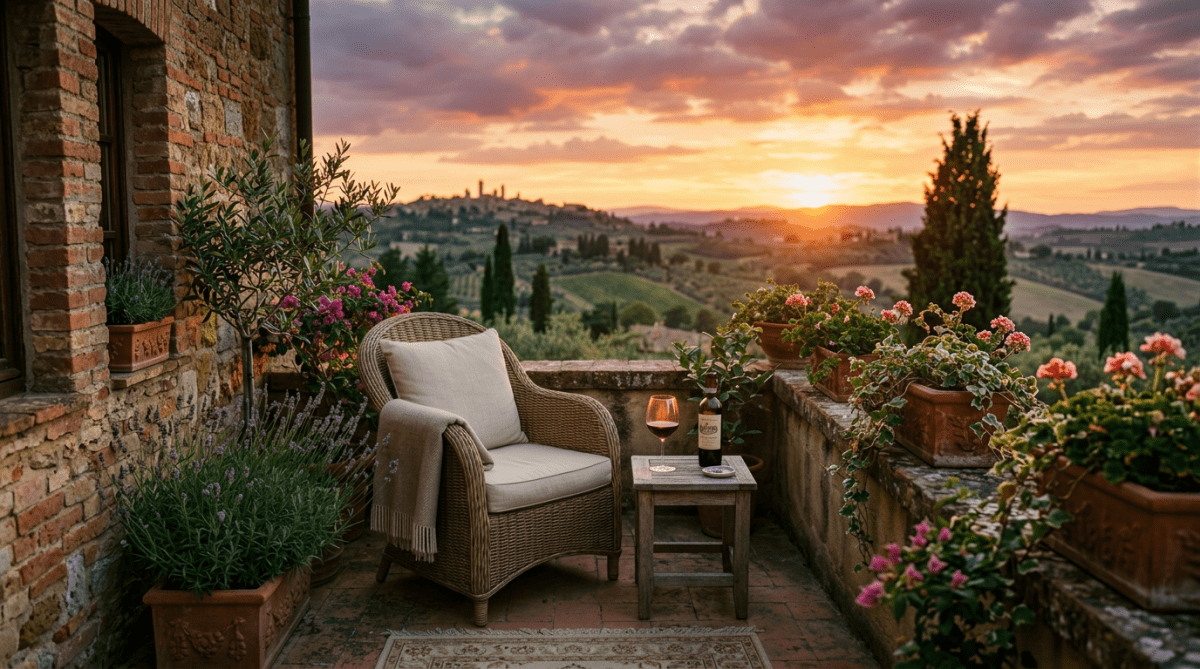
There’s a particular look on the face of an American tourist watching Italians eat lunch. It’s a mix of envy, suspicion, and quiet panic — like the expression a border collie makes when the sheep stop moving. “Why are they sitting down? Why is there wine? Why does this take ninety minutes on a Tuesday?” The American instinct is to assume this is somehow unserious, a charming inefficiency that explains why “they” don’t run the world anymore. The Italian instinct, watching the American eat a sad desk salad over a keyboard as they still scroll through their Outlook inbox, is roughly the same look in reverse, except theirs comes with pity.
‘La dolce vita‘ or ‘the sweet life’ in English has been so thoroughly merchandised by travel magazines and Instagram that the phrase now mostly evokes linen pants and Aperol spritzes against a Positano sunset. That version is a vacation, not the culture itself. The actual concept is far more radical, and far more boring: it’s a daily, granular insistence that pleasure, beauty, presence, and human connection are not rewards to be earned after the work is done. They are the work, in the sense that they’re the point of being alive. Everything else is logistics.
Americans have a complicated relationship with this idea of work-life balance, and it seems to have regressed since the COVID pandemic has ended. We’ve built an entire economy, geography, and moral framework on the opposite premise that leisure is suspicious until proven to enhance productivity, that meals are fuel stops rather than meals to be enjoyed, that beauty is a luxury good rather than a daily requirement, and that the highest compliment you can pay a person is ” he’s / she’s so busy” or “he / she is such a hard worker at their job.” Adopting even fragments of la dolce vita or ‘the sweet life’ mentality in this context isn’t a lifestyle tweak. It’s mild cultural sedition, which is exactly why it’s worth doing.
Before going further, it’s worth clearing away what the phrase has become. La dolce vita in its current English usage is mostly a marketing layer like a vibe sold by linen brands, boutique hotels, and travel writers who need a shorthand for “expensive Mediterranean leisure.” The Fellini film that gave us the phrase was really about decadence and spiritual emptiness, which is a delicious irony nobody mentions when they’re captioning a photo of a Negroni.
The real thing, as practiced rather than performed, is less photogenic and more philosophical. It rests on a handful of assumptions that quietly contradict the American cultural operating system. First, that pleasure is not a reward but a baseline, something that deserves to be woven into ordinary days, not stored up for vacations. Second, meals are social and temporal events and should linger for a while, not refueling stops mostly spent alone or with people you are forced to have lunch with. Third, that beauty in your immediate environment like the cup you drink from, the square you walk through, the shirt you put on for no reason is a daily necessity, not a luxury. Fourth, that time spent with other people you care about, in person, without a professional or otherwise hidden agenda, is not “downtime” but the substance of a life. And fifth, perhaps most foreign to American ears: that being unproductive is not a moral failure, but rather slowing things down for a bit to savor life for what it is.
What ‘la dolce vita’ is not and what has been mistaken for: laziness, hedonism, anti-ambition, or a rejection of work. Italians work just as hard as anyone. Plenty of them work too much. However, work shouldn’t colonize every other category of existence. There’s a fence around it. Americans tend to assume the fence is the problem and that it prevents greatness. The Italian counterargument is that without the fence, you don’t get greatness; you just get a tired, lonely person who answers emails and makes spreadsheets until they die.
The American resistance to this kind of approach isn’t personal weakness or laziness but rather it’s structural, and it goes back centuries. The Protestant work ethic, however secularized, still runs underneath the culture like plumbing. Work isn’t just what you do; it’s evidence of your moral standing. Rest, by the same logic, requires justification. You don’t see your life as time to be inhabited; you see it as productivity to be optimized, with leisure as the reward you’ve theoretically earned but rarely can take because you feel guilty about it.
Layer on top of that is the physical environment. Postwar America bulldozed walkable neighborhoods, especially in most major cities, and built the suburbs, which is a geography that makes spontaneous social life functionally impossible. You cannot accidentally bump into a friend on your way home from the bakery if there is no bakery, no sidewalk(s), and no home you arrive at except by car. The “third place” in a walkable town or community like the café, plaza, pub, or stoop where unstructured human contact happens has been largely engineered out of American daily life. What remains is home and work, with a windshield between them.
Then, there’s the cultural premium on busyness as identity and with being identified by “what do you do?” that defines “who you are” as an individual. “How are you?” “Busy!” and we hear this as a thing to brag about, not a confession that we are overworked. We’ve inverted the older signal: in most of human history, leisure denoted status. In America, exhaustion does. Even our leisure has been infected as we optimize our hobbies, track our sleep, gamify our walks, turn vacations into itineraries that require recovery afterward or a vacation from our vacation.
The cruelest part is how this gets internalized in our overall outlook on life. Sitting at a café for an hour without a laptop, a book, or a goal feels actively wrong to most Americans. There’s a faint moral itch; shouldn’t I be doing something with my time? that Italians and other cultures simply do not have. Recognizing that itch as a disease rather than a virtue is step one.
You cannot import Rome, Italy into Bethesda, Maryland. However, you can import behaviors, and the behaviors are surprisingly portable. Some of my fondest memories are of long afternoons drinking tea by the Bosporus Strait in Istanbul, savoring freshly made coffee on a farm in Colombia, and passing the hours with no destination on evening strolls through major European and Latin American cities. Remember to start small and start with things that don’t require permission from your employer, your spouse, or your municipality.
The proper coffee ritual. Stop drinking coffee in the car or taking your coffee ‘to go’ from a drive-thru or on an application. Drink it sitting down, in a real cup (no Styrofoam), for ten minutes minimum, doing nothing else. That’s the challenge I ask you. This single change reframes the morning from a launch sequence into an actual beginning, where the world slows down and you can really think deeply without distractions. No use of the phone for ten minutes is a bonus if you can have that kind of self-control too.
The ‘passeggiata’ or ‘after meal walk’. The Italian after-dinner walk has no destination, no fitness target, no podcast, no phone. You walk because it’s evening, because digestion exists, because the neighborhood is worth being in. Twenty minutes minimum and make sure you can do it in a walkable area first. Bring a person if you have one and preferably do it around sunset.
Lunch, that isn’t sad. Eating at your office desk is the single most depressing American workplace practice and it produces measurably worse afternoons as a result. Leave the building or the facility, if you can. Eat something you’d describe to a friend that you would recommend to him or her. If you work from home, set the table and eat well. Yes, even for one.
Aperitivo hour. The deliberate transition from work-self to evening-self. A drink (doesn’t have to be alcoholic), a snack, sitting down, no screens, ideally with another human. It marks the day’s end and the night’s beginning. Without this kind of transition, work bleeds into dinner bleeds into Netflix bleeds into bed.
Sundays as actual Sundays. Not “meal prep and laundry and grocery run” day. Make sure to save time for at least one long meal, a walk, a nap, a book, and time with people you like. The protestant pull will be strong; resist it at least once a month.
Fare niente. “The art of doing nothing.” Sit. People watch. Meditate. Interact with nature. Look out the window. Touch grass, as the kids say. Don’t optimize each moment. This is the hardest one for many Americans because it triggers the productivity itch most acutely, which is precisely why it’s the most valuable to incorporate into your life.
Remember that you may be on your own when you adopt your own slice of ‘la dolce vita’ as best as you can. Your job will not endorse this. American work culture treats “I’m taking my full lunch” as either rebellion or weakness. Salaried knowledge workers have absorbed an unspoken rule that being reachable is the job. Carving out an actual hour in the middle of the day requires either seniority, audacity, or a willingness to be slightly misunderstood and possibly all three.
Your friends are also overscheduled. The ‘passeggiata’ works in Italy partly because everyone else is also outside at the same time, doing the same thing. In an American suburb, you are walking alone past dark houses where people are inside watching television. Building the social density that makes these rituals feel natural rather than performative is a lifelong project, not an average Tuesday decision. Your built environment is hostile. If you live somewhere designed for cars, you will have to drive to the place where you sit and have coffee. The friction is real, and it explains why these practices feel easier when you travel as the environment is doing half the work.
The shame response is the deepest obstacle. Most Americans, sitting at a café for an unhurried hour, will feel a low hum of guilt within twenty minutes. I should be answering that email. I should be at the gym. I should be using this time. That voice is not your conscience. It’s cultural conditioning, and it will get quieter only with repetition. Finally, here’s an honest admission: Some elements of la dolce vita genuinely require structural conditions such as walkable cities, shorter workweeks, robust social ties, strong labor protections that no individual American can produce alone. You can adopt fragments of this lifestyle, but you cannot adopt the whole lifestyle unless these conditions adapt to foster better work-life balance in the greater society.
Given all these obstacles, the move is not “transform your life” but “claim one hour back.” A practical sequence for someone trying this without quitting their job or moving to Tuscany:
Pick one ritual, not all of them at once. The most common mistake is trying to overhaul the morning, the lunch, the evening, and the weekend simultaneously. Choose one part of the day to make yours again. Master it. Let it become unremarkable before adding the next part to be more enjoyable.
Start with the meal you control most. For most people, this is breakfast or dinner. Lunch is usually hostage to a workplace, especially when you’re forced into an office. If you can make one meal a day a non-optimized, sit-down, non-screen affair, you’ve already changed something structural about your lifestyle.
Find or create one third place within walking distance of you. A café, a bar, a park bench, a library, a bookstore; somewhere that isn’t home and isn’t at work, where you can be a regular patron. If nothing exists within walking distance, this becomes a clue about whether your geography is serving you and whether you and your neighbors can get together to change these structural conditions working against you in your own community.
Build one non-negotiable hour per day for yourself. Same time, same boundary. Not “when I have time” as that hour will never appear. Treat it like a meeting with someone you respect and don’t want to let down. It’s healthy for you, your family, and your health long-term.
Audit your current “relaxation” patterns. Be honest with yourself: is scrolling on your phone for an hour restful, or is it just numbing you? La dolce vita draws a sharp distinction between rest that restores you and consumption that sedates you. Most American leisure is the latter pretending to be the former. Please understand the difference to actually ‘rest well’ and do so consistently.
Accept the awkward phase at first. The first few weeks of this approach will feel slightly wrong, and you’ll catch yourself reaching for the phone, the emails, the drive to maximize productivity. That discomfort is the old operating system protesting this lifestyle change. Let it protest. Sit through it. On the other side is a version of your daily life that you might want to be inside of and that you look forward to each week.
Living ‘La Dolce Vita’ is not just a lifestyle but also a mindset for how you choose to spend your free time and with whom you spend it with. It’s not optimizing every moment but rather making the most of them by living in them and not just thinking about one moment leads to the next. Anyone should go to Italy if they have the chance to experience it for themselves but even if you don’t ever get to, you can experience ‘the sweet life’ by savoring more about life whether it’s a well-cooked meal, a delicious coffee in a park, and spending time just with your own thoughts and watching the world pass you by. It takes time to adjust to this kind of mentality, but you’ll end up finding that there is just as much beauty in doing nothing as there is in doing something.
“A one-way trip on the Cape Cod ferry on a windy, late Summer in Massachusetts as I make my way back to Boston after a great Labor Day weekend with friends.”
















Camera: iPhone 15
Locations: Cape Cod National Seashore (Cape Cod), Provincetown, Massachusetts, United States; Boston, Massachusetts, United States
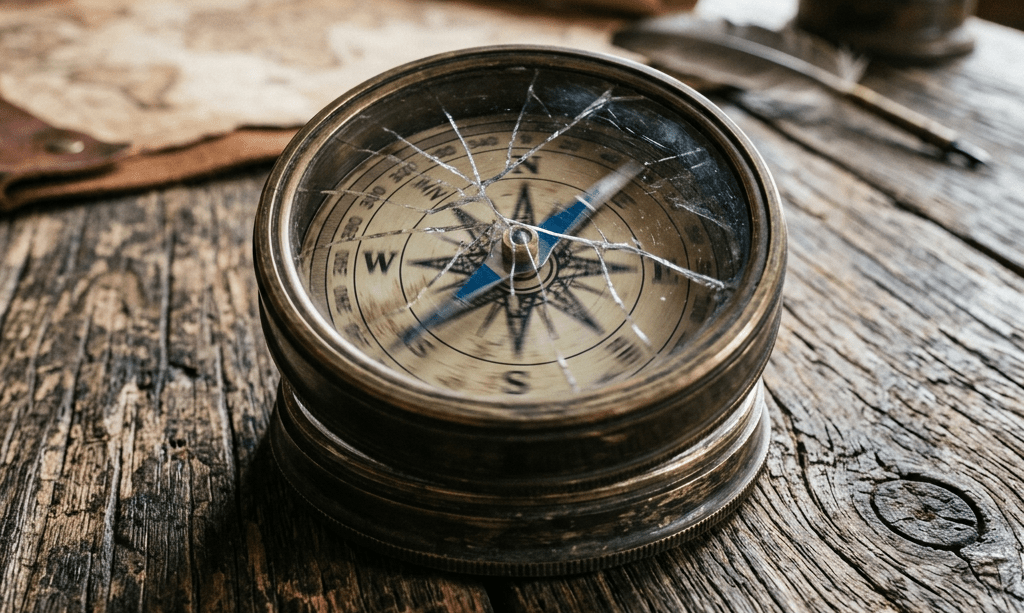
“Today, that baseline feels increasingly unstable and it’s not because morality has disappeared, but because it has largely fragmented. There is no longer a shared moral consensus or compass that is keeping the glue that holds a functioning society together, which is harmful in the short run and devastating the longer it goes on.”
There was a time in my life when I was younger, and while not perfect, but real in my view, when people could disagree with politics yet still recognize a shared baseline of right and wrong. Today, that baseline feels increasingly unstable and it’s not because morality has disappeared, but because it has largely fragmented. There is no longer a shared moral consensus or compass that is keeping the glue that holds a functioning society together, which is harmful in the short run and devastating the longer it goes on.
We no longer argue from the same starting point when it comes to understanding what is moral and what is not. What one group sees as justice, another sees as inequity where this principle is not being equally distributed or followed. What one calls freedom for everyone; another calls it inflicted harm to a particular group who is having their freedoms limited as a result. These aren’t surface-level disagreements; they cut to the core of how people interpret truth, responsibility, and even reality itself.
A shared moral compass cannot survive in a system where consequences are inconsistent or not applied equally to everyone. When ordinary people are expected to follow rules and laws that the powerful and the well-connected routinely evade and mock, morality stops feeling like a standard and starts feeling like a tool, used or applied when convenient, and ignored when costly or detrimental to those people who have a lot to lose.
For example, the average employee notices when corporate leaders avoid consequences for actions that would destroy the career of an average employee. The average voter also notices when political figures excuse corrupt behavior from themselves, their allies, or their donors that they would condemn in their opponents or in their colleagues. They notice when public outrage seems selective, flaring up in some cases while remaining quiet in others showing a peculiar kind of hypocrisy that has only gained steam in recent years in a polarized political and social climate.
Over time, this kind of blatant inconsistency corrodes overall trust and fairness in one another. It sends a quiet but powerful message to everybody in society: morality is not universal and it is conditional and can be applied or not applied as such. As a result, more people begin to believe that the incentive to act morally weakens or erodes completely leaving an absence from that behavior, especially in our institutions. Why follow rules that others can bypass or not be held accountable to? Why uphold standards or norms that are not enforced equally to everyone in the society?
Part of this shift comes from the collapse of shared institutions, religion, local communities, even trusted media, that once anchored moral conversation. In their place, we’ve built personalized ecosystems of belief, reinforced by algorithms and tribal loyalty. The result is a culture where validation matters more than reflection, and outrage travels faster than understanding. However, the deeper issue isn’t disagreement, it’s disconnection. When people stop believing that others are arguing or acting in good faith, the possibility of persuasion disappears. Debate becomes performance, and morality becomes a tool for scoring points rather than seeking truth.
This doesn’t mean that most people suddenly abandon their values or morals entirely. It means those kinds of values become more tribal, more situational, and more defensive as a result. Morality becomes something we apply outward, toward others, rather than inward, toward ourselves. It becomes easier to justify our own actions while scrutinizing everyone else’s.
At the same time, we are facing a different kind of problem: a lack of education around how to think morally in the first place, which should start at a young age but for which schools and universities have long neglected in their curriculum. We’ve replaced moral education with moral reaction. People are often taught what to believe, what to support, and what to condemn but not how to reason through complex ethical situations or think critically about why enforcing standards, morals, and laws equally is so important. They inherit frameworks that have been established through centuries of precedent without examining them or understanding why they exist in the first place. Many people today absorb positions or opinions without questioning the principles or values behind them. In today’s environment that rewards speed and certainty, there is little incentive to slow down and reflect on how or why one should act in any given situation.
This untenable situation creates a kind of moral fragility that becomes more relevant each day. When individuals encounter perspectives that challenge their beliefs, they are more likely to react defensively than to engage thoughtfully on how someone came to develop those perspectives. This is not necessarily because they are unwilling to think critically, but because they were never taught how to navigate moral ambiguity. In a world where many issues are not black and white, that gap becomes a serious problem for the next generation(s) to solve on their own without guidance from previous generations.
Education systems, broadly speaking, prioritize absorbing complex information and developing technical skills. Those matter in developing one’s career and prospects in the 21st century. However, the current curriculum by and large often leaves out something just as important: the ability to weigh competing values, to recognize bias, and to wrestle honestly with difficult moral and ethical questions. Without that foundation, people default to the loudest voices, the most emotionally charged narratives, or the groups they feel most aligned with to guide their own morality. Perhaps most worrying to me is that we really do not teach ethics, values, having a strong moral compass or how to recognize a lack or absence of that kind of compass in other people in society regardless of who they are or what their status is.
Layer on top of that the digital media environment is designed to amplify and cause division, and the problem continues to compound each day. Social media platforms reward content that provokes strong reactions and outrage. Nuance doesn’t spread as easily as certainty and thoughtful disagreement doesn’t travel as far as selective outrage. Over time, this shapes not only what people see, but how they think. It encourages a style of moral engagement that is quick, reactive, and shallow.
Where does that leave the future of morality? The loss of a shared moral compass does not mean society is doomed to fail or deteriorate. Still, it does mean the work ahead will be harder and be exceedingly difficult if this issue is not treated with the seriousness that it deserves. Rebuilding common ground and shared morality in a fragmented world requires more than louder arguments or sharper critiques. It requires a shift in how we approach and teach morality itself.
First, there must be a renewed emphasis on consistency, especially when it comes to applying morals to those who hold power, influence, or wealth. Rules, ethics, and norms cannot be optional at the top and mandatory for the rest of us. Accountability must apply across the board, or it loses its legitimacy with society. That doesn’t mean perfection in diagnosing who’s being moral and who is not and the consequences that the latter should face. It means a genuine effort to close the gap between what we say we value and how those values are enforced.
Second, we need to take moral education more seriously and to invest much more money, time, and effort in its teaching, especially to young people. This approach should not be done in the sense of telling people what to think, but in teaching them how to think. That includes engaging with different ethical frameworks, debating morality and how it is applied, understanding trade-offs, and developing the ability to question one’s own assumptions. It also means creating third spaces, whether in schools, communities, or in public discourse, where people can wrestle with difficult ideas without immediately being reduced to labels or judged harshly for what they see is moral or not.
Finally, there must be a cultural shift toward fomenting intellectual humility. That doesn’t mean abandoning convictions or pretending that all viewpoints are equally valid. It means recognizing that our understanding is limited, that we are capable of being wrong, and that other people, even those we strongly disagree with, may be operating from a framework that makes sense to them given their education, their background, and their life experiences.
A shared moral compass doesn’t require total agreement all the time on what is ‘morality’. It requires enough overlap to make conversation possible, enough trust to assume good faith, and enough consistency to believe that the standards we claim matter and they apply to everybody once agreed upon and instituted within the rules, laws, and regulations of that society as such.
Right now, that foundation feels shaky and declining across the world. The loss of a shared moral compass doesn’t mean society is doomed to regress further. It does mean though that we face a harder task ahead: rebuilding common ground in a world that increasingly rewards division and rancor. That kind of consensus building starts not with louder arguments, but with a willingness to question our own certainty and to listen, seriously, to those we instinctively dismiss and disagree with.
The question isn’t just whether we can rebuild a shared sense of morality and virtue immediately given the gravity of the current situation; it’s whether we’re willing to do the slower, less rewarding work required to get there in the future and establish it for the long term. Otherwise, we will continue down a path where right and wrong mean something different depending on who you ask and which person it applies to. If everything is debatable, eventually nothing is binding, including morals. A society where nothing is binding is one that cannot hold together.