‘Sideways’ – Film Review and Analysis

notdrinkingmerlot
“Miles is not drinking any Merlot!”

Sideways (2004) is an excellent film about the topsy-turvy nature of middle-age life and how to cope with the curveballs that life throws at us to challenge us. Critically acclaimed at the time and nominated for many awards, Sideways, directed by Alexander Payne is a good tale about male friendship, how to deal with mid-life problems, and finding love and purpose during difficult times.

The very title of the film ‘Sideways’ is symbolic of the best way in which wine bottles should be preserved by being laid on its’ side in order to age properly. Also, men and women who are going through their mid-life ‘sideways’ must embrace the challenges that lie ahead and the changes that come to them with this part of life in order to grow and mature as a person.

The basic premise of the film ‘Sideways’ involves two middle-aged men who are close friends, Miles Raymond (played by Paul Giamatti) and Jack Cole (starring Thomas Haden Church) that decide to take a week long Bachelor’s trip up to the wine country of Napa Valley in California to celebrate Jack’s upcoming wedding and the end of his singledom. Both of these men are in their forties and have a sinking feeling that the best of life is behind them.

Miles is in a depressive state due to the fact that he feels like a failed writer due to the uncertain future success of his yet-to-be published book. While he has a steady job as a high school English teacher, he feels unfulfilled by his life and wants to achieve greater success as a novelist but has yet to break through. On top of that, he has gone through a recent divorce that he has yet to recover from fully and is newly single.

Luckily or unluckily for Miles, he has a friend, Jack, who is hoping to have a good time for his last few days as a single man. Jack Cole, Miles’ friend is an actor who may be past his prime. While he used to be a TV soap opera star years ago, now, he is mostly relegated to doing voiceovers for silly commercials and seems to be getting tired of the acting business. Jack loves his fiancé but has the problem of not being able to control him when it comes to women.

Unlike Miles, Jack is not a big wine connoisseur and is more into playing golf and hooking up with a local woman before he takes those fateful steps down the aisle. Jack is hoping to not screw up his marriage but he obviously misses the single life while his friend, Miles dreads being single again. Jack may love his fiancée but he is also hoping to get involved with the real estate business that his soon-to-be father-in-law is running in Los Angeles, which Jack wants to be apart of in order to get away from acting once and for all.

Beyond just writing novels and teaching his students, Miles’s true passion in life is wine, which is why he proposes Jack that they go to Napa Valley to drink some great wine, play some golf, and eat some good food together. While Jack enjoys all of those activities, he has other plans in mind for his last days as a single guy leading to hilarious and disturbing results for the both of them. Before Jack wants to get married, he wants one last fling as a ‘single’ guy before he becomes the husband to his wife. In the meantime, Miles encounters a woman he never expected to meet.

Maya, (played by Virginia Madsen), is a kind and intelligent waitress at a local restaurant in Napa Valley known as ‘The Hitching Post II.’ She is someone who Miles has encountered before during his previous solo trips to Napa Valley. While they were friendly to each other, it’s only on this Bachelor’s trip to the wine country where Miles with the help of Jack’s support gets to know Maya better. Maya and Miles really hit it off with each other especially over their shared love of good wine and they start to develop a relationship.

Luckily for Jack, Maya knows a local wine keeper, Stephanie, (played by Sharon Oh), who has a lot of the characteristics that Jack likes in a woman. The two men end up dating and hooking up with both women but with unforeseen and negative consequences. Jack’s adulterous philandering almost catches up with him and causes Miles a lot of unneeded stress. Miles also suffers during this trip from the lack of hope for his novel in finding a publisher to sell and advertise it.

He also struggles to give up on his ex-wife, Vicki, who he did cheat on leading to their divorce and breakup. The almost breaking point for Miles comes when he finds out that his ex-wife, Vicki, got re-married and has a newborn daughter causing him to regret his divorce from her. While his wife has moved on from him, he still struggles with the fact that his book is going nowhere, he is single in his 40’s, and has no legacy or children at the moment.

Despite all of mid-life struggles that both Miles and Jack go through during the film, they remain loyal and true friends despite the pain and suffering they cause each other. Miles and Jack are almost complete opposites of each other in terms of their personality and character. Miles is serious yet forlorn and an intelligent, well-spoken man while Jack is a cocky womanizer who never really grew out of his teenage years.

However, despite their differences from each other, they do help lift each other out from their problems. Jack gives Miles encouragement to keep working on his novel and to self-publish it if he has to. He wants Miles to succeed at starting a relationship with Maya and really gets him to start going out with her. Miles saves Jack from himself multiple times throughout the film and even though Jack’s integrity is compromised, Miles is there to clean up the damage and makes sure that his friend follows through on his marriage commitment to his fiancée, Stephanie.

Every character in this film is flawed in some way and even though each of them, both men and women, are in their forties, they still have some growing up to do and don’t have everything figured out when it comes to life. Each of these characters has their own personal demons with Miles having depression and a lack of success in his passion and Jack being an adulterer and a compulsive liar.

While they are not perfect men and the women they are involved with make that clear to them, they are still good guys at heart and want to do the right thing. Life has thrown them ‘Sideways’ and they are trying to keep up with all of the curveballs that they must dodge and move forward against. It is really no surprise to me that similar to ‘Lost In Translation’, this film has become a cult classic that can warrant multiple viewings.

While it may not be your typical feel good movie, it’s a ‘real’ film about ‘real’ people who are trying to succeed both personally and professionally against the odds. If you decide to watch ‘Sideways’ for the first time, you’re going to be rooting for each of these characters to find happiness. They are endearing to us as the audience because they make mistakes and have setbacks just like those of us watching the film. In addition to the brilliant acting especially by Virginia Madsen, Paul Giamatti, and Thomas Haden Church, the adapted screenplay is brilliantly written and thought out.

Even though most viewers would consider it a dark, morose film, it also has a lot of comedy in it and some great lines about wine. There are a lot of moments in ‘Sideways’ that will make you sad, happy, angry, and even make you relate to the characters themselves. A great film overall directed by Alexander Payne, Sideways was released way back in 2004 but still remains a popular and heart-warming film that will leave you satisfied. I highly recommend checking ‘Sideways’ out when you get the chance and to remember after watching the whole film to never order a tall glass of Merlot again.

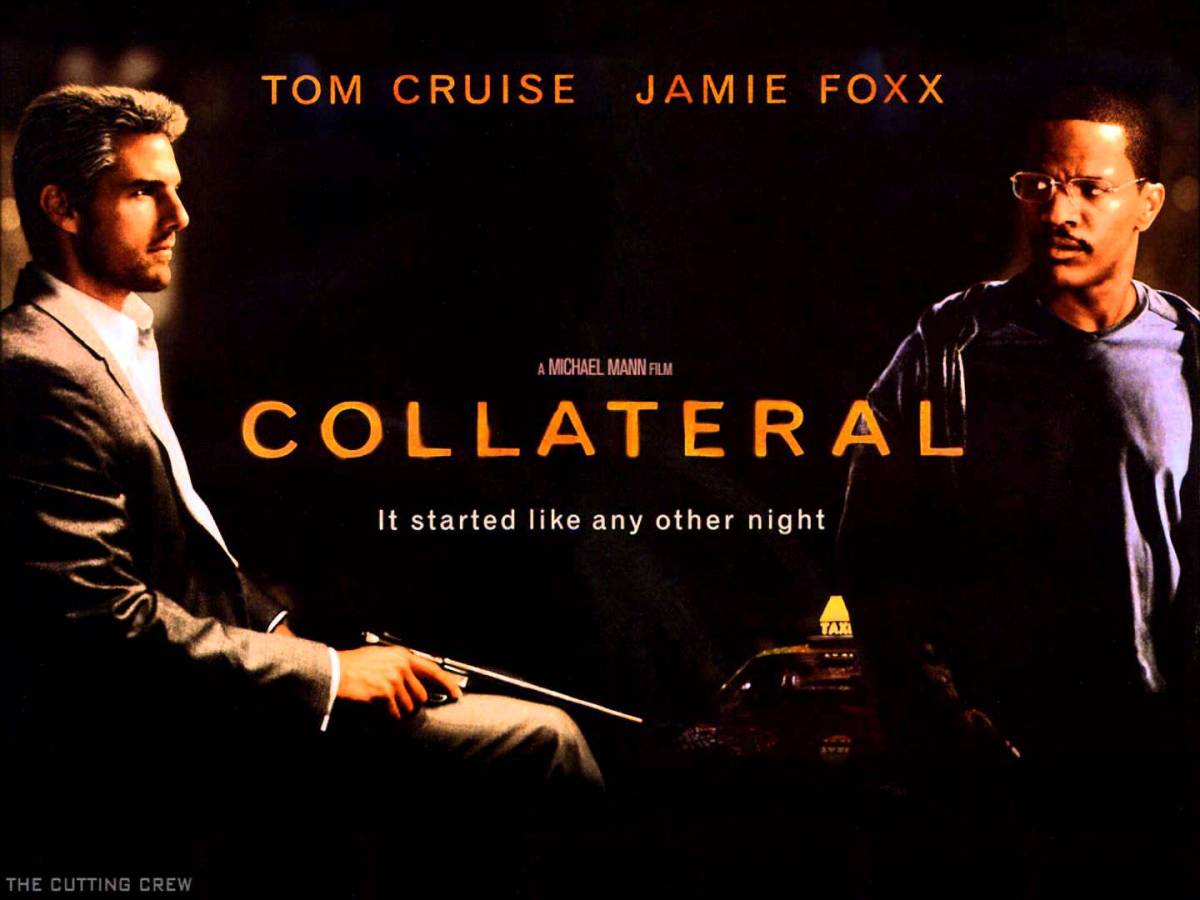
‘Collateral’ – Film Review and Analysis

It’s not often the case that a Hollywood film can go beyond its’ genre to relay a deeper message about the human condition and why people are the way they are. ‘Collateral’ (2004) is one of those movies that is able to achieve just that by making the audience member such as myself care about the characters as well as appreciate the deeper meanings beyond the dialogue and the setting.

While there are numerous crime thriller films out there, ‘Collateral’ is able to go above and beyond the clichés and be original in its’ own right. Part of this is due to the fact that Tom Cruise and Jamie Foxx give outstanding performances for their respective characters along with the rest of the credit that should be given to director Michael Mann who relishes being a director for crime noir dramas that are set in Los Angeles. While ‘Collateral’ was not an Oscar award winning film unfortunately, its’ characters, the setting, the action sequences, the directing, and the overall message that the plot sends to the audience make it a unique and reputable movie that deserves a viewing or two.

Without going into too much detail, the plot of ‘Collateral’ stars two men who come from very different circumstances and live very different lives. However, the Cosmos align to have them meet for the first time at night in Los Angeles. “Vincent” played by Tom Cruise, has just arrived in Los Angeles from the airport and is looking for someone to take him around the city. What better way to see L.A. than to do so by taxi so Vincent goes to the nearest taxi stand to seek one out for a ride. That’s where the plot of the film begins as Max, played by Jamie Foxx, accepts Vincent as a new passenger after ignoring his presence initially. Vincent, dressed in a gray suit with gray hair could be just like any other businessman in Los Angeles but he’s not what he appears to be. Max starts to realize this as the night goes on but not until after he drops off Vincent at his first but not his last destination.

Vincent is more than just the new guy in town here for business. He’s a contract killer and a hitman who is in Los Angeles for one night only in order to carry out a series of hits. After bearing witness to the first of Vincent’s murders, Max is forced into being Vincent’s chauffeur for the rest of the night as he has four more contract hits to carry out for his boss, “Felix”, played brilliant by actor Javier Bardem. Vincent’s goal for the night is to carry out the rest of the contract hits successfully and then get a flight out of Los Angeles as the sun rises after his boss pays him handsomely for his ‘work’. Max’s goal for the rest of the night is to get out of this situation alive without getting killed by Vincent or being seen by the police as an accomplice of Vincent who is dragging him along as he commit these vicious murders in cold blood.

Mixed up in all of this madness is “Annie”, played by Jada Pinkett Smith, who is a prosecutor in the U.S. Justice Department who works out of their office in Los Angeles. She ends up being the first passenger of the evening in Max’s cab before the fates intertwine and Vincent comes along to change Max’s life forever. The only good part of Max’s night is when he meets Annie and they hit it off enough to the point where he is able to get her phone number but it is uncertain whether or not he will have the confidence to call her and make plans.

Unfortunately, Vincent, the contract killer, has Annie in his sights as one of his five targets setting off a series of events that put Max and Vincent on a tense collision course. On top of all of this, you have members of both the FBI and the Los Angeles Police Department noticing what Vincent and Max have been up to which causes more violence and bloodshed to occur. “LAPD Detective Ray Fanning and FBI Investigator Frank Pedrosa” (played by Mark Ruffalo, and played by Bruce McGill) are the ones leading the investigation into these random but coordinated killings popping up all over Los Angeles in the dead of night orchestrated by Vincent with Max as his unwilling accomplice.

There’s no character in this film that isn’t in danger or who may come into harms way and that is partly what makes the title of the film fitting as called ‘Collateral’ because everybody in this movie feels the damage caused by Vincent in some way. Max has feelings for Annie so he wants to do the most he can to protect her before she become apart of the ‘collateral’ damage that is being inflicted by Vincent.

Michael Mann, the director of ‘Heat’ (1995) previously and of this film ‘Collateral’, does an excellent job of making the setting of Los Angeles feel like its’ own character that sets the tone for the movie as well as provide an analogy for what the characters of Max and Vincent are like. Los Angeles is a sprawling urban city of more than four million people and has highways, tunnels, and bridges that loop and wind through the various neighborhoods that can only be connected by car.

For Max, Los Angeles is the only home he’s ever known but for Vincent, it’s a sprawling, disconnected mess of alienated people who don’t know or care about each other even if the collective Gross Domestic Product (GDP) of their city is more than most countries on the planet. Vincent regales Max about a story of someone who dies on the Los Angeles Metro one day and nobody else on the transit system notices for many hours, which proves his supposed point about the city’s culture of alienation. Similar to L.A., Max and Vincent are disconnected from other people in their own ways. Max is shy and reticent with new people he meets and doesn’t go after what he wants while Vincent is a sociopathic killer who doesn’t have much regard for people in general.

There’s one excellent scene in this film where Vincent and Max chide and prod each other as to why they are who they are. Vincent wants Max to call Annie, the girl whose number he got earlier in the evening, because “Life is short. One day it’s gone…” Max doesn’t reply regardless of what Vincent’s opinion is of his dating life. Later on in the scene, they both see a lone grey wolf walking through the streets of Los Angeles presumably searching for food or for some sort of purpose. In so many ways, this is symbolic of who Vincent and Max both are.

Vincent knows his purpose is to kill people because it’s what he ‘does for a living’ but this job alienates him from his humanity and causes him to be a lone wolf. Max is unsure of his purpose in life and wants desperately to be more than a simple taxi driver. He has dreams to start his own limo company one day but never takes the first step to making that dream come true and actually become a reality.

Even though they are two different men from very different circumstances, they are able to see what they should become if they weren’t so set in their ways. Max is a compassionate person who cares for others but is stuck without a purpose and isn’t able to take control of his life. Vincent is a sociopath who can’t relate to other human beings but knows what his one true purpose in life is and this allows him to feel some control over his existence, which he deems as being ‘meaningless’ in the long run.

Even with the fact that they detest each other, they begin to understand the flaws in their own character and how they could be different if they gave themselves a chance. Max could be more spontaneous and avoid having a repetitive life if he chose to be something more than a taxi driver. There’s no changing that Vincent is a cold-blooded killer but you start to see the circumstances that created his monstrous self. He never knew his mother, and his father was an alcoholic who beat him mercilessly and let young Vincent to grow up in foster homes. Max, nor the audience, can show much sympathy for Vincent’s plight but you start to realize that he is not just a simple-minded killing machine.

While life may be meaningless for Vincent, he still thinks that Max should live it to the fullest and ‘carpe diem’ before it’s too late for him. Max gets Vincent to ask himself why he is a sociopathic killer and gets him to reveal a little about his troubled family as well as to why he is a nihilist. In response, Vincent gets Max to ask why he never did anything to make the Limo Company to become a reality. He implores him to think deeply about making his dream come true because someday it may never come to pass if you don’t do anything to make it happen in the first place.

‘Collateral’ is a great crime thriller that is extremely well written, has great acting, and is directed and choreographed superbly by Michael Mann and his team. Beyond that, ‘Collateral’ is a film that makes you question certain things about life and the limits that we put on ourselves. The nihilism and disconnectedness of both Los Angeles and the main characters of Max and Vincent is both surreal and powerful. This is not your typical Hollywood drama and that’s a good thing. This movie is not a blockbuster and feels more like an independent film that came in way under budget.

‘Collateral’ is a gripping take on two men who are forced together by fate to go through a night together that will change them forever. I highly recommend this movie based on the excellent writing, acting, directing, and the strong storyline that keeps the viewer interested. Jamie Foxx and Tom Cruise do an excellent job and have great chemistry together, which is what makes ‘Collateral’ really shine, and have longevity as a unique film over a decade later. If you get the chance sometime, you should really see this movie.

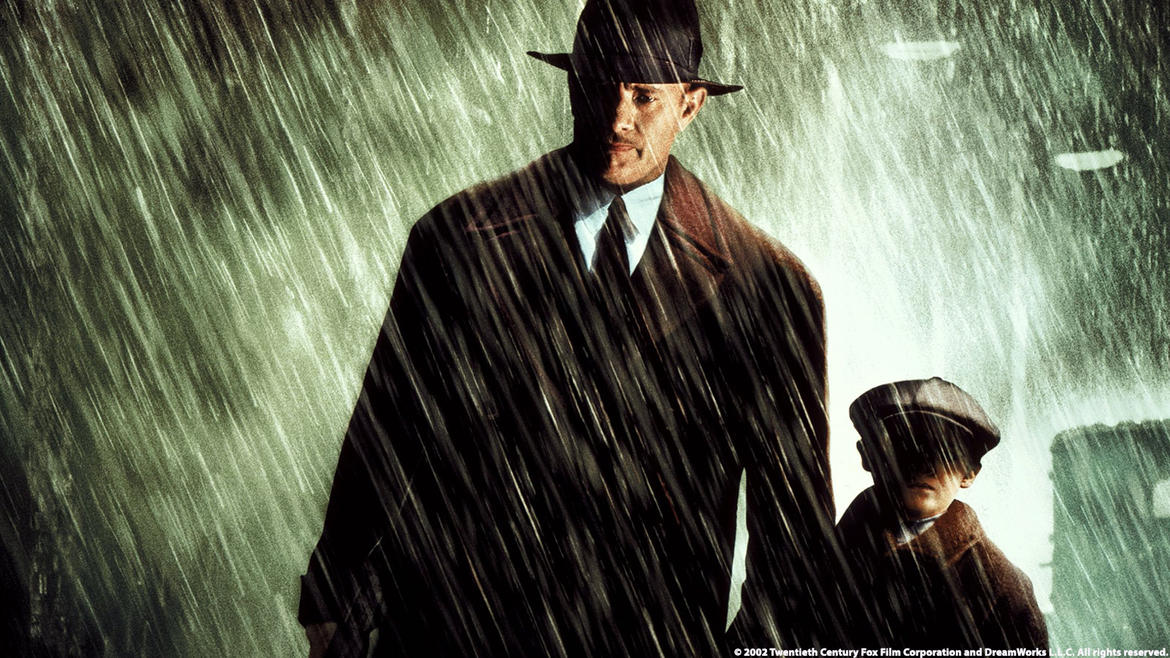
‘Road to Perdition’ – Film Review and Analysis

One of the most underrated movies of the 2000’s was Sam Mendes’s ‘Road to Perdition’, which was released to critical acclaim back in 2002 and did pretty well at the box office with around $200 million in ticket sales. While some people would be skeptical of watching ‘Road to Perdition’ at first because they think it’s your average crime / mafia movie that doesn’t have much to offer in terms of storyline and symbolism, they would be wrong when it comes to this film.

Sam Mendes, who directed two other great films ‘American Beauty’ and ‘Revolutionary Road’, does an excellent job here as this movie is beautifully shot and has a stellar cast. ‘Road to Perdition’ also benefited from the legendary cinematography work of the departed Conrad L. Hall for which he won a posthumous Oscar for ‘Best Cinematography’ for this film after he passed away in 2003. The scenery and settings for this movie help to create quite a unique atmosphere and the wide shots, long angles that are used help to make this film stand out as being above average. Beyond just the cinematography, the acting by the cast also stands out.

When you look back to see who was starring in the main roles for ‘Road to Perdition’, it is a very impressive list. Tom Hanks plays Michael Sullivan Sr., the lead role of the film and a conflicted Irish mafia man caught between his past and keeping his son sheltered from the consequences of his actions. Paul Newman, one of the greatest American actors of all-time plays the role of John Rooney, an Irish mafia boss, who is also conflicted between his paternal feelings of love for Michael Sr., and his wish to protect his own son, Connor, played by a young Daniel Craig, from his own destructive sins. Rounding out the list is Jude Law, who plays a gifted hit-man / grisly photographer known as Harlan McGuire, and Stanley Tucci, who plays a high-ranking member of the Italian mafia known as Frank Nitti. A young actor who steals most of his scenes is the young but talented Tyler Hoechlin who is Michael Sullivan Jr. in the film, a boy who is coming to terms with his father’s lifestyle and his ties to the mafia. A truly impressive cast of Academy Award winners and nominees, which makes this film even more of a lasting treasure.

‘Road to Perdition’ really brings the atmosphere and makes the setting feel real as it portrays life in Great Depression-era America by focusing on specifically both on the city of Chicago and its’ rural hinterlands, cornfields of greater Illinois. The movie really portrays well the last decade of America being discovered and settled, while undergoing deep economic difficulties, as the Irish and Italian mafias become a source of income and employment when none could be had.

Most movies don’t seem to want to portray the mafia as having been a well-oiled machine that acted like a legitimate business, but ‘Road to Perdition’ makes clear that there are ways to look at the criminal enterprises that achieved a lot of prominence during the Great Depression due to their ability to bootleg and their appeal to provide a good income to men without work.

Without spoiling too much of the plot, Michael Sullivan Jr. (Tom Hanks) is an enforcer and bodyguard for the Irish mafia in the Chicago area of Illinois who has a close relationship with his boss, John Rooney (Paul Newman), who is implied to have helped Michael Sr. a lot with a home, a steady income, and a purpose which is quite difficult to come by during the height of the Great Depression. Michael Sr. is a flawed man who has done murder and committed other crimes for his boss, Mr. Rooney, and knows that it may cost him his life. Despite his past transgressions, he wants to protect his family from his sins and wants to keep his boys from knowing about what he does for a living.

Connor Rooney (Daniel Craig) is shown to be jealous of the close relationship that his father, John, and Michael Sr. have and is resentful of him. Michael Sullivan Jr. (Tyler Hoechlin) is distant from Michael Sr., his father due to late working hours and distant lifestyle. As any boy would like to know about his father, Michael Jr. decides to find out the truth about who his father, Michael Sr. is, and what he does for Mr. Rooney. At this point, the plot really takes off in tragic and unexpected ways leaving the viewer engaged in the storyline and the eventual outcome. As mentioned before, the acting done by this legendary cast helps make the film what it is and what it still is today.

Beyond just being a typical mobster movie, ‘Road to Perdition’ has a number of poignant and thought-provoking themes that stay with you even after the end credits begin to roll. This film goes over the trials and tribulations that fathers and sons can have with each other even when they love and care for each other dearly. Michael Sr. and John Rooney are not related by blood by have a relationship similar to a father and son as Mr. Rooney was around for Michael and his family when they had nothing. He is heavily indebted to Mr. Rooney even if he knows what he is doing is wrong by committing violent acts for the mafia. Still, their bond appears to be unbreakable and they get along quite well with each other.

To the contrary, both of their relationships with their respective sons are shaky at best and hostile at worst. There is a considerable distance between Michael Sr. and Michael Jr. due to the fact that Michael Sr. makes his lifestyle and his work for Mr. Rooney a well-kept secret. Michael Sr. does not show much affection or love for his boy and it’s not made clear until the end of the film why that is. Michael Sr. obviously cares for his boy but likely doesn’t want his son to know about the horrible things he’s done to keep him, his brother, and his wife save from harm or want. Still though, Michael Jr. does not want to be kept away from his father and who he is.

He ends up pursuing the truth whether or not his father wants him to or not leading to quite a turn of events when the truth comes to light. Connor Rooney, John’s son is quite envious of the close relationship that Michael Sr. has with his father compared to him. However, this is for a number of reasons. Connor is very much unlike his father, John, and has a number of character and personality flaws that make him a liability to the family. Connor is shown to be impulsive, manipulative, untrustworthy, and greedy but the conflict comes to light when John Rooney must decide if he should stick by his son’s side or give him up due to his past misdeeds. As John Rooney says to Michael Sullivan Sr. during one of the movie’s best scenes, “Sons were put on this Earth to trouble their fathers.”

During one of the movie’s most touching scenes, Michael Sr. tells Michael Jr. about a town called an idyllic town called Perdition, Illinois, which has beautiful scenery along the beach of Lake Michigan, and where the Sullivan family has visited before when Michael Jr. was a little boy. Perdition is portrayed as a goal for the two Michaels to get to in order to start their lives anew and escape the sins of the past. It’s a way for Michael Sr. to get redemption after taking care of his ties to the mafia and by trying to make up for what he did wrong as both a father and a man. The word ‘Perdition’ as defined in other words is ‘hell’ or ‘complete and utter damnation’ in more religious terms. Michael Sr. may try to redeem his sins by going to church or by rectifying the wrongs he’s done by getting revenge on the men who wronged him in the past but he knows deep down that it may not be enough.

If he is on the ‘Road to Perdition’ or the road to hell, the film shows the audience that he wants to keep his son, Michael Jr., from going down that same path. He wants badly for his son to have a better life and a brighter future away from violence and death. Michael Sr. won’t let his downfall lead to that of his son’s as well. Even if Michael Sr. is a murderer and a sinner, he knows what’s still right from wrong and he is going to do his best to preserve the innocence and goodness of his son. As a father, he is flawed but he still loves his son dearly and wants the best for him still.

Certain moves fit a certain season of the year well and ‘Road to Perdition’ is no exception. The winter setting, the Chicago cold, and the mature themes help lead it to being an ideal film to be watched during the depths of winter in January and February. Without spoiling anything, the film is a real story with real characters who are flawed in their own ways but who each have their own complex motives that drive the plot forward. This film, most of all, touches the audience emotionally and will pull on your heartstrings.

‘Road to Perdition’ is very underrated film that remains one of my favorite movies to this day. I highly recommend ‘Road to Perdition’ to other movie buffs who are looking to watch a crime / mafia film that has a soul. In addition to having an all-star cast, a renowned director, and a legendary cinematographer at the helm, ‘Road to Perdition’s music score composed by Thomas Newman is excellent and fits perfectly into the many moods of the film and has some stirring moments that add to the film’s setting. If you’re snowed in this weekend from the blizzard, do yourself a favor and go watch ‘Road to Perdition.’

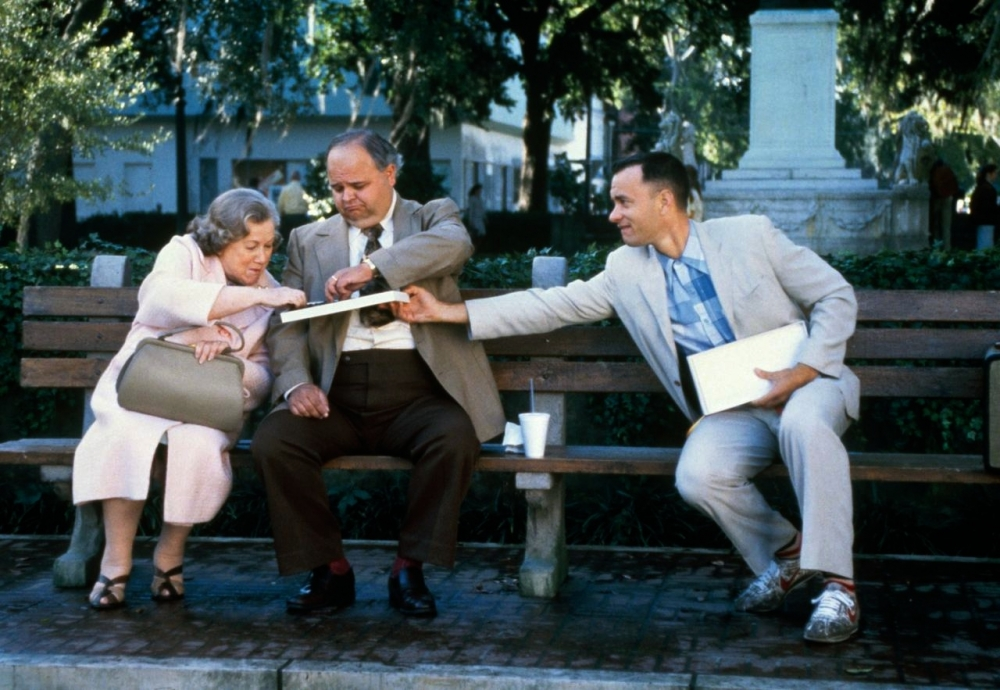
‘Forrest Gump’ – Film Review and Analysis

chocolates
“Life is like a box of chocolates, Forrest, you never know what you’re gonna get.”

One film that captures both your imagination and your heartstrings is the classic American film, Forrest Gump. Released in theaters over two decades ago in 1994, it has become one of the most beloved films of all time and enjoyed high amounts of praise from both critics and moviegoers alike. The film was notable for the fact that it won many different awards and accolades such as the Academy Awards for Best Picture, Best Director for Robert Zemeckis, Best Actor for Tom Hanks, among many other distinctions. I would argue that this film along with Big helped to launch Tom Hanks as one of Hollywood’s rising stars and set him on a monumental acting career, which included many future box office hits. Five years ago, the U.S. Library of Congress recognized Forrest Gump as being a film that is historically, culturally, and aesthetically significant and selected it for preservation in the United States National Film Registry.

Forrest Gump is about an everyman who has a slight disability of not being as smart as everyone else with an IQ of 75. However, despite him learning this fact as a child and being bullied about it, he manages to not let this handicap ruin his life but instead learns to preserve and make the most of things. The story of Forrest Gump takes place over the tumultuous and transformative decades of the 1950s, 1960s, 1970s, and 1980s when America went through a number of political, social, and economic changes. One of the true delights of this film is seeing how many of these changes Forrest witnesses and is actually apart of.

During the film, we see him shaking his hips with Elvis Presley at his mom’s guesthouse in Alabama, serving in the U.S. Army after being drafted in the Vietnam War, starting a fight during the midst of a Black Panther group meeting, and meeting Presidents Kennedy, Johnson, and Nixon. Despite his lack of formal intelligence, Forrest does not let that stop him from being an ‘All-American’ college football player, a veteran of the Vietnam War, a shrimp boat, a wealthy man due to his investments in a little company called Apple Inc, and lastly and most important, a loving son, friend, father, and husband. In addition to serving in Vietnam and witnessing Elvis Presley in person, Forrest also helps a black woman become the first African-American to integrate into an all-white school, helps to break the seal on the Watergate scandal when he sees people breaking into DNC headquarters, and becomes an international ping-pong star while helping to improve relations between the United States and the People’s Republic of China. He’s an every man who takes life as it comes regardless of the good or bad and finds himself involved in extraordinary events that shape American history.

As Forrest gets wrapped up in these events over the course of the film, he takes an almost child-like innocence to them even in the cases of war, violence and prejudice. He’s aware of these things and knows right from wrong but tries to live a simple and uncomplicated life despite all he’s been through. He wants to be a good son to his mother; he desires to be with the love of his life, Jenny, to have good friendships with his fellow soldier Bubba and Lieutenant Dan, and to be a responsible father to his son at the end of the movie. He may lack intelligence in terms of critical thinking and solving problems; he has the ability to display maturity, show emotional intelligence and is able to show kindness and love towards others despite his differences with them.

While he may not know his father, and his wife Jenny disrespected and left him in the cold over the years when she was dealing with her own demons, he has the ability to look past these grievances and live a good and fulfilling life. Forrest endures other traumas and heartbreak in the Vietnam War when he sees his fellow soldiers and friends killed or disabled like his good friend Bubba and his lieutenant, Dan Taylor. While he could have given up on life or become bitter and disenchanted, Forrest instead finds new purposes in playing ping-pong around the world, starting a very profitable shrimp boat company with his old Lieutenant Dan, and runs around the United States for three years straight to help get past those losses and betrayals that has haunted him. Forrest is an example of a man who never gives up and keeps moving forward despite his past. He simply does not let his past define him. Like all of us, he’s been giving good and bad fortune but he makes the best of things regardless of the circumstances.

During the long run scene of Forrest’s, people become inspired by his example and ask him for advice and guidance. He doesn’t have much to say to them but they happen to find comfort in the fact that he’s doing this just for its’ own sake. Forrest simply can’t help them all figure life as they have to each follow their own path and find inspiration wherever they can. Once one path ends, another one opens up to be explored afterwards. As Forrest states when reporters ask him why he’s running, “I just felt like running.” Sometimes, you don’t need a reason to be doing something if you feel like it.

While many other people are inspired and are given hope from Forrest’s example, Forrest is inspired by other people such as his mother played by the wonderful Sally Field, along with his fellow soldier Bubba and his Lieutenant Dan. His mother teaches him about love, respect, and finding your own path in life. She gives Forrest a quote on her death-bed that he takes to heart and has become one of the most famous movie quotes of all-time. “Life is like a box of chocolates, Forrest, you never know what you’re gonna get.” Forrest asks his mom what his destiny may be. She tells him that he can’t answer that for him and ask he needs to figure that out for himself. She does let him know that it was her destiny to be his momma and that she’s very proud of the man that he has become.

Forrest’s relationship throughout the film with Jenny is complicated and unfortunate as the ways their lives converge and diverge leads to pain and heartbreak but also compassion and understanding. Jenny is Forrest’s first and only love. They grow up together and spend time getting to know each other. Forrest is a breath of fresh air for Jenny who has to deal with an abusive father at home. Even through college, they remain close but still friends.

Jenny’s path through life takes her to some lonely places and she deals with abusive boyfriends, drug abuse, and hostile friends like the Black Panther party. Even with her flaws, Forrest still loves her as always and asks her to marry him. She eventually agrees to be his bride making him the happiest man in the world. Tragically, their marriage is cut short by the fact that Jenny has HIV/AIDS and has become really sick. However, the love that Jenny shares for Forrest allows them to have a son together before she passes away. While a devastating loss for Forrest like it was to lose his mother and Bubba, his best friend, Forrest’s destiny is renewed in the love he has for his son, Forrest Jr. as he takes care of him after Jenny’s death.

Forrest Gump is a special movie that has resonated with millions of people around the world. Many folks have been inspired by the message of this movie and have gone to improve their lives in enumerable ways. The story of Forrest Gump is a story of hope, love, perseverance, respect, and tolerance. Anybody who watches Forrest Gump will get something out of the movie because of its’ overall message. Like the feather that floats by Forrest at the beginning and ending of the film, you make the most of what we’re dealt with in life and it’s you alone who can shape your destiny through the choices you make, the people you befriend, and the impact you create. We may all be floating on the breeze like a feather unsure of where we’re going but we can steer the direction of that feather to new places and new conclusions.

Forrest Gump is a special character in a special movie that rekindles for viewers what they love about the big screen by showing our capacity as human beings to love, cry, laugh, and share good times and bad with those friends and family as Forrest does. Anybody who watches Forrest Gump can relate to Forrest and what he goes through. That is what makes this movie such an endearing, popular film and why it will last for many more years as one of the most iconic pieces of work in American cinema.

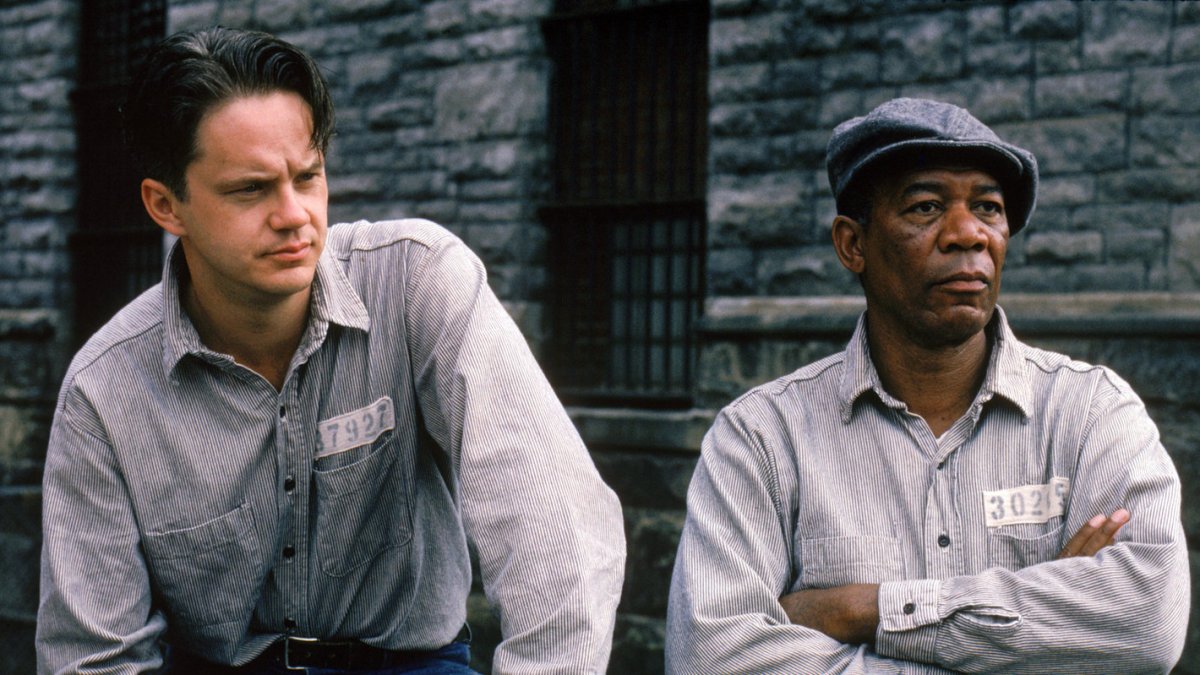
‘The Shawshank Redemption’ – Film Review and Analysis

Few other modern films capture the power of the human spirit more than The Shawshank Redemption. Directed by Frank Darabont, released originally in 1994, and starring Morgan Freeman as Ellis ‘Boyd’ Redding, Tim Robbins as Andy Dufresne; this film was not originally successful in movie theaters when it was released to the general public.

However, since then, The Shawshank Redemption has become a cult classic which has skyrocketed in popularity even after its’ release twenty years later. It is often considered by film critics to be one of the best Hollywood movies of the 20th century. Personally, I have watched this film multiple times and consider it to be my all-time favorite movie. If I’m channel surfing late at night and I see that The Shawshank Redemption is on AMC, HBO, or another movie network, I’ll often stop what I’m doing to watch the film already in progress. It’s that good of a movie and is timeless in its’ themes and its’ overall message.

More so than just the brilliant acting by Mr. Freeman and Mr. Robbins, along with the great directing by Frank Darabont, the cinematography is quite flawless and the film has a consistent flow to it. It also has an engaging plot and setting that suits the overall themes quite well. The Shawshank Redemption is a very human story with a lot of powerful, and emotional scenes that have captivated millions of viewers. It’s rare to come across a film today that can tug at your heartstrings and make you really feel deep emotions about a fictional story and characters. The Shawshank Redemption is able to pass that test and remind you of what it means to be human. The film highlights the triumphs, the tragedies, and the deeper meaning that we seek within our own lives.

Andy Dufresne is a young, smart, and ambitious banker in Portland, Maine who is accused and later convicted of murdering his wife and her extramarital lover. At first, he appears to the audience as a cold, detached, and remorseless person who very well could have committed that awful crime. The other main character, Ellis ‘Boyd’ Redding, a long-time prisoner at Shawshank state prison is unimpressed by Andy’s appearance at first sight and remarks how “a stiff breeze would blow him over.” As the saying goes though, “Don’t judge a book by its’ cover.”

Throughout the film, we learn through the eyes of Red more about Andy and what he’s like in terms of his true personality and character. We don’t know whether he killed his wife or not because he pronounces his innocence to Red and the other prisoners. Red is resigned to his life in prison and tries to make the best of it by being ‘the guy who can get you things.’ His friendship with Andy blossoms due to a simple, haphazard moment when Andy asks Red for a rock hammer to carve chess pieces. It’s an unusual request but it gets the two men to talk to each other and to break down the stereotypes that Red has of Andy, and Andy has of Red.

Andy must deal as best as he can with his new life as a prisoner whom may in fact be innocent of the crime that he was convicted of. As Red states knowingly in the film, “Prison is no fairy tale world.” Andy has to cope with the vindictive warden of Shawshank prison, played by Bob Gunton as well as the malicious head prison guard, Captain Byron Hadley, who is played by Clancy Brown. He also must fend off some sadistic fellow prisoners who wish him physical harm and sexual violence. It is clear to the viewer that Andy, despite the injustices he has encountered in Shawshank and outside of Shawshank prison, maintains the ‘hope’ that he’ll survive his ordeal and eventually win his freedom. Despite his friend, Red, warning him about the dangers of seeking hope in a place where none can be found, Andy reminds Red that “Hope is a good thing, maybe even the best of things, and no good thing ever dies.”

The most memorable scenes of this film still stick out to me after all of these years. My favorite is the famous ‘Suds on the Roof’ scene when Andy risks his life to give his fellow prisoners a one-time allowance of beers while they tar the roof of a factory by giving the prison guard, Hadley, some financial advice on how to deal with the IRS. Andy knew how much it would means to his fellow prisoners if they could enjoy a beer or two while doing hard work in the hot Maine summer sun. In that scene, he also showed a lot of bravery by confronting Hadley about if “he trusts his wife with money or not.”

Another notable scene that stands out to me is how Andy continuously asks the state of Maine for extra money to give to the Shawshank prison in order to build a memorial library in honor of another prisoner, Brooks Hatlen, who committed suicide regrettably after finishing up his sentence. Andy keeps writing letters for months on end but finally receives the funds he needs after a few years to build the memorial library. Because of this library, many prisoners like young Tommy Williams, who Andy takes a liking to, end up reading books and even receiving their High School GEDs (General Equivalency Degree).

Lastly, there is an extremely beautiful scene where Andy is collecting records for the prison library and ends up putting an Italian opera record over the loudspeakers for all of the prisoners to hear. He locks himself in the room so the guards and the warden can’t get to him. For a few minutes, the opera music flows openly through the walls and the bars of the prison. As Red puts it succinctly in the movie, “For the briefest of moments, every last man in Shawshank felt free…”

After nineteen years in prison and many tumultuous events, Andy knows that his destiny no longer is meant just for the walls and bars of Shawshank prison. He dreams of a coastal city in Mexico known as Zihuatanejo, where he can run a hotel and begin his life anew. Andy implores Red to join him one day and help him out with his business since he’s a man who “knows how to get things.” While Andy remains hopeful and optimistic even when his future seems grim, Red is skeptical and dismissive of Andy’s “pipe dream.”

Despite the long odds, Andy doesn’t let the negativity get him down and puts effort toward realizing his dream of getting out of Shawshank and making his way to Mexico. This courage and perseverance shown by Andy has a lasting effect on Red by the end of the movie as they have become close friends who have known each other for almost twenty years. Red realizes the innate truth behind Andy’s belief in everlasting hope and to “get busy livin’ or get busy dyin.’”

Some people who have not taken the time to watch The Shawshank Redemption regard it naively as just another prison movie. However, this summarization is far from the truth. Similar to The Green Mile, it’s a story about finding hope in the least hopeful of places and never giving up on life when it seems rather cruel or unjust. It also has a constant theme about the power of male friendship and how Andy and Red have bonded together over the years despite their initial differences.

The Shawshank Redemption was never a summer blockbuster or a critically acclaimed behemoth of a film but it is widely regarded now as one of the best American films of all-time. Many people have cited this movie as having changed their lives for the better when they were going through difficult times in their personal or professional lives. Above all else, The Shawshank Redemption is a story about one man’s ability to remain hopeful during the most difficult and harsh circumstances. As Red states at the end of the film, “Get busy livin’ or get busy dyin.’ That’s goddamn right.”


‘Lost In Translation’ – Film Review and Analysis

suntory-time
“For a relaxing time, make it…Suntory time.”

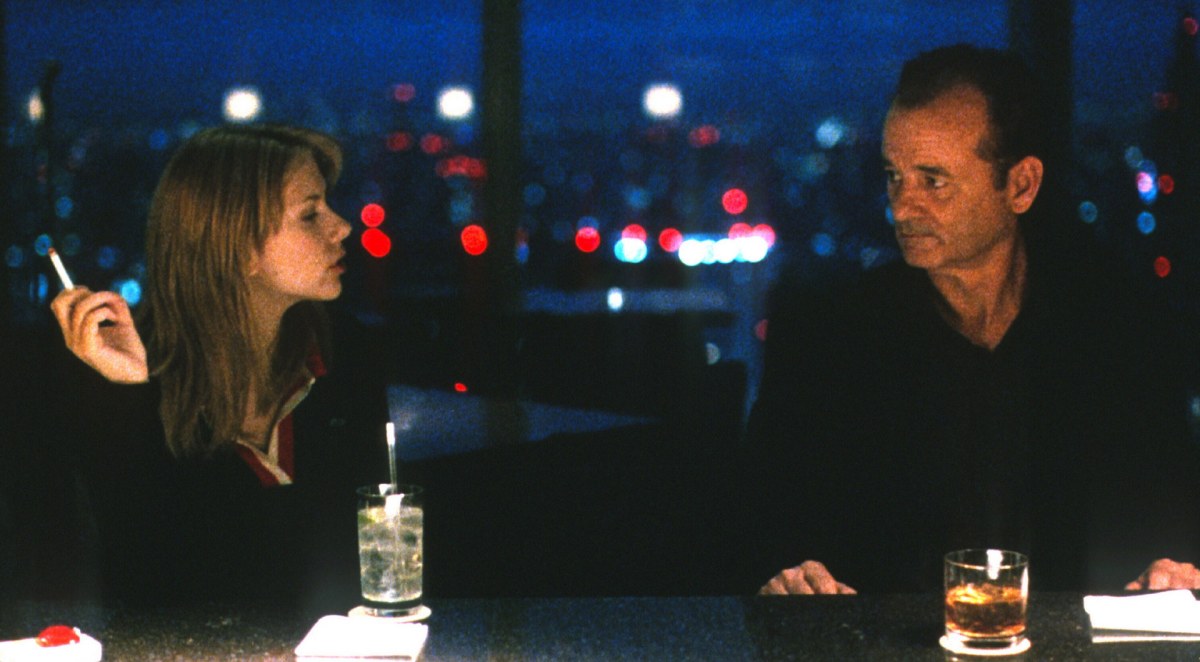
One of the great films of the 2000’s, Lost In Translation is a film that is often underrated but which deserves a lot of praise and acclamation. Directed and produced by Sofia Coppola, daughter of the highly acclaimed director Francis Ford Coppola, Lost In Translation is the story of two Americans of different ages who are visiting Japan for different reasons but who are struggling with similar existential crises.

Bob Harris, played by the wonderful Bill Murray, is an aging actor and movie star from Hollywood who is struggling with a mid-life crisis. He comes to Tokyo to film whiskey commercials and appear on some popular Japanese talk shows. In one of her first roles on film, the talented Scarlett Johansson plays Charlotte, a young college graduate from Yale, who is struggling to figure out what she wants to do in her life.

While Bob and Charlotte come from different backgrounds and are of different ages, they are both struggling with adult concerns such as marriage, work, and the search for overall meaning. Bob has been married for twenty-five years whereas Charlotte has only been marries for two years. While they are at different stages in their marriages, both of them have doubts about being or staying with their partners. In addition, once they meet each other in the hotel lounge for the first time, they are drawn to each other’s personality, humor, and the fact that they are adjusting to Japanese culture for the first time.

One of the best things about Lost In Translation is the way Tokyo, Japan becomes a character in the film. The city is a sprawling metropolis with a population of over twenty million people that seems to go on forever. Since Charlotte’s husband is a director and is busy shooting for a new film and Bob’s wife is five thousand miles away, they both find time to explore and immerse themselves in the bright lights and diverse sounds of Tokyo.

The most illustrative scenes in describing the developing relationship of Bob and Charlotte take place in the karaoke bars and the hibachi restaurants where they try to adapt to the culture shock and the persistent jet-lag together. Despite being married, they feel alone and unhappy in their relationships for different reasons.

They take solace and comfort in each other’s company as they navigate the intricacies of Japanese language and culture. They start off as complete strangers in the hotel bar but then become friends over the course of their stay. Bob also acts as a life mentor to Charlotte who is in her early 20’s by giving her lessons on life, marriage, and what it’s like to have children. Bill Murray’s character comes across as someone who’s halfway through life and is honest to Charlotte about the ups’ and downs’ of it all.

Charlotte’s youth and curiosity about the world helps to change Bob too as he rediscovers the joys and thrills of being care-free and being able to laugh with someone who puts no pressure on him. After appearing on cheesy talk shows and doing uninspiring whiskey commercials, Bob is able to have fun and enjoy himself around Charlotte. From the one-sided phone conversations you hear from Bob and his wife back in Los Angeles, neither of them seem happy or fulfilled about their marriage. I don’t want to spoil the ending for those of you who haven’t watched the film but it is possible that Bob and Charlotte will find romance or love when they least expected it to happen.

I have to admit that the first time I saw Lost In Translation, it made me really want to visit Japan. The nightlife and crowded streets of Tokyo interest me quite a bit. I was also intrigued by a scene from the movie that was set in Kyoto, where Charlotte takes a high-speed train to the city to see the Shinto temples and the beautiful cherry blossoms. The cinematography and settings of the film are very moving and beautiful. Lost In Translation has a reputation of being a serious and deep film with little humor mixed in.

However, I would disagree with this assessment because there are a lot of scenes of light-hearted humor especially when Bob Harris, Bill Murray’s character is on the set for a Japanese commercial. Many things are ‘lost in translation’ as he looks for guidance and help from his translator but she never gives him the full story of what the Japanese director wants. There are other humorous scenes where Bob appears as a guest on a goofy talk show with a quirky host. Another classic moment is when a Japanese escort is sent to Bob’s hotel room and asks Mr. Bob Harris to “lip her stockings.” It’s a subtle English faux pas but I found it hilarious the first time I watched it.

Two strangers who meet in a hotel bar and get to know each other over a drink is not a new movie concept. However, the relationship that develops after that chance meeting is what makes Lost In Translation a great film. The on-screen chemistry between the two great actors, Bill Murray and Scarlett Johansson also draws the viewers in to the plot. There can be few other cities as magical, crazy, and hypnotizing as modern Tokyo.

The neon lights, huge skyscrapers, and hoards of people make it a unique setting, which is rarely used in Hollywood films. Lost In Translation isn’t your typical romance movie and it doesn’t have a clear-cut ending. What it does offer the viewer are the special moments of two lost souls making a deep connection with each other in a foreign city, and enjoying those experiences during the short time that they have together.


‘The Godfather’ – Film Review and Analysis

don-vito
“I’ve spent my life trying not to be careless. Women and children can be careless, but not men.”

One of the great classic American films of the 20th century, The Godfather, directed by the legendary Francis Ford Coppola and based off of the novel of the same title by Mario Puzo is often considered to be the most influential film that created the ‘organized crime’ or mafia/gangster genre in cinemas.

Since its’ release in theaters in 1972, it has garnered a cult following among fans who led to ‘The Godfather’ becoming a trilogy with Parts Two and Three both released in following years. Because of its significance culturally and historically, the Library of Congress preserved it in the United States National Film Registry in 1990. Because of its success at the box office and with film critics alike, ‘The Godfather’ garnered many Academy Award nominations and won four Academy Awards including ‘Best Actor’ for Marlon Brando and ‘Best Picture’.

In addition to adding to the legendary career of Brando, ‘The Godfather’ also introduced to Hollywood a young Al Pacino and a very talented Robert Duvall. Both men would have extremely successful careers in American film but I believe that it was ‘The Godfather’ which helped catapult their early careers into noteworthy stardom.

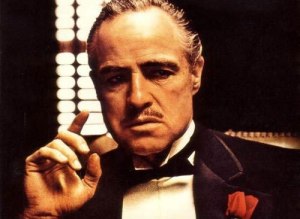
Drawing parallels to the real life ‘Five Families’ of New York that dominated the Italian mafia during the 20th century, the fictional Corleone family, led by Don Vito Corleone, is highlighted as being the ‘pariah’ and at odds with the other crime families throughout the film. Vito Corleone, played by Marlon Brando, acts like the quintessential mob boss whose cunning and intellect has made him to this day a very quotable character that has become apart of American popular culture.

In The Godfather, we see Vito nearing the end of his reign as boss of the family and looking for his eventual successor. Vito has three sons: Sonny, the oldest whose lack of foresight and hotheaded temper makes him a liability albeit is the favorite initially to replace Vito as Don of the Corleone family. Fredo is the middle child and is a consistent womanizer. Considered neither to be reliable nor intelligent, Fredo is kept to the side often and is not a suitable person to lead the family due to his lack of cunning and intellect. Michael, a U.S. Army Veteran and the youngest child of Vito Corleone is portrayed as being very innocent and often has requested to be kept out of the family business if he can avoid it.

However, as the viewers of the film can understand and interpret, a mafia family reels everyone in to its business whether or not it’s intentional. One of the best aspects of The Godfather is watching the changes in Michael’s behavior and demeanor as extenuating circumstances involving the family forces his hand and he is forced to take on more responsibilities and duties as a Corleone and the son of Vito. His loss of innocence and the transformation that occurs with Michael from dignified U.S. Army Veteran to cunning, ruthless Mafia boss is a great strength of this timeless film.

For those critics who are against violent Mafia films and choose not to watch them, that is fine but it should be considered that there is more to this movie than meets the eye. Above all else, it is the story of a father trying to repent for the sins of the past and trying to keep his sons from avoiding the same mistakes that he has made.

The relationship between Vito and his son, Michael in particular is memorable for how Vito expects so much from Michael considering he is the most levelheaded and intelligent of the Corleone brothers. There is one great scene in the film where Vito and Michael are discussing the ongoing drama of the war between “The Five Families.” Vito laments to Michael on how he is sorry that he was thrust into the mafia business when he expected his son instead to become “Governor Corleone” or “Mayor Corleone.” Michael simply looks at his father lovingly, and says: “We’ll get there, pop. We’ll get there.”

Other classic scenes that I enjoyed involve the courtship between Michael and a beautiful Sicilian woman named Apollonia. What I liked most was highlighting the very old-school dating process of asking Apollonia’s father for permission to date and then later marry his daughter with all respect given. It’s a touching moment in the film, which reveals that Michael’s humanity has not been totally wiped out because of the mafia. It was also great of Director Coppola to show the traditional procession of the Sicilian wedding and how all of the townspeople were involved in wishing Michael and Apollonia well.

Without trying to spoil the rest of the film for those of you readers who haven’t watched The Godfather yet, I can’t recommend it enough to avid movie fans. The directing by Francis Ford Coppola, the cinematography, the acting performances by Al Pacino, Marlon Brando, Robert Duvall, James Caan, etc. are phenomenal and they deserved every heap of credit that was bestowed upon them at the Oscars and elsewhere.

The Godfather is simply more than just a mafia film in my opinion. It is a story about a complex family, fathers and sons, human nature, and the thirst for power and respect. Have an open mind and see this film if you get the chance. I promise that you won’t regret it even if the running time is three hours in total. You can always tell your friends and family that I wrote a blog post that you couldn’t refuse to read.