

Book Recommendations – Volume III

After a five-month break, I’m back with another edition of “Book Recommendations.” I’ve had some free time on my hands lately which has allowed me to read these really great books. I would like to share my latest selections with my visitors and hope that you will check these books out for yourself.

Note: I have also posted the links to these books so you can check them out on Amazon.com. You simply need to click on the books’ images below in order to be re-directed to the Amazon page of the book itself. Enjoy.

1.) And Then All Hell Broke Loose: Two Decades In The Middle East by Richard Engel, Chief Foreign Correspondent for NBC News

As someone who has studied the Middle East region extensively in college and has made a few trips to the region (Turkey, Israel, Jordan), I continue to enjoy learning about this tumultuous part of the world despite its rough past and present.

This book by Richard Engel is excellent because it comes from someone who understands the complexities and historical background of the region. He is also a great correspondent and storyteller who weaves his own history of working in the Middle East alongside the tumultuous events over the past two decades, which have fundamentally transformed the region.

Mr. Engel has been a foreign correspondent in the Middle East for over twenty years now. In this book, he clearly displays his vast knowledge of its’ history, culture, societies, and the troubles that continue to plague the region. Engel is fluent in Arabic, Italian, and Spanish. He has worked for NBC News and other major news organizations for over two decades. He re-tells his firsthand experiences and stories of starting out as a freelance journalist for the Agence France-Presse in the late 1990’s during the time of Mubarak’s Egypt. He goes on to discuss his experiences of working and living in Iraq during the collapse of Saddam’s regime and the subsequent U.S. occupation of Iraq.

In addition, Mr. Engel has also spent a lot of time covering the fall of Muammar Gaddafi in Libya and the recent civil war in Syria. Richard Engel has also endured some trauma during his career as he was captured and kidnapped by ISIS in late 2012. For the readers of his book, we get personal insight into the hellish situations he has been drawn into through his accounts of witnessing the deaths and injuries of many of his journalist colleagues over the past twenty years. This book is fundamentally a more personal story as he recounts how his 20 years of covering the Middle East had affected his marriage, his friendships, and his mental state.

What I like most about this book is that Mr. Engel gives you the historical background and the straight facts of what happened in the region and why it happened. You can tell that he was both physically and emotionally affected by the wars and insurgencies that he bravely covered for the U.S. media. More than anything else, it is a well-written account of what it means to be a journalist in a very difficult region of the world for journalists. Richard Engel doesn’t preach about what should have happened or what could have been different in terms of the politics but he simply relays his past experiences for those of us who want a more personal, firsthand account of what it is like to cover the Middle East.

2.) Kitchen Confidential: Adventures in the Cultural Underbelly by Anthony Bourdain

A world-renowned traveler, famous television show host, coolest American alive over 50 years of age. You can also add best selling-author to this list as if it wasn’t long enough. These are just a few of the titles that Mr. Bourdain has earned over the course of his life. However, most people forget that he was a very successful chef in New York City and elsewhere during the 1980’s and 1990’s. He is especially known for being the executive chef at the famed restaurant of ‘Les Halles’ in Manhattan, NY.

Due to his years in the kitchen, Kitchen Confidential is an in-depth, intriguing look into the actual process of how the food we eat in restaurants ends up on our plates. You may not feel very hungry after reading this book due to the expose on some food industry practices that could be considered unsatisfactory in terms of health regulations. I know now that I won’t ever order fish or any other seafood from a restaurant if it’s a Monday.

This book is an unfiltered look into life as a cook and Bourdain hilariously delves into stories from his past and the characters he encounters in the various kitchens he’s worked in. He discusses how he worked alongside drug dealers, degenerates, thieves, loose cannons, etc. in the kitchen but that didn’t detract from the excellent chefs that they made themselves out to be. If anything, Bourdain argues, their eccentricities and attention to details help make these people into great cooks.

Kitchen Confidential is also useful in that Bourdain gives tips and advice to his readers on how to cook and prepare food better. His advice ranges from what kind of knives are best to which simple gadgets make the most difference in having a decent kitchen to cook in. If you like his travel shows and his antics as a TV host, you will most certainly enjoy this book.

3.) Connectography: Mapping The Future of Global Civilization by Parag Khanna

The race to win the 21st century will not be a race between militaries, or of competing arms but of overall connectivity. Mr. Khanna argues that whichever country becomes the most connected to the global supply chains of trade, finance, technology, infrastructure, etc. will stand to benefit most in our current globalized world. A geopolitical strategist, consultant, and world traveler, Mr. Khanna displays his in-depth knowledge of international affairs and geopolitics from his past travels and from his extensive research.

From Ukraine to the UAE and from China to Nigeria, Mr. Khanna details how national borders are no match for the global supply chains that are increasingly emerging. Physical boundaries of geography are becoming less important than the priorities of developing high-speed rail lines, building intercontinental pipelines, expanding the World Wide Web, along with increasing energy outputs and resource trading among many different nations.

While some prominent figures in politics are advocating for resurgent nationalism and wall-building, Mr. Khanna understands that this perspective is detrimental in a world which is becoming more fundamentally connected. In the 21st century, countries and continents need each other now more than ever. With ten trillion dollars and growing being spent per year on infrastructure, transportation, energy, and communications, this trend is likely to continue unabated.

Among the notable ideas in this great book that Mr. Khanna highlights are the emerging North American Union with related maps in the book showing how the United States, Canada, and Mexico are becoming more interdependent. China is also connecting itself to many of its neighbors in Eurasia through gas, oil pipelines and freight rail networks.

In Connectography, Mr. Khanna gives us an in-depth perspective on the world’s growing interdependence and how its’ affecting our everyday lives. While there are numerous challenges to this worldwide trend, which are also highlighted in the book, Mr. Khanna strikes on a final note of optimism. Even with the difficulties and struggles of climate change, terrorism, civil wars, etc., only a more inclusive, connected global society can meet these challenges head on and succeed together.
Interconnected

interconnected
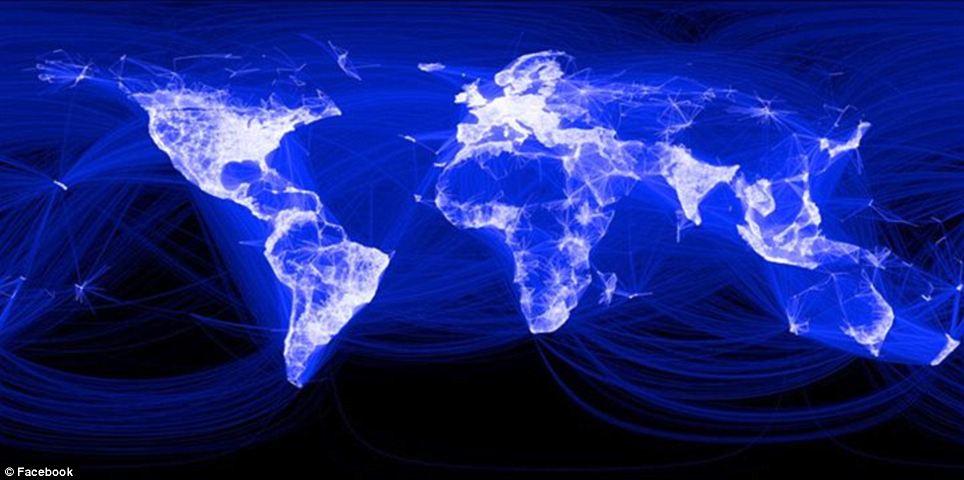
“Will humanity become more or less interconnected during the 21st century?”

When the 21st Century is over and becomes apart of the history books, it will be known as the first truly interconnected, interdependent, and entangled era of human history. Compared to past eras, borders are more open, long-distance travel is common place due to modern aviation, and global commerce is more free than it ever has been. Globalization as a phenomenon has been made possible not just through open borders and advances in aviation but also due to the wonders of the Internet.

While many human beings can not physically cross borders or take modes of transport to other countries, the Internet has helped to minimize that gap of connection by allowing people from around the world to connect virtually at an increasing frequency. As the technology continues to improve and advance, the Internet has made our planet interconnected on a scale once considered unthinkable a generation ago.

I woke up one morning in New York, had my breakfast and juice, and then was able to log-in to Skype and chat with my good friend who is living in Beirut, Lebanon about his work there and how he has adjusted to living in the Mediterranean metropolis. After that, I sat down to have lunch and finished some homework for a 1:30 PM Spanish lesson with my teacher who is originally from Mexico but currently lives in Italy. Somehow, we were able to make the six-hour time difference work between me in New York and her in Italy. Before the day was over, I had two more Skype and Google Hangout based English lessons with my students from countries like Saudi Arabia and South Korea. Satisfied with my day of both teaching and learning, I settled the rest of my affairs and went down to the kitchen to prepare my dinner for the evening.

None of these lessons or exchanges of information would be possible between persons of different countries and backgrounds without the invention of the Internet. Too often, the average person either takes for granted the capabilities that allow us to stay connected on a worldwide scale or doesn’t take advantage of using this technology to bolster their abilities personally or professionally.

Professionally, as an ESL teacher, the fact that I have been able to use the Internet and web applications such as Skype, Google+, etc. to connect with numerous students from around the world virtually has been a real treat for me. Sometimes, my students with whom I’m working with online do not have the means or ability to work with a native English speaker / teacher in person in their own city or country. Those of us language teachers who commit time out of our lives to help others learn our native languages should be commended for making this a possibility. It is truly enjoyable for me to work with those students online from different countries who will share with me interesting tidbits about their cultures and societies.

Personally, I have been able to stay in touch and meet up again with friends of mine from different regions of the world thanks to staying connected through social media websites like Facebook, CouchSurfing, Twitter, etc. The Internet has allowed me to stay connected with international friends, both new and old, thanks to the rise of social media and its applications. It is funny to think that only fifty to hundred years ago, or even before the advent of the Internet, twenty years ago, the best that you could do is send a handwritten letter by mail or make an expensive call to any location overseas. Now, such communication to an international location is often very cheap or even free of charge depending on which application you decide to use.

While the advent of globalization has its positives and negatives, which are often debated and discussed endlessly, I believe that one net positive from globalization has been how the Internet and the “world wide web” has made humanity interconnected. This one trend of “Interconnectedness” for the 21st century is one that isn’t going to reverse course anytime soon and is going to be hard pressed to find itself limited in total amount of users or overall global popularity.

According to the World Bank’s recent report titled “World Development Report 2016: Digital Dividends”, the number of people worldwide who have access to the Internet has tripled from about 1 billion people in 2006 to about 3.5 billion people in 2016. This recent development is an extraordinary occurrence. This means that over 40% of humanity now has some type of access to the Internet which has become increasingly possible due to rise of mobile technology and the spread of 3G and 4G cellular networks.

As more and more people connect to digital markets of e-commerce, become new entrepreneurs and start to create their own small businesses, this will also allow more students to connect and learn with me here in New York and other teachers around the world to learn English or another foreign language. The possibilities of eventually having everyone connected to the Internet would be truly endless. It could lift millions more people out of poverty and create new economic opportunities where there were none before.

Some of the big questions to be answered in the coming decades is how do we as a global community work together to connect the remaining 60% of humanity to the Internet? How do we work together as governments, NGOs, and individuals to give people the means virtually to benefit economically and personally from the advent of the Internet? These are not easy questions to answer let alone solve. However, if humanity is to continue advancing and developing into the future, we must continue to become more interconnected to each other. That is a fundamental truth of the 21st century for which we all must be aware of.

Sources:

1.)  http://www.theguardian.com/technology/2016/jan/13/internet-not-conquered-digital-divide-rich-poor-world-bank-report

2.) http://www.worldbank.org/en/publication/wdr2016

A Wealth of Knowledge

knowledge-translation-and-exchange1
“The sharing and exchange of knowledge is easier now than it has ever been in human history.”

There has been no other time in human history than in today’s era where the average person with access to the Internet can seemingly have unlimited amounts of information available to him or her. When you truly think about the magnitude of it, untold amounts of data are being created every day. According to IBM, “The current estimate is 2.5 quintillion bytes of data per day and over 90% of the data in the world today has been created in the past two years alone.”

A common response nowadays from both family and friends when I ask a question to them about a random query is not a straight-forward answer but rather an off-handed suggestion to “Google it.” Living in this era of ‘Big Data’ can be quite overwhelming to the average person but one could also look into it as an opportunity to gain knowledge and further ones’ understanding on a limitless amount of subjects with the simple click of a mouse. The Internet is an amalgamation of thousands of libraries of Alexandria at the beck and call of one’s fingertips.

Compared to past ages when information and knowledge was more exclusive and harder to come by, today’s era allows everyone with an Internet connection to search and find information to their heart’s content. Instead of going to a library to find what you need on a subject, websites like Google, Wikipedia, and other online encyclopedias have largely replaced the main role of the physical library. I remember when I was younger and in my high school days having to seek out certain books in order to write a research paper or complete a book report.

However, now more than ever, you can easily find the sources of information you need online in order to facilitate your research and evidence. While I love libraries and hope that they never go out of style, the reality is that online encyclopedias and eBooks are largely replacing their original purpose. In order for libraries to stay relevant, they need to start incorporating computers, free Wi-Fi, and technical classes in order to remain useful.

From the 18th to the 20th centuries, universities and colleges across America were the standard bearers and purveyors of higher education. Originally for the elite, wealthy, and well connected, those students who were able to get accepted and afford undergraduate and graduate studies believed that they would have an advantage in the job market and in achieving the American Dream. More recently, as colleges and universities have become more inclusive than exclusive, tuition prices have inversely risen as well.

While higher education has become accessible to more and more young Americans, it also has become more expensive especially over the past decade. These events have led to an ongoing debate as to whether college is really worth the price tag and whether the average student gains anything from earning a four-year degree. With student loan debt at an all-time high of $1.3 trillion in 2015 in the United States and tuition rates at both public and private universities continuing to rise, people are beginning to look for alternatives to the current higher education system.

Over the past decade, there has been a drastic proliferation of massive open online courses (MOOCs) provided by both private companies and traditional universities. At a much lower price and sometimes free, people from all over the world can sign-up for these courses and partake in lectures, tests, quizzes, and papers as if they were actual enrolled undergraduate and graduate students at the physical form of the university. As the credentials and certifications bestowed upon these courses continue to increase and become more widely accepted, we may begin to see ‘the end of college’ as we know it.

Examples like Khan Academy, edX, Coursera, Udacity, etc. and other MOOCs have leveled the playing field. Tech entrepreneurs from Silicon Valley have allowed students from all over the world to access unlimited online courses to further their academic knowledge at a lower price. With the subsequent rise in online university programs for undergraduates and graduates, the physical college experience of dormitories, lecture halls, football stadiums, etc. may become less appealing to students as tuition prices continue to increase. While the social and networking benefits of college life are numerous, they may not be enough to compete with this era of free information that we are living in.

Compared to past decades, we’re living in a time when access to the Internet is at an all-time high and is increasingly rapidly due to the rise of mobile technology. Traditional havens of knowledge such as the library or the public university will have to adapt to stay relevant in this unlimited information age. In a worldwide job market that is evolving rapidly and where the average child today will work in an industry not yet created, the free exchange of knowledge must continue to spread through the worldwide web.

Countless others and I have benefited from taking online coding courses on ‘Codeacademy’ to learning new languages on ‘Duolingo.’ As MOOCs and online universities continue to develop their courses and credentials, we may begin to see an era where the average person can earn a degree or two without breaking the bank. MOOCs are cheaper, less time intensive, and can adapt more easily to the rapidly changing employment market.

A well-educated population is now more possible now than ever with the wealth of knowledge and information that is available. That fact is evident but it also is up to the individual to be willing to search for that information and actually apply it. Instead of getting frustrated with people asking me to ‘Google’ the answer, I find that it’s worth the hassle because it’s often true that I will find the answers I’m looking for and in greater detail than if I were to ask a friend or family member for a quick description. That’s the power of the Internet. That’s the wealth of knowledge that we are able to take advantage of.

Sources

Sites Mentioned