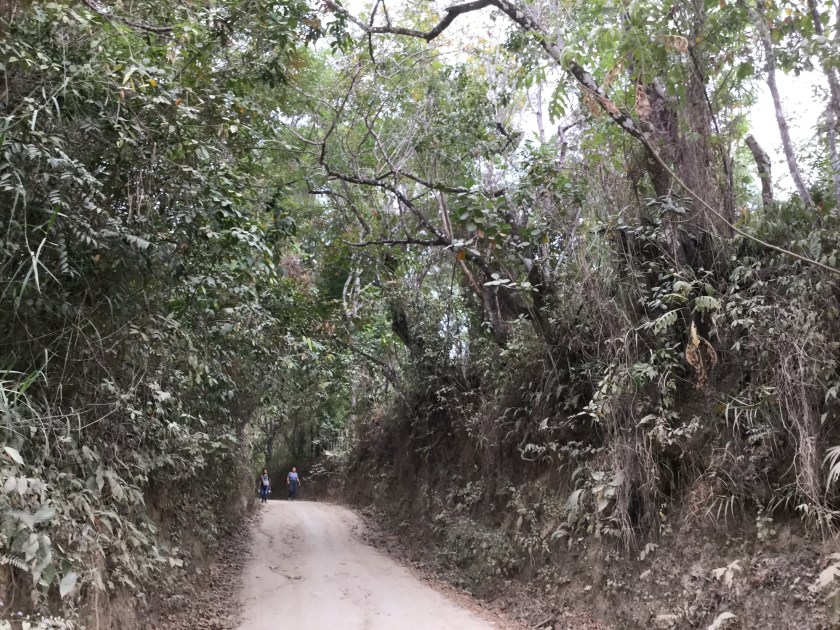
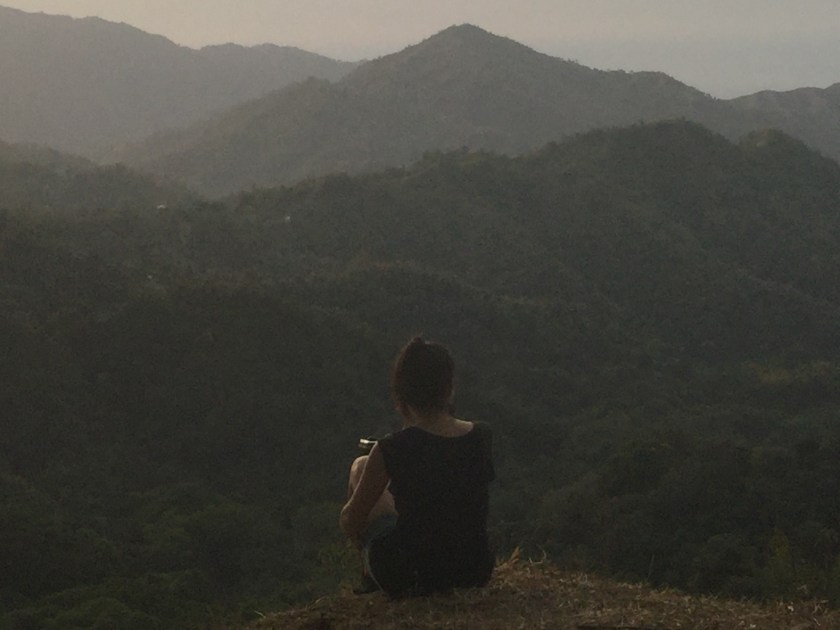
Santa Marta is an undiscovered gem of a city located on the northeastern tip of Atlantic coast of Colombia. I say that it’s an ‘undiscovered gem’ because it usually flies under the radar when compared to its’ coastal counterparts of Cartagena and Barranquilla. Still though, for Colombians and foreigners alike on vacation, Santa Marta has a lot to offer its’ visitors. I was drawn to Santa Marta a couple of months ago when I visited its’ neighboring town of Minca, which is also quite beautiful and full of lush scenery up in the mountains. Unfortunately, I did not get to spend much time in Santa Marta so I decided that during my 2nd time living in Colombia, I could not pass up the chance to visit this city if I had the chance.
Luckily, due to the recent religious holiday observed in Colombia which falls on a Monday, I was able to make my return to the Atlantic coast via Santa Marta for a long weekend and I had a great time overall. Even with three full days, I felt like I could have done and seen even more so if you’re planning on coming to Santa Marta, five days or so and that should be enough to cover everything. Due to the fact that I live in Medellin, which is surrounded by mountains with no sea in sight, I took full advantage of my time on the coast by hitting up the local beaches, sampling some great seafood and doing some hiking.
Santa Marta is a small and navigable city, which made it easier to visit for a long weekend. The locals I met were extremely helpful to me, and especially the taxi drivers who were patient with my handwritten directions. The historic center of Santa Marta was well preserved in my opinion and very walkable. There are a lot of bars and restaurants located around the Parque de Los Novios, which made it easy for me to choose places to eat and drink. Beyond that, you can easily go to La Quinta de San Pedro Alejandrino, which is place where the liberator of most of South America died in 1830. The hacienda is a museum, resting place, and has a really nice art gallery as well.
My recent trip mostly focused on visiting the different beaches located in Santa Marta, Rodadero, and Parque Tayrona. Santa Marta has many public beaches, which I found to be refreshing because there are a lot of hotels and private apartments located close to the sea but families and locals can mix with tourists to enjoy the beaches as well in the city. I found that to be a great idea and a contrast to other places, which have private beaches that only guests of the hotel or apartment can use freely. The public beach in Santa Marta is clean and nice to swim in but it can become quite crowded especially on holiday weekends.
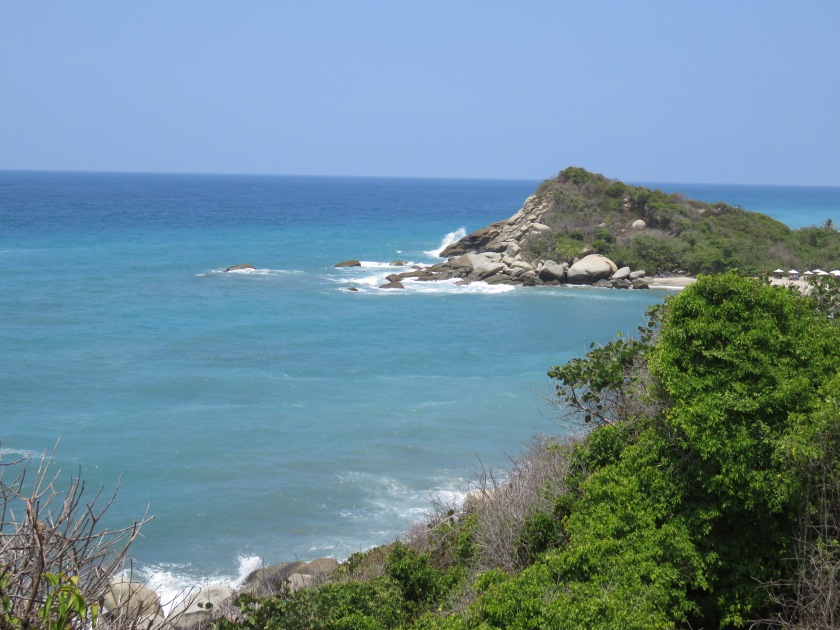
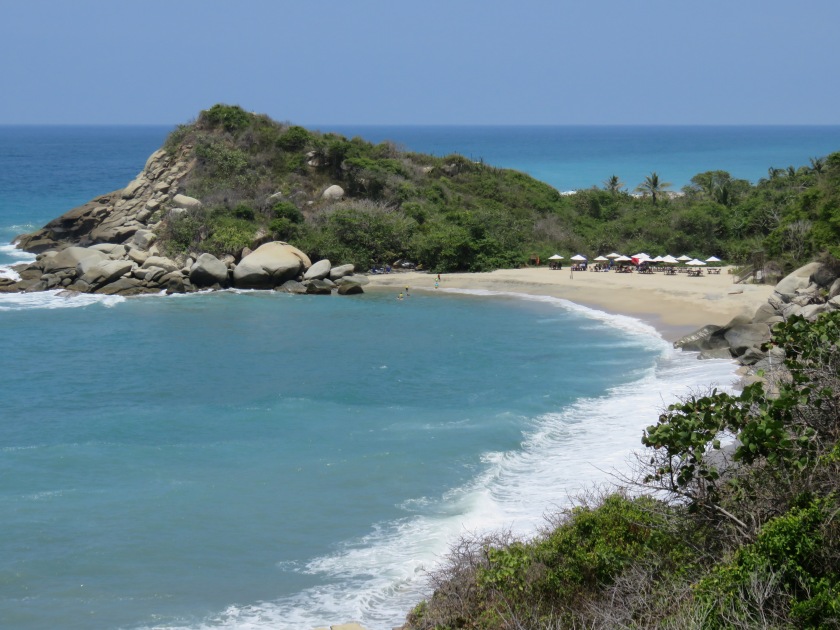
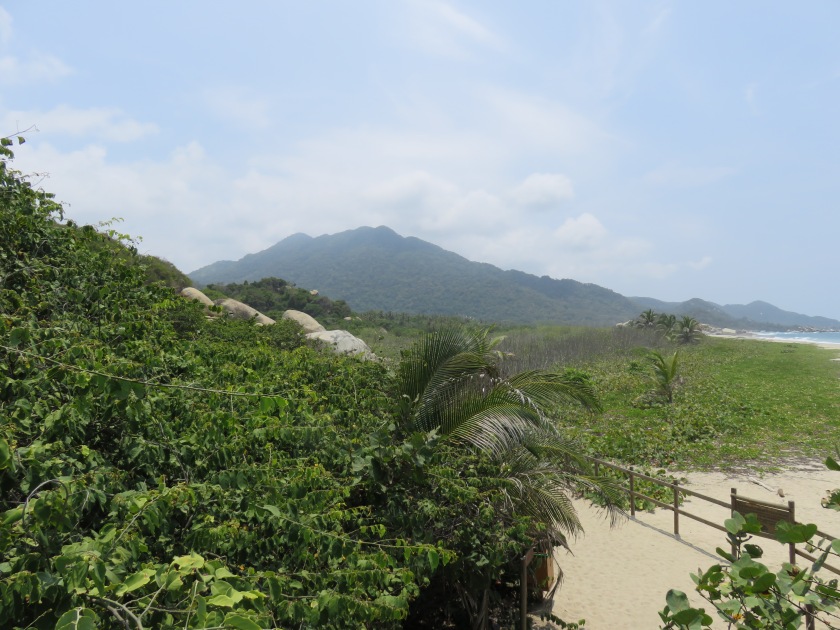
The highlight of my trip was a visit to Parque Tayrona, one of the biggest and most popular national parks in Colombia. Well-preserved, pristine beaches, and great hiking opportunities, Parque Tayrona is the reason a lot of tourists come to Santa Marta in the first place. The park offers a lot of beautiful natural scenery of mountains, trees, and small rivers, which you can hike through for a day or more. Some visitors choose to spend a night or more in the park because it’s too big and vast to spend only a day there. The beaches are especially gorgeous because they are quite unspoiled and have no trash or residue of human presence for the most part. The water is clear, blue, and enjoyable to swim in. There’s a powerful rip-toe and large waves so be careful if you are to go swimming in some of the beaches there.
The particular beach that I visited, which is called Arrecifes, was barely inhabited and I enjoyed my time swimming, sunbathing, and listening to the clear sound of the waves without a care in the world. It was a very rewarding feeling to soak myself in the waters of the Atlantic again after a long day of waiting to get into the park and hiking through the park. For a couple of hours, I had the whole beach to myself so I was able to hear the sounds of the waves uninterrupted without any outside noise or voices to disturb the flow of nature. If there is one regret I have about the park is that I did not have enough time to see other beaches and that I should have woken up earlier to get into the park without waiting in line. If you plan on coming to Tayrona, make sure to get there by 8 or 9 AM, otherwise you will be waiting for a while to get in.
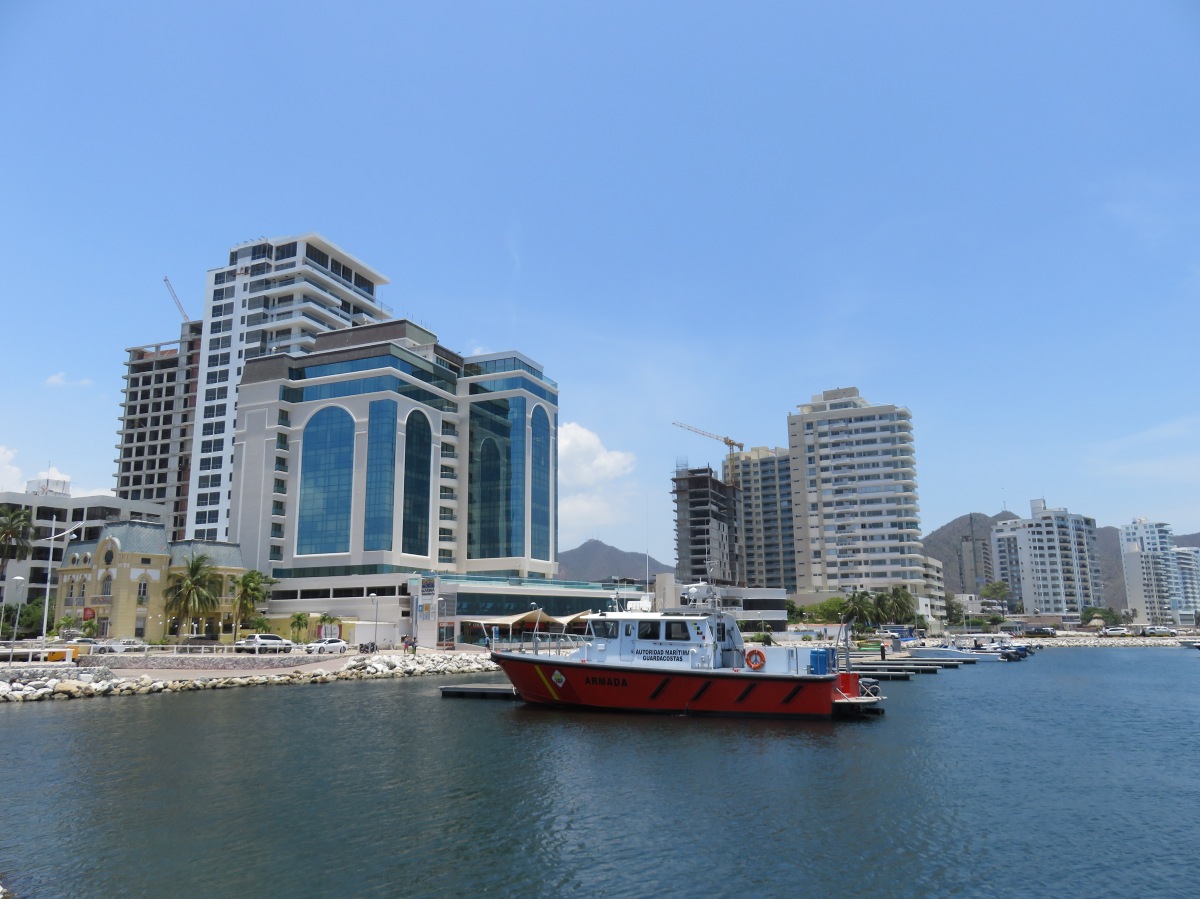
Before I left Santa Marta, I made sure to check out Rodadero, which was very different from Santa Marta and felt more like Miami Beach. High-rises, hotels, and apartments make up quite the skyline for this small city, which sits between the mountains and the coast. Rodadero is a great hub for restaurants and nightlife but also has nice public beaches which locals and tourists can enjoy alike. On my last day in the area, I decided to check out Playa Blanca, which was well worth the boat trip. Having a nice, private cabana that kept me out of the sun was welcome after two previous days in the sun. If you can’t make it to Parque Tayrona, spending the day in Rodadero is a great back up plan especially if you can make it to Playa Blanca where it’s less crowded and the water is crystal blue.
In addition to swimming and sunbathing, there are a multitude of activities to take part in. The fishing village of Taganga, which is nice to check out for a day due to its’ coastal style boardwalk also offers diving classes if you’re into learning that skill. There are also numerous tour groups offering snorkeling, hiking trips in the Santa Marta area for reasonable prices. If you’re feeling more leisurely, you can go jet skiing, banana boat riding, canoeing, and paddle boarding if that suits your fancy. The multitude of activities and places to visit in the area make it clear that Santa Marta is worth at least five days or so if you want to explore each nook and cranny of what the area has to offer. You simply can’t be bored if you decide to visit.
Despite being relatively undiscovered when compared to Aruba, the Bahamas, Bermuda, and other vacation getaways, Santa Marta is a city on the rise and its’ making a lot of progress in developing its’ tourism infrastructure. There are many cranes working on building the next hotel or apartment complex especially in Rodadero. The Santa Marta airport, which may be the smallest airport I’ve ever visited is getting a makeover and is going through a lot of construction in order to make it a hub for Colombians and tourists alike. With investments in infrastructure and education, Santa Marta will continue to grow in popularity.
I hope that tourists will continue to get along with the locals and respect the great natural beauty of the area especially in Parque Tayrona. The one thing that was difficult for me to deal with was the coastal humidity, which will cause you to sweat like no other. Be prepared to be hot but you get used to it eventually. Lastly, using AirBNB to meet some locals was really nice and I highly recommend the online service to my readers. Just make sure to do your research first and choose places to stay, which are conducive to your travel needs. A holiday weekend well spent in my opinion and I have a feeling that I will be back in Santa Marta one day soon. Parque Tayrona and Rodadero were my favorite parts of the trip and I’m sure others will enjoy those places too if they choose to visit this great area of the country.
Medellin, a bustling metropolis of over three million people, has a popular and well-known nickname, “The City of Eternal Spring.” I can say for certain that this particular nickname is well warranted and appropriate given the moderate temperatures and humidity that make up the day and night here. Among the cities and towns I’ve visited in Colombia thus far, Medellin is special in that its’ climate is hospitable and agreeable.
Luckily, after a long day’s work at my new school, I can come back home without sweating through my shirt and dress pants. When it does rain here, it’s refreshing and cool. Sometimes, it can pour really hard but usually only for short periods of time and despite July and August being the prime months for the rainy season, it hasn’t been that frequent of an occurrence.
In addition to its’ great climate, there are other qualities that make Medellin a unique city. Its’ transportation is well organized and runs smoothly. The metro system here is one of the few in South America and is clean, affordable, and has frequent trains. I’ve been impressed at how easy it is to get around the city without breaking the bank. In addition to the metro, there are also the ‘Colectivo’ buses, the Metro Plus bus system, the Metro Cable car system, plentiful taxis, and Uber if you really need to get around in a hurry. Motorcycles, which I noticed to be quite popular on the Atlantic coast, are also another great way to get around especially if you’re not patient with the traffic here.
Caution is necessary, as ‘right of way’ does not exist for the pedestrian so you have to be an eye out for both cars, taxis, motorcycles, and large buses. Everything seems to run efficiently when it comes to getting people to and from their jobs whether they are in the north, south, or central part of the city. While I haven’t spent much time in Bogota or Cali, I would say that Medellin is the most interconnected city in Colombia when it comes to transportation.
Residents of Medellin and the Antioquia region in general are commonly known as ‘Paisas.’ This nickname is also spot on given the fact that these people are really born and raised here in the countryside. Compared with Costenos, Paisas are accustomed to the mountains and hills that surround their fair city. It’s been an adjustment for me given my past experience of living near the Atlantic coast of the country. It’s a unique opportunity to be able to see Colombia through a different lens.
While the food is similar to what you would find in other parts of Colombia, Paisa cuisine is unique in offering hearty dishes like ‘La Bandeja Paisa’ and ‘Cazuela Antioquia.’ Rather than seafood, Antioquia pride itself on its’ offerings of different kinds of meat served with potatoes, avocado, tomatoes, etc. Each region of Colombia including Antioquia are known for its’ cuisine offerings which may be unique to the particular region.
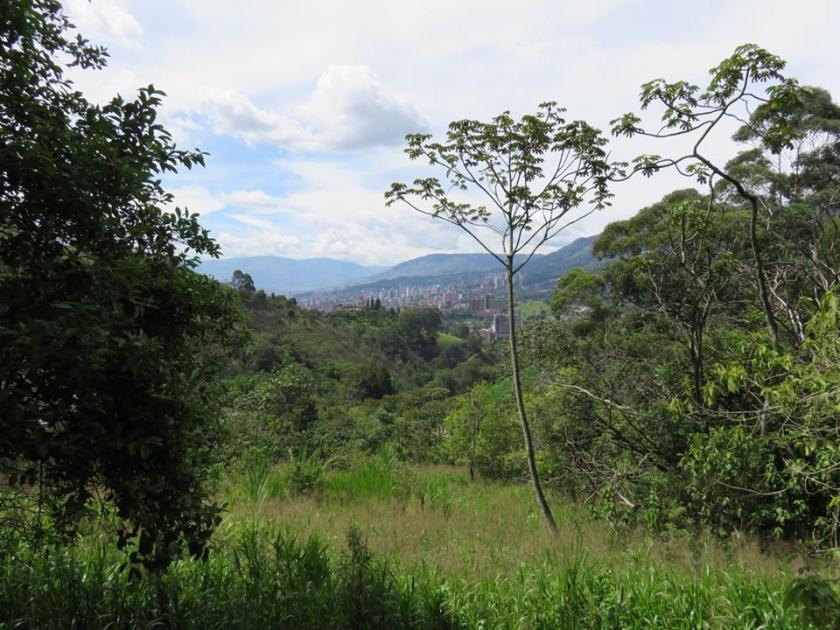
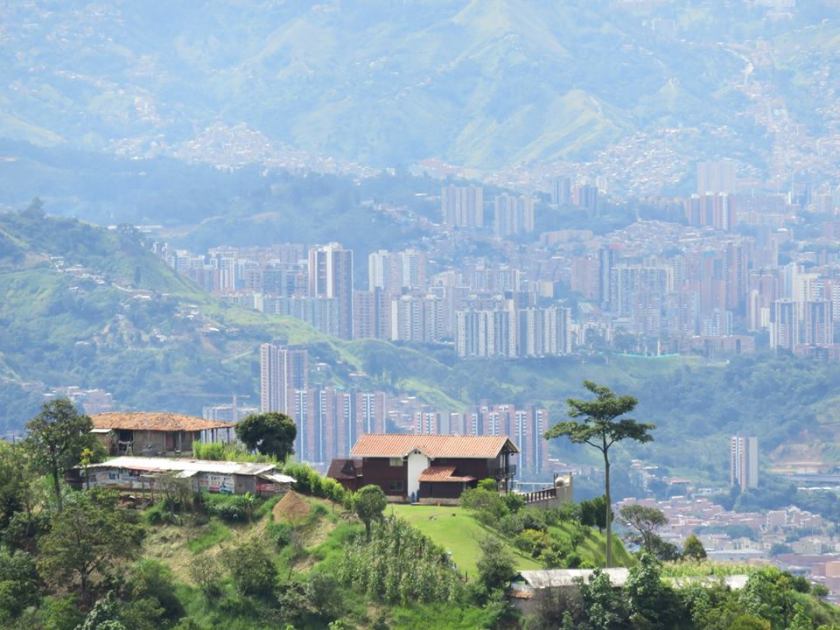
To put it bluntly, Medellin is a city which contrasts its’ natural surroundings of mountains and rivers with its’ skyscrapers, bridges, and freeways. In any view of the city, you get a mix of pure nature and urban settings. Tucked below the valley, the city rises with its’ buildings and elevated metro to contend with the nearby green mountains that surround the city. The most special sight to me occurs at night when the lights of the city flicker brightly across the valley and off the side of the mountains. Each white and orange light that shines in the valley at night signifies one of the homes, apartments, and buildings that house a few of the city’s overall three million residents.
I have only been in Medellin for two weeks so far but I can tell that this is a special place. In addition to the great climate, good public transportation, tasty local cuisine, and stunning views of nature, the city’s inhabitants are friendly and helpful. Sometimes, to me, it doesn’t feel like a big city but a cluster of small towns that make up an urban area. Part of the fun of living here is discovering new neighborhoods that each has something different to offer. There are cool museums and botanical gardens to see at the University of Antioquia, trendy restaurants and bars that make up most of the Laureles / Estadio neighborhood, and the heart of the nightlife scene in El Poblado. It’s also cool to check out the more suburban neighborhoods that are within a metro ride of Medellin such as Envigado and Sabaneta.
Even if one were to get bored with Medellin, there are a lot of things to do, and places to see in the Antioquia region. In addition, there’s also a number of day trips out there to explore the local nature scene and to experience more traditional villages. It would be unrealistic for me to say that you can get bored living in Medellin because it really is a vibrant cultural capital and I believe that a lot of tourists and residents from other Colombian cities now acknowledge that fact. Having had an unfortunate negative reputation in the international news media for many decades, Medellin is a city on the rise with a deep culture, cool neighborhoods, and hard-working, friendly people who want to show you the best of what their home city and region have to offer. I am very happy with my decision to have come back here to Colombia and to make my current residence here in ‘The City of Eternal Spring.’ Hopefully, as a reader of my blog and website, you’ll come down to visit Medellin sometime to find out just what all the hype is about.
This past weekend, I was able to make my first road trip here in Colombia with a few fellow Peace Corps trainees. When I found out that we would be going to visit a current volunteer in the Magdalena department, a different and very unique, beautiful part of Colombia that is much different from where I have been currently living in Atlántico.
It was quite the trip for the four of us trainees, as we had to use three different modes of transportation such as cars, taxis, and buses in order to get to our final destination. However, the scenery and landscape changes that we were able to see and enjoy could not be matched. Going from the savanna/dry flatlands of Atlántico to the lush tropical mountains and hillsides of Magdalena was quite fascinating for me. It was almost as if we had transported ourselves to a different country but in fact, we were only four or so hours away from our original starting point.
This small road trip was able to put into perspective for me just how biodiverse and unique Colombia is as a nation. I have only seen a little bit of the wide range of landscapes and scenery that this country has to offer but I have been really impressed with how different it is even when just describing the Atlantic coast. Along with China and the United States, Colombia ranks as one of the most bio-diverse and naturally rich countries in the world, which is amazing considering its size compared to those two aforementioned countries. I really do hope to see as much as Colombia as I can and to be able to see how diverse and unique it really is.
Getting back to the trip, it was smooth traveling for us all even when we had to take a car halfway up the mountain to about an altitude about 1,000 meters. Our host, a current Peace Corps volunteer in Colombia was generous, gracious, and showed us around the town of Minca and all it has to offer. When you’re up in the Sierra Nevada Mountains, you can indulge in a lot of different outdoor activities.
Minca recently has become a more popular tourist hotspot with cafes, restaurants, and small hostels being filled with French, German, and other European tourists. It is difficult to conclude whether or not the locals of Minca have benefited or not from this influx of tourists who have come to see the natural sights and sounds. I would argue that this is part of a growing trend for Colombia as more and more tourists come to explore the country given that the safety and security situation has been improving.
During our short stay in Minca, we were able to meet some of the locals who have benefited from the Peace Corps’ volunteer being there to help with their English. In addition to working full-time at the school, the volunteer here gives English lessons to adults and also those business owners who would like to have a decent level of proficiency for dealing with the incoming tourists. I really admired the hard work and effort that the volunteer has put in to the community there and the close comradery, affection that the local people have for the volunteer too.
In addition, the teachers and students at the school in Minca welcomed us with open arms and allowed us to observe their lessons, answer their questions, and answer our many questions as well. I believe that it will be vitally important for myself, as a volunteer-to-be is to establish a productive and successful working relationship with my Colombian counter-part. It’s also important to really get to know all of the students in the school on some level and be able to interact with them, which should help when it comes to classroom learning.
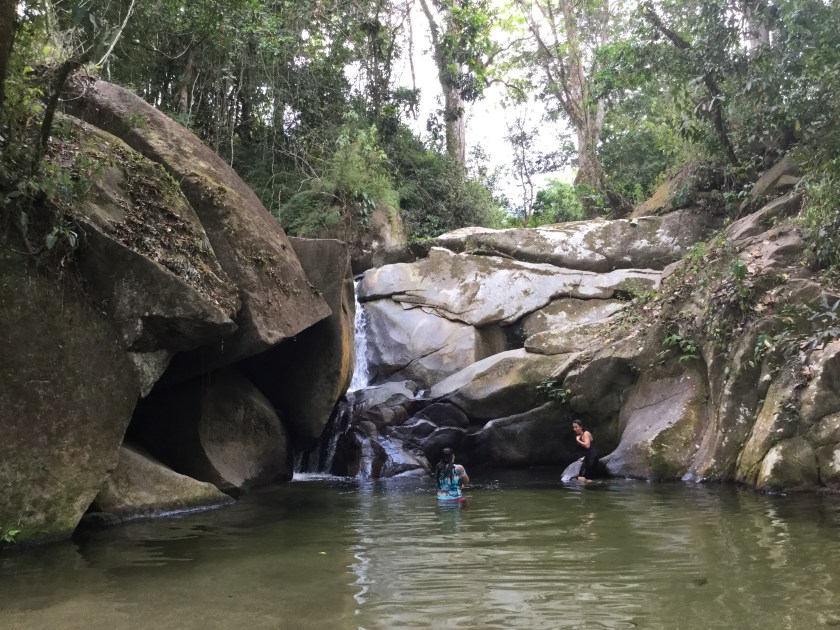
We were truly lucky to spend a day with a current Peace Corps volunteer and to observe them at work and at home to see what kind of life may await us for our two years of service. Minca is a really peaceful, unique town nestled in the Sierra Nevada Mountains. The beautiful vistas, and the cascading waterfalls will stay in my memory for a long time.
Even if my site placement puts me far from that type of location and environment, I definitely hope to be able to visit the Magdalena department of Colombia soon again. If for anything else for the fact that I really enjoy hiking up the mountains, breaking into a sweat, and then cooling off by diving into the cool, refreshing waters of the many waterfalls to be found there. Stay tuned for more road trips in the future. Colombia is a very big country and I hope to visit more places here in the future.