The Bill Always Comes Due

“It is an inevitability that we all must face and even when we try to push it out of our mind, that responsibility is there to provide lest we face any consequences that comes with not paying the bill.”

When we think about the moment of slight anxiety or stress involved with sitting in a restaurant, you’re satiated from a great meal of great food and drinks, maybe you’re surrounded by friends and family on a special night together, in all that joy and happiness, you still have that thought in the back of your mind, “the bill always comes due.”

There is no way of avoiding it and you’re going to have to pay it, one way or another. It is an inevitability that we all must face and even when we try to push it out of our mind, that responsibility is there to provide lest we face any consequences that comes with not paying the bill.

While you are under the expectations that any food, drinks, or other service at a restaurant always will come at a cost, we as consumers try to not think about that at all to be here and now in the present to enjoy what we have ordered with the company that we keep. It is a key characteristic of human nature that we often avoid thinking about the future even when we do at present is likely to carry its own kind of consequences. I use ‘the bill coming due’ as an anecdote for how what we choose to do, how we act, what we focus on and prioritize, will lead to what kind of bill we end up paying in the future.

Just like you would not want to pay a restaurant bill you cannot afford by understanding your budget and what you can afford to order off the menu of that particular reasonably priced restaurant, we should be aware of the fact that there are other ‘bills’ that can come due in the future that can cost us more than we bargained for if we are not careful about it. What we do in the present can help us manage our bills and how we handle our future by dealing with it in a responsible and mature manner now.

Let’s think about our health and how we manage it as there will be some kind of ‘bill’ handed down to us as we get older. It can be a clean ‘bill’ of health as your physician or doctor will tell you if everything goes well or it can instead be an array of expensive tests, surgeries, or procedures that lead to a hefty medical ‘bill’ that will cost us dearly beyond what we can afford, even if you have some form of insurance. How do we avoid this kind of ugly ‘bill’ of health? Well, I won’t dive into specifics as I am not a medical physician but how you eat, if you exercise, whether you stay active in your daily life, can help us pay off that ‘bill’ in advance or make it that much smaller to manage in the long run. There are common sense ways to manage the ’bill’ of health as it will come due at some point, and you have a measure of control over it in the present to make sure it does not bankrupt you or cost you with your health in the future.

In a similar way, one’s ‘wealth’ and how you manage it in the present can help you pay the various ‘bills’ that come due on a monthly, yearly, or longer basis. When you use part of your paycheck and weekly or monthly earnings to pay down outstanding debt or to save up for an emergency or to help yourself learn an employable skill, you are making sure that you will be able to pay for any bill that can come due because you have accrued your wealth and investments in a way where you will never be broke from these ‘bills’ coming due.

If you make other choices instead where you spend every dollar you make and beyond that, get into debt with various bill collectors including the credit cards and other loans you have taken out, the bills that come due will be beyond your accrued means, and you may be struggling for the rest of your life to get out from the ‘bills’ coming due that you have to pay or face serious financial consequences.

You do not want your health, wealth, or ability to earn a living to suffer because you cannot handle both present and future bills to come. You should make sure to think of the future to save, invest, and earn for a ‘rainy day’ fund that can overcome an unforeseen or unexpected bill coming due. Again, I am not making any specific financial recommendations to you as I am neither a financial planner or investor, but I do want to impart some common sense and wisdom in how to avoid future ‘bills’ by planning to save and invest for the future in some measurable way so the bills coming due will be paid for entirely without any stress or anxiety.

Lastly, it is unfortunate where we live in a society where it can cost exorbitant amounts to educate oneself for the workforce and for financial success, indebting ourselves in the process. I believe education is worth investing in if you are able to afford the bills to come due, but if you are in a cycle where you can’t get out of accrued bills or debt because you went for higher or professional education, please make sure that the investment that you make in the present will help pay off the debt in the future. The worst thing to do is invest in an education that does not end up paying for itself later and help with all the bills coming due to that investment.     

Make sure you focus on those employable skills or to be a subject matter expert or practitioner, in an important area that will pay off because you invested in your education in a useful area. I know of a lot of people who cannot get themselves out of a debt or pile of bills, even with their extra years of education, because what they learned what not useful for the job market, and now they are stuck with bills that will never be paid off.

I am not against the idea of paying for more education but please make sure it is aligned with your future career or business goals. If you are not sure of what you want to invest financially in an education, there are many free tools and videos that can help you understand better of what opportunities are out there. I think it’s important to think hard about what bills you want to take on for your education because it is no good to have a debt burden that will prevent you from future job or educational opportunities because you have bills coming due that you must sacrifice your ideal career or business for.

Whether it is health, wealth, or education, you will have to pay the bills that come due, even if they come at an unknown future date. Make sure you invest in each area within reason that you will be able to afford to do so without suffering later for bills or obligations that you took on that you found were beyond your capacity.

Do not sacrifice your future by what you do in the present. Make sure you practice good health habits, invest in your wealth accrual with whatever route that you find is best for your goals, and to reasonably access educational opportunities that can create excellent business or career opportunities that you will not have to sacrifice either your health or your wealth to achieve. Remember that the bill(s) always come due at the end, but that does not mean life should not be enjoyed or taken advantage of, but to do so in responsible manner, where your present is secured in each of these three areas, and as a result, your future is prosperous, healthy, and full of opportunities.

The Real Meaning of ‘Seize The Day’

“You seize the day when you can plan for how you are going to seize not just today but tomorrow as well.”

Seizing the day or ‘Carpe diem’ is an oft-quoted Latin phrase that has become as popular as often as it has been misunderstood. Seizing the day is definitely a principle that I stand by for a couple of reasons, but I don’t agree with people who say that seizing the day means to ignore the future or not to think past today’s goals or tasks. You seize the day when you can plan for how you are going to seize not just today but tomorrow as well.

Some people choose only to live in the present moment, and I think that is a fundamental misreading of what it means to really ‘seize the day’. You really have a bigger advantage when you plan ahead of time for what you should accomplish not just on the same day but in the weeks or months ahead. You won’t be able to make the most of each day if you do not know ahead of time what you need to get done or what is most important in your life to complete.

Living only for the day will keep you in a constant state of searching and jumping from activity to activity without planning how long you plan to study, work, explore, travel, or focus on. That is to say that life is nothing without a little spontaneity and that when a good opportunity or event pops up out of nowhere and this will be your only chance to experience it, then it would definitely be acceptable to ‘carpe diem.’ If it is truly a once-in-a-lifetime chance or a very rare opportunity that you would live to regret or would change your life, that is an opportune time to seize the day and chart a new course for yourself.

When you don’t plan for your day ahead, you will not be able to seize it as easily. You do not want to spend your days drifting about from idea to idea, opportunity to opportunity, place to place. Life inherently is not all about spontaneity and being in the moment at all times. You should try to plan ahead to some degree but also be open to changing your life course is a good enough lasting opportunity or change of plan comes around that would definitely benefit you in the long run.

Short-term pleasures, wins, and successes can be quite enjoyable especially when you seize them when they come but it’s the little victories over time that build up and lead you to a successful relationship, business, or career will pay off a lot more. You truly do seize the day when you are planning and doing something each day to push those long-term goals forward in some capacity. When you work towards your goals consistently each day and putting in the work each day, you’ll start to see your hard work come to fruition. That is what will truly go along with the phrase ‘seize the day’ when you make the most of each day to give yourself the highest life satisfaction.

Frittering your days away impulsively going from party to party, country to country, or job to job without a long-term plan can be ruinous to somebody. Seizing opportunities that come your way should be encouraged but not at the expense of having some long-term goal or dream in mind that would truly change your life for the better. Making the most of each day to reach your life goals or to do something meaningful whatever that may be should definitely be part of that famous saying of ‘carpe diem.’

‘Seizing the day’ is not just about working consistently to achieve goals and dreams but it’s also about taking care of both your mental and physical health and to take the necessary time out of a busy day to see a friend or a family member, to go on a bike ride, or to do another hobby like photography or hiking, which will make you feel more well-rounded and relaxed. Human being are not machines that can be constantly on the go and we need that time to reflect alone or socialize with others to improve our relationships as much as possible.

Another key thing to know about ‘seize the day’ is just showing up every day and doing your best. You may not get every opportunity that presents itself, you may not hit your goals each day, or you may not prioritize your relationships or hobbies as much as you want but the main thing is to just show up each and every day to work hard at what you have going on not just immediately but into the future.

As another popular saying goes, “showing up is just half the battle.” Putting yourself out there takes courage and grit, and some people today can’t even do that. Seizing the day is about putting yourself out there enough so you can attract those chances and opportunities that you wouldn’t have gotten ahold of had you not even made yourself available. When you stay at home, isolate yourself, and don’t try at all, you won’t get anywhere in one day or even in one year. If you don’t put in the effort each day, you won’t be able to seize anything of importance or value to make yourself that much more meaningful.

If you are reading this article, I hope you rethink the meaning of ‘carpe diem’ or ‘seize the day.’ It’s much more than just living in the moment and pursuing instant gratification in whatever form that may be. It’s about putting in the effort each day, consistently, in pursuit of a long-term opportunity or goal that isn’t handed to you automatically and which will often take more than one day to succeed at. Whether it’s competing for a championship, building a business, or planning out one-year of travel around the world, you seize the day by working towards these visions each and every day by putting yourself in front of those opportunities and doing your best to succeed at them with hard work, grit, and a little bit of luck too.

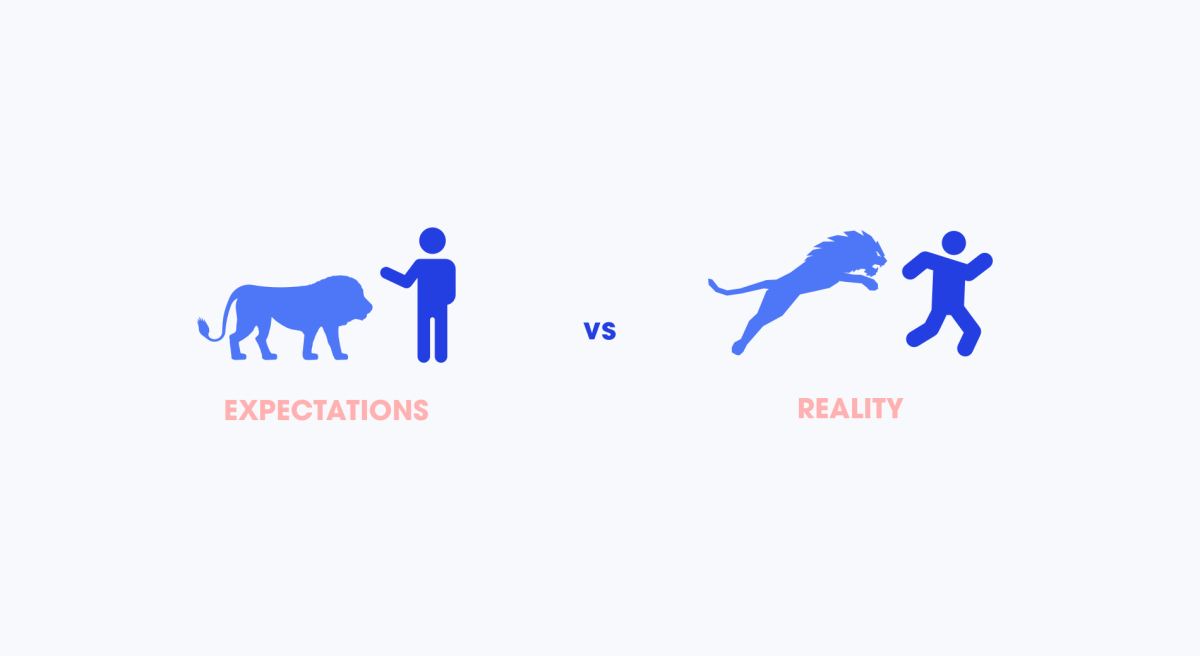
Expectations vs. Reality

An important part of maturing and becoming a fully functional adult is to keep your expectations in check and to manage them as to not conflict with what the reality of the situation is. Keeping your expectations in check is difficult to do but it is necessary in order to not let an oversized ego, or arrogance, or selfishness keep you from becoming the person you should be. One has to always be prepared for reality to not line up with our initial expectations. You can never really be fully certain of how things in life are going to shape up to be. A true sign of maturity is wishing for the best but understanding that you could be in for disappointment and setbacks even when you think that everything can turn out fine.

The word ‘expectations’ can be synonymous with being ‘unrealistic’ because you are hoping for things to be better than average and to be better than you hoped they could be. Often times, things are about the same as you would expect or can even be worse if you set your expectations too high. Keeping your expectations in check will also to help keep both your emotions and feelings in check as well. There are a number of things one can do in order to measure expectations enough to keep them in line with reality. They include focusing on the present, cultivating patience, and taking the good with the bad. These three keys alone will help anybody’s reality win out over their expectations. While having expectations is not necessarily a bad thing, having too many expectations that are unrealistic or impede your ongoing hard work and efforts will make the reality of that situation worse. Keeping your expectations realistic is something we all must do as adults.

Focusing on the Present: Controlling what we can and not worrying about the things outside of our control goes a long way towards keeping our reality in line with what our expectations should be. Doting too much on the future without having a plan for today is a recipe for disaster in terms of not being able to meet your expectations. It is good to set goals and to set your sights high, but the efforts and the work must be there as well. If you are not working on your goals in the present, you can expect your reality to look differently in the future if you were not actively working towards achieving them in the here and now.

Day-to-day expectations that are measurable and quantifiable are more easily met rather than those that are months or even years away. You cannot be worried or distracted about what could happen three months from now, but you should rather focus on what you are doing now to increase your happiness and satisfaction. You can only control your actions and your behaviors, which will save you a lot of angst and anxiety when you focus on what can be controlled and to focus less on what is out of your control especially for what is still away on the horizon of your life for which you are totally unsure of what is to come. The older I get, the more I realize it is good to plan for the long-term, but to expect things to change the further away from your current present reality are. Focusing on things on a day-to-day basis is part of a recipe for fulfilled expectations and kept promises.

Cultivating Patience and Perspective: Being able to understand that life has both its good and bad events, and you never know how things are really going to shake out is a true sign of keeping your expectations in check. We tend to think a new city, a new job, a new house, more money will fulfill us but sometimes, our expectations can fall short because we set them so high. We sometimes do the opposite in terms of cooking a meal for family members, volunteering at a homeless shelter, cleaning the house, or buying a gym membership in that we think it will not be as fun or fulfilling in reality but those kind of activities end up fulfilling us more than the former. Obviously, we set our expectations high or low based on our personal histories, personal biases, and our own desires and goals.

However, regardless of what we think will be awesome or what we think will be crummy can balance out more if we are able to cultivate patience regarding how any of our life events will shape out. You may not be satisfied with something on day one but then really love it by day 100. When it comes to expectations vs. reality, you have to show patience regarding both because what you expect to be good can end up being bad and what you expect to be bad can really end up being good.

Having perspective on what is going on with our lives can help us as well because our reality may not be what we expect but we can express gratitude for what good things we have to balance out what disappointments or ills that have befallen us previously. If you can count your personal blessings each day, you will be happier with your reality and you can better measure your expectations. Knowing that your perspective on life is totally unique compared to everyone else’s is comforting because your reality is going to be different in many ways from your fellow family members, friends, or work colleagues.

What you are going through cannot be adequately compared to other people because their reality and their expectations are never going to be the same. You can only be patient, be grateful, and realize that you should put your life in perspective as much as you can to remember that life has its ups and downs, and you should never get too low or too high because of it. Everyone has their good days and their bad days, and you never really know what people are going through because everyone has a different reality and different expectations of who they are, what they expect, and who they hope to be.

Taking the Good with the Bad: As I mentioned earlier, reality can bite sometimes especially when your expectations were sky high so anything in life is not going to be as rosy as you first imagined it. Even if something awesome happens in your life and you feel like you’re walking on cloud nine, you can be sure that there will be some small annoyances that come with it. Nothing is ever 100% good, and nothing is ever 100% bad. Similar to walking on ‘Cloud Nine’, you could be ‘down in the dumps’, but realize that your pain is temporary, and nothing lasts forever. The highest high and lowest low will pass and most of life is somewhere in the middle for which you make the best of and strive to meet expectations that only you can hold yourself accountable to. You can’t hold others accountable for standards that they can’t reach as much as you want them to for your own peace of mind. The world does not work that way. You have to hold yourself accountable and be that positive example for others.

You are always in a constant battle of Reality vs. Expectations but in this case, there is not going to be a clear winner. Sometimes, life will exceed expectations, other times, life will fall short of your expectations. The key thing to keep in mind is how do you react to both successes and setbacks in a mature and clearheaded way. You can get discouraged or be ecstatic, but you have to remember that life is about having patience, keeping it all in perspective, taking the good with the bad, and always focusing on the present and the here and now over the past and the future. If you can do these things, regardless of when reality wins or when expectations win out, you will be the winner as well because you will have cultivated the emotions, habits, and overall maturity needed to make it through both life’s ups and its downs.

Saudade

There is a fact that you eventually have to come to terms with as a language learner such as myself: there are going to be certain words in foreign languages that have no direct translation to the English language. The art of translation is an imperfect one, which means that you need to be comfortable doing your best to come up with an adequate description of a foreign word even if there is no direct translation available.

The beauty of studying a foreign language is being able to use one word that is able to sum up a number of different emotions and feelings that are tied together. While there are singular phrases and/or words in the English language that have no equivalent in other languages, the same could be said for the Portuguese word of ‘Saudade.’

According to Dictionary.com, Saudade means “a feeling of longing, melancholy, or nostalgia that is supposedly characteristic of the Portuguese or Brazilian temperament.” As you can see from the English definition that I have written about above, there are a great number of different words in English that you could use to describe saudade in Portuguese. While there are multiple words in the English language that could be translated to have the same meaning as saudade, however, in its’ culture and in the overall context, there is only one saudade in its’ original language of Portuguese.

While I have never been to Brazil or to Portugal, I have recently begun to study the Portuguese language in earnest. I now believe that is a really powerful language in terms of communicating both emotions and feelings. Portuguese is a romance language like Spanish, and I have found that the way I communicate in either of these two romance languages is much different than how I communicate in my mother tongue of English. I think that there is a huge variety of ways for which you can express your emotions and feelings in romance languages such as Spanish or Portuguese, and you can be more expressive in those ways when compared to the English language.

I first learned about saudade not from my Portuguese language studies but rather from when I was watching a recent episode of Anthony Bourdain’s show, “Parts Unknown”, when he is visiting Porto, Portugal. There’s a beautiful scene in that episode where Mr. Bourdain is listening to an older woman singing a melodic song in Portuguese about how she has experienced saudade in her past, and how she mourns for a lost lover.

It goes to show you how any human being can relate to that exact feeling even if each individual language has a different way of stating what that feeling is. If you think about saudade in English when it comes to musical expression, the first thing that comes to my mind is the ‘blues.’ You can say that someone has the ‘blues’ and is feeling upset or bummed out about life. However, the ‘blues’ is also a form of expressive music in English similar to how singers and musicians can express saudade in Portuguese musical styles.

I have come to love the word, saudade, because regardless of the fact that it comes from a different language, everyone around the world can relate to it in terms of what it means. Everyone experiences saudade whether they realize it or not. Saudade is longing for someone or something that you’re nostalgic for from your past but which you’re unable to have with you in the present. It’s a deep yearning to go back in time to experience those positive, happy moments that put a smile on our face. It’s a very human thing to want to dive back into your memories and make them real again because one day, that’s all that we’re truly left with.

Whether it’s a long lost lover, a memorable trip, or a fun night out with your close friends, saudade can represent any one of those unique, happy memories. The older a person gets, the more they’re likely to experience saudade because it’s only natural to want the people or things back in your life that were once present and real. While our memories can be happy and joyous, they can also be painful and sad. If you’re yearning for a family member who passed away or a lover who you parted ways with, you’re going to be having saudade. In order to go through saudade, you need to experience life in all of its’ ups and downs. You need to feel things, have experiences, go off to new places, be part of events, etc. in order to make those memories happen whether they end up being beautiful or ugly. That is saudade at its’ core.

Millions of love poems and songs have been written about saudade, whether these feelings and emotions were described in the original Portuguese or other languages such as English, Spanish, etc. While we are happy to have had those experiences, met those people, and done those things, we are also sad because we know those occurrences are in the past and may never come to us again in our lives. Saudade is a very strong emotion and one that we all experience at least once.

When it comes to saudade, it’s important to remember that it’s still necessary to move on emotionally to focus on the present and the future. While it’s nice to reminisce about past memories and experiences, you don’t want to do it so often that you’re handicapping yourself from thinking about what’s next to come in your life, and what your future holds. Like many things in life, there’s a balance to be struck between the past, the present, and the future. Saudade is a powerful and potent feeling but you should not let it consume you.

If you decide to learn more about what saudade is, you should invest in studying the Portuguese language. When it comes to using ‘saudade’ in European Portuguese, it would look something like, “Tenho saudades tuas.” A sentence with ‘saudade’ in Brazilian Portuguese would look a little bit different but very similar to the European structure and form. “Tenho saudades de você”, which translates in English literally as “I have saudade of you” or if you are using the better, more figurative translation of this sentence; Either “I miss you” or “I have feelings for you” would work best in this context.

When it comes to other countries’ languages, there are words that come close to describing what saudade is. Whether its’ the ‘blues’ in America, ‘Sehnsucht’ in Germany, or ‘Tizita’ in Ethiopia, many cultures around the world have their own form of saudade in their respective languages. Saudade seems to be a cultural centerpiece in both Brazil and Portugal with there even being a specific day devoted to the word in Brazil that takes places every year on January 30th.

The fact that this word ‘saudade’ can have figurative translations to other similar words in different languages, and cultures in other parts of the world should show us how interconnected the world really is. There is universality in the human experience that transcends language, culture, and national boundaries. We all feel joy, pain, sorrow, anger, and happiness.

Considering that many languages across the world have a word such as the Portuguese ‘saudade’ to represent the ups and downs of life is a testament to how there is more that should unite us than divide us as human beings. Whether it’s a young Portuguese sailor missing his homeland on the initial journey to the new world, or an elderly man thinking about a lifetime of memories in the local park while feeding the birds as time passes by, saudade is saudade.