Why It’s Important to Romanticize Life a Little (While Not Losing Your Grip on Reality)

“When I say romanticize life, it’s about choosing a balance between being aware of suffering and cruelty in all its forms but not letting it steal our joy or every drop of beauty we should experience during our short time we are living on this planet.”

A star-filled sky, a sunset that looks like a colorful painting come to life, a delicious cup of coffee on a patio or rooftop, a smile from a stranger, or a song that just puts you in a good mood; romanticizing life itself is important to maintaining one’s contentedness. Romanticizing life itself isn’t about deluding oneself about the ills of our troubled world or denying that life has its problems, but it’s about choosing meaning, joy, and pleasure in a chaotic thing that we call existence. When I say romanticize life, it’s about choosing a balance between being aware of suffering and cruelty in all its forms but not letting it steal our joy or every drop of beauty we should experience during our short time we are living on this planet.

What does it mean exactly to romanticize life itself? For me, it’s about viewing life not only through its troubles, struggles, and effort, but also about embracing wonder in all its forms, keeping your imagination going, and living life with intention to observe joy and be appreciative of being able to exist in this moment. Being able to romanticize life does not come easy and we can lose track of how precious life really is. However, you can appreciate life more when you’re able to enjoy the small rituals and little moments that bring you a sense of calm and contentedness.

Maybe it’s your morning coffee or your daily walk around the neighborhood. If you’re a parent, maybe it’s the sound of your child’s laughter or if you’re married, your partner smiling at you. In those precious moments, you are left with a sense of what the good stuff in life is and that it can be good. You know those moments don’t last forever so it’s important to recognize them when they happen and to find enjoyment in them. I also think romanticizing life is about embracing yourself as the ‘main character’, which I have written about in a previous article. Being able to embrace new places, new foods, new cultures, and new adventures can give your life much more volume of good memories, meaningful connections, and some amazing stories to tell upon your return.

Life isn’t perfect and neither is your own, but it’s important to remind yourself daily of the good stuff even if it’s minor things in your routine and daily rituals. Even if life seems bad, I always think there’s the ‘little’ things in life to be grateful for and to remind yourself of what to be fortunate for even if things can look bleak at times. Romanticizing life matters even more in today’s world in my view. Modern life is designed to overwhelm us seemingly everyday and can drain our joy completely if we are not careful.

A lot of us are burnt out from work, overstimulated by 24/7 news cycles, and overwhelmed by the technological change going on around us. Romanticizing life is not about ignoring these changes going on around us but to remember exactly why life is still beautiful and how to find out what inspires us, moves us, and allows us to embrace the good things in our world.

It is also a good antidote to apathy, nihilism, and numbness to the problems in our society because remembering the good things in life and what’s worth fighting for. We cannot control the world or right every wrong, but we can control how we experience and move through the world in our own way. Being able to romanticize life and the good it can offer us encourages positive feelings of gratitude, mindfulness, and presence especially when there are so many distractions around that can cause us to lose sight of what we really should be focusing on.

While I advocate for romanticizing life, I’ll never shy away from acknowledge the pain and suffering we all inevitably go through in life. However, we cannot let ourselves be consumed by the pain we experience or seek to escape reality in unhealthy ways. Remember to be able to hold the good and the bad of life in you, the joy and the grief, stress and peace, happiness and sadness.

Don’t romanticize life to escape your problems or the pain you experience but instead use it as a tool to ground yourself, to have perspective, and to think in a more balanced way rather than ‘everything is terrible’ or ‘everything is perfect.’ For some examples of this you may experience in life, you can still pay your bills and light a candle for a nice dinner in the same day. You can still enjoy Paris while it’s raining down on you and you’re late for a tour. You can still have a bad day and still journal your thoughts down while being grateful for the good things you have in your life overall.

As the famous philosopher Albert Camus once wrote, “There is no love of life without despair of life.” To me, this quote represents that you can still be in touch with life’s beauty and joy without being broken by the pain and sorrow you experience that’s a part of life too. This is the kind of perspective that you should be cultivating like Mr. Camus in that you need to be romanticizing the ordinary and mundane of life and to find some beauty in it if you can.

How to do this exactly? Well, I like to write and observe to romanticize and find joy in the world. For others, it could be reading literature, watching films, or learning about art. Even better than that is to create these types of output yourself and to collaborate and work with others because building out human connection through these endeavors makes life more enjoyable and makes it easier to romanticize it all.

Romanticizing life does not mean broadcasting for the world every photo you take, every meal you consume, or every sunset you enjoy. It’s about living in the moment, not being performative or fake about what you experience, and taking the time to really embrace beauty wherever it can be found. It’s about being intentional in how you embrace life, little by little, the good and the bad. You need to have perspective in that things are never as bad as they seem nor as good as they seem. Romanticizing life is not about pretending bad things don’t exist or that good things don’t exist, but it’s about believing in that there is good in the world still and it’s worth taking pleasure in.

If you’re into romanticizing life through travel and adventure, do more of that, and for others it could be the comfort of family and friends, while others can do it more simply with watching the passing of a cloud or the blossoming of a flower, you need to find one small way each day to bring some good energy to your life and to uplift oneself when you can. Life is not meant to be an endless grind where we are meant to struggle endlessly without taking some time to reflect, be present, embrace beauty when we see it, and to live life with as much passion  as you can muster when we find things worth enjoying, both big and small, both random and planned, and above all else, reminds us that while life can be tough, it can also be beautiful too.
Anatomy of a Scene – ‘The Lady In The Red Dress’ (The Matrix)

“In a simulated world, which is built both on illusion and deception, distraction is the perfect weapon for keeping one complacent and from asking questions.”

In a simulated world, which is built both on illusion and deception, distraction is the perfect weapon for keeping one complacent and from asking questions. Few film moments capture that idea more powerfully than a short but iconic scene from The Matrix (1999): Neo (Keanu Reeves), newly unplugged from the simulated world he once thought of as reality or the ‘real world’, walks through a bustling cityscape inside a training simulation that is programmed to feel like ‘The Matrix’, but whose participants realize it is a simulation and not the ‘real world’.

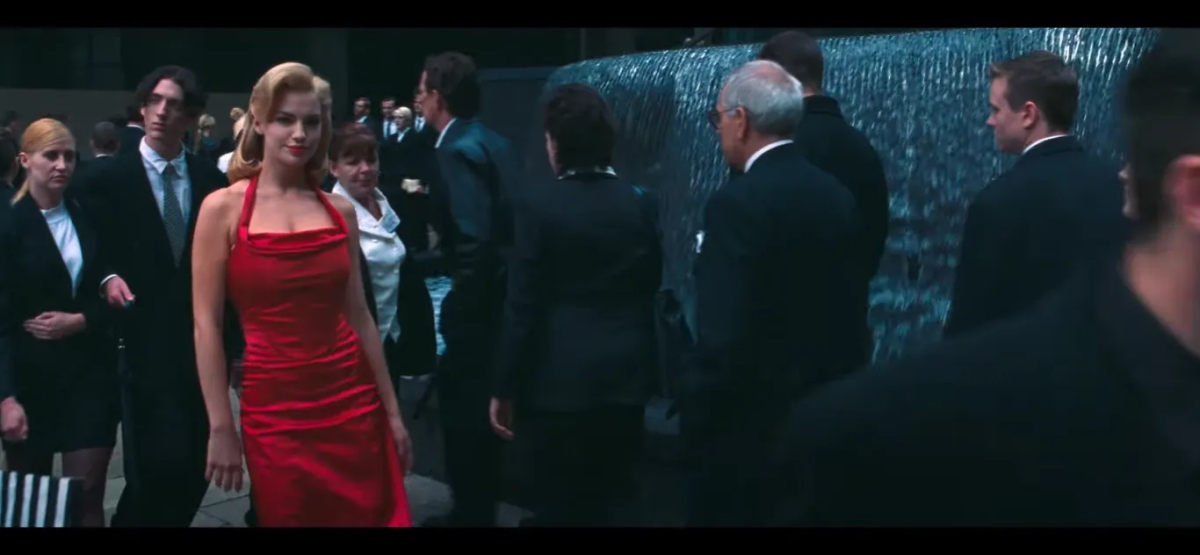
Suddenly, his attention is captured fully as he stops listening to Morpheus’s speech and focuses elsewhere. This distraction is not of danger, but by desire. A stunning blonde woman in a bright red dress walks past him on a city street. He turns to look at her and take in her beauty. A moment later, he’s staring down the barrel of a gun from an Agent of The Matrix.

This moment, while brief, is the Matrix in miniature form, a system that doesn’t just imprison the body, but hijacks the mind as well. In this scene, the Wachowski Brothers, who directed the Matrix film series, deliberate show the audience how distraction can be deadly, how perception can be manipulated, and how even the most liberated minds are vulnerable to illusion even after escaping from the simulated word of The Matrix. Over two decades later, this scene resonates more than ever as we live in a blurred world now of reality and simulation and of seemingly endless distractions like the lady in the red dress.

Let’s walk through how the scene unfolds similarly to how Neo and Morpheus experience the simulation themselves. Neo and Morpheus are in what appears to be a peaceful, clean city environment with sun-drenched streets, people in business attire moving in orderly fashion of different occupations and livelihoods. It’s not the gritty or green-tinted world Neo has just escaped from. Everything here is vibrant, bright, almost too perfect and calm. There’s a catch to it but we don’t know what it is yet as the audience.

Morpheus explains to Neo, “This isn’t the real world. It’s a computer-generated dreamworld built to keep us under control.” They’re inside a training program that mimics the Matrix, but this version is safe and controlled with seemingly no threats like what lurk inside the Matrix. As they walk, Morpheus encourages Neo to stay alert and keep up with him. However, Neo’s attention suddenly drifts elsewhere. A tall, blonde, and slightly smirking woman in a red dress glide past him, a stark contrast to the grayscale suits and muted tones of the crowd. The camera follows Neo’s gaze and not Morpheus’ words. Just as Neo turns around to look at her again, Morpheus interrupts: “Were you listening to me, Neo, or were you looking at the woman in the red dress?”

Neo turns again and instead of the woman, an Agent from the Matrix stands there with a gun to his head. The simulation freezes. Morpheus smiles. “Look again.” This is Neo’s wake-up call after he flinches from the sight of the Agent’s gun in his face. Neo is shaken as at any time in the Matrix, any of those ‘people’ are enslaved by the Matrix can turn into an Agent who is looking to prevent others from being freed from their enslavement by Neo, Morpheus and his crew. In The Matrix, distractions can be deadly because anyone can be an Agent and turn into one at any time. Neo learns his lesson and Morpheus instructs Neo about the real danger of going back into the Matrix, but they have a mission to free those from a reality that is not real, whatever the cost may be.

At its core, the Lady in the Red Dress scene isn’t just about Neo getting distracted having not been accustomed to the unique threat of an Agent. It’s about how the Matrix and by extension, any system of contro uses desire, beauty, and sensory overload to mask its true threat.

The woman in red is not a glitch, nor an accident of the simulation. She is designed by Morpheus’s crew to test Neo’s ability to focus and to challenge his awareness in an environment that constantly floods the senses, a virtual simulation that is meant to feel real but isn’t real. Morpheus isn’t just teaching Neo about the Matrix’s mechanics but also, he’s teaching him about vulnerability. The greatest danger isn’t always visible or known in the Matrix. Often, it’s hidden behind the things we want most or desire to have the most.

The red dress is more than a splash of color on a woman who is simulated to be a distraction. It’s a symbol in the overall movie of temptation, distraction, and the human tendency to follow what pleases us, rather than what protects us, even if it will end up hurting us later. In mythology, this kind of idea of ill-fated temptation appears often: sirens luring sailors to their doom in ‘Odysseus’, the forbidden fruit offered to Adam and Eve in Eden from the Old Testament, each of these illusions are designed to distract heroes from their quests or to lead to the fall of man and woman.

In this scene, the woman in the red dress is a test, one for which Neo fails, momentarily, and I think a lot of us would fail like he did with the distractions that are constantly thrown at us each day. His eyes are drawn away from his mentor, away from the lesson he is teaching, and toward something that feels more real than the truth. The result of his ill-fated choice? Instant danger and his potential demise if he were to make the same mistake again.

The brilliance of this scene lies in how it’s staged visually and shot from Neo’s perspective: everyone is dressed in grayscale, forming a camouflage of conformity and ordinariness. The woman is the only thing that stands out to Neo and the audience. She breaks the pattern of what we see and thus, attracts attention and an extra look. That’s what makes her the perfect distraction and allegory for ill-fated temptation, and that’s what makes this scene timeless.

Fast forward to today’s world where distraction has become the default mode for many of us. Our attention is fragmented by design, engineered by algorithms, applications, increasingly ‘real’ virtual and simulated realities, and seemingly endless digital stimuli, for which has dramatically shortened our attention spans. The modern “Matrix” isn’t an actual simulation in our brains, at least not yet as I write this, but it’s a network of more and more screens, news feeds, constant notifications, and seductive content. It’s the all-knowing algorithm pushing what it knows will make you pause mid-scroll and continue to feed your dopamine receptors.

Every time you find yourself watching a video you didn’t intend to watch, reacting to an outrage post on a political or social issue, comparing your life to curated influencer perfection on social media, or buying something new because it popped up at just the right time in your news feed, that’s the ‘red dress’ in action. While you’re watching the distraction, whatever kind it may be, something else is happening in the background of our lives: real threats are forming that pose real danger to us. Climate change. Political instability. Ongoing wars. Mental health crises. Surveillance capitalism. Social isolation. Economic inequality. Things that are far more dangerous and impactful than seeing ‘a lady in red’. Like Neo, we rarely see ‘the Agent’ or the real threats coming at us on the horizon.

In The Matrix, Morpheus teaches Neo that true liberation begins with awareness, not just of the system, but of how the system manipulates us and our desires. The Lady in the Red Dress is a metaphor for all the ways we’re trained to look away, to not pay attention, to surrender to the pleasure of the moment rather than focus on the issues of the present and the future. In 2025, this scene is more relevant than ever to our real world. It reminds us that to stay aware, engaged, and vigilant in a constantly distracted world is a small yet meaningful act of rebellion.

The focus and impact that you give to the world around you rather than cheap simulated or virtual distractions is actual power. Being able to have greater perception and awareness is everything these days and will allow you to help other people do the same. The next time something flashy, tempting, or beautifully packaged grabs your attention, you should ask yourself: “Am I listening, or was I looking at ‘the woman in the red dress’?”

The World Will Humble You

“What you believe you deserve out of life is often out of your control at the end of the day.”

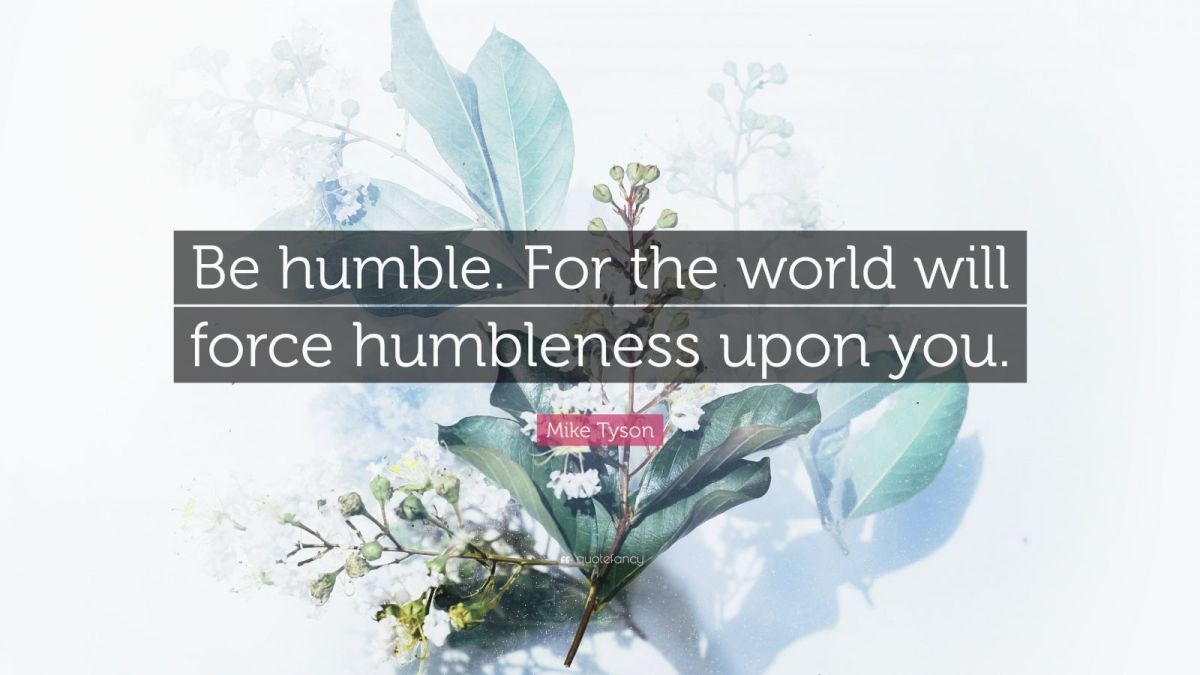
What you or I want from the world will be different from what the world will give to us. You must understand that the world will humble you in terms of your expectations versus what you will get. A key part of our lives is managing the difference between what we get against what we expect. It is important to keep your own beliefs in check because the world will test them continually and often turn them on their head. What you believe you deserve out of life is often out of your control at the end of the day.

The world will see fit to humble you when it comes to the outcomes we get when compared to what we earn and are able to get based on our hard work and effort. In a perfect world, the fruits of our labor would earn the same kind of return but often, that is not the case and sometimes hard work can be punished rather than rewarded. We have our expectations of the world around us, and the world often has different expectations from those that we expect from it. We must keep trying, to keep working, and to put our best foot forward in our individual efforts but must also understand that what we get back for those efforts may fall short of our own expectations.

Humbling oneself in the face of adversity or a negative result does not come naturally but is part of our maturation process. There is not much we can do but to try again or to move on to another opportunity. Failure is just a part of being human and the better we can handle it and be humble in a bad outcome, the better off you will be in the long run. Instead of being bitter, developing an inconsequential grudge, or blaming yourself or the other party without coming to grips with the fact that what’s done is done, you just must be willing to move on and grow from the failure itself.

We distinctly desire to avoid failure or setbacks and to think that they can’t happen to us, but they can, and they will. How we react to these failures and how we move forward will tell us more about ourselves than the initial failure itself. I would say that it does get easier as you get older as you get more used to the feeling of failure or setbacks and are able to bounce back quicker from them. You must have a thick skin about it, and I think that our age plays an important factor in being able to absorb the blow of failure or a setback without letting it derail you for a long time.

To have your ego be humbled by what the world gives you in return in it of itself is a victory. One’s ego can grow out of control when the world doesn’t humble you or push back on you in any way. When you let your own self-confidence or ego get out of control, you’re more likely to develop megalomaniac behaviors as a result. I find that it is a good thing when the world humbles you because without that happening, you tend to isolate yourself from others’ who have had it more difficult than you and tend to believe everything you do is the best thing ever or without any critique or issue.

Life is not meant to be failure-free or error-free. We are all human and thus, we will falter, make mistakes, and let our own ego get in the way. The key test is if we can push through these setbacks and failures to chart a new course or to try again if we believe enough in what we are trying to accomplish. Perhaps we did not work hard enough, study enough, use our full abilities, or sometimes it just wasn’t meant to be. There is no use fighting against an outcome that is out of our own control.

Sometimes, life has other plans for us, and it just wasn’t in the cards for us in the result we expected. You must take it in and decide how to best move forward. I find that there is nothing wrong with trying again if you believe in your own abilities enough where you want to re-try something by doubling your efforts. If you tried it once and you don’t want to do it again after failure, I don’t think that there is any shame in that either if it doesn’t appeal to you enough. Just because you failed at one thing and the world made it clear that you aren’t ready to move on with it now, doesn’t mean that is a final verdict on you or your capacity to do better or to get to where you want to be.

At the end of the day, there is nothing wrong with being humbled and to keeping your ego in check. If it wasn’t meant to be, it wasn’t meant to be. There is neither no harm in trying again nor is there any harm in moving on to a new goal or objective you have in your life. One’s ego can run rampant without any kind of pushback or critique, and you don’t want to end up in that place. Failure is the best teacher, and it should not reflect on your whole self as a person but rather on your skill set or aptitude that could use some improvement. Yes, it hurts, and it can feel like an absolute rejection of yourself as a human being, but I want you to know that it is not the case.

It is better to have tried and failed and sometimes to have done so a few times than not to have tried or failed at all. You may eventually succeed, or you may never end up succeeding at all, but the point is that you allow the world to humble you and your ego, without letting it derail you from keeping at it, trying again, or moving on to try in a different area of life that you believe you would be good at. It is natural to fail and to pretend otherwise is doing yourself and those around you a disservice. Being humble and accepting your limitations is part of being a human and hope that even if you fail, you dust yourself off, get back out there, and keep trying your best.

Expectations vs. Reality

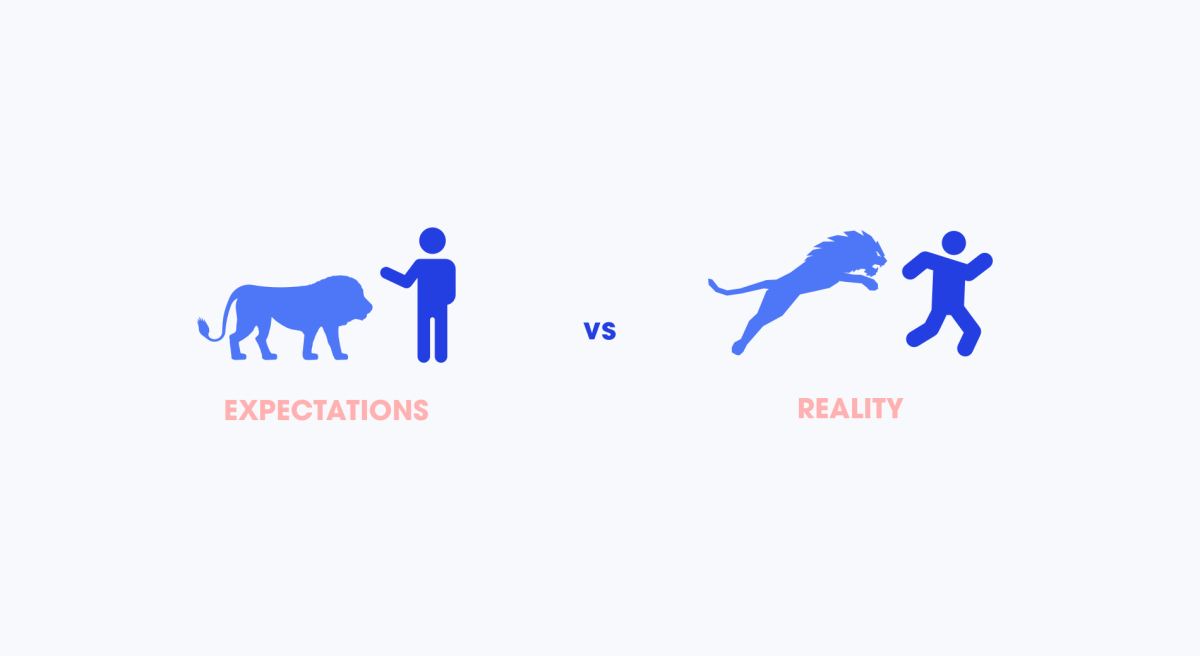
An important part of maturing and becoming a fully functional adult is to keep your expectations in check and to manage them as to not conflict with what the reality of the situation is. Keeping your expectations in check is difficult to do but it is necessary in order to not let an oversized ego, or arrogance, or selfishness keep you from becoming the person you should be. One has to always be prepared for reality to not line up with our initial expectations. You can never really be fully certain of how things in life are going to shape up to be. A true sign of maturity is wishing for the best but understanding that you could be in for disappointment and setbacks even when you think that everything can turn out fine.

The word ‘expectations’ can be synonymous with being ‘unrealistic’ because you are hoping for things to be better than average and to be better than you hoped they could be. Often times, things are about the same as you would expect or can even be worse if you set your expectations too high. Keeping your expectations in check will also to help keep both your emotions and feelings in check as well. There are a number of things one can do in order to measure expectations enough to keep them in line with reality. They include focusing on the present, cultivating patience, and taking the good with the bad. These three keys alone will help anybody’s reality win out over their expectations. While having expectations is not necessarily a bad thing, having too many expectations that are unrealistic or impede your ongoing hard work and efforts will make the reality of that situation worse. Keeping your expectations realistic is something we all must do as adults.

Focusing on the Present: Controlling what we can and not worrying about the things outside of our control goes a long way towards keeping our reality in line with what our expectations should be. Doting too much on the future without having a plan for today is a recipe for disaster in terms of not being able to meet your expectations. It is good to set goals and to set your sights high, but the efforts and the work must be there as well. If you are not working on your goals in the present, you can expect your reality to look differently in the future if you were not actively working towards achieving them in the here and now.

Day-to-day expectations that are measurable and quantifiable are more easily met rather than those that are months or even years away. You cannot be worried or distracted about what could happen three months from now, but you should rather focus on what you are doing now to increase your happiness and satisfaction. You can only control your actions and your behaviors, which will save you a lot of angst and anxiety when you focus on what can be controlled and to focus less on what is out of your control especially for what is still away on the horizon of your life for which you are totally unsure of what is to come. The older I get, the more I realize it is good to plan for the long-term, but to expect things to change the further away from your current present reality are. Focusing on things on a day-to-day basis is part of a recipe for fulfilled expectations and kept promises.

Cultivating Patience and Perspective: Being able to understand that life has both its good and bad events, and you never know how things are really going to shake out is a true sign of keeping your expectations in check. We tend to think a new city, a new job, a new house, more money will fulfill us but sometimes, our expectations can fall short because we set them so high. We sometimes do the opposite in terms of cooking a meal for family members, volunteering at a homeless shelter, cleaning the house, or buying a gym membership in that we think it will not be as fun or fulfilling in reality but those kind of activities end up fulfilling us more than the former. Obviously, we set our expectations high or low based on our personal histories, personal biases, and our own desires and goals.

However, regardless of what we think will be awesome or what we think will be crummy can balance out more if we are able to cultivate patience regarding how any of our life events will shape out. You may not be satisfied with something on day one but then really love it by day 100. When it comes to expectations vs. reality, you have to show patience regarding both because what you expect to be good can end up being bad and what you expect to be bad can really end up being good.

Having perspective on what is going on with our lives can help us as well because our reality may not be what we expect but we can express gratitude for what good things we have to balance out what disappointments or ills that have befallen us previously. If you can count your personal blessings each day, you will be happier with your reality and you can better measure your expectations. Knowing that your perspective on life is totally unique compared to everyone else’s is comforting because your reality is going to be different in many ways from your fellow family members, friends, or work colleagues.

What you are going through cannot be adequately compared to other people because their reality and their expectations are never going to be the same. You can only be patient, be grateful, and realize that you should put your life in perspective as much as you can to remember that life has its ups and downs, and you should never get too low or too high because of it. Everyone has their good days and their bad days, and you never really know what people are going through because everyone has a different reality and different expectations of who they are, what they expect, and who they hope to be.

Taking the Good with the Bad: As I mentioned earlier, reality can bite sometimes especially when your expectations were sky high so anything in life is not going to be as rosy as you first imagined it. Even if something awesome happens in your life and you feel like you’re walking on cloud nine, you can be sure that there will be some small annoyances that come with it. Nothing is ever 100% good, and nothing is ever 100% bad. Similar to walking on ‘Cloud Nine’, you could be ‘down in the dumps’, but realize that your pain is temporary, and nothing lasts forever. The highest high and lowest low will pass and most of life is somewhere in the middle for which you make the best of and strive to meet expectations that only you can hold yourself accountable to. You can’t hold others accountable for standards that they can’t reach as much as you want them to for your own peace of mind. The world does not work that way. You have to hold yourself accountable and be that positive example for others.

You are always in a constant battle of Reality vs. Expectations but in this case, there is not going to be a clear winner. Sometimes, life will exceed expectations, other times, life will fall short of your expectations. The key thing to keep in mind is how do you react to both successes and setbacks in a mature and clearheaded way. You can get discouraged or be ecstatic, but you have to remember that life is about having patience, keeping it all in perspective, taking the good with the bad, and always focusing on the present and the here and now over the past and the future. If you can do these things, regardless of when reality wins or when expectations win out, you will be the winner as well because you will have cultivated the emotions, habits, and overall maturity needed to make it through both life’s ups and its downs.