

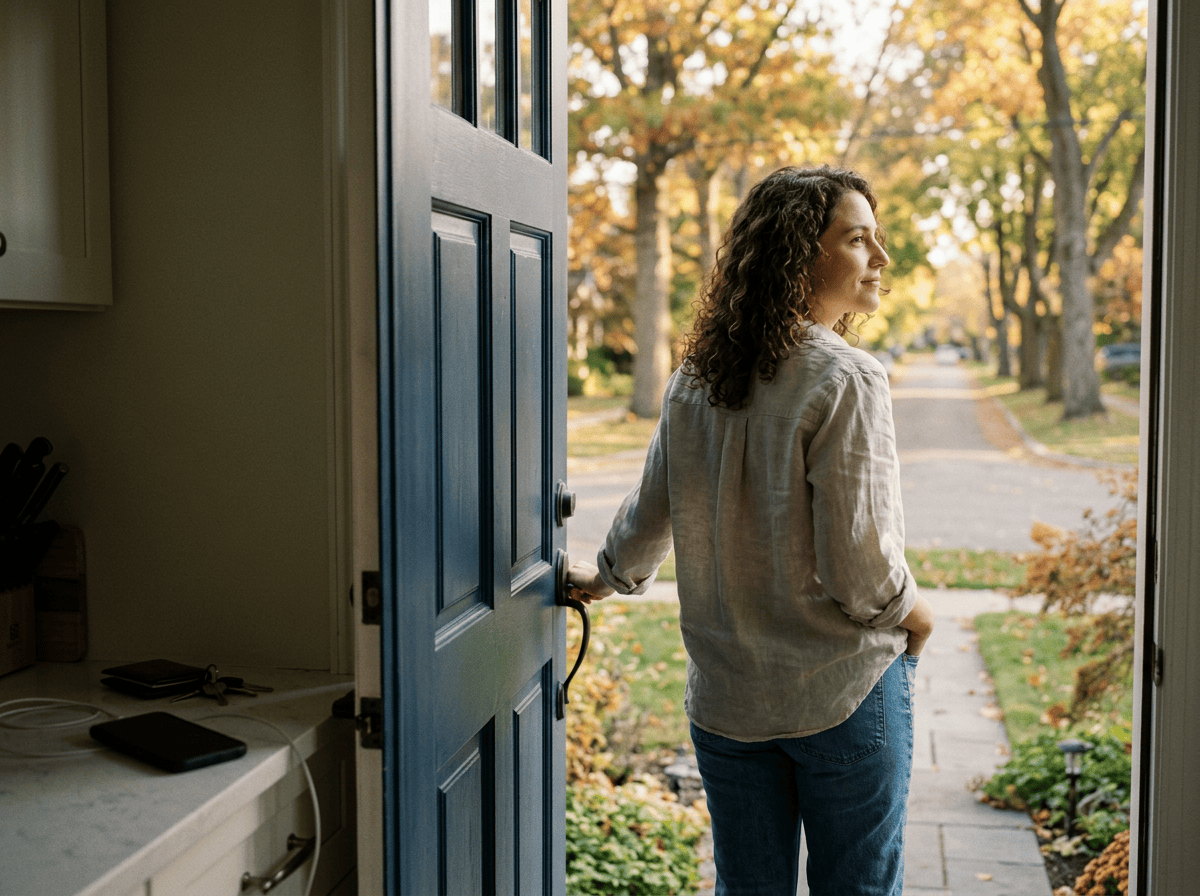
When You Can, Leave The Phone At Home

“However, the result of that ease and efficiency given to us by the modern phone is also a curse where we are never out of reach or always expected to be ‘on’. Constant availability, being addicted to notifications that come up, and having our attention span scattered causes us to sometimes lose sight of what’s important to focus on.”

Having your phone on you all the time, like many of us do these days, seems like both a blessing and a curse. It’s easier now than ever to do everything you could want from your phone whether it’s call friends or family, order groceries or items for your home, answer work or personal emails and texts, or just play Candy Crush and other games. That is a blessing in the sense that you can get a lot more done with one mobile phone now in a few minutes that it used to take a day or more to do with different means.

However, the result of that ease and efficiency given to us by the modern phone is also a curse where we are never out of reach or always expected to be ‘on’. Constant availability, being addicted to notifications that come up, and having our attention span scattered causes us to sometimes lose sight of what’s important to focus on.

This kind of constant dependence that we have on our phones in 2026 became apparent to me during a recent live comedy show featuring Jerry Seinfeld. Each guest was asked to voluntarily have their phone metaphorically locked away or at least stored in a plastic Yondr pouch that you can’t open without someone else helping you with the magnetic lock opener. You can still take your phone with you, but you don’t get the magnetic lock opener, and it’s stored in a pouch that you can either carry or put around your neck. Comedians obviously don’t want their live act or ‘bits’ to be recorded and spread around for free on YouTube or another platform and so it is a phone-free zone for at least 1-2 hours.

Since there is only so much observational comedy that Jerry Seinfeld can do without repeating his act repeatedly, the phone-free zone is key, so he doesn’t have any leaks of his new and older materials to audiences who don’t appreciate his legendary style of humor. Similar to live comedy shows, more places are becoming phone-free zones like certain bars, restaurants, and even nightclubs. This idea seems to have gained traction in the last year or two but especially now in 2026 as people are beginning to realize just how much we check out phones each day and how it takes away from our ability to do much else.

Why practice guitar when you can doomscroll your phone? Why buy a book when you can just use Audible? Why go to the grocery store when you can just order through DoorDash? The phone just seems to be crowding out everything else in modern life and I, for one, am glad that there’s some push back. While comedians like Seinfeld are just looking to preserve the act, putting the phone away for an hour or two really helps preserve one’s piece of mind as a side effect. You feel lighter once that attendant snaps your Yondr pouch shut with no means for you to get it open.

While many people succumbed to leave Jerry Seinfeld’s recent comedy show I was at to go out into the lobby to check their phone and satiate the burning desire to stare at the glowing screen of temptation, I felt much relieved instead. Leaving your phone off, in a pouch, or just at home is a real weight off your proverbial shoulders and I think this trend is only going to get more popular in the future. When you consider some schools banning phones in the classroom and certain restrictions at the office about which applications your phone can access, there is a balance that needs to be struck in terms of reachability vs. anonymity.

I believe it’s healthy to take a break from being with your phone all the time. You should leave it in the other room when you sleep, turn it off when you are with friends or family, and leave it at home when you go for a hike, walk, or run. I guarantee you’ll feel better instantly though the withdrawal can hit hard like it did for my fellow Seinfeld fans at the comedy show. You start to make eye contact with people, be more outwardly social and engaging, and feel better about the world when you see it through your eyes instead of through your screen.

Despite being more connected than ever, we are still more isolated from each other as ever before. The phone is to blame for both these factors but while the phone can never go away completely or should never suck up all our attention, we should be more conscientious of where and when to use the phone. If there’s a phone-free zone or event, leave it at home and I’m sure you won’t miss it. If there’s an emergency that comes up, I’m sure there will be ways for you to get in touch with the outside world without your phone too. It doesn’t have to be a long time away from the phone but putting it away or leaving it home for at least 1-2 hours a day is a healthy balance.

Throughout 99% of recorded human history, we did just fine in not having a mobile device on us 24 / 7 years ago and I think we were much less anxious and maybe even happier because of that. We will never go back to the pre-mobile phone days, but we can work to reduce the bandwidth that it takes up in our lives every day. Use your best judgment, enjoy some phone-free events that pop up, and remember you did fine without a mobile device earlier in life and you’ll be fine without it for a few hours if you decide to leave it at home or in a Yondr pouch.

The End of Daily Social Interactions?

“One consequence of the pandemic that has accelerated in terms of being an option for our lives is how the easiness and convenience of going a day or more without seeing or speaking to another human being.”

One consequence of the pandemic that has accelerated in terms of being an option for our lives is how the easiness and convenience of going a day or more without seeing or speaking to another human being. Obviously, if you’re counting virtual meetings on Zoom or Microsoft Teams, you’re interacting with plenty of people on a daily basis but to me, it’s not the same and shouldn’t be considered a real replacement for face-to-face interactions. Whereas ten or twenty years ago, you would need to leave the house or apartment to get pretty much anything done, you now have the chance to do everything from the comfort of your own domicile, for better or for worse.

If you’re an introvert, you may be welcoming this kind of societal shift, but I do worry how we are sacrificing convenience for social awareness and better interpersonal relations. Even if you consider yourself pretty comfortable on your own, I don’t think it’s necessarily healthy to be cooped up all the time even in a pandemic. Of course, we have to be socially distant, stay home according to what guidelines may be in place, and keep washing our hands but that shouldn’t prevent us from saying ‘hello’ to a stranger or asking a cashier that’s not a robot or automated computer the common courtesy of ‘how you are doing?’

Right now, it’s acceptable to minimize human to human contact especially if you’re elderly, vulnerable, or with a preexisting condition but the rest of us should still make time to interact with someone outside of our ‘COVID bubble’ even if it’s in a limited way. I do believe that companies have made it way too easy for us to subsidize our usual running of errands by keeping us at home. While it does help people, who can’t leave due to concerns for their health, I think it does a disservice in making things a little too convenient and then perhaps keeping our reliance on applications, e-commerce, and delivery services to meet our every need.

Running errands to go to the grocery store or to pick up stamps or to pick up medical prescriptions may end up going the way of the Dodo bird and while some of us may be holdouts even after the pandemic, this is a huge societal shift that will affect our way to socialize and build shared communities with other people. The 2020s may have us needing to go out of our way and building our willpower up in terms of seeking out social connections rather than them happening organically. In order to meet new people, it may not happen as much if your university is online or you are a remote worker, you’re going to have to put it upon yourself to find a way to meet people again which will take some creativity.

The good news is that clubs, organizations, sports teams, and language groups aren’t going to die out even if some of them remain online in some capacity. You will have to seek out those groups that are similar to your hobbies and interests especially if you’re in a new city or a new country, but they are going to be out there, but you have to take the initiative to find those groups, attend those meetings, get involved, and also give back to that group when you can. Volunteering your time and effort in person will also be a boost to communities affected by the COVID-19 pandemic and even after it is finally over, if you find yourself isolated and needing to be social more, volunteering with others is a great way to do it and will be sorely needed due to economic and health needs that people will need help with.

What you need to avoid is getting too comfortable with the increasing automation of our society, which will make it harder to deal with anyone face to face, for better or worse. Even if you do leave the house, it’s becoming likelier that you’ll deal with an automated register at a convenience store or supermarket, an ATM at a bank, and with a touchscreen to order food. With just a smartphone alone, you can order groceries delivered to your door, get dry cleaning picked up for you, have prescriptions delivered, food for lunch and dinner, and also most consumer items with a conglomerate like Amazon or Alibaba. The eCommerce industry is set to grow exponentially in this young decade to suit consumer needs and with the rise of Internet of Things, your home will become more adjustable to your comforts too making it harder to leave your place.

Whether it is UberEats, HelloFresh, Amazon’s prescription service (coming soon), online banking, or Zoom for teleconferencing, the pandemic has accelerated wide shifts in society and one that becomes more evident each day is how much easier it is getting to stay at home 24 / 7. Again, after the pandemic, this may let up a bit as people socialize again but the automation of jobs will continue, remote working will become the norm, and online education will become cheaper and of better quality to suit those who want to be virtual for at least part of their higher learning.

I don’t encourage people to become hermits, recluses, or to avoid human contact with anyone who is not a family member or a friend even if it’s during a pandemic with safety precautions in mind. However, the societal shift to convenience at any cost and becoming an island to oneself does have a cost. While you may love your dog Fido or your cat Fifi, they are not substituting for other people. With increased convenience comes a cost like anything else and in this case, it’s our ability to socialize and be around others.

In a post-COVID world where automation, eCommerce, and the Internet of Things will make it harder to leave your home, you are going to need to be more proactive in seeking out activities, events, and groups where you can be free to meet new people and have new friends. We will all be socially awkward after the pandemic but at least we’ll be social again and I promise it will be worth the effort.

While you’re not going to be friends with most of the people we meet, it is important to be open to the possibility and to put yourself out there again. Staying at home with your delivered food, groceries, and prescriptions may be really appealing and easy to get used to but I promise after a while, you’ll miss the feeling of going to a physical store or a pharmacy and just being in a public place again and away from your screen(s). That’s a unique feeling that I hope never truly goes away because our daily interactions, somewhat mundane but potentially unique too, can help make our life that much fuller and richer.