Anatomy of a Scene – The Letter

“For what it’s worth, it’s never too late, or in my case too early, to be whoever you want to be. There’s no time limit, start whenever you want. You can change or stay the same. There are no rules to this thing. You can make the best or worst of it, and I hope you make the best of it. I hope you see things that startle you. I hope you feel things you never felt before. I hope you meet people with a different point of view. I hope you live a life you are proud of. If you find that you’re not, I hope you have the strength to start all over again.”

-The Curious Case of Benjamin Button

Sometimes, you can watch an entire movie and not feel moved by it. Whether it’s a stirring of your emotions or being introspective about your feelings, few movies will touch the viewer personally. Luckily, The Curious Case of Benjamin Button is an exception to the rule, especially when it comes to the scene where the main character, Benjamin Button, writes a letter to his daughter, whom he barely knew in life.
With her mother on her death bed, the daughter finally opens and retrieves many letters from a father whom she barely knew and is startled to have a keepsake from someone who was rarely in her life.

Benjamin Button has a unique condition where instead of getting older like he the rest of us as he goes through life, the opposite happens to him and he gets younger and younger allowing him to experience life backwards. Still, despite this inconvenience he can live a full life and that is what this movie scene so special because he encourages his daughter to do the same. While he is not around to see her have her own adventures, he wants the best for her and wants to her to “live a life that she’s proud of.”

When we first are introduced to this scene, we see that Benjamin’s daughter realizes that he went to India and many other places years ago based on the kind of parchment that his letters are written on. There are many letters addressed to her from the time she was two years old and onward when he was not around to be with her. Despite the sadness and disappointed associated with that, she is relieved that he was writing to her and thought of her even when he was far away. For him to think of her while writing ‘the letter’ in such faraway places show that despite his curious condition, he loved her dearly and wanted to express that even after he passed away.

This movie scene is brilliant because it shows Benjamin travelling around India while narrating to his daughter that he wants her to ‘be whoever you want to be’ whether that’s a traveler or a janitor or a toll booth manager. You can make the ‘best or the worst of it’ as he states to her depending on your perspective on life, but he wants her to make the ‘best of it’ as he did. A father imparting this important message on to his daughter that it’s okay to ‘start over’ again in life is important for her to hear but also for the audience to understand.

If you find that you are not ‘living a life that you’re proud of’, then there is nothing wrong with changing it in order to finally be proud of. While he did a lot of travelling, there is still the humdrum of daily life involved such as cleaning your clothes, talking with the locals, and even drinking from a water hose. “There are no rules to this thing.” Sometimes, we tend to think of life as a narrow path when really there are going to be numerous zigs or zags, and when you become an adult, you have to make the rules for how you want to live, what is important to you, and what to care about.

“I hope you see things that startle you, I hope you feel things that you’ve never felt before…” This part of the scene is brilliant in showing the beauty of Benjamin’s travels and how he would sleep, brush his teeth, and move around by motorbike through beautiful mountain passes and rivers. Benjamin wanted his daughter to experience the world and for her to enjoy what it had to offer in her own life. Part of doing just that is adapting to the places you visit and to seek out the adventures yourself in order to make the most of it.

“I hope you meet people with a different point of view…” Benjamin encourages his daughter also to get to know other people, whether from another city or another country, and how it’s necessary to be open to them and to be kind. The locals help Benjamin fix his motorbike as he drives through their village on one of his journeys.
“I hope you have the strength to start all over again.” Benjamin’s last words to his daughter ask of her to be strong in not being afraid to change your life or decide that you want to live it a different way than before. The mother imparts at the end of the scene that “he had been gone a long time…”

Unfortunately, this scene shows both the beauty and tragedy of life in that sometimes, we can’t be there for the people we love but are with them in spirit. Benjamin could not be with his daughter in life but he wished that he had been there to wish her a happy birthday, to kiss her goodnight, to take her to her first day of school, to teach her to play piano, to chase away boys, and to be her Father. “Nothing he ever did would replace that.” Even after all the adventures that Benjamin had, the most important role he ever had was being her father and he wanted to make sure she knew that by leaving her with his diary.

Even in his absence, this scene shows us the power of a father’s love for his daughter and how he wanted the best for her and to live a life that would yield happiness and fulfillment for her. In one minute, this scene in ‘The Curious Case of Benjamin Button’ has more of an emotional impact than many movies do in more than two hours. Breaking down this narrative and the beautiful cinematography and filmmaking of travelling at its most challenging yet most rewarding was quite an achievement by the film’s director and crew. Not only would this movie scene have an impact on Benjamin’s daughter by also on the rest of us watching in the movie theater or at home. If you have a chance, watch this scene to appreciate the scenery, the message, and the power of love between a father and a daughter. A powerful movie scene worth a watch and a couple of re-watches as well.

‘The Revenant’ – Film Review and Analysis

What happens when you push a man to his utmost limit? What occurs when you take everything from him including his wife and child? At the point of both physical and mental exhaustion, what carries the man forward to keep on fighting and to keep on living? Few films really probe these questions related to the power of the human spirit as realistically as ‘The Revenant.’ An excellent and unique film that was propelled to success, both commercially and critically because of the acting brilliance of Leonardo DiCaprio and through the special direction of Alejandro González Iñárritu.

‘The Revenant’ is a 2015 film that is both a sprawling epic and an intimate biography, which covers a time in American history where the West was not yet settled, and both the elements and the native population could cause a settler or a trader to lose their lives all too quickly. The film is also a western in that it depicts the rough and tumble life of a frontiersman who was at the whim of not only nature but also hostile animals and native tribes who were lurking just behind the shadows of the mountains and the forestry that surrounded them.

Hugh Glass (portrayed by Leonardo DiCaprio) is one such frontiersman who was a real-life person skilled at being a fur trapper, explorer, and a hunter. While his story was embellished for ‘The Revenant’, the legend itself while it may not have happened in all of its audacity still makes for a great movie adaptation. The legend surrounding Mr. Glass involves him being left for dead after he was abandoned by the fur trappers, he was assisting in their quest to participate in the burgeoning fur trade in the Far West of Montana, the Dakotas, and Nebraska.

After a vicious attack by a grizzly bear while out hunting for food and provisions for General William Ashley’s expedition, Hugh Glass was essentially left for dead by those men who had abandoned him even though he was still alive. Glass had killed the grizzly bear who had attacked him but was essentially rendered immobile by the attack and could not talk or walk on his own two feet for weeks. In the historical accounts, Hugh Glass was able to somehow heal himself enough to crawl, stumble, and walk over 200 miles (320 kilometers) to Fort Kiowa, South Dakota to survive.

In the meantime, he had survived attacks from the native tribes, living in conditions of winter weather and brutal cold, and avoiding potential hazards such as icy tundra, treacherous mountains, and other elements. The one thing about both the historical portrayal of Hugh Glass’s story and that of ‘The Revenant’ was how he thrived in those brutal environments given his history as an explorer and a fur trapper. If you are able to live at the edge of civilization and make a living for yourself in doing so, you should never be counted out when it comes to surviving when all hell breaks loose.

Compared to the historical legend, Hugh Glass, thanks to the brilliant acting of Leonardo DiCaprio is given a more substantive background that makes him a more relatable figure. In the two and a half hours of the film, Glass is portrayed also as a family man just trying to make his way in the world by making himself useful to both the fur trappers and the U.S. Army personnel who have come to take territory for themselves and make themselves rich in the unforgiving North American wilderness. In this cutthroat environment, there are no room for careless mistakes and the viewer will see in the film just how deadly each day can be. If there is any wisdom that Hugh wishes to impart on his family is that he wants to give them the tools for survival even if that means his own demise.

Glass is not a perfect protagonist and it is clear from the beginning of the film that he is out for himself and his family alone as he does not let anyone, or anything come between him and his son Hawk. His deceased wife was a Pawnee Indian and his son, Hawk, is half-Pawnee. After the death of his wife, Hugh Glass is extremely protective of his son, Hawk, because he knows that the men, he is traveling with do not see him as an equal because of his Pawnee background. Glass is committed to protecting his son because that is all he has left to live for.

While respectful towards the Pawnee, Glass and the other fur traders are fearful of the Arikara who are out to find their tribe chief’s abducted daughter, Powaqa, even though they didn’t take her. In order to survive, Glass has to defend himself and the other traders from the Arikara who are vicious in their hatred of anyone who has invaded their territory. After the fateful bear attack that severely wounds Glass, Hawk prevents the trappers from killing his father and they move on without him leaving John Fitzgerald and Hawk to carry him back to the Fort where he can get medical attention.

Unfortunately, Fitzgerald is a sociopath only concerned about his own survival and terrified of the Arikara attacking again. Fitzgerald kills Hawk as Glass watches in agony because Fitzgerald was selfish in his desire to survive and leave Hugh to die. Another man, Bridger, leaves Glass to die as well and they take his gun and all of his provisions leaving him defenseless against the brutal elements. While Bridger is complicit, it is Fitzgerald who draws the ire and contempt from Glass in his quest for vengeance.

Despite being left for dead, Hugh Glass is hellbent on getting vengeance for the death of his son, Hawk, and wanted to get revenge on John Fitzgerald for killing his son, taking his provisions, and leaving him to die in the wilderness. Through his knowledge as a fur trapper, his ability to track both people and animals, Hugh was able to survive the treacherous winter conditions, heal himself and his wounds, and able to eat buffalo and horse meat to survive. So much was Glass’s desire for vengeance that he was able to travel the 200 miles to get to the Fort to seek treatment for his wounds and gather up the strength to set himself on the trail of John Fitzgerald. In the case of Hugh Glass, an eye for an eye is warranted when his whole life (his wife and his son) have been taken from him.

While the real-life story of Hugh Glass is up for debate, ‘The Revenant’ draws the audience in through its stunning visuals, powerful acting by actors Leonardo DiCaprio and Tom Hardy and the visionary directing by Iñárritu whose tracking shots from the opening battle to the bear attack scene to the final fight scene between Fitzgerald and Glass will leave the viewer breathless. This is a pure survivalist movie of man against man and nature but it also revolves around an emotional core of someone who is trying to do his best to sustain himself and his son in harsh living conditions. The movie’s setting is strongly intertwined with a perilous time in American history where Native Americans, fur trappers, French explorers, and even the U.S. army were fighting to the death for control of lucrative trades and future security in the untamed yet wild territory of the Northwest region.

DiCaprio and Iñárritu made ‘The Revenant’ in mind for its unabashed portrayal of both the beauty and the brutality of the natural environment. It is a movie that highlights how precious and fragile our climate is and how men can negatively affect it through their desire for greed and power. ‘The Revenant’ is as much as a morality tale as it is a tale of the utility of revenge. Two men, one whose world has been ripped apart due to the loss of his wife and son, and another man who fears losing his money, his fur pelts, and his life to Arikara attack are brought together in a struggle of good against evil. The film poses the question of is vengeance worth it? and how can justice be served in a world that is based on survival and not codes of morality or law? Arguably, one of the best films of 2015, ‘The Revenant’ was one of the best films of this decade and deserves a viewing.

Led by an Academy award winning director (Alejandro Gonzalez Iñárritu) and starring an Academy award winning actor (Leonardo DiCaprio), ‘The Revenant’ is a jaw-dropping and powerful film that will stay with you after the credits roll. The film’s themes are extremely relevant in terms of its varied focus on family, revenge, survival, and how to seek justice in a lawless environment. More than anything, it shows the fragility of civilization and how important it is to be able to put yourself in difficult and challenging situations to show what you are made of. Hugh Glass was not a perfect man but he knew what it took to survive against all odds and seek justice against those who had wronged him and his family even if it meant certain death.

‘Good Will Hunting’ – Film Review and Analysis

What happens when you bring together two of the best actors of the modern age who meet at just the right time in their careers? The short answer is that you get some old-fashioned movie making magic. Both men have made their mark on Hollywood and this film that they carry together is one of the reasons for that happening. While a generation sets them apart, their commitment to the craft of acting shines through in this classic film that takes place in the city of Boston where I currently reside titled ‘Good Will Hunting.’

‘Good Will Hunting’, released in 1997, over twenty years ago is a film that I have gone back to again and again throughout the years since I grew up with it in a way. As I have gotten older, the themes of the film stick with me more and more. This film is a timeless piece that a lot of people, especially young men, can relate to. While it’s not a blockbuster and isn’t a mainstream favorite, it carries deep messages regarding relationships, dealing with the future, and learning to love and trust other people.

The two actors that I was referring to earlier are Robin Williams and Matt Damon. Both men are known for their more popular roles in movies like ‘Mrs. Doubtfire’ and ‘Good Morning, Vietnam for Mr. Williams and ‘The Bourne Trilogy’ movies and ‘The Departed’ for Mr. Damon. Unlike those other movies, I believe that this movie really shows off the talent of these two men and how they’re able to push each other in emotionally trying roles. On top of those two performances, Gus Van Sant is an excellent director who does a great job of filming this movie set in late 1990s Boston.

As if that weren’t enough, you have a great cast of supporting actors including Ben Affleck, Minnie Driver (has she been in any major movies since?), Stellan Skarsgard, and Casey Affleck of Manchester-by-the-Sea fame who really add depth and substance to this movie. These character-driven movies such as ‘Good Will Hunting’ are usually the hardest to make but if done right, they really stay with the viewer long after the film is over. They really capture different moods, emotions, and feelings and this one in particular captures the struggles inherent in being a brilliant mind in a troubled world.

The title of this film ‘Good Will Hunting’ is based off the name of its main character, Will Hunting (played by Matt Damon) a 20-year old, born and raised in South Boston. You would think from this description that he’s just a regular guy but Mr. Hunting was born with the innate gift of having genius level intellect. He has few possessions except for hundreds of books from Foucault to Shakespeare. He’s an avid book reader but has a specialty in solving advanced mathematical equations that few others in the world can figure out. You would think that this college-aged guy would be working on advanced mathematics at MIT or CalTech but he’s not an enrolled student there or anywhere for that matter.

Will Hunting has had a rough upbringing in that his parents abandoned him when he was a baby and he grew up in foster homes where his foster father abused him physically multiple times. Abandoned by those people who were supposed to love and cherish him, Will, for good reason has a fear of abandonment and does not trust other people. His social interactions are limited because of the abusive childhood he endured but he is happy with his group of three friends: Billy, Morgan, and his best friend Chuckie. While Will does not have many friends, he would do anything for his three neighborhood buddies who he grew up with and he literally considers them to be his family.

While Will’s friends are loyal, they are not the best influence on him and they can be crass, crude, and spend too much time drinking. The group’s antics lead Will into a fight against some neighborhood miscreants, which draws the attention of the local police. Will, acting out his aggression violently, ends up assaulting a police officer causing him to do mandatory community service and therapy sessions. Will, a janitor at the Massachusetts Institute of Technology, works after hours to help clean the bathrooms and empty the waste paper baskets. Unbeknownst to both students and professors alike, Will in his spare time has been going around solving advanced Math equations that the regular MIT graduate students can’t even begin to conceive a solution for. One night, Will is caught in the act as he gets caught doing an extremely difficult problem that no one else has solved yet. Professor Lambeau of the Mathematics department discovers Will solving this problem and calls after him to no avail but with a four-letter crude response from Mr. Hunting.

Professor Lambeau does Will a huge favor and gets him out of some serious jail time for assaulting the police officer. In exchange for his favor, Will has to sit and work with Professor Lambeau on advanced mathematics in a mutual exchange. Professor Lambeau is fascinated by Will’s brilliance but it appears to the audience that he cares more just about Will’s brain than who he is as a person. Professor Lambeau tries to get Will to open up to different psychiatrists but Will messes with all of them and doesn’t take his therapy sessions seriously. Lambeau, out of options, goes to an old friend from his college days at MIT, Sean Maguire (played by Robin Williams), who now teaches psychology at Bunker Hill Community College and is also a licensed therapist.

Despite a few sessions where Will is argumentative and closed off, Sean is able to break down Will’s defensive mechanisms partly by talking about his own rough upbringing. Sean was beat by his alcoholic father while he was a child. In an effort to protect his mother and little brother, Sean would endure the brunt of his father’s anger and vitriol. The two men bond over the fact that they have a high intellect, have both grown up in Boston, share a love of the Red Sox, have had rough upbringings, and can be a bit closed off from their loved ones.

Will is going through a transition period in his young life where he is starting to think about a future beyond just getting drunk with his buddies and hiding his talents from the world. He is also trying his best to form healthy relationships with not only his friends but in his love life too. Instead of endlessly pursuing casual one-night stands, Will finds a girl one night at a Harvard bar whom peaks his interest named Skylar (played by Minnie Driver). Despite them coming from very different family backgrounds as well as her being born into wealth, they share a love for learning and have the same sense of humor. Most important to Will in all of this courting is that she likes his friends and that means a lot to him since they have essentially been his family his whole life.

The problem that Will struggles with in terms of his relationships whether its romantic with Skylar or personal with Sean is that he can’t open up to them about his being abused as a child due to a mixture of shame, guilt, and anger. He turns his emotional pain outward and directs that anger at society, the past therapists, Professor Lambeau, and even at Will and Skylar. Will is self-conscious about his genius and is not sure he wants to have a prestigious office job or even to leave his home city of Boston. He says to his best friend, Chuckie, at one point that he doesn’t “feel like doing long division in a room for the rest of my life.”

However, what Will realizes is that he’s not the center of the world. With the help of Sean and Skylar, he learns eventually that while his life has been tragic, that should not prevent him from reaching his true potential and that he is literally “bound by nothing.” He’s a genius of great intellectual capacity who can change the world in a number of ways. Will has a great gift that a lot of people would kill to have including his best friend, Chuckie. As Chuckie puts to Will bluntly towards the end of the movie, “You’re sitting on a winning lottery ticket and you’re too chicken to cash in on it.” Chuckie tells Will that he’ll essentially be working construction until he retires which is fine because he doesn’t have Will has and that Will owes it not only to himself but to him and his other buddies to do more with his life.

Sean also is the father figure that Will never had and is able to give him tough life. Sean was also abused as a child and knows where Will is coming from. However, he has to learn how to put the past behind him and to not blame himself for what had happened because it simply wasn’t his fault. Will was an innocent child and can’t be blamed for such a horrific event. Will has to learn again how to be emotionally open and vulnerable with the people who care about him like Sean and Skylar. Will had lost the inability to love and be loved but it’s never too late to get that back.

The mentorship of Sean throughout the film helps to bring Will around and the time they share together in the therapy sessions make them true friends. Sean is able to tell Will that he is not so special in the fact that his life has been extraordinarily difficult. Sean, himself, fought in the Vietnam War as a young man and had his best friend there die in his arms. He also lost his wife, the one true love of his to a long battle with cancer years ago and hasn’t been able to become romantically involved with anyone since then. However, he implores Will to also see the beauty in life such as in the form of a woman who can ‘level you with her eyes’ and be your own angel.

There are also the wonders of the world that Will can experience such as how it smells in the Sistine Chapel in Italy.    Will may be an intellectual genius but he still has a lot to learn about the beauty and ugliness of life. Sean’s experiences help to enlighten Will about what life is all about and how to persevere through the struggles and setbacks that are inevitable. Both men have their inner demons to battle but they encourage each other to become better, to strive for more, and to live good lives. With Will’s urging, Sean is also ready to put his tragic past behind him to begin anew. He sets out to travel the world, meet a special someone like Will has with Skylar, and truly live life again.

The positive mentorship between Will and Sean is a beautiful thing to see develop over the course of the film. To see true friendship between the two and the chemistry that Damon and Williams have in their scenes together makes ‘Good Will Hunting’ a really special movie. Similar to ‘Lost In Translation’, it’s also nice to see a true romance between Will and Skylar develop as well that starts out very inconspicuously. It’s a young, innocent kind of love that is beautiful to watch and it’s both real and raw to see with how much they truly care for each other and want to best for one another. One of the best lines in the film that Will and Sean both use for courting the special women in their lives is “Sorry, I had to go see about a girl.” Is there anything in modern cinema that can compare to this phrase so simple yet so full of meaning? I don’t think so.

‘Revolutionary Road’ – Film Review and Analysis

The epic saga of Jack and Rose continues in the form of two young, suburbanite lovebirds in Connecticut who discover that married life may not be what they thought it would be. If anyone has seen the movie ‘Titanic’, you’ll notice that ‘Revolutionary Road’ features the same actors, Kate Winslet and Leonardo Dicaprio as romantically involved but not as star-crossed lovers but rather as a newly married couple. While this is a totally different film and in a different time period, part of what makes ‘Revolutionary Road’ a great and memorable film is the acting by DiCaprio and Winslet.

Once again, they are the leading roles in a movie where the acting can make or break the film. Similar to their previous movie together in ‘Titanic’, ‘Revolutionary Road’ is a character-driven film with intense emotional moments and a message that stays with you deeply after the final credits roll. Michael Shannon, a very well-renowned actor almost steals the show from Leonardo and Kate as John Giving, the brilliant yet disturbed son of the Wheelers’ neighbors, the Giving’s. Helen Giving (played by Kathy Bates) and her husband help the Wheelers to buy their home at 115 Revolutionary Road in suburban Connecticut.

‘Revolutionary Road’, released in 2008, was directed by Sam Mendes who has also directed other classic American movies including ‘Road to Perdition’ and ‘American Beauty.’ Mendes is a talented director who does an excellent job finding the right actors to fit the character-driven roles that they have to sell to the audience. In a way, ‘Revolutionary Road’ seems like a period piece precursor to the movie, ‘American Beauty’ in terms of its’ suburban setting and overall themes of dissatisfaction of life and a yearning for change.

Similar to his other movies, Mendes enlists Thomas Newman, my favorite movie composer to conduct the powerful and moving score to the film. The cinematography also draws you in especially in the penultimate moments where you see Frank Wheeler (DiCaprio) running frantically out of remorse down Revolutionary Road after the climax of the movie. The movie’s title doesn’t give the audience too much detail on what it could be about or what the film focuses on. It is enough however to peak your curiosity especially with the two leading actors involved and the film does not disappoint in this aspect. Awarded with both Golden Globe and Academy Award nominations, ‘Revolutionary Road’ was a critical success even though it didn’t really light up the box office when it was released.

Unbeknownst to most, the film ‘Revolutionary Road’ was based off of the novel by Richard Yates of the same name. While the book was released in 1961, Yates wrote it as a referendum on the conformity of the 1950’s and how families across America were settling down in suburbs that were safe and secure yet did not leave much to the imagination. It’s a great work of fiction and the movie ‘Revolutionary Road’ sticks to the material quite well.

Like most couples of that age, Frank and April Wheeler meet at a friend’s party in 1948. Frank is a longshoreman and a former soldier during World War II while April is an aspiring actress when they first get to know each other. Frank’s father worked for 20 years for a sales company known as Knox Machines and sees himself in the same position unless he can think of something else. Frank is someone who is bored by the monotony of his work and desires to do something bigger with his life. Ironically, the less he cares about his sales job, the more the bosses like what he’s been doing. Frank falls in love with April and they marry each other.

The courtship and how well they actually knew each other before marrying is not covered in the film but it’s clear that they were both young when they married. The audience is left to infer that they really didn’t know each other all that well and what they expected out of their lives. After they get married, it is mentioned that April is pregnant with the couples’ first child. Because of the cheapness of land and the need for more space like many other American couples in the 1950’s, the Wheelers move to 115 Revolutionary Road in suburban Connecticut.

When April and Frank move in to Revolutionary Road, they are first welcomed by the realtor, Helen Givings (played by Kathy Bates) and her husband Howard Givings. The new couple is deemed to be perfect for this idyllic suburban town by the Givings even though their son, John (Michael Shannon), is unhappy with the way the Wheelers are living to each other. Lacking an understanding of normal social cues, John rants about the ‘hopeless emptiness’ of suburban living and questions the soundness of their marriage in front of them.

While the audience can see John Givings as initially crazy, as the film goes on, he actually starts to make the most sense out of anyone in the film. To The Wheelers, their other neighbors, the Campbells, are what they would aspire to be as the perfect suburban couple. They are a friendly couple, content with their lives, and seemingly in love with each other. However, as we go through the film, we realize that each couple: the Wheelers, the Givings, and even the Campbells are putting on a mask.

Out of the three couples in this film, we do spend the most time with the Wheelers who it seems were never truly meant through each other. They may have connected initially but they seem to us as two very different people. April is very footloose, wanting to enjoy life, and experience the world while Frank is content with who he is, what his career will be, and his contentedness with being a father. They are also not quite settled in their livelihoods when we meet as April is struggling to gain traction as an Actress and Frank is bored stiff at his sales job. Instead of supporting each other through the tough times, it remains a point of contention that either person hasn’t succeeded as much as they would like. While it seems that they are both not content with living in the suburbs or being married, they also have their two children to think about.

Because they are married and have children, it’s nearly impossible for them to uproot their lives as April suggests. A running theme throughout the film is their desire to move elsewhere including Paris which April endorses immediately yet Frank sees as being unrealistic. When you have people who depend on you, bills to pay, and jobs that get in the way, it’s hard to move anywhere including overseas. Their collective boredom at living in the suburbs starts to manifest itself elsewhere as they start to get bored with each other by seeking out extramarital affairs, excessive drinking, smoking, etc. to dull their pain. Instead of trying to work out their marriage problems or seek ways to better their lives separately, they drag each other through the mud with shouting matches and other more extreme actions.

While Paris is an escape for the two of them from their jobs, their repetitive jobs, and their monotonous suburban lifestyle, it’s clearer that they want to escape and get away from each other. As John Lennon famously stated, “Life is while happens when you’re busy making other plans.” Frank and April Wheeler never truly accept that their lives are not truly their own and they do have to make compromises when it comes to money, children, lifestyle, etc. When they plan to actually move to Paris, April gets pregnant again and Frank is offered a lucrative promotion at his sales job. Instead of accepting their new reality together, they lash out at each other and cause a lot of pain and suffering in the process.

You can see from the film that Frank and April Wheeler were not compatible people in terms of their relationship or marriage. As April bluntly opines to Frank during one of their fights, “You were just some guy that made me laugh at a party once.” It becomes clear to the audience that they would be happier living separate lives with Frank living as a successful salesman at his father’s former company in New York City while April tries to make it on her own as an actress working in Paris or Los Angeles. Both of them are not cut out for the married, suburban lifestyle but they are also equally not cut out for each other. They can use the suburbs, their children, their job situations as excuses but at the heart of the issue is their flawed relationship.

American society in the 1950’s helped to put a lot of pressure on young couples like the Wheeler’s to get married, have children, and then move to the suburbs where it’s safe and secure. However, it’s clear that this type of lifestyle is not for everyone. Some people are not meant to be married or to have children. Others are meant to live in cities or travel for their work. I can imagine that the cultural attitude in the 1950’s shunned this kind of critical thinking and encouraged a more conformist lifestyle that stifled people’s personal hopes, wants, and ambitions. You could say that the following decade, the 1960’s, changed American life forever in its expectations of people and how they could and should live their lives.

In closing, this film is a realistic and sobering look at how relationships and marriages can fail sometimes and that it can be very painful to live a life that’s not in line with your personal wants and needs.

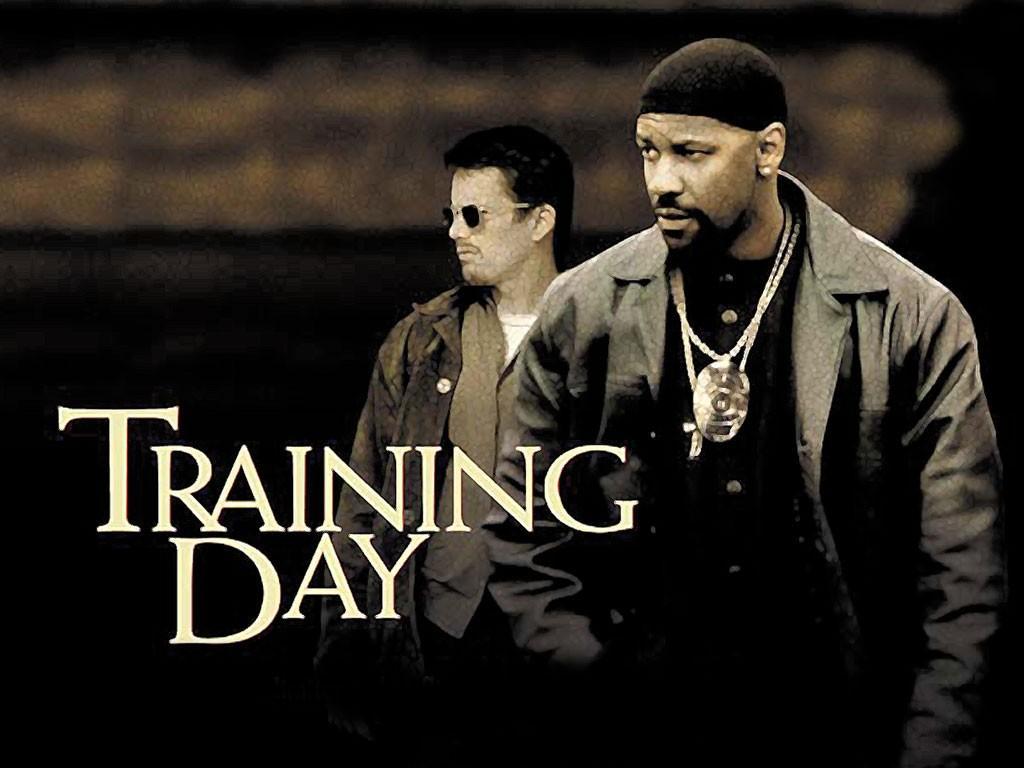
‘Training Day’ – Film Review and Analysis

‘Training Day’ is the kind of movie that highlights two people who somehow cross paths as they are on opposite sides of morality. The men are shown to be both flawed in their own ways but still have a direct impact on each other as they spend more time together. Throughout this film, both men are trying to outwit each other in the hopes that they’ll come out on top. Because of this gamesmanship, this is no simple training day but rather a series of events that end up changing both of their lives for better and for worse.

The two main characters, one of them who could be considered a youthful idealist, is trying to better his community and his city by enforcing the law by the book. The other man has been around the block and knows about the grittiness of the job more so than his impressionable, younger rookie partner. He is a pessimist who discards the idealism that he likely brought with him when he originally joined the police force. He has abused his power as a law enforcement agent, is looking to maintain his authority and grow his wealth through intimidation and threats.

“It takes a wolf to catch a wolf” is a powerful quote from ‘Training Day’ that shows that in order to bring somebody down, you have to act and imitate who they are. The problem with this attitude is that sometimes you end up becoming your own worst enemy. However, to simply be a sheep is leading yourself to the slaughter as well especially when you’re dealing with the criminal underworld.

In order to survive as a detective, both men know that you need to be confident in yourself, steadfast in your beliefs, and willing to confront ‘the wolves’ out there if you want to catch one. It could be argued that the protagonist of this film starts out as a sheep and ends up becoming a wolf in order to catch the antagonist, a true wolf who has caught the wolves for many years. This kind of symbolism embedded within ‘Training Day’ makes it a classic film worthy of repeated viewings.

‘Training Day’, released in 2001 is a crime drama / thriller directed by Antoine Fuqua which follows two LAPD detectives who patrol and fight crime in gang-heavy neighborhoods. The film stars Denzel Washington as Alonzo Harris, a veteran detective and police officer who prefers wearing street clothes over a formal uniform and a badge. Ethan Hawke, who plays Jake Hoyt, a new detective and Alonso’s new partner who is entrusted in learning from Alonzo on his first day of detective training.

This film has earned excellent reviews over the years and is considered one of the best movies of the 2000’s. It achieved critical acclaim and success in theaters as Denzel Washington earned a Best Actor award for his role as Alonzo Harris. Truly, one of the best parts of the film is Washington’s acting and how he brings the corrupt yet smooth talking cop character to life. Det. Harris is a classic villain who ranks as one of the best antagonists in film history for his duplicity to others and displaying his indefatigable charisma while doing it.

From the opening scene of the movie, you can tell that Jake Hoyt is out of his league when it comes to matching up against Alonzo Harris. Unfortunately, not much of Alonso or Jake’s backstory is given in the film as well as how they came to become partners together. However, you can see early they are both polar opposites of each other in terms of their ideals, morals, and overall character. Jake is a young guy who’s trying to make his mark as a police officer and trying to do everything by the book as instructed by his superiors at the academy.

He is idealistic, fair-minded, and perhaps a bit naïve to the murky shades of gray that make up the world. Meanwhile, the audience can tell that Alonso has been on the wrong side of the streets for a while and has become purely jaded by his work as a narcotics detective. Instead of serving and protecting the people in his community and city, he cares only about his image, the reach of his authority, and the ability to make illegal money without compromising his career. What once was left of the idealism and the drive to do good by becoming a police officer has long been washed away. You could argue that Jake is a sheep while Alonso is a wolf who is going to prey on him.

The ultimate goal of Alonso is to bend Jake to his will by manipulating his moral code and his willingness to stay clean as a police officer. While Jake starts out the film as being a bit reticent, gullible, and naïve to what Alonso is doing to him, he is able to change over the course of the film to fight for his future, his career, and his life. The transformation of Jake Hoyt from a ‘sheep’ to a ‘wolf’ able to stand up to Alonso is one of the greatest displays of character development in film.

The great drama of ‘Training Day’ is to see both men push each other to the limits both mentally and physically to see who will be left standing after the training day and night is over. While Alonso lost his soul and is trying to corrupt those around him, Det. Jake Hoyt needs to harness his strengths, moral fiber, and intelligence to best Alonso at his own game.

At first, Alonso seems like an ideal partner to be with if you are in the police force. However, Jake and the audience find out that he is anti-social, manipulative, and willing to take what he wants without remorse. The challenge throughout the film for Jake is how does he change into a ‘wolf’ without losing his own moral code. Complicating matters for Detective Hoyt is the fact that Alonso isn’t the only corrupt police officer to deal with and that it goes to higher levels in both local and state government who know what Alonso is up to.

While some officials turn a blind eye to Alonso’s money-grabbing, wrongful beatings and killings, and others in the police force actually join in on it, Jake takes a moral stand and wants to bring Alonso to justice. However, we find out that Alonso is in fact his own worst enemy and the bad karma that he’s acquired over his years of corrupt wheeling and dealing will come back to haunt him.

Everyone’s luck eventually runs out and Alonso finds himself on the wrong end of a bad gambling streak with organized crime. For all of his manipulation, wrongdoing, and anti-social behavior, its’ Alonso’s desire for control over others including Jake that leads himself to ruin. To the opposite, Jake becomes a stronger person and a more effective police officer as the film progresses. He stops two men on the street from physically abusing a high school girl, which pays off for him later after he faces another near fatal betrayal from Alonso.

The concept of karma plays out for Jake, as he is able to resist the corrupting influence of Alonso and remain on the right side of the law by doing his job even under great personal pressure. Instead of letting the power and authority entrusted in him get to his head, Jake is able to become not just a better police officer than Alonso by the end of the film but a better human being.

While Alonso wasn’t always a corrupt cop, ‘Training Day’ makes you wonder what could have happened to this man to turn him into what he was originally fighting against. Overall, this movie is a morality tale of two men who have different intentions when it comes to being a police officer, which puts them at odds with each other. Their impression of the other man continually changes as they learn more about who exactly is the ‘sheep’ and who is the ‘wolf’ as their training day plays out.

‘Traffic’ – Film Review and Analysis

‘Traffic’ (2000) is one of those films that was way ahead of its’ time when it was first released over a decade and a half ago. It is a film that makes you think deeply hours or even days after you first watch it. ‘Traffic’ should be viewed more than once to really understand all of the nuances and subtleties embedded in its’ individual stories underneath its’ overarching central themes.

When compared to most other movies of the crime drama genre, ‘Traffic’ gained a lot of particular praise for the way its’ director and screenwriter were able to successfully weave multiple plotlines, characters, and settings together that slightly overlap with each other but are seamless enough as to not overburden the viewer with unrealistic connections.

‘Traffic’ is a movie that respects the intelligence of its’ audience and isn’t afraid to tackle the controversial topic of the ‘War on Drugs.’ It’s quite surprising when you think about how this movie was released back in 2000, but is still just as relevant and timely of an issue today as it was back when it was first released to the public. When ‘Traffic’ came out, it gained universal recognition and critical acclaim, and after viewing it for the first time, it’s easy to see why it was so noteworthy.

Steven Soderbergh directed ‘Traffic’, and Stephen Gaghan wrote its screenplay. Mr. Gaghan, who was responsible for another multi-layered film with multiple plotlines in ‘Syriana’ (2005), which also starred an ensemble cast of actors dealing with a different timely issue of oil and geopolitics in the Middle East. Unbeknownst to most people, ‘Traffic’ won numerous awards including for Oscar awards for Best Director, Best Supporting Actor, Best Adapted Screenplay, and Best Film Editing. This ensemble cast of actors for ‘Traffic’ is very impressive and includes star names such as Michael Douglas, Don Cheadle, Benicio del Toro, Dennis Quaid, and Catherine Zeta Jones.

At its’ core, ‘Traffic’ focuses on the illegal drug trade going on in both the United States and Mexico. One of the brilliant things about this film is the fact that each character in the movie represents a different perspective on the drug war whether they are a user, enforcer, trafficker, lawyer, or politician. It’s unlikely that a film like ‘Traffic’ would be made today but it’s distinctive editing, multi-use of colors depending on which of the three stories are being highlighted, and the political relevance of its’ themes could keep a lot of viewers away these days.

Its’ importance and timeliness today can’t be overstated as this film doesn’t try to impose a point of view on the audience. ‘Traffic’ would rather cause the individual viewer to ask questions, seek out more knowledge about the issue, and weigh the different opinions expressed by the characters throughout the movie. The three-color grades that are used for the three different stories are probably one of the most interesting things that I’ve ever seen when it comes to film editing. Each story in ‘Traffic’ could be its’ own movie in its’ own right, and the film is lengthier than most in terms of run time at two hours and twenty minutes total.

To briefly highlight the substance of the three stories without spoiling the whole movie, let’s go over each one to introduce the arch of the overall plot to prospective viewers out there. The first story is mainly set in Mexico City and other parts of the country, which highlights the efforts of two Mexican police officers that are trying to do their job as enforcers of the law under difficult circumstances. While trying to bring down local cartels in the easiest way possible, the two officers, one of them, Javier Rodriquez (played by Benicio del Toro) come up against corruption, and crime within their own ranks, which makes their ability as officers to keep their areas safe difficult with money and influence blurring the line between the good guys and bad guys.

Officer Rodriguez (del Toro) wants to do his best to keep his job, but to also hold his fellow policemen and elements of the Mexican army accountable for their actions without compromising his safety. He knows that ending the drug war is futile but he wants to keep his immediate community safe and that of its’ inhabitants. This is especially true if it means that the local kids in his neighborhood can play baseball at night with new stadium lights and not be at risk of joining gangs instead in their free time.

The second storyline in ‘Traffic’ takes place between the nexus of small town Ohio and the capital city of Washington, DC in the United States. A conservative judge, Robert Wakefield (played by Michael Douglas), is appointed to head the President’s Office of National Drug Control Policy, and he becomes an unofficial ‘drug czar.’ Mr. Wakefield doesn’t seem to be enthused with the new position he’s been given due to the long hours, lack of support, and political skepticism from the official circles within Washington. He tries to make the most of fighting the ‘war on drugs’ even if he knows deep down that it is truly unwinnable. Because he is away from his family for long periods of time, he is unaware that his daughter in high school has developed a drug problem over the past six months and is struggling with a heroin addiction now.

On top of dealing with being a father and the leader of a national drug control policy effort, he struggles to be a open and forthcoming husband to his wife. Compared to other characters in the film, Wakefield changes the most in his views on the ‘war on drugs’ as the audience can see that his mindset changes when this issue becomes personal and not just professional. With his daughter’s future and life at stake, the ‘war on drugs’ becomes less of an abstract war and more of a battle to save his family from falling apart.

The third and last storyline takes place mostly in southern California in the San Diego area where two DEA agents are conducting an underground investigation. The investigation, led by Agents Ray Castro and Montel Gordon (played by Don Cheadle), eventually leads to the successful capture and arrest of a top drug dealer, Eduardo Ruiz, who pretends to be a fisherman as his cover.

This arrest is instrumental in helping along the trial of suspected drug lord, Carl Ayala, who is thought to be the leading distributor of illegal drugs for one of the biggest cartels in the world. Ruiz is important to be kept alive and in good shape so that he can testify to the illegal activities of Ayala and his empire, but that is harder for the DEA than they ever imagined. With Ayala’s possible imprisonment and/or cooperation, the DEA agents are hoping to bring down this cartel, once and for all.

However, since Ayala and his wife, Helen (played by Catherine Zeta Jones), have a lot of wealth and influence still, they are able to put a damper on the DEA’s plans with the help of the shady family lawyer, Arnie Metzger (played by Dennis Quaid). DEA Agent Gordon and his partner are unable throughout the film to cope with the long tentacles of the drug cartels, and the amount of money and hit men the Ayala’s are able to use to threaten the safety of the DEA’s witness and the potential success of the prosecution against Ayala. You could imagine that this particular story in the film does not come with a happy ending.

Any of the three unique yet intertwined storylines of ‘Traffic’ could be ripped from newspaper headlines from over the past forty years. Ever since the beginning of the ‘war on drugs’ back in the 1970’s, there has been endless debate about whether there have been any successes or mainly just the upholding of the status quo. ‘Traffic’ doesn’t try to impose a simple yes or no answer to the ‘war on drugs’ question.

Rather, this film intelligently asks its’ audience to weigh the outcomes of these different stories that are affected by the drug trade, and the viewer is supposed to make that decision for themselves. When it comes to special movies like ‘Traffic’, there are no simple black and white solutions. There are many shades of grey in all of these human stories, and it takes deep insight, critical thinking, and analysis in order for slow changes of the status quo to actually occur.

While this is a fictional movie, it is made clear by the film itself that a lot of these characters are based off of actual people who make up all sides of the ‘war on drugs.’ Overall, the one key thing that the ending of this film makes clear to the audience is that there are no winners in the drug war, only losers, and it takes an impactful movie like ‘Traffic’ to make that fact absolutely clear.

‘Lord of War’ – Film Review and Analysis

Arguably one of the best movies of the 2000’s and Nicholas Cage’s best performance as a lead actor, The film ‘Lord of War’, released in 2005, is a realistic and unfiltered take in the role of illegal arms dealers, who facilitate the sale and transfer of arms trafficking throughout the international arms industry, which continues to be one of the world’s most profitable endeavors. ‘Lord of War’, while nonfictional in its’ story is actually based off of the lives and exploits of different real-life arms smugglers. ‘Lord of War’ is directed by Andrew Niccol, and stars a cast of Nicholas Cage, Jared Leto, Ethan Hawke, and Bridget Moynahan.

Nicholas Cage plays Yuri Orlov, the son of Ukrainian refugees from the Soviet Union, where he and his brother, Vitaly, help their parents out in their Ukrainian restaurant as cooks and helpers. While Vitaly is somewhat satisfied with this simple life of cooking borscht and washing dishes, Yuri wants to achieve the ‘American Dream’ and get out of Brighton Beach, Brooklyn, where he grew up after leaving Ukraine. He struggles to grasp at any real business opportunity in order to get out of the shadow of his ordinary life in Brooklyn.

However, one day when he is dining at a restaurant in Brighton Beach, the business idea he needs comes to life for Yuri in the form of a Russian mobster killing two would-be assassins and fending off their attack with AK-47 Kalashnikov rifles. Yuri believes that there is a lot of money to made in international arms sales and decides to go into business despite the protests of his brother, Vitaly, and the fact that his parents don’t know what he’s up to.

One scene in particular that stands out in Yuri’s beginning as an illegal arms dealer is when he tells his brother that since there are so many McDonald’s and gun stores in America already, he needs his business to be international in its’ focus. At first, Yuri feels that dealing arms is comparable to serving food at a restaurant. He justifies his nefarious business by narrating to the audience that its’ providing for a part of human nature in his opinion, the instinct to kill and harm others, as documented by the “earliest human skeletons who had spears in their heads and rib-cages.”

While Vitaly, Yuri’s brother has moral reservations about what Yuri is doing, he decides to join him later on as they crisscross the globe during the late 1980’s and into the 1990’s dealing with corrupt governments, genocidal dictators, and other more ruthless arms dealers as their competition. As Yuri becomes more popular and wealthy with the illegal arms business, he runs up against a by-the-book, incorruptible, and idealistic Interpol agent, Jack Valentine (Ethan Hawke), who tries unsuccessfully to track Yuri’s business dealings down by air and by sea.

Despite the fact that his brother, Vitaly, becomes a drug addict, and is an unreliable business partner, Yuri continues to run his illegal arms business as a one-man show. While a fictional story, ‘Lord of War’ is based off of real life conflicts and real life people who were involved in the illegal arms trade. These conflicts include the 1982 Lebanon War, the Soviet Union’s War in Afghanistan against the Mujahadeen, the civil war in Liberia during the 1990’s, etc. The movie does not gloss over the dissolution of the Soviet Union and the impact that the end of this cold war conflict had on the rest of the world in terms of arms sales. Yuri is able to become a very wealthy and powerful arms dealer in the film due to his family connections in Ukraine and the sheer weaponry, and arsenal that the Soviet military left unused.

Like his arms business, which is run under false pretenses, he does the same with his love life as he falls for a fashion model and childhood crush, Ava Fontaine (Bridget Moynahan), who he sets himself up with under the guise of a false photo shoot. Despite the fact that his parents don’t know about his illegal dealings, he lies to his new wife regularly, and his brother ends up in a drug rehabilitation center, Yuri does not give up on the arms business because he likes it, is good at it and is unable to go straight in legal business endeavors. However, in the wake of all of his ‘success’, innocent men, women, and children get killed by the guns, bombs, ammunition, tanks, planes, etc. that he sells and profits off of. As the film progresses, the director makes clear that Yuri has sold his soul in this dirty trade and it may cost him his life or the lives of others close to him if he doesn’t stop.

In a way, the audience who watches ‘Lord of War’ could be most closely aligned with the perspective of the Interpol agent, Jack Valentine. He knows that Yuri is a bad person and he wants to bring him down, but will it make any difference to bring one sole arms dealer down when billions of dollars are exchanged around the world each year through both legal and illegal arms sales. Like Jack, the audience may question the nobility of bringing down one arms sales dealer like Yuri when there are dozens of them out there, and Presidents / Prime Ministers of the major countries are the biggest arms dealers of them all.

Yuri never takes full responsibility for his business dealings during the film even if the sale of his arms causes bloodshed and death. He remarks bluntly to his brother, Vitaly during one scene: We don’t talk about it. How many car salesmen talk about their work? How many cigarette salesmen talk about their work? Both their products kill more people every year than mine, at least mine comes with a safety switch. Those guys can leave their work at the office, so can I.”

In Yuri’s opinion, he may be evil, but he’s ‘necessary evil’ because there are other people or governments out there like him involved in the business, but sometimes they ‘can’t have their fingerprints on the gun.’ Despite the pressures placed on him by family, friends, and the law, Yuri is committed to doing what he does best without having the moral imperative to stop. As I don’t want to reveal the ending, the first time you see it, you may be shocked but this film doesn’t deal in black and white, and that’s what I love about it.

There are numerous shades of grey that go along with the black and white, and the ending of ‘Lord of War’ falls within those shades of gray. ‘Lord of War’ doesn’t have your typical Hollywood ending, and that’s partly what it makes it such an alluring film. On top of the exquisite directing, acting by Nicholas Cage, Jared Leto, Ethan Hawke, etc. and the deep political and philosophical themes behind this film, I highly recommend it.

I’ll leave you with a quote from the film that is very poignant and is still true twelve years after ‘Lord of War’ was released in movie theaters. “While private gun-runners continue to thrive, the world’s biggest arms suppliers are the U.S., the U.K., Russia, France, and China…they are also the five permanent members of the United Nations Security Council.”

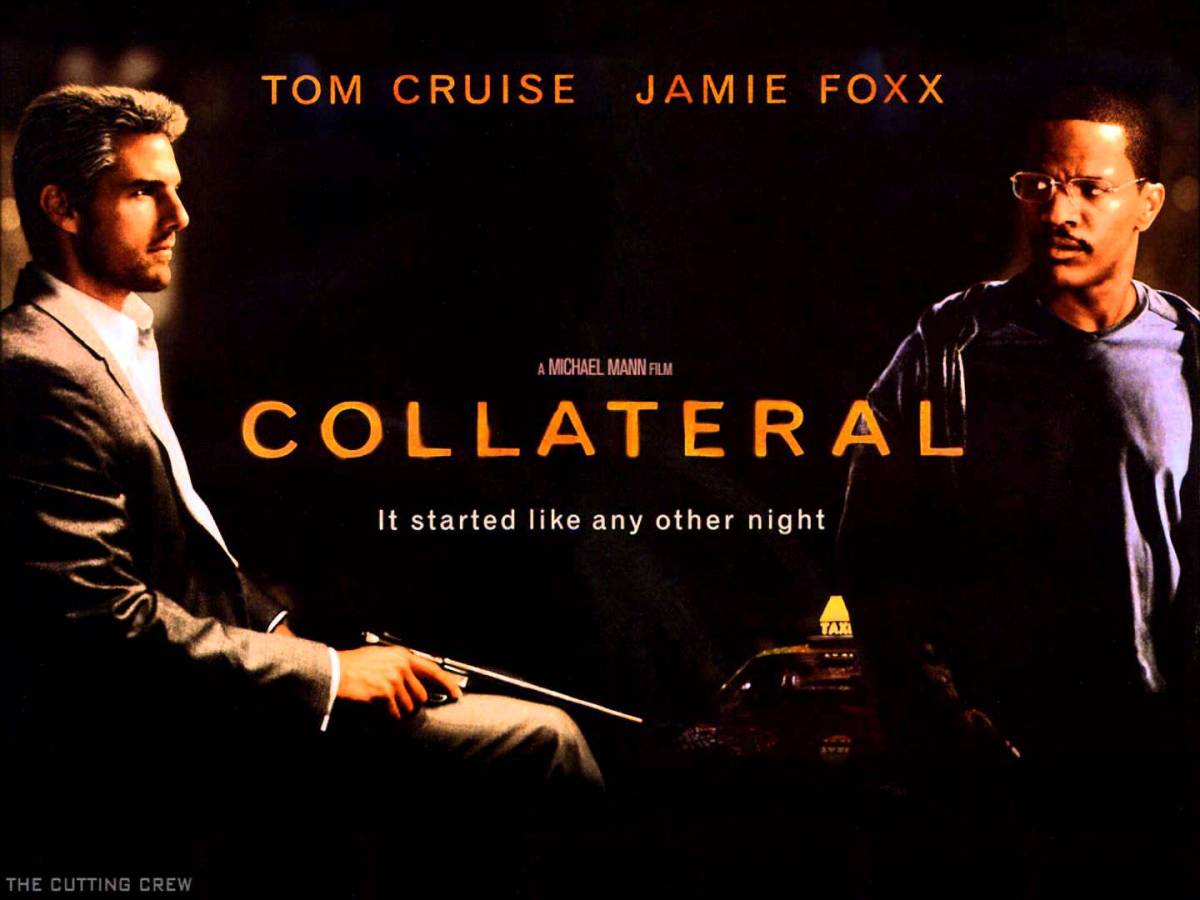
‘Collateral’ – Film Review and Analysis

It’s not often the case that a Hollywood film can go beyond its’ genre to relay a deeper message about the human condition and why people are the way they are. ‘Collateral’ (2004) is one of those movies that is able to achieve just that by making the audience member such as myself care about the characters as well as appreciate the deeper meanings beyond the dialogue and the setting.

While there are numerous crime thriller films out there, ‘Collateral’ is able to go above and beyond the clichés and be original in its’ own right. Part of this is due to the fact that Tom Cruise and Jamie Foxx give outstanding performances for their respective characters along with the rest of the credit that should be given to director Michael Mann who relishes being a director for crime noir dramas that are set in Los Angeles. While ‘Collateral’ was not an Oscar award winning film unfortunately, its’ characters, the setting, the action sequences, the directing, and the overall message that the plot sends to the audience make it a unique and reputable movie that deserves a viewing or two.

Without going into too much detail, the plot of ‘Collateral’ stars two men who come from very different circumstances and live very different lives. However, the Cosmos align to have them meet for the first time at night in Los Angeles. “Vincent” played by Tom Cruise, has just arrived in Los Angeles from the airport and is looking for someone to take him around the city. What better way to see L.A. than to do so by taxi so Vincent goes to the nearest taxi stand to seek one out for a ride. That’s where the plot of the film begins as Max, played by Jamie Foxx, accepts Vincent as a new passenger after ignoring his presence initially. Vincent, dressed in a gray suit with gray hair could be just like any other businessman in Los Angeles but he’s not what he appears to be. Max starts to realize this as the night goes on but not until after he drops off Vincent at his first but not his last destination.

Vincent is more than just the new guy in town here for business. He’s a contract killer and a hitman who is in Los Angeles for one night only in order to carry out a series of hits. After bearing witness to the first of Vincent’s murders, Max is forced into being Vincent’s chauffeur for the rest of the night as he has four more contract hits to carry out for his boss, “Felix”, played brilliant by actor Javier Bardem. Vincent’s goal for the night is to carry out the rest of the contract hits successfully and then get a flight out of Los Angeles as the sun rises after his boss pays him handsomely for his ‘work’. Max’s goal for the rest of the night is to get out of this situation alive without getting killed by Vincent or being seen by the police as an accomplice of Vincent who is dragging him along as he commit these vicious murders in cold blood.

Mixed up in all of this madness is “Annie”, played by Jada Pinkett Smith, who is a prosecutor in the U.S. Justice Department who works out of their office in Los Angeles. She ends up being the first passenger of the evening in Max’s cab before the fates intertwine and Vincent comes along to change Max’s life forever. The only good part of Max’s night is when he meets Annie and they hit it off enough to the point where he is able to get her phone number but it is uncertain whether or not he will have the confidence to call her and make plans.

Unfortunately, Vincent, the contract killer, has Annie in his sights as one of his five targets setting off a series of events that put Max and Vincent on a tense collision course. On top of all of this, you have members of both the FBI and the Los Angeles Police Department noticing what Vincent and Max have been up to which causes more violence and bloodshed to occur. “LAPD Detective Ray Fanning and FBI Investigator Frank Pedrosa” (played by Mark Ruffalo, and played by Bruce McGill) are the ones leading the investigation into these random but coordinated killings popping up all over Los Angeles in the dead of night orchestrated by Vincent with Max as his unwilling accomplice.

There’s no character in this film that isn’t in danger or who may come into harms way and that is partly what makes the title of the film fitting as called ‘Collateral’ because everybody in this movie feels the damage caused by Vincent in some way. Max has feelings for Annie so he wants to do the most he can to protect her before she become apart of the ‘collateral’ damage that is being inflicted by Vincent.

Michael Mann, the director of ‘Heat’ (1995) previously and of this film ‘Collateral’, does an excellent job of making the setting of Los Angeles feel like its’ own character that sets the tone for the movie as well as provide an analogy for what the characters of Max and Vincent are like. Los Angeles is a sprawling urban city of more than four million people and has highways, tunnels, and bridges that loop and wind through the various neighborhoods that can only be connected by car.

For Max, Los Angeles is the only home he’s ever known but for Vincent, it’s a sprawling, disconnected mess of alienated people who don’t know or care about each other even if the collective Gross Domestic Product (GDP) of their city is more than most countries on the planet. Vincent regales Max about a story of someone who dies on the Los Angeles Metro one day and nobody else on the transit system notices for many hours, which proves his supposed point about the city’s culture of alienation. Similar to L.A., Max and Vincent are disconnected from other people in their own ways. Max is shy and reticent with new people he meets and doesn’t go after what he wants while Vincent is a sociopathic killer who doesn’t have much regard for people in general.

There’s one excellent scene in this film where Vincent and Max chide and prod each other as to why they are who they are. Vincent wants Max to call Annie, the girl whose number he got earlier in the evening, because “Life is short. One day it’s gone…” Max doesn’t reply regardless of what Vincent’s opinion is of his dating life. Later on in the scene, they both see a lone grey wolf walking through the streets of Los Angeles presumably searching for food or for some sort of purpose. In so many ways, this is symbolic of who Vincent and Max both are.

Vincent knows his purpose is to kill people because it’s what he ‘does for a living’ but this job alienates him from his humanity and causes him to be a lone wolf. Max is unsure of his purpose in life and wants desperately to be more than a simple taxi driver. He has dreams to start his own limo company one day but never takes the first step to making that dream come true and actually become a reality.

Even though they are two different men from very different circumstances, they are able to see what they should become if they weren’t so set in their ways. Max is a compassionate person who cares for others but is stuck without a purpose and isn’t able to take control of his life. Vincent is a sociopath who can’t relate to other human beings but knows what his one true purpose in life is and this allows him to feel some control over his existence, which he deems as being ‘meaningless’ in the long run.

Even with the fact that they detest each other, they begin to understand the flaws in their own character and how they could be different if they gave themselves a chance. Max could be more spontaneous and avoid having a repetitive life if he chose to be something more than a taxi driver. There’s no changing that Vincent is a cold-blooded killer but you start to see the circumstances that created his monstrous self. He never knew his mother, and his father was an alcoholic who beat him mercilessly and let young Vincent to grow up in foster homes. Max, nor the audience, can show much sympathy for Vincent’s plight but you start to realize that he is not just a simple-minded killing machine.

While life may be meaningless for Vincent, he still thinks that Max should live it to the fullest and ‘carpe diem’ before it’s too late for him. Max gets Vincent to ask himself why he is a sociopathic killer and gets him to reveal a little about his troubled family as well as to why he is a nihilist. In response, Vincent gets Max to ask why he never did anything to make the Limo Company to become a reality. He implores him to think deeply about making his dream come true because someday it may never come to pass if you don’t do anything to make it happen in the first place.

‘Collateral’ is a great crime thriller that is extremely well written, has great acting, and is directed and choreographed superbly by Michael Mann and his team. Beyond that, ‘Collateral’ is a film that makes you question certain things about life and the limits that we put on ourselves. The nihilism and disconnectedness of both Los Angeles and the main characters of Max and Vincent is both surreal and powerful. This is not your typical Hollywood drama and that’s a good thing. This movie is not a blockbuster and feels more like an independent film that came in way under budget.

‘Collateral’ is a gripping take on two men who are forced together by fate to go through a night together that will change them forever. I highly recommend this movie based on the excellent writing, acting, directing, and the strong storyline that keeps the viewer interested. Jamie Foxx and Tom Cruise do an excellent job and have great chemistry together, which is what makes ‘Collateral’ really shine, and have longevity as a unique film over a decade later. If you get the chance sometime, you should really see this movie.

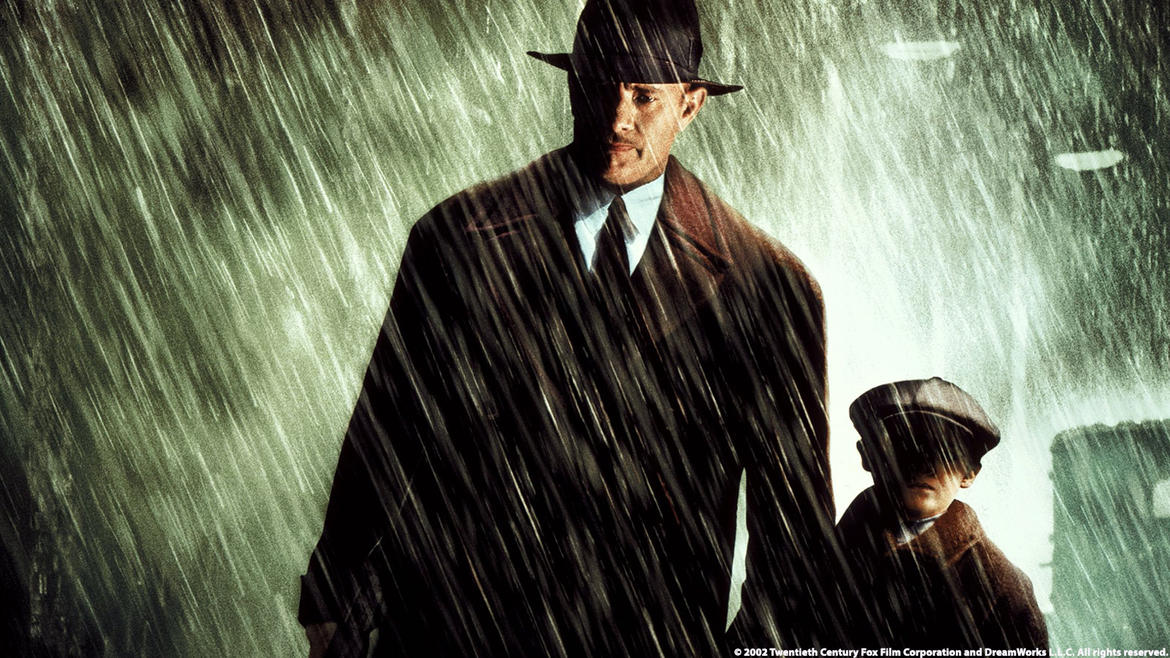
‘Road to Perdition’ – Film Review and Analysis

One of the most underrated movies of the 2000’s was Sam Mendes’s ‘Road to Perdition’, which was released to critical acclaim back in 2002 and did pretty well at the box office with around $200 million in ticket sales. While some people would be skeptical of watching ‘Road to Perdition’ at first because they think it’s your average crime / mafia movie that doesn’t have much to offer in terms of storyline and symbolism, they would be wrong when it comes to this film.

Sam Mendes, who directed two other great films ‘American Beauty’ and ‘Revolutionary Road’, does an excellent job here as this movie is beautifully shot and has a stellar cast. ‘Road to Perdition’ also benefited from the legendary cinematography work of the departed Conrad L. Hall for which he won a posthumous Oscar for ‘Best Cinematography’ for this film after he passed away in 2003. The scenery and settings for this movie help to create quite a unique atmosphere and the wide shots, long angles that are used help to make this film stand out as being above average. Beyond just the cinematography, the acting by the cast also stands out.

When you look back to see who was starring in the main roles for ‘Road to Perdition’, it is a very impressive list. Tom Hanks plays Michael Sullivan Sr., the lead role of the film and a conflicted Irish mafia man caught between his past and keeping his son sheltered from the consequences of his actions. Paul Newman, one of the greatest American actors of all-time plays the role of John Rooney, an Irish mafia boss, who is also conflicted between his paternal feelings of love for Michael Sr., and his wish to protect his own son, Connor, played by a young Daniel Craig, from his own destructive sins. Rounding out the list is Jude Law, who plays a gifted hit-man / grisly photographer known as Harlan McGuire, and Stanley Tucci, who plays a high-ranking member of the Italian mafia known as Frank Nitti. A young actor who steals most of his scenes is the young but talented Tyler Hoechlin who is Michael Sullivan Jr. in the film, a boy who is coming to terms with his father’s lifestyle and his ties to the mafia. A truly impressive cast of Academy Award winners and nominees, which makes this film even more of a lasting treasure.

‘Road to Perdition’ really brings the atmosphere and makes the setting feel real as it portrays life in Great Depression-era America by focusing on specifically both on the city of Chicago and its’ rural hinterlands, cornfields of greater Illinois. The movie really portrays well the last decade of America being discovered and settled, while undergoing deep economic difficulties, as the Irish and Italian mafias become a source of income and employment when none could be had.

Most movies don’t seem to want to portray the mafia as having been a well-oiled machine that acted like a legitimate business, but ‘Road to Perdition’ makes clear that there are ways to look at the criminal enterprises that achieved a lot of prominence during the Great Depression due to their ability to bootleg and their appeal to provide a good income to men without work.

Without spoiling too much of the plot, Michael Sullivan Jr. (Tom Hanks) is an enforcer and bodyguard for the Irish mafia in the Chicago area of Illinois who has a close relationship with his boss, John Rooney (Paul Newman), who is implied to have helped Michael Sr. a lot with a home, a steady income, and a purpose which is quite difficult to come by during the height of the Great Depression. Michael Sr. is a flawed man who has done murder and committed other crimes for his boss, Mr. Rooney, and knows that it may cost him his life. Despite his past transgressions, he wants to protect his family from his sins and wants to keep his boys from knowing about what he does for a living.

Connor Rooney (Daniel Craig) is shown to be jealous of the close relationship that his father, John, and Michael Sr. have and is resentful of him. Michael Sullivan Jr. (Tyler Hoechlin) is distant from Michael Sr., his father due to late working hours and distant lifestyle. As any boy would like to know about his father, Michael Jr. decides to find out the truth about who his father, Michael Sr. is, and what he does for Mr. Rooney. At this point, the plot really takes off in tragic and unexpected ways leaving the viewer engaged in the storyline and the eventual outcome. As mentioned before, the acting done by this legendary cast helps make the film what it is and what it still is today.

Beyond just being a typical mobster movie, ‘Road to Perdition’ has a number of poignant and thought-provoking themes that stay with you even after the end credits begin to roll. This film goes over the trials and tribulations that fathers and sons can have with each other even when they love and care for each other dearly. Michael Sr. and John Rooney are not related by blood by have a relationship similar to a father and son as Mr. Rooney was around for Michael and his family when they had nothing. He is heavily indebted to Mr. Rooney even if he knows what he is doing is wrong by committing violent acts for the mafia. Still, their bond appears to be unbreakable and they get along quite well with each other.

To the contrary, both of their relationships with their respective sons are shaky at best and hostile at worst. There is a considerable distance between Michael Sr. and Michael Jr. due to the fact that Michael Sr. makes his lifestyle and his work for Mr. Rooney a well-kept secret. Michael Sr. does not show much affection or love for his boy and it’s not made clear until the end of the film why that is. Michael Sr. obviously cares for his boy but likely doesn’t want his son to know about the horrible things he’s done to keep him, his brother, and his wife save from harm or want. Still though, Michael Jr. does not want to be kept away from his father and who he is.

He ends up pursuing the truth whether or not his father wants him to or not leading to quite a turn of events when the truth comes to light. Connor Rooney, John’s son is quite envious of the close relationship that Michael Sr. has with his father compared to him. However, this is for a number of reasons. Connor is very much unlike his father, John, and has a number of character and personality flaws that make him a liability to the family. Connor is shown to be impulsive, manipulative, untrustworthy, and greedy but the conflict comes to light when John Rooney must decide if he should stick by his son’s side or give him up due to his past misdeeds. As John Rooney says to Michael Sullivan Sr. during one of the movie’s best scenes, “Sons were put on this Earth to trouble their fathers.”

During one of the movie’s most touching scenes, Michael Sr. tells Michael Jr. about a town called an idyllic town called Perdition, Illinois, which has beautiful scenery along the beach of Lake Michigan, and where the Sullivan family has visited before when Michael Jr. was a little boy. Perdition is portrayed as a goal for the two Michaels to get to in order to start their lives anew and escape the sins of the past. It’s a way for Michael Sr. to get redemption after taking care of his ties to the mafia and by trying to make up for what he did wrong as both a father and a man. The word ‘Perdition’ as defined in other words is ‘hell’ or ‘complete and utter damnation’ in more religious terms. Michael Sr. may try to redeem his sins by going to church or by rectifying the wrongs he’s done by getting revenge on the men who wronged him in the past but he knows deep down that it may not be enough.

If he is on the ‘Road to Perdition’ or the road to hell, the film shows the audience that he wants to keep his son, Michael Jr., from going down that same path. He wants badly for his son to have a better life and a brighter future away from violence and death. Michael Sr. won’t let his downfall lead to that of his son’s as well. Even if Michael Sr. is a murderer and a sinner, he knows what’s still right from wrong and he is going to do his best to preserve the innocence and goodness of his son. As a father, he is flawed but he still loves his son dearly and wants the best for him still.

Certain moves fit a certain season of the year well and ‘Road to Perdition’ is no exception. The winter setting, the Chicago cold, and the mature themes help lead it to being an ideal film to be watched during the depths of winter in January and February. Without spoiling anything, the film is a real story with real characters who are flawed in their own ways but who each have their own complex motives that drive the plot forward. This film, most of all, touches the audience emotionally and will pull on your heartstrings.

‘Road to Perdition’ is very underrated film that remains one of my favorite movies to this day. I highly recommend ‘Road to Perdition’ to other movie buffs who are looking to watch a crime / mafia film that has a soul. In addition to having an all-star cast, a renowned director, and a legendary cinematographer at the helm, ‘Road to Perdition’s music score composed by Thomas Newman is excellent and fits perfectly into the many moods of the film and has some stirring moments that add to the film’s setting. If you’re snowed in this weekend from the blizzard, do yourself a favor and go watch ‘Road to Perdition.’

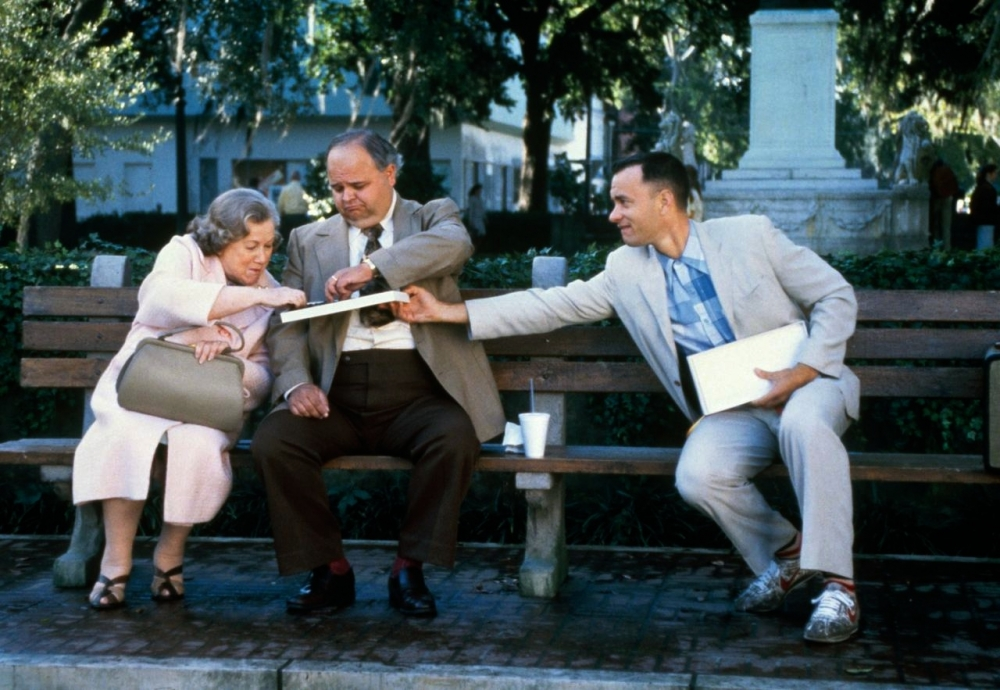
‘Forrest Gump’ – Film Review and Analysis

chocolates
“Life is like a box of chocolates, Forrest, you never know what you’re gonna get.”

One film that captures both your imagination and your heartstrings is the classic American film, Forrest Gump. Released in theaters over two decades ago in 1994, it has become one of the most beloved films of all time and enjoyed high amounts of praise from both critics and moviegoers alike. The film was notable for the fact that it won many different awards and accolades such as the Academy Awards for Best Picture, Best Director for Robert Zemeckis, Best Actor for Tom Hanks, among many other distinctions. I would argue that this film along with Big helped to launch Tom Hanks as one of Hollywood’s rising stars and set him on a monumental acting career, which included many future box office hits. Five years ago, the U.S. Library of Congress recognized Forrest Gump as being a film that is historically, culturally, and aesthetically significant and selected it for preservation in the United States National Film Registry.

Forrest Gump is about an everyman who has a slight disability of not being as smart as everyone else with an IQ of 75. However, despite him learning this fact as a child and being bullied about it, he manages to not let this handicap ruin his life but instead learns to preserve and make the most of things. The story of Forrest Gump takes place over the tumultuous and transformative decades of the 1950s, 1960s, 1970s, and 1980s when America went through a number of political, social, and economic changes. One of the true delights of this film is seeing how many of these changes Forrest witnesses and is actually apart of.

During the film, we see him shaking his hips with Elvis Presley at his mom’s guesthouse in Alabama, serving in the U.S. Army after being drafted in the Vietnam War, starting a fight during the midst of a Black Panther group meeting, and meeting Presidents Kennedy, Johnson, and Nixon. Despite his lack of formal intelligence, Forrest does not let that stop him from being an ‘All-American’ college football player, a veteran of the Vietnam War, a shrimp boat, a wealthy man due to his investments in a little company called Apple Inc, and lastly and most important, a loving son, friend, father, and husband. In addition to serving in Vietnam and witnessing Elvis Presley in person, Forrest also helps a black woman become the first African-American to integrate into an all-white school, helps to break the seal on the Watergate scandal when he sees people breaking into DNC headquarters, and becomes an international ping-pong star while helping to improve relations between the United States and the People’s Republic of China. He’s an every man who takes life as it comes regardless of the good or bad and finds himself involved in extraordinary events that shape American history.

As Forrest gets wrapped up in these events over the course of the film, he takes an almost child-like innocence to them even in the cases of war, violence and prejudice. He’s aware of these things and knows right from wrong but tries to live a simple and uncomplicated life despite all he’s been through. He wants to be a good son to his mother; he desires to be with the love of his life, Jenny, to have good friendships with his fellow soldier Bubba and Lieutenant Dan, and to be a responsible father to his son at the end of the movie. He may lack intelligence in terms of critical thinking and solving problems; he has the ability to display maturity, show emotional intelligence and is able to show kindness and love towards others despite his differences with them.

While he may not know his father, and his wife Jenny disrespected and left him in the cold over the years when she was dealing with her own demons, he has the ability to look past these grievances and live a good and fulfilling life. Forrest endures other traumas and heartbreak in the Vietnam War when he sees his fellow soldiers and friends killed or disabled like his good friend Bubba and his lieutenant, Dan Taylor. While he could have given up on life or become bitter and disenchanted, Forrest instead finds new purposes in playing ping-pong around the world, starting a very profitable shrimp boat company with his old Lieutenant Dan, and runs around the United States for three years straight to help get past those losses and betrayals that has haunted him. Forrest is an example of a man who never gives up and keeps moving forward despite his past. He simply does not let his past define him. Like all of us, he’s been giving good and bad fortune but he makes the best of things regardless of the circumstances.

During the long run scene of Forrest’s, people become inspired by his example and ask him for advice and guidance. He doesn’t have much to say to them but they happen to find comfort in the fact that he’s doing this just for its’ own sake. Forrest simply can’t help them all figure life as they have to each follow their own path and find inspiration wherever they can. Once one path ends, another one opens up to be explored afterwards. As Forrest states when reporters ask him why he’s running, “I just felt like running.” Sometimes, you don’t need a reason to be doing something if you feel like it.

While many other people are inspired and are given hope from Forrest’s example, Forrest is inspired by other people such as his mother played by the wonderful Sally Field, along with his fellow soldier Bubba and his Lieutenant Dan. His mother teaches him about love, respect, and finding your own path in life. She gives Forrest a quote on her death-bed that he takes to heart and has become one of the most famous movie quotes of all-time. “Life is like a box of chocolates, Forrest, you never know what you’re gonna get.” Forrest asks his mom what his destiny may be. She tells him that he can’t answer that for him and ask he needs to figure that out for himself. She does let him know that it was her destiny to be his momma and that she’s very proud of the man that he has become.

Forrest’s relationship throughout the film with Jenny is complicated and unfortunate as the ways their lives converge and diverge leads to pain and heartbreak but also compassion and understanding. Jenny is Forrest’s first and only love. They grow up together and spend time getting to know each other. Forrest is a breath of fresh air for Jenny who has to deal with an abusive father at home. Even through college, they remain close but still friends.

Jenny’s path through life takes her to some lonely places and she deals with abusive boyfriends, drug abuse, and hostile friends like the Black Panther party. Even with her flaws, Forrest still loves her as always and asks her to marry him. She eventually agrees to be his bride making him the happiest man in the world. Tragically, their marriage is cut short by the fact that Jenny has HIV/AIDS and has become really sick. However, the love that Jenny shares for Forrest allows them to have a son together before she passes away. While a devastating loss for Forrest like it was to lose his mother and Bubba, his best friend, Forrest’s destiny is renewed in the love he has for his son, Forrest Jr. as he takes care of him after Jenny’s death.

Forrest Gump is a special movie that has resonated with millions of people around the world. Many folks have been inspired by the message of this movie and have gone to improve their lives in enumerable ways. The story of Forrest Gump is a story of hope, love, perseverance, respect, and tolerance. Anybody who watches Forrest Gump will get something out of the movie because of its’ overall message. Like the feather that floats by Forrest at the beginning and ending of the film, you make the most of what we’re dealt with in life and it’s you alone who can shape your destiny through the choices you make, the people you befriend, and the impact you create. We may all be floating on the breeze like a feather unsure of where we’re going but we can steer the direction of that feather to new places and new conclusions.

Forrest Gump is a special character in a special movie that rekindles for viewers what they love about the big screen by showing our capacity as human beings to love, cry, laugh, and share good times and bad with those friends and family as Forrest does. Anybody who watches Forrest Gump can relate to Forrest and what he goes through. That is what makes this movie such an endearing, popular film and why it will last for many more years as one of the most iconic pieces of work in American cinema.