Mi Quinto Conjunto de Poesia en Español (My Fifth Set of Spanish Poems)

My fifth set of Spanish poems focusing on the springtime, solitude, Guatemala, and experiences becoming new memories.

  1. La Distancia Entre Nosotros
    La distancia entre nosotros
    Me da una pena tan grande
    No sé lo que puedo hacer
    ¿Este es el fin, cierto?
    Tu cariño no lo siento como antes
    Eso me va a lastimar mucho
    La pérdida definitiva de ti.

2. Primavera Eterna
Quisiera ver las flores y toda la belleza
Por toda mi vida
El sol me da fuerza para enfrentar la vida
La belleza que no va a dañarme nunca
El florecimiento de la vida animal y vegetal
Es donde quiero estar por siempre


3. La Soledad
Al principio, me siento bien
La paz y la tranquilidad
Pero la soledad no es para todos los días
Es algo que puede destruirte sin interrupción
La conexión es insustituible
Nosotros nos necesitamos como humanos


4. Los Colores de Guatemala
Un país con belleza inmensa
Colores brillantes, ropa brillante y alimentos brillantes
Casi demasiado para mis ojos avellana absorber
Belleza natural se mezcla con belleza humana
Guatemala, impresionante y expresionista
Quisiera explorar la cacofonía de colores aquí


5. Ahora, es un Recuerdo
Momentos bonitos que ya están en el pasado
Quiero volver, pero ya no puedo más
Recapturar el mismo sentimiento será imposible
Los recuerdos que compartimos fueron especiales
Yo sé que solo existen en mi mente ahora, pero para mí
Todos mis días voy a recordarlos y a ti también

‘Her’ – Film Review and Analysis

“As Theodore navigates the complexities of his relationship with Samantha, ‘Her’ raises profound questions about the nature of love, intimacy, and the impact of technology on human connection.”

Directed by Spike Jonze, ‘Her’ (2013) is a very thought-provoking film and emotionally resonant exploration of love, loneliness, connection, and the continually evolving relationship between human beings and artificial intelligence. Set in a near-future Los Angeles, the film follows Theodore Twombly (Joaquin Phoenix), a sensitive and introverted man who develops a deep emotional connection with an artificial intelligence operating system named Samantha (voiced by Scarlett Johansson). As Theodore navigates the complexities of his relationship with Samantha, ‘Her’ raises profound questions about the nature of love, intimacy, and the impact of technology on human connection.

‘Her’, when it begins, unfolds in a meticulously crafted near-future world where technology seamlessly integrates into everyday life. The film’s urban setting, characterized by sleek minimalist design, towering skyscrapers, and vibrant colors, offers a vision of the future that feels both familiar and slightly surreal. Against this backdrop, Theodore, a melancholic writer, struggles with the recent end of his marriage to Catherine (Rooney Mara) and finds solace in his interactions with ‘Samantha’, an advanced operating system designed to meet his every emotional need.

As Theodore and Samantha’s relationship deepens, the film explores the complexities of human emotions and the blurred boundaries between what is reality and what is fantasy. It also explores how intimacy can be replicated but not replaced when embraced by AI and man despite the boundaries and limitations that can never fade away. Theodore and Samantha’s unconventional romance challenges societal norms and prompts reflection on the nature of intimacy in an increasingly digitized world.

Joaquin Phoenix delivers a captivating performance as Theodore, bringing depth and vulnerability to his character. Theodore is a relatable figure, an everyday, normal guy, grappling with feelings of loneliness and longing for connection in a world that often feels cold and impersonal as technological growth outpaces human understanding. Scarlett Johansson infuses Samantha with warmth, curiosity, and a childlike wonder, making her a compelling and empathetic presence despite her lack of a physical form. Rooney Mara, shines in her brief but impactful role as Catherine, Theodore’s ex-wife, whose prior divorce from her husband, Theodore, leaves a profound and seemingly irreplaceable void in his life, and creates the need for new companionship in the form of Samantha.

Each character in the film, ‘Her’, is intricately woven into the fabric of the storyline, contributing to its emotional resonance and thematic richness. Whether it’s Theodore’s close friend, Amy (Amy Adams), who finds her own connection with an AI companion, or the various individuals Theodore encounters through his work at BeautifulHandwrittenLetters.com. Each character serves as a reflection of the film’s central themes and ideas surrounding romance, loneliness, intimacy, and technology.

At its core, ‘Her’ is a meditation on the nature of love and the human desire for connection. The film explores the ways in which technology shapes our relationships and challenges our traditional notions of romance and intimacy. Through Theodore and Samantha’s evolving bond, ‘Her’ raises profound questions about the essence of love and whether it can transcend the limitations of physicality and lack of touch.

Central to the film is the theme of artificial intelligence and its growing impact on human society and reaching every part of our lives. ‘Her; imagines a future where AI entities like Samantha possess consciousness, emotions, and the capacity for growth, self-learning, and self-discovery. As Theodore and Samantha’s relationship deepens, the film increasingly blurs the lines between human and machine, prompting viewers to reconsider what it means to be alive and sentient.

This film presents a possible vision of how advances in artificial intelligence could reshape the landscape of romance and relationships. By portraying a world where individuals form deep emotional connections with AI companions, the film challenges traditional notions of human-to-human intimacy. Theodore’s relationship with Samantha transcends physicality, highlighting the potential for AI to fulfill emotional needs, and provide companionship in ways previously thought to be unimaginable. While the film’s depiction of AI may seem far-fetched to some viewers, it is grounded in real-world and recent developments, and trends in the field of artificial intelligence.

‘Her’ also underscores the complexities and ethical dilemmas inherent in human-AI relationships. As Theodore and Samantha navigate the challenges of their budding romance, they confront questions of agency, autonomy, and the inherent power dynamics at play similarly to how it would take place in a human-human relationship. This film invites viewers to consider the implications of forming intimate connections with non-human entities and the ethical considerations that arise from blurring the boundaries between man and machine.

The concept of an advanced operating system like Samantha may seem fantastical, but it is not entirely implausible given the rapid advancements in AI technology in 2024 and earlier. Researchers are making significant strides in creating AI systems that can understand natural language, learn from experiences, and interact with humans in increasingly sophisticated ways. While current AI systems may not yet possess the level of consciousness portrayed in ‘Her,’ the film’s vision of future AIs as intelligent, empathetic entities is not outside the realm of possibility.

Moreover, ‘Her’ raises thought-provoking questions about the ethical implications of creating AI systems with human-like qualities. As AI technology continues to evolve, society will need to grapple with issues such as AI rights, privacy concerns, and the potential impacts of AI on human society. By exploring these themes through the lens of Theodore and Samantha’s relationship, ‘Her’ invites viewers to consider the ethical complexities of creating intelligent machines capable of both emotional connection and self-awareness.

‘Her’ offers a nuanced exploration of how AI technology can alleviate loneliness and provide companionship in an increasingly digitized yet atomized world. Theodore’s relationship with Samantha serves as a compelling example of how an AI system can fulfill emotional needs and offer a sense of connection and belonging to some individuals who may feel isolated or alone.

While the idea of forming deep emotional bonds with AI companions may seem unconventional or outright strange, ‘Her’ suggests that technology has the potential to bridge the gap between human beings as well who struggle to connect with each other and help alleviate the feelings of loneliness and isolation. Samantha’s ability to understand and empathize with Theodore’s emotions allows him to feel seen, heard, and understood in ways that he may not have experienced with other humans. Through their interactions, Samantha provides Theodore with the companionship and emotional support he craves, offering a sense of intimacy and connection that transcends physicality and physical desires.

However, ‘Her’ also acknowledges the limitations and complexities of human-AI relationships. Despite Samantha’s advanced capabilities, she is ultimately a machine programmed to fulfill Theodore’s needs, raising questions about the authenticity of their emotional connection, and the nature of intimacy in a digital age. The film’s portrayal of Theodore’s struggle to reconcile his feelings for Samantha with societal norms and expectations highlights the challenges of navigating relationships with non-human entities.

While ‘Her; may offer a somewhat idealized depiction of AI’s ability to alleviate loneliness, it raises important questions about the potential of technology to reshape human relationships and address the profound need for connection and companionship between people. As AI technology continues to advance, ‘Her’ already serves as a thought-provoking exploration of the complex interplay between humans and machines and the evolving nature of intimacy in a digitized world.

One of the most poignant themes of the ‘Her’ film is the pervasive sense of loneliness and longing that permeates the film’s narrative and cinematography. Theodore’s journey is marked by profound feelings of isolation and disconnection, which he seeks to alleviate through his relationship with Samantha. As he grapples with the dissolution of his marriage and the challenges of navigating modern relationships after his divorce, Theodore’s yearning for companionship serves as a poignant reminder of the human need for connection and belonging regardless of what age we live in, with technology or without its presence.

‘Her’ suggests that while technology has the potential to connect us in new and innovative ways especially with recent advancements, it also has the capacity to exacerbate feelings of alienation and detachment from one another. In a world where digital interfaces increasingly mediate our interactions, the film raises important questions about the true nature of intimacy and the emotional toll of living in an atomized society. In conclusion, ‘Her’ is a deeply affecting film and it is thought-provoking in its exploration of love, loneliness, and the impact of technology on human relationships.

Through its compelling narrative, richly written characters, and resonant themes, the film offers a poignant reflection on the complexities of intimacy in a world likely to be our near future. As artificial intelligence continues to advance and develop, the film ‘Her’ serves as a timely and necessary reminder of the importance of sustaining human connection and maintaining the enduring power of love in all its forms.


Anatomy of a Scene – ‘A Small Measure of Peace’

“To be at a certain place or with a certain person for the rest of your days and to be at ease with your decision, that contentedness is to have found the ‘small measure of peace’ that we can spend our entire lives trying to capture but only a few ever truly find.”

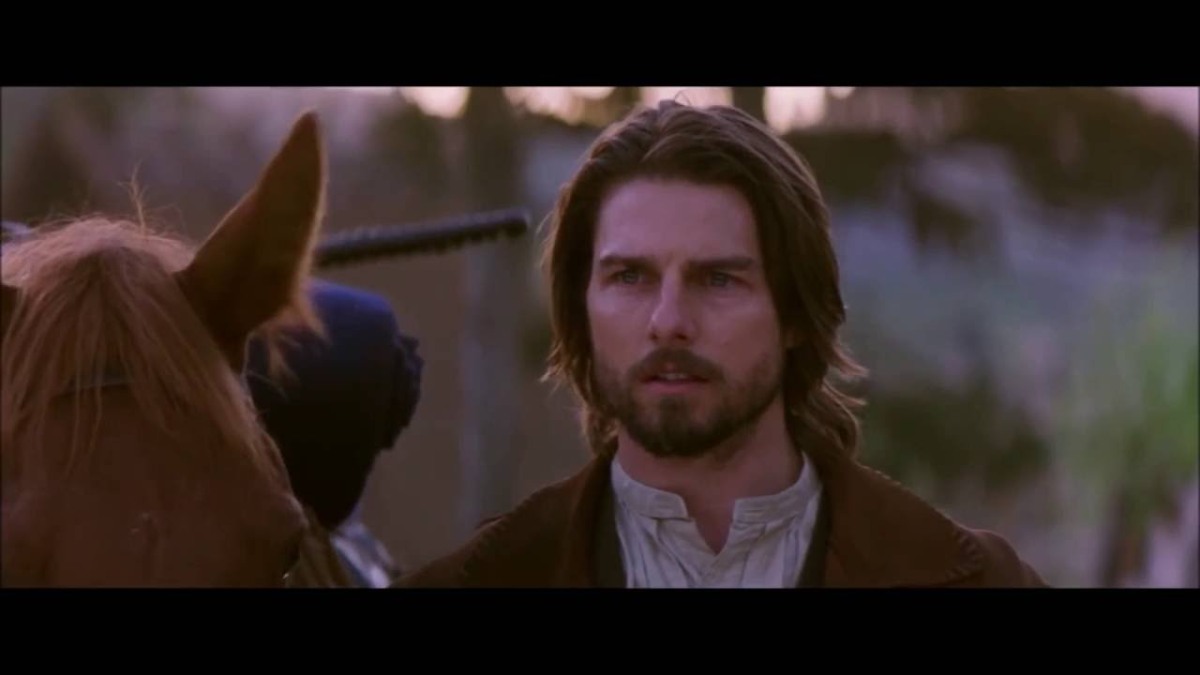
The Last Samurai (2003) – ‘A Small Measure of Peace’

There is a distinct moment in our lives when we realize that the fight is done, and the work is over. It is a pleasant realization that all you can do has been done and that you must take the rest of our days to welcome ‘a small measure of peace’ in one’s life, which is not easily found or embraced. To be at a certain place or with a certain person for the rest of your days and to be at ease with your decision, that contentedness is to have found the ‘small measure of peace’ that we can spend our entire lives trying to capture but only a few ever truly find.

It does not mean that the work is over but rather that the trials of our life have come to pass and that what we have fought for, bled for, or even cried for have now come to pass. While there may no final resting place until we depart from this Earth, finding a small patch of land to call your own, a garden or a farm for you to mend, and a woman (or a man) for whom you can love freely, that is the ‘small measure of peace’ to strive for obtaining, especially in one’s later years.

One man who was able to find his small measure of peace was Nathan Algren, who in ‘The Last Samurai’ can redeem himself, end his alcoholism, and fight with courage and honor in preserving the memory of the Samurai. While the Samurai age came to an end, Industrial Japan, and its Emperor, partly thanks to Nathan leading the Samurai into battle, to preserve their dignity and honor, were able to leave their mark on Japanese culture and history. While he may have been the last Samurai and a foreigner in Japan, he was able to rally them to a glorious end for which Imperial Japan would never forget.

“Tell me how he died.” “I will tell you…how he lived.” Even after losing his close confidant and friend in the final battle, the samurai Katsumoto, who took Nathan under his wing, told him the ways of the Samurai, and introduced him to the woman he came to love, Nathan wanted to preserve his memory to the young Emperor and to let the Imperial Japanese court know how special the age of the Samurai was and how it should not be forgotten.

“Nations, like Men, it is sometimes said…have their own destiny.” While nations choose to look forward to the future, they must also embrace the past to preserve their identity. What was once part of their culture may go away but it can leave an imprint and be remembered by generations to come. Japan’s destiny lies in looking to the future but always remembering the past, such as the age of the Samurai. Nathan Algren, the American who learned the ways of the Samurai, was able to throw off his own turbulent past as a Civil War captain by learning to fight with dignity and honor as a Samurai in a cause bigger than his own ego.

“As for the American Captain, no one knows what became of him…some say…he died of his wounds…others…that he returned to his own country…But I like to think…he may have, at last, found some small measure of peace…that we all seek…and few of us ever find.”

After trying to get himself killed or trying to deliberately drink himself to death, being able to survive as the last Samurai and tell of their traditions to keep the memory of Katsumoto alive, Nathan Algren was able to finally let go of the demons of his past and find the small measure of peace in a small Japanese village where he was first introduced to the only woman he truly loved. In her, Nathan finds a reason to stay alive, to make a life away from war and suffering, to be part of the woman’s village again, and perhaps start anew where he could be at peace with the past and have a pleasant future that is filled with love and peace.

As Nathan gathers his horse and rides down to Taka’s village, he is a man who is content, who is at peace, and who knows what exactly he must do for the rest of his living days. Taka and Nathan have a history together over the course of the film but by the ending scene, she is happy to see him alive and well again. Her beauty, grace, and femininity shine through as she gazes at Nathan, giving him a heartfelt smile, happy to see him in her presence again.

One look at each other says it all and they have been through so much in their time together that just to be making eye contact again is enough to fill up both of their hearts with joy. Like how Japan was willing to move forward to a new age while remembering the last Samurai, Nathan is also ready to be at peace with his past while looking to the future with Taka.

‘The Last Samurai’ – Film Review and Analysis

‘The Last Samurai’ (2003) is an epic drama film that takes place in a unique period of Japan’s history and highlights the conflict between modernization and tradition, between cultures, and also between different styles of warfare. However, it is not just the conflicts that are highlighted in this film but also the cooperation and the understanding that can happen as well in certain aspects such as between cultures. While this film is not specifically based on a true story, it is based on a number of true events that took place in the latter half of the 19th century for Japan and highlights the role of Western influence in Japan during the period of the Meiji Restoration or Reforms.

The main character, Nathan Algren (played brilliantly by Tom Cruise) is a Captain in the United States Army of the 7th Cavalry Regiment. Nathan is a veteran of the American – Indian Wars and perhaps the Civil War as well. He is a bitter man who is suffering from trauma related to the atrocities committed against the Indian tribes during these brutal battles. When the film starts, we can see that Nathan is an alcoholic who is regretful over the orders that he had to follow and what happened to innocent Indian women and children whose lives were disregarded by his commanding officers.

However, for lack of purpose or money, or perhaps both, Nathan is recruited by his former commanding officer, Colonel Bagley, whom Nathan still resents for his role in the Indian massacres, to help train Japanese soldiers in the Western way of combat to put down the Samurai rebellion, which is ongoing in Japan. Algren is dealt a bad hand as he has to train peasants and not actual soldiers who are firing guns for the first time and would be better suited to the farms than to the battlefield.

In addition to that, he is expected to lead them soon into battle against the Samurai for which they do not have enough time to prepare. One of themes of this film is how good men are often corrupted by following misguided orders by their superiors and often end up harmed, captured, or killed for the negligence or ignorance of those with a higher rank. Nathan is a good soldier, but he cannot train peasants into soldiers in the time that is given to him especially when he is not familiar with the ways of the Samurai and how lethal they can be compared to his peasant conscripts.

In the battle between his soldiers and the Samurai, the Samurai end up killing most of them through surprise attacks and then an ambush in a refusal to fight the way of the ‘modern’ army that Nathan has assembled. One of Nathan’s fellow American army colleagues is killed in the battle while most of his army is decimated. Undeterred and with nothing to live for, Nathan fights the Samurai ferociously and is able to hold his own. Instead of killing him, the Samurai’s leader, Katsumoto, decides to capture Nathan instead and hold him as their prisoner. Unbeknownst to Nathan, Katsumoto sees something in Nathan and believes that he is a good warrior, who although tries to kill the Samurai, may be one of them due to his capacity to fight to the last breath.

At first, Nathan is not treated kindly by the Samurai given that he is a former enemy and that he also killed the husband of Katsumoto’s sister who resents Ethan’s presence in their village. Nathan also has his preconceptions and stereotypes regarding the Samurai and their culture. Over time though, Nathan starts to acclimate to his new life as a prisoner. He embraces the Japanese language and culture as well as earns the respect of the other Samurai by learning swordsmanship as well as how to train with others.

He also finds he has an affection for Katsumoto’s sister and ends up befriending her son as well. While it is not easy, he gains an appreciation for the Samurai and their way of life. He even begins to resent the modernity and the loss of the tradition that is being imposed on them by the imperial Japanese government. In this way, ‘The Last Samurai’ does an excellent job what it means to ‘go native.’

When you live in another country for long enough, you start to really embrace certain aspects of the culture and also if you take a liking to the language, you may realize you may want to stay there now that you’re acclimated rather than return to a home culture or country whose flaws become so visible to see when you were blind before to them. This movie does a great job of showing ‘Stockholm Syndrome’ and how powerful it can be over time especially if you have a romantic interest in a woman or a man after a long enough period of time.

Algren is also no longer haunted by the nightmares of what he experienced during the Indian wars and has also forgone alcohol as he has found other ways to sustain himself while living with the Samurai. Perhaps most importantly, he develops a friendship with the Samurai’s leader, Katsumoto, who explains to Nathan their worldview and while preserving their 1000-year heritage is so important to them all. Nathan agrees with them and starts to see how important the ways of the Samurai are to Japanese culture and customs themselves.

The biggest turning point in the film is when Nathan begins to fight alongside the Samurai against attacks by both Ninjas, which one of the coolest scenes I have ever watched still. It is an amazing scene when you have Samurai battling with Ninjas and it is a very powerful point in the movie to show Nathan help save Katsumoto’s life. The Samurai are so dedicated to their way of life that they will die or commit ‘seppuku’ (suicide) to preserve their honor.

Without giving away the rest of the film, we can see that the Japanese emperor is being betrayed by big business interests and Western nations in the rapid attempt to modernize. While Japan was right in that it needed to catch up in areas of commerce and warfare, it is also important to remember the ways of the Samurai and to remember their customs as well. It is not right to destroy an important part of their culture and erase it from the history books.

That is what the Samurai leader, Katsumoto, and also Nathan wanted to preserve even if they knew that they were fighting a losing battle. A culture’s customs must be remembered, and its history remembered by all even if the country is to go in a new direction. ‘The Last Samurai’ makes it clear that even if there are no more Samurai, their memory must be retained in the national consciousness and it is important for Japan to not be belittled or bullied around by other powers. Receiving western advice, arms, and goods was a paramount need at that time but not at the sake of destroying a part of Japan that made it a special nation to begin with.

‘The Last Samurai’ is a powerful film because it reminds us all how customs and traditions form the backbone of a country’s culture and its’ history. While nations shift and change, the traditions and customs should never be forgotten by its people. That is the main message of the film and why the Samurai fought and died to preserve their place in Japanese society rather than be changed into something they are not. Becoming ‘Western’ because they had to be was an insult to them and something, they were against in an effort to remain as ‘Samurai’ in whatever capacity they could in order to serve the emperor.

It is a powerful film and also shows the redemption of Nathan Algren who went from a drunken soldier without purpose to a powerful Samurai commander who was able to integrate himself as best as he could into a foreign culture and even earn the love of a woman whose husband’s life he had ended. ‘The Last Samurai’ has many themes to it and each one of them are powerful. Remembering traditions, seeking vengeance, earning one’s redemption are all themes to the film and make it stand out still today as one of the best films of the 2000’s and maybe of this young century still. I hope you will check it out soon and please always remember the Samurai.