On Territory and Hierarchy

“It’s not just being rewarded financially but there are also the noted past benefits such as being the first to eat at a meal or having livestock awarded to you for leading the tribe or group.”

When you rise in the hierarchy of any company, firm, or organization, you are likely to be rewarded for it subsequently. It’s not just being rewarded financially but there are also the noted past benefits such as being the first to eat at a meal or having livestock awarded to you for leading the tribe or group. The leader, if he or she does a good job, gets first dibs on what they would like as a result whereas if it’s money, food, or what I think is the most common today as it was in the past: land or space.

In my view, there is a direct correlation between rising in the hierarchy and having more space or territory allotted to you. This kind of correlation has really stood the test of time when you think about the era of feudalism when there would be lords over the land and forts or castles would be built to maintain that territory, even if it was contested by outsiders. When you think of the rise of empires from the Ottoman to the French to the British whose kings, queens, emperors, or sultans who would make their royal palaces and compounds as elegant, grand, and massive as they could.

Even your modern-day Presidents and other heads of state live more lavishly than 99% of their population and while they may command a modest salary, they still hold the keys to a massive home and office where they have people waiting on them to make sure any of their needs are taken care of. Because of the way hierarchies are set up, the people who have the most power tend to get the most benefits in terms of taking up space and territory because of the office or title or family legacy that they hold.

While it would make sense that in a capitalist society, you must ensure lopsided rewards and benefits to those people entrusted with political or other forms of power. When you think of your average CEO or company owner, they tend to on average also take up more territory or have more space than your average person. As your status rises so does the amount of acreage or square meters you would like to claim as your own. While there are exceptions, popular culture encourages the acquisition of power and status to correlate with not only acquiring financial wealth but territorial wealth too.

You can even see this in terms of who gets the most space in the c-suite or in the average office. While the average worker may have to work in a cubicle or share a space with others at a lower level of hierarchy in their organization or company, the management or higher-level executive will often have the corner office or their own floor depending on the place of work. It is easy to see where your status in the working world is just by seeing who is taking up the most space even when the impact you or your colleague have on the firm, company, organization, may be different in terms of actual value provided.

The societal drive to get that corner office, or to get a bigger home, or to have a piece of land to call your own is an innate part of what keeps our drive to boost our economic means in life. Taking up territory and holding it is such an innate part of our caveman-like nature that even if we may have come out of the caves into homes, palaces, and offices, we still strive to show off to others where we are in the hierarchy by showing how much space we take up compared to the other guy.

While there’s nothing wrong with staking your claim, working hard for what you earn, and claiming that corner office or hectare of land as your own, it does not mean that you’ll automatically be happy or fulfilled. It’s likely you’ll be satisfied, happy, or content with how far you’ve come and how hard you had to work for your spot in the hierarchy, but it does not guarantee you long-term happiness or fulfillment. When you think about it, while you can get an office or a home or a castle to yourself, it can cause a tendency to isolate yourself, to think you know better than anyone, and worst of all, to lose a kind of empathy for what your co-workers, your compatriots, or your community is going through.

You may be able to stock more resources, live more lavishly, and show off to others, but it won’t fill our most basic need as human beings, and that is to connect with one another on a deeper level. You may have family or close friends but the higher you are up in the hierarchy, the tendency is there to ignore others’ advice, or to start thinking you’re better than other people even when you may not know what to do or what the answer is, and it may prevent you from being touch with other people are going through who are going through a tough time in life.

The more we seek to rise in a hierarchy, whatever it may be, the more likely it is to lead to isolation, loneliness, and even unhappiness if we use the territory that we have to shut the door on interacting with others around us or who work with us. It is tempting to let our success and our status get to our heads, but it can lead to increased narcissism, apathy toward what got you there in the first place, and an ego that can run out of control if it’s not checked by others.

When you think about a successful leader or executive, they let others tell them when they are wrong or show humility when they don’t know the answer. Instead of isolating themselves entirely, they make sure those people who helped them share in the success and are treated well. They share their space with others instead of hoarding it for themselves. They go out in the community to find out how they can help as a leader with more resources and knowledge. Instead of becoming a hermit with a lot of territory but no one around to help, a good leader will let people in to give advice, counsel, and to back down when he or she knows when they are wrong.

It’s the reason why dictators, kleptocrats, and monarchs can be so out of touch with their compatriots and why the CEO who has his own floor and never leaves his mansion are not long for staying in power. They neglect having people around them to be part of their apparatus and to tell them when the decisions they make should be rethought. It is also because when a leader hoards all the wealth, territory, or resources for him or herself and their family or close friends, people who are worse off tend to notice, can congregate, and organize together, and an overthrow of that leader is just around the corner.

A good leader makes sure that he does not hoard more than he needs to succeed in his role and that he or she relinquishes their title so a successor can rise whatever the vocation to share in the continued success of the company, organization, or firm. There’s nothing wrong with letting your rise in hierarchy allow you to acquire more land, territory, or money, but to hoard it all or to do nothing to let others improve their own lot in life to make sure they have the same shot at success is a recipe for disaster. You cannot take land with you after you’re gone so the priority should be on making sure you are a good leader first and also someone who uses their status to assist others, to make wise decisions, and to help give other people in their community or country a leg up so they can have enough territory to live a good life and share their own success with their family and friends.

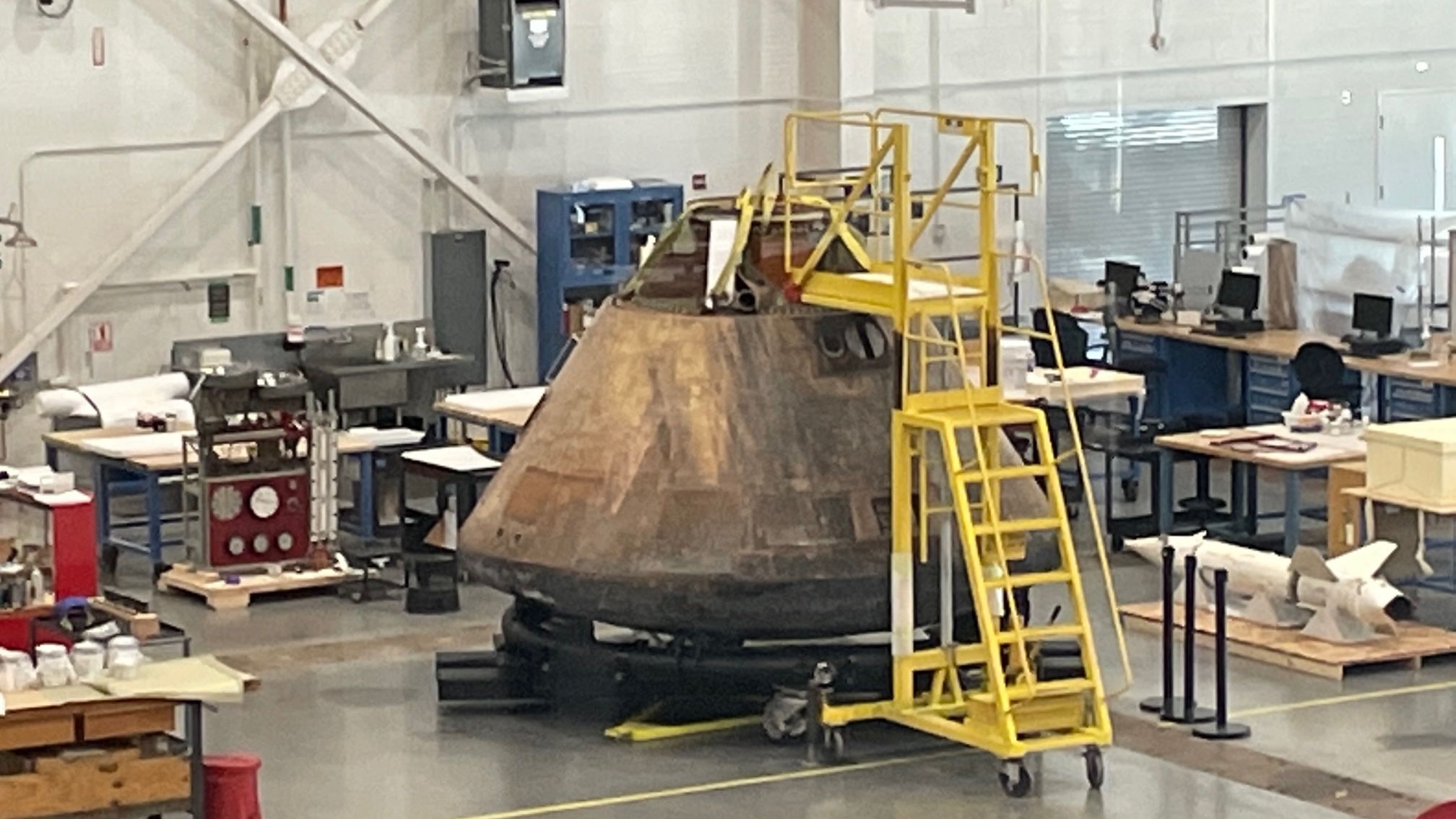
The Steven F. Udvar-Hazy Air and Space Center

Camera: iPhone 12

Location: Steven F. Udvar-Hazy Center, Air and Space Museum Annex; Chantilly, Virginia, United States

Thoughts on Carl Sagan’s ‘A Pale Blue Dot’

“This effort will only intensify in the years and decades to come as we go from being space-bound again to even Moon-bound and Mars-bound with our eyes set forward to being a galactic species.”

Carl Sagan’s ‘A Pale Blue Dot’ Speech

As much as we try to ignore it, pay it no thought, or just let it fade into the background of our priorities, Planet Earth is our only current and future home. When I say ‘future home’ as well, I may be met with some skepticism given the exciting recent events in putting man and woman back into space with success. This effort will only intensify in the years and decades to come as we go from being space-bound again to even Moon-bound and Mars-bound with our eyes set forward to being a galactic species.

However, while this excitement is commendable and our goals of being an interplanetary species a revolutionary event that could transform human life, I think we all need to remember that even though this effort to touch down on other planets including Mars may be a decade away, it will be quite a while still where people in large quantities can explore, live, and settle down in a planet not named Earth. You can practically guarantee that by reading this article in the year 2022 that it is very remote that we will be able to see humanity transcend Earth to live on other Earth-like planets in our lifetimes.

While I personally believe that Earth in our galaxy is not the only habitable planet, finding one that is, being able to go there, and then sustaining ourselves there will be the challenges of not years or decades but centuries forward. It is a noble pursuit and one that is likely to occur in the far future. My concern during this renewed era around space travel and interplanetary focus is that we stand to lose our only planet’s hospitable climate while we try to find others like the current one, which we are so blessed to have.

Multiple reports out there especially recently cite that we may be past the point of no return already when it comes to pulling the planet back from the depths of climate change activity already in motion. Our Planet Earth or as the great Carl Sagan would say, the ‘Pale Blue Dot’ is in danger of only having a century or less left where it is hospitable for humans to live there comfortably. Natural disasters are clearly getting worse, droughts, wildfires, flooding, torrential downpours culminating together to create something out of a Biblical prophecy on top of the fact that the Polar ice caps melting has accelerated alongside unseasonably warm temperatures in the Arctic.

While we marvel at putting impressive rockets into space that can land vertically after being thousands of miles away, our planet is going through a stage five fire alarm and basically ringing the warning signs for us to collectively do something about the current climate crisis. We do not know how fast this crisis will accelerate and how bad it will get and when it will be unsustainable for Earth to be a hospitable planet, but we can measure that in decades and not centuries. We race to get to space and to find a hospitable planet other than our neglected and vengeful home of record, but we are at a disadvantage in my view. We do not have centuries to fix our climate crisis, but mere decades or even a decade as some have argued. Our ability to find an Earth-like planet for which humanity would have to relocate in mass would not take place for centuries and not decades.  

I am not writing this article to solve the climate crisis or to illustrate what we all should do to combat it; I believe we know what to do in our lives and what we should tell those in power to implement but rather my fear is that we have lost sight of the importance of why Planet Earth is so precious and worth fighting for. There is no better illustration of the gravity of our current fight to save Earth than the humble video recorded speech of the late famous American astronomer, Carl Sagan, who summed up the sheer importance of why ‘here’ or ‘Earth’ matters so much in the grand scheme of the Cosmos. “That’s here. That’s home. That’s us.”

The ‘A Pale Blue Dot’ speech by Mr. Sagan highlights the totality of how Earth captured the human experience from across the globe among the tens of billions of people who lived on our planet including every hunter, forager, creator, destroyer, king, peasant, mother, father, and hopeful child. Everyone who has existed has lived on Earth on a ‘mode of dust suspended on a sunbeam.’ Mr. Sagan highlights the cruelties and violence that we have committed and continue to commit against each other to control a small part of the ‘pale blue dot’ we call Earth. The delusions of grandeur, the great ego we all struggle with, and how we think of ourselves as greater than the vastness of space and the endless infinity that surrounds us outside of our banal conflicts and glories.

Carl Sagan makes the point that in 2022, “The Earth is where we make our stand.” We can visit other planets like Mars or our own Moon, but we cannot live there yet. Mr. Sagan highlights the need to preserve and cherish ‘the pale blue dot’, which is still the only home we have ever known. To be kind to one another, to treat one another with respect, and to realize that the significance of our lives and of our place in the universe is quite minimal when you consider the vast never-ending spectrum of the cosmos. The Voyager 1 took the photo of the miniscule ‘pale blue dot’, otherwise known as Earth, over thirty years ago on February 14th, 1990, which inspired Carl Sagan’s speech and then book on what it means to see Earth from space to realize how small yet precious it is to have our home in the galaxy, and that it is the only known one we have in our universe.

As much as we try to distance ourselves from the fact that we are quite small and insignificant outside of ‘pale blue dot’, we occasionally should use that photograph to remind ourselves of how significant the Earth is to humanity and how we would not be surviving as a species without it as our home since the dawn of man and woman. If we choose not to preserve and protect for future generations, it will be a sad day with ancestors henceforth will have to leave a dying Earth to hope for a ‘better’ world, which may not even exist for us. All the love, death, goals, hopes, dreams, pain, pleasure of what it means to be human has taken place on our only home of Earth. The speech was a wakeup call to people in 1990 to take our only home of Earth more seriously and it will continue to be that clarion call for 2022 and beyond as the warning signs grow louder and more ominous if actions are not taken to combat the climate crisis.

While the movement to preserve Planet Earth has been around since at least the 1960s with the growth of environmentalism, Sagan’s ‘pale blue dot’ speech has inspired and continues to inspire those of us who realize how grave of an existential threat climate change is to humanity and how vital it is to protect this only home of ours. Sagan would not argue with those people who are trying to get us into space currently and to the parts unknown of our galaxy, but he would also remind us not to neglect our only home, not to abandon it to certain devastation, nor destruction, and to fight to keep it as a hospitable home for future generations. “Every human, who has ever lived, has lived on Earth,” he makes clear in the ‘pale blue dot’ speech and if the Earth is thriving, humanity will also have the chance to thrive too.