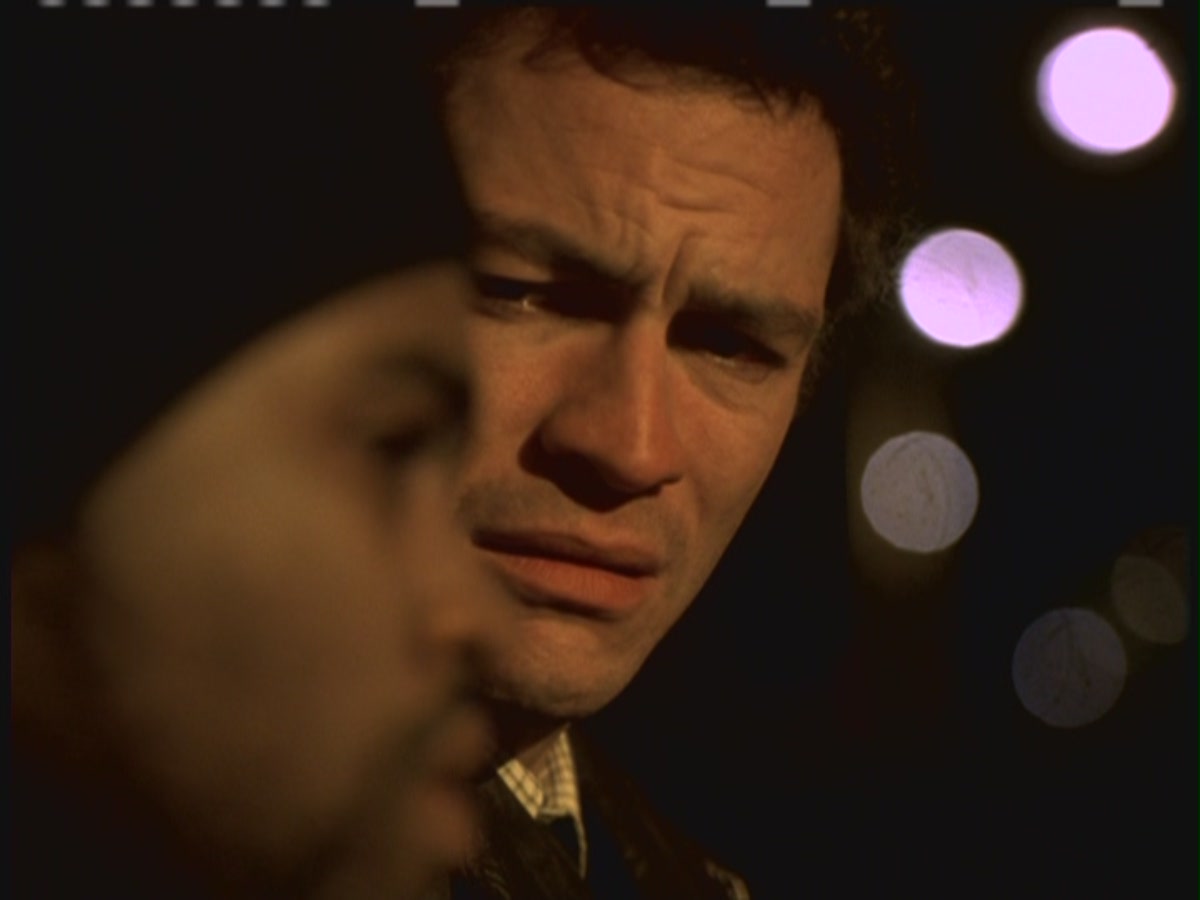
Anatomy of a Scene – ‘How you been, ya know, besides work?’ (True Detective)

“However, they both are excellent detectives, dedicated to solving crimes, and are each other’s yin and yang by keeping the other one honest.”

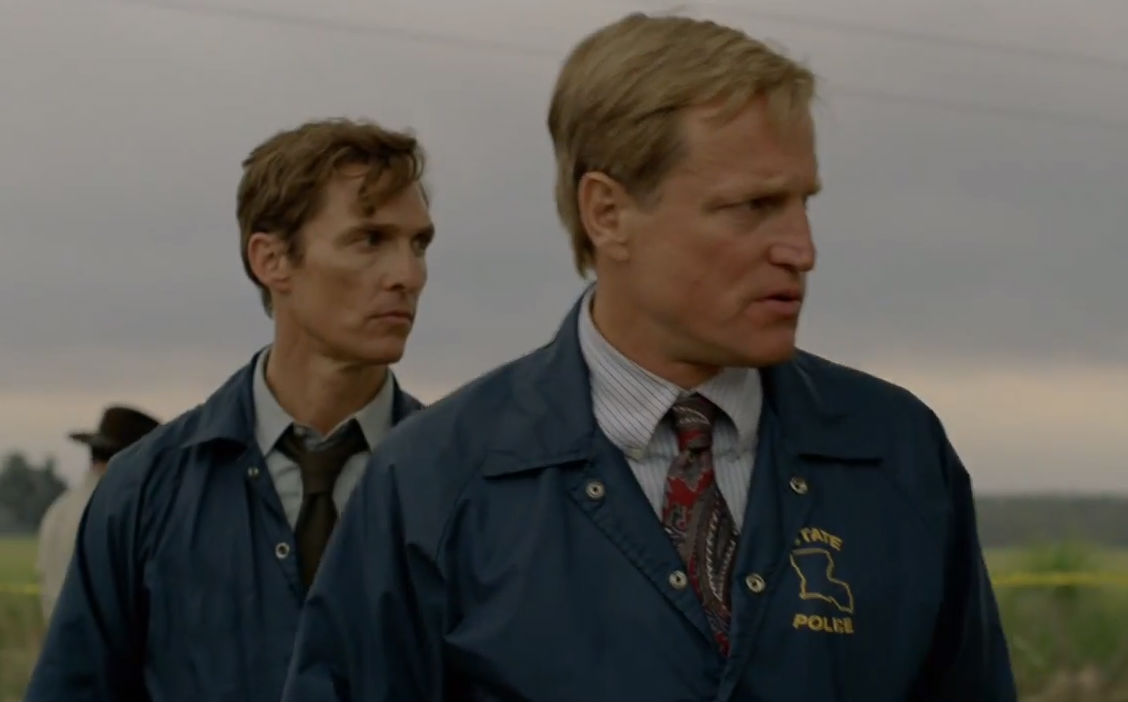
True Detective, Season 1 on HBO aired over ten years ago but it’s still regarded as one of the best TV drama seasons of all time. Part of its lore lies in its storyline and direction, but a lot of credit also should go to the lead actors, Matthew McConaughey and Woody Harrelson. The two actors who play Rustin ‘Rust’ Cohle and Martin ‘Marty Hart’ respectively do an excellent job of showing these actors at different periods in their lives and careers as detectives with the Louisiana State Police. Both men appear to be opposites at the start and the friction(s) that they have intensify over the year. However, they both are excellent detectives, dedicated to solving crimes, and are each other’s yin and yang by keeping the other one honest.

Few shows since that season of True Detective or the seasons of the popular anthology series since the 1st season with Rust and Marty have achieved the same level of on-screen chemistry and presence. It helps that off-screen both actors are close friends and have known each other for decades. They’ve been quoted as almost being like ‘brothers’ sharing the same sense of humor, profession, and having different hobbies in common. While True Detective with Marty and Rust happened over ten years ago, there are rumors swirling around that both characters could come back in the future for another story by showrunner Nic Pizzolatto.

One scene on the show that really sums up their rocky relationship and occurs later in their troubled careers. Not only do they have unfinished business with each other in terms of reconnecting and perhaps getting over their troubled past but also to attend to possibly solving a murder mystery central to the season’s plot. At this point in the season, they are older, not on the force anymore as detectives, and life has both affected them in different ways including estranging them from their former family and friends.

Marty Hart, for example, is balding, lives alone after separating from his now ex-wife, and doesn’t have sole custody of his daughters anymore. He doesn’t cook much (it’s implied), likes to fish for a hobby, has trouble finding purpose in his current job, and has resorted to online dating (unsuccessfully so far) even though he insists it’s ‘casual’, but likely wants to have a new relationship via Match.com. Rust Cohle, has grown his hair and beard out, looks a bit older due to his smoking and drinking habit, owns a bar in rural Louisiana, is isolated but does seem to enjoy the quiet of living by himself and spending time watching the sunset each night while drinking a beer.

You can tell by the montage of this scene in the show that as the years gone by, they’ve lost connection not only to their purpose and to each other, but also to what made truly worth living. They may have other jobs and maybe some other things keeping them going, but they miss the work they did, the past relationships they squandered, and even each other begrudgingly.

While the montage showing them settling into middle age monotony may be unsettling, the short scene does give them a chance to reconnect again, get to know each other on a personal level outside of detective work, and work together to find a purpose again. In this case, there’s a murder mystery to solve and they cannot do it by themselves. Since they both are single, one divorced and the other non-committal to it, seemingly estranged from their current work and lacking purpose, they need each other ten years later more than they could ever know.

Life can get lonely without friends or family but especially if there’s no one around to help you find your purpose. I think that’s why this scene is so key within the show is that it shows Marty and Rust may feel like they’re alone, but they do have each other despite their past differences. Sometimes, you must go through some solitary times in life to find out what you really want to do or who you really want to spend your time with. Rust knows he is alone as the scene makes clear, but he has made peace with the loneliness even if he might wish for a girlfriend or a friend to drop by the bar after it closes. Marty had a marriage and a good relationship with his children but unfortunately, he was not able to balance it with his work life and his infidelity.

The scene’s montage shows the years have been a bit hard on Marty as he tries to rekindle what he once had but being unsuccessful at doing so. The montage shows you just how precious our situation can be with work, with love, and with family, and that you can’t go back and change the past. As much as you might wish to catch lightning in the bottle twice as is the case with Marty in terms of finding love or companionship, sometimes, those second chances never come around. The fact that they each have each other in their lives again, even with their storied pasts, is a good thing and shows that they still have an innate purpose regarding their work as detectives and that they are better off working together than being apart. In time, they will get back their skillset, work to solve the case, and even become friends again, which can help put their loneliness at bay.

While this scene of them living isolated lives may be looked on as depressing, I think it is a realistic look at how life can get as you get older. You may have to deal with periods of loneliness or getting swept up in a routine that grows stale. However, it’s important to remember for all of us watching is that life throws us curveballs sometimes and you never know who will appear in your life again or what kind of purpose and worth you can find in the most unlikely of places. For Marty, it was seeing Rust’s trust again on the road after ten years as they drove on the same road, and there was more to their story together, and they think they were both happy to find each other again and work towards getting their sense of purpose back together.

Anatomy of a Scene – Bourdain’s ‘Parts Unknown’ in Congo and NYC Contrast

“One of Anthony Bourdain’s ‘Parts Unknown’ episodes in the Congo has one of the show’s best scenes where it has a vivid description of Bourdain gazing over New York City from his high-rise apartment in the closing moments, set up against the backdrop of his first and only foray to the Democratic Republic of Congo.”

If you had to pick opposites in the world, you couldn’t do much worse to contrast the journey through the thick Congolese jungles and down the Congo River with the urban sprawl of New York City. One of Anthony Bourdain’s ‘Parts Unknown’ episodes in the Congo has one of the show’s best scenes where it has a vivid description of Bourdain gazing over New York City from his high-rise apartment in the closing moments, set up against the backdrop of his first and only foray to the Democratic Republic of Congo.

There are multiple themes to take away from the significance of Bourdain’s perilous journey in the Congo throughout the episode and with the contrasting solitude and isolation he likely had felt back in his NYC apartment after such a harrowing trip. There is a burden that he must have felt in witnessing such a contrast between the Congo and New York City that leaves the contrasting scenes up for our interpretation as fans of his ‘Parts Unknown’ show. How easy it can be to feel lonely amongst millions of people after traveling to such a distinct place, the burden of making it through a perilous journey and putting your life on the line, and how traveling to such extreme places can change your sense of place in a complicated and often troubling world.

Before his passing in 2018, Anthony Bourdain was the preeminent travel host for over 15 years and his last show, Parts Unknown, from 2013-2018 was the deepest dive in his own mission of uncovering people’s stories through food and culture. In terms of looking at human nature and the human condition, few shows, if any, were better than Parts Unknown. More than anything, many of the Parts Unknown episodes had Bourdain providing needed historical context regarding the complex and difficult history of the country or place he would be visiting. This was especially the case during the Congo episode where he spends part of the episode looking at the colonial exploitation, civil conflict, and poverty that has gripped the country both before and after it became the nation state known as the Democratic Republic of the Congo today.

Bourdain was a huge fan of the Joseph Conrad book, ‘Heart of Darkness’ and makes it known in the episode of how became obsessed with the Congo and the Congo River without trivializing the country or its people. His approach is sincere, and he looks to paint an accurate picture of what the Congo is like, why he sought to demystify and humanize the place, and how it was both similar and different to Conrad’s interpretation of it.

“When all is said and done, I wanted to go to the Congo, and I did.” Bourdain knew that this would be one of his most difficult journeys, but he also wanted to pay homage to Conrad’s novel by following a similar exploration to the authors with a boat trip down the Congo river. However, this kind of journey as shown in the episode was not simply a leisurely trip down the river without witnessing the history, culture, or food of the Congolese. Bourdain and his film crew interacted with different villagers, aid workers, and other locals to hear their stories despite how difficult the journey had been especially losing power on the boat and being surrounded by mosquitoes and other insects at one point.

It takes a toll on a person to look at the dark history of a place’s past as well as its uncertain present and not be affected by it. Bourdain has a visible weariness and introspection upon the conclusion of the journey given how hearing about the history of violence, dealing with the security issues involved, the lack of infrastructure to make the journey work, and to hear about the sheer resilience and fortitude of the Congolese people under extremely difficult circumstances.

The hardest part for Bourdain in my view maybe wasn’t the actual trip down the Congo river with all the bureaucracy, bribery, and lack of infrastructure involved to make it finally happen. I think the final scene of this Parts Unknown episode sums up the ‘lost’ feeling and the isolation to have witnessed all that and come back to a New York City that is abundant, thriving yet inequal, and with a completely different set of circumstances than one would encounter in the Congo. There’s ‘culture shock’ and then there is experiencing a bit of a totally different reality that few Americans and fewer New Yorkers would ever see for themselves. This contrast in realities and the stark scene transition from leaving the Congo River to being back at his high-rise apartment in Manhattan is perhaps the greatest scene ever shot for Parts Unknown or in any of his travel shows.

To break down this excellent scene and contrast further, Bourdain is in one of the world’s most crowded cities, but he is alone and isolated in his apartment like being isolated from most people’s lived experiences of the world, which pales in comparison to his own having had been to over 100 countries in his travels. He is filmed sitting behind his apartment windows, which acts as a barrier between Anthony and the rest of the world, seeing everything for himself but finding it difficult to connect with his immediate surroundings in NYC after witnessing such a contrasting reality in the Congo.

I think this final scene of the Congo episode really encapsulates Bourdain’s struggle as a travel host and writer to search for meaning and purpose in a world that often feels indifferent or alienates the struggles of other people who live in a different place or country. Bourdain’s gaze through the window symbolizes the distance between the world he witnessed and the world he felt disconnected from. It reflected the existential tension that marked his life: the constant search for meaning, tempered by the knowledge that some things, no matter how deeply we travel, remain elusive.

In his life, Antony Bourdain likely felt a sense of solitude and isolation having witnessed the worst of humanity at times, which could be hard to relate to other people or even travelers who had not been to the same places. He was brave, kind, and let other people to tell their stories without judgment but it must have been lonely especially after a return from the Congo and returning home where he may have felt the most alone rather than out on the road with others in his crew or amongst people he had met. There is a loneliness in the familiar as any traveler can attest and the novelty of new places, people, and experiences make the routine feel mundane and trite. Bourdain’s entire journey, in this case, from the Congo back to his home in New York, shows that it can be hard to come full circle after visiting one of the least known places in the world.

The final shot of Anthony Bourdain in his New York City apartment, looking out over the vast, bustling city, yet consumed by solitude, serves as a poignant culmination of his journey as a seasoned traveler. After traveling the world, exploring the darkest corners of humanity in places like the Congo, Bourdain returns home, not with answers, but with a profound sense of isolation. The Congo episode, with its harrowing depictions of suffering and resilience, reflects the complexity of human nature that Bourdain grappled with throughout his career. The contrast between the vibrant, chaotic cityscape of NYC and Bourdain’s contemplative stillness in his apartment alone emphasizes a universal paradox: despite all the human connections made in the world, the traveler often finds themselves confronted with a loneliness that cannot be filled as a result.

Bourdain’s Parts Unknown was not merely about exploring food and culture, but it was also an exploration of the man himself. His travels were a quest for greater understanding, but they also unearthed the difficult truth that knowing the world does not necessarily mean knowing oneself at the same time. In the end, Bourdain’s legacy lies in the raw, honest portrayal of this duality, the external world and the internal battles that shape who we are. His life story continues to remind us that, no matter where we go or how much we learn, we all face the same fundamental challenge in life: to find a true connection in a world that often seems vast, indifferent, and overwhelming.

Anatomy of a Scene – ‘Capital Gains’ (The Wire)

“Additionally, the subplot involving one of the show’s lead characters, Jimmy McNulty, taking a bribe adds depth to the show’s narrative, reflecting the complex moral compromises made by the working class to survive in a system that often leaves them behind and without any viable mobility upwards.”

The opening scene of “The Wire” Season Two serves as a powerful commentary on socio-economic disparities that continue in modern-day America. This scene that I would like to highlight, through both its characters and setting, sets the tone for exploring themes of economic hardship, corruption, and the American Dream’s elusive nature. Additionally, the subplot involving one of the show’s lead characters, Jimmy McNulty, taking a bribe adds depth to the show’s narrative, reflecting the complex moral compromises made by the working class to survive in a system that often leaves them behind and without any viable mobility upwards.

The scene itself opens with a bleak view of the channel leading to the port of Baltimore, which various imagery reflecting the industrial decline and economic stagnation affecting the middle class of the city. Characters are introduced through their mundane yet telling actions, highlighting their struggles and aspirations. Jimmy McNulty’s character, a police detective with a perennial professional chip on his shoulder amid his own set of personal challenges, becomes embroiled in a morally dubious activity by the end of the scene, further complicating the framing of certain characters being ‘purely good’ and others being ‘purely bad.’ With ‘The Wire’, there are many shades of gray in morality and understanding the reasoning behind characters’ actions.

The cinematography of this scene uses dark, muted tones to emphasize the grim reality of the workers’ lives. The ambient sounds of the port’s gray and murky waters, combined with a somber soundtrack of foreboding ahead, enhance the sense of despair and frustration with the status quo. These visual and audio elements work in tandem to create an atmosphere that underscores the themes of economic hardship and moral compromise that permeates the iconic show’s second season.

The central theme of this scene revolves around the precipitous decline of traditional industries such as manufacturing, shipbuilding, and longshoring in Baltimore, and its deleterious impact on the middle class there from its decline. The scene underscores the economic disparities and the futile chase for financial stability, a stark contrast to the wealth and power depicted elsewhere in the series and for which the middle class is forced to shield the wealthy or protect them from the errors of their poor decision making. McNulty’s acceptance of a bribe is a poignant example of the lengths to which some individuals without economic security will go to make ends meet, even if it means compromising their ethics in the face of financial malaise and stagnation.

The middle-class workers, portrayed prominently in season two, with a sense of resignation to their fates and perseverance despite the odds, contrast sharply with the wealthy individuals who appear disconnected from these struggles including in this scene as they dance, drink, and party onwards. The boat that they drift across the deteriorating port and city channel is aptly named ‘Capital Gains’ for which they profit off selling those companies and laying off the works who help make the economy run. They get rich from the assets, stocks, bonds, and other ‘capital gains’ they trade and sell while the working class shoulder the increasingly large burden of doing the hard, dirty, and often unappreciated work that is the real ‘labor’ keeping the economy and the nation moving forward without enough money to show for their hard work and efforts.

These interactions between the characters in this scene and elsewhere in the show highlight the inherent power imbalance and the lack of upward mobility for the middle class. McNulty’s character epitomizes the moral gray areas navigated by those who find themselves caught between maintaining their integrity and dealing with the necessity of surviving economically. His own willingness to take a bribe reflects a broader theme of systemic corruption and the desperate measures taken by the working class to stay afloat when the rest of the economy gets hollowed out all for more ‘capital gains’ and ‘stock buybacks.’

Officer Jimmy McNulty’s involvement in taking a bribe exemplifies the complex dynamics of survival within the working class. Faced with limited options and a pressing need to provide for themselves and their families, individuals like McNulty often resort to unethical practices. This subplot highlights the pervasive nature of corruption and the moral compromises made by those who feel trapped by their circumstances. It illustrates how the working class is sometimes complicit in perpetuating a system that exploits them, driven by the necessity to secure their economic survival.

The scene mirrors contemporary issues such as job insecurity, wage stagnation, and the shrinking middle class. It critiques the capitalist system that often leaves the working class in a perpetual state of struggle while the wealthy thrive. McNulty’s actions can be seen as a microcosm of larger societal issues, where individuals are forced to compromise their values due to economic pressures. This reflects the broader reality of modern-day America, where financial hardship can lead to ethical lapses and the erosion of moral standards.

From that opening scene onwards, season two of “The Wire” further delves into the lives of dock workers in Baltimore, painting a vivid picture of the economic decline faced by the American working class. The season explores themes of globalization, the loss of blue-collar and good-paying jobs, and the resulting social and economic fallout. The working class is depicted as being left behind in the wake of economic shifts, with their traditional livelihoods eroded by technological advancements and policy changes favoring the wealthy and corporate interests.

The narrative highlights the systemic failures that contribute to the marginalization of the working class. Characters are often portrayed as victims of circumstances beyond their control, struggling to navigate a landscape where opportunities are scarce, and the cost of living continues to rise. The season’s portrayal of the working class serves as a critique of the socio-economic structures that perpetuate inequality and hinder social mobility.

Since “The Wire” first aired on HBO, the American Dream has continued to remain elusive for many people in the United States. The show brought these emerging issues to light in the early 2000s, highlighting the struggles of the working class in a society increasingly marked by economic inequality and technological upheaval. “The Wire” was ahead of its time in addressing these themes, as income inequality has only worsened since then.

The gap between the rich and the poor has not been alleviated, and the systemic issues the show portrayed are still prevalent today. The depiction of the working class’s plight and the moral compromises they make to survive reflects ongoing societal challenges, not just in the U.S. but around the world. The show’s foresight in presenting these issues has made it a timeless piece, resonating with audiences who continue to witness the widening economic divide in modern America.

This scene from “The Wire,” coupled with McNulty’s own moral compromise, is a microcosm of the broader socio-economic issues facing modern-day America. Through its poignant depiction of the middle class’s struggles and the ethical dilemmas they face, it offers a critical perspective on the elusive nature of the American Dream. Season Two’s exploration of these themes highlights the systemic challenges that continue to affect the working class, underscoring the need for a deeper understanding and more equitable solutions to address these persistent economic and social disparities.

The Brilliance of Curb Your Enthusiasm

“Created by and starring the incomparable and legendary Larry David, this groundbreaking television series has left an indelible mark on the landscape of comedic television forever.”

In the realm of television comedy history, few shows have attained the iconic status and enduring brilliance of HBO’s “Curb Your Enthusiasm.” Created by and starring the incomparable and legendary Larry David, this groundbreaking television series has left an indelible mark on the landscape of comedic television forever.

From its razor-sharp wit to its unapologetically irreverent humor, “Curb Your Enthusiasm” stands as a testament to the genius of its creator and the unparalleled hilarity of its ensemble cast. In this reflection on the recent 12-season end to this timeless show, I will dive into what makes “Curb Your Enthusiasm” one of the best comedy shows of the current century, examining its societal critiques, witty dialogue usage, and the reasons for the genius behind show creator, Larry David’s success.

At the heart of “Curb Your Enthusiasm,” lies its fearless examination of social norms and conventions, some that I would argue as the show does are both outdated and tiresome. Through its biting satire and clever storytelling, the show offers a candid and often uncomfortably honest portrayal of everyday American life. Larry David, known for his role as the co-creator of “Seinfeld,” brings his signature brand of observational humor to “Curb Your Enthusiasm”, presenting audiences with a heightened reality where social etiquette is put under a microscope and hilariously dissected.

One of the show’s defining features is its ability to derive comedy from mundane situations, turning everyday occurrences into laugh-out-loud moments. Whether it’s navigating the intricacies of a dinner party or grappling with the complexities of personal relationships, “Curb Your Enthusiasm” finds humor in the absurdities of human behavior. This relatable quality endears the show to audiences of all backgrounds, as viewers see themselves reflected in Larry David’s misadventures and faux pas.

Central to the success of “Curb Your Enthusiasm” was its groundbreaking use of improvisation. Unlike traditional sitcoms with scripted dialogues, “Curb” relies heavily on improvised performances, giving its actors the freedom to explore their characters, and react in real-time. This unscripted approach lends a unique authenticity to the show’s interactions, allowing for spontaneous moments of comedic brilliance that feel genuine and unrehearsed.

Larry David’s portrayal of himself as a fictionalized version of his persona is nothing short of a genius move. Through his character, also named Larry David, the creator skewers societal norms with fearless abandonment, fearlessly tackling taboo subjects, and challenging conventional wisdom. David’s willingness to embrace discomfort and confront controversial topics head-on sets “Curb Your Enthusiasm” apart from other comedies, elevating it to a league of its own.

The ensemble cast of “Curb Your Enthusiasm” further contributes to its comedic brilliance. From Jeff Garlin’s portrayal of Larry’s loyal but perpetually exasperated manager, Jeff Greene, to Richard Lewis, a fellow comedian dressed in black perpetually and Larry’s comedic foil, to Cheryl Hines’ pitch-perfect performance as Larry’s long-suffering wife, Cheryl, each actor brings their A-game to the show, delivering performances that are equal parts hilarious and heartwarming. The chemistry between each of the cast members is palpable, lending an authenticity to their interactions, which was essential to the show’s long-lasting success.

Beyond its comedic brilliance, “Curb Your Enthusiasm” is also notable for its incisive social commentary. Through its satirical lens, the show tackles issues of race, religion, politics, relationships, friendships, and more, offering a searing critique of contemporary American society. Whether it’s exposing the absurdity of political correctness or challenging entrenched stereotypes, “Curb” fearlessly confronts the ‘elephant in the room’, sparking real conversations between its viewers, and provoking a good amount of thought long after the credits roll.

Another hallmark of “Curb Your Enthusiasm” is its distinctive dialogue patterns. The show is renowned for its rapid-fire banter and quick-witted repartee, with characters engaging in verbal sparring matches that are as entertaining as they are memorable. Larry David’s penchant for wordplay and linguistic acrobatics infuses the show’s dialogue with a playful energy, keeping audiences on their toes, and delighting in every clever turn of phrase.

Perhaps the most remarkable aspect of “Curb Your Enthusiasm” is the way in which it blurs the lines between reality and fiction. Larry David’s decision to play a fictionalized version of himself blurs the boundaries between the actor and the character, inviting viewers to question where the line between truth and fiction truly lies with regards to if Larry behaves as his character, Larry will do. This meta-narrative device adds an additional layer of complexity to the show’s storytelling, challenging audiences to discern where reality ends and satire begins.

Larry David’s success in making “Curb Your Enthusiasm” a TV show hit can be attributed to his uncompromising vision and unwavering commitment to his craft as an actor. As both the creator and star of the show, David brings a singular voice to the screen, infusing each episode with his unique perspective and razor-sharp wit. His willingness to push boundaries and defy expectations has earned him a devoted following amongst fans including myself and has cemented his status as one of the most influential figures in comedy history.

“Curb Your Enthusiasm” stands as a timeless masterpiece of television comedy, a show that continues to resonate with audiences more than two decades after its initial debut. Through its fearless satire, impeccable improvisation, and incisive social commentary, “Curb” offers a refreshing take on the human condition, challenging conventions, and sparking a lot of genuine laughter in equal measure. With its brilliant writing, unforgettable characters, and fearless exploration of society’s taboo subjects, “Curb Your Enthusiasm” has rightfully earned its place as one of the comedy shows of this young century, leaving an indelible mark on the world of television, and inspiring countless imitators in its wake.                                

Larry David’s previous successful show, “Seinfeld”, and “Curb Your Enthusiasm” are often mentioned in the same breath, given their shared DNA through David’s involvement. While both shows explore the intricacies of human behavior and social conventions, they do so through distinct lenses. “Seinfeld” operates within the confines of a traditional situational comedy or ‘sitcom’ format, with scripted dialogue and episodic storylines centered around four main characters, one of whom, ‘George Costanza’ was based on Larry David’s past experiences living as a younger man in New York City. In contrast, “Curb Your Enthusiasm” eschews traditional sitcom conventions in favor of a more improvisational approach, blurring the lines between reality and fiction with its mockumentary-style presentation.

Despite these differences, the two shows share a common thread in their exploration of the minutiae of everyday life. Both “Seinfeld” and “Curb Your Enthusiasm” derive humor from the absurdity of human behavior, finding comedy in the mundane and the trivial. However, where “Seinfeld” often relies on situational humor and elaborate plotlines, “Curb” thrives on its characters’ interactions and spontaneous moments of hilarity that arise from their social faux pas. In considering which of the two shows may be perceived as superior to the other, one could argue that “Curb Your Enthusiasm” holds the edge due to its fearless approach to comedy and its willingness to push boundaries.

While “Seinfeld” remains a beloved classic with its timeless humor and iconic characters, “Curb” distinguishes itself through its unapologetically irreverent tone and its willingness to tackle taboo subjects head-on. Additionally, “Curb” benefits from the creative freedom afforded by its HBO platform, allowing for more explicit language and mature themes than its network predecessor. Ultimately, whether one views “Curb Your Enthusiasm” or “Seinfeld” as the better of the two shows may come down to personal preference, but there’s no denying the lasting impact and enduring brilliance of both series in the pantheon of television comedy history. Overall, Curb Your Enthusiasm is a pretty, pretty, pretty good show and one worth watching again and again.

“Got to, This is America, Man…” – Anatomy of a Scene

“‘The Wire’ is the greatest television show of all-time. Even as the show nears the 20th anniversary since when it first aired on American cable television network, HBO, it still rings as culturally relevant and as emotionally stirring as it was when it first debuted in the Summer of 2002. While technology may be different now, the characters would not be the same, the setting could be different from the show, the overall themes, and messages from ‘The Wire’ as well as the institutions that the show focused on for five great seasons have not changed that much.”

‘The Wire’ is the greatest television show of all-time. Even as the show nears the 20th anniversary since when it first aired on American cable television network, HBO, it still rings as culturally relevant and as emotionally stirring as it was when it first debuted in the Summer of 2002. While technology may be different now, the characters would not be the same, the setting could be different from the show, the overall themes, and messages from ‘The Wire’ as well as the institutions that the show focused on for five great seasons have not changed that much.

I could write a thesis on ‘The Wire’ and devote at least 10,000 words on the show in terms of an in-depth breakdown on how it’s the modern equivalent to a Shakespeare tragedy or drama. However, in this ‘Anatomy of a Scene’, I am going to focus on one of my favorite scenes in this classic television show. This scene is the opening one for the entire five-season series and discusses a core tenet of the show not just about what kind of ‘game’ that the characters play, but also the ‘game’ inherent to the setting of Baltimore, Maryland as well as America as a country.

The opening scene, more than any other scene, even if it is the 1st, one pinpoints exactly what ‘The Wire’ is about. In the first shots, you can see a young man lay face down dead on the ground on some dark city street with the police collecting evidence and a main character, who is a detective, questioning a potential witness. The associate of the victim talks about how they were involved with street gambling and how it was not fair that it was not right to kill the victim, non-ironically known as ‘snot boogie’ to the game’s players. The victim of the crime has a real name but is endeared to the rest of the game’s players by that nickname alone.

As the witness explains to Detective Jimmy McNulty of Baltimore Police, ‘Snot Boogie’ was the victim of the crime, but his associate did not expect him to be killed for stealing from the other players of the street game for playing craps. The associate tells McNulty that the victim is known for stealing and grabbing the money to run away but they never want beyond just ‘beating his ass’ up a bit.

While it is a grim description of the dangers of gambling illegally on the streets, the witness to McNulty’s murder case explains that there is an unwritten rule to the ‘game’ of street gambling and that ‘Snot Boogie’ should not have been murdered for stealing from the other players. Nobody ever tried to kill the victim even after he was found guilty of stealing money from the street game players even if they did often catch him and beat him for having done it multiple times.

The witness refuses to tell McNulty who killed his associate in this game and does not want to go to court even though he believes it was disgraceful how ‘Snot Boogie’ was killed because they always let him play even though he would always steal from them.
“I got to ask ya, if every time Snot Boogie would grab the money and run away…why’d you even let him in the game?”
“…What?”
“If Snot Boogie always stole the money, why did you always let him play?”
“Got to, This America, man.”

McNulty looks incredulously as the witness tells him this reasoning because at its face, it does not make much sense for a guy who steals from folks repeatedly to continue playing a dangerous and illegal craps street game. It’s clear to both characters that life itself, and life in America is far from being fair at the end of the day especially a man got killed, which was against to how the game was being played, according to the witness, even if he was stealing from them.

Even if the game is fair or is rigged to some degree, it occurs to the witness and then McNulty after he sees the guy’s reasoning that even if the game was not meant to be won and the result would always be the same, you still let the game play out. The game may not be fair like life itself in general or in America, but it must be played by everyone. It may not be a fair shot and there is no equal outcome, but there is equal opportunity out there for each player to be involved even if someone cheats, steals, and comes back to play again. The game exists for everyone to be given a shot at it and if they don’t, that’s against the principle of life itself and life in America.

There are tragic consequences to this craps game for Snot Boogie who loses his life senselessly as well as for the men who will go to jail for it or lose all their money, but the game goes on and it’s open to everyone. Like the witness explains, the game deserves to be played by everyone equally although the outcome may not be something everyone will like or even will cost some people dearly. This excellent opening scene opens with the most prominent themes of The Wire perfectly and almost seems like a graphic novel come to life. Its visuals are striking, the characters are who you can relate to on a human level, and there is a lot of foreshadowing about the rest of the show and its messages to the viewers from this tone-setting scene.

‘The Wire’ is a show about the early stages of 21st century America in its first decade of the 2000s but it is as still as relevant about 20 years later. The metaphor of this opening scene for not just a couple of guys in a craps game gone wrong in the street can pair directly too what can happen when capitalism can go off the rails when someone tries to beat the rules or try to gain an advantage when they are put at a disadvantage to begin with. If the game is rigged from the get-go even if you’re given a shot at it, what’s the point in playing by the rules? If you can beat the system even if there are dire consequences, is it not worth trying?

‘Snot Boogie’s associates knew he was a thief and a cheater because they believed that he still deserved a shot at winning like everyone else even though it was likely rigged so he would never make it after multiple tries. As the opening scene of the greatest television show of all-time shows the viewer, everybody can play the game even if they are a cheater in the sense of having equal opportunity, but what happens when no one is held accountable when the odds are stacked against them from the start of the game and there is no other way to win than by cheating the system and facing serious consequences?

The show may not be defined by its iconic opening scene but as you find as you watch the entire series, the metaphor for what that scene represents about the show and about the ethic that binds American society together long after you finish watching each of its five seasons.