Slip, Counter, Repeat – What Boxing Taught Me About Surviving Real Life

“Life, like the sport of boxing, isn’t about taking punishment, it’s about learning from your mistakes, moving to avoid future errors, reading what the next move(s) could be thrown at you, and responding with precision when you make your counters.”

I remember the first time when my trainer told me to stop blocking punches and start slipping and dodging them instead; it rewires your brain to not just try to absorb the punishment but to dodge and counter it with the same enthusiasm. Life, like the sport of boxing, isn’t about taking punishment, it’s about learning from your mistakes, moving to avoid future errors, reading what the next move(s) could be thrown at you, and responding with precision when you make your counters.

You’re not always going to win the fight like you’re not going to always win in life, but if you know to slip, dodge, and counter, you’ll lose less and learn from your mistakes to be better not just at boxing but in life itself. For myself, you can learn more from boxing than you can from a traditional classroom and there’s a lot of justified metaphors for how this unique sport translates over to how to win in life.

Most setbacks in boxing aren’t knockout punches, they’re jabs. They are meant to measure you, test your resolve, and see how you react to them. A jab is like the difference between a crisis and a probe, meant to read what’s being thrown at you. Like overacting to an unfortunate event in life, you don’t want to overreact to a jab in a sparring session or a fight. You don’t want to waste precious mental and physical energy worrying too much about the jab when you should be focused on what could come after it. Burning bridges, making decisions from panic in life will cost you more in the long run instead of pausing, thinking it through, and coming up with your counter. Not every jab deserves a full combination back from you; but you should be sizing up your opponent (life) and figuring out what the next move is going to look like.

The slip, in boxing, isn’t a retreat, its intelligent non-contact, you keep your feet planted and you move your head to avoid the damage. When you apply that approach to life, it’s about knowing which arguments, which jobs, and which people to let pass by cleanly. If you don’t slip and you think you can dodge very blow when you’re flat footed, you’re going to get hit and take shots that you could have avoided making you worse off than before. Don’t let your ego stand in the way of protecting yourself and know that you’re saving yourself for the long struggle in the ring and outside of it, if you know how to slip a punch. This is a very underrated skill of not engaging everything that comes at you or wants a piece of you. You shouldn’t be engaging in contact or giving a response to everything headed your way; something, it’s best to slip it.

In boxing, the counter punch is thrown at the same moment your opponent overextends themselves and life works the exact same way. When you face adversary or a challenge, life should open to you as the moment of disruption can create an equal opportunity as a result. When you counterpunch an opponent in the ring, you’re meeting the moment and taking advantage of an opportunity even while you’re putting yourself at risk. When you counterpunch in practice outside of the ring, you are changing careers, rerouting plans, pivoting to new skills, turning obstacles into reaffirming moments and repositioning yourself for future success. Timing matters though so make sure that when you throw your counter it comes at the right time because if you do it too early or too late, it’s not going to land cleanly and is going to look more like a wild swing out of desperation.

Any boxer will tell you that footwork is pivotal to mastering even before the fight starts and positioning yourself well could end up making the difference. Champions don’t improvise their way through fights; they control the ring before the first punch lands and are always moving their feet to be in the best position possible. In life, you have got to build skills, relationships, and options for yourself even during the calm periods so you’re not scrambling to make progress when things get hard or when you need immediate success. Good footwork is about optionality and always having somewhere to move to or from and not backing yourself into a counter. Being light on your feet, agile, and not getting caught flatfooted by comfort, complacency, or cockiness will help you win the fight and in your life.

When someone or something seems impenetrable, you have got to shift your attack and rethink your approach. You must be able to play the long game when you can’t get through your opponent’s guard. You must be persistent, shift your strategy, and choose different pressure points to wear down your opponent. Slow, consistent pressure will win over dramatic gestures or do the same thing repeatedly to expect a different result. Boxing and life both require mental discipline by delaying your own gratification and using sustained effort to get the wins that you are seeking. If your opponent is blocking one approach, you have got to go for a different strategy and try to find a weakness or opening elsewhere. Shift your approach when it calls for it and don’t keep trying without mixing it up to get the success you are fighting for.

You will get hit. You will get bruised. You are going to fail. The question is whether you’re falling forever or rolling with the punches. ‘Rolling with the punches’ is known as the physical technique of being able to deal with getting hit and absorbing blows with some difficulty without catastrophizing the effect of getting hit to prevent you from fighting back. Resilience in the ring and outside of it is about knowing when you can take the hit and keep moving forward and you must get back to the center after it by reset, breathe, drink some water, find your focus and your range again, and stay in the fight. Only throw in the towel when you know the hit has changed the fight and you’re not continuing out of sheer stubbornness. Sometimes, you know you’ve lost the fight when you’ve taken too many hits and it’s better to call it quits to fight another day than to lose everything in that one night.

Even the greatest fighters in boxing don’t go the three-minute rounds alone; they have someone cutting the swelling during rounds, giving timely advice, and cheering you on from your corner. We need coaches in boxing just like we need mentors, honest friends, and trusted advisors who tell you what’s happening rather than what you want to hear from them. Be wary of having a ‘yes man’ in your corner in the ring or in your life. A corner that is not truthful with you and only hypes you up will get you knocked out because they fail to take account of your weaknesses as well as your strengths. You got to build your corner up wisely over the years and have good people you can rely on who will tell you the truth, support you through thick and thin, and know when the fight is over to save you from yourself sometimes.

Any good boxer knows how to make some adjustments in the middle of fight and to change their game plan when it comes to their opponent. The fighter who can’t adapt gets figured out by round four and usually doesn’t win the match. It can be hard to invest in something you’ve put days, weeks, months, or even years into developing but you need to have the discipline to abandon a pursuit, strategy, or plan even after investing heavily into it. When we think of a sunk cost in boxing, the mistake is like throwing a hundred punches the same way even when they aren’t landing in each round and that strategy is costing you to lose the fight. Be prepared to constantly pivot as you would in the real world whether it’s professionally, personally, or geographically because doing the same thing again and expecting a different result is lunacy and it shows up both in boxing and in your life.

You don’t train to be a boxer to avoid any difficulty that you’ll face, you train to be someone who can handle it when it arrives, and that also goes for any facet of your life. You dodge and counter not just as well-known tactic in boxing but as a mindset for your entire life. You don’t dodge and then not counter, any action deserves a response, but it must be measured, appropriately, and done patiently. You should always be moving forward but with the wisdom that sometimes, you’re going to have dodge a punch like you would dodge a toxic person, a bad boss, an unfortunate upbringing, and be able to counter by moving towards a result and a life that you can be proud of.

As someone who enjoys boxing, I’m always thinking about how I’m going to slip the next punch and what counter I can set up as a result to move forward in the contest. Think about this for yourself: what ‘punch’ are you slipping right now in your life, and what counter are you setting up? Life, like boxing, can be difficult sometimes, but if you can slip, dodge, and counter, you’ll be able to handle any adversity, meet any challenge head on, and be successful in whatever you put your mind and body to.


My First Attempt at English Poetry (March 2025)

Taking a break from my Spanish poems to write some poems, the first in a series on English language poetry, which I am new to!

1. Layover Nights

Jetlagged again,
3 AM blinks on the clock,
Sleep slips through my fingers,
Mind unraveling miles away.

Is this the life I chased?
A suite with a view, but you’re not here.
Other side of the world,
Feet to the floor,
Another day in paradise—
Or just another day alone?


2. Trapped

Loveless job,
Loveless bed,
Loveless life?

The hamster wheel spins,
But I refuse to run.
Not again.
Not this time.

Life’s too short
To live behind glass.


3. Hotel Bar

A stranger in a dim-lit room,
Another Elton John hit sways through the air.
The piano man knows the chords,
The bartender waters down the whiskey,
And your eyes hold a question.

Shall we dance to Tiny Dancer?
No names, no promises,
Just a song, just a moment
Before morning erases us both.


4. Big Fish or Small Fish

Catch the big fish,
Be the big fish,
So much pressure on both.

Is it better to swim unseen,
A small fish in deep waters?
Or to rise, to glisten, to be devoured,
A trophy too tempting to let go?

Big fish take the bait,
Small fish slip through the cracks.
One feeds on ambition,
The other on time.

Who really wins?

Is ‘The Grass Always Greener’ On The Other Side?

“There is a sense of whimsy about wishing what would your life be like if you had made a different decision or if a different opportunity had come your way.”

The popular English language expression on ‘the grass is always greener on the other side’ is a common refrain when discussing the possibilities of where one could see themselves in a different reality or circumstance other than their own. There is a sense of whimsy about wishing what would your life be like if you had made a different decision or if a different opportunity had come your way. You may even want to switch places with someone else you know or someone you admire or someone you read about. Beyond that, it could also be wanting to live in a different city or country or to experience a different culture or set of customs other than the one you were born into or grew up in.

I find that there is nothing wrong with daydreaming about the possibilities for change or how to make your life better or more successful. I do think it is a good thing to be reflective as well on how others live, what you can take from their example or even discard based on your own perspective, and to not be afraid to even experiment with making different choices in life based on what others have done ahead of you. It is good to be inspired by other people, read about their lives, and to change your own approach to how you live, where you work, how you act, and what you can be within reason.

I think, however, that it is important to not be fantasizing all the time about how others live or envious of other people without knowing the full story. Being obsessed with mimicking or copying other people is also a recipe for disaster in my view. It is okay to be influenced by others around you who are making a positive impact and living life in a successful and moral manner. However, it does not justify being a ‘copycat’ or a ‘sycophant.’ Often, we must think for ourselves, make our own decisions, and to live a life true to our own morals, values, and code. Doing what others do just because they think it is ‘popular’, ‘cool’ or ‘successful’ is not what a mature individual should be following.

You may think that the other person or group of people has it all figured out, but the reality is much more complicated than that. You may envy the house, the car, the lifestyle, or the personality they have but often, you only know the surface of what you can see about that person. The same goes for endlessly admiring another city, country, or culture. It is okay to admire and adopt those customs, the food, the language, and the beliefs, but it’s important to take a step back to see what is compatible with you and what you would rather not adapt as your own self-expression.

As another saying goes, ‘walk a mile in another person’s shoes’, that is not a bad thing to do in life. Still, to automatically wish to live like them, be like them, and change who you are entirely is losing your own conception of self in the process. I am a fan of learning about other people, their backgrounds, their cultures, and their viewpoints, but that should be a way for you to more fully accentuate who you are as a result rather than change you are entirely. It’s good to see how others live, why they live like that, and be the more educated and worldly for it, but there’s a limit to how much we can live like those people.

Instead, use those variety of experiences, either lived or learned, to water ‘your own grass’ to be ‘greener and livelier.’ Instead of envy, jealousy or obsession, be more concerned with how to live a life that’s truer to yourself and what you wish to achieve. Think about what you’ve learned, seen, or heard, to adapt that to benefit your own life. Adopt those practices that will make your life better and make you a better person. Use your expansive knowledge based on living in different places, meeting different people, or studying different topics to make your life much more fulfilling and richer. We never truly have all the information regarding the lives of others and often we just see a snapshot of it rather than the full picture.

This is the same when we visit a place or even live there for a little bit of time. Even with that knowledge of a place and a people, we are not born there, or grew up there, and it limits our perception of what is going on there to some degree. Regardless of if you’re envious, apprehensive, dismissive, or neutral about a person, place, or culture, you should not automatically think that where you are or the ‘grass’ on your side is better or worse than theirs because you really can’t even make a real judgment.

You can always ‘walk in other’s person’s shoes’ for some time but you’ll never fully live in their shoes as they do. The same goes with where, why, and how we live and comparing it to others’ lives we learn about as they may want to have our life and we may want to have theirs, but we should remember that we will never have the full picture regarding their life’s circumstances. Instead of envying the ‘grass on the other side’ that we are constantly exposed to in person and online, you should remember to focus primarily on watering, fixing, and shaping your own ‘grass’ under your own feet and in your life to make it a more fulfilling, joyful, and happy kind of life to live.  

“Got to, This is America, Man…” – Anatomy of a Scene

“‘The Wire’ is the greatest television show of all-time. Even as the show nears the 20th anniversary since when it first aired on American cable television network, HBO, it still rings as culturally relevant and as emotionally stirring as it was when it first debuted in the Summer of 2002. While technology may be different now, the characters would not be the same, the setting could be different from the show, the overall themes, and messages from ‘The Wire’ as well as the institutions that the show focused on for five great seasons have not changed that much.”

‘The Wire’ is the greatest television show of all-time. Even as the show nears the 20th anniversary since when it first aired on American cable television network, HBO, it still rings as culturally relevant and as emotionally stirring as it was when it first debuted in the Summer of 2002. While technology may be different now, the characters would not be the same, the setting could be different from the show, the overall themes, and messages from ‘The Wire’ as well as the institutions that the show focused on for five great seasons have not changed that much.

I could write a thesis on ‘The Wire’ and devote at least 10,000 words on the show in terms of an in-depth breakdown on how it’s the modern equivalent to a Shakespeare tragedy or drama. However, in this ‘Anatomy of a Scene’, I am going to focus on one of my favorite scenes in this classic television show. This scene is the opening one for the entire five-season series and discusses a core tenet of the show not just about what kind of ‘game’ that the characters play, but also the ‘game’ inherent to the setting of Baltimore, Maryland as well as America as a country.

The opening scene, more than any other scene, even if it is the 1st, one pinpoints exactly what ‘The Wire’ is about. In the first shots, you can see a young man lay face down dead on the ground on some dark city street with the police collecting evidence and a main character, who is a detective, questioning a potential witness. The associate of the victim talks about how they were involved with street gambling and how it was not fair that it was not right to kill the victim, non-ironically known as ‘snot boogie’ to the game’s players. The victim of the crime has a real name but is endeared to the rest of the game’s players by that nickname alone.

As the witness explains to Detective Jimmy McNulty of Baltimore Police, ‘Snot Boogie’ was the victim of the crime, but his associate did not expect him to be killed for stealing from the other players of the street game for playing craps. The associate tells McNulty that the victim is known for stealing and grabbing the money to run away but they never want beyond just ‘beating his ass’ up a bit.

While it is a grim description of the dangers of gambling illegally on the streets, the witness to McNulty’s murder case explains that there is an unwritten rule to the ‘game’ of street gambling and that ‘Snot Boogie’ should not have been murdered for stealing from the other players. Nobody ever tried to kill the victim even after he was found guilty of stealing money from the street game players even if they did often catch him and beat him for having done it multiple times.

The witness refuses to tell McNulty who killed his associate in this game and does not want to go to court even though he believes it was disgraceful how ‘Snot Boogie’ was killed because they always let him play even though he would always steal from them.
“I got to ask ya, if every time Snot Boogie would grab the money and run away…why’d you even let him in the game?”
“…What?”
“If Snot Boogie always stole the money, why did you always let him play?”
“Got to, This America, man.”

McNulty looks incredulously as the witness tells him this reasoning because at its face, it does not make much sense for a guy who steals from folks repeatedly to continue playing a dangerous and illegal craps street game. It’s clear to both characters that life itself, and life in America is far from being fair at the end of the day especially a man got killed, which was against to how the game was being played, according to the witness, even if he was stealing from them.

Even if the game is fair or is rigged to some degree, it occurs to the witness and then McNulty after he sees the guy’s reasoning that even if the game was not meant to be won and the result would always be the same, you still let the game play out. The game may not be fair like life itself in general or in America, but it must be played by everyone. It may not be a fair shot and there is no equal outcome, but there is equal opportunity out there for each player to be involved even if someone cheats, steals, and comes back to play again. The game exists for everyone to be given a shot at it and if they don’t, that’s against the principle of life itself and life in America.

There are tragic consequences to this craps game for Snot Boogie who loses his life senselessly as well as for the men who will go to jail for it or lose all their money, but the game goes on and it’s open to everyone. Like the witness explains, the game deserves to be played by everyone equally although the outcome may not be something everyone will like or even will cost some people dearly. This excellent opening scene opens with the most prominent themes of The Wire perfectly and almost seems like a graphic novel come to life. Its visuals are striking, the characters are who you can relate to on a human level, and there is a lot of foreshadowing about the rest of the show and its messages to the viewers from this tone-setting scene.

‘The Wire’ is a show about the early stages of 21st century America in its first decade of the 2000s but it is as still as relevant about 20 years later. The metaphor of this opening scene for not just a couple of guys in a craps game gone wrong in the street can pair directly too what can happen when capitalism can go off the rails when someone tries to beat the rules or try to gain an advantage when they are put at a disadvantage to begin with. If the game is rigged from the get-go even if you’re given a shot at it, what’s the point in playing by the rules? If you can beat the system even if there are dire consequences, is it not worth trying?

‘Snot Boogie’s associates knew he was a thief and a cheater because they believed that he still deserved a shot at winning like everyone else even though it was likely rigged so he would never make it after multiple tries. As the opening scene of the greatest television show of all-time shows the viewer, everybody can play the game even if they are a cheater in the sense of having equal opportunity, but what happens when no one is held accountable when the odds are stacked against them from the start of the game and there is no other way to win than by cheating the system and facing serious consequences?

The show may not be defined by its iconic opening scene but as you find as you watch the entire series, the metaphor for what that scene represents about the show and about the ethic that binds American society together long after you finish watching each of its five seasons.

Anatomy of a Scene -‘The Life We Chose; The Life We Lead’

“One scene that conveys that ‘movie magic’ to me is a scene of verbal confrontation between Paul Newman and Tom Hanks in ‘Road to Perdition’ (2002).”

Movie magic is an illustrious concept to grasp but it often happens when you have those special moments to show off the full acting prowess by men or women at the top of their game. Moments like these are increasingly hard to come by when most movies today focus on non-stop action, horror, or thrills without taking the time to stop and let actors perform their best to act like real people in real situations. One scene that conveys that ‘movie magic’ to me is a scene of verbal confrontation between Paul Newman and Tom Hanks in ‘Road to Perdition’ (2002).

In another article, I wrote about my thoughts on this beloved movie of mine now almost twenty years of age but still ripe for a rewatch for me whenever the weather gets colder, and the sun goes down earlier. ‘Road to Perdition’ is a serious film with serious actors. This particular scene titled, ‘The Life We Chose, The Life We Lead’ lets these two juggernauts of Hollywood use their acting skillset to the fullest without any action distractions or cheap thrills.

Director Sam Mendes and the late and great Cinematographer Conrad L. Hall are able to use the muted lighting, the wide lens camera to help focus all of the audience’s attention on Hanks’ and Newman’ characters at a pivotal scene in the film. A good movie lets the attention focus in on the actors and heightens the importance of the dialogue so that nothing is missed, and every word, facial expression, and bodily movement means something to the plot. I fully appreciate this scene because it strips down the movie to its bare bones and puts its faith in the leading actors who make it a great film to begin with. When you are surrounded by great talent, you don’t obscure their abilities but rather let them shine in their roles for all viewers to enjoy.

Without spoiling too much ahead for readers who have not seen the movie, this ‘Road to Perdition’ scene focuses on the evolving conflict between Irish American Mob boss John Rooney (played by Paul Newman) and his loyal enforcer turned outcast named Michael Sullivan (played by Tom Hanks). They are at odds over the murder of his wife, Annie, and his youngest son, Peter, early in the film by John’s only son, Connor, who is now on the run from Michael but whom is being protected by John and his mob associates throughout the Midwest U.S. Both John and Michael find themselves protecting their own sons from each other while mourning the loss of their own special ‘father-son’-like relationship.

The old English idiom of ‘blood being thicker than water’ looms heavily in this dark scene as both men must sacrifice their friendship, their employer-employee relationship, and perhaps their own kin for these acts of bloodshed to stop. In this movie, the Road to Perdition or ‘hell’ is paved with the bloody sins that each man has committed to save the innocence of those they still love.

‘Road to Perdition’ – Confrontation (Scene)

The metaphors of the scene itself especially at the beginning speak for themselves. John and Michael meet secretly in the catacombs of a Church basement where their talk of murder and betrayal is almost drowned out by the church choir practicing above them as they try to avoid more bloodshed. Similar to angels singing from heaven, the men are in ‘hell’ as they confess to each other how as ‘murderers’, they’ll never see ‘heaven’ like the dark catacombs they find themselves meeting in away from the light of the church or of the day.

In a last-ditch attempt to save John from certain death at Michael’s hand, Michael Sullivan tries to convince John that his own son is betraying him. Michael alleges that Connor is stealing from John and has been opening bank accounts while taking money from the men that Michael has killed on Connor and John’s orders. As an enforcer for the Irish mafia, Michael thought he was helping John keep control over his mob empire, but he instead was lining Connor’s pockets with blood money.

Amazingly, John is aware of all this even before Michael gives him the account statements from all the money Connor has been compiling over the years. With remorse and regret in his eyes, John Rooney admits to Michael that he tried to protect Michael from the fact that he was working for Connor and not himself but that he still loved him ‘like’ a son. The key word in their discussion is ‘like’ because Michael is not John’s son, but Connor is. Both men must do what’s in their son’s best interests even though they don’t always see eye to eye with their own sons.

John gave Michael and his wife Annie a home, consistent income, and the ability to live a middle-class American life and in return, Michael killed on John’s behalf and tried to protect his family from the gritty truth of being an enforcer. Michael lost Annie and Peter because of his murderous past but it is not too late at this point in the movie for his only remaining son, Michael Jr. Connor knows Michael Jr. is aware of the murders of his mom and brother along with Finn McGovern, a man who Connor was stealing from so Connor wants Michael Jr. dead. Michael Sr. and his son are on the run from Connor, but they know that once John Rooney is dead, the rest of the mob will give up Connor leaving Michael Sr. in a devastating position of playing ‘cat and mouse’ with his former boss.

Michael Sr. tries to reason with John to give up Connor to spare John’s life. John won’t allow Michael to kill Connor as revenge while he’s alive even though Connor murdered Annie and Peter previously. John can’t let Michael Sr. keep using his losses as a justify for another murder, which would be his son, Connor. “There are only murderers in this room. Michael! Open your eyes! This is the life we chose, the life we lead…and there is only one guarantee: None of us will see heaven!”

“Michael (Jr.) could.”, Michael Sr. hopefully responds. With his mob ties gone, his family torn apart, and his livelihood evaporated, Michael Sr. has one mission left in life and that is to protect his son’s innocence. Michael Jr. is a good teenage boy shielded from his father’s history of violence. To make Michael Sr.’s life worth living, it is worth protecting his son from Connor, his father John, and the rest of the Chicago mafia. Even if it means Michael Sr. dying to protect his son, it would be worth it to Michael to protect his son’s innocence and prevent him from becoming a murderer. At this point in the film, Michael Sr. knows just what to do and that involves killing John, who will keep hunting the two of them to protect Connor, his son.

To have Michael Jr. see heaven, to not go down the same path as his father, to live a full, happy life away from the violence and bloodshed he has already bore witness to, it is up to Michael Sr. to do what he must to protect his son from John’s son. The choir stops singing at the end of the scene signaling that Michael Sr. must decide about what to do once and for all about John.

            “And if I go?”, Michael Sr. asks of John if he lets Connor and John live.

            “Then I will mourn the son I lost…”, John tells him and walks away, with tears glistening in his eyes.

Michael Sr. finds himself with an impossible decision that his life of murder has led him to. Either he lets John, his boss, go free and let Connor escape as well, or he must stay and kill John for not giving up Connor to him. Either John will mourn ‘the son he lost’ meaning Michael Sr. or Michael Sr. will end up mourning the death of John, the ‘father he loved’ even though they are not related by blood.

Throughout this pivotal scene in the film, you can see the many years of friendship, love, and trust that each man shared with one another. Despite them leading a notorious life of crime and violence, they know they have done wrong and will eventually pay for it in this life or the next. The cinematography even indicates from this scene that they may end up perhaps in a ‘hell’ like in the catacombs of a dungeon that they find themselves in now with no exit in sight and away from the singing angels above them in heaven.

However, Michael Sr. knows his son must not lead the same life of misfortunate, pain, and regret that he has. While Connor, John’s son, is now a murderer like John is, Michael Sr. resolves to sacrifice his own innocence to protect that of his own son before it’s too late. In the process, he must continue to avenge the deaths of his wife and other son to protect the only precious thing he has left in this world. Even though he loves John like a ‘father’, he is the only man standing in the way of killing the man who murdered his family and preventing that same man from killing his only son left.

Both men walk away knowing that one of them is going to die after this meeting. The question remains: which man will it be and who is willing to sacrifice himself first to save their own son in the process? This scene of ‘Road to Perdition’ is one of the best in the film because it allows two great men of acting stature do what they do best with just dialogue, emotion, and having amazing chemistry between them even in a fictional world. It’s why I believe this scene and this movie is one of the great films of the 21st century and to which I will keep returning to watch in the future. When acting professors want to show a great scene of pure dialogue, I hope they choose to show their students this one because it will long live on in pure film lore and reverence.

Anatomy of a Scene – The Dream

“In his 30+ years as a police officer, he means well but he has noticed an increasingly brutal fact that is inescapable. The world has become more unforgiving, violent, and it is hard for him to make an impact whereas at the beginning of his career, he sought to make it a better place.”

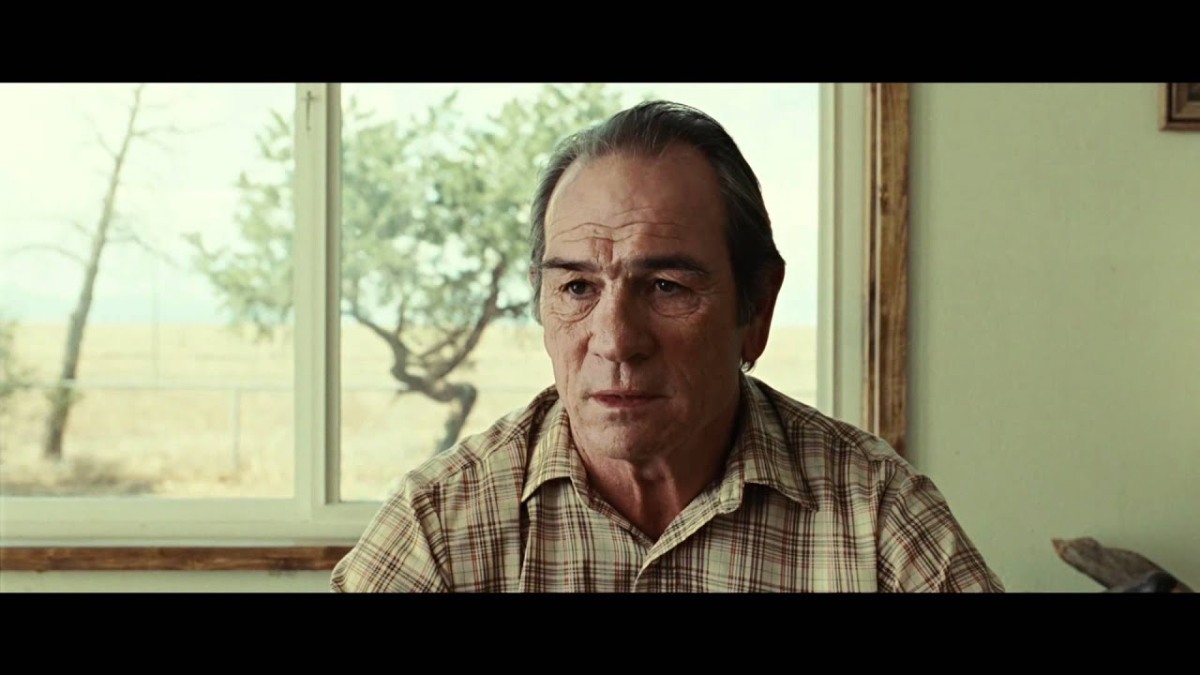
Tommy Lee Jones is an elderly police officer overmatched in the excellent ‘No Country for Old Men’ (2017). He is overmatched for a number of reasons including not being able to keep up with the actions of violent men who show no compassion or no remorse. Throughout the film, he is always just a step behind the sociopathic Anton Chigurh and fails to either apprehend him or to prevent him from killing innocent people. In his 30+ years as a police officer, he means well but he has noticed an increasingly brutal fact that is inescapable. The world has become more unforgiving, violent, and it is hard for him to make an impact whereas at the beginning of his career, he sought to make it a better place.

Ed Tom Bell is your average protagonist who means well, wants to do right in his work, and believes he can do good but finds himself overmatched and overwhelmed by what he is asked to do. When he thinks of his future, he wonders what is left for him and if retirement will bring him peace or have him think back on what could be.

The dream scene begins with Ed Tom, now retiring, looking out of his window at his farm’s seemingly barren landscape with a sole tree to his left through the window behind him. A man of seemingly few hobbies and fewer words, he thinks about his day ahead and thinks about the possibility of riding around on his horse. Not too enthused about it, he also asks his wife if he should help around the house. Seemingly because he is less than skilled at this work, his wife believes it’s better that “he not.” He asks if his wife will join him riding but she is still working and a member of society actively.

Resigned to his fate as a retiree instead of being an active police officer, he reflects to his wife that he’s had dreams and he wants to share them. She says that he has time for them now and that she’ll be polite while he remembers them. He goes ahead and states that there were ‘two dreams’, they were ‘peculiar’ and both of them involved his father who has long passed away. Ed Tom is an older man than his father ever was indicating his father passed away at a younger age that of which Ed Tom will live to be longer.

The first dream is almost like a flash as most of our dreams tend to be with the details muddled and hard to recall. Ed Tom only states that he meets up with his young father in town and he leaves him some money perhaps as a way of his father being there for him even if he wasn’t present physically in his life. Similar to losing his father early in life, Ed Tom believes he lost his money in the dream as well leaving him without help as his father’s early death may have inadvertently done.

The second dream is much more imaginative and involve Ed Tom and his father living in ‘older times’ perhaps when the West was not settled and was lawless. He is no longer a police officer maintaining law and order but rather a horse rider having adventures with his father as he wishes they perhaps would have had time for had he lived longer.

This second dream is much more vivid as Ed Tom recalls how it is cold, they are going through a mountain pass together. They ride together in the snow among the mountains of the night until his father rides past him with no explanation and his blanket wrapped tight against him. This is confusing to Ed Tom at first knowing how hard it is to be without his father who he loves and must face the cold world without him as if he has been abandoned again. Though he may have lost his father, Ed Tom recalls how his father was carrying ahead a fire and a horn of a golden moon color, which gave him comfort despite the fact that he was not with him riding together.

“He was going on ahead, fixing to make a fire.” Ed Tom believes his father in the dream is out there doing this noble act in the middle of all the dark and cold, which is brutal to handle. “I knew whenever I got there, he’d be there…then I woke up.” The hope that Ed Tom haves is that his father even though it seems like he abandoned him as the son is that he really is instead looking out for him and paving the road ahead with light so he would not abandon his hope.

He believes that his father even though he may not be there with him wants him to keep going ahead and to meet him eventually instead of becoming deterred. He paves the way for his son to chase the flame of his absence and to resolve to not let the dark encapsulate him fully. Ed Tom’s expression about the dream is one of resigned sadness that his father is no longer around but also one of lingering strength to believe his death was not in vain and that he will reunite with him one day. His father, like him later, use their lives to keep the flame and the light moving forward even when surrounded by the darkest aspects of human nature.

Like any dream scene in a movie, this one has a deeper meaning behind it related to one man’s grief involving the loss of not only his livelihood but of his hope for a brighter future for humanity. Having seen the horrors that people inflict on one another, he may be resigned to that fact but he also believes his father would have wanted him to keep the flame ‘alive’ and to keep carrying it forward throughout his life even if things looked bleak. His death did not stop Ed Tom from keeping the flame moving in his own life and to carrying it forward in the hopes that he would bring it to his father someday when they would eventually be reunited in another lifetime or in another dream that seemed real.