

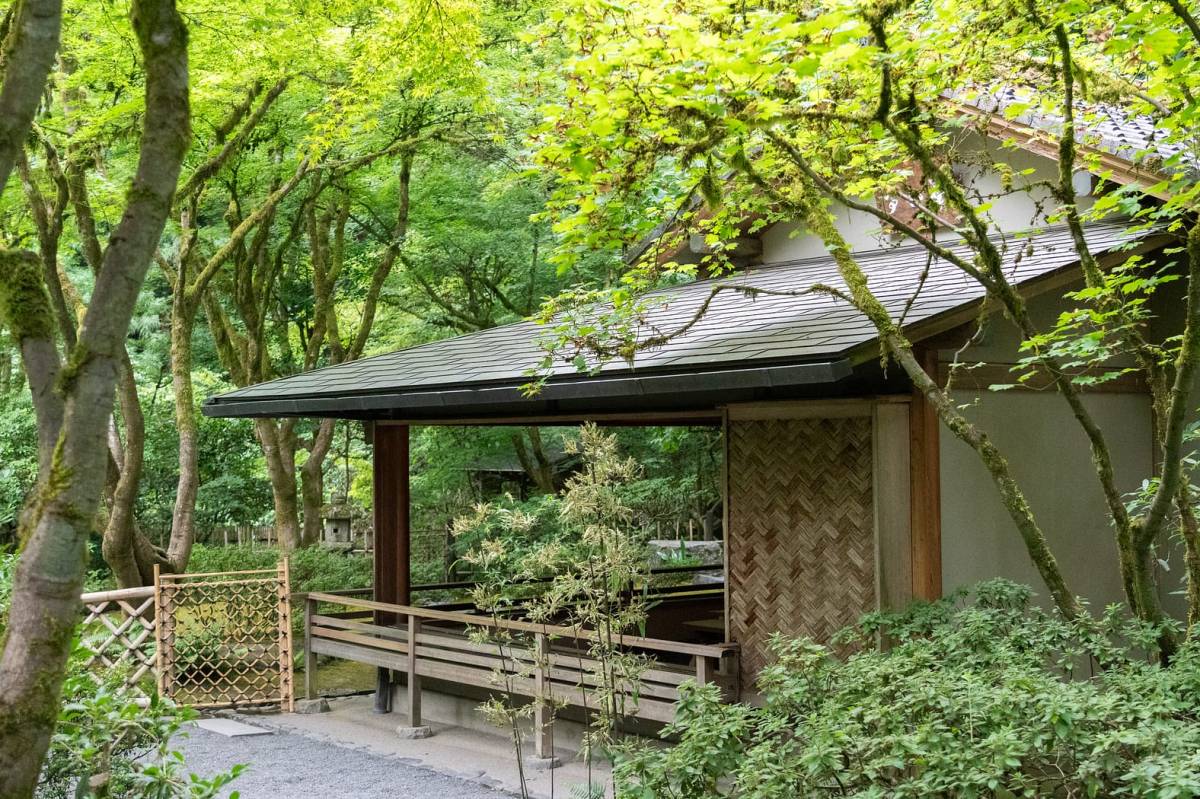
Recently, I was at a famous Japanese garden in Portland, Oregon, known for being the most authentic one outside of Japan, and it was as serene and peaceful as it could be. It was wonderful to experience such a physical space that was optimized for reflection and observation with how it is structured and organized. For me, it’s rare to find places like that on the road where you can meditate, relax, and enjoy the surroundings. To find a Japanese garden in the middle of Portland that made it feel like Kyoto or Sapporo was not what I was expecting. What would have made it even better though would have been for it to be a completely quiet zone for all visitors as the main rule.
You may be thinking that how would that make a difference? Well, it makes a huge difference to be able to enjoy the views, take in the sounds of nature, and observe more closely the koi fish and other wildlife who call the garden home. When you can focus more on enjoying such a beautiful garden, the last thing I want to hear as a solo traveler are other tourists talking about their recent surgery or angling to take the best selfie in front of a waterfall.
‘Quiet Zones’ in today’s America are increasingly rare and I find that rather unfortunate for our society. Whether it’s the beach where you sometimes need to pay the town or state to enjoy and still have to listen to another person’s music to the office where your colleague doesn’t bring headphones so everyone else can hear their conference call, there is a real lack of decorum or respect to lowering the noise level around us. Private places can do what they want in terms of the rules especially if they own the property but in public places or lands or modes of transport, having quiet areas would make a big difference to those of us who want that available option.
In my case, I do my best thinking and my best work when it’s quiet and I don’t believe I am alone in that. How different would things be for our society if quiet zones or places were an option to create, to reflect, to focus, without all the noisy distractions that keep us from doing what we do best? Whether it’s the beach, the airplane, the train, or just in your neighborhood, quiet hours really can do a lot of good, especially when you’re on a tight deadline or just are seeking some peace and time to reflect.
One example of how ‘quiet zones’ can work is on the Amtrak Northeast Regional train that can take you from Washington, DC up to Boston, Massachusetts over seven or so hours and on the Acela high speed rail option. As someone who rides these two trains a couple of times each year, I always do my best to book a seat or find a way to get to the ‘quiet car.’ I don’t mind it when I end up in a non-quiet car as may happen at times but being able to ride the rails in silence is quite a pleasant experience. Now, the ‘quiet car’ is only one train cars out of nine or ten cars usually so it’s not like every car is ‘quiet.’ Sometimes, on Amtrak, in other parts of the United States, there isn’t even a ‘quiet car’ option. I take it for granted due to my Northeastern roots, but why can’t we create that ‘quiet car’ option for all Amtrak trains and in other places we frequent?
Achieving more quiet in the workplace, on public transportation, in public areas, and even at a Japanese garden is possible. America is a loud and boisterous country and that has served us well over 250 years, but I find that it should be balanced out too. Introducing quieter, more introspection, more peaceful harmony with each other and with nature would be good over time and lead to a lot of different psychological and economic benefits.
When you can focus deeply and sit in quiet, whether surrounded by trees, wildlife, or the sound of waves crashing on the beach, it becomes easier to think clearly and create meaningful work. Yet being alone with one’s thoughts is not easy. Many American naturalists and writers, including Henry David Thoreau, Robert Frost, and John Muir, understood this and deliberately sought out solitude in nature to do their most important thinking. It raises a simple question: if they had been constantly interrupted by noise, crowds, and distraction in the 21st century, would their work have been the same or would it have even happened at all?
The landscapes in America that once gave thinkers space to observe and reflect still exist, but they are harder to hear over the noise of modern life. And yet the need remains unchanged: to think clearly, we must sometimes be willing to step out of the crowd and into silence, even if only for a while. Perhaps the real question is not whether great thinkers need silence, but whether we still allow ourselves to have it. In a world filled with constant noise, distraction has become the default setting rather than the exception. The ability to step away from it, even briefly, may not just shape better work, but a clearer way of seeing the world itself.
