

The Case for Silence in a Loud World

“For me, it’s rare to find places like that on the road where you can meditate, relax, and enjoy the surroundings.”

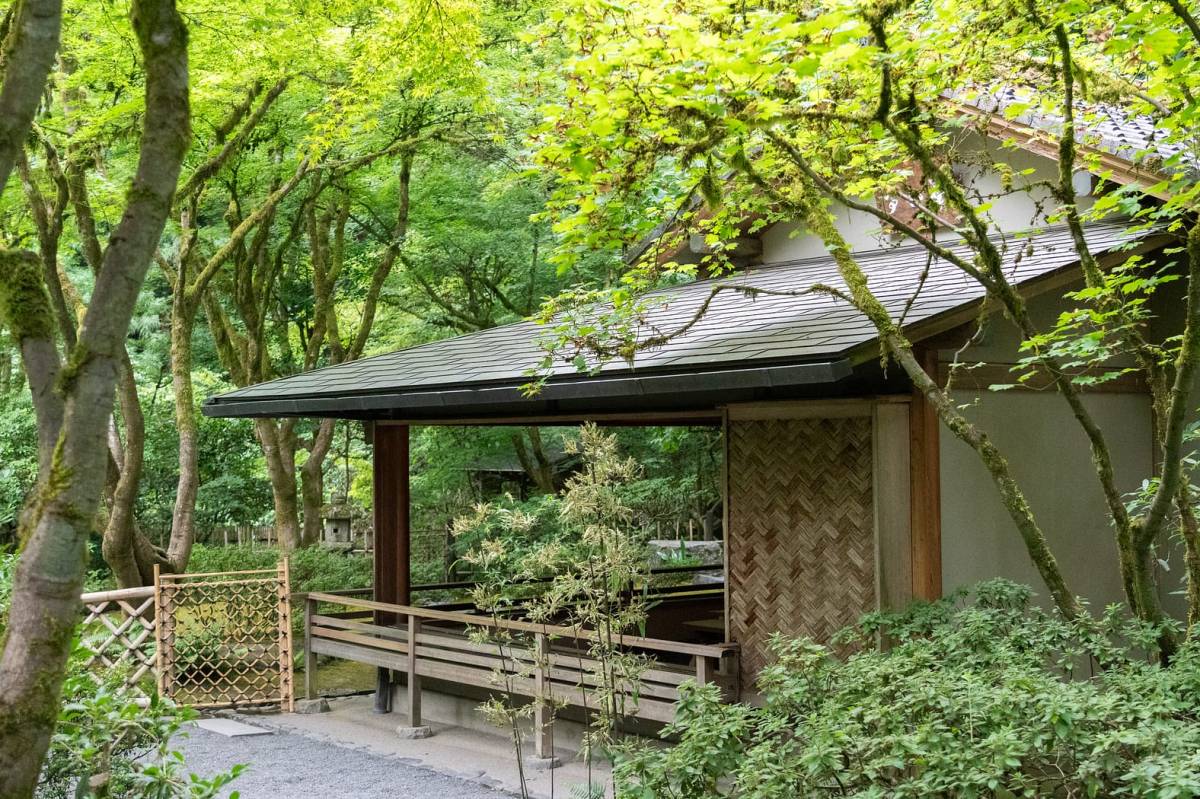
Recently, I was at a famous Japanese garden in Portland, Oregon, known for being the most authentic one outside of Japan, and it was as serene and peaceful as it could be. It was wonderful to experience such a physical space that was optimized for reflection and observation with how it is structured and organized. For me, it’s rare to find places like that on the road where you can meditate, relax, and enjoy the surroundings. To find a Japanese garden in the middle of Portland that made it feel like Kyoto or Sapporo was not what I was expecting. What would have made it even better though would have been for it to be a completely quiet zone for all visitors as the main rule.

You may be thinking that how would that make a difference? Well, it makes a huge difference to be able to enjoy the views, take in the sounds of nature, and observe more closely the koi fish and other wildlife who call the garden home. When you can focus more on enjoying such a beautiful garden, the last thing I want to hear as a solo traveler are other tourists talking about their recent surgery or angling to take the best selfie in front of a waterfall.

‘Quiet Zones’ in today’s America are increasingly rare and I find that rather unfortunate for our society. Whether it’s the beach where you sometimes need to pay the town or state to enjoy and still have to listen to another person’s music to the office where your colleague doesn’t bring headphones so everyone else can hear their conference call, there is a real lack of decorum or respect to lowering the noise level around us. Private places can do what they want in terms of the rules especially if they own the property but in public places or lands or modes of transport, having quiet areas would make a big difference to those of us who want that available option.

In my case, I do my best thinking and my best work when it’s quiet and I don’t believe I am alone in that. How different would things be for our society if quiet zones or places were an option to create, to reflect, to focus, without all the noisy distractions that keep us from doing what we do best? Whether it’s the beach, the airplane, the train, or just in your neighborhood, quiet hours really can do a lot of good, especially when you’re on a tight deadline or just are seeking some peace and time to reflect.

One example of how ‘quiet zones’ can work is on the Amtrak Northeast Regional train that can take you from Washington, DC up to Boston, Massachusetts over seven or so hours and on the Acela high speed rail option. As someone who rides these two trains a couple of times each year, I always do my best to book a seat or find a way to get to the ‘quiet car.’ I don’t mind it when I end up in a non-quiet car as may happen at times but being able to ride the rails in silence is quite a pleasant experience. Now, the ‘quiet car’ is only one train cars out of nine or ten cars usually so it’s not like every car is ‘quiet.’ Sometimes, on Amtrak, in other parts of the United States, there isn’t even a ‘quiet car’ option. I take it for granted due to my Northeastern roots, but why can’t we create that ‘quiet car’ option for all Amtrak trains and in other places we frequent?

Achieving more quiet in the workplace, on public transportation, in public areas, and even at a Japanese garden is possible. America is a loud and boisterous country and that has served us well over 250 years, but I find that it should be balanced out too. Introducing quieter, more introspection, more peaceful harmony with each other and with nature would be good over time and lead to a lot of different psychological and economic benefits.

When you can focus deeply and sit in quiet, whether surrounded by trees, wildlife, or the sound of waves crashing on the beach, it becomes easier to think clearly and create meaningful work. Yet being alone with one’s thoughts is not easy. Many American naturalists and writers, including Henry David Thoreau, Robert Frost, and John Muir, understood this and deliberately sought out solitude in nature to do their most important thinking. It raises a simple question: if they had been constantly interrupted by noise, crowds, and distraction in the 21st century, would their work have been the same or would it have even happened at all?

The landscapes in America that once gave thinkers space to observe and reflect still exist, but they are harder to hear over the noise of modern life. And yet the need remains unchanged: to think clearly, we must sometimes be willing to step out of the crowd and into silence, even if only for a while. Perhaps the real question is not whether great thinkers need silence, but whether we still allow ourselves to have it. In a world filled with constant noise, distraction has become the default setting rather than the exception. The ability to step away from it, even briefly, may not just shape better work, but a clearer way of seeing the world itself.
You Don’t Owe The World A Status Update

“You should not be performing for other people and achieving goals for their attention. The ‘likes’, the ‘emojis’, the ‘congratulations’ are all well and good but when it comes down to it, you don’t owe the world a status update.”

Not everything in your life needs to be broadcast to other people, especially strangers. It’s preferable even to move in silence while you work towards achieving your personal goals or achievements. True self-growth is about achieving your wins in life because of your own hard work and desire and not just to seek validation from others. You should not be performing for other people and achieving goals for their attention. The ‘likes’, the ‘emojis’, the ‘congratulations’ are all well and good but when it comes down to it, you don’t owe the world a status update.

You build a legacy for yourself and not for chasing the validation of others, whether they end up giving it to you or not when your success comes to fruition. We live in a world where broadcasting every tiny move is celebrated, which is fine for those who choose to engage in it, but that’s not what your life should be focused on.

Telling people too much, especially too soon, can be bad for your goal setting and put undue pressure on you to reach that goal even more. If you fail, everyone will know who you shared the original goal with which could sting. While telling people can provide external motivation, at the same time, you are also putting a lot more stress and anxiety on yourself to perform for others because of how public you made your goal.

In my view, overexposure kills momentum and the energy you give towards outside attention can distract you from setting and achieving your goals. To give a personal example, in the past, I let some people I trusted in my life know about my goals, especially when it comes to launching a business or passing a certification for professional reasons. While I enjoyed letting those people I cared about know, I should have waited until I had achieved my goals in both areas before making it public even to close friends and family.

The sting of failure or falling short is accepted best by those closest to you but it can still hurt knowing that you may have let them down by promising more than you could deliver. Often, it’s best to wait until the goal is achieved, like having a profitable business or acing your certification before you let others know you were even working on that accomplishment to begin with.

Some things in life need space, time, and most importantly, privacy to develop like the roots of a tree as they form the foundation for growth. Self-improvement can be shared publicly but it should be thought of primarily as a private contract within yourself, and not public performance. Real growth takes a lot of time and achieving tough goals takes years, decades, and sometimes an entire lifespan.

Updating others constantly will get boring too and if you are going to update others, make sure you are only doing it when you achieve something along the path to success. Progress should be boring and predictable, and you shouldn’t need applause or praise to keep going towards your goal or objective as well.

I find that the most successful people often work in silence until its time to deliver the final result, not announce to the world that it’s in progress. Whether it’s Albert Einstein working on the e=mc(squared) result, Michael Jordan putting in the years as a teenager and college basketball player to make it to the NBA and become a legend there, or even Steve Jobs getting rejected multiple times for what would become world renowned tech products like the iMac and iPod.

These legends in different fields of mathematics, technology, and sports did not announce to the world when they made progress towards their goals, they only announced to the world that they had made it when they achieved their goals. For a personal example, I didn’t tell the world when I started a martial art, I only let it be known to people when I had been doing it for a few years and had some progress or goal achieved to show for the efforts I had made. It’s great to start towards a goal but only announce it after you’ve been grinding for a while and have achieved a result with that job or activity or passion.

Let the results do the talking when you work in silence. When your final product or achievement is ready, it’ll speak louder than any fan or hater will have to say about it when it becomes public. Again, don’t tell people or especially strangers on the Internet your plans, show them the outcomes and the results that you have achieved and maybe how you got there if you want to give that away too. I think it’s best for anybody to be devoted to improving themselves and bettering their lives with real goals is to build in peace and quiet.

Keep your head down, have a steady heart, work consistently towards your goals, whatever they may be, and do so only loud enough for you to hear them constantly, until they echo for everyone else once you’ve achieved what you set out to accomplish.