

The Megacity: A Cacophony of Humanity

“Only from above can you see how such massive populations can occupy relatively small portions of the Earth, while vast stretches of land remain sparsely populated.”

Flying into a megacity offers a unique perspective on its scale as I have done countless times over the years. From the window seat of an airplane, it’s impossible to fully grasp the size of cities like Istanbul, Mexico City, São Paulo, New York, or Los Angeles—cities that house tens of millions of people. Only from above can you see how such massive populations can occupy relatively small portions of the Earth, while vast stretches of land remain sparsely populated.

In these cities, one can sense how humanity has evolved over the centuries, transitioning from primarily agricultural societies to industrial powerhouses, and now, to the complexities of a post-industrial world. The growth of cities, especially megacities, reflects humanity’s ongoing desire to improve civilization, particularly in the realms of efficiency, innovation, and social equity.

In the 21st century, megacities are projected to grow at an unprecedented rate, particularly in Africa and Asia. New cities are expected to join the ranks of those already housing tens of millions of people, with some approaching populations of 100 million. This trend of urbanization is part of a broader pattern that dates to ancient civilizations. From Ancient Rome and Babylon to Athens, our cities have always concentrated power, knowledge, culture, commerce, and industry in urban centers. With a global population of 8 billion and rising, megacities are a relatively recent development, but they reflect historical trends toward greater urbanization. This process will likely continue throughout the 21st century.

More than ever, megacities are testing grounds for technological advancements and infrastructure developments that will shape the future. Whether it’s high-speed rail, autonomous vehicles, smart electricity grids, or renewable energy sources, these cities are ideal laboratories for innovation. Given their size and complexity, megacities allow for large-scale experiments in sustainability, from energy-efficient buildings to advanced waste management systems. These cities are also at the forefront of efforts to address current environmental challenges, integrating technologies that reduce their carbon emission footprint and improve water and energy use.

With millions of people living in near proximity, megacities serve as testing grounds for the social systems that underpin modern life: healthcare, education, and public safety. Cities with large populations can quickly reveal whether social safety nets are effective or in need of reform. These urban centers provide a direct feedback loop for policy ideas and social services, offering a unique opportunity to evaluate and improve the systems that impact the quality of life. The success or failure of these initiatives in megacities often sets the tone for broader national or even global policy shifts.

Megacities are also microcosms of global culture, where different languages, customs, and traditions coexist, creating a vibrant and diverse urban fabric. This cultural mixing is a hallmark of humanity’s increasing interconnectedness. Cities with millions of people can foster greater cooperation, creativity, and tolerance, but they also present various challenges. Integrating diverse cultures and languages in ways that promote social cohesion can be difficult, especially when disparities in wealth, power, and opportunity persist. However, megacities are often sites of cultural innovation and collaboration, where new ideas are born and tested on a global stage.

Cities are often the birthplace of new political ideas and social policies. When these policies succeed, they can be scaled up and implemented nationwide or even worldwide. Urban areas, being more densely populated and diverse, offer the ideal environment for experimenting with solutions to systemic issues, such as education reform, income inequality, or civic engagement. The ability to gather immediate feedback from a large and diverse population means that cities can rapidly assess the effectiveness of new public policies, making them key players in shaping the future of society.

The rapid urbanization of the world since the industrial age brings with it both opportunities and challenges. As cities continue to grow and scale, they will increasingly become the focal points for innovations and social experiments that shape the trajectory of human civilization. At their core, cities reflect humanity’s inherent desire to evolve, improve, and create something greater than us. The drive for progress embodied in the ambition, growth, and efficiency of urban areas mirrors our collective aspiration for a better future. However, this continued growth plans to bring more complexities. As megacities expand, they face the challenge of providing a good quality of life for millions of people while managing the unintended consequences of scale, such as overcrowding, pollution, and social inequality.

The success or failure of megacities in the 21st century has global implications. As urban centers grapple with present challenges like climate change, wealth inequality, and the effects of economic globalization, the solutions they implement or fail to implement will have ripple effects across the globe. From Tokyo to Cairo, from Bogotá to Kinshasa, these cities are testing grounds for humanity’s ability to adapt to a rapidly changing world. The development of megacities is not just a local issue or an urban issue; it is a global concern that reflects our collective ability to meet the challenges of the 21st century.

The paradox of progress is that while we strive to improve our cities and societies, we must recognize the complexities of providing a high quality of life for growing populations. The ambition to create more efficient, sustainable, and equitable urban environments must be balanced with the practical realities of physical infrastructure, resource management, and social integration. If megacities are successful in making responsible choices now, they will be better equipped to meet these challenges in the future. The decisions made today will shape the cities of tomorrow and, by extension, the world at large.

As the world becomes increasingly urbanized, the fate of megacities and urban areas will be intertwined with the well-being of all people. What happens in these cities, whether positive or negative, will affect everyone, whether they live in rural, suburban, or exurban areas. The interconnectedness of our societies means that the success or failure of urban areas will have far-reaching consequences. We must ensure that the policies and solutions developed in megacities are inclusive and benefit all members of society. The prosperity of our cities is not just the concern of city dwellers, but it is a global concern too. This becomes particularly evident to me when I fly over a city or megacity, witnessing its sprawling lights and endless streets, and realizing that the future of our civilization is unfolding in these urban spaces.
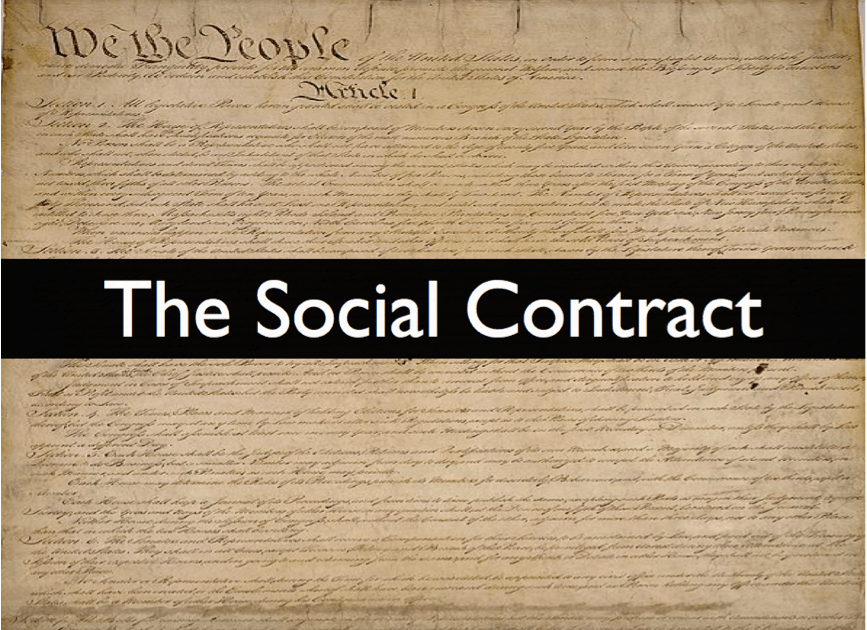
Restoring The Social Contract

“If everyone just decided to opt out, to not pay their share, to simply protect everything they have, not only would things generally decay quite quickly but the foundational trust that any society is built upon would crumble as well.”

When we are born, we start off with new responsibilities, commitments, or duties. We are purely helpless and rely on other people to assist us in everything from feeding ourselves to being clothed or to even how to be cleanly. Oftentimes, we rely on our first teachers and friends, our parents, to care for us. Of course, not everyone has the luxury to have both or one parent to care and nurture for them, which is why we rely on adoption, local and state services, and even foster care to make sure those who are young, vulnerable, and in need of care are provided for.

If you did not have parents around to guide and nurture you, it is likely that at one point or another, to prevent you from being hungry and homeless, you relied upon services provided by a local, state, or national government. In exchange for such services provided for in part or by whole by taxpayer funding, you would receive support as a child or teenager to receive public schooling, get publicly funded health care or subsidized health insurance to make it more affordable, and even food if you are able to get breakfast or lunch at no or low cost due to circumstances beyond your control. These different services, especially to the young, the poor, the homeless, or even the elderly are part of what I like to call the ‘social contract.’

By participating in the ‘social contract’, you receive certain necessities to live such as food, shelter, housing, and ideally, health care in exchange for later contributing back to the society either financially through taxes and even voluntarily through charitable donations, volunteering, or being active in the political process. The key thing to remember is that the better the taxpayer money is spent and the more accountable it is in those areas, the better those services will end up being.

Going back to the case of an orphaned or abandoned child, since their parent(s) were not there for them when they needed that love and care the most, who else should step in but society itself? Would it be better to abandon such a child to the streets or to an uncertain future to likely starve, to miss school, to be homeless, and to fall into despair or rather should we as a society remember that it could have been us in that situation as a child or a newborn and to ensure that the child will have the same opportunity or chance to succeed despite being born into uncertain circumstances?

Children or teenagers don’t pay taxes but by investing in them, we invest into the collective future of our society. Even if we use private health care, private schools, private roads, etc., the worse off the general society gets, everyone will be negatively affected by it even if those who are well off seek to shield them from such a deformed society. After using such services rather than not having had them at all, I find that it is much more likely that that child will grow a contributing adult to the general society rather than if we had not collectively invested in him or her at all.

Many such issues in adulthood involving joblessness, alcoholism, drug abuse, higher likelihood of prison can be avoided if there are safeguards in place because a home without parents can lead to a slippery slope of lack of opportunities and an eventual grim future if society through our provided services funded by each of us does not help to fill in the gap.

Now, that does not mean that personal responsibility should not be accounted for, and each person should work hard to achieve their goals and pursue opportunities if they put the effort in. You can’t just be given these services and expect them to give you an easy life. You still must be able to finish your schooling, find work in your field, and become part of the large pot of contributions that keep our society running. If everyone just decided to opt out, to not pay their share, to simply protect everything they have, not only would things generally decay quite quickly but the foundational trust that any society is built upon would crumble as well.

Any well-run society in any country always has two fundamental pillars going for it: accountability and trust. If you only have one and not the other, the society will be on shaky ground and be deteriorating in the other area after a while. If you lose both, the society will generally collapse until it can be built again after re-establishing at least one of these two fundamental tenets after it has taken hold in the general population again. Advanced societies are inherently fragile because if you can’t be held accountability regarding why certain services are not given when you believe you are paying a lot into the society and feel like you’re not getting much back in return that you can see, feel, touch, or enjoy, then there is a big issue at hand.

If there is no accountability given on behalf of those who provide such services like health, housing, defense, basic services such as water, energy, or even food production, then people will become increasingly distrustful of each other and seek to provide those services themselves outside of the state or society or focus on only having private means of acquiring such services, which due to the profit motive, may leave part of the society out in the dust if they cannot afford the private services and there are no public ones available as a substitute.

As U.S. Supreme Court Associate Justice Oliver Wendall Holmes Jr. once said about the means of taxation, “Taxes are what we pay for a civilized society.” As much as people will complain about their taxes, if we don’t have them, how else would we provide for clean water, clean air, reliable energy, good schools, safe streets, plentiful hospitals, etc.? The key idea to keep in mind is that if we don’t see our taxes going to these areas that improve upon society or advance it further for the well-being of the population, then there is a lack of accountability there that should be rectified.

Waste, fraud, and abuse of taxpayer money is a serious offense and so is an inability to break down for the taxpayer where their money goes to fund local, state, and national services year after year. Collectively, there should be a role in taxpayers demanding accountability from those in power to know where are taxpayer money is going, how can we make it more responsive to societal needs, and are we reaching enough of the population to justify the level of taxes we incur?

While it is seriously unlikely, we ever get a full accounting of where our tax money goes individually, it would improve the trust and accountability tenets of society to know which percentage of our taxes are spent on health care, housing, safety, defense, education, etc. and if we have that general idea, I do believe there would be more transparency to change those percentages at least at a local, state, or even national level to be more befitting with the priorities of the general public.

If we see that millions of people do not have access to public or private health care, perhaps our societal priorities can change to accommodate for that in the general contract. If we believe that economically, our roads, bridges, tunnels, airports, and public transit are not enough to compete in the 21st century, that should change the calculations. If our schools are crumbling, our teachers are underpaid, and the schoolchildren with parents or no parents are growing hungry there because there is no free lunch or breakfast accommodated for, that should change the calculations.

These are all good examples of how our general societal contract can be expanded and adapted to. Everybody, regardless of their social class or economic upbringing should have basic dignity afforded to them. I believe that social contract needs to be upheld especially if we are paying into it but not getting enough out of it in exchange. When health care, housing, food, and even school are considered luxuries rather than necessities, that contract is fraying and needs to be strengthened.

If our society becomes complacent and does not allow for such public services including health care and housing to care for all, either it will be privatized or it will vanish from being accounted for. We should begin to account for the societal contract where if you work hard, play by the rules, pay your share, and invest back into your community and country, you should get back what you put in especially if you need a leg up when you fall on hard times. Public necessities like education, health care, housing, and good public transit should not at all be considered luxuries.

We should believe it to be absolutely absurd to hear about people with two jobs not able to afford housing, two hard working parents not able to afford to send their children to publicly funded colleges and universities, or even going bankrupt because you have taken on too much medical debt. The societal contract we pay into and hope to receive back in return is fraying when that becomes not only common place in the society but accepted by the population. There should be push back in terms of accepting that kind of contract, which has to be either rewritten or redone entirely.

U.S. President Franklin D. Roosevelt delivered a speech on January 6th, 1941, titled the “Four Freedoms” speech. It addressed what should be what we would consider common sense for a social contract to be based on but during the era of Nazism, fascism, and totalitarianism on the march, it was a key historic event where he lined out what people around the world regardless of birthplace, creed, ethnicity, and background should be born with. They are the freedom of speech, freedom of worship, freedom from want, freedom from fear. Without addressing the whole of human needs from birth, Roosevelt argued that the general society in the United States and in countries around the globe would be worse off.

While FDR did not specifically mention health care, housing, education, or infrastructure in his speech, it can be inferred that economic security made up the ‘freedom from want’ part of the four freedoms. If we do not have a roof over our head, food in our belly, medicine, and care when we get sick, or school / work to give us opportunities to afford such needs as we age then general insecurity and the society itself will fray as a result.

Roosevelt understood that if the social contract does not include the four freedoms or the additional needs encompassed within these four freedoms of humanity, then our societies and the world at large will fall victim to another war, another depression, or general malaise and misery. FDR may have given this speech on the ‘Four Freedoms’ over eighty years ago but his words and his call to action remain as ever necessary in our society today. If there is a child without parents, we must be there to provide and care for his or her future, if a teenager can’t find work, we must provide that community college or technical education to give him an opportunity to succeed, and if that man or woman can’t find a way to get health care when they get sick and are in between jobs, we must step in to fill the void.

Simply put, the social contract is what we decide it is if we work together and find common ground on where it’s lacking based on what we pay into it and how we implement it to see the benefits of what comes out the other end. There is no doubt in my view that the four freedoms of FDR should be upheld and strengthened, especially around economic security or the ‘freedom from want’, which would eventually ensure that more and more of the general population would have the means to pursue their dreams, to be better able to succeed, thrive, and live their lives to the fullest extent.